


Community
AM supports National Park’s contribution to local economy

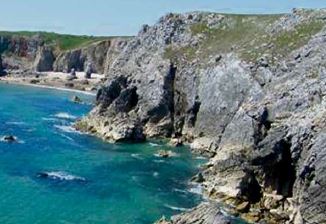
 THE PEMBROKESHIRE Coast National Park, along with the other two National Parks in Wales, plays a critical role in supporting the Welsh economy, an independent report published today has revealed.
The report – Valuing Wales’ National Parks – examines the economic contribution of our National Parks and the extent to which they impact on the lives of people in Wales and beyond.
The report found that the Pembrokeshire Coast National Park and the surrounding area attracts 4.2million visitors a year, supports over 7000 jobs and contributes £187million Gross Value Added to the Welsh economy.
Paul Davies the Assembly Member for Preseli Pembrokeshire said: “I consider myself very lucky to both live and work in such a beautiful part of the country. Our National Parks very much symbolize the character and essence of Wales and in many respects they are Wales’ window to the world.
“Understanding their economic value is crucial on so many levels. The findings of the report, Valuing Wales’ National Parks, are very positive indeed, highlighting their significant contribution to the Welsh economy.”

In a Statement of Opinion raised at the National Assembly – AMs including Paul Davies paid tribute to the work of the Pembrokeshire Coast, Brecon Beacons and Snowdonia National Parks.
The Statement of Opinion reads: ‘This National Assembly commends the work of our three National Park Authorities and recognises their significant contribution to the Welsh economy – estimated to be in the region of £1billion. We further acknowledge that the National Parks of Wales play a pivotal role in the economic development of their respective regions that extends far beyond their physical boundaries. The specialised and consistent approach to the management of these natural assets ensures their protection and sustainability for the enjoyment of both residents and the 12 million annual visitors’.
The report found that together Wales’ National Parks attracted over 12 million visitors each year spending an estimated £1billion on goods and services, outperforming their English and Scottish counterparts in terms of visitor nights – with a higher proportion of visitors staying in the Welsh countryside.
The findings of the report not only highlight the fundamental role the National Parks play in underpinning our economy, but also recognise the recreation, wellbeing and cultural benefits they bring and their wider tourism value as high-profile international brands.

Pembrokeshire Coast National Park Authority Chairman Cllr Mike James added: “The results are revealing. Pembrokeshire Coast National Park attracts over 4million visitors each year, supporting over 7,000 local jobs.
“Their conservation and social wellbeing value of the National Park has long been recognised, but this report has given us a real insight into the tangible economic benefits and I’m naturally pleased with its findings. I’m also delighted with the cross-party support we’ve received at the National Assembly for Wales.”
The findings of the report have been endorsed by Assembly Members from across the political spectrum, who have come together to show their support for the work of Wales’ three National Park Authorities.

The report, produced by Arup, Consulting, was commissioned by National Parks Wales, the Welsh Local Government Association and Natural Resources Wales.


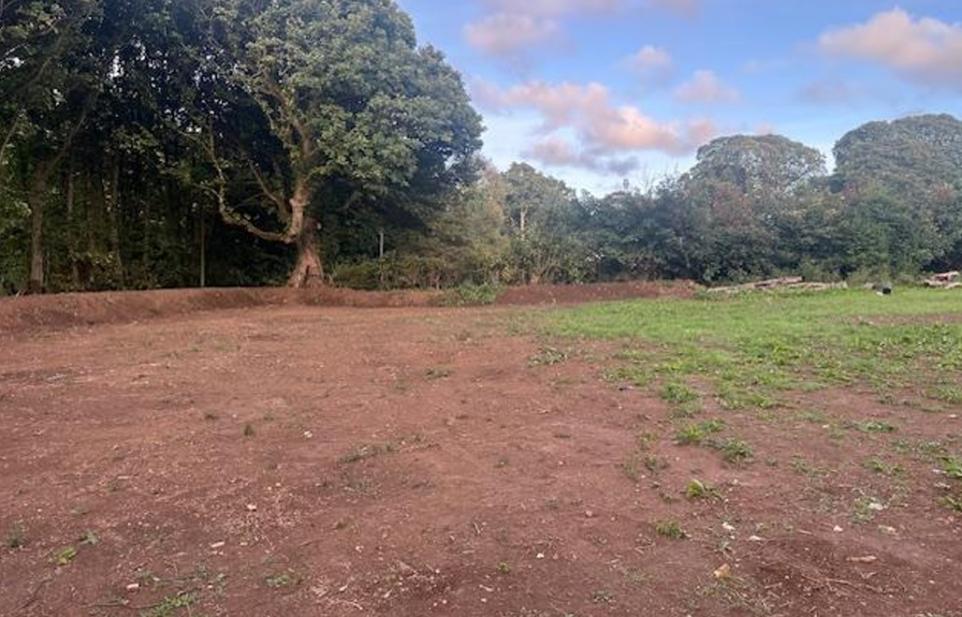
A SCHEME for a gypsy traveller site near a south Pembrokeshire village will be decided by councillors rather than officers after a call for it to do so was narrowly backed.
In an application to Pembrokeshire County Council, Ryan Boswell and family seek permission for two traveller family pitches, and associated works, at Greenwells, Cosheston Bridge, near Pembroke Dock.
A supporting statement through agent Hayston Developments & Planning Ltd says: “The applicant and his father’s lifestyle and traditions fall within the statutory definition of Gypsies as defined in Welsh Assembly Government Circular 005/2018 ‘Planning for Gypsy, Traveller and Showpeople Sites’.
“Following the death of the applicant’s mother he, and his family need to return to cultural and traditional accommodation living in caravans. This site has been purchased by the applicant and is available for immediate occupation to enable the family to live in a tranquil and safe environment close to friends and acquaintances.
“There are no public or private pitches available within the county and unlikely to be so in the immediate future. The applicant has therefore identified and demonstrated an urgent need for appropriate alternative accommodation.”
It said it was not considered “this small-scale development for one family pitch for two static units in this location will cause any significant harm considering the more permissive approach provided by [planning circulars]”.
A call for a decision on the scheme to be made by councillors at a future planning committee rather than being delegated for officers was made at the December 16 meeting of the council’s planning delegation panel by local member Cllr Tessa Hodgson.
In her submission, Cllr Hodgson said: “This application has implications for the whole of Pembrokeshire, and this is reflected in recent decisions to refer earlier similar applications to committee.”
Her submission included references to a similar scheme at Pincheston, south Pembrokeshire, which had been referred to committee.

Cllr Hodson’s submission added: “This application for two gypsy traveller pitches will have an impact on the local community and is finely balanced between the competing interest of providing gypsy traveller sites against development in open countryside on a site which is not within the identified development boundaries in either the currant local development plan or LDP 2.”
It was recommended a decision on the scheme remain delegated to officers; a report for members outlining a list of criteria where it could be decided by committee, which it said were not met.
Speaking at the meeting, Cllr Hodgson said there was little difference between this scheme and some other applications in the Cosheston area which had gone to committee, suggesting it warrants committee consideration on the grounds the proposed scheme, which has attracted a petition of concern of some 178 signatures, was outside the settlement boundary, in the open countryside.

Councillor Phil Kidney moved Cllr Hodgson’s call be approved, against officer recommendation, so both sides could have their say.
“There’s community concern regarding this; I think if it goes to committee it gets a fair hearing all sides can make their representations. Sometimes these applicants are demonised, it gives an opportunity to make their case at committee. I’m quite happy to support it going to committee so everyone can get a fair hearing.”
Cllr Kidney’s call, against the recommendation of officer delegation was supported by three votes to two, with one abstention, Cllr Hodgson, on the grounds she had made the call.
The application will be heard at a future planning committee.
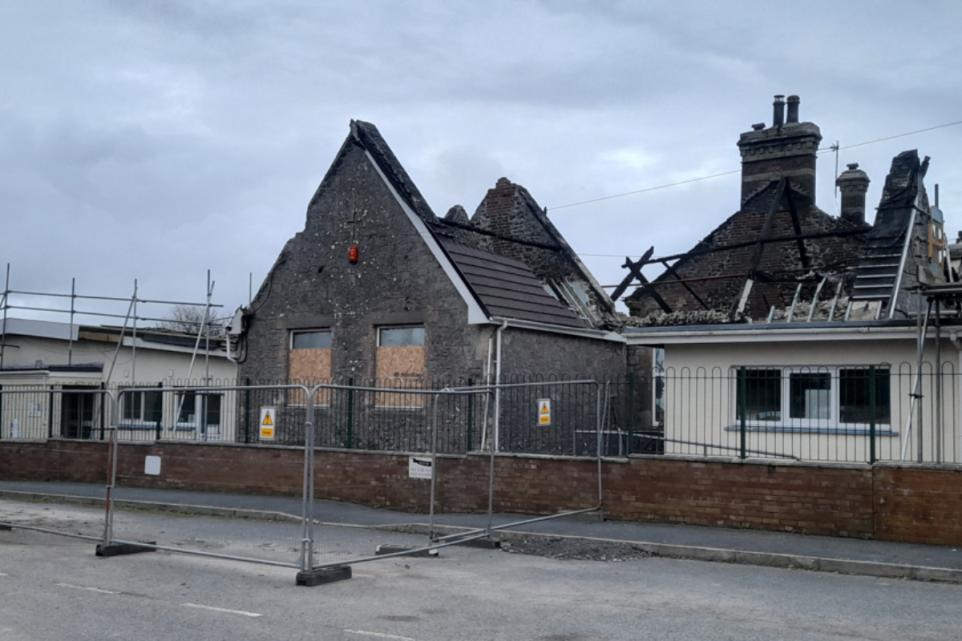
A PLEA for councillors to not act as “judge, jury and executioner” when the potential closure of fire-ravaged Manorbier is decided upon next year was heard at full council.
At the December meeting of Pembrokeshire County Council, members received a petition opposing the potential closure of Manorbier School.
Manorbier Church in Wales VC School and its adjoining schoolhouse was severely damaged by a fire on October 11, 2022, which broke out in the school roof space.
After that, a ‘school from school’ was set up in Jameston Village Hall.
It had been hoped the school would be rebuilt, but earlier this year members of Pembrokeshire County Council backed a report of the School Modernisation Working Group which, amongst other recommendations, included a statutory consultation on proposals to discontinue Manorbier Church in Wales Voluntary Controlled School.
The decision attracted strong local opposition, with more than 1,500 people signing a petition on the council’s own website calling for the school to be rebuilt, meaning it passed the threshold for a formal hearing by members of the council.
The formal consultation for the discontinuation of Manorbier closes in just a few days on December 19.

However, many of the council’s figures, especially on the level of surplus places at the school, have been strongly disputed.
Speaking at the December meeting, Richard Hughes, of Manorbier Community Council, said the council consultation was “deeply flawed and unlawful,” the quoted capacity figures after the fire damaged the original building “null and void,” with a true surplus of some 21 per cent.
“The school is clearly thriving under less-than-ideal conditions, your report claims 59 per cent [surplus], it’s misleading and artificial.”
He said the council was acting as “judge, jury and executioner” in its “deeply flawed” consultation.

Local member Cllr Phil Kidney said the staff, parents and pupils had been “living this process for three years,” adding: “At worst light we were misled for three years, living under this shadow, it’s not fair.
“We’ve been promised all along ‘we will rebuild this school; no matter what we do we will have to spend on this school, we have to hand it back in [a useable] condition.
“How members of staff have worked under these conditions for three years is amazing, the service they are providing in that school is fantastic.”
He criticised the consultation wording, feeling it painted Manorbier in an unfair light, saying it was stacked heavily in favour of St Florence school in a submitted question heard later at the meeting.
“We do feel there’s a hidden agenda, nothing more than a boost for St Florence school; we were led to believe was all about the positives and the negatives for the school; we have lost the trust in the director of education, we still feel we’re not been listened to.”
He said it was important councillors, when a final vote on Manorbier’s future, expected in March, keep an open mind “not just going along with the narrative: ‘We can’t afford it, and the figures are going down’.”
He went on to say: “We want to get the right vote, the moral vote, and get the school rebuilt.”

Cabinet member for education Cllr Guy Woodham praised the work at the school following the fire, saying he intended to “set the facts out” when it came to a final decision.
Leader of the independent group Cllr Huw Murphy said: “It just doesn’t sit right with me to close a school that has burned to the ground. Yes, we will respect the decision in March, however we haven’t handled the decision well. We need to do what’s right, and we haven’t done what’s right for Manorbier.”
Members agreed to note receipt of the petition prior to the final report before council in 2026.
Later in the meeting, Cllr Woodham disputed Cllr Kidney’s submitted question claim, Cllr Kidney telling Cllr Woodham: “We’ve put a lot of trust and faith in you on this consultation to make sure it’s fair and transparent. St Florence was referenced more times than our school, for a consultation I think it’s misleading.”
Cllr Woodham responded: “I will do my utmost to give a balanced report when I bring it back to full council.”


THE BADGER TRUST has published a new Cymru Badger Manifesto calling on candidates standing in the 2026 Senedd elections to commit to a science-led approach to bovine tuberculosis (bTB) and to maintain Wales’ current policy of not culling badgers.
The manifesto, released on Wednesday (Dec 10) as part of the charity’s Badgers Belong Here / Mae Moch Daear yn Perthyn Yma campaign, sets out the organisation’s position on badger protection, wildlife crime and bTB control, and urges politicians to reject calls for the reintroduction of culling in Wales.
Badger Trust argues that political decisions taken during the next Senedd term will be critical to the future of badgers, which it describes as culturally and ecologically significant to Wales. The charity says badgers have been present in Wales for more than 250,000 years and remain part of Welsh folklore, place names and rural identity.
Five key commitments
The manifesto outlines five commitments the charity is asking Senedd candidates to support, including defending what it describes as science-led policy on bTB, challenging misinformation in public debate, strengthening enforcement against wildlife crime, recognising badgers as part of Welsh heritage, and supporting local volunteer badger groups.
According to Badger Trust, 140 incidents of badger-related wildlife crime have been recorded in Wales since 2020, which it says highlights the need for improved reporting and enforcement.
The charity also points to the work of six active badger groups across Wales, which it says assist with rescuing injured animals, monitoring setts, recording road casualties and supporting local authorities.
bTB policy in Wales and England
Wales has not carried out widespread badger culling as part of its bTB control strategy, instead focusing on cattle testing, biosecurity measures and herd management.
Badger Trust claims that new herd incidents of bTB in Wales fell by more than 40% between 2010 and 2024, which it attributes to cattle-based controls rather than wildlife intervention.
The charity contrasts this with England, where it says almost 250,000 badgers have been culled over the past decade as part of bTB control programmes. It argues that bTB rates in England remain higher than in Wales and that the evidence does not show culling alone to be responsible for reductions in disease.
Disputed claims over culling
The manifesto challenges the frequently cited claim that badger culling in England led to a 56% reduction in bTB in cattle. Badger Trust says this figure has been misinterpreted and that studies cited in support of culling also involved additional measures such as enhanced cattle testing and biosecurity.
The charity points to statements from researchers and official correspondence which, it says, indicate that reductions in bTB cannot be attributed solely to culling.
Supporters of culling, including some farming groups, continue to argue that wildlife control should remain an option as part of a wider disease management strategy, particularly in areas with persistent infection. The Welsh Government has previously said it keeps its bTB policy under review in line with emerging evidence.

Call to candidates
Nigel Palmer, CEO of Badger Trust, said Wales demonstrated that bTB could be tackled without killing wildlife.
He said: “Wales is a world-leading example of how to address bovine TB through evidence-based policy. The progress made here shows that culling is not necessary, and we urge Senedd candidates to stand by the science.”
The manifesto is available in both Welsh and English and will be circulated to political parties and candidates ahead of the 2026 election.



Milford Haven man jailed after drunken attack on partner and police officers
A MILFORD HAVEN man who launched a violent drunken assault on his partner before attacking two police officers has been...


Court hears historic child sex abuse claim emerged after ‘tarot reading’
Judge reminds jurors there is no standard timeframe for victims to come forward as trial reaches final stage A JURY...


Rape allegation investigated at Saundersfoot nightclub
Police appeal for witnesses after incident reported in early hours of Sunday DYFED-POWYS POLICE are investigating an allegation of rape...

Milford ground worker denies historic child sex abuse charges at Crown Court
Accused tells jury claims did not happen as trial hears evidence about alcohol use and alleged controlling behaviour A MAN...


Three inmates deny murder of Lola James killer at Wakefield prison
THREE prisoners have denied murdering child killer Kyle Bevan, who was found dead in his cell at HMP Wakefield. Bevan,...


Dyfed-Powys Police reassure communities after Bondi Beach mass shooting
Officers monitor local tensions following terror attack on Jewish event in Sydney DYFED-POWYS POLICE have issued reassurances to communities across...

Search under way in Pembroke Dock for missing man Lee
Coastguard, RNLI and rescue helicopter launched as fears grow he entered the water A MAJOR search and rescue operation is...


Search under way in Pembroke as man reported missing
Rescue teams battle worsening weather ahead of amber rain warning A MULTI-AGENCY search and rescue operation is under way in...
Amber weather warning as ‘danger to life’ rain set to hit Pembrokeshire
Dyfed-Powys Police and council teams prepare as Monday deluge expected COMMUNITIES across Pembrokeshire are being urged to brace for severe...

Former Army Cadet leader sentenced for child abuse image offences
Judge condemns “horribly abused” victims as Carmarthen man admits offences A FORMER Army Cadet instructor from Carmarthen has been sentenced...
-
 Crime7 days ago
Kilgetty scaffolder sentenced after driving with cocaine and in system
-

 News3 days ago
Dyfed-Powys Police launch major investigation after triple fatal crash
-
Crime2 days ago
Man sent to Crown Court over historic indecent assault allegations
-

 Crime7 days ago
Motorist banned for three years after driving with cannabis in system
-
Crime4 days ago
Man spared jail after baseball bat incident in Milford Haven
-

 Education6 days ago
Teaching assistant struck off after asking pupil for photos of her body
-
 Crime2 days ago
Milford Haven man admits multiple offences after A477 incident
-
 Crime3 days ago
Trefin dog case ends in forfeiture order after protection notice breach