


Politics
National museums face almost £3m budget gap


THE PLANNED “business-as-usual” Welsh budget would leave national museums facing a near-£3m shortfall and lead to more cuts, the Senedd’s culture committee has heard.
Jane Richardson, chief executive of Amgueddfa Cymru (Museum Wales), was quizzed about the impact of Welsh Government plans for a standstill budget rising only in line with inflation.
She said a flat settlement in the draft budget – which will be initially unveiled on October 14, with the detail to follow on November 3 – would leave Amgueddfa Cymru nearly £3m short.
Giving evidence on October 8, the chief executive told the culture committee: “We would need to find ways of reducing programming and activities to address that shortfall.”
Plaid Cymru’s Heledd Fychan, who worked for Amgueddfa Cymru until her election in 2021, sought assurances that Wales’ seven national museums would be maintained.

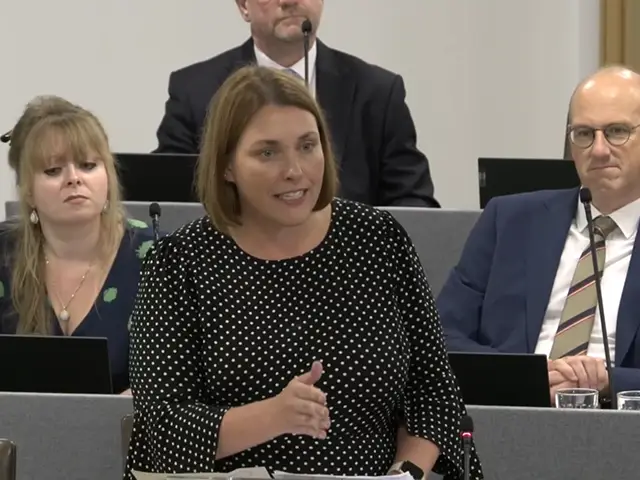
Kate Eden, who chairs Amgueddfa Cymru, replied: “They’re not currently under review, no. But, as you’re aware, we do always have to keep under consideration the span of activities that we undertake but currently there is no plan to actively review those.”
Pressed about rationalising the seven sites, Ms Richardson told Senedd Members: “Not under the current financial arrangements. Were we to have a drastic slashing of our budget, that’s of course what we would have to do.”
The chief executive stressed: “We’re very committed to being a national museum with national reach – we don’t want to be a museum of Cardiff plus a few others.”
Ms Richardson warned an inflationary increase for longer-term capital funding would be “very problematic” in terms of tackling a backlog of building works.

She called for more money to be “baselined” through the museum’s core “grant in aid” funding, warning of a significant resource drain from having to justify each project.
Despite dozens of redundancies due to a previous £4.5m budget deficit, Ms Richardson told the committee staff surveys show morale has since improved significantly.
She explained the museum has introduced new income streams – from commercial flannel production to brand licensing – while making a £1m operating profit from catering and retail.

On introducing charging, she said: “We believe that charging for added-value experiences is an important contribution to increasing the income we receive as a museum.”
Ms Richardson told the committee the museum would continue to pursue charging for activities such as certain exhibitions, including a “pay-what-you-can” model.
She explained the extended charging trial for the underground tour at Big Pit national coal museum, which runs until June 2026, will remain under review.
But she said: “There has been no drop off in the number of people or the percentage of visitors doing the underground tour… since the charge was introduced… feedback is clear that the overwhelming percentage of visitors support and understand the need for a charge.”
Ms Richardson raised the “Art of the Selfie” exhibition, saying Welsh Government insurance did not cover the cost of loaning the Van Gogh self-portrait from Musée d’Orsay in Paris.
She said the museum paid £40,000 for a private insurance policy for one painting but more than recovered the costs by charging a £1 minimum fee.
She told the committee: “Had it run at a loss, we would then have to think: can we afford to bring in such high-value and important works… to the people of Wales?”
Ms Richardson outlined the “NMC 100” vision for the 2027 centenary of the grade one-listed National Museum Cardiff which aims to display collections in a uniquely Welsh way.
The project would also see an overhaul of maintenance issues such as a leaking roof, with only 30% of the building, which is the size of 24 Olympic swimming pools, open to the public.
Ms Richardson stressed: “We owe it to the people of Wales, that we perform at the same level as other national museums both within the UK and more widely in Europe.”
Supporting Wales’ future generations commissioner’s calls for a bill to safeguard services, the former council director warned culture is always among the first areas to be cut.
During a difficult week, in which the St Fagans national museum was hit by a burglary, Ms Richardson told Senedd Members: “Wales should lead the world on culture… it’s our best and greatest export, so we should be proudly defending it.”


Party accuses rivals of “all words, no actions” as battle over renters and council tax intensifies ahead of Senedd election
A POLITICAL row has broken out ahead of the next Welsh Parliament election after Welsh Labour launched a twin attack on the Greens and Reform UK over housing policy and council tax.
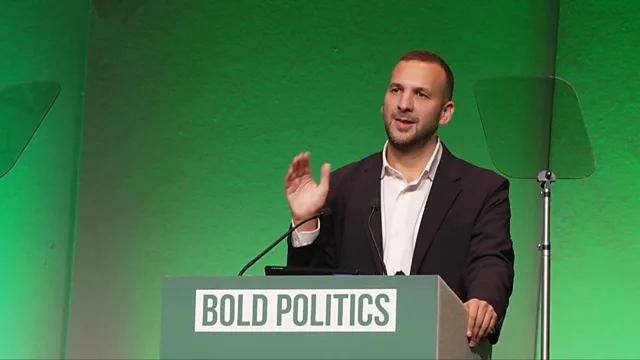
The party issued a strongly worded response following comments by Green Party deputy leader Zack Polanski (pictured) during a recent interview on BBC Politics Wales discussing renters’ rights and housing shortages.
Welsh Labour accused the Greens of saying they support tenants while opposing legislation aimed at increasing house building.
A Welsh Labour spokesperson said: “The Greens say they want to back renters. Then why did they block the bill in parliament that will deliver more houses?
“All words, no actions – that’s what you get from the Greens.”

Labour pointed to the vote by Green MPs against the UK government’s Planning and Infrastructure Bill, which ministers argue would help speed up the delivery of new housing.
The spokesperson added: “At a time when families across Wales are struggling to find somewhere affordable to live, blocking legislation designed to build more homes simply doesn’t make sense.”
The criticism also referenced proposals by a Green-controlled council in Bristol to consider selling council houses in order to fund housing services.
The exchange highlights growing political competition between Labour and the Green Party of England and Wales as housing increasingly dominates the political agenda.
Across Wales, shortages of affordable homes, rising rents and pressure from second homes have pushed housing towards the top of voters’ concerns.
Welsh Labour also used the opportunity to criticise the growing influence of Reform UK, which has been campaigning heavily on council tax and cost-of-living issues.
Responding to comments from James Evans discussing Reform’s stance on council tax, the spokesperson said the party had failed to deliver tax cuts where it holds power.

“Reform has no leg to stand on when it comes to talking about council tax rates,” the spokesperson said.
“They promised tax cuts in the English councils they run and haven’t delivered – in fact just over the border in Worcester council tax has gone up by nine per cent.”
Political observers say the exchange reflects a wider shift taking place in Welsh politics as the next Senedd election approaches.
With the expansion of the Welsh Parliament and the introduction of a new proportional voting system, smaller parties are expected to find it easier to gain representation.
That has encouraged parties such as the Greens and Reform to push harder into territory traditionally dominated by Labour.
For many voters, however, the debate ultimately centres on familiar concerns: the rising cost of living, the availability of housing, and the level of council tax bills.
With the election campaign beginning to take shape, those issues are likely to dominate the political battleground in Wales in the months ahead.

THE UK DEPUTY Prime Minister Angela Rayner visited Cardiff on Friday (Mar 13) alongside Justice Secretary David Lammy as part of a visit focused on community safety, probation services and cooperation between the UK and Welsh governments.
During the visit, the Deputy Prime Minister travelled to the Dusty Forge community hub in Ely, where she met members of the public involved in local community projects.
The centre provides a base for a range of services aimed at strengthening community ties and helping people rebuild their lives. Rayner also met staff from the Probation Service who work from the hub, discussing their role in supporting offenders back into society and helping reduce reoffending.
While at the centre, the Deputy Prime Minister spoke with local campaigner Donna Hurley, often referred to locally as the “Queen of Ely”. Their conversation focused on the importance of community cohesion and the role community hubs can play in supporting people leaving prison to turn their backs on crime.
Following the visit to Ely, Rayner travelled to the Senedd in Cardiff Bay where she was given a tour of the Welsh Parliament building.
She later held talks with Huw Irranca-Davies MS, the Deputy First Minister of Wales.
The meeting centred on how the governments in London and Cardiff can work together more closely to improve public services and create a more effective and fair justice system.
Discussions also touched on cooperation around probation services and youth justice, areas where responsibilities between the UK and Welsh governments intersect.
The visit forms part of ongoing efforts to strengthen collaboration between the two governments on issues affecting communities across Wales.

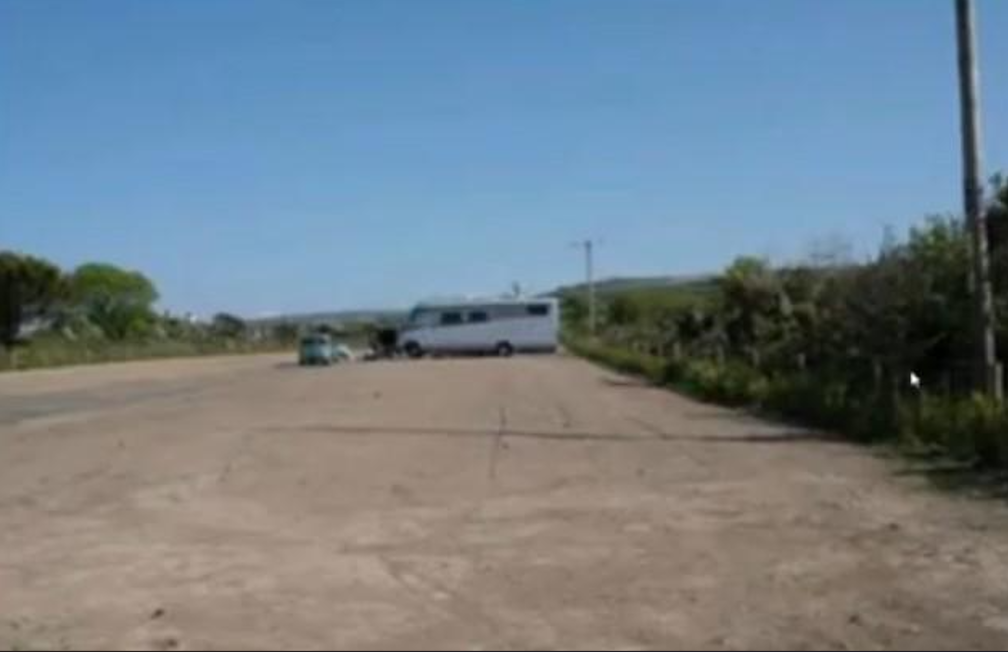
LEGAL action against a landowner, who repeatedly failed to comply with an enforcement notice served back in 2023, has been backed by Pembrokeshire’s national park.
Members of Pembrokeshire Coast National Park’s March development management committee meeting were asked to back delegated authority for prosecution proceedings in the magistrates’ court for failure to comply with steps required to be taken by an enforcement notice on land to the south of Parc Yr Eglwys, Brynhenllan, Dinas Cross.
A report for the committee said that, in May 2023, the park received a complaint that a green field in the open countryside had been stripped of its vegetation and turned into a mobile home park by the new landowners.
Following a site inspection, a planning contravention notice was served in relation to the removal of hedgebanks/hedgerows, widening of the existing access, alterations to ground levels, construction of a track and the siting of a storage container.
After that, a 2024 retrospective planning application was received by the park seeking retention of the hardstanding area, siting of storage container and additional landscape works, which was refused that May.
“As no voluntary steps were taken to remedy the breach of planning control and no appeal made against the refusal of planning permission, the Authority considered it expedient to issue and serve an Enforcement Notice as the development and use of the land resulted in an unnecessary incursion into the rural countryside which causes a significant visual intrusion to the detriment of the special qualities of the National Park,” the report said.
An enforcement notice was service in January 2025, but, the following month, the landowner lodged an appeal with Planning & Environment Decisions Wales, which was dismissed that June; the enforcement notice taking effect.
A further application, seeking permission for a small-scale seasonal campsite on the land was received in June 2025, subsequently refused that October; officers confirming to the landowner the enforcement notice remained in effect, running through to January 3 of this year.
A site inspection undertaken by officers on January 6 confirmed the breach of planning control continued, the report added.
This was followed by a further planning application seeking to regularise the development on January 21.
That application was refused on March 9.
The report concluded: “The landowner has had multiple opportunities to regularise the development through both retrospective applications and an appeal against the enforcement notice. Those processes have not resulted in permission being granted nor compliance being achieved.
“The continued failure to comply with the enforcement notice undermines the integrity of the planning system and public confidence in its proper operation.
“It also results in an unnecessary incursion into the rural countryside which causes a significant visual intrusion to the detriment of the special qualities of the National Park.
“Officers therefore consider it expedient and in the public interest to pursue prosecution proceedings should the breach remain unresolved.”
Members backed the recommendation.



Sport9 hours ago
France crowned Six Nations champions after extraordinary final-day drama
Ramos penalty in Paris seals title as Ireland fall just short and Wales end losing run FRANCE were crowned 2026...


News13 hours ago
Fishguard linked to allegations in Many Tears Animal Rescue investigation
Claims about puppies arriving through Pembrokeshire port emerge as licensing probe continues FISHGUARD has been named in allegations linked to...


Local Government1 day ago
Investigation confirmed after inspectors visit Many Tears Animal Rescue
Licensing authority declines to comment as police confirm attendance at Carmarthenshire rescue centre AN INVESTIGATION is underway following a visit...


Business2 days ago
Work set to begin on £50m hydrogen plant in Milford Haven
A MAJOR new hydrogen production facility worth around £50 million is expected to begin construction in Milford Haven later this...


Education4 days ago
Manorbier school closure approved while insurance claim still unresolved
Council confirms negotiations with insurer ongoing following 2022 fire PEMBROKESHIRE COUNTY COUNCIL has confirmed that negotiations with its insurer over...


Crime4 days ago
‘Knife attack’ at Spittal property leaves man in hospital
POLICE have arrested a woman following what is being described as a ‘knife attack’ at a property in Spittal on...

Community4 days ago
Pembrokeshire to receive its first banking hub in Pembroke Dock
LINK, the UK’s Cash Access and ATM network, has today announced local people and businesses in Pembroke Dock will benefit from a new banking...


Health6 days ago
Future of Withybush Hospital petition sparks urgent call for Senedd debate
CALLS have been made for an urgent debate in the Senedd over the future of services at Withybush Hospital as...


Sport6 days ago
Sean Bowen set for historic Welsh clash at Cheltenham Gold Cup
PEMBROKESHIRE jockey Sean Bowen could be part of a historic all-Welsh showdown when he lines up in the Cheltenham Gold...


Community6 days ago
Tenby still waiting as Wales hits 50 rural mobile mast upgrades
Seaside town plagued by signal congestion again absent from latest government-backed coverage improvements A NEW milestone in the UK Government’s...
-

 Health2 days ago
Welsh Ambulance Service to host bi-monthly Board meeting
-

 News1 day ago
Rayner and Lammy visit Wales to discuss justice and community safety
-

 Local Government4 days ago
Register now to vote in May’s Senedd election
-

 Crime6 days ago
Former Pembrokeshire Army officer stripped of MBE after fraud conviction
-
Community6 days ago
Tenby still waiting as Wales hits 50 rural mobile mast upgrades
-

 Community6 days ago
Carmarthenshire woman celebrates 100th birthday surrounded by family
-
Sport6 days ago
Sean Bowen set for historic Welsh clash at Cheltenham Gold Cup
-

 Crime5 days ago
E-bike rider who sped through pedestrian alley sentenced by court