


Farming
FUW hosts successful SFS meeting in Pembrokeshire


OVER seventy farmers attended the Farmers’ Union of Wales’ (FUW) recent roadshow event in Pembrokeshire, demonstrating the strength of feeling and interest among the local farming community as Wales prepares to transition to the new Sustainable Farming Scheme (SFS).
The meeting, held at the Claberston Road Memorial Hall, was one of eleven roadshows being hosted by the FUW across Wales. The public meetings aim to provide practical information and guidance ahead of the launch of the SFS on 1 January 2026 – the most significant shift in Welsh agricultural policy for generations.
Farmers heard from the FUW’s Policy Team and local County Officers, who provided clear, practical guidance on how the Scheme will work in practice.
Presentations covered key topics such as the new SFS payment structure, eligibility criteria, and the gradual tapering of BPS support. Attendees were also given an overview of the FUW’s own support services, which include advice from a local provider, assistance with the paperwork and support navigating the transition period.
FUW Pembrokeshire County Executive Officer, Rebecca Voyle said: “We were delighted to see such a strong turnout at Claberston Road. The level of engagement and the number of questions we received show how important it is that farmers are fully informed and supported through this period of change. The Sustainable Farming Scheme represents a major shift for Welsh agriculture, and events like this are crucial to help farmers make well-informed decisions for their businesses.”

FUW President Ian Rickman emphasised the importance of the roadshows and the support services the FUW could provide to farmers: “The Sustainable Farming Scheme represents a monumental shift for our industry, and it’s understandable that many farmers will have questions about the future. With farmers at a crossroads, these events have provided an opportunity to outline the options available; whether they choose to enter the SFS in 2026 or continue on a tapering Basic Payment.”
The FUW is here to help every step of the way. Our experienced local teams and policy experts are on hand to guide farmers through the details of the new Scheme, provide support, and ensure no member is left facing these changes alone.”
For more information about how the FUW can help farmers prepare for the Sustainable Farming Scheme, or to access tailored support and advice, farmers are encouraged to contact the FUW Pembrokeshire office on [email protected] or 01437 762913.


Charity says Wales should continue science-led approach as bovine TB cases fall
BADGER Trust has called on the next Welsh Government to maintain a science-led and non-lethal approach to tackling bovine tuberculosis.
The charity says Wales should continue to focus on cattle testing, farm biosecurity and support for farmers, rather than wildlife intervention.
According to Badger Trust, bovine TB cases in Wales had fallen by 13.6% by the end of 2025, without any wildlife culling. It said this compared with a 5% fall in England over the same period.
The charity said 5.3% of cattle herds in Wales were not officially TB-free at the end of 2025, down 0.4 percentage points on the previous year. It said 567 new herd incidents were recorded during the year, alongside a 27% reduction in early cattle slaughter.
Badger Trust said bovine TB remains a serious threat to cattle health, but argued that the best response is a cattle-focused policy, including more frequent and enhanced testing, improved farm hygiene, and non-slaughter options for cattle testing positive.

The charity said: “The premature culling of cattle due to a failed bovine TB test is outdated and unnecessary. Instead, strict segregation is an effective alternative.
“The main focus must be on eliminating the reservoir of bovine TB in the national herd in preparation for cattle vaccination.”
Badger Trust also argued that bovine TB can remain dormant in cattle and in the environment for long periods before being detected, which can lead to mistaken assumptions that infection has entered a closed herd from wildlife.
It said the disease can also be spread through contaminated vehicles, workwear, manure and slurry if proper biosecurity measures are not followed.

The charity added: “Focusing on badgers distracts from the real issue, as DNA testing shows that 94-95% of bovine TB infections are transmitted directly between cattle.
“The only effective way to combat bovine TB is to address it at its source: within the cattle population.”
Badger Trust is urging the next Welsh Government to “hold its nerve” and continue with a science-led, evidence-based, non-lethal policy.

Nigel Palmer, Chief Executive of Badger Trust, said the charity wanted Wales to continue “leading by example” in its approach to tackling the disease.
Badger Trust says it welcomes the end of intensive badger culling licences in England in 2026, but remains opposed to presenting badger vaccination as the main solution to bovine TB. It argues that improved cattle testing and stronger farm biosecurity offer a more effective and humane way forward.
The charity also warned that badgers face a separate threat from changes linked to the Planning and Infrastructure Bill, which it says could weaken protections for badger setts in development areas.
Badger Trust is the leading voice for badgers in England and Wales and works through a network of local badger groups. Its Badgers Belong Here campaign promotes badger protection and public education.
Union says rising fuel and fertiliser costs are putting pressure on farmers and food supply chains
THE FARMERS’ Union of Wales has warned that food security must be treated as a UK-wide priority as global instability continues to drive up costs for farmers.
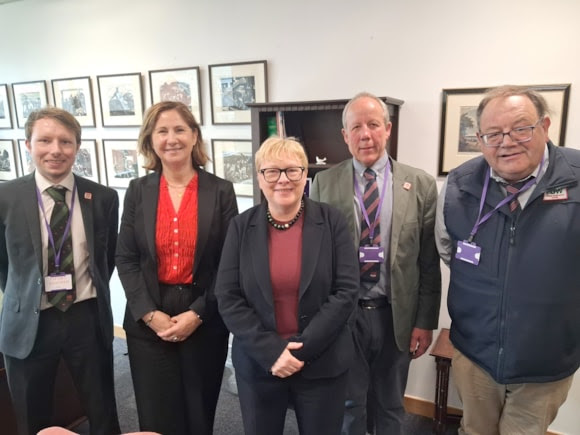
FUW President Ian Rickman and Deputy President Dai Miles met Defra Minister for Food Security and Rural Affairs Dame Angela Eagle MP in Westminster to discuss the impact of international events on farming, production costs and the resilience of food supplies.
They were also joined by Wales Office Minister Anna McMorrin MP.
The union said the ongoing conflict in the Middle East and Gulf region had added significant pressure to key agricultural inputs and energy costs.
According to the FUW, fertiliser prices, particularly urea and ammonium nitrate, have risen by between 20% and 30% since the escalation of the conflict.
The union is calling for greater transparency around fertiliser stocks and distribution across the UK.
Fuel costs have also risen sharply, with the FUW saying red diesel has effectively doubled in price in some cases. Wider agricultural fuel and energy costs are continuing to rise across the sector, placing further pressure on farm businesses already operating on tight margins.
The union warned that these cost increases are feeding through the entire food supply chain, affecting production, transport, processing and manufacturing, and are likely to contribute further to food price inflation.
The FUW repeated its call for a UK-wide legislative food security metric, which it says should be taken forward by the next Welsh Government in collaboration with the UK Government.
It said food security is a cross-UK issue, affecting all four nations because of the closely integrated nature of agri-food supply chains.
The union also pointed to recent government evidence, including Defra’s 2024 Food Security Report and its 2025 national security assessment on biodiversity loss and ecosystem collapse.
It said these highlighted long-term risks to food production, including climate change, nature decline, animal and plant disease, supply chain disruption and exposure to volatile global markets.

FUW President Ian Rickman said: “We welcomed the opportunity to meet Minister Eagle and Minister McMorrin, and highlight the continued impact of recent global instability on Welsh farmers.
“Food security is national security, and recent global instability has made that clearer than ever.
“Farmers are facing surging cost pressures, particularly from fertilisers and sharply rising fuel costs such as red diesel, which in some cases have doubled.
“These are forces far beyond their control, yet they directly threaten the resilience of our food system.
“We urgently need a coordinated UK-wide approach that recognises the strategic importance of domestic food production and reduces our exposure to volatile international markets.
“With that must come regular and meaningful engagement between Defra and agricultural stakeholders across the UK, including the FUW, particularly on policy areas that remain reserved to the UK Government.”

NOMINATIONS are now open for the 28th Wales Woman Farmer of the Year Award, celebrating the vital contribution made by women across Welsh agriculture.
NFU Cymru, together with sponsor NFU Mutual, has launched the search for the 2026 winner of the prestigious award, which recognises the role women play in farming businesses, rural communities and the wider agricultural industry.
Now in its 28th year, the NFU Cymru/NFU Mutual Wales Woman Farmer of the Year competition has highlighted women from a wide range of farming sectors and backgrounds across Wales.
The winner of the 2026 award will receive £500 and a Welsh Royal Crystal bowl.
The closing date for nominations is Friday, May 29. The award will be presented on Thursday, July 23, on the NFU Cymru stand at the Royal Welsh Show.
NFU Cymru Deputy President Paul Williams, who will be one of this year’s judges, said: “The Wales Woman Farmer of the Year Award is there to champion the contribution that women make to farming businesses and wider rural life.
“Over the many years we’ve been holding this prestigious award, we’ve had a variety of winners, all representing different sectors and parts of the farming industry, and we look forward to receiving applications for the 2026 title and celebrating this great award.”
Heather Holgate, NFU Cymru Group Secretary and NFU Mutual Agent, who will judge the competition alongside Paul Williams, said: “For generations, women have played a crucial role in Welsh agriculture, from running farm businesses to leading diversification enterprises to increase farm income, and NFU Mutual is proud to support this award.
“We hope the award inspires other women in Wales to take centre stage and influence farming in the future.”

Anyone interested in entering, or nominating someone for the Wales Woman Farmer of the Year 2026 title, can visit the NFU Cymru website to complete an application form.
Forms are also available from the NFU Cymru office by calling 01982 554200.



Crime1 hour ago
70-year-old denies assault and restraining order breach
A PENSIONER from Pembroke Dock has denied breaching a restraining order and assaulting another man. Henry Howlett, 70, of Market...


News20 hours ago
Conservatives target two seats in new Ceredigion Penfro constituency
Paul Davies and Sam Kurtz say health, farming and transport are key as they seek return to the Senedd CONSERVATIVE...


Community1 day ago
Milford Haven Beer Fest returns to waterfront this May
EVENT WILL FEATURE 34 DRINKS, LIVE MUSIC AND STREET FOOD MILFORD HAVEN is preparing to raise a glass as Beer...


Community2 days ago
Cancer patients targeted with parking fines outside Haverfordwest support centre
Adam’s Bucketful of Hope says vulnerable users, elderly volunteers and charity drivers have paid more than £1,000 after Ateb introduced...


Charity2 days ago
Row erupts at Spitfire museum after Reform poster displayed at charity premises
A HAVERFORDWEST museum has become caught up in a political row after Reform UK campaign material was photographed inside the...


Crime2 days ago
Pembrokeshire man charged with making hundreds of indecent images of children
A PEMBROKESHIRE man has appeared before magistrates charged with making hundreds of indecent images of children. David Lewis, 42, is...


Crime3 days ago
Man appears in court charged over death of Blood Bike Wales volunteer
FAMILY WATCHED FROM PUBLIC GALLERY AS CASE SENT TO CROWN COURT A PEMBROKESHIRE man has appeared before magistrates charged with...


Crime3 days ago
Police launch arson investigation after Haverfordwest fire
CCTV APPEAL ISSUED POLICE have launched an arson investigation after a derelict building was destroyed in a major overnight fire...


News3 days ago
Residents told to stay indoors as derelict building destroyed in Haverfordwest fire
EMERGENCY SERVICS were called to a major overnight fire in Haverfordwest which led to residents being urged to remain indoors...


Health3 days ago
Welsh public backs urgent action on dementia ahead of Senedd elections
Calls grow for diagnosis, care and support to become national priority NEW figures reveal overwhelming public demand for dementia to...
-

 News6 days ago
Barley Saturday brings bumper crowds to Cardigan
-

 Local Government3 days ago
Fishguard children’s home application is a ‘legal test’, not planning merits decision
-
Crime7 days ago
Hakin resident fined £1,330 over repeated noise and intimidation breaches
-

 Sport6 days ago
Goodwick United lift Senior Cup after 3-1 win over Monkton Swifts
-
 Community24 hours ago
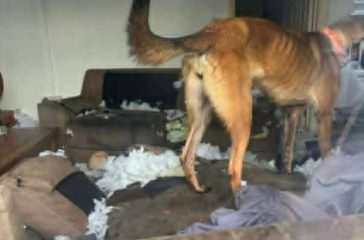
Dogs removed after welfare concerns at Milford Haven property
-
 Crime2 days ago
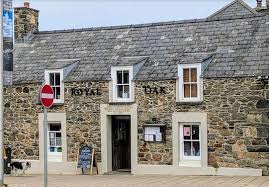
Pembrokeshire hairdresser avoids prison after pub assault
-

 Sport5 days ago
Narberth seconds start season in new sponsored kit
-

 News4 days ago
SPECIAL FEATURE: Did Chernobyl affect children in Wales?