


Education
Parent challenges council over Manorbier school closure data as long-running dispute deepens


Fire-damaged school has operated with limited capacity since 2022, but consultation still uses original figures
A ROW over the future of Manorbier Church in Wales VC School has intensified after a parent and former governor accused Pembrokeshire County Council of using “misleading and incomplete” data in its statutory consultation on permanent closure.
Suzanne Pearton-Scale contacted The Herald this week after receiving a formal response to her complaint from Steven Richards-Downes, the Council’s Director for Education. He said the consultation process meets statutory requirements and that the data used by the authority is accurate.
But Ms Pearton-Scale says the Council has failed to address fundamental issues about the figures underpinning its case to shut the fire-damaged school — issues the community says have been raised repeatedly since the consultation began on 5 November.
Fire, delays and temporary accommodation

The dispute comes more than three years after the October 2022 fire that destroyed Manorbier’s main building. The Council later moved pupils into temporary accommodation, where the school has remained ever since — despite early hopes that a rebuild could be completed by 2026.
The Herald has reported extensively on delays linked to insurance negotiations, the £2.6 million rebuild estimate, and uncertainty over how much of that figure would be covered by insurers. At one stage the Council confirmed that its own liability included a £200,000 excess, but refused to confirm the total amount insurers were prepared to fund.

By April 2025, community frustration was growing, with residents saying the long delays had left the school in limbo while wider “school modernisation” proposals were being developed.
Capacity figures at the centre of dispute

In its consultation documents, the Council states that Manorbier has 86 places and more than 70% surplus capacity — one of the key criteria used to justify closure.
Ms Pearton-Scale says this figure is “entirely hypothetical” because the school has not had 86 usable places since 2022.
She says the temporary site only has a functional capacity of 30 pupils, and that with 23.5 pupils currently on roll, the true surplus is around 21%, well below the School Organisation Code thresholds for closure.

“The figures being presented to the public are not based on the school that actually exists today,” she said. “You cannot run a consultation on numbers that ignore three years of reality.”
Was the school removed from the Council website?
She also alleges that at one stage the school was removed from the Council’s website, something she says misled prospective parents and suppressed enrolment during a period when pupil numbers were being monitored.
PCC did not address this point in its response to her complaint.

Rebuild costs: ‘separate issue’ or central justification?
Mr Richards-Downes told Ms Pearton-Scale that the rebuild is “a separate matter” from the consultation.
However, The Herald notes that the Council’s own consultation documents repeatedly cite rebuild costs, temporary accommodation fees, and insurance factors as part of the rationale for closure.
Ms Pearton-Scale said: “The authority can’t claim it is not relevant while using those same costs to argue the school is no longer viable.”
Diocese opposition and community campaign
Earlier this year, The Herald reported that the St David’s Diocesan Board of Finance formally opposed closure, stating the school should be reinstated.
Local politicians, including county councillors, have previously accused PCC of “steamrolling” the closure through the modernisation process.
A petition launched by residents in mid-2024 gained hundreds of signatures in its first week and has since grown to more than 1,500 signatures in a parish of around 1,900 people.
Campaigners say this level of engagement shows overwhelming opposition and should carry weight in the consultation.
Council figures challenged
Ms Pearton-Scale disputes several other key consultation claims:
- That parental preference has shifted away from Manorbier: she says the cramped temporary site has deterred families, not lack of demand.
- That pupil numbers have declined by nearly 60% since 2015: she says the true decline prior to the fire was around 30%, and the remainder is due to enforced displacement.
- That per-pupil costs are high: she argues that temporary accommodation inflates figures that will not apply if a rebuild proceeds.
She says these issues were not adequately addressed in the Council’s response.
What happens next
The statutory consultation runs until 19 December 2025, after which officers will publish a consultation report and the Council’s Cabinet will decide whether to issue a statutory notice of closure.
If approved, the school could close in summer 2026.
Council response
Pembrokeshire County Council says the consultation is lawful, that its data is accurate, and that it has consulted all statutory bodies, including the Diocese.
The authority has been approached for further comment in light of the issues raised.











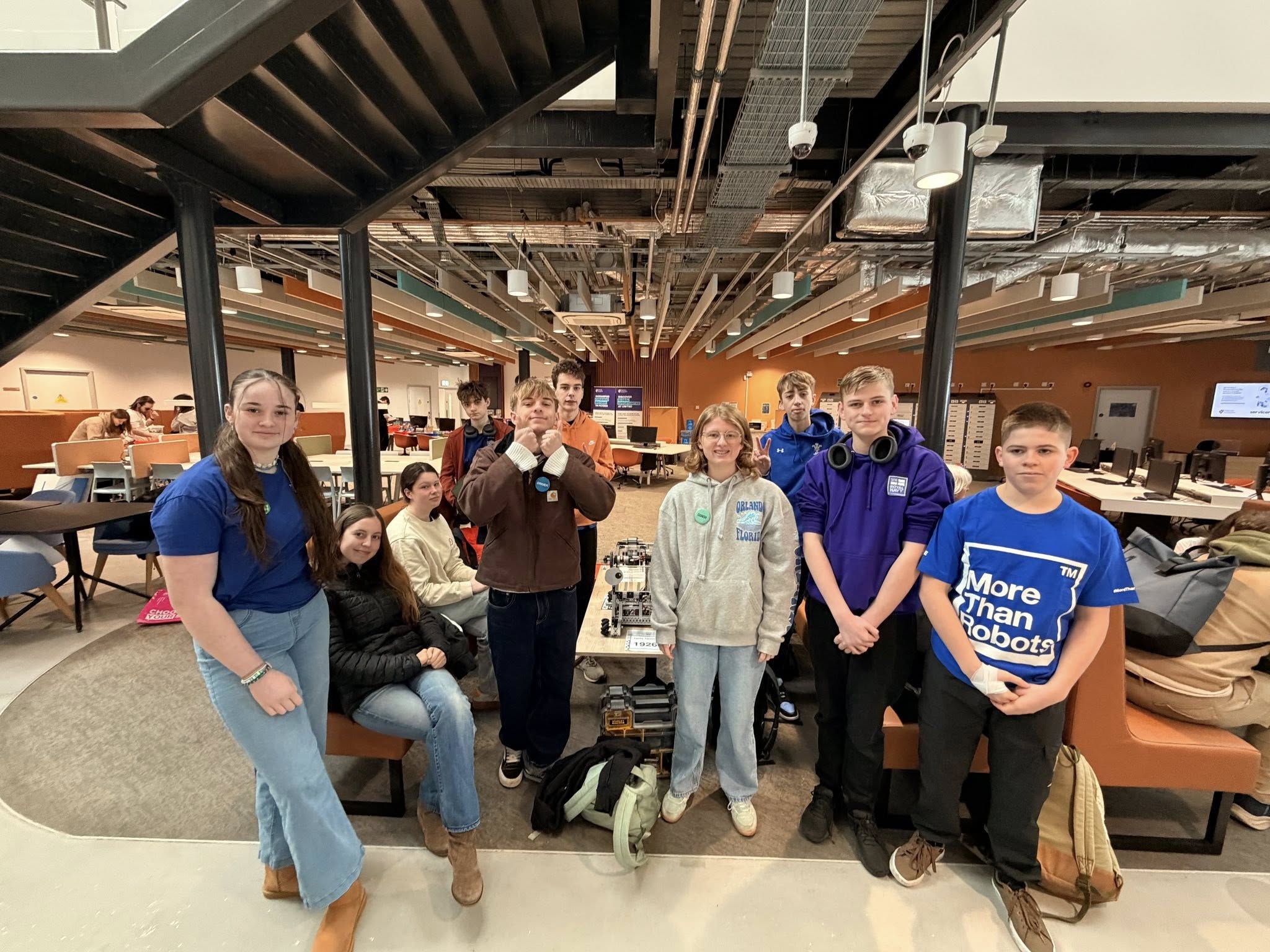
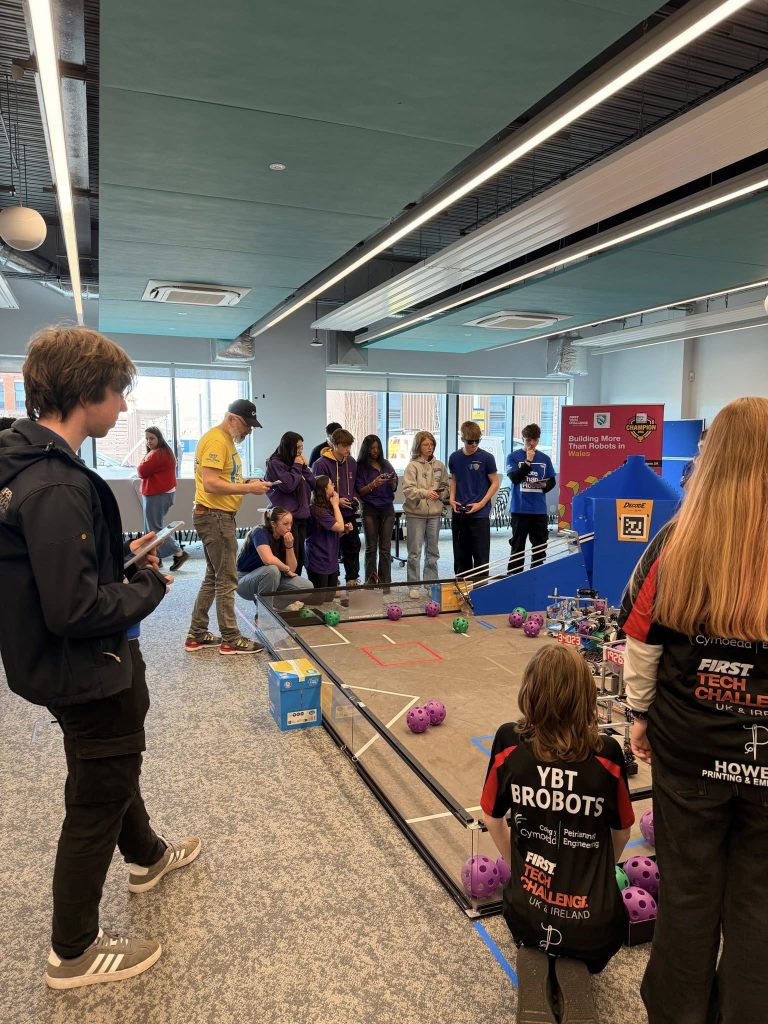
STUDENTS from Ysgol Greenhill in Tenby have taken part in the FIRST Tech Challenge UK & Ireland competition, showcasing their engineering and computing skills at a national robotics event.
The Tenby Techno Team travelled to the University of Wales Trinity Saint David’s School of Applied Computingwhere teams from across the UK and Ireland gathered to compete in the international robotics programme.
The competition challenges students to design, build and programme robots capable of completing tasks on a specialist arena, testing both technical ability and teamwork.
The Tenby team said they were proud to be competing and were supported during the event by former computing students Issac, Ieuan and Finley, who returned to help the team as volunteers.

Organisers of the programme say the FIRST Tech Challenge aims to inspire young people to pursue careers in science, technology, engineering and mathematics while building practical problem-solving skills.

The team also thanked Valero Pembroke Refinery and Tenby Round Table for sponsoring the project, along with Marc Ingram, who provided advice and guidance during the build and preparation stages.
More updates from the competition are expected as the event progresses.

THE PORT OF MILFORD HAVEN joined students from schools across Pembrokeshire for a careers event aimed at inspiring the next generation of workers in the region.
The event, organised by the SPARC Alliance, took place at the Canolfan Arloesedd y Bont / Bridge Innovation Centre. Pupils were given the opportunity to learn about a range of career opportunities available at the port and the wider maritime sector.
Representing the Port of Milford Haven were Pilot Jamie Furlong, Project Manager Claire Lawrence, Environmental & Sustainability Assistant Bethan Davie, HR Director Vidette Swales and Stakeholder Engagement Executive Emily Jones.
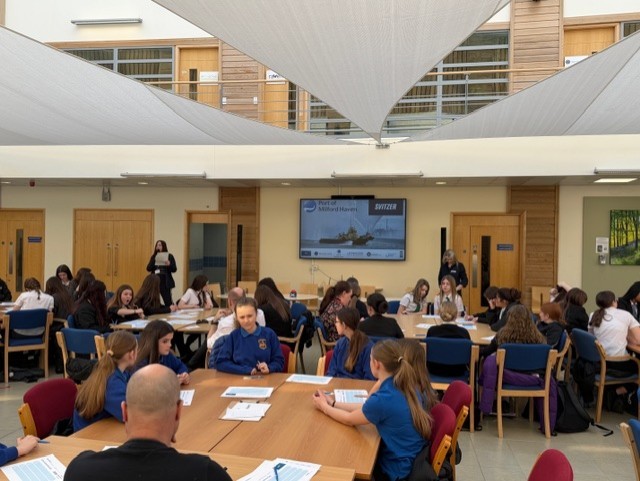
Students spoke directly with the team about different roles within the organisation and the skills needed to work in areas such as shipping operations, project management, environmental work and stakeholder engagement.
The Port thanked the SPARC Alliance for hosting the event and said supporting initiatives that connect young people with employers and highlight opportunities in Pembrokeshire is something it is proud to be part of.


SOCIAL media influencers can significantly increase the spread and toxicity of misinformation online, according to new research led by academics at Cardiff Business School.
The study, published in the journal Psychology & Marketing, analysed brand-related misinformation and associated user comments across forty-seven brands in nine industries over a three-year period. Researchers say it is the first study to measure how online toxicity differs when misinformation comes from influencers rather than ordinary users.
Brands increasingly rely on social media influencers to reach audiences, with spending on influencer marketing hitting a record $33bn in 2025. While influencers can drive engagement and sales, the communities built around them can also amplify inaccurate claims and direct hostility towards brands.
The research found that regular social media users who spread misinformation are often challenged or criticised by other users. As a result, discussions tend to become more civil over time as inaccuracies are corrected.
Influencers, however, face the opposite incentive. Their visibility, engagement and profits often increase when posts generate controversy or strong emotional reactions.
The analysis found that online toxicity was particularly high when influencers discussed socio-political issues, where public emotions and stakes are greater.
Lead author Dr Giandomenico Di Domenico said: “Social media influencers often have huge followings that are extremely valuable for brands seeking to increase sales.
“But our research shows the negative consequences when influencers endorse or amplify misinformation. Under the same conditions that increase their visibility and influence, influencers also generate significantly more toxic engagement than regular users.”
He explained that the close relationships influencers cultivate with their followers play a key role.
“Unlike regular users, influencers form parasocial bonds with their communities. These relationships make followers far more likely to support or defend claims without critically questioning them.
“This means misinformation introduced within these networks does not simply attract attention — it can transform scattered reactions into collective, belief-driven antagonism.”
The researchers identified two key mechanisms that strengthen misinformation when it comes from influencers.

The first is “legitimation”, where the influencer’s endorsement lends credibility to a claim. The second is “community enmeshment”, where followers rally around the influencer and reinforce the narrative.
When combined, these factors can create what researchers describe as “toxic echo chambers”, producing a self-reinforcing cycle in which toxicity increases engagement — and engagement encourages further inflammatory content.
The study highlights how these dynamics played out in early 2025 when several TikTok influencers posted viral videos claiming luxury brands including Hermès, Louis Vuitton and Chanel secretly manufactured products in Chinese factories while marketing them as “Made in France” or “Made in Italy”.
The videos presented the claims as exposés of industry deception but offered no verifiable evidence. Despite this, they generated millions of views and fuelled widespread online debate about authenticity, ethics and transparency in the luxury industry.
Dr Di Domenico said the example illustrates a growing tension within influencer culture.
“Despite the positive impact influencers can have on marketing outcomes, their prominence also introduces new risks,” he said.
“When misleading or controversial claims are amplified by influencers, the resulting backlash can create highly toxic environments that damage brands and distort public understanding.”
The research paper, titled Don’t You Know That You’re Toxic? How Influencer-Driven Misinformation Fuels Online Toxicity, is published in Psychology & Marketing.



News47 minutes ago
Fishguard linked to allegations in Many Tears Animal Rescue investigation
Claims about puppies arriving through Pembrokeshire port emerge as licensing probe continues FISHGUARD has been named in allegations linked to...


Local Government22 hours ago
Investigation confirmed after inspectors visit Many Tears Animal Rescue
Licensing authority declines to comment as police confirm attendance at Carmarthenshire rescue centre AN INVESTIGATION is underway following a visit...


Business2 days ago
Work set to begin on £50m hydrogen plant in Milford Haven
A MAJOR new hydrogen production facility worth around £50 million is expected to begin construction in Milford Haven later this...


Education3 days ago
Manorbier school closure approved while insurance claim still unresolved
Council confirms negotiations with insurer ongoing following 2022 fire PEMBROKESHIRE COUNTY COUNCIL has confirmed that negotiations with its insurer over...


Crime4 days ago
‘Knife attack’ at Spittal property leaves man in hospital
POLICE have arrested a woman following what is being described as a ‘knife attack’ at a property in Spittal on...


Community4 days ago
Pembrokeshire to receive its first banking hub in Pembroke Dock
LINK, the UK’s Cash Access and ATM network, has today announced local people and businesses in Pembroke Dock will benefit from a new banking...


Health5 days ago
Future of Withybush Hospital petition sparks urgent call for Senedd debate
CALLS have been made for an urgent debate in the Senedd over the future of services at Withybush Hospital as...


Sport6 days ago
Sean Bowen set for historic Welsh clash at Cheltenham Gold Cup
PEMBROKESHIRE jockey Sean Bowen could be part of a historic all-Welsh showdown when he lines up in the Cheltenham Gold...


Community6 days ago
Tenby still waiting as Wales hits 50 rural mobile mast upgrades
Seaside town plagued by signal congestion again absent from latest government-backed coverage improvements A NEW milestone in the UK Government’s...


Crime7 days ago
Man raped 15-year-old girl in caravan while she was on family holiday in west Wales
Jury convicts Pendine man after court hears he raped intoxicated teenager in caravan during family holiday A MAN who raped...
-

 Health2 days ago
Welsh Ambulance Service to host bi-monthly Board meeting
-

 Local Government4 days ago
Register now to vote in May’s Senedd election
-

 Health7 days ago
Women’s health services ‘expanding’ across mid and west Wales says Health Board
-

 News22 hours ago
Rayner and Lammy visit Wales to discuss justice and community safety
-

 Cymraeg7 days ago
Commissioner’s five-year report highlights key opportunities to strengthen Welsh language
-

 Crime6 days ago
Former Pembrokeshire Army officer stripped of MBE after fraud conviction
-
Community6 days ago
Tenby still waiting as Wales hits 50 rural mobile mast upgrades
-

 News6 days ago
Hustings to focus on learning disability support ahead of Senedd election