


Health
Consultation reveals lack of public trust in health board

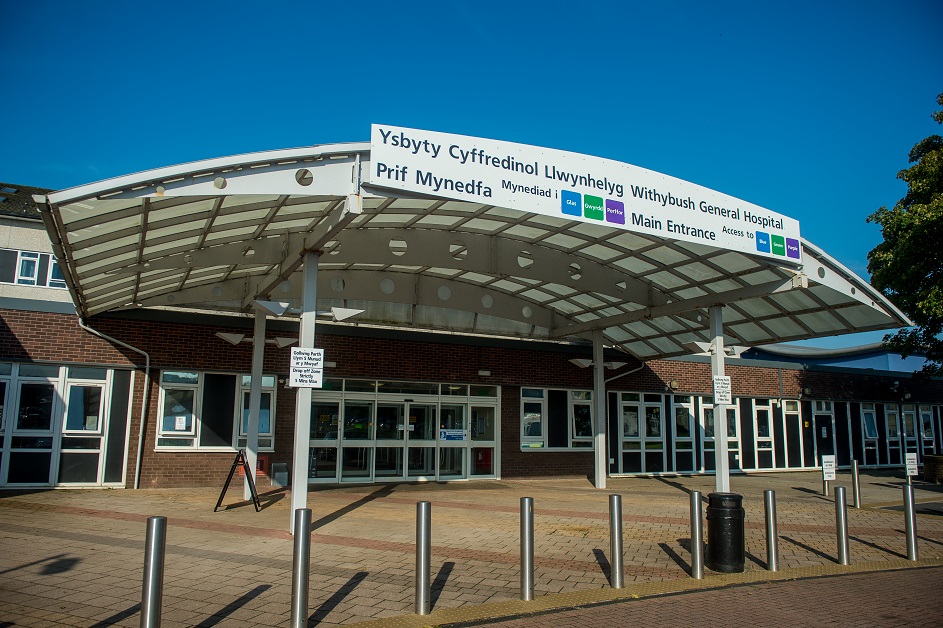
EARLIER this week, Hywel Dda UHB published the results of a consultation into the future configuration of its clinical services.
It is widely accepted that the current provision of clinical services is unsustainable. The Board cannot recruit enough staff to fill vacancies, particularly in rural areas, despite the existing staff shortages there. Only Prince Philip Hospital in Llanelli, situated close to the medical faculty and research facilities in Swansea, experiences relatively little difficulty recruiting and retaining staff.
A QUESTION OF TRUST
Public reactions online to the publication of the results, particularly in Pembrokeshire, were plentiful and mostly negative. Those initial reactions were predictable, even where the report’s details had not been read. However, an examination of the consultation’s findings paints a troubling picture for the Board.
Many of the approximately 4,000 respondents to the consultation said they understood the practical difficulties of delivering healthcare across rural Wales with limited resources. However, many also said they did not expect the Health Board to act in good faith upon its findings. Using the definition of ‘many’ adopted by ORS, a slight majority of respondents to the consultation said, in terms, that they did not trust their local health board.
We asked the Health Board to respond to those findings.

The Board told us: “We hope that by giving the people and communities in Hywel Dda the chance to share their views, we can work together on planning for the future of health care that is safe, accessible, sustainable and kind. More than 4,000 people engaged with us by attending our events, held throughout the Hywel Dda area, neighbouring Health Boards, and online.
“At the Extraordinary Board meeting on the 18 and 19 February, the Board will be considering 48 options across the nine services, 22 of which are alternative options generated directly through staff, public and stakeholder feedback during the consultation process. This reflects our genuine commitment to listening to our communities. There are no preferred options.”
THE ROAD AHEAD
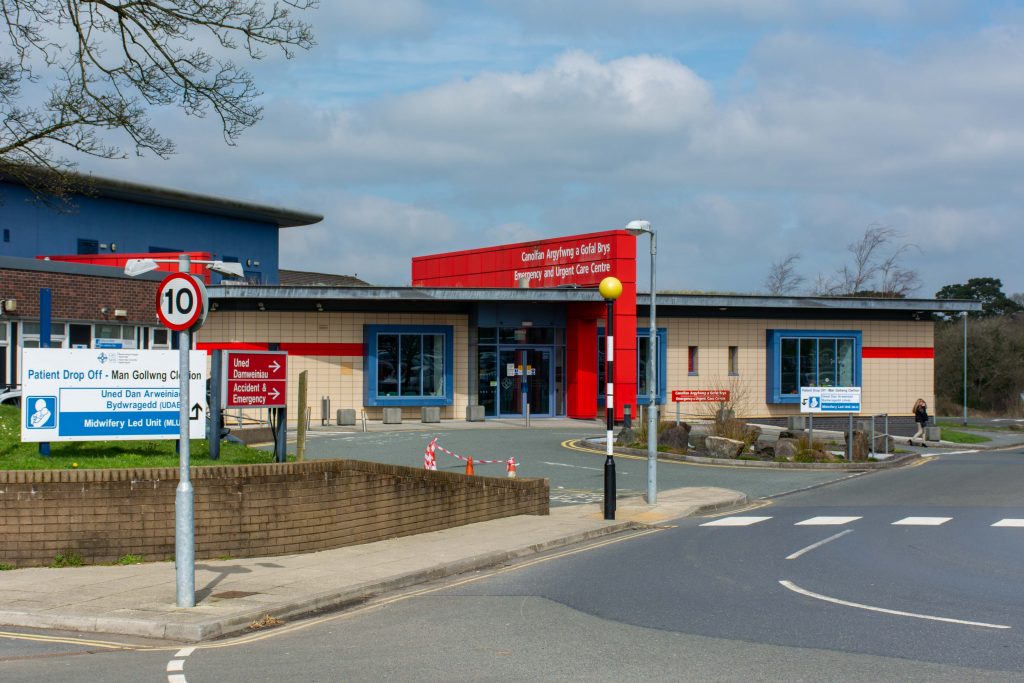
The consultation report included a large range of responses expressing serious concerns about access to services close to home. Respondents aired even stronger misgivings about the linked issue of transport for those attending hospital appointments. Simply put, options that proposed centralising services in one centre or another met with almost universal short shrift from the public.
The options proposed by the Board contained no hint of a transport assessment if key services were centralised, particularly from rural areas. Concerns about transport links, a bugbear for respondents from Pembrokeshire, were expressed by members of the public living in Ceredigion, in rural Carmarthenshire east and north of the M4 and A40.

Without a massive investment in patient transport services or a massively expanded public transport system, it is difficult to see how the Board could reasonably expect a patient with a debilitating condition to reach an appointment many miles away. Therefore, we asked the Board what transport it had commissioned to justify and underpin the options in the consultation.
The Board said: “We carried out Equality Impact Assessment (EqIA) and Quality Impact Assessment (QIA) during options development. Alongside this, there is a dedicated Patient and Travel Insights assessment to explore how changes could affect journeys and access to care. This includes analysis of travel times, transport patterns and the potential effects on different groups.
“We have carefully considered how proposed changes to healthcare services could impact travel and transport for patients, loved ones, and our staff. Some options may involve longer travel times for some people to ensure they can access better-quality care. We have worked with partners such as the Welsh Ambulance Service, the University NHS Trust, and the Adult Critical Care Transfer Service to ensure appropriate transport arrangements have been considered.

“We will continue to work with partners to understand how we can reduce the impact of any changes on travel and transport.”
A DIGITAL FUTURE?
This is at least the fourth consultation this reporter has reported on in the last eleven years. Each has suggested the future provision of healthcare services through technological solutions.
If patients must travel further for appointments, many of which will be clinically routine, remote medical appointments would go some way to addressing that issue. On the surface, it’s a win-win.
Progress has been slow. The technical demands of remote consultation and creaking IT infrastructure have delayed rollout. The risks attendant upon assessing a patient’s condition over a videolink remain undiminished. Moreover, a significant number of older patients either cannot or will not access services online. Rural broadband roll-out, which remains piecemeal, has not been the cure-all previously imagined.
We asked how the options accounted for the factors listed above.
The Board’s response stated that: “Digital is increasingly becoming the means by which we all interact with each other and with everything around us. However, we understand that some members of our Hywel Dda population cannot always access services online, or prefer not to, and we will support them in accessing healthcare in the way that is most convenient for them.”

FINDING (AND KEEPING) STAFF
The problems west Wales has in attracting and retaining healthcare staff are well known. They are chronic and, despite numerous initiatives, have not gone away. Rural areas are a hard sell to young professionals, especially those ambitious to specialise in cutting-edge practice areas. All principal research centres are based in or close to cities. In South Wales, that means Swansea, Cardiff, and Bristol. It follows that the more distant a post is from those centres, the less likely an early-career professional will apply for it.
Meanwhile, working conditions, shift patterns, and travel times to and from workplaces, often miles from home, mean that agency working (less secure, but better paid and more flexible) is an attractive alternative to direct employment. Despite Welsh Government diktats to cut the use of agency staff, healthcare delivery operates in the real world.
The Board told us: “Staff recruitment and retention are challenges across the NHS, especially in rural areas. We continue to recruit staff by offering them competitive remuneration packages and excellent opportunities to work, train and progress in our hospitals and health sites.
“An important motivation for the CSP programme was the expectation that more sustainable, higher-quality services would be more attractive to staff, helping with both retention and recruitment.
“Some options seek to recruit more substantive staff rather than temporary staff, which will be better for our clinical teams and improve patient care. Some options provide current staff with chances to work more closely together in teams and offer more training opportunities.”
PEMBROKESHIRE FIGHTS FOR WITHYBUSH
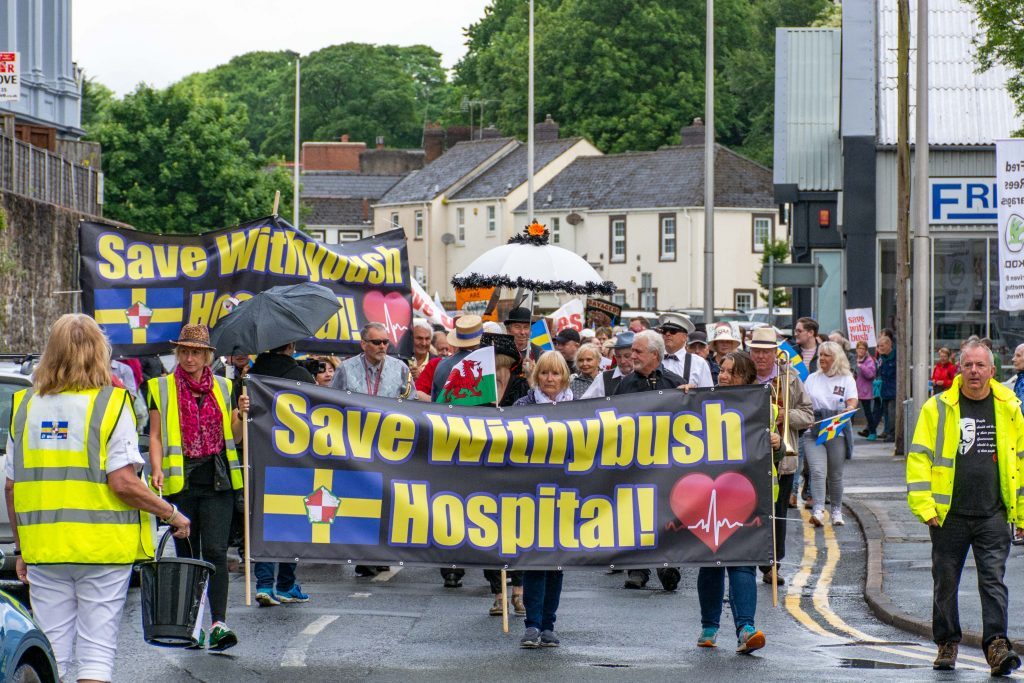
Opposition to the options proposed by the Health Board was predictably strongest when it came to removing services from local hospitals. In Ceredigion, a 16,000-signature petition opposed the removal or reduction of stroke services at Bronglais. In Llanelli, an option to close the Emergency Care Unit drew a negative reaction. In Llandovery, the loss of radiology services garnered a similarly trenchant response. In particular, a large majority of responses rejected proposals to introduce a treat-and-transfer system.
Against that background, it is hardly surprising that Pembrokeshire respondents stood firmly against any further reduction in services provided in the county, and particularly at Withybush. Having experienced the salami-slicing of services away from Haverfordwest, and in the face of repeatedly broken assurances regarding the return of services ‘temporarily’ removed, those reactions are unsurprising. Those feelings are not limited to the public. One staff member was directly quoted in the consultation report claiming that cuts to Withybush were baked into the options the Board presented.
We asked the Board to provide specific reassurance about maintaining current service provision at Withybush and other Pembrokeshire hospitals.
Whether the Board’s response addresses that question, the reader can decide.
“Withybush Hospital will have an important role to play in the health care of the region, and our long-term plan for our hospital sites has been set out in our A Healthier Mid and West Wales strategy. In the interim, our CSP consultation has included our thinking on the role of each of our acute sites. For example, we anticipate that Withybush Hospital will provide more planned care, and initial access to acute care would remain on site, with transfers to Glangwili Hospital for patients with the highest needs.”
PEMBROKESHIRE MSs RESPOND
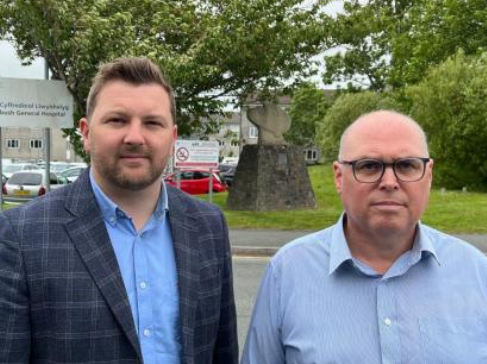
Local Welsh Conservative Senedd Members Paul Davies MS and Samuel Kurtz MS have warned that any decision which undermines the future of A&E services at Withybush Hospital would be “wholly unacceptable”, ahead of a crucial Hywel Dda University Health Board meeting in February.
Paul Davies MS, joined by fellow Welsh Conservative Senedd Member Samuel Kurtz MS, said Withybush Hospital must be protected as a vital lifeline for Pembrokeshire, and that communities are deeply concerned about the potential consequences of the Health Board’s proposals.
Paul Davies MS said: “People in Pembrokeshire are deeply worried about what these proposals could mean for Withybush Hospital. Over many years, we have seen a gradual erosion of services, and communities are understandably anxious that this process will continue.
“Withybush Hospital is not a ‘nice to have’ — it is a vital lifeline for a large, rural population. Any changes must strengthen services in Pembrokeshire, not weaken them. I will not support decisions that place patients at greater risk or force them to travel unreasonable distances for essential care.”
Samuel Kurtz MS added, “People in Pembrokeshire have heard this story before. Time and again, we are told services are fragile, and the result is that Withybush loses out.
“The loss of SCBU, consultant-led maternity and children’s A&E is still deeply felt locally. Removing one service often makes others unviable, and that is exactly what people are worried about now.
“Any decision that threatens the long-term viability of A&E at Withybush Hospital is a red line. It would be wholly unacceptable and would be met with fierce opposition from the community.”
Mr Kurtz also stressed that rurality, transport challenges and ambulance pressures must be central to decision-making, not treated as secondary considerations.
“Pembrokeshire is a rural county. Asking patients to travel further for emergency or urgent care is not a theoretical issue — it affects safety, outcomes, families and staff.
He continued: “There is also deep frustration that these decisions continue to be made in the shadow of the so-called ‘super hospital’ elsewhere in west Wales, which has never come to fruition. Pembrokeshire cannot be left with a slow erosion of services while waiting for something that may not materialise for a decade or more.”
Both Senedd members have written to Hywel Dda University Health Board and the Welsh Government ahead of the February meeting.
Paul Davies MS concluded: “We will be watching the outcome of this meeting very closely. Withybush Hospital is vital to Pembrokeshire. It must be properly supported, not hollowed out.”






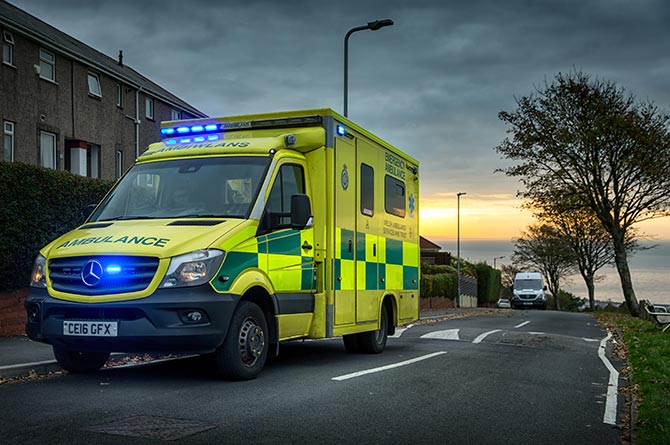
THE WELSH AMBULANCE SERVICE is preparing to host its bi-monthly Board meeting – and the public are invited.
Join the meeting on Thursday 26 March via Microsoft Teams to hear senior leaders cover a full agenda, including approval of the Integrated Medium-Term Plan for 2026-29, which outlines what the organisation will prioritise and deliver, how it will use its resources and how it will continue to improve care for the people of Wales over the next three years.
Board members will approve the initial revenue budget for the year ahead and receive an update on current financial performance.
The Board will also hear from Mr Clarke from Cwmbran, who describes an experience of trying to access help via 999 for his late father who was terminally ill.
There will also be an opportunity to pose a question to the Board.

Chair Colin Dennis said: “Board meetings give you the opportunity to really get to know our ambulance service, with a clear view of how important decisions are shaped and the processes behind them.
“They also create a forum to hear directly about ongoing work, explore how we can strengthen support for the Trust’s staff and patients, and connect with the people responsible for shaping those decisions.”
Click here to watch the Board meeting on Thursday 26 March 2026 from 9.30am.
This link will be active from 10 minutes before the meeting starts.
To pre-submit a question, please email [email protected] by no later than Wednesday 25 March 2026.An agenda will be available on the Trust’s website in the days prior to the meeting.

PHARMACIES across Wales carried out more than 600,000 clinical consultations for a wide range of common health issues over the last twelve months, according to the latest community pharmacy services statistics.
Almost 346,000 people used the Common Ailments Service, which offers free advice and treatment for twenty-seven common conditions and is available in ninety-nine per cent of pharmacies across Wales.
Figures covering April 2024 to March 2025 show that more than 462,000 Common Ailments Service consultations took place during the period – the highest number ever recorded.
The most frequent reasons people sought help from their local pharmacy included sore throats, hay fever, conjunctivitis and dermatitis.
Pharmacies also carried out more than 53,000 consultations specifically for sore throat treatment, around 33,000 consultations for contraception advice and treatment, and over 121,000 consultations to provide emergency supplies of medicines.
During those emergency consultations pharmacists issued more than 189,000 prescription-only medicines to patients who had run out of medication and were unable to obtain a new prescription in time.
In addition to these consultations, pharmacies across Wales dispensed more than eighty million prescription items over the same twelve-month period.
The Common Ailments Service allows people to receive treatment closer to home while helping free up GP appointments for patients with more complex or urgent medical needs.
Health Secretary Jeremy Miles said: “Community pharmacies play a vital role in providing healthcare across Wales.
“Nearly half a million consultations in a single year shows just how much people value being able to walk into their local pharmacy and get the help they need quickly, without having to wait for a GP appointment.
“We are working to ensure more people can receive convenient care closer to home, and expanding access to these services is a key part of that.
“The right care, in the right place, at the right time — that is what people in Wales want, and what our pharmacies are delivering.”


A NEW report has urged the Welsh Government to work more closely with voluntary organisations to ensure communities are better prepared for future emergencies.
The call comes from the Senedd’s Public Accounts and Public Administration Committee, which examined how lessons from the COVID-19 pandemic have shaped Wales’ current emergency planning.
The report highlights the crucial role played by voluntary groups during the pandemic, particularly in supporting vulnerable people and responding quickly to rising community needs.
Clair Swales, Chief Executive of the Powys Association of Voluntary Organisations (PAVO), welcomed the committee’s findings and its recommendation that government bodies strengthen collaboration with the voluntary sector and commissioning organisations.
The recommendation includes making greater use of long-term funding arrangements to support infrastructure investment and improve the sector’s ability to respond to sudden surges in demand during emergencies.
Giving evidence to the committee last November, Swales warned that continued financial pressures across the sector could weaken its ability to respond effectively in future crises.
She said: “If I was asked to bring the third sector together to respond to an emergency at this moment, I could. However, future involvement may become more challenging as the sector continues to face significant financial and capacity pressures.”
The committee’s report, published on Tuesday (Mar 11), explored how the Welsh Government and public bodies responded to the pandemic and what improvements have been made since.
It also considered findings from Module 1 of the UK COVID-19 Inquiry, which examined resilience and preparedness across the UK.
Swales said the report recognises that the work carried out by voluntary organisations during the pandemic came at a significant cost to the sector.
She added: “Evidence from a number of voluntary organisations shows the sector is facing considerable funding and resource challenges.
“We will continue to work with commissioners and the Powys third sector to maximise opportunities, represent the sector’s voice in policy and investment discussions, and ensure rural communities are considered when funding and commissioning services.”

The report has been submitted to the Welsh Government and will be debated by Members of the Senedd during a plenary session on Wednesday (Mar 18).
Powys Association of Voluntary Organisations is the County Voluntary Council for Powys and operates offices in Newtown and Llandrindod Wells.



Sport14 hours ago
France crowned Six Nations champions after extraordinary final-day drama
Ramos penalty in Paris seals title as Ireland fall just short and Wales end losing run FRANCE were crowned 2026...


News18 hours ago
Fishguard linked to allegations in Many Tears Animal Rescue investigation
Claims about puppies arriving through Pembrokeshire port emerge as licensing probe continues FISHGUARD has been named in allegations linked to...

Local Government2 days ago
Investigation confirmed after inspectors visit Many Tears Animal Rescue
Licensing authority declines to comment as police confirm attendance at Carmarthenshire rescue centre AN INVESTIGATION is underway following a visit...


Business3 days ago
Work set to begin on £50m hydrogen plant in Milford Haven
A MAJOR new hydrogen production facility worth around £50 million is expected to begin construction in Milford Haven later this...


Education4 days ago
Manorbier school closure approved while insurance claim still unresolved
Council confirms negotiations with insurer ongoing following 2022 fire PEMBROKESHIRE COUNTY COUNCIL has confirmed that negotiations with its insurer over...


Crime5 days ago
‘Knife attack’ at Spittal property leaves man in hospital
POLICE have arrested a woman following what is being described as a ‘knife attack’ at a property in Spittal on...

Community5 days ago
Pembrokeshire to receive its first banking hub in Pembroke Dock
LINK, the UK’s Cash Access and ATM network, has today announced local people and businesses in Pembroke Dock will benefit from a new banking...

Health6 days ago
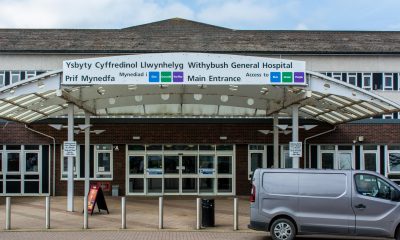
Future of Withybush Hospital petition sparks urgent call for Senedd debate
CALLS have been made for an urgent debate in the Senedd over the future of services at Withybush Hospital as...


Sport7 days ago
Sean Bowen set for historic Welsh clash at Cheltenham Gold Cup
PEMBROKESHIRE jockey Sean Bowen could be part of a historic all-Welsh showdown when he lines up in the Cheltenham Gold...


Community7 days ago
Tenby still waiting as Wales hits 50 rural mobile mast upgrades
Seaside town plagued by signal congestion again absent from latest government-backed coverage improvements A NEW milestone in the UK Government’s...
-

 Health3 days ago
Welsh Ambulance Service to host bi-monthly Board meeting
-
 News2 days ago
Rayner and Lammy visit Wales to discuss justice and community safety
-

 Local Government5 days ago
Register now to vote in May’s Senedd election
-

 Crime7 days ago
Former Pembrokeshire Army officer stripped of MBE after fraud conviction
-
Community7 days ago
Tenby still waiting as Wales hits 50 rural mobile mast upgrades
-
 Community7 days ago
Carmarthenshire woman celebrates 100th birthday surrounded by family
-
Sport7 days ago
Sean Bowen set for historic Welsh clash at Cheltenham Gold Cup
-

 News7 days ago
Hustings to focus on learning disability support ahead of Senedd election