


Local Government
Review launched into winter gritting for north-east Pembrokeshire roads


Council to assess whether salt provision should return to Preseli and higher-ground communities after concerns over closures
PEMBROKESHIRE COUNTY COUNCIL has agreed to review its winter maintenance strategy for roads in the north and north-east of the county, following concerns that higher-ground communities are more vulnerable to snow and ice disruption.
The decision comes after a Notice of Motion was presented by Independent Group Leader, Councillor Huw Murphy, calling for a reassessment of how the authority manages gritting and salt provision in areas north and north-east of the A40, including the Preseli Mountains and communities such as Crymych and Tegryn.
Council officers and Cabinet members acknowledged that these upland areas experience harsher winter conditions than much of the county and are more likely to become impassable during periods of snowfall and icy weather.
The review will also examine the 2022 removal of the auxiliary salt depot previously located near Crymych. If the review concludes that additional provision is required, a replacement salt tip could potentially be reinstated in the north-east, although not necessarily at the former Llanfyrnach site.
The council expects the review to be completed during the second half of 2026.

Councillor Murphy said he welcomed the response from officers and Cabinet, adding that the issue had significant implications for residents, businesses and schools in affected areas.
He said: “The higher ground of north-east Pembrokeshire and areas adjacent to the Preseli Hills are more susceptible to closure during periods of poor weather, especially snow and ice. The potential return of an auxiliary salt tip is something that should be seriously considered and would be welcomed by local communities in helping to keep roads passable during difficult conditions.”
He also referenced the severe weather disruption seen during late 2025, which highlighted the challenges faced by rural communities when key routes become blocked.
Pembrokeshire County Council currently operates three winter maintenance zones across the county, but the review aims to determine whether the existing arrangements provide sufficient resilience for the most weather-exposed areas.

Further details are expected once the assessment work progresses later this year.


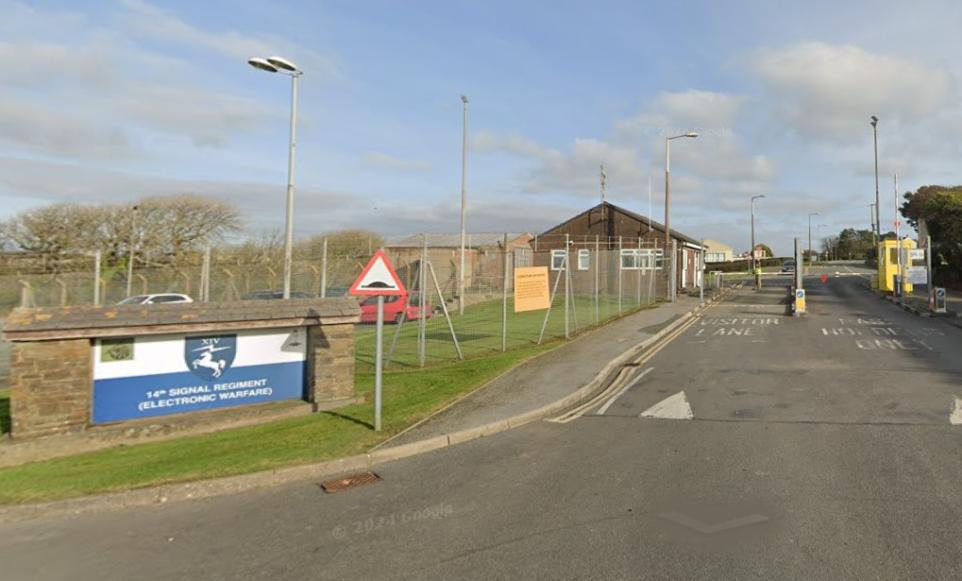
PLANS for specialist MoD air traffic radio direction finding equipment works at Pembrokeshire’s Cawdor barracks, where a ‘DARC’ deep space radar facility is proposed, have been submitted to the council.
Cawdor barracks, Brawdy, is occupied by the 14th Signal Regiment who are due to vacate the Barracks in 2028.
A formal screening opinion call, under Environmental Impact Assessment Regulations, submitted to Pembrokeshire County Council by agent Montagu Evans on behalf of the ministry of Defence (MoD) has been submitted relating to renewal works to be undertaken to the air traffic equipment at Cawdor Barracks.
A supporting statement says: “The Ministry of Defence are progressing a full planning application with associated Environmental Statement for a Deep Space Advanced Radar Capability (DARC) Facility on part of the barracks site.
“ This project has yet to be submitted for approval and is being brought forward independently of the renewal works to the Radio Direction Finder.

“The Cawdor Barracks airfield includes a Directional Finder (DF) which forms part of the service operated under a requirement from the National Air Traffic Services (NATS) and the Civil Aviation Authority (CAA).
“It forms part of the nation-wide system automatic triangulation and distress, and diversion network regulate by the CAA on behalf of NATS. It is located towards the centre of the airfield.
“The network of DF installations is a civilian rather than military requirement, and allows bearing data to be provided to the Distress and Diversion Cell at NATS Swanwick. This is a national service which locates and supports aircraft in distress and manages the diversion of other aircraft.
“The current DF equipment comprises a 0.5m cabinet for electronics, a counterpose mounted the building which holds the ultra-high frequency antennas and a mast upon which the antenna array of 18 antennas is mounted.
“The existing DF equipment is reaching the end of its operational life and must be replaced at a manner which allows for continued operations. It is to be replaced with a High-Resolution Direction Finder (HRDF) which is being managed under the Ministry of Defence’s MARSHALL programme.
The new equipment will allow signals to be received from aircraft up to approximately 90 nautical miles (Nm) from the site, providing maximum coverage of the area through including the Bristol Channel and St Georges Channel.
“The existing DF will remain operational during installation of the new equipment. Once the HRDF is operational, the existing system will be decommissioned and removed from the site. Works are to commence in early 2026 and completed by early 2027.”

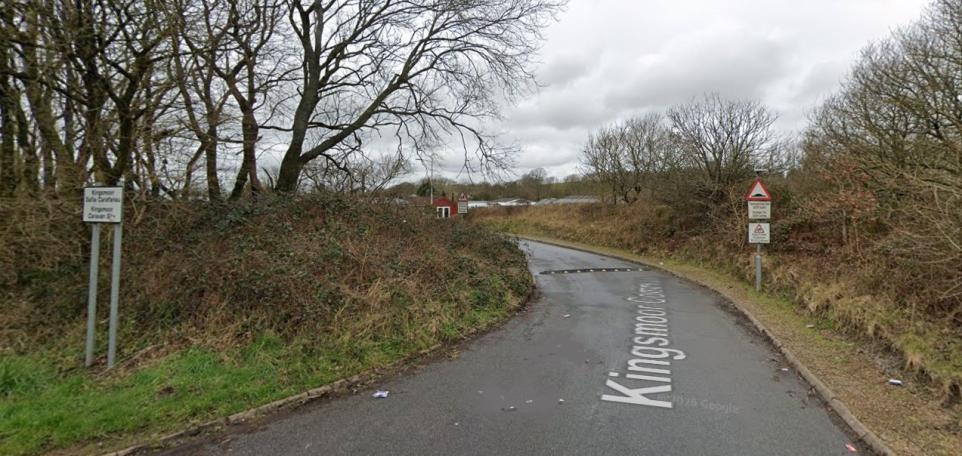
AN INCREASE in pitch fees and sewerage service charges for gypsy and traveller site in Pembrokeshire has been backed by senior councillors.
At the February meeting of Pembrokeshire County Council’s Cabinet, members were asked to back proposed increases in pitch fees and water and sewerage service charges for gypsy and traveller sites for the forthcoming financial year.
Pembrokeshire manages five Gypsy and Traveller sites with 83 pitches, 77 currently occupied at: Castle Quarry, Under the Hills, Kingsmoor, Waterloo (with one tenant) and Withybush.
“Historically in Pembrokeshire, the basis for increases to Gypsy & Traveller pitch rents and water charges has been to uplift charges annually by CPI inflation,” the report said, adding: “The intention is to continue with this approach. However, it is worth noting that rent levels are currently very low in comparison to the cost that is needed to run, maintain and improve the condition of the sites.
“In addition to this, out of the 21 council-run Gypsy and Traveller sites in Wales, Pembrokeshire has one of the lowest pitch rent figures. It therefore stands that PCC must therefore increase pitch fees.”
It says investment to improve the sites is taking place, but more investment is needed, with Welsh Government grant funding having been previously secured, £1.005m for 2024-2027, with £278,585 works completed, £335,004 works ongoing to be completed by March 2026, and a further £848,397 works planned for the next two years.
It said it was intended to continue applying for funding, but, if it was not available it would have to come out of the council’s own coffers.
“Without increases to rent levels plus additional investment, we will see a decline in our site conditions as budgets for maintenance will need to be reduced to meet cost reduction/efficiency targets.”
It says the pitch rents, charged over 48 weeks, are currently £55.45 per week, and £84.24 per week for new pitches in Kingsmoor, for all Pembrokeshire sites with the exception of the Waterloo Site, at £65.62 per week.
It says water and sewerage charges are currently £12.78 per pitch per week (48 weeks) for all sites except Waterloo, at £13.09 per week; in 2024-’25 the full year charges increased to £164,653.06, with £38,905.86, costing the council £125,747.20 for water provision (including sewerage).
“It is estimated that figures for 2025-2026 will see a slight reduction in the subsidisation down to £121,158, but it is recognised that this level of subsidy cannot continue without urgent review of the position.”
Members backed a 3.8 per cent increase in pitch fees to £57.56 for Under the Hills, Castle Quarry and old pitches on Kingsmoor, £87.44 for new pitches on Kingsmoor, and £68.11 for Waterloo.

It also backed water and sewerage charges from £12.78 to £14.24 for Withybush, £16.60 for Kingsmoor, £16.60 for Castle Quarry, and £13.09 for Waterloo to £60, the high cost of the latter currently being investigated.
Local Government
Ex-councillor Brian Rothero disqualified for three years after code breaches upheld
Second tribunal sanction in weeks deepens long-running town council turmoil
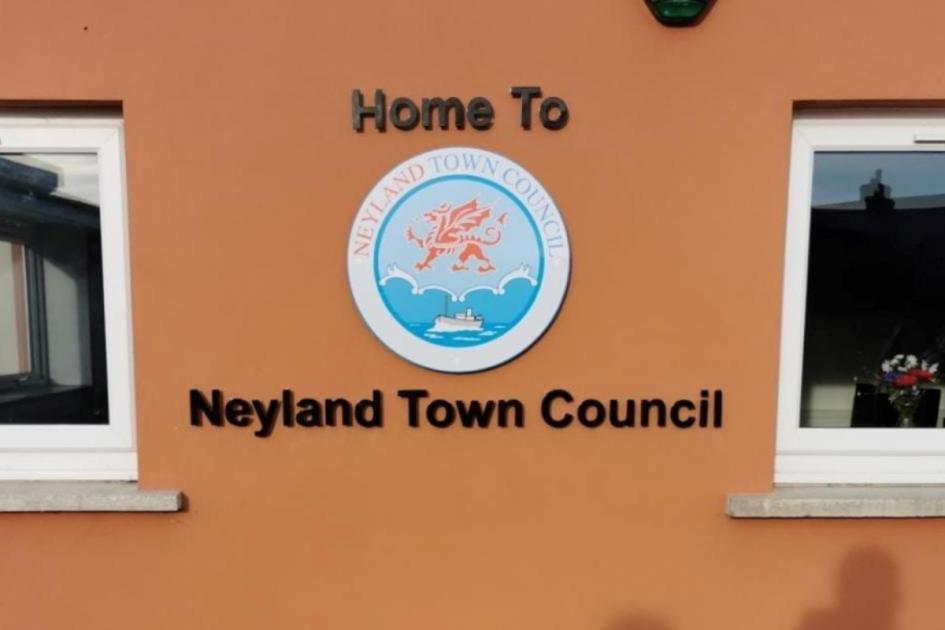
A FORMER Neyland town councillor has been banned from holding public office for three years after an Adjudication Panel for Wales tribunal found he breached multiple provisions of the authority’s Code of Conduct.
Brian Rothero, who resigned from Neyland Town Council in 2025 while the investigation was ongoing, was disqualified following a remote hearing held on Wednesday (Feb 12).
The panel ruled unanimously that Mr Rothero had failed to show respect and consideration towards the council’s clerk and fellow councillors, had engaged in behaviour amounting to bullying or harassment, and had acted in a way that could bring his office or the authority into disrepute.
The sanction prevents him from acting as a councillor in any relevant authority in Wales until early 2029.
The case arose from four complaints referred by the Public Services Ombudsman for Wales between September 2023 and March 2024.
Tribunal findings
According to the Notice of Decision, the panel found breaches of:
- Paragraph 4(b) — failure to show respect and consideration
- Paragraph 4(c) — bullying or harassment
- Paragraph 6(1)(a) — bringing the office into disrepute
- Paragraph 6(1)(d) — making vexatious or inappropriate complaints
The tribunal concluded Mr Rothero had communicated with the council clerk and colleagues in a manner inconsistent with the standards expected of elected members.
The hearing was conducted remotely via Microsoft Teams and proceeded largely on written submissions rather than oral witness evidence.
The panel was chaired by Judge Meleri Tudur, sitting with members Ms S Hurds and Mrs S McRobie.
Mr Rothero has the right to seek permission to appeal to the High Court, although no appeal has yet been confirmed.
Rothero disputes findings
Speaking to The Pembrokeshire Herald on Monday (Feb 16), Mr Rothero rejected the bullying allegations and said his actions consisted of emails raising concerns about council administration.
“I wasn’t bullying anyone — I was trying to get answers and get things done,” he said.

He argued that frustration arose because of what he described as repeated non-responses to issues he raised.
Mr Rothero also questioned the fairness of the process, noting that his hearing took place on papers without witnesses, unlike the recent two-day in-person tribunal involving former councillor David Devauden.
Procedural differences between the two cases may form part of any future appeal.
Long-running tensions
The ruling is the latest development in years of conflict within Neyland Town Council, which has generated an unusually high number of standards complaints compared with other community councils in Pembrokeshire.
Mr Rothero previously faced a standards investigation relating to the Neyland Community Hub project nearly a decade ago, resulting in a censure in 2018.
More recent disputes have centred on relationships between councillors and the town clerk, with leaked correspondence revealing frustrations on multiple sides over workload, communication and expectations.
The Herald understands that interpersonal tensions within the authority have contributed to resignations and ongoing governance difficulties.
Perception of influence
Observers have also noted that official council communications are frequently issued under a collective sign-off placing the clerk’s name before the mayor and councillors — a format that has contributed to perceptions among some members and residents about where day-to-day influence within the council sits.
Legally, elected councillors remain the decision-making body, with the clerk acting as the authority’s senior officer and adviser.
Wider context
Mr Rothero’s disqualification follows the recent four-year ban imposed on former councillor David Devauden in a separate but related case involving similar allegations.
Together, the decisions underline the scale of governance challenges that have affected Neyland Town Council in recent years.
Community councils rely heavily on volunteer elected members supported by a small number of paid staff, usually one clerk, a structure that can magnify personality clashes and operational pressures when relationships break down.
The full written reasons from the Adjudication Panel for Wales are expected to be published in due course.
For Neyland Town Council, the latest ruling closes another chapter in a prolonged period of internal conflict, although questions remain about whether deeper structural issues within the authority have been resolved.
The Herald will continue to monitor developments.



Business6 minutes ago
Tug crews at Milford Haven vote for industrial action in pay dispute
Union ballot raises concerns over potential disruption at key UK energy port TUG crews working in the Port of Milford...


Crime10 hours ago
Pembroke Dock raids: One man in court today as three released on bail
Update follows major Gordon Street operation reported on Friday ONE man is due to appear in court today (Monday, Feb...


Local Government11 hours ago
Ex-councillor Brian Rothero disqualified for three years after code breaches upheld
Second tribunal sanction in weeks deepens long-running town council turmoil A FORMER Neyland town councillor has been banned from holding...


News1 day ago
Sea Empress: 30 years since the grounding that transformed safety in Milford Haven
Human error, storm conditions and salvage decisions combined in one of Britain’s worst maritime disasters THIRTY years ago this week,...


Health2 days ago
NHS pay row erupts as ministers confirm 3.3% rise
Unions warn award amounts to real-terms cut as inflation remains above headline figure NHS staff across Wales will receive a...

Crime3 days ago
Governors defend leadership at Milford Haven School after stabbing incident
GOVERNORS at Milford Haven Comprehensive School have issued a public statement responding to concerns about leadership and staffing following last...


Crime3 days ago
Four arrested in armed police operation across Pembroke Dock
Firearms, drugs and GBH suspects detained as pre-planned raids hit Bush Street and Gordon Street A MAJOR armed police operation...


News3 days ago
Climber dies and two injured in St Govan’s Head fall
Major air and sea rescue launched as coastguard, lifeboat and helicopters scramble to Pembrokeshire cliffs A PERSON has died and...


Education3 days ago
School in special measures after inspectors raise safeguarding and leadership concerns
Estyn orders urgent action plan and regular monitoring at Pembroke secondary A PEMBROKESHIRE secondary school has been placed into special...
Crime3 days ago
Armed police arrest man after major operation in Pembroke Dock
Firearms officers, dog units and roadblocks deployed on Gordon Street as Dyfed-Powys Police investigate ARMED officers sealed off part of...
-

 Health5 days ago
Health Board to decide future of nine key services at two-day meeting
-

 Community6 days ago
Facebook ‘news’ site targeting Herald editor collapses after community backlash
-
Crime3 days ago
Four arrested in armed police operation across Pembroke Dock
-

 Community18 hours ago
Hywel Dda hospital services decisions will be made next week
-

 Crime6 days ago
Publican admits supplying cocaine and cannabis at Crown Court
-
Education3 days ago
School in special measures after inspectors raise safeguarding and leadership concerns
-

 Community2 days ago
Second Milford Haven webcam launched after 1.3m views and US TV feature
-

 Community6 days ago
Students win King’s Trust award for transforming vandalised subway