


international news
Can Starmer keep Britain out of a wider war?

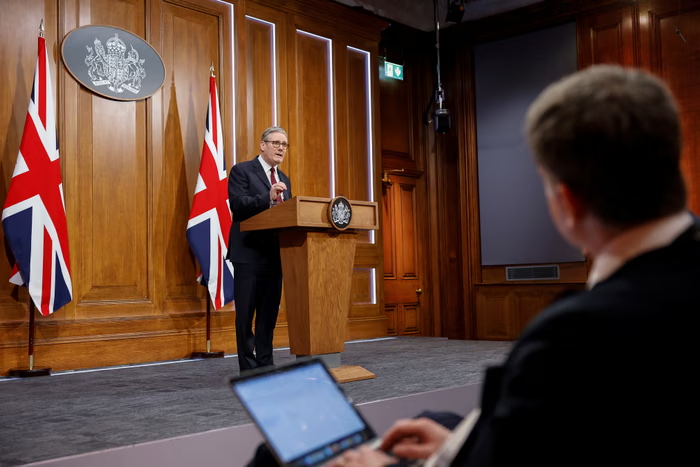
PRIME MINISTER Keir Starmer is walking an increasingly delicate diplomatic tightrope as tensions in the Middle East threaten to spill into a broader international conflict.
Speaking at a press conference on Monday (Mar 16), Starmer repeatedly declined to be drawn into speculation about military escalation, stressing that any potential effort to reopen the strategic Strait of Hormuz would not be a NATO operation but rather “an alliance of partners”.
The narrow waterway between Iran and Oman is one of the most important shipping routes in the world, with around a fifth of global oil supplies passing through it.
Recent tensions in the region have raised fears that disruption there could trigger a major international crisis.
But Starmer’s message was clear: Britain will support efforts to keep trade routes open while avoiding being pulled into a full-scale conflict.

When asked directly about comments made by former US President Donald Trump suggesting NATO allies should help reopen the strait, Starmer refused to engage in the escalating rhetoric.
Instead, he emphasised diplomacy and cooperation.
“It’s not straightforward,” the Prime Minister said, adding that discussions with international partners were ongoing.
Observers noted that Starmer also avoided responding to speculation about potential military commitments, a move widely interpreted as an attempt to prevent Britain being boxed into a position before negotiations with allies are complete.

Relations with Washington
Starmer was also pressed by journalists about his relationship with Donald Trump, who has been increasingly critical of some NATO allies.
Asked to rate their relationship on a scale of one to ten, the Prime Minister said simply that it was “a good relationship”.
“We’re strong allies and have been for decades,” he said, adding that his responsibility was always to act “in the best interests of Britain”.

Despite the diplomatic language, the exchange underlined the growing pressure facing the UK government as global tensions rise.
The United States has been urging partners to support efforts to secure key shipping routes, while some European leaders remain cautious about the risks of escalation.
Energy and economic stakes
The stakes are not purely military.
Any disruption to shipping through the Strait of Hormuz could have immediate consequences for global energy markets, pushing up fuel costs and inflation.
That prospect is already weighing heavily on governments across Europe.
At the same press conference, Starmer announced new financial support for households struggling with rising heating costs and outlined plans to strengthen regulation of the heating oil market.
The move was widely seen as preparation for potential energy price shocks linked to instability in the Middle East.
A careful balancing act
For Starmer, the challenge now is balancing Britain’s commitments to international allies with a public that remains wary of overseas military entanglements after conflicts in Iraq and Afghanistan.
So far, the Prime Minister appears determined to keep the UK involved diplomatically while resisting pressure to escalate militarily.
Whether that position can hold if tensions in the region worsen remains the key question facing Downing Street.
For now, Starmer’s strategy is clear: support allies, protect global trade routes — but avoid sliding into a wider war.

Ministers confirm talks with allies after Donald Trump calls on Britain to help protect vital oil shipping route
THE UK GOVERNMENT is examining “all options” to help secure the Strait of Hormuz as tensions in the Middle East threaten one of the world’s most important oil routes.
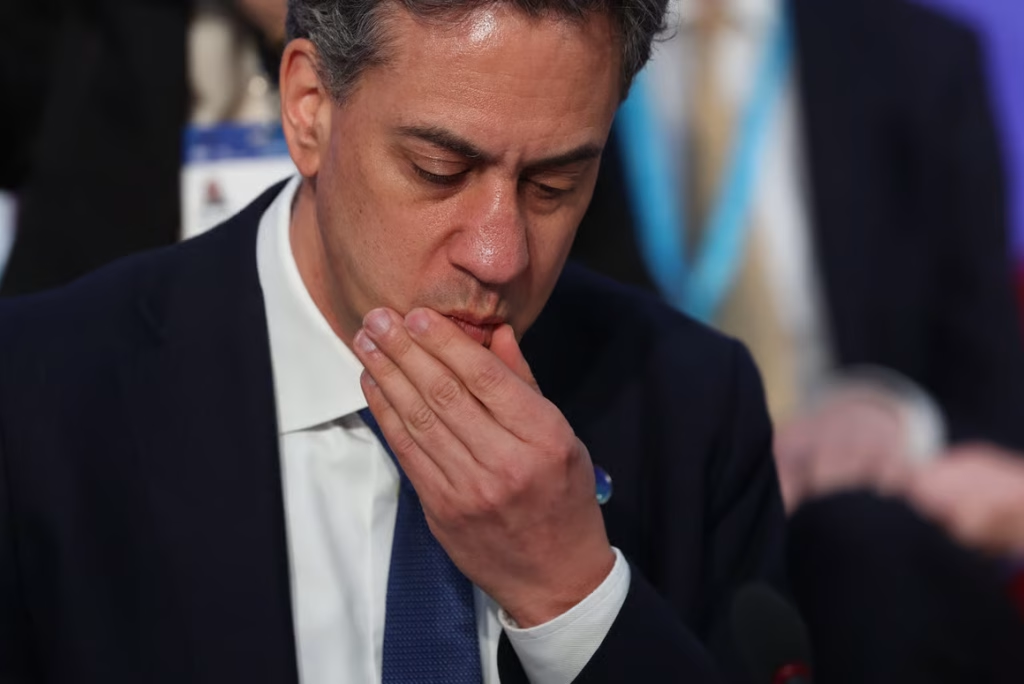
Energy Secretary Ed Miliband said Britain is already in discussions with allies, including the United States, about how to restore safe navigation through the narrow shipping corridor, through which around one fifth of the world’s oil supply passes.
Speaking on BBC One’s Sunday with Laura Kuenssberg, Miliband said reopening the strait was a global priority but stressed the government favours de-escalation rather than military confrontation.
“It is very important that we get the Strait of Hormuz reopened,” he said. “We are in talks with allies about how to secure that key shipping route. Any options to help the Strait reopen are being looked at.”
The comments come after US President Donald Trump called on several major powers — including the UK, France, Japan, South Korea and China — to send warships to the region to ensure the vital oil corridor can no longer be threatened by Iran.
The escalating conflict between the US, Israel and Iran has already led to attacks on shipping in the Gulf, raising fears that Tehran could attempt to block or severely disrupt the strait.
Political divisions in Westminster
The prospect of British military involvement has exposed sharp political divisions in Westminster.
Shadow energy secretary Claire Coutinho said the UK should explore deploying ships or surveillance drones to the region if doing so would protect Britain’s national interests.
She argued that keeping international shipping lanes open and protecting military assets abroad was vital for global stability and the UK economy.

However, Liberal Democrat leader Ed Davey warned Britain should not automatically follow Washington into another conflict.
He said the quickest way to stabilise oil markets and secure the route was through diplomatic de-escalation rather than military intervention.
Davey also criticised President Trump’s approach to the crisis, warning the UK should not be “at the beck and call” of an American president.
Global oil supply at risk
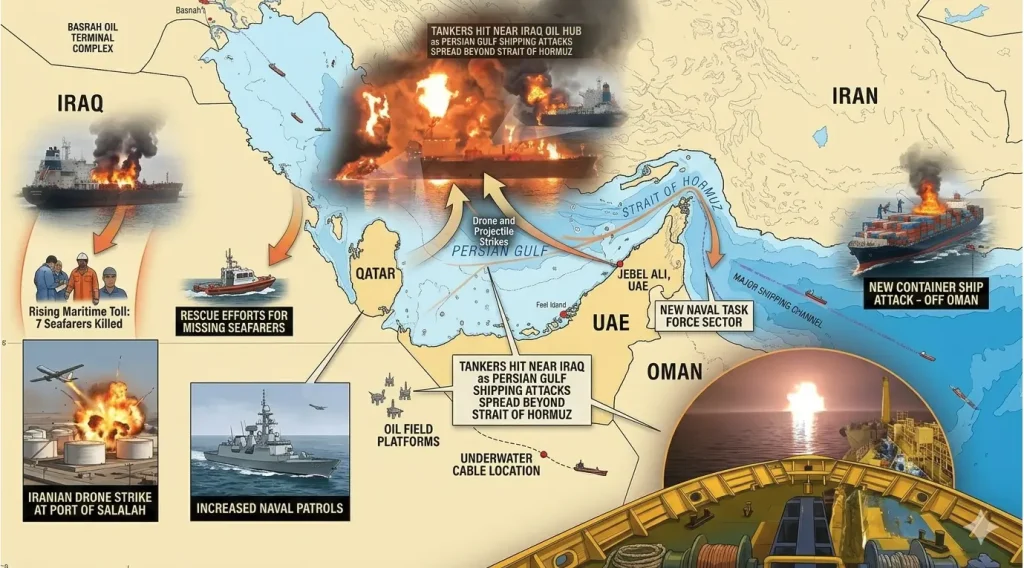
The Strait of Hormuz is widely regarded as one of the most strategically important shipping routes in the world.
Bounded by Iran to the north and Oman and the United Arab Emirates to the south, the narrow channel connects the oil-rich Gulf region to the Arabian Sea and global markets.
Around 3,000 vessels pass through the strait every month, carrying an estimated 20 million barrels of oil per day.
Any prolonged disruption could send global oil prices soaring and drive up fuel and energy costs in countries including the UK.
Government sources have warned the economic impact of the Middle East conflict could be “huge”, with ministers already examining measures to shield households and businesses from potential spikes in energy prices.
The developments are being closely watched in Pembrokeshire, home to the South Hook and Dragon LNG terminals at Milford Haven. Tankers carrying Qatari liquefied natural gas frequently pass through the Strait of Hormuz before reaching the UK, meaning any disruption in the Gulf could have implications for energy supplies and prices in Wales.
For now, the government insists diplomacy remains the preferred path — but with tensions rising and pressure from Washington increasing, Britain may soon face difficult choices about how far it is willing to go to secure the world’s most critical oil chokepoint.
STRAIT OF HORMUZ CRISIS
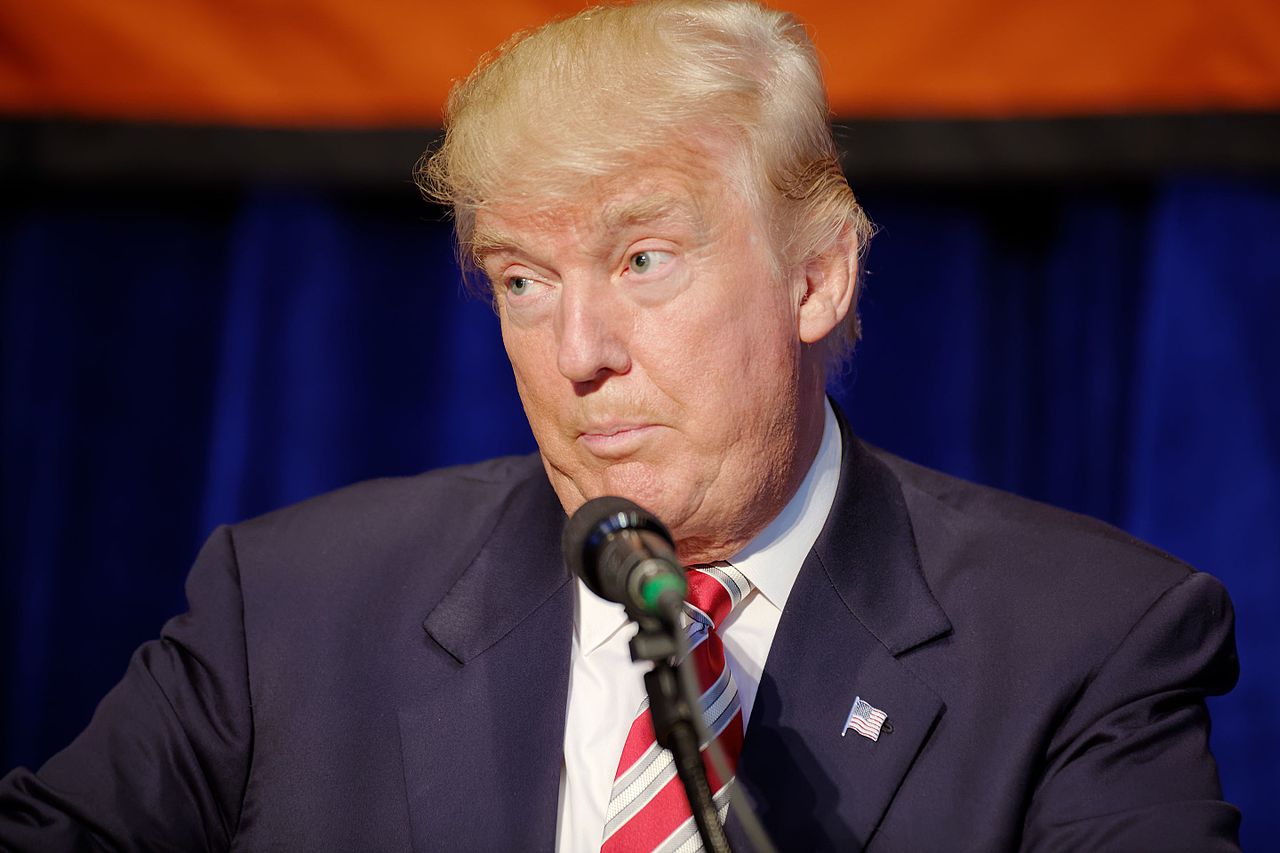
US President Donald Trump has urged the United Kingdom to send warships to the Middle East to help secure the Strait of Hormuz as Iran’s retaliation in the ongoing conflict continues to disrupt one of the world’s most critical oil routes.
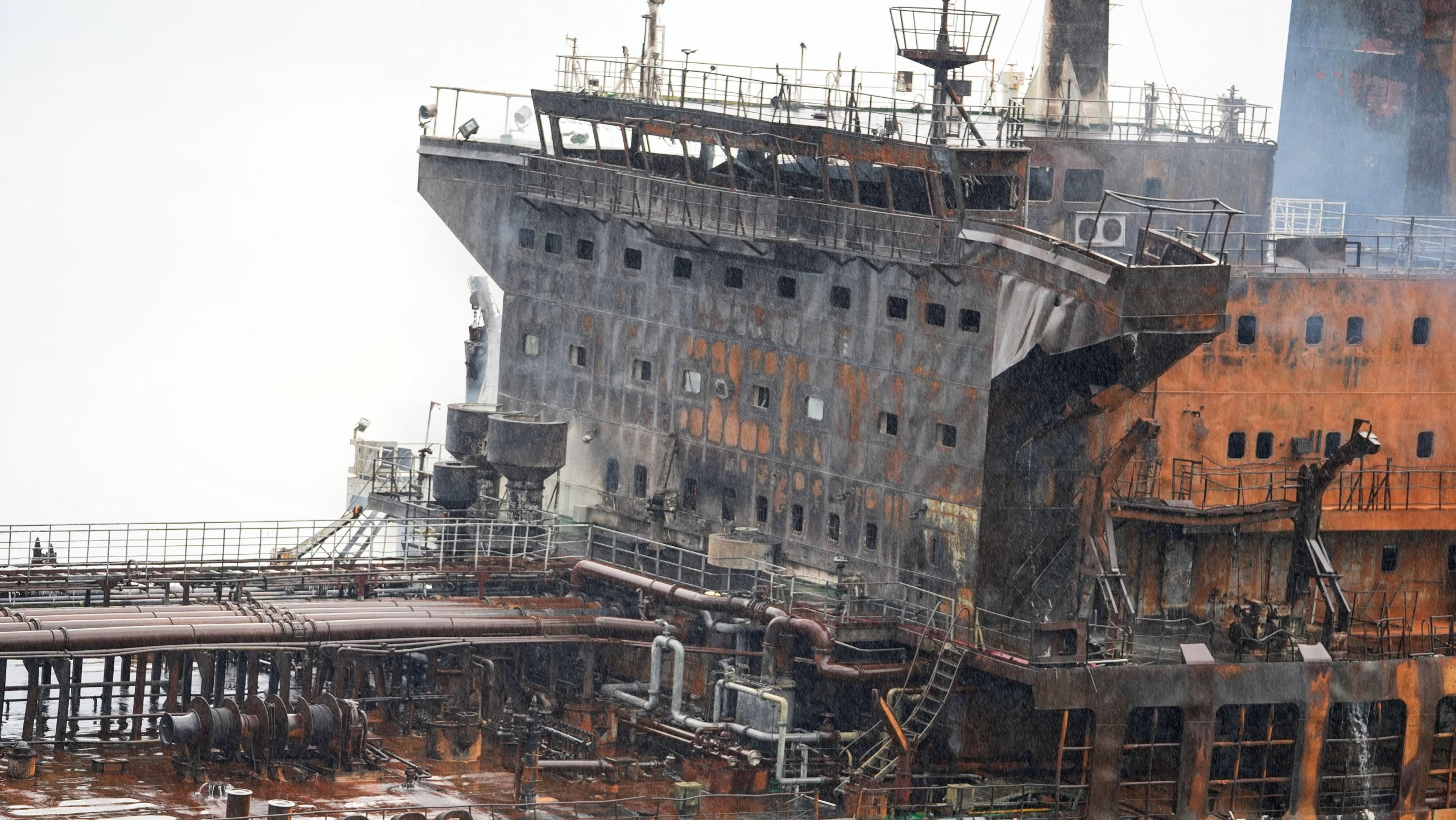
The call comes as shipping through the narrow waterway has effectively ground to a halt following missile, drone and mine attacks linked to the escalating war. Analysts say tanker traffic through the strait has fallen sharply since the fighting began.
Located between Iran and Oman, the Strait of Hormuz is the most important oil chokepoint on the planet. Normally around 20 million barrels of oil per day – roughly one fifth of global supply – pass through the route.
Since the war began in late February, numerous vessels have reportedly been damaged or forced to turn back, while many more have anchored outside the Gulf waiting for the situation to stabilise.
In practical terms, analysts say Iran has been able to use geography to exert enormous leverage over global energy markets.
“Iran cannot permanently close the Strait of Hormuz, but it doesn’t have to,” one maritime security expert said. “If tankers refuse to sail because of the risk of mines, drones or missiles, the effect is almost the same.”
President Trump said Western allies must act together to protect the shipping lanes.
“The UK should be sending warships to help secure the Strait of Hormuz,” he said, calling for an international effort to keep the route open.
The appeal places pressure on the British government to decide whether it will increase its naval presence in the region as tensions escalate.
Britain already maintains naval forces in the Middle East as part of maritime security operations aimed at protecting international trade.
However, the scale of the current disruption has raised fears of a major global energy shock.
Oil prices have surged as markets react to the sudden loss of shipments from the Gulf, with analysts warning that prolonged disruption could trigger wider economic consequences.

The conflict has also exposed the strategic advantage Iran holds through its position along the Strait of Hormuz.
Even without a formal blockade, threats from missiles, naval mines and fast-attack craft have been enough to deter much of the commercial traffic.
For now, Tehran appears able to exert pressure on the global economy simply by making the waterway too dangerous for ships to use.
That reality is now forcing governments around the world to consider military options to reopen the route – a move that could risk drawing more countries into an already widening conflict.
With energy markets rattled and tanker traffic stalled, the struggle for control of one of the world’s most vital maritime passages is rapidly becoming a defining front in the war.
THE UK GOVERNMENT has urged its international partners to maintain pressure on Russia after the United States eased sanctions on some shipments of Russian oil already moving through global markets.
Downing Street said Britain would not follow the US move and insisted sanctions remain a key tool in limiting Moscow’s ability to fund its war in Ukraine.
The US Treasury confirmed that certain cargoes of Russian oil already in transit would be allowed to continue to their destinations. Officials described the step as a “targeted, short-term measure” designed to help stabilise global energy markets during rising geopolitical tensions.
The announcement comes as oil prices surge amid escalating conflict in the Middle East. Iran has threatened further disruption to shipping through the Strait of Hormuz — one of the world’s most important oil transport routes — following ongoing US-Israeli strikes in the region.
Attacks on energy infrastructure in Gulf states have also contributed to uncertainty in global supply.
A spokesman for Prime Minister Sir Keir Starmer said the UK’s position remains firm.
“All partners should maintain pressure on Russia and its war chest,” the spokesman said.
“Our support for Ukraine is degrading Russia’s ability to wage war, both militarily and financially.”
Energy Minister Michael Shanks also stressed that sanctions remain critical to weakening Russia’s ability to sustain the conflict.

“This is an absolutely critical moment in the Russian aggression against Ukraine and sanctions are important,” he said.
“What we cannot have is Putin sitting in the Kremlin thinking this is an opportunity to invest more in the war machine.”
European leaders have also expressed concern about any relaxation of sanctions. German Chancellor Friedrich Merz said easing restrictions now would be “wrong”, while French President Emmanuel Macron warned tensions in the Middle East should not become a reason to soften measures against Russia.

Ukraine’s president Volodymyr Zelensky previously warned that easing sanctions would be a “serious blow” to Ukraine and could allow Russia to strengthen its military capabilities.
Milford Haven connection
The issue carries particular significance in Pembrokeshire because of the role the Port of Milford Haven plays in the UK’s energy infrastructure.
In the early days following Russia’s invasion of Ukraine in 2022, vessels carrying Russian fuel became the focus of controversy across Europe.
One tanker transporting Russian diesel that had been expected to unload in Milford Haven was later diverted to Antwerp amid political pressure and uncertainty over sanctions.
Another vessel carrying Russian crude did berth in the Milford Haven Waterway and unload at the Valero refinery terminal before the UK introduced a full ban on Russian oil imports later that year.
Across the UK, some energy workers refused to handle Russian cargoes during the early stages of the conflict, forcing certain tankers to divert to other European ports.
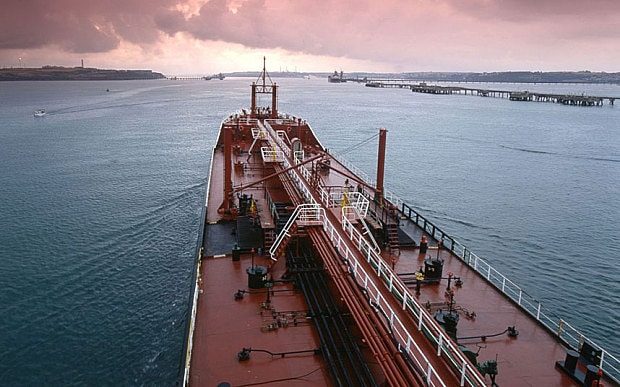
Large oil tankers arriving in Milford Haven berth at deep-water terminals and refinery jetties along the waterway rather than traditional docks, allowing the port to handle some of the largest vessels operating in European waters.
The waterway remains one of the UK’s most important energy hubs, handling crude oil, refined fuel products and liquefied natural gas imports.
Impact on fuel prices
The rising price of oil is already feeding through to motorists and households, with petrol prices climbing and heating oil costs increasing in recent weeks.
Energy Secretary Ed Miliband warned that regulators would intervene if energy companies attempt to exploit the situation by raising prices excessively.
“We will not tolerate rip-offs,” he said, adding that the competition watchdog is ready to act if necessary.
Opposition parties have meanwhile called on the government to cancel a planned increase in fuel duty scheduled for September if the crisis continues.
With tensions rising both in Eastern Europe and the Middle East, ministers say global energy markets could remain volatile for some time — with potential consequences for fuel costs and supply security across the UK.



Education12 minutes ago
New facilities open at Portfield School as redevelopment reaches key milestone
THE FIRST phase of a major redevelopment programme at Portfield School in Haverfordwest has been completed, marking a significant step...


News57 minutes ago
£377m spent saving blast furnaces months after Port Talbot closure
Government intervention keeps UK’s last primary steelmaking furnaces running THE UK GOVERNMENT spent £377 million to prevent the closure of...


Sport21 hours ago
France crowned Six Nations champions after extraordinary final-day drama
Ramos penalty in Paris seals title as Ireland fall just short and Wales end losing run FRANCE were crowned 2026...

News1 day ago
Fishguard linked to allegations in Many Tears Animal Rescue investigation
Claims about puppies arriving through Pembrokeshire port emerge as licensing probe continues FISHGUARD has been named in allegations linked to...


Local Government2 days ago
Investigation confirmed after inspectors visit Many Tears Animal Rescue
Licensing authority declines to comment as police confirm attendance at Carmarthenshire rescue centre AN INVESTIGATION is underway following a visit...

Business3 days ago
Work set to begin on £50m hydrogen plant in Milford Haven
A MAJOR new hydrogen production facility worth around £50 million is expected to begin construction in Milford Haven later this...


Education4 days ago
Manorbier school closure approved while insurance claim still unresolved
Council confirms negotiations with insurer ongoing following 2022 fire PEMBROKESHIRE COUNTY COUNCIL has confirmed that negotiations with its insurer over...


Crime5 days ago
‘Knife attack’ at Spittal property leaves man in hospital
POLICE have arrested a woman following what is being described as a ‘knife attack’ at a property in Spittal on...


Community5 days ago
Pembrokeshire to receive its first banking hub in Pembroke Dock
LINK, the UK’s Cash Access and ATM network, has today announced local people and businesses in Pembroke Dock will benefit from a new banking...


Health6 days ago
Future of Withybush Hospital petition sparks urgent call for Senedd debate
CALLS have been made for an urgent debate in the Senedd over the future of services at Withybush Hospital as...
-

 Health3 days ago
Welsh Ambulance Service to host bi-monthly Board meeting
-

 News2 days ago
Rayner and Lammy visit Wales to discuss justice and community safety
-

 Local Government5 days ago
Register now to vote in May’s Senedd election
-

 Crime7 days ago
Former Pembrokeshire Army officer stripped of MBE after fraud conviction
-

 Community7 days ago
Tenby still waiting as Wales hits 50 rural mobile mast upgrades
-

 Community7 days ago
Carmarthenshire woman celebrates 100th birthday surrounded by family
-

 Community7 days ago
Funding event to support churches, chapels and graveyards
-
News1 day ago
Fishguard linked to allegations in Many Tears Animal Rescue investigation