


News
Sainsbury’s gets the green light

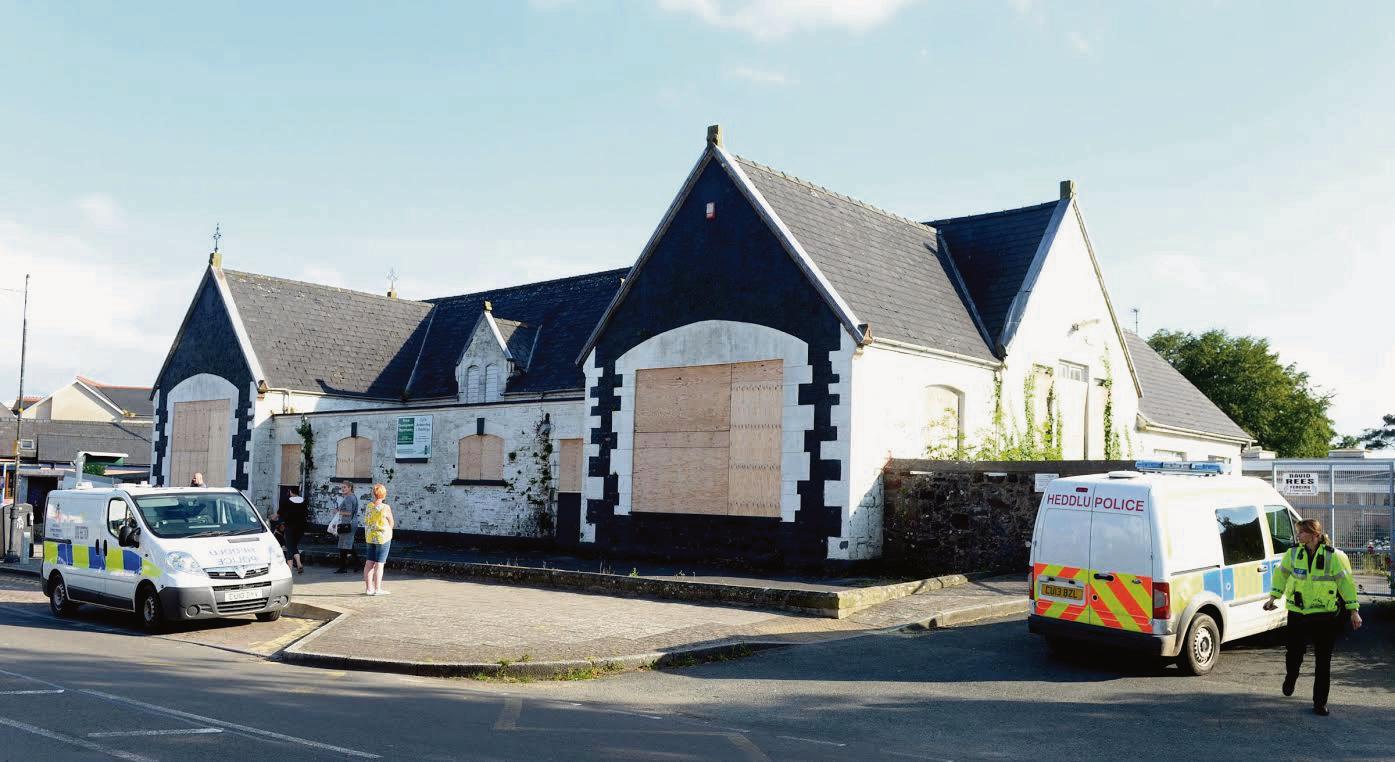

Local eyesore: To be replaced by new retail unit.
CONTROVERSIAL plans to for the development of a new retail unit in Narberth have been given the green light by Pembrokeshire County Council (PCC).
In a planning meeting of this week the application, put forward by Abbeymore Estates, was voted for unanimously by the county councillors as the fight by Narberth traders to prevent a Sainsbury’s convenience store opening seems to have failed.
Speaking on behalf of the developers, Gareth Davies spoke to the committee, saying: “We made a successful in bid in October 2013 and our success was based on the quality of the scheme in conjunction with the Authority. The aspirations of the Authority were to turn the partly derelict school into a high quality mixed retail and residential development. The key words are vitality and commercial strength which are our guiding principles in order to revitalise the northern end of town providing colour and visual interest. The scheme is of a high quality using traditional materials to compliment the local townscape and conservation area. The access route-way will be enhanced with a new and reconfigured car park that will improve existing provision, replacing the temporary parking with 50 permanent spaces. The retail units have been designed to meet the aspirations of Narberth’s niche retail offer, but more aligned with the demands of 21st century retail. It has been done in accordance with PCC planning strategy and with the planning department and other local departments.”
Gordon Barry was due to comment on behalf of the Narberth Future Forum (NFF) group, objecting to the proposals, but had to pass his statement over to Town Councillor Moorcross, after health issues forced him to leave the proceedings. In summary the statement read that there were apprehensions with regards to the development, chiefly the concern of the loss of parking. The NFF said that the developer says there would be a net loss of 20 spaces, but that that didn’t take into account additional parking demand for employees of the new retail park. The statement went on to say that parking was at a premium in Narberth and there needed to be additional parking and this demand should be addressed. The statement also said that the current mix of independent shops was not enhanced from the proposed retail development. The NFF also raised concerns over the loss of the old playground area, currently a temporary parking area, that has, it said, been enjoyed by the community for events and festivals over many years.
Town Councillor Moorcross then spoke himself on behalf of the town stating that there had been just one presentation to the Town Council from the developers in April of 2014 and that no meaningful consultation or true dialogue had taken place since then. He further stated that Narberth offered a renowned ‘quality shopping experience’, and that this new development would take away the ‘essence’ that he said presently exists. He finished by stating that a local Sainsbury’s could not be described as ‘small’ if it had a floor area of 4000 square metres and was offering the same fare as local stores, stating this would not be ‘complimentary’ to the town’s current retail provision.

Narberth County Councillor, Wynne Evans, spoke in favour of the application, stating: “I am very proud of Narberth and what has been achieved there over many years. We have an old school building – empty for 5 years – which is a source for vandalism and graffiti. It’s not good for the town, it’s frowned upon and it’s right at the entrance to Narberth. The housing allocation provides 14 affordable houses for people with a local connection who live in Narberth. They need to be in the town and have their children go to school in the town. There are lots of opportunities to look at possibilities of new sites in Narberth (in relation to extra parking) and to move forward and work together. We must invest in the future and in Narberth. I am looking for a small supermarket with some retail units and housing, and I have put together, in the last few weeks, a new working party. Narberth is growing and growing, but we must move forward.”
Simon Montgomery, opinions editor at ‘OneNarberth’, an independent community platform for the town, said after the result: “The development will mark the most significant re-alignment of the town for a generation. The issue at stake with regard to the development is the question of accountability. I agree with what Gordon Barry, the secretary of the Narberth Future Forum has said. He explained his dismay about the lack of any community consultation. From talking to a number of key stakeholders in the town today, it is clear that along with dismay, there is also a degree of shock about the outcome of the development process. Perhaps a legal challenge will now follow. Exactly what will happen next is yet to be seen. The majority of people that I have talked to today about the matter agree that what seems certain is that the voice of the town will now be heard. What is remarkable, given the significance of the development to the town and its future, is that there has been no public consultation of any description.”

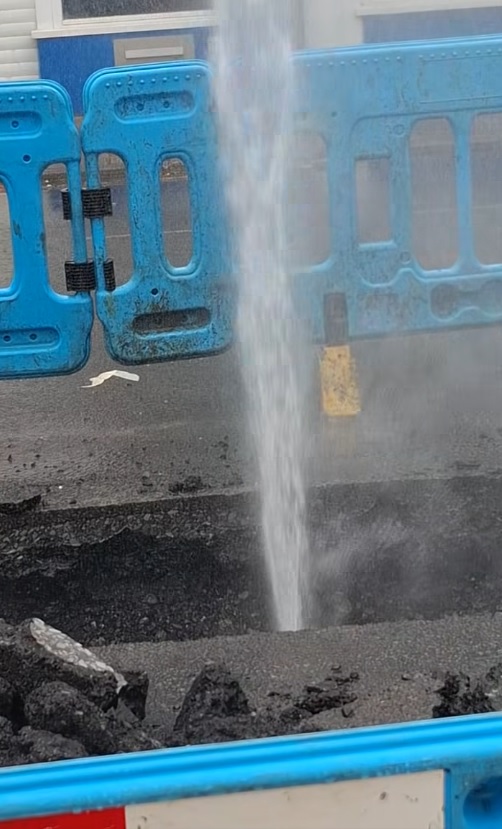
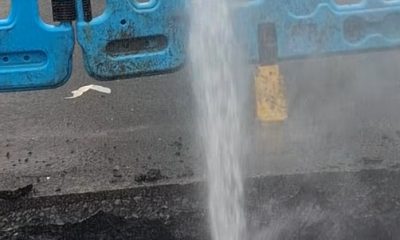
Water shot several metres into the air from an excavated section of West Street as crews worked behind safety barriers
A HUGE burst water main sent a towering jet of water into the air in the centre of Fishguard on Monday afternoon (July 27).
Photographs show water surging several metres into the air on the Golden Mile.
The road surface had been opened and the area surrounded by barriers, with an excavator and repair equipment at the scene. Broken sections of tarmac could be seen around the large excavation as water continued to pour from the damaged main.
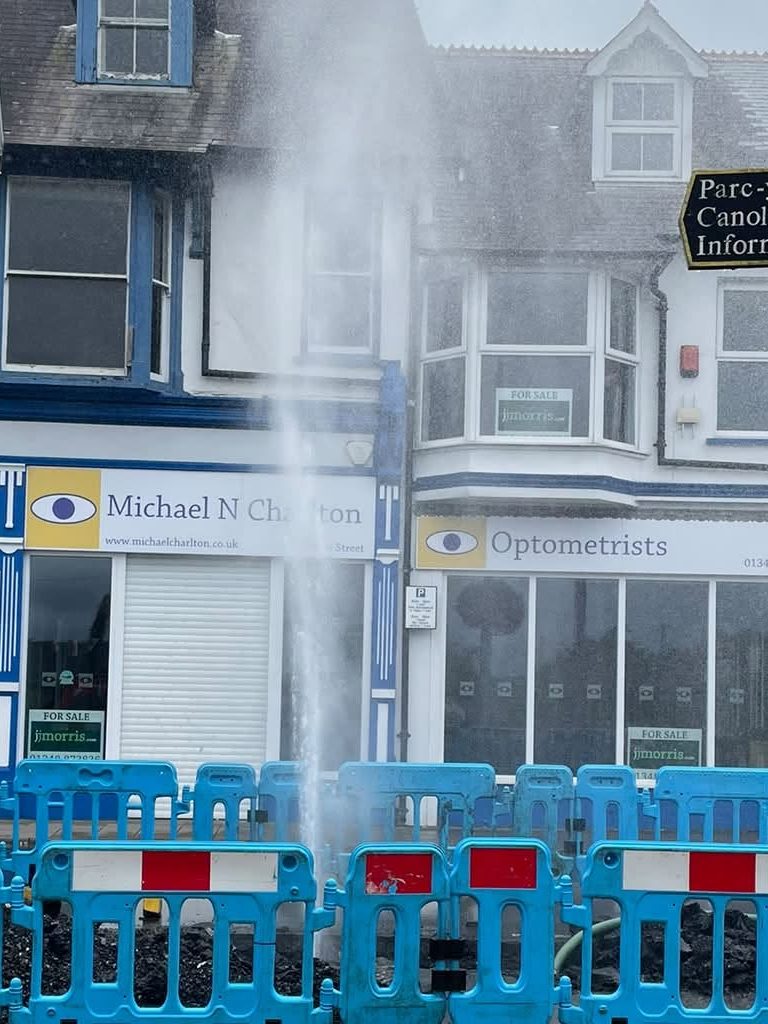
The incident comes just eight days after Dŵr Cymru Welsh Water introduced temporary hosepipe restrictions across parts of west Wales because of exceptionally high demand for treated drinking water.
The ban affects around 33,000 properties, including communities in north Pembrokeshire such as Crymych, Eglwyswrw, Nevern, Newport, Llanfyrnach, Tegryn and Star. Fishguard itself is not currently included in the company’s published list of restricted areas.
Welsh Water said the restrictions were introduced because demand had risen to around one billion litres a day, approximately 20 per cent above the level normally expected. It stressed that the immediate problem was the ability to treat, pump and distribute water quickly enough, rather than a shortage in reservoirs.
The sight of such a substantial volume of water escaping from the network is nevertheless likely to cause frustration among residents who have been urged to conserve supplies during the prolonged hot and dry weather.
Community
Wales wildfire crisis sparks calls for Senedd recall as crews battle blazes into second week
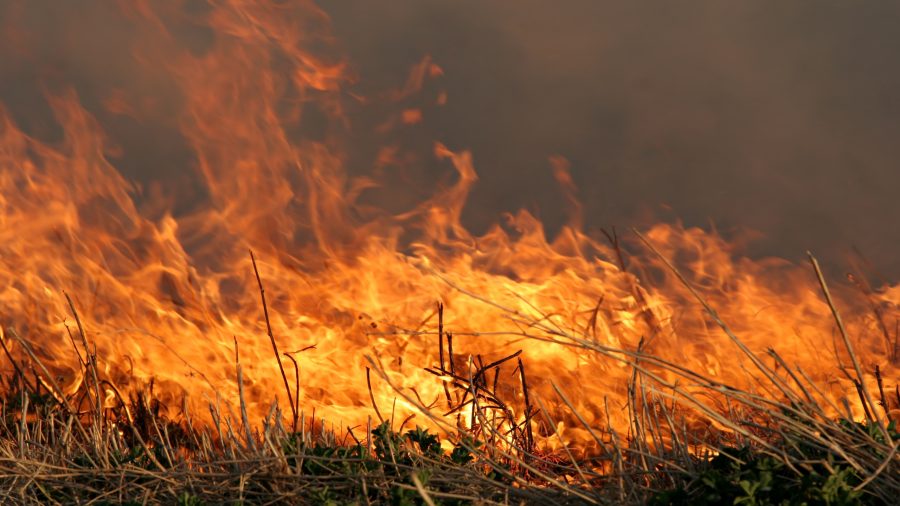
Major fires have scorched thousands of acres, threatened protected habitats and exposed concerns over Wales’ ability to secure aerial firefighting support
WILDFIRES across Wales have prompted calls for the Senedd to be recalled as firefighters continue tackling some of the country’s most serious incidents in years.
Crews have faced simultaneous fires across north and south Wales, with the largest incidents centred on the Rhinogydd mountains near Harlech and the hills above Blaenavon.
The emergency has unfolded after successive heatwaves and exceptionally low rainfall left mountains, moorland and grassland tinder dry.
Natural Resources Wales has now declared drought conditions across North Wales and the Upper Severn, while every other part of Wales is classed as experiencing prolonged dry weather. July is on course to become the driest month recorded in Wales for almost 190 years unless substantial rainfall arrives before the end of the month.
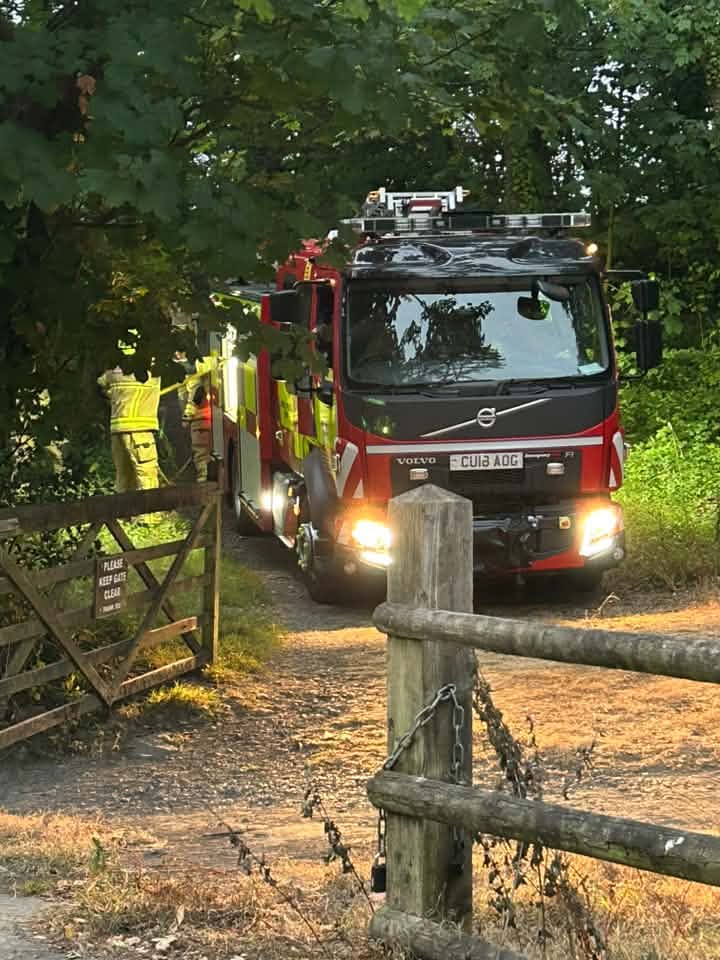
Major fire enters second week
Firefighters were still working on Monday, July 27, to extinguish the wildfire above Blaenavon, more than a week after the first emergency call was received.
The fire has affected an estimated 220 hectares, around 543 acres, of mountainside covered by bracken, gorse and other vegetation.
Crews have been working around the clock in difficult terrain, supported by specialist wildfire officers, drones, four-wheel-drive vehicles, water bowsers and heavy machinery.
Tactical burning has been used to remove vegetation ahead of the advancing fire, while farmers have helped create firebreaks intended to prevent the flames spreading further.
South Wales Fire and Rescue Service has established an operational base near Blaenavon, with local residents and businesses delivering meals, drinks and other supplies to firefighters working long shifts on the mountain.

Smoke from the blaze has travelled considerable distances, affecting communities around Nant-y-Glo and Brynmawr and reportedly being detected as far away as Cardiff.
Residents affected by smoke have repeatedly been advised to remain indoors where possible and keep their windows and doors closed.
Protected landscape burned near Harlech
In North Wales, firefighters have spent more than two weeks responding to a fire across the Rhinogydd mountains, close to Llyn Cwm Bychan, Harlech and Trawsfynydd.

The fire was first reported on July 12 and spread across remote terrain containing nationally and internationally protected habitats.
Parts of the affected landscape are designated as a Special Area of Conservation, Site of Special Scientific Interest and National Nature Reserve.
An estimate reported by BBC Wales suggested that the fire had affected approximately 951 hectares, equivalent to around 2,350 acres.
Firefighters and Natural Resources Wales staff created and strengthened firebreaks while monitoring the threat to woodland, wildlife habitats and nearby communities.
Roads and footpaths were closed to protect the public and maintain access for emergency vehicles. Smoke also reduced visibility around parts of the A470 near Bronaber and Coed y Brenin.
By Friday, July 24, North Wales Fire and Rescue Service said there was no longer a continuous fire front. However, numerous hotspots remained and crews expected monitoring and firefighting work to continue over the weekend and beyond.
Helicopter arrived after days of delay
The Rhinogydd fire became the focus of a national debate about the availability of aerial firefighting equipment.
North Wales Fire and Rescue Service requested helicopter assistance because crews were struggling to reach parts of the fire across steep and isolated terrain.
Natural Resources Wales approved the request and agreed to meet the associated costs because of the potential damage to protected habitats.
However, an approved helicopter was initially unavailable because aircraft were already in demand at other wildfire incidents across the UK.
The Welsh Government said there was no suitable military aerial firefighting capability based in the UK and that the armed forces could not provide a water-bombing aircraft.
A specialist civilian helicopter was eventually secured and began supporting the Rhinogydd operation on Friday, July 24.
The aircraft helped firefighters reach difficult areas and attack hotspots from the air, alongside the continuing ground operation. It was also scheduled to return the following day.
The Welsh Government has now promised to review the capabilities available to deal with wildfires, including the possible future role and cost of aerial support.
Cabinet Minister for Local Government, Housing and Planning Siân Gwenllian said fire and rescue services remained responsible for operational firefighting decisions.
She said Natural Resources Wales’ existing aerial arrangements related principally to protecting the Welsh Government Woodland Estate rather than providing a general national wildfire service.
She added that there were differing views among emergency services and other agencies about the role helicopters should play but accepted that the issue needed to be examined.
Labour calls for Senedd recall
Welsh Labour has called for the Senedd to meet during its summer recess so Members can question ministers about the response.
Jayne Bryant MS, Welsh Labour’s spokesperson for communities, said: “I am deeply concerned about the wildfires across Wales.
“There is an urgent need for the Senedd to meet in order for the government to provide an update about the response and give Members the opportunity to represent their constituents’ views.
“The lack of aerial support is of great concern.”
Ms Bryant thanked firefighters and emergency workers who had been operating in difficult and dangerous conditions.
She said: “My thoughts remain with everyone affected by the fires and I would like to thank the fire and rescue teams across Wales, who have been working tirelessly in very difficult circumstances.”
The Welsh Government has said multi-agency tactical co-ordination groups were established for both the Rhinogydd and Blaenavon fires.
Those groups included the fire and rescue services, Natural Resources Wales, military representatives and Welsh Government officials.
Ministers said the groups allowed resources and information to be co-ordinated quickly and reported that, as of July 23, neither major fire posed an immediate threat to life or property.
Fires reported across North Wales
The fires at Rhinogydd and Blaenavon have been the largest incidents, but they formed part of a much wider pattern.
North Wales Fire and Rescue Service has dealt with fires or remaining hotspots at Pentrefelin near Holyhead, Hope Mountain, Pentre Halkyn, Mount Pleasant in Brymbo and the mountain above Capelulo near Sychnant Pass.
Other incidents were reported at Braichmelyn Forest near Bethesda, Bagillt, Brynford and Conwy Mountain.
A major incident was declared during the earlier fire at Sychnant Pass, where 36 properties were evacuated as flames and smoke approached nearby communities.
Residents were later allowed to return after firefighters brought the immediate danger under control.
The scale and number of the incidents placed significant pressure on fire control rooms, specialist wildfire crews and equipment.
Mutual aid was requested to bring staff and fire appliances into North Wales from other services.
Entire country affected by exceptional dryness
The wildfire emergency has coincided with rapidly deteriorating environmental conditions.
Natural Resources Wales declared drought status across North Gwynedd, Ynys Môn, South Gwynedd, the Welsh Dee, Clwyd and the Upper Severn on July 23.
North Wales and the Upper Severn had received less than two per cent of their expected rainfall for July at the time of the declaration.
Some rivers recorded new monthly minimum flows, while groundwater levels continued to decline and river temperatures increased.
All remaining catchments in south-west Wales, including Pembrokeshire, Carmarthenshire and Ceredigion, were moved into prolonged dry weather status.
South-east Wales had already been placed in that category, meaning the whole of Wales is now experiencing drought or prolonged dry conditions.
Reservoir supplies were reported to remain generally healthy, but NRW asked households and businesses to use water carefully to reduce pressure on rivers, habitats and wildlife.
Risk remains despite some rainfall
Rain and cooler conditions brought some temporary relief over the weekend, but the Met Office has warned that the wildfire danger remains elevated across much of Wales and England.
Dry ground, low humidity, warm temperatures and stronger winds can allow a small fire to spread quickly and become difficult to control.
The Fire Severity Index measures how serious a fire could become if one starts rather than predicting whether an ignition will take place.
The Met Office said conditions were expected to become increasingly warm again during the week beginning Monday, July 27, while wildfire conditions would remain elevated despite rainfall in some areas.
Questions over management of the uplands
The fires have also revived debate about how mountains and moorland should be managed.
The National Sheep Association said properly managed grazing by sheep and cattle could help control the amount of bracken, gorse and long grass available to fuel wildfires.
Chief executive Phil Stocker said declining livestock numbers and reduced grazing in some upland areas had allowed large fuel loads to develop.
He called for farmers to be supported through agricultural and environmental funding to manage vegetation, protect peatland and reduce fire risks.
Any future policy would need to balance grazing, habitat protection, carbon storage, biodiversity and wildfire prevention across some of Wales’ most environmentally sensitive landscapes.
Public warned against barbecues and campfires
Fire and environmental authorities have stressed that many wildfires can be prevented.
People are being told not to light campfires or carry out controlled burning during periods of extreme dryness.
Disposable barbecues should not be used in the countryside, on mountains or in other open spaces. Cigarettes should be extinguished completely and never thrown from vehicles or dropped on the ground.
Visitors are also being asked to take bottles, cans and broken glass home and to use authorised campsites rather than setting up unauthorised camps where fires may be lit.
Public Health Wales said wildfire smoke could irritate the eyes, nose and throat and cause coughing, wheezing, breathlessness or chest discomfort.
People with asthma, chronic obstructive pulmonary disease or heart conditions, along with older people, young children and pregnant women, may be particularly vulnerable.
Anyone affected should stay indoors, close windows and doors, turn off systems drawing outside air into the building and keep prescribed medication nearby.
People should call 999 immediately if they discover a wildfire or believe that lives or property are in danger.
A warning for the future
Although firefighters have made progress at several sites, the crisis has raised questions that will remain after the final hotspots have been extinguished.
Ministers now face pressure to establish whether Wales needs guaranteed access to specialist helicopters, additional wildfire vehicles, more trained personnel and a long-term national wildfire strategy.
There will also be questions about land management, emergency funding and how communities are protected as hotter and drier summers become more common.
For now, firefighters remain on the mountains, supported by farmers, volunteers, emergency services and communities who have supplied food, water and practical assistance.
Their work has prevented a serious environmental emergency from becoming a tragedy involving the loss of homes or lives.
But with the landscape still exceptionally dry and further warm weather forecast, the danger has not passed.
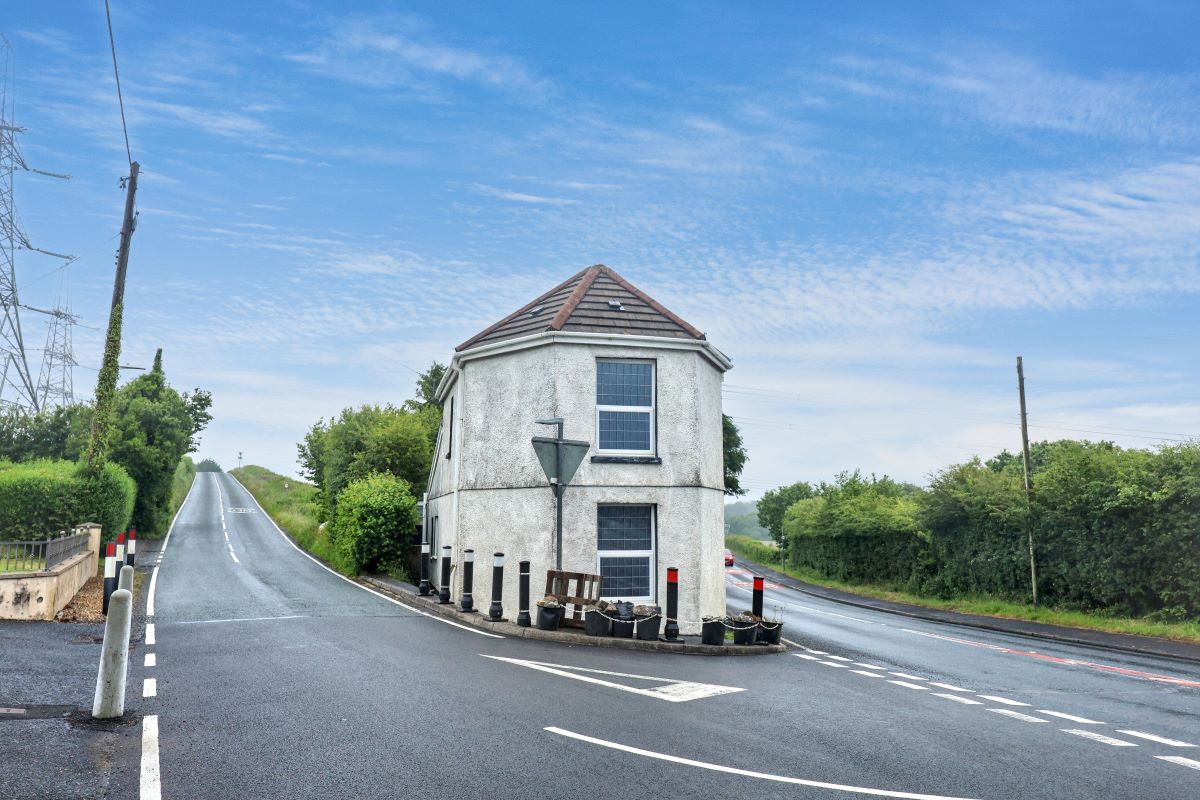
The characterful two-bedroom cottage near Llanelli is heading to auction with a guide price of £69,000
A HISTORIC west Wales toll house linked to the Rebecca Riots is set to go under the hammer with a guide price of £69,000.
The Gate House at Llannon, near Llanelli, was built during the 19th century by the Three Commotts Turnpike Trust and was once used to collect tolls from people travelling on local roads.
Now converted into a comfortable two-bedroom home, the distinctive property is being offered for sale through Paul Fosh Auctions.
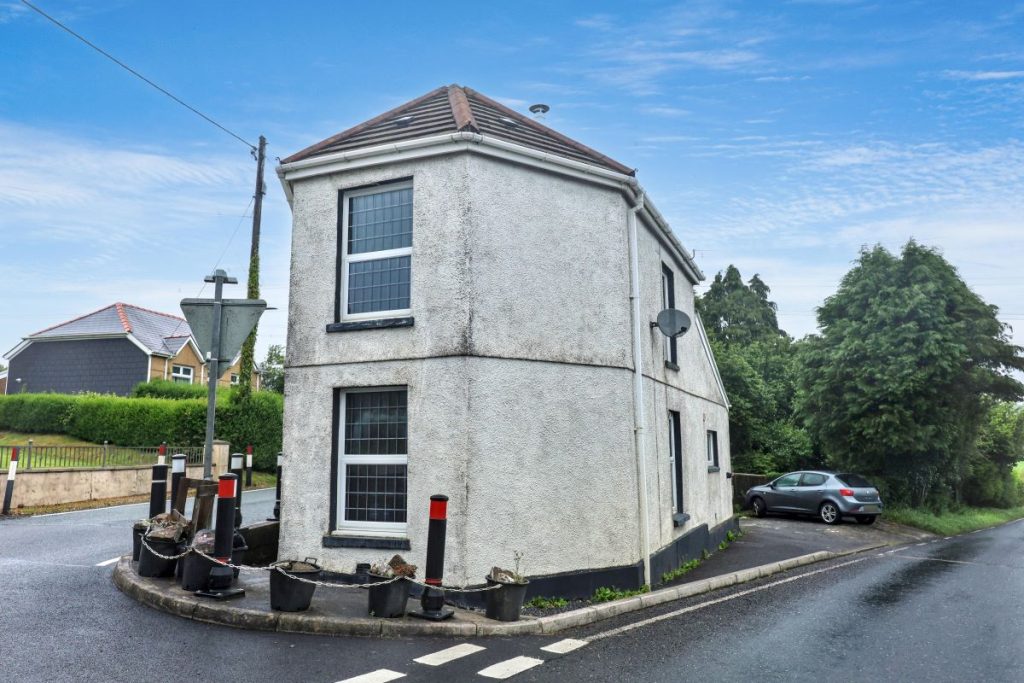
Toll houses such as this became the focus of widespread unrest during the Rebecca Riots of 1839 to 1843, when farmers and agricultural workers protested against high tolls and taxation across west and mid Wales.
Many of the protesters blackened their faces and dressed in women’s clothing before attacking toll gates, which had become highly visible symbols of the financial pressures facing rural communities.
The protesters became known as Merched Beca, or Rebecca’s Daughters.
Today, the former toll house is a detached cottage with two reception rooms, a kitchen and dining room, bathroom and two bedrooms.
It also has a secluded rear garden, an outbuilding and parking for two vehicles.
Angie Davey, of Paul Fosh Auctions, said the building could now enjoy a new chapter as a holiday home or investment property.
She said: “Set in a prominent position, this cottage offers plenty of character, along with a secluded garden, outbuilding and parking for two cars.
“The updated and improved property provides two reception rooms, a kitchen and dining room, bathroom and two bedrooms. It also benefits from double glazing and electric storage heating, although this has not been tested.
“Given the wealth of tourism in the area, this unusual and historic toll house, steeped in vibrant local history and being sold with vacant possession, could make a lucrative holiday let or rental investment.”

Llannon is situated on the A476 between Tumble and Swiss Valley, around 11 miles south-east of Carmarthen. The wider community includes Llannon, Tumble and Cross Hands.
The property will be among around 90 lots offered during the next Paul Fosh Auctions online sale, which begins at noon on Tuesday, July 28, and ends from noon on Thursday, July 30.
Picture caption
Historic home: The former toll house at Llannon, which once collected money towards the upkeep of local roads, is being offered for sale with a guide price of £69,000.



Health3 hours ago
More than 3,000 people have their say as Hywel Dda stroke consultation closes
Final decision on proposals, including a central 24-hour stroke unit at Glangwili and treat-and-transfer services at Withybush, is expected in...

Crime5 hours ago
James McKenna guilty of attempted murder after Carmarthen Park knife attack
Jury rejects defendant’s claim he only intended to cause serious injury after ambush attack on former partner SPECIAL REPORT FROM...


Community20 hours ago
New creative team transforms the Maes ahead of Eisteddfod y Garreg Las
Festival site in Llantwd is taking shape ahead of the National Eisteddfod’s arrival in Pembrokeshire from August 1 to 8...


Community22 hours ago
From Tenby to Llandudno: Wales’ seaside towns face the same signal crisis
Businesses in two of Wales’s busiest resorts say unreliable mobile coverage is disrupting payments, bookings and everyday life TWO of...


Crime23 hours ago
Judge orders Dyfed-Powys Police review after £3,912 fraud error
Force responsible for policing Pembrokeshire criticised after an officer understated the amount stolen from a vulnerable care-home resident A JUDGE...


Community2 days ago
Narberth bursts into colour as carnival brings Civic Week to spectacular close
Crowds lined the streets for an afternoon of floats, fancy dress, music and family entertainment at one of Pembrokeshire’s longest-running...


Community2 days ago
More than 100 racers take to Castle Pond for Paddle West’s inaugural regatta
Successful community event raised money for Forever11 and launched three consecutive weekends of waterside activity in Pembroke MORE than 100...


News2 days ago
NASA chief meets west Wales scientist helping search for life on Mars
Aberystwyth-led technology will guide Europe’s first Mars rover as it drills beneath the planet’s surface, while the proposed DARC radar...


News3 days ago
Princess Royal celebrates Pembrokeshire craftsmanship at family-run weaving mill
A Pembrokeshire business that began after a mother grew tired of waiting three weeks for her children’s name tapes has...


Local Government3 days ago
Burger King could be coming to Haverfordwest as plans submitted
Plans have been lodged for a Burger King outlet at the Morrisons petrol station on Bridge Meadow Lane BURGER KING...
-
 Community2 hours ago
Huge water main burst sends geyser over Fishguard town centre
-
Community2 days ago
More than 100 racers take to Castle Pond for Paddle West’s inaugural regatta
-

 Health1 day ago
Welsh NHS executive pay revealed as patients face lengthy waits
-
Community2 days ago
Narberth bursts into colour as carnival brings Civic Week to spectacular close
-

 Health2 days ago
Mental health crisis ‘place of safety’ could be centralised in Carmarthen
-

 News2 days ago
Welsh Government renews call for justice and policing powers to be devolved
-
 News2 days ago
Legal services oversight ‘not fit for purpose’ as reports call for major reform
-

 Sport1 day ago
Saundersfoot stay unbeaten as Carew pile up 311 in Week 14
ieuan
February 12, 2015 at 5:44 pm
let this be a lesson to allTHIS IS WHAT APATHY GETS YOU!!!!NEXT COUNCIL ELECTIONS GET OUT AND VOTE!!