


News
Struggling hospices across Wales to receive £4.3m funding boost


HOSPICES throughout Wales are set to benefit from a £4.3m support package announced by the Welsh Government, aimed at helping both children’s and adult services cope with mounting financial pressures.
The funding will provide relief as hospices grapple with rising energy costs, workforce shortages and growing demand for increasingly complex care.
Alongside the financial support, landmark national commissioning guidance has been agreed for the first time, establishing a fairer and more consistent framework for how hospice and palliative care services are planned and funded. The reforms are intended to pave the way for a streamlined national commissioning model from April 2027, tackling longstanding inequities in access to care across the country.
Around 35,000 people die in Wales each year, with up to 29,000 having palliative care needs. Yet roughly a quarter of people currently lack access to a hospice or equivalent specialist palliative care support.
The one-off stabilisation grant brings total Welsh Government investment in hospices to more than £25m over this Senedd term.

Cabinet Secretary for Health and Social Care, Jeremy Miles, said: “Hospices provide valued and trusted care to thousands of people and families at the most difficult time in their lives. They enable people to spend their final days with dignity, comfort and compassion, surrounded by those they love.
“This grant will provide immediate support to help hospices continue their vital work. With the new commissioning guidance, we are laying the foundations for a fairer, more sustainable future for hospice care in Wales; one where funding is more predictable, services are commissioned based on need, and every person has access to high-quality end of life care.”
National Clinical Lead for Palliative and End-of-Life Care, Dr Idris Baker, said: “The new commissioning guidance is a major step forward, setting a clear and consistent approach to how hospice care is planned and funded across Wales.
“Hospices are a vital part of the palliative and end-of-life care system, bringing specialist expertise, compassion and support to people, families and communities when it matters most.

“This funding provides important stability for the sector now, while the guidance lays the foundations for a more sustainable and equitable future, helping ensure that access to high quality care is based on need, wherever people live.
“Our focus now is on implementation and the next phase of work to strengthen equity across Wales, including developing a whole system approach to specialist palliative care commissioning. By building on this progress, we can reduce variation, improve access, and ensure services work seamlessly together to meet the needs of people and families across all settings.”
Chief Executive Officer of City Hospice, Dr Liz Booyse, said: “This funding is welcome news for hospices across Wales. Like many in our sector, we have been navigating a challenging financial landscape.

“This stabilisation grant will support City Hospice as we continue to provide specialist care to patients and families who need us most.
“We also welcome the new commissioning guidance, and Welsh Government’s commitment to establishing a long term sustainable hospice sector in Wales, working in partnership with hospices, to ensure we can be there for our communities for years to come.”


Charity backs Vision Zero ambition but warns targets and investment remain unclear
CYCLING UK has welcomed the Welsh Government’s new long-term road safety strategy—but warned it risks falling short without clear targets and guaranteed funding.
The charity was responding to the publication of the Road Safety Partnership Plan 2026–2040, which sets out how ministers aim to reduce deaths and serious injuries on Welsh roads through a “Vision Zero” approach.
The plan places a strong emphasis on safer speeds, improved road design, and greater support for people walking, wheeling and cycling.
However, Cycling UK said key details are still missing.
Gwenda Owen, Wales advocacy and development lead at Cycling UK, said: “Recognising that people walking, wheeling, and cycling are most at risk on our roads—and that the system itself must be redesigned to protect them—reaffirms the Welsh Government’s commitment to active travel.
“But for this plan to succeed, it needs sustained, ring-fenced funding to build cycling infrastructure that works for everyday journeys.”
She added that while ministers have pledged to increase cycling levels and improve safety, there is currently no clarity on how progress will be measured.
“The commitment to Vision Zero is crucial, but there needs to be a clear plan showing how it will be achieved,” she said.
Cycling UK also warned that without defined targets, the strategy risks losing momentum despite Wales’ previous leadership in promoting active travel.

The Welsh Government says the plan represents a long-term commitment to making roads safer for all users, with further details on targets expected in due course.

Award-winning PC spared dismissal despite panel ruling groin contact was deliberate
A DYFED-POWYS POLICE officer praised for saving a toddler’s life has kept her job despite being found to have deliberately touched a man’s groin during a night out.
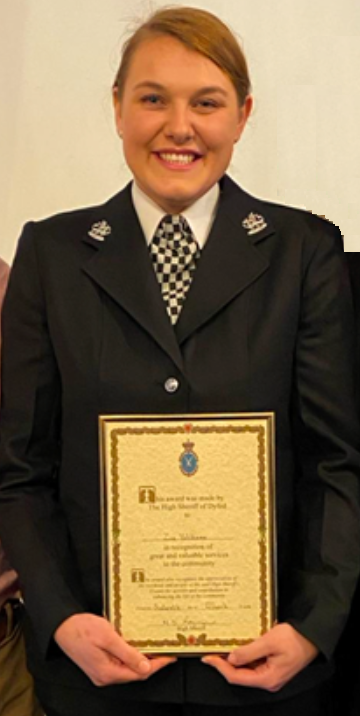
PC Zoe Williams was handed a final written warning after a misconduct panel ruled her actions amounted to gross misconduct following an incident at the RAFA Club in St Davids over the August Bank Holiday weekend in 2024.
The off-duty officer had been drinking with friends before entering the club, where CCTV captured her making two deliberate movements towards a man’s groin and making contact at around 1:20am.
Williams denied the allegation, claiming any contact was accidental and to the man’s midriff. The panel rejected her account, finding the touching was intentional and sexual in nature, likely intended to show interest in the man.
It concluded she had breached standards of authority, respect and courtesy, as well as discreditable conduct. There was no evidence the man had consented to the contact, and the panel noted that a number of people present knew she was a police officer at the time.

Her culpability was assessed as medium to high, with the panel warning her behaviour had the potential to undermine public confidence in policing. Aggravating factors included sexual motivation, excessive alcohol consumption and breaches of multiple professional standards.
Despite the gross misconduct finding, the panel decided dismissal would be disproportionate.
In reaching that decision, it placed significant weight on Williams’ otherwise strong record — in particular an incident earlier that year when she helped save the life of a two-year-old child.
While off duty and walking her dog on a beach at Solva, she carried out prolonged CPR after the child collapsed and stopped breathing. The child survived, and Williams later received commendations from the Chief Constable and the High Sheriff.

The panel also considered a series of positive testimonials describing her as a capable and compassionate officer, and concluded the incident was out of character.
It ruled that a final written warning would be sufficient to mark the seriousness of the misconduct while allowing her to continue serving the public.
The decision is likely to prompt debate about consistency in police discipline, particularly in cases involving sexualised behaviour, and whether an officer found to have committed gross misconduct should remain in post.


Concerns raised over phone-based support replacing GP referrals
ADULTS seeking routine mental health support in west Wales will increasingly be directed to a telephone helpline instead of face-to-face services, following a major decision by Hywel Dda University Health Board.
The Health Board has approved a permanent change to how patients in Ceredigion access support, with plans to roll out the same system across Pembrokeshire and Carmarthenshire in phases.
Under the new pathway, patients assessed by their GP as needing non-urgent mental health support will be told to contact the NHS 111 Wales “Press 2” service, rather than being referred to community mental health teams.
The change was first introduced in Ceredigion in March 2025 as an emergency response to staff shortages.
Health chiefs now say the model has proven “safe and effective,” claiming it allows patients to receive quicker support while freeing up specialist teams to deal with more serious cases.

Liz Carroll, the Health Board’s Service Director for Mental Health and Learning Disabilities, said: “Making this change permanent will mean more adults needing non-urgent support will access help much quicker.”
She added that the move would also create capacity for those with “more complex or urgent mental health needs.”
Concerns over access and understanding
Despite the positive assessment, the decision follows a nine-week consultation in which concerns were raised by patients and professionals.
Feedback highlighted confusion about how the 111 Press 2 service works, what support it can offer, and its limitations.
There were also worries about accessibility for people who struggle with telephone-based services, as well as questions around medication and prescribing.
Andrew Carruthers, Chief Operating Officer at the Health Board, acknowledged the concerns.
He said: “People told us they wanted greater clarity and consistency… and highlighted gaps in understanding about 111 Press 2.”
He added that steps would be taken to improve awareness and build trust as the system is rolled out more widely.
Shift driven by pressure on services
Before the change, some patients in Ceredigion faced waits of up to 28 days or more for a face-to-face assessment.
However, data suggested that fewer than five per cent of those referred required that level of specialist input.
Health officials say diverting less urgent cases to the 111 service has improved access times and allowed community mental health teams to prioritise higher-risk patients.
The Health Board also confirmed there has been no increase in serious incidents or complaints linked to the temporary system.
What it means for Pembrokeshire
The phased rollout means patients in Pembrokeshire will soon see similar changes when seeking help for non-urgent mental health issues.
GPs will still be able to refer patients directly to specialist teams where cases are urgent or complex.
The NHS 111 Wales Press 2 service operates 24 hours a day and offers free access to mental health support, including Welsh-language provision.
However, the shift marks a significant move away from traditional GP-led referrals — and is likely to prompt debate over whether remote access can fully replace in-person care.


Health3 hours ago
GP crisis driving NHS pressure in Wales, Senedd report warns
Falling GP numbers and funding gaps blamed for worsening hospital delays THE NHS crisis highlighted earlier this week is being...


News21 hours ago
Reform reveals west Wales candidates for Senedd battle
Monkton councillor tops Pembrokeshire list as party confirms Carmarthenshire names and includes Haverfordwest councillor in unwinnable Swansea spot REFORM UK...


Health1 day ago
Clash over Withybush Hospital services as Paul Davies challenges First Minister
A HEATED exchange in the Senedd has laid bare growing tensions over the future of hospital services in west Wales....


Crime2 days ago
Police stop car in Pennar as three arrested in drugs investigation
Suspected drug driver report leads to major police response and multiple arrests DRAMATIC scenes were reported in Pennar on Monday...


Business2 days ago
New pilot vessel Llanion arrives at Milford Haven
State-of-the-art 22-metre craft marks reset after £3.6m pilot boat controversy THE PORT OF MILFORD HAVEN has taken delivery of a...


Community2 days ago
Sycamore Gap legacy tree to take root in Pembrokeshire landscapes
A SAPLING grown from the famous Sycamore Gap tree is set to become part of Wales’ protected landscapes — with...


Business3 days ago
Could Primark be coming to Haverfordwest? Major retailer in talks for former Wilko site
Council confirms advanced discussions as speculation grows over high street boost HAVERFORDWEST could soon see a major high street revival,...


Business3 days ago
Rail investment ‘could unlock 40,000 jobs and £11bn for Wales’ says new report
RAILWAY stations across Wales could help unlock around 40,000 jobs and more than £11 billion for the economy by 2036,...


Local Government3 days ago
Milford Haven set for £200m investment with schools, leisure centre and rail upgrade
Council outlines major plans for town with backing from Welsh Government MILFORD HAVEN is set for a major transformation with...


Community4 days ago
Broad Haven volunteers secure ‘national asset’ status for nature reserve
A SMALL stretch of woodland and former opencast coal mine has been transformed into a nationally recognised biodiversity site, in...
-

 Crime6 days ago
Pembroke man remanded in custody over knife threat, assault and damage allegations
-

 Crime6 days ago
Broad Haven man remanded in custody over sexual harm prevention order breach
-

 Farming7 days ago
£3 million secured to continue Welsh sheep genetics programme
-

 Education7 days ago
Milford Haven school plans unveiled but funding not yet secured
-

 Crime6 days ago
Publican jailed for six years for supplying cocaine and cannabis
-

 Community7 days ago
Former Neyland police officer Louis Knight dies aged 83
-

 Cymraeg7 days ago
National Eisteddfod unveils legacy framework to boost Welsh language and communities
-

 Business7 days ago
Plans to rebuild arson hit building at farm with one of largest sheep flocks in Wales