


News
Fire and Rescue Services’ road safety strategy



Fire service in Wales: Considerable savings have already been made
IN RESPONSE to the Welsh Government’s ‘Road Safety Framework for Wales’, the Welsh Fire and Rescue Service has launched its own ‘Road Safety Strategy ’.
The strategy provides a framework for the three Welsh FRS to communicate and implement their road safety commitments on a national and local level.
Chief Fire Officer for Mid and West Wales Fire and Rescue Service (MAWWFRS), Chris Davies said: “Road safety has improved considerably in recent years. In 2014 there were 8,208 reported casualties as a result of road traffic collisions in Wales, this is a 30% reduction on the number of casualties seen on our roads 10 years ago.”
While the number of incidents has declined, statistics show a 12% increase in the number of people seriously injured on our roads in the last year, with poor driving and observation the leading cause of collisions.
While much has been achieved through collaborative working with our road safety partners, there is still work to be done.

A disproportionate number of vulnerable road users including young people (16 to 24 year olds) and motorcyclists are killed or seriously injured compared to other groups.
Despite making up 11% of driving licence holders, young people represent 23% of casualties in road traffic collisions in Wales.
Motorcyclists accounted for 37% of those killed or seriously injured in road traffic collisions, while accounting for just 1% of the road traffic in Wales. Motorcyclists are not necessarily at fault for collisions, their vulnerability means that they are far more likely to be killed or seriously injured. Whilst a diverse range of motorcyclists are involved in collisions, a disproportionate number of casualties are men, riding on rural roads in the drier months.
Wales has, and is projected to continue to have, the most aged population in the UK. Around 1 in 20 drivers involved in road traffic collisions in Wales are aged 70 or older. Older drivers have often held their licence for many years and the vast majority will not have undertaken any further training since passing their test, despite significant changes in driving conditions and, potentially, their own ability.

A coordinated effort in the education of road users, targeting specifically those identified most vulnerable groups, with a range of activities, interventions and publicity that result in behavioural change forms the core of today’s road safety strategy.
This strategy sets out how the Fire and Rescue Services in Wales will support the Welsh Government’s vision for a continued reduction in the number of people killed and seriously injured on Welsh Roads, with the ultimate aspiration of no fatalities.
Station Manager Simon Brown, Road Safety Manager for South Wales Fire and Rescue Service (SWFRS) said: “The All Wales Road Safety Strategy (2015 – 2020) encourages the Fire and Rescue Services’ of Wales and their partners to work together to identify local risks within their areas and developatargetedapproachtoreducing deaths and injuries on Welsh roads.

“As such, SWFRS is extremely pleased to be continuing to work collaboratively on this strategy and associated activities with our partners that aim to make our communities and roads safer and save lives.”
Stuart Millington, Senior Fire Safety Manager for North Wales Fire & Rescue Service (NWFRS), said: “All three fire and rescue services in Wales have a common objective which is at the heart of everything we do – to work together for a safer Wales.
“We are delighted to be part of the All Wales Road Safety Strategy that will continue to ensure that we all work together as best as we can within the fire and rescue services across Wales and with our partner agencies to make the roads in Wales as safe as possible.
“As part of this strategy we are looking at a variety of approaches that organisations can take to improve road safety including training, education, publicity, sharing information and evaluation. By combining all these we hope that we will be able to improve road safety across Wales.”


New centres proposed for Milford Haven and Pembroke as ageing facilities face replacement
PEMBROKESHIRE COUNTY COUNCIL’S Cabinet has approved a major investment programme aimed at transforming leisure facilities across the county.
The multi-million-pound Leisure Investment Programme includes plans for new leisure centres in Milford Haven and Pembroke, alongside a £4.6 million package to repair and extend the life of Tenby’s swimming pool.
Cabinet members were told that both Pembroke and Milford Haven leisure centres are reaching the end of their usable life. Pembroke Leisure Centre opened in 1974, while Milford Haven’s facility followed in 1984, ten years after the site’s original swimming pool.
The report highlighted that maintaining the ageing buildings would require millions of pounds in ongoing repairs, with replacement now seen as the most sustainable long-term solution.
For Milford Haven, Cabinet approved £1.2 million to develop detailed plans, including design work and pre-construction activity. The proposed new leisure centre would be built alongside the town’s planned new primary and secondary school development.

In Pembroke, councillors agreed £195,000 to carry out feasibility studies for a new leisure centre on the existing site.
Meanwhile, Tenby’s swimming pool will receive a £4.6 million capital grant awarded to the Tenby and District Swimming Pool Association, which owns the facility. The funding is expected to extend the pool’s lifespan by at least ten years, allowing time to explore longer-term options, including possible integration with future secondary school provision in the town.
Cllr Rhys Sinnett, Cabinet Member for Residents’ Services, said the decision marked a major step forward.
He said: “We have taken a significant step towards delivering leisure facilities that are fit for the future and meet the needs of our communities.

“We are committed to providing high-quality sports and leisure provision across Pembrokeshire, and where significant investment is required, we will not shy away from it. These facilities play a vital role in supporting long-term health and wellbeing.”

NEW research has revealed just how closely sound is linked to identity in Wales — but also raised concerns about declining hearing health across the country.
A study commissioned by Specsavers and fronted by broadcaster and drummer Owain Wyn Evans found that nearly half of adults in Wales have noticed changes in their hearing in recent years, yet many are failing to act.
Sound shapes Welsh identity
The research found that seven in ten people in Mid and West Wales (69%) say hearing a Welsh accent is what makes Wales feel most like home. Over half also pointed to the Welsh language (59%) and the sounds of the countryside (57%) as central to their sense of belonging.
Community events also play a key role, with 68% saying occasions such as Eisteddfodau and local fêtes bring people together through shared sound — more than those who cited singing at rugby or football matches (59%).
Overall, 65% of respondents said sound is an important part of their Welsh identity, with Welsh choirs (54%) and everyday language (53%) also featuring strongly. Around 40% said losing the ability to hear these sounds would make them feel less connected to Welsh culture.
Hearing issues on the rise
Despite this strong emotional connection to sound, the study highlights growing concerns around hearing health.
Some 45% of adults said they have noticed changes in their hearing in recent years. However, more than a quarter have taken no action.
Exposure to loud environments appears to be a key factor. Nearly three in ten people (29%) reported experiencing temporary muffled hearing or ringing in their ears after live music or gigs, while one in five (21%) said the same after visiting nightclubs.
Across Wales, 38% said they had experienced similar symptoms after live events, yet only 24% of those who noticed a decline in their hearing had a hearing check in the past two years. More than a quarter (28%) said they have taken no action and do not plan to.
Owain Wyn Evans shares personal experience
The findings are personal for Owain Wyn Evans, 42, who has experienced hearing changes himself.
The Ammanford-born broadcaster said: “I first noticed changes to my hearing about five years ago. I’ve been drumming since I was ten, often in very loud environments like rugby and social clubs, and over time I realised I was missing parts of conversations.
“It was a shock to be told there had been changes, but it made me take my hearing health seriously.

“Sound is such a huge part of who we are in Wales — from the countryside to the sea. Protecting our hearing means protecting those connections.”
Barriers to seeking help
Despite recognising the importance of hearing, one in three people (33%) admitted they have never taken steps to protect it. More than a third (38%) said they would feel more confident wearing glasses than using hearing devices.
For some, taking action has been life-changing. Cardiff-based former DJ Amal Luchmun, 56, said hearing loss had begun to affect everyday life.
“My hearing loss became a conversation killer,” he said. “I’d find myself guessing what people were saying and avoiding noisy environments because it was exhausting.
“Since getting a hearing device, the difference has been huge. I recently went to a Six Nations match and could hear everything clearly and chat easily with people around me.”
Experts urge early action
Annie Morris, head of clinical performance at Specsavers, said hearing changes often go unnoticed.
“Changes to our hearing usually happen gradually, and the brain adapts to missing sounds,” she said. “People often don’t realise how much they’re missing until it starts to affect conversations.
“On average, people wait around ten years before seeking help. While hearing loss can’t be reversed, acting early can slow further decline.”
She added that simple steps such as wearing ear protection in loud environments and booking regular hearing checks can make a significant difference.
Checks available across Wales
Specsavers stores across Wales offer hearing tests both in-store and through home visits for those unable to travel.
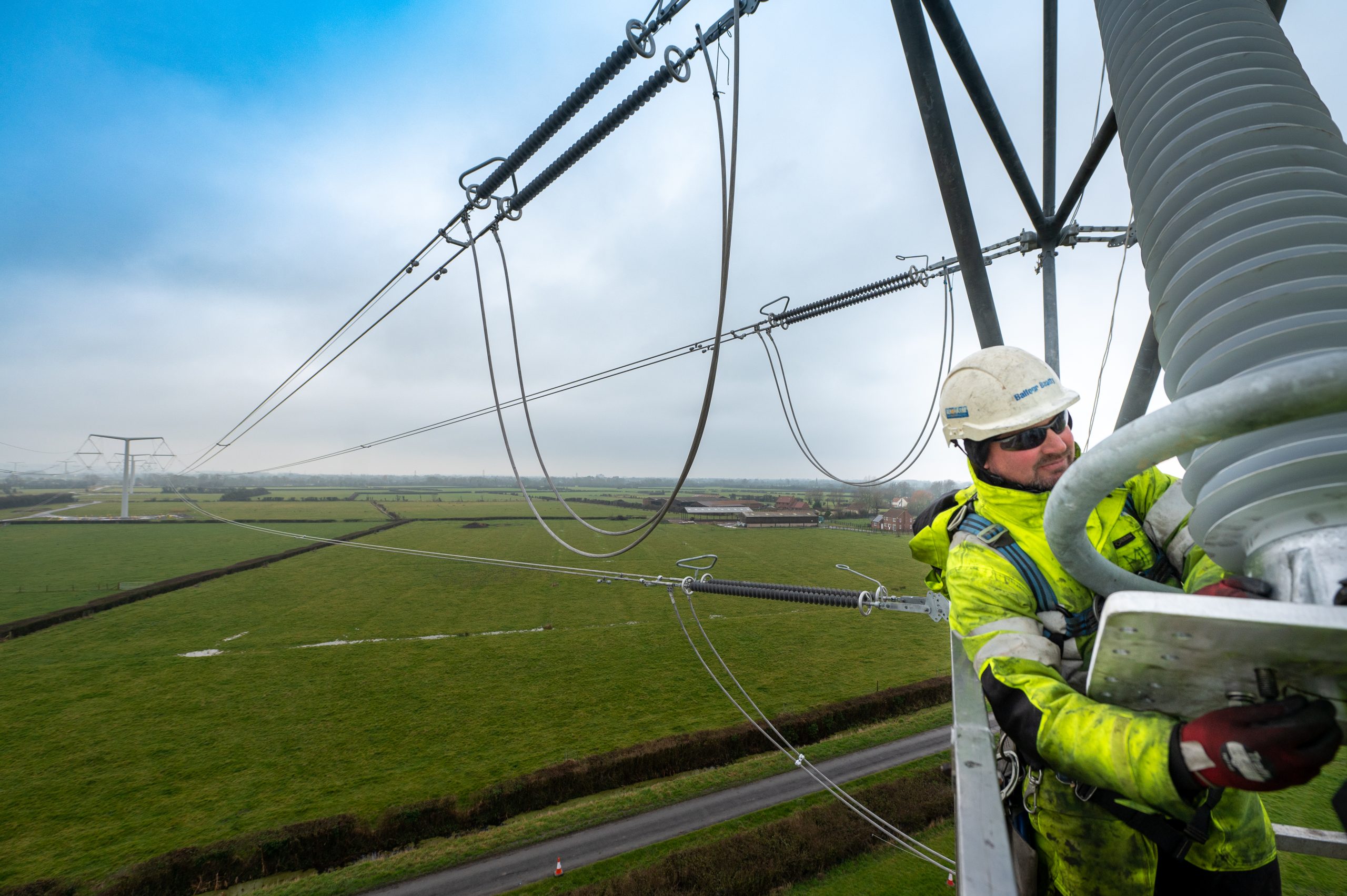
WALES risks falling behind on its long-term infrastructure needs unless major barriers to planning, funding and delivery are tackled, a leading advisory body has warned.
The National Infrastructure Commission for Wales (NICW) this week (Mar 23) published two major reports setting out what the country will need over the next 80 years — and why current systems are failing to deliver.
The Wales Infrastructure Assessment examines key sectors including energy, transport, water, digital and the circular economy, while a separate Infrastructure Delivery Report focuses on how projects can be better planned, funded and completed.
The Commission says that despite strong policies already in place, many major projects are delayed or fail to progress due to systemic problems. These include complex approval processes, short-term political and funding cycles, and a shortage of skilled workers.
It also highlights a lack of joined-up thinking across sectors, with transport, energy and digital systems often planned in isolation, leading to inefficiencies and missed opportunities.
Concerns were also raised about fragile confidence among communities and investors, driven by frequent policy changes, inconsistent engagement and uncertainty over long-term funding.
NICW has identified eight priority actions to improve delivery, including longer-term funding commitments, planning reform, better collaboration between sectors, investment in skills, and earlier engagement with communities.
Dr David Clubb, Chair of the Commission, said: “Wales has no shortage of ambition. What we face is a shortage of delivery. Unless we address the structural barriers in the system, we will not meet the needs of current or future generations.
“The next Senedd must be prepared to make long-term, and sometimes difficult, choices.”
The reports also stress the importance of better data and long-term planning, drawing on international approaches to support more informed decision-making.
With the Senedd election approaching, the Commission said the next Welsh Government will have a critical opportunity to reset how infrastructure is delivered — and warned that failure to act could undermine economic growth, climate targets and public confidence.



Business14 hours ago
Could Primark be coming to Haverfordwest? Major retailer in talks for former Wilko site
Council confirms advanced discussions as speculation grows over high street boost HAVERFORDWEST could soon see a major high street revival,...


Business14 hours ago
Rail investment ‘could unlock 40,000 jobs and £11bn for Wales’ says new report
RAILWAY stations across Wales could help unlock around 40,000 jobs and more than £11 billion for the economy by 2036,...


Local Government15 hours ago
Milford Haven set for £200m investment with schools, leisure centre and rail upgrade
Council outlines major plans for town with backing from Welsh Government MILFORD HAVEN is set for a major transformation with...

Community1 day ago
Broad Haven volunteers secure ‘national asset’ status for nature reserve
A SMALL stretch of woodland and former opencast coal mine has been transformed into a nationally recognised biodiversity site, in...


Entertainment2 days ago
Tenby steams up in spectacular style as crowds flock to festival
Colourful parade, towering creations and Victorian flair bring town centre to life TENBY was transformed into a vibrant Victorian fantasy...


Crime4 days ago
Publican jailed for six years for supplying cocaine and cannabis
Milford Haven man sentenced at Swansea Crown Court following drug dealing operation A MILFORD HAVEN publican has been jailed for...


Local Government4 days ago
Poverty summit highlights support efforts across Pembrokeshire
A SUMMIT bringing together key organisations from across Pembrokeshire has highlighted both the scale of local poverty and the work...


Education4 days ago
Milford Haven school plans unveiled but funding not yet secured
PLANS for a new £100 million school in Milford Haven have been unveiled, but the project has not yet secured...


News5 days ago
Council unveils plans for new state-of-the-art secondary school in Milford Haven
PEMBROKESHIRE COUNTY COUNCIL has revealed plans for a new state-of-the-art school in Milford Haven, promising modern, inspiring learning spaces for...


Health5 days ago
NHS waiting list falls — but cancer delays and diagnostic backlog worsen
Record progress claimed by Welsh Government as critics warn key targets are still being missed THE NHS in Wales has...
-

 News7 days ago
Emergency services flood Haverfordwest after reports of person in river
-

 Crime5 days ago
Mother given community order after admitting child cruelty offence
-
Health5 days ago
NHS waiting list falls — but cancer delays and diagnostic backlog worsen
-

 News6 days ago
Senedd vote to ban greyhound racing hailed as ‘landmark moment’ by charities
-

 News6 days ago
Reform secures first Pembrokeshire councillor in Hakin by-election win
-

 News6 days ago
Senedd votes to ban Greyhound racing in Wales to protect animal welfare
-

 Crime5 days ago
Woman stole from pharmacy despite ban, court hears
-

 Crime5 days ago
Illegal workers found at Cardigan takeaway after immigration raid
OwlBadges.com
December 29, 2025 at 10:26 pm
Thanks for sharing your knowledge on this topic. It’s much appreciated.