


Community
Pupils in global weather project



Raspberry Pi project: Stackpole VC pupils record weather data
PUPILS at Stackpole VC School were thrilled to recently discover that they were one of only 150 schools around the UK to receive a Raspberry Pi Oracle Weather Station.
The Stackpole school has a strong reputation for delivering a cuttingedge technology curriculum, and pupils were delighted to be selected to take part in a global weather experiment where participating schools could gather and access data from all around the world.
The weather station kit has been designed to be operated alongside the Raspberry Pi computers, which have previously been used at the school.
The kit allows the Raspberry Pi computer to collect weather data using a variety of different sensors on the device. As well as logging data locally, Stackpole VC School will have the opportunity to log their data in a central Oracle database which will enable the pupils to collaborate with schools around the world.
Matthew Bell, Key Stage Two teacher, is leading the project. He said: “This is an amazing opportunity to deliver creative cross-curricular activities that engage the pupils and have a real impact, and enable global collaboration.

“It also provides the opportunity for pupils to learn about writing code to interface directly with the sensors, as well as displaying and analysing collected data on rainfall, wind speed, temperature and other weather measurements.”
Matthew is no stranger to highprofile technology. In 2015, he was featured in the Guardian Education Supplement for his inspirational ICT teaching when Stackpole VC pupils worked together to build their own school in Minecraft using Python Code.


Battle scenes, cavalry displays and a surrender procession brought one of Pembrokeshire’s most extraordinary stories back to the streets
MUSKET fire, mounted soldiers and marching French troops transformed Fishguard and Goodwick at the weekend as Britain’s last invasion was brought dramatically back to life.
Visitors gathered across the twin towns on Saturday and Sunday (July 18 and 19) for a large-scale re-enactment of the failed French invasion of 1797, the last occasion on which a hostile foreign army landed on mainland Britain.
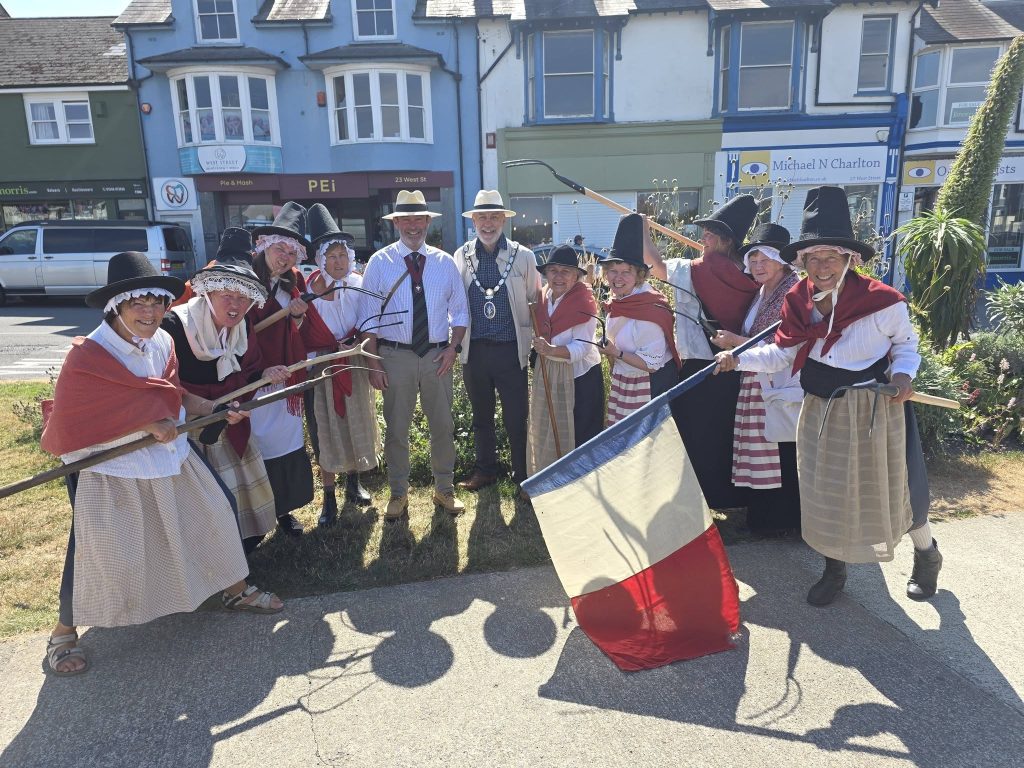
The free two-day event featured living-history camps, military demonstrations, cavalry displays and staged fighting before reaching its climax with the surrender of the invading French force.
Costumed soldiers representing the French and British armies established military camps where visitors could see the clothing, equipment and living conditions experienced by troops at the end of the eighteenth century.
The action then moved to Goodwick’s foreshore, where mounted displays were followed by a recreation of the fighting which took place after the French landed on the north Pembrokeshire coast.
The defeated French forces later formed a procession through Fishguard, recreating their march into the town before the surrender negotiations associated with the historic Royal Oak.
The pub, which still stands on Fishguard Square, served as the headquarters of the British commander Lord Cawdor during the invasion and remains one of the most important surviving locations connected to the story.
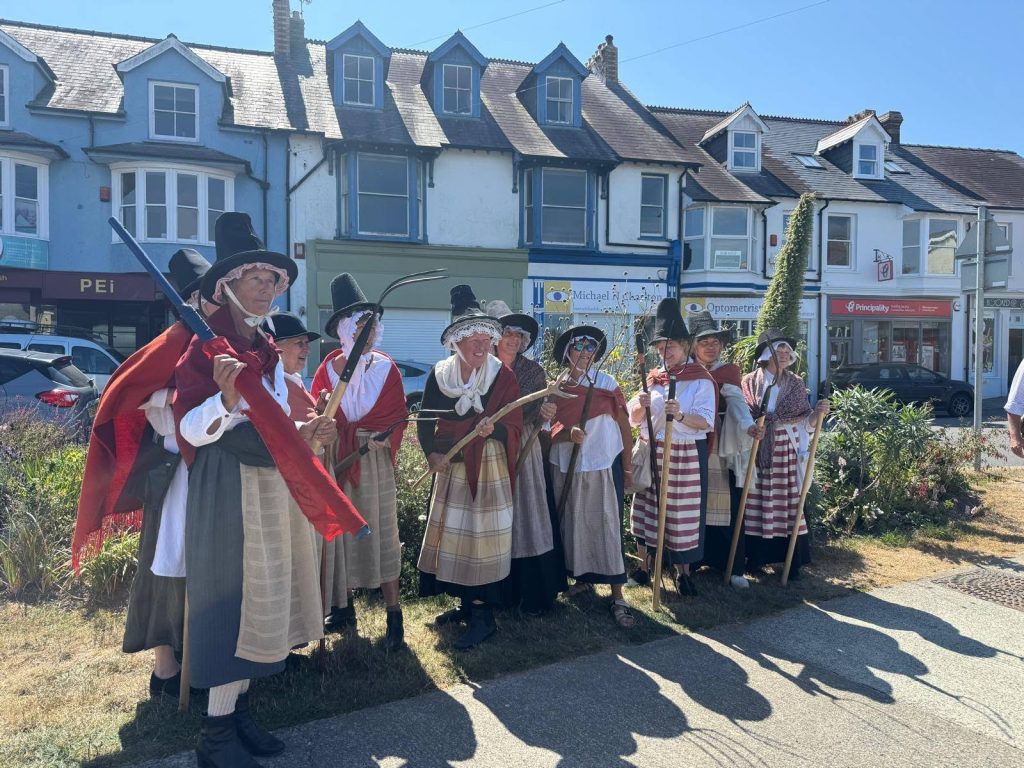
The weekend marked 229 years since around 1,400 French troops landed beneath the cliffs at Carreg Wastad Point, near Llanwnda, on February 22, 1797.
Led by the Irish-American Colonel William Tate, the force had crossed the sea as part of a wider French Revolutionary plan to undermine Britain and encourage an uprising against the government.

Many of the troops belonged to the Légion Noire, or Black Legion, so called because of the dark uniforms they wore.
The French expected to receive support from the local population. Instead, their arrival caused alarm across Pembrokeshire as news of the landing spread through Fishguard, St Davids, Haverfordwest, Milford Haven, Pembroke and the surrounding countryside.
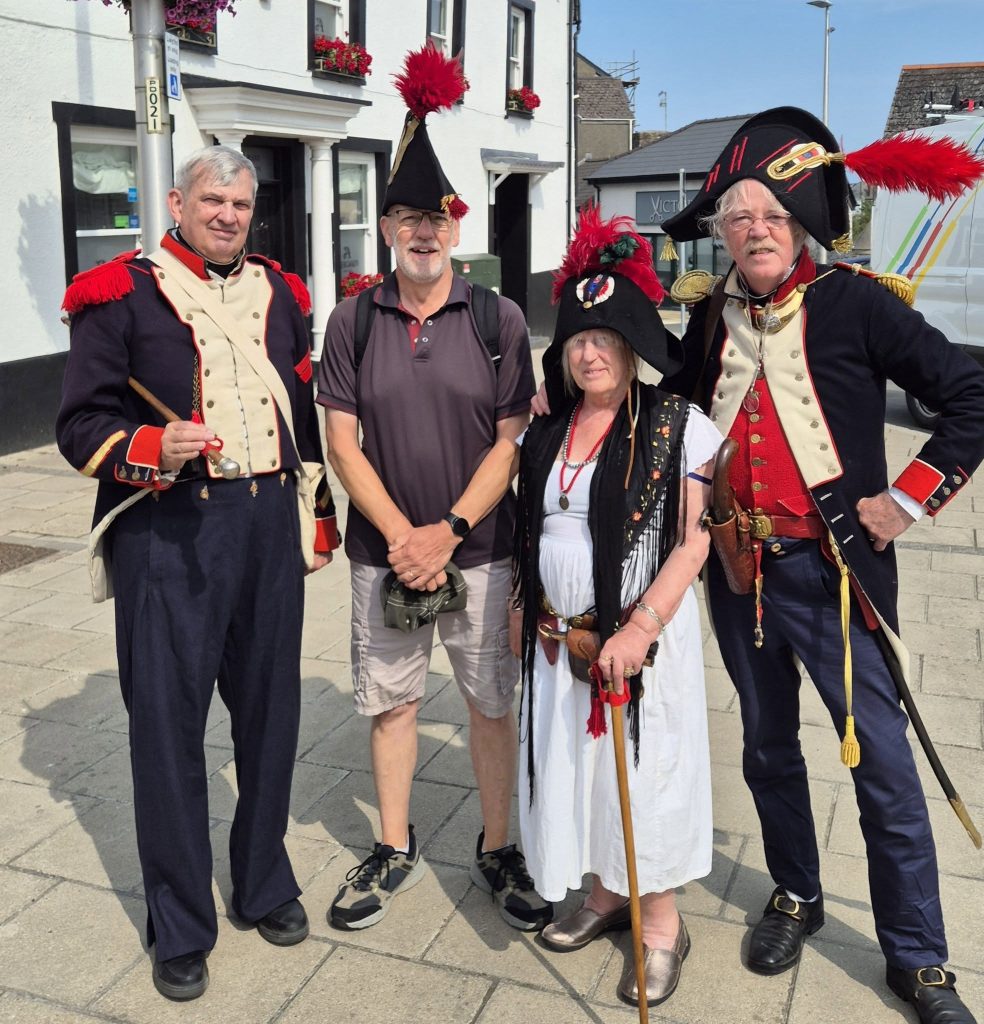
Residents armed themselves with whatever was available, while militia, sailors, volunteers and cavalry began assembling to confront the invaders.

The French operation soon descended into disorder.
Some soldiers left their positions to search local farms and homes for food and drink, while others abandoned their units altogether. The ships which had carried them to Pembrokeshire also departed, leaving Tate and his men without an easy means of escape.
British forces were gathered under Lord Cawdor, who established his headquarters at the Royal Oak after marching north with local volunteers, militia, sailors and members of the Pembroke Yeomanry Cavalry.
The gathering of troops and civilians on the hills surrounding Fishguard may have created the impression that the defending force was far larger than it really was.

According to one of the best-known versions of the story, local women wearing traditional red shawls and tall black hats were mistaken by the French for additional British soldiers.
The tale has become deeply woven into Fishguard folklore, although historians continue to debate exactly how much influence the women’s appearance had on Tate’s decision to surrender.
Another central figure in the story is Jemima Nicholas, remembered in Fishguard as Jemima Fawr, or Jemima the Great.
Tradition holds that Jemima armed herself with a pitchfork, confronted a group of French soldiers and marched 12 of them back into Fishguard, where they were confined inside St Mary’s Church.
Although the precise details cannot be fully verified through contemporary records, Jemima became a celebrated symbol of the courage and determination shown by local people during the invasion.
Her story featured prominently during the weekend’s re-enactment, which included a recreation of the French surrender to local forces and Jemima Nicholas.
By the evening of February 23, 1797, Tate’s position had become increasingly desperate.
Two French officers were sent into Fishguard seeking terms, but Lord Cawdor refused to accept a conditional agreement. He demanded the complete and unconditional surrender of the invasion force.
The following day, the French marched down towards Goodwick Sands, laid down their weapons and became prisoners.
The campaign had lasted little more than two days.
Despite its short duration, the invasion secured Fishguard’s place in British military history and created a story which continues to shape the identity of the town more than two centuries later.
That history is permanently recorded in the Last Invasion Tapestry, housed inside Fishguard Town Hall.
Created to commemorate the bicentenary of the invasion in 1997, the 100-foot embroidered work depicts the French landing, the response of local people and the eventual surrender.
Its narrative style was inspired by the Bayeux Tapestry, with dozens of local volunteers spending several years creating a detailed visual record of the invasion.
Visitors attending the re-enactment were also encouraged to explore the wider history of Fishguard and Goodwick through a heritage trail linking 46 locations across the twin towns.
The trail covers more than 2,000 years of history, ranging from Iron Age settlement and the French invasion to the suffragette movement and the filming of the 1956 screen adaptation of Moby Dick.
For Fishguard and Goodwick, the re-enactment is more than a military display.
It gives residents and visitors an opportunity to walk through the locations where the events unfolded, see the uniforms and weapons of the period and understand the role played by ordinary Pembrokeshire people.
It also ensures that the history is passed to a new generation in a form which is immediate, accessible and entertaining.
More than two centuries after Tate’s army appeared off the Pembrokeshire coast, the sight of French troops marching through Fishguard once again showed why the last invasion remains one of the county’s most remarkable and enduring stories.


FIREFIGHTERS at Pembroke Dock Fire Station are looking forward to welcoming the local community to their annual Open Day on Wednesday, July 29, from 10am to 4pm.
The free, family event promises a fun-filled day for all ages, offering visitors the chance to meet their local Firefighters, learn more about the vital work of Mid and West Wales Fire and Rescue Service and enjoy a range of activities and attractions.
There will be plenty to see and do throughout the day, including live demonstrations, fun activities, refreshments and much more! Proceeds from the event will support the Fire Fighters Charity, which provides specialist, lifelong support to serving and retired members of the Fire and Rescue Services community, and their families.
The Open Day offers a great opportunity to connect with your local fire crew, discover important fire safety advice, explore community prevention work, and see firsthand how Firefighters help keep communities safe every day.
Bring your family and friends to join the Firefighters for an enjoyable day of community engagement and family entertainment.
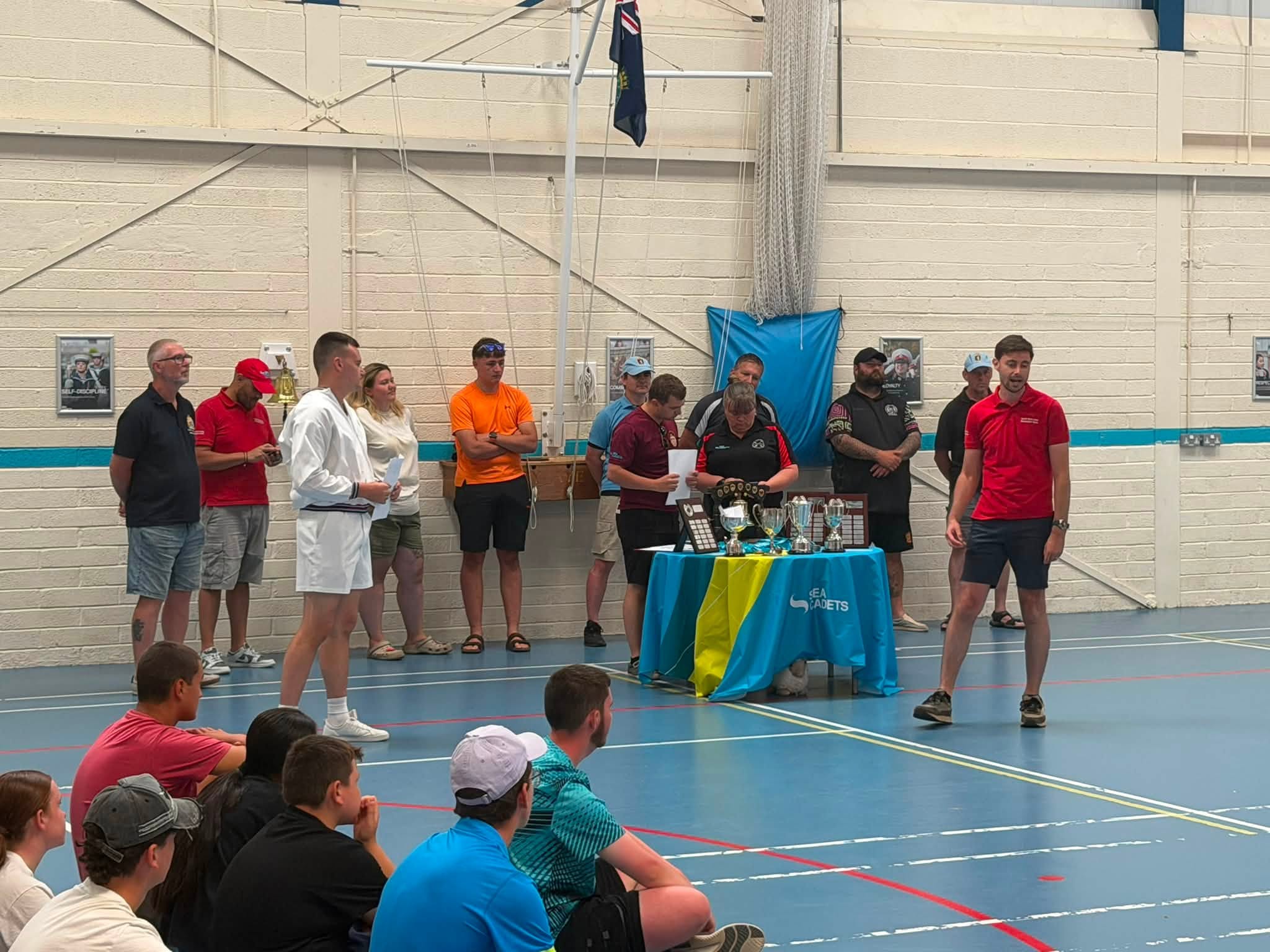
CADETS from across West Wales have returned from the South West Area Sea Cadets Sail and Windsurf Regatta with an impressive collection of medals and team honours.
Strong performances across both sailing and windsurfing helped West Wales District finish third overall in the combined competition.
In the sailing events, Leading Cadet Jack, of Tenby Sea Cadets, secured third place in the Open Pico class.
Ordinary Cadet Sadie, of Port Talbot Sea Cadets, finished seventh in the Open RS Zest, while Cadet First Class Charis, of Tenby, placed 13th. Their combined results helped West Wales achieve sixth place overall in the Zest competition.
Milford Haven cadets also enjoyed success in the Junior RS Quest, with Cadet First Class Dylan and Ordinary Cadet Naomi taking second place. West Wales went on to finish third overall in the Junior RS Quest category.
In the Open RS Quest, Able Cadet Wilfred and Leading Cadet Reilly, of Swansea Sea Cadets, secured third place, contributing to a sixth-place overall finish in the class.
West Wales District finished fourth in the overall sailing competition.
The district produced even stronger results in the windsurfing events.
Cadet Harley, of Fishguard Sea Cadets, finished second in the up to 4.5-metre category, while Cadet Konrad, of Neath and District Sea Cadets and Royal Marines Cadets, placed fourth. Their performances earned West Wales the overall title in the class.
In the up to 5.8-metre event, Able Cadet Noah, of Fishguard, finished second, with fellow Fishguard cadet Able Cadet Jakob taking fourth place. West Wales again secured the overall class victory.
Able Cadet Ryan, of Milford Haven, claimed first place in the up to 6.8-metre competition, helping the district take its third windsurfing class title.
The combined results saw West Wales District crowned overall winners of the windsurfing competition.

A strong team effort across every event ultimately secured third place for West Wales in the overall Sail and Windsurf Regatta standings.
West Wales District Sea Cadets congratulated all those who competed, describing the results as a fantastic achievement for the cadets and their units.



Crime5 hours ago
Teen cleared of attempted murder but guilty of GBH after Milford teacher stabbed
Jury returns 11-1 majority verdict on charge of causing grievous bodily harm with intent, with sentencing set for September 3...


Community6 hours ago
French troops march through Fishguard as Britain’s last invasion returns to life
Battle scenes, cavalry displays and a surrender procession brought one of Pembrokeshire’s most extraordinary stories back to the streets MUSKET...


News6 hours ago
Andy Burnham promises new politics as he enters Downing Street
New Prime Minister admits politicians have “not been good enough” as he sets out a ten-year plan for Britain and...


Health1 day ago
Two new surgeons appointed as Hywel Dda admits orthopaedic waits remain too long
Health board says it is increasing capacity after figures revealed hip replacement patients waited an average of 64 weeks HYWEL...

Community2 days ago
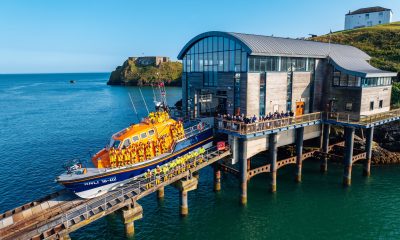
84-year-old man rescued after falling overboard near Tenby
A MAYDAY call sparked a major nighttime rescue after an 84-year-old man fell from a tender and was swept towards...


Crime3 days ago
Jury hears final arguments in Milford Haven teacher stabbing trial
Defence says there was no motive or intention to kill as judge reviews competing accounts of classroom knife incident SPECIAL...


News3 days ago
Andy Burnham becomes Labour leader and prepares to enter No 10
Former Greater Manchester mayor promises an ‘unashamedly Labour’ government after completing extraordinary return to Westminster ANDY BURNHAM has been formally...


News3 days ago
Motorcyclist dies following collision near Narberth
Police appeal for witnesses and footage after fatal crash on B4313 at Redstone A MOTORCYCLIST has died following a collision...


Local Government4 days ago
Stepaside school saved as council abandons closure proposal
Governors welcome decision but maintain original plans were based on outdated information STEPASIDE Community Primary School will remain open after...

Crime4 days ago
Footballer given 200 hours’ unpaid work for eye-gouging assault during match
Magistrates heard Robert Hedley put an opposing player in a headlock before gouging at his eyes during a match in...
-

 Health7 hours ago
Welsh Ambulance Service invites public to AGM and Board meeting
-
Crime5 hours ago
Teen cleared of attempted murder but guilty of GBH after Milford teacher stabbed
-
News24 hours ago
Andy Burnham set for No 10 as Wales awaits change
-
Health1 day ago
Two new surgeons appointed as Hywel Dda admits orthopaedic waits remain too long
-

 Community1 day ago
Tributes paid to long-serving Mansel Davies driver Gareth Griffiths
-

 Crime5 hours ago
What the Milford Haven School stabbing verdict really means
-

 Business1 day ago
First look at plans for new Llanelli indoor market
-
 Community1 day ago
West Wales Sea Cadets celebrate outstanding regatta success