


Politics
‘Lack of clarity’ in Wales Bill

 A REPORT on the Wales Bill, published by the House of Lords Constitution Committee, has stated that the lack of clarity over the demarcation of powers between the UK Parliament and Welsh Assembly not only risks future litigation, but the need for further legislation to clarify the settlement.
The report welcomes the move from a ‘conferred powers’ model (where the Welsh Assembly can only legislate on matters specifically devolved to it) to a ‘reserved powers’ model (where Welsh Assembly can legislate on any subject not explicitly ‘reserved’ by the UK Parliament). The reserved powers model offers a relatively clear and simple division of powers, as well as allowing the Welsh Assembly ‘constitutional space to legislate’. However, the Committee say that the way the Wales Bill implements the reserved powers model undermines these key advantages.
The complexity of the settlement set out in the Wales Bill, in which numerous legal tests interact with hundreds of matters reserved to the UK Government and Parliament, risks the courts being asked to make decisions about whether the National Assembly for Wales has the power to make laws in certain areas. The Committee contrasts this with the simpler settlement set out in the Scotland Act 1998, where the subjects reserved to Westminster are relatively limited, ensuring greater clarity about the devolution of powers.
The Committee also point out that in some areas, the list of reserved matters is so extensive, and the number of legal tests that must be met for the Assembly to use its powers are so vague, that the switch to a reserved powers model is likely to actually result in a return of power from the Welsh Assembly to Westminster.
The Committee call on the Government to explain whether the Wales Bill is actually intended to reduce the legislative competence of the Welsh Assembly in some areas and, if not, what steps they plan to take to ensure that the competence of the Assembly is not inadvertently reduced.

The Committee notes, for example, that absolute restrictions on the Assembly’s ability to modify criminal law in relation to sexual offences may affect its ability to exercise its legislative competence in relation to the protection and well-being of children and young adults.
The Committee notes that there is ‘no evidence of a clear rationale’ for the powers devolved by the Wales Bill and calls on the Government to explain the principles which underpin the devolution proposals set out in the Bill.
The Committee points out that in its recent report, The Union and Devolution, it recommended that further devolution should be managed in a coherent way based on sound principles and clarity about the purpose of the proposed devolution. It says the Government has failed to provide a clear rationale for the scope of powers devolved by the Wales Bill.
Lord Lang of Monkton, Chairman of the House of Lords Constitution Committee, said: “My Committee have taken a long and serious look at devolution within the UK in the last year and we bring that experience with us in examining the Wales Bill.

“We welcome the Wales Bill’s move from a ‘conferred powers’ to a ‘reserved powers’ model of devolution. However, the list of reservations is so extensive, and the legal tests that govern the Assembly’s powers so complex and vague, that it could be a recipe for confusion and legal uncertainty. The outcome is likely to be increased litigation as the courts are asked to decide exactly where the boundaries of the Assembly’s authority lies.
“We are disappointed that there is no clear explanation from the Government as to the rationale for the scope of the powers being devolved under the Wales Bill. As we noted in our report, The Union and Devolution, devolution must take place on the basis of appropriate principles to ensure that the devolution settlements evolve in a coherent way, rather than in a reactive, ad hoc manner.
“The Bill also risks, in some areas, actually reducing the powers of the Welsh Assembly. We have asked the Government whether that was their intention, and if not, how they intend to avoid unintentionally diminishing the Assembly’s powers.

“The Wales Bill starts Committee Stage in the House of Lords next week. This is the first stage where amendments can be made and debated and where the detail of the Bill is examined closely. I hope our report will be helpful to the House in informing that debate.”
This week, the Director of the Welsh Governance Centre, Professor Richard Wyn Jones, also raised concerns that the Wales Bill was being ‘rammed through Parliament’, and suggested that it could be blocked by the Welsh Government. Speaking to the BBC, he said: “It is genuinely hard to find people who aren’t directly involved on the UK government side with a good word to say about this legislation, certainly in terms of the detail,” he said.
“What was striking, we did have a consensus, an all-party consensus, in terms of moving to a reserved powers model.
“What’s particularly depressing is, in the enactments of that good intention, we’ve reached a stage where everybody who is looking at this in a relatively dispassionate way is pointing to some fundamental problems.
“I don’t think that anybody is going into this wanting it to fail, in terms of the critics. This is the only piece of legislation on the table, there is a sense the status quo is unsatisfactory and so people want this to work.
“There have been lots of constructive suggestions for change from the Welsh Government, from the National Assembly presiding office, and yet the legislation is being rammed through Parliament with, so far, only very small changes being conceded.”
However, the Leader of the Welsh Conservatives, Andrew RT Davies, described the ‘landmark’ legislation as offering ‘greater clarity and accountability than ever before in the devolved era’.
“Labour had 13 years in power to address concerns over where power resides and made no meaningful attempt to establish a lasting settlement. Whereas Conservatives have delivered a significant breakthrough, demonstrating our party’s commitment to devolution and the place of Wales as a full partner in the UK,” he added after the MPs gave the Bill an unopposed third reading in September.
“We now have an opportunity to move on from constitutional affairs, and the Welsh Government must now make best use of the tools at its disposal and deliver for Welsh communities; creating jobs, developing the Welsh economy and improving our public services.”


A SENIOR member of the Welsh Government has been accused of “passing the buck” for declining a call to directly intervene in contentious changes to Withybush hospital.
Last year, Hywel Dda University Health Board consulted with its communities on options for change in critical care, dermatology, emergency general surgery, endoscopy, ophthalmology, orthopaedics, stroke, radiology and urology.
It said its Clinical Services Plan focuses on nine healthcare services that are “fragile and in need of change”.
The proposed changes included an option for Withybush patients needing specialist critical care being transferred to Glangwili.
At a recent two-day meeting, the board, amongst its many other decisions, backed changes into emergency general surgery which will see no emergency general surgery operations taking place at Withybush, but a strengthening of the same-day emergency care (SDEC).

Members stressed the changes would not happen overnight.
Following the decision, calls for intervention have also been made by local Senedd members Paul Davies and Sam Kurtz, who wrote to the Cabinet Secretary for Health & Social Care to urge him to intervene and stop the Health Board removing services from Withybush.

That response from the cabinet secretary has been criticised by Mr Kurtz.
In his letter of response, Cabinet Secretary for Health and social Care Jeremy Miles MS stressed planning and delivery of local health services, in this case “scheduled to begin in the next Senedd term, with a time horizon of up to four years to complete,” were, under statutory arrangements for NHS Wales, “the responsibility of health boards”.

Responding, Sam Kurtz said: “The response from the Welsh Health Minister is regrettably, though perhaps unsurprisingly, deeply disappointing. Rather than demonstrating leadership and using the powers that he has as Health Minister, he appears to be passing the buck to the health board despite the profound impact these decisions will have on services in Pembrokeshire.
“There is clear and justified concern among residents. After years of cuts to services at Withybush Hospital, this response will do little to reassure our communities.
“People deserve clarity, accountability, and a meaningful voice in decisions affecting vital services. Paul Davies and I will continue to stand firmly in defence of healthcare provision across West Wales.”

The Minister’s letter added: “Since the decision was taken, both the First Minister and I have set out the Welsh Government’s position in answers to questions from members of the Senedd and in debates. We have been very clear that decisions of this nature rest with the health board.”
It went on to say: “In your letter, you raise points about services within the scope of the [Clinical Services Plan] as well as the future of the emergency department at Withybush Hospital. I want to be very clear that emergency department services were not part of the CSP decision.”
The county council has also debated the downgrade plans for Withybush.
A petition to the Senedd against the changes has been created by Crymych resident Ajay Owen, entitled Urgent Pembrokeshire Healthcare & Resident Safety – Withybush Hospital & Health Board Intervention.
The petition, running to August 23, has attracted more than 11,000 signatures to date.


THE WELSH LIBERAL DEMOCRATS have criticised comments by Reform UK figures suggesting coal mining could be revived in Wales, describing the idea as unrealistic and warning it could damage both the environment and future investment.
The row follows comments by Reform candidate Ben Hodge-McKenna, who said reopening coal extraction using newer and “safer” technology could help meet Wales’ future energy needs. Reform leader Nigel Farage has also previously faced criticism over remarks about sending young Welsh people back down the mines.
Responding to the comments, the Welsh Liberal Democrats said Wales should focus instead on developing newer industries, including floating offshore wind in the Celtic Sea, tidal energy and green manufacturing.
The party also linked the issue to Reform’s previous support for fracking, arguing that both positions point to what it sees as an over-reliance on older fossil fuel industries rather than long-term economic planning.
Welsh Liberal Democrat leader Jane Dodds said: “Reform’s plan to reopen coal mines is pure fantasy politics. It won’t cut bills, it won’t deliver lasting jobs, and it won’t stand up to even the most basic economic scrutiny.
“The fact they also want to open Wales up to fracking tells you everything you need to know. Fracking would destroy our countryside, can cause earthquakes and risks contaminating local water supplies, yet Reform seems willing to ignore those dangers.
“This is a party doubling down on the failed energy policies of the past, with no serious plan for the future.
“Wales cannot build its future by trying to relive its past. Communities that once powered the industrial revolution deserve better than being sold false promises about industries in irreversible decline.
“Instead of chasing yesterday’s solutions, we should be investing in the industries of the future and giving Welsh workers the secure, well-paid jobs they deserve.”
The Welsh Lib Dems said former coalfield communities deserve serious economic plans for regeneration rather than what they described as headline-grabbing promises.
Reform has argued that Wales should be more willing to use domestic energy resources, including fossil fuels, as part of a wider push for energy security and lower costs.
I’d add a line at the end saying Reform was approached for comment, if you have asked them.

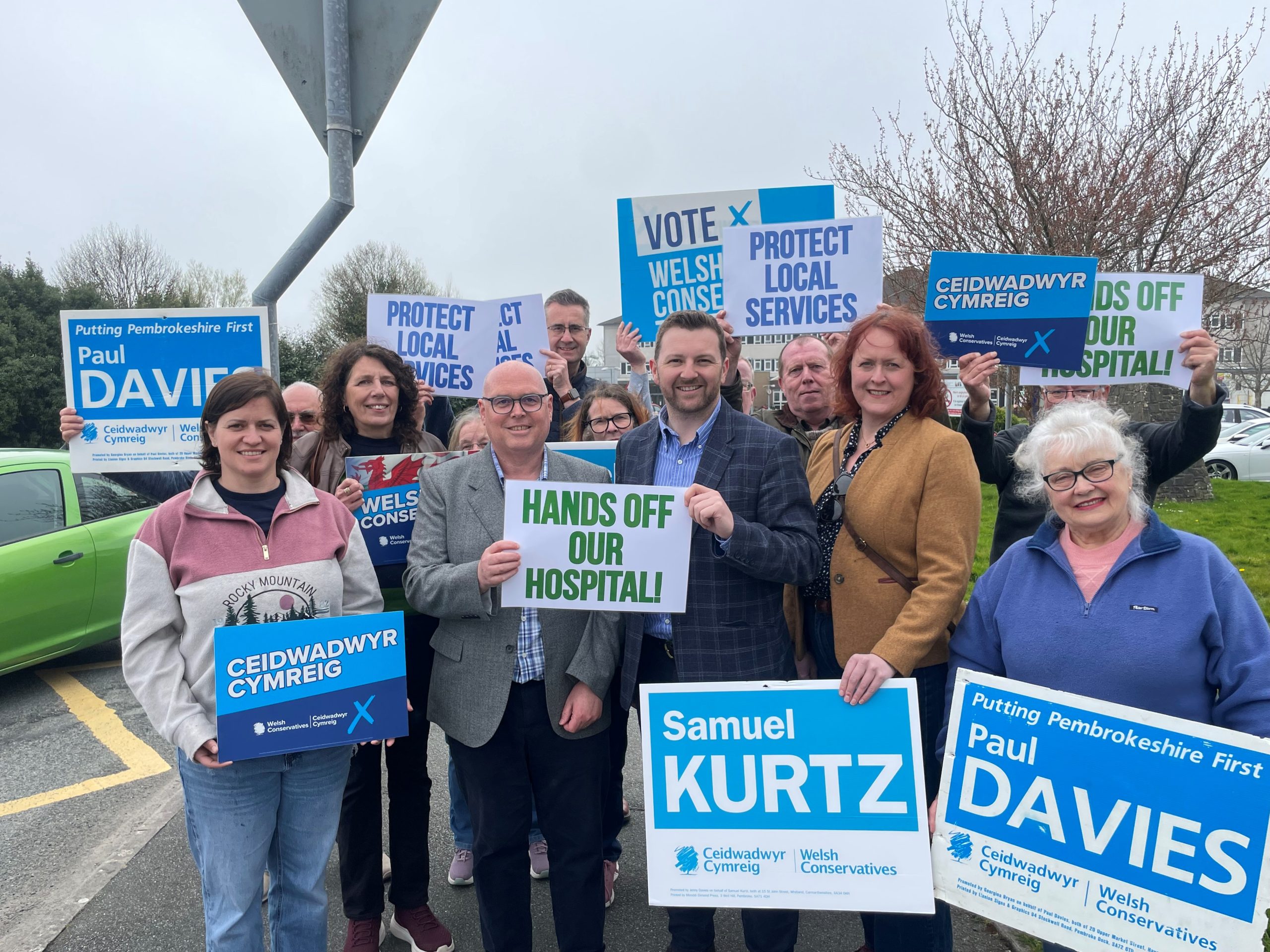
THE WELSH CONSERVATIVE team has officially launched its campaign for the new Ceredigion Penfro constituency, pledging to protect vital local health services including Withybush Hospital and Bronglais Hospital.
Leading the campaign are current Senedd Members Paul Davies and Samuel Kurtz, who were joined by members of the Welsh Conservative team and fellow Ceredigion Penfro candidates Claire George, Brian Murphy, Jill Evans and Claire Jones.
At the launch, held outside Withybush Hospital, the team set out its vision for improving healthcare provision across west Wales. The campaign will focus on protecting and strengthening services at Withybush Hospital in Haverfordwest and Bronglais Hospital in Aberystwyth, both seen as essential lifelines for rural communities in Pembrokeshire and Ceredigion.
Paul Davies said: “Residents across Pembrokeshire and Ceredigion deserve access to high-quality healthcare close to home. We have consistently stood up for Withybush Hospital and will always fight to defend it. Any attempt to downgrade services is simply unacceptable.”
Samuel Kurtz added: “Labour has overseen the downgrading of local health services, while Plaid has enabled it by propping up Labour budgets in the Senedd. Reform has been silent on cuts to Withybush and Bronglais hospitals. Only Paul, myself and the Welsh Conservatives are standing up for our local health services, from Withybush and Bronglais to GP and dental access.”
The Welsh Conservatives said their campaign would focus on protecting and improving services at both hospitals, cutting waiting times, improving access to GPs and dentists, securing fairer healthcare funding for rural areas, and ensuring local voices are heard in decisions about health provision.
They said rural healthcare needs tailored solutions and long-term investment, rather than further centralisation of services away from local communities.
Paul Davies added: “This campaign is rooted in the priorities of local people who have trusted us to deliver. We have a strong track record of action, and we will continue to stand up for our hospitals, support local businesses and farmers, and fight for a healthcare system that works for everyone, no matter where they live.
“This election is about making sure west Wales has a strong, experienced voice focused on what really matters – our NHS, our economy and our future.

“After more than two decades of Labour running Wales, too many public services are still falling short, especially in rural areas like ours.”
Mr Kurtz said: “Paul and I have experience, and we have put that experience into practice by working hard for our communities. That experience will matter in a larger Senedd. We are ready to hit the ground running and fight for west Wales, no matter who ends up running the Government.”
The campaign will now continue across the constituency, with candidates meeting residents and listening to their priorities.
Aled Thomas, Chair of the Pembrokeshire and Ceredigion Conservative Federation, said: “With six Senedd Members representing the new constituency under the new voting system, every vote matters, and every vote for the Welsh Conservatives can help return Paul and Sam.
“Both Paul and Sam are well known locally, with years of experience standing up for west Wales. They understand the issues that matter, they are proud to serve, and they have consistently worked hard to get results.”
Photo caption: Welsh Conservative candidates Paul Davies, Samuel Kurtz, Claire George, Brian Murphy, Jill Evans and Claire Jones launched their Ceredigion Penfro Senedd campaign on Wednesday (Apr 2) with a pledge to protect local health services.



Crime15 hours ago
Driver spared jail after crash killed young couple
A PEMBROKE DOCK driver who caused the deaths of a young couple in a road crash has been given a...


Entertainment19 hours ago
BBC unveils major new Welsh dramas with Tenby set for prime-time spotlight
New crime series Old Town Murders and supernatural thriller The Witch Farm will both be filmed and set in Wales...


Health20 hours ago
No jobs for new paramedics in Wales as graduates told to apply for technician roles
Students trained at public expense urged to take lower-grade jobs as anger grows over NHS workforce planning NEWLY qualified paramedics...


News2 days ago
Health minister refuses to act on Withybush despite 15,000-signature petition
Senedd pressure grows as Welsh Government declines to intervene over surgery fears THE WELSH GOVERNMENT has refused to step in...


Business2 days ago
Fishguard to Wexford rail tunnel plan backed by Elon Musk firm
Six-hour London to Dublin service proposed in £32bn project ahead of Senedd election PLANS for a rail tunnel linking west...

Charity3 days ago
Milford Haven charity honoured with King’s Award for voluntary service
A PEMBROKESHIRE charity supporting vulnerable young people has received one of the highest honours in the UK for voluntary work....


News4 days ago
Plaid Cymru launches bid to lead next Welsh Government
Party positions itself as ‘government-in-waiting’ ahead of May election PLAID CYMRU has formally launched its campaign for the 2026 Senedd...


Crime4 days ago
Police appeal after attempted child abduction in Haverfordwest
DYFED-POWYS POLICE has launched an appeal for witnesses following a reported attempted abduction of a 12-year-old girl in Haverfordwest. The...


Crime5 days ago
Gunshot fired by police during incident in Milford Haven
A POLICE officer discharged a firearm during an incident in Milford Haven on Saturday evening (March 28), prompting an investigation...


Community6 days ago
Three Amigos Easter Run roars through Pembrokeshire
MOTORCYCLE enthusiasts turned out in force today (Saturday, March 28) as the popular Three Amigos Easter Run returned to the...
-

 Education7 days ago
Ysgol Henry Tudor reassures parents over Sikh ceremonial kirpan
-
 Crime7 days ago
Taylor wins appeal as Crown Court quashes ‘no insurance’ conviction
-

 Crime7 days ago
Appeal dismissed in blood sample case after court rejects PTSD defence
-

 Business7 days ago
Popular extreme sport off Pembrokeshire coast to become licenced activity
-

 Local Government7 days ago
Pembrokeshire Coast National Park members salaries to rise
-

 Crime7 days ago
Four men fined over illegal cockle gathering on the Burry Inlet
-

 Charity4 days ago
RSPCA calls for stronger animal welfare measures as Welsh Labour launches manifesto
-
 Charity7 days ago
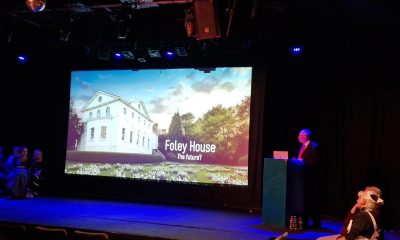
Foley House to become cancer support centre in memory of Adam Evans-Thomas