


Politics
Cameron’s hamstrung Exchequer



Pledges cost money: David Cameron’s hamstrung Exchequer
THE NATIONAL tabloids are often full of foaming at the mouth headlines about ‘scroungers’, stories about ‘dole fiddlers’, and tales expressing horror that some people pretend to be ill to get disability benefits.
That is nothing new and it is conspicuous that there is a spike in such stories (particularly involving those from outside the UK) when governments of whatever complexion have announced ‘welfare reform’ (cuts) ‘designed to deliver to those most in need’ (not those in most in need).
WHERE THE MONEY GOES: PENSIONS
Welfare spending makes up around 35% of the UK Government’s spending and totals over £260b per year. However, ‘welfare’ is a broad term and only a fraction of welfare benefits spending is on unemployment benefits.
The largest amount paid out in welfare benefits is for pensions and the Office for National Statistics’ last available figures show that £108b of the £258b welfare spend in 2014/15 went on pensions.

In fact, total pension spending has increased by 25% since the financial year 2010/11. This isn’t surprising as life expectancy has been steadily increasing, so state pensions are being claimed for longer. The remaining life expectancy for someone aged 65, in 2016, is 21 years for a man and 24 for a woman.
What that means is that the idea that people have ‘paid in what they get out’ is increasingly untrue. Some of those claiming pensions will have contributed comparatively little to their state pensions, whereas actuarial calculations on future pension need carried out when older pensioners were working would have been predicated on them dying within a few years of retirement. The fact that we are all living longer means that the proportion spent on pensions is likely to continue to rise just at the point when the working age population which funds the spending is in decline.
WHERE THE MONEY GOES: CARE AND DISABILITY
£29 b is spent on personal social services. About £41 b goes on benefits for people who are ill or disabled, while £10 b goes on elderly care payments. Disabled people are more likely to live in deprived areas and work in routine occupations. In the 2011 Census, 18% of people (10 million) reported some form of disability.

As for elderly care, there were 9.2 million people aged 65+ in 2011, making up 16% of our population. The care home population has actually stabilised over the last decade at around 300,000 people, but there has been an increase of 600,000 people (likely family members) providing unpaid care between 2001 and 2011. In total, 5.8 million (10%) provided unpaid care in England and Wales in 2011, and the majority were of working age.
W HERE THE MONEY GOES: POVERTY AND THE UNEMPLOYED
£44 b goes on family benefits, income support and tax credits. This includes benefits such as child benefit and support for people on low income. Around £3.5 b goes to the unemployed.

There were around 3 million people in in-work poverty in 2013. This meant their household income (adjusted for household size and composition) was below the poverty threshold and were in employment themselves. The 10% of households with the lowest disposable income spent an average of £196 a week in 2013. Of this, half (£98) was spent on food and non-alcoholic drinks, transport, housing (including net rent), and household fuel and power.
As for out of work people claiming Jobseeker’s Allowance and Universal Credit, there were 760,200 people claiming these benefits in January 2016. This number has decreased by 11.2% compared with a year earlier
WHAT ABOUT FRAUD?
The notion, often pushed by the tabloids, is that there is a massive amount of benefit fraud. A poll carried out by the TUC in 2012 revealed that British people believed that 27% of benefits were claimed fraudulently.
To describe that as a ‘wild overstatement’ does not do how wrong it is justice. It seems to be one of those figures arrived at on the basis that ‘everybody knows’, rather than being remotely founded in reality.
The actual level of all fraud in the UK’s welfare benefits system was 0.8% in 2014/15.
While that is the amount of detected fraud, to suggest that it is completely out of line with actuality is to ignore the fact that the UK government employs 12 times as many benefits fraud investigators than it has tax fraud investigators.
The UK loses six times more through tax evasion and aggressive tax avoidance than the total value of fraudulent welfare benefit claims. Moreover, the UK fails to collect £34b in tax each year. And that is providing you accept the UK government’s figures, which are disputed by some economists as a wild underestimate.
While benefits fraud is an issue, there is an argument that the amount of time spent on it and the amount of publicity it receives is out of all proportion to the actual value of the fraud involved.
University of Warwick political scientist Adam Taylor said: “
This isn’t to say that benefit fraud is OK or that HMRC isn’t doing anything about tax evasion. But it is wrong that the government feels it can openly threaten the poor while merely cajoling the rich. And it is sad that the tax-burdened middle class reserve their outrage for the single mother working in the cafe while lionising the rich, famous and powerful who are getting away with it, tax free.”
WHO PAYS?
Successive governments have been aware of the crisis facing benefit payments for over two decades and yet none of them has sought to do anything more than fiddle at the margins and target the most vulnerable and weakest members of society: the Cameron Government spent an enormous amount of political capital to no good end making an economically pointless adjustment to housing benefit with the hated bedroom tax. The projected savings from that policy were tiny.
In addition, the amount of direct tax paid by the working population is contracting along with the numbers of those in work and the changing profile of work economic activity.
In the past, when the welfare model was fixed, there was generally one full time bread winner per working class family in a job which lasted an entire working life. Stable incomes represented a stable and predictable tax yield. However, the change from a high labour manufacturing economy to a service-based one with lower labour requirements, altered the whole dynamic of working class life. Multiple part time jobs may reduce the number on the unemployed role, but lower income jobs pay less into the UK’s tax base.
So, the question that all governments face is how to provide people with the welfare benefits they need without upsetting voters who have to pay for them.
NO EASY ANSWER
The issue is particularly acute due to David Cameron’s 2015 promise not to raise National Insurance, Income Tax, or VAT. Where else, the question might fairly be asked, would the money come from? Especially as there is a guaranteed 2.5% increase per annum in the state pension.
Oh – and older voters and pensioners vote in far higher numbers than the young. On the basis that turkeys seldom vote for Christmas, you can guess why politicians are wary of doing anything to affect that demographic.
One thing is certain, fiddling at the margins is not enough. But whether politicians have the will to make the sort of changes needed to the UK’s tax and welfare system, is one of those questions to which there is no glib answer.
Which do you prefer, after all, higher taxes or cuts targeted at those least able to defend themselves?

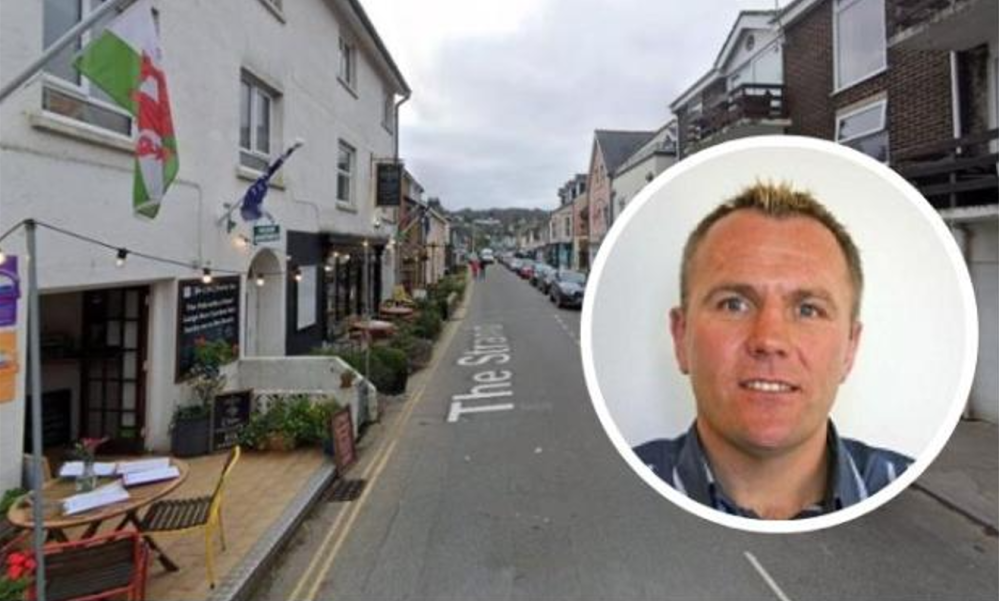
A FORMER Pembrokeshire county councillor who owns many hostelries in the county has submitted plans to the national park to rejuvenate a “tired” seaside pub.
In an application to Pembrokeshire Coast National Park, Mike Evans of Harbwr Brewery, a former county councillor and national park authority member, seeks a partly retrospective permission for works at the Old Chemist Inn, The Strand, Saundersfoot.
The works include proposed internal alterations to the basement and ground floor, a new rear balcony area to replace the existing one, improvements to front façade, a change of use of shop space to food/drink, and installation of seating booths in the rear garden.
It says the changes proposed will increase the number of staff employed to 15 full time and 10 part-time.
No objections to the proposal were raised by local community council Saundersfoot.
A supporting statement through agent David J P Morgan RIBA Architect, says the 19th Century pub “has endured many alterations during its lifetime and at present it needs improvements to echo the recent upgrading of the village, both in the general tourism support facilities, as well as the new innovative harbour development,” with the appearance and interior facilities “tired” and needing “works both inside and outside to enable the inn to achieve and provide the high levels of cuisine and facilities now expected”.
It says: “The Inn has been purchased by a local company who have a number of establishments within Saundersfoot and Tenby. The company is owned by local people, they use local produce, they employ local labour and work actively with local communities to achieve the high standards expected.
“The proposals include internal alterations to the internal layout of basement and ground floor which will improve bar, kitchen and food facilities and allow a much more varied menu including lots of local produce and locally caught seafood dishes. New toilet facilities will be provided on both levels to cater for the increase in visitors to the Inn.”
It adds: “The applicant has recently purchased the small retail unit on the ground floor. This was a single room, situated in between the two entrances into the Inn and with its own entrance door from the street.
“The current proposals include integrating this unit into the public house bar area and consequently the application includes a change of use from retail to the serving of food and drink.”
It goes on to say: “The rear ‘beer garden’ will be improved to allow more space and comfortable seating areas.
“The applicant is well known for the extensive use of external plotted plants in open areas at their establishments and the garden area will give the opportunity of using such to soften the garden area whilst giving greater habitat opportunities for birds and insects.”

There were initial objections from the Park’s buildings conservation officer to some of the parts of the design, a 2025 application being withdrawn early that year; amended plans being later submitted.
The application will be considered by park planners at a later date.


THE WELSH GOVERNMENT’s key Child Poverty Strategy lacks clarity, has no reliable way of measuring success or failure, and, crucially, does not account for the Welsh Government’s lack of control over the levers needed to deliver on it.
Those are the findings of a new report by the UK’s leading economic policy research body, the Institute for Fiscal Studies (IFS), which looks at Wales’s economic performance and poor employment record.
The IFS report, published on Wednesday (April 1), shows that Wales’s economic performance is the worst of the UK nations, with the lowest employment rate, the lowest incomes, the lowest productivity, and the worst poverty levels.

POVERTY STRATEGY LACKS FOCUS
The Welsh Government launched its Child Poverty Strategy in 2018, with five broad aims to reduce child and youth poverty. However, the IFS criticises how those aims have been set out, finding that the definitions are too broad to be measured accurately and lack focus. In particular, the IFS says the strategy’s aims are so nebulous that they ignore the impact of policy areas over which the Welsh Government exercises direct control, for example, health and education, on how outcomes might be measured.
The IFS report says: “Issues with the data mean a material risk that the Welsh Government might either appear to have met a future poverty target or missed it, by a large margin, when in fact the reverse is true.”

WG NOT IN CONTROL OF OWN POVERTY STRATEGY
In any event, several of the most direct policy levers available to influence employment and earnings, including minimum wages, employment law and benefits policy, are reserved to Westminster. However, even if these policy levers were available, it would be very challenging to achieve large, rapid reductions in child poverty with them. In addition, Labour has ruled out using the tax system to generate additional income to help it meet its aims.
Wales’s highest-earning regions are along the North East Wales border with England and in the Cardiff and Newport areas. In addition, proportionately more Welsh employees are public sector workers, who are also, far and away, the best paid in Wales. The average public sector wage is around £5,000 higher than the average private sector wage. And those jobs, too, are disproportionately centred in Cardiff, Newport and North East Wales. The best-performing areas by employment rate, Monmouthshire and Newport, are within easy reach of the English border.
POVERTY CONCEALED BY LOWER PROPERTY VALUES
Compared with the rest of the UK, the gap between men’s and women’s pay is lower in Wales, as are the differences in income and in the highest and lowest property prices. However, property prices are far lower in Wales than in England, as are incomes overall; in addition, there are so few higher-rate tax earners in Wales that the Welsh Government increasing their income tax would have a negligible effect on its revenue. In addition, because Welsh housing prices are much lower than elsewhere in the UK, and because housing costs are a factor in how poverty is measured, housing costs improve one of the key poverty metrics.


TV presenter and commentator to appear at Cardiff event aimed at mobilising anti-Reform voters before May 7
CAROL VODERMAN has urged voters in Wales to reject Reform UK at next month’s Senedd election, as she prepares to appear at a live political event in Cardiff focused on keeping the party out of power.
Speaking ahead of an emergency Guilty Feminist Welsh Election Special at the New Theatre, Cardiff, on Sunday, April 12, Vorderman said Wales faced a crucial choice at the ballot box.
She said: “Wales has a chance for a new beginning in May. But Reform, the chaotic London-based, privately educated, failed Tory party, needs to be sent packing.
“Already numerous of their 96 Welsh candidates have resigned or been sacked for revolting actions. Their last Welsh Reform leader Nathan Gill is serving time in jail for accepting Russian bribes while serving in the European Parliament. Their new Welsh leader was a Tory living in London until a few months ago.
“Farage is a thin-skinned and proven liar. Everyone must come out to vote to save our country. Cymru Am Byth.”
Vorderman is due to appear alongside Guilty Feminist host Deborah Frances-White, with Welsh comedians Kiri Pritchard-McLean and Priya Hall also on the bill. Organisers say the night will mix comedy, music and political discussion, with the aim of building strategy ahead of the election.
Frances-White said polling suggested the Senedd result could be close and argued that “it really matters who ends up making decisions about our lives”, adding that the event was intended as a “get-in-the-room” night to work out how to respond.
Reform UK’s current leader in Wales is Dan Thomas, who was unveiled by Nigel Farage in Newport in February. Thomas is a former Conservative leader of Barnet Council in London, although he grew up in Blackwood.
Vorderman’s reference to Nathan Gill points to a highly embarrassing chapter in the party’s recent history. Gill, a former Reform UK politician and ex-MEP, was jailed last year after admitting taking bribes from pro-Russian figures in exchange for speeches and statements in the European Parliament.
Asked for a response to Vorderman’s remarks, a Reform UK Wales source replied briefly: “Does she even live in Wales?”
It was a short answer, but perhaps not one likely to end the argument. With the campaign heating up, and with high-profile voices now piling in from outside formal party politics, the battle for attention ahead of May 7 is only getting louder.



Health3 hours ago
Crumbling NHS faces £1bn repairs bill in Wales
Senedd election promises collide with the harsh reality of ageing hospitals, fire safety concerns and a maintenance crisis stretching across...


News12 hours ago
Emergency services respond to incident in Haverfordwest town centre
EMERGENCY SERVICES were called to an incident in Haverfordwest town centre on Saturday morning (Apr 4), with police and ambulance...

News12 hours ago
Teenager intervenes after bridge incident
A TEENAGER was left shaken after stepping in to help a young woman in distress on Clay Lanes bridge in...


Crime2 days ago
Driver spared jail after crash killed young couple
A PEMBROKE DOCK driver who caused the deaths of a young couple in a road crash has been given a...


Entertainment3 days ago
BBC unveils major new Welsh dramas with Tenby set for prime-time spotlight
New crime series Old Town Murders and supernatural thriller The Witch Farm will both be filmed and set in Wales...


Health3 days ago
No jobs for new paramedics in Wales as graduates told to apply for technician roles
Students trained at public expense urged to take lower-grade jobs as anger grows over NHS workforce planning NEWLY qualified paramedics...


News3 days ago
Health minister refuses to act on Withybush despite 15,000-signature petition
Senedd pressure grows as Welsh Government declines to intervene over surgery fears THE WELSH GOVERNMENT has refused to step in...


Business4 days ago
Fishguard to Wexford rail tunnel plan backed by Elon Musk firm
Six-hour London to Dublin service proposed in £32bn project ahead of Senedd election PLANS for a rail tunnel linking west...


Charity5 days ago
Milford Haven charity honoured with King’s Award for voluntary service
A PEMBROKESHIRE charity supporting vulnerable young people has received one of the highest honours in the UK for voluntary work....

News5 days ago
Plaid Cymru launches bid to lead next Welsh Government
Party positions itself as ‘government-in-waiting’ ahead of May election PLAID CYMRU has formally launched its campaign for the 2026 Senedd...
-

 News2 days ago
Accommodation providers in Wales will be required to register under new law
-
Business4 days ago
Fishguard to Wexford rail tunnel plan backed by Elon Musk firm
-

 Entertainment2 days ago
From Milford Haven to the world: The story of The Evolution Experience
-
Entertainment3 days ago
BBC unveils major new Welsh dramas with Tenby set for prime-time spotlight
-

 Charity5 days ago
RSPCA calls for stronger animal welfare measures as Welsh Labour launches manifesto
-

 Crime6 days ago
Gunshot fired by police during incident in Milford Haven
-
 Tourism6 days ago
Moving to Australia from the UK: What you need to Kknow
-

 Community6 days ago
Pembrokeshire school allows Sikh pupil to wear Kirpan