


Politics
Energy policy and the environment

 LAST WEEK The Herald looked at the energy market and the ways in which different parties have approached the question of rising domestic energy bills.
That article discussed the ways in which taking advantage of existing energy efficiency schemes and the use of the most competitive tariffs would reduce bills far more than a simple price cut on the most commonly used domestic tariff.
Labour has claimed it will create over 300,000 renewable energy jobs throughout the country and put modern low-carbon industries at the heart of a £500 billion investment strategy, championing ‘a new green industrial revolution’.
One of the big ideas underpinning that commitment is to promote the growth of local energy companies and support the development of 1,000 community energy co-operatives. That’s accompanied by a commitment to 65% renewable electricity by 2030, aiming for 85% as technology improves and diffuses.
All of which will sound very familiar to Plaid Cymru, whose Shadow Environment spokesperson, Simon Thomas AM, has called for the creation of Ynni Cymru to promote Wales’ own self-sufficiency in domestic energy. It sounds like Plaid’s clothes have been lifted by Jeremy Corbyn’s promises to invest in similar schemes and raise investment across the UK.

Labour has set out a radical commitment to set up publicly-owned energy supply companies in every region focused purely on cutting prices. Under the same proposals, Government would take ‘control of the natural monopolies of the transmission and distribution grids’ currently run by the National Grid.
The Labour leader has made big promises, and the cynical might think that Labour may as well shoot for The Moon, given the remote chances it has of forming an administration under Jeremy Corbyn as PM.
“We’ve got a real opportunity to drive the green economy – to have green jobs, green growth, and make sure that we have our share of the industries of the future. Clearly there’s the climate change agenda, where we’ve got to get back on track, both nationally and internationally. And third, there is the issue of energy security, which I think is vitally important, which we need to do a huge amount of work on.”
Those were big promises, too. They were made seven years ago by David Cameron at the outset of his first term as PM, when he pledged to lead the greenest government ever. By 2013, David Cameron was keen to ‘get rid of all the green crap’, as the hopes of 2010 smashed into the economic and political realities of Treasury austerity.

The rug was pulled from under the renewables industry: following through on the pledge to virtually ban onshore wind, and slashing the feed in tariff. Overall UK carbon emissions had been falling but the growth in renewables deployment stalled, and solar companies employing thousands of people around the country went bust.
Five years later, at the outset of his second term, David Cameron pulled the Green Deal for UK homes.
On every single one of those policy decisions, commitments, and staggering reversals Theresa May went along, bobbing along like a cork on the tide of Cabinet collective responsibility. The number of times she has spoken out on energy policy in public can be counted on the fingers of one thumb. However, she merged the Department of Energy and Climate Change into a new Department of Business, Energy and Industrial Strategy in July 2016.

While that suggests a rather less overtly ‘green’ approach to the PR side of politics than her predecessor, it is noteworthy that Theresa May has expressed consistent and strong positions on the issue of energy security. Her first noteworthy public policy decision was to initiate a pause on the development of Hinkley B, ostensibly due to concerns of increasing UK reliance on Chinese investment in its energy infrastructure.
In addition, in a complex and volatile international energy market, there are clear attractions for the PM in adopting measure which enhance energy security and the reduction on the reliance of overseas energy. Her concerns on energy supply were echoed in the 2015 Conservative manifesto, which said: ‘Without secure energy supplies, our country becomes less safe and less prosperous’.
And, in 2008, Mrs May said: “I am thrilled to see that after years of Conservative pressure, we have finally passed a necessary and ambitious piece of legislation on Climate Change. Britain is the first country in the world to formally bind itself to cut greenhouse emissions and I strongly believe this will improve our national and economic security.
“To stay reliant on fossil fuels would mean tying ourselves to increasingly unstable supplies which could endanger our energy security and the Climate Change and Energy Bills mark an important step for both the health of our economy and the health of our nation. It is now vital that we stick to these targets.”
The logic of Mrs May’s evident and consistently expressed concerns on security of energy supply is to make the UK more self-sufficient. There are two sides to that issues: firstly, the extension of green energy generation; secondly, the extension of fracking and nuclear power.
The second limb of that proposition is the most contentious. Fracking is a public relations disaster waiting to happen and the first time it is scheduled to take place in a Conservative-held marginal seat is when we will see just how committed the Conservative party is to its use. As for nuclear power, it requires considerable public support and subsidy to make it even marginally viable for the long term.
The only large energy project requiring anything like the level of price support as nuclear power is the Swansea Tidal Lagoon, which for all its carbon-saving claims involves quarrying stone in Cornwall, building new jetties extending into the Bristol Channel and transporting the stone over by barge to Swansea by the thousands of tonnes to build a tidal barrage affecting marine life and habitats across the whole of Swansea Bay.
For someone as sensitive to polls as Theresa May it is worth noting that the BEIS tracker surveys on consumer views shows significantly higher support for renewable energy (at around 75-80%) than for other options. Opposition to renewables was very low at 4%, with only 1% strongly opposed.
However, and this is where energy policies and political judgement come into play, support for renewables was lower amongst those in social grade DE (72%), aged 65+ (73%), and social renters (75%).
The first two of those groups are key electoral demographics whose support Theresa May is actively courting. The triangulation of Conservative policy on energy, which now appears to have abandoned the notion that competition delivers the best results for energy users, might not swing a lot of votes, but the Conservative leader will not be shy of using every gimmick in her arsenal to court wavering voters looking for a way to justify voting Conservative.

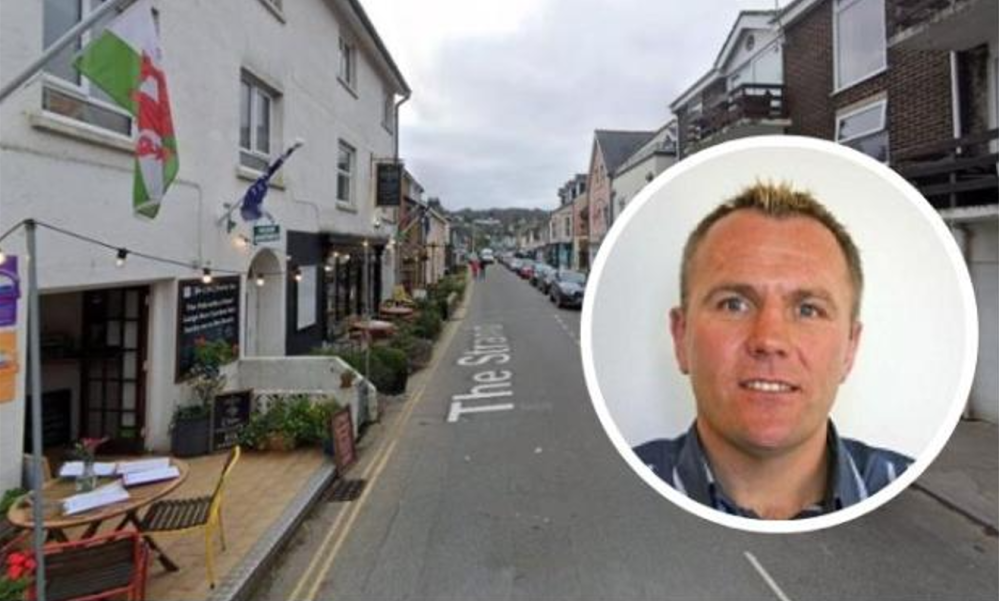
A FORMER Pembrokeshire county councillor who owns many hostelries in the county has submitted plans to the national park to rejuvenate a “tired” seaside pub.
In an application to Pembrokeshire Coast National Park, Mike Evans of Harbwr Brewery, a former county councillor and national park authority member, seeks a partly retrospective permission for works at the Old Chemist Inn, The Strand, Saundersfoot.
The works include proposed internal alterations to the basement and ground floor, a new rear balcony area to replace the existing one, improvements to front façade, a change of use of shop space to food/drink, and installation of seating booths in the rear garden.
It says the changes proposed will increase the number of staff employed to 15 full time and 10 part-time.
No objections to the proposal were raised by local community council Saundersfoot.

A supporting statement through agent David J P Morgan RIBA Architect, says the 19th Century pub “has endured many alterations during its lifetime and at present it needs improvements to echo the recent upgrading of the village, both in the general tourism support facilities, as well as the new innovative harbour development,” with the appearance and interior facilities “tired” and needing “works both inside and outside to enable the inn to achieve and provide the high levels of cuisine and facilities now expected”.
It says: “The Inn has been purchased by a local company who have a number of establishments within Saundersfoot and Tenby. The company is owned by local people, they use local produce, they employ local labour and work actively with local communities to achieve the high standards expected.
“The proposals include internal alterations to the internal layout of basement and ground floor which will improve bar, kitchen and food facilities and allow a much more varied menu including lots of local produce and locally caught seafood dishes. New toilet facilities will be provided on both levels to cater for the increase in visitors to the Inn.”
It adds: “The applicant has recently purchased the small retail unit on the ground floor. This was a single room, situated in between the two entrances into the Inn and with its own entrance door from the street.
“The current proposals include integrating this unit into the public house bar area and consequently the application includes a change of use from retail to the serving of food and drink.”
It goes on to say: “The rear ‘beer garden’ will be improved to allow more space and comfortable seating areas.
“The applicant is well known for the extensive use of external plotted plants in open areas at their establishments and the garden area will give the opportunity of using such to soften the garden area whilst giving greater habitat opportunities for birds and insects.”
There were initial objections from the Park’s buildings conservation officer to some of the parts of the design, a 2025 application being withdrawn early that year; amended plans being later submitted.
The application will be considered by park planners at a later date.

THE WELSH GOVERNMENT’s key Child Poverty Strategy lacks clarity, has no reliable way of measuring success or failure, and, crucially, does not account for the Welsh Government’s lack of control over the levers needed to deliver on it.
Those are the findings of a new report by the UK’s leading economic policy research body, the Institute for Fiscal Studies (IFS), which looks at Wales’s economic performance and poor employment record.
The IFS report, published on Wednesday (April 1), shows that Wales’s economic performance is the worst of the UK nations, with the lowest employment rate, the lowest incomes, the lowest productivity, and the worst poverty levels.

POVERTY STRATEGY LACKS FOCUS
The Welsh Government launched its Child Poverty Strategy in 2018, with five broad aims to reduce child and youth poverty. However, the IFS criticises how those aims have been set out, finding that the definitions are too broad to be measured accurately and lack focus. In particular, the IFS says the strategy’s aims are so nebulous that they ignore the impact of policy areas over which the Welsh Government exercises direct control, for example, health and education, on how outcomes might be measured.
The IFS report says: “Issues with the data mean a material risk that the Welsh Government might either appear to have met a future poverty target or missed it, by a large margin, when in fact the reverse is true.”
WG NOT IN CONTROL OF OWN POVERTY STRATEGY
In any event, several of the most direct policy levers available to influence employment and earnings, including minimum wages, employment law and benefits policy, are reserved to Westminster. However, even if these policy levers were available, it would be very challenging to achieve large, rapid reductions in child poverty with them. In addition, Labour has ruled out using the tax system to generate additional income to help it meet its aims.
Wales’s highest-earning regions are along the North East Wales border with England and in the Cardiff and Newport areas. In addition, proportionately more Welsh employees are public sector workers, who are also, far and away, the best paid in Wales. The average public sector wage is around £5,000 higher than the average private sector wage. And those jobs, too, are disproportionately centred in Cardiff, Newport and North East Wales. The best-performing areas by employment rate, Monmouthshire and Newport, are within easy reach of the English border.
POVERTY CONCEALED BY LOWER PROPERTY VALUES
Compared with the rest of the UK, the gap between men’s and women’s pay is lower in Wales, as are the differences in income and in the highest and lowest property prices. However, property prices are far lower in Wales than in England, as are incomes overall; in addition, there are so few higher-rate tax earners in Wales that the Welsh Government increasing their income tax would have a negligible effect on its revenue. In addition, because Welsh housing prices are much lower than elsewhere in the UK, and because housing costs are a factor in how poverty is measured, housing costs improve one of the key poverty metrics.


TV presenter and commentator to appear at Cardiff event aimed at mobilising anti-Reform voters before May 7
CAROL VODERMAN has urged voters in Wales to reject Reform UK at next month’s Senedd election, as she prepares to appear at a live political event in Cardiff focused on keeping the party out of power.
Speaking ahead of an emergency Guilty Feminist Welsh Election Special at the New Theatre, Cardiff, on Sunday, April 12, Vorderman said Wales faced a crucial choice at the ballot box.
She said: “Wales has a chance for a new beginning in May. But Reform, the chaotic London-based, privately educated, failed Tory party, needs to be sent packing.
“Already numerous of their 96 Welsh candidates have resigned or been sacked for revolting actions. Their last Welsh Reform leader Nathan Gill is serving time in jail for accepting Russian bribes while serving in the European Parliament. Their new Welsh leader was a Tory living in London until a few months ago.
“Farage is a thin-skinned and proven liar. Everyone must come out to vote to save our country. Cymru Am Byth.”
Vorderman is due to appear alongside Guilty Feminist host Deborah Frances-White, with Welsh comedians Kiri Pritchard-McLean and Priya Hall also on the bill. Organisers say the night will mix comedy, music and political discussion, with the aim of building strategy ahead of the election.
Frances-White said polling suggested the Senedd result could be close and argued that “it really matters who ends up making decisions about our lives”, adding that the event was intended as a “get-in-the-room” night to work out how to respond.
Reform UK’s current leader in Wales is Dan Thomas, who was unveiled by Nigel Farage in Newport in February. Thomas is a former Conservative leader of Barnet Council in London, although he grew up in Blackwood.
Vorderman’s reference to Nathan Gill points to a highly embarrassing chapter in the party’s recent history. Gill, a former Reform UK politician and ex-MEP, was jailed last year after admitting taking bribes from pro-Russian figures in exchange for speeches and statements in the European Parliament.
Asked for a response to Vorderman’s remarks, a Reform UK Wales source replied briefly: “Does she even live in Wales?”
It was a short answer, but perhaps not one likely to end the argument. With the campaign heating up, and with high-profile voices now piling in from outside formal party politics, the battle for attention ahead of May 7 is only getting louder.



Health10 hours ago
Crumbling NHS faces £1bn repairs bill in Wales
Senedd election promises collide with the harsh reality of ageing hospitals, fire safety concerns and a maintenance crisis stretching across...


News18 hours ago
Emergency services respond to incident in Haverfordwest town centre
EMERGENCY SERVICES were called to an incident in Haverfordwest town centre on Saturday morning (Apr 4), with police and ambulance...

News18 hours ago
Teenager intervenes after bridge incident
A TEENAGER was left shaken after stepping in to help a young woman in distress on Clay Lanes bridge in...


Crime3 days ago
Driver spared jail after crash killed young couple
A PEMBROKE DOCK driver who caused the deaths of a young couple in a road crash has been given a...

Entertainment3 days ago
BBC unveils major new Welsh dramas with Tenby set for prime-time spotlight
New crime series Old Town Murders and supernatural thriller The Witch Farm will both be filmed and set in Wales...


Health3 days ago
No jobs for new paramedics in Wales as graduates told to apply for technician roles
Students trained at public expense urged to take lower-grade jobs as anger grows over NHS workforce planning NEWLY qualified paramedics...


News4 days ago
Health minister refuses to act on Withybush despite 15,000-signature petition
Senedd pressure grows as Welsh Government declines to intervene over surgery fears THE WELSH GOVERNMENT has refused to step in...

Business4 days ago
Fishguard to Wexford rail tunnel plan backed by Elon Musk firm
Six-hour London to Dublin service proposed in £32bn project ahead of Senedd election PLANS for a rail tunnel linking west...

Charity5 days ago
Milford Haven charity honoured with King’s Award for voluntary service
A PEMBROKESHIRE charity supporting vulnerable young people has received one of the highest honours in the UK for voluntary work....

News6 days ago
Plaid Cymru launches bid to lead next Welsh Government
Party positions itself as ‘government-in-waiting’ ahead of May election PLAID CYMRU has formally launched its campaign for the 2026 Senedd...
-

 News2 days ago
Accommodation providers in Wales will be required to register under new law
-
Business4 days ago
Fishguard to Wexford rail tunnel plan backed by Elon Musk firm
-

 Entertainment2 days ago
From Milford Haven to the world: The story of The Evolution Experience
-
Entertainment3 days ago
BBC unveils major new Welsh dramas with Tenby set for prime-time spotlight
-

 Charity6 days ago
RSPCA calls for stronger animal welfare measures as Welsh Labour launches manifesto
-

 Crime7 days ago
Gunshot fired by police during incident in Milford Haven
-

 Community6 days ago
Pembrokeshire school allows Sikh pupil to wear Kirpan
-
 Tourism6 days ago
Moving to Australia from the UK: What you need to Kknow