


Politics
Consent required but no veto on Brexit

THE UK GOVERNMENT has moved to quell at least some of the concerns of devolved administrations by undertaking to consult with them about the planned Repeal Bill which is a cornerstone of the ConDup pact’s policy on Brexit.
However while consent will be sought, if it is not forthcoming there will be no veto on the UK government’s Brexit legislation.
On Monday (Jun 26) , Brexit Secretary David Davis told the House of Commons: “We expect there will be a significant increase in the decision-making power of each devolved administration once we exit the EU.
“That’s why, given that this bill affects the powers of devolved institutions and legislates in devolved areas, we will seek the consent of the devolved legislatures of the bill.”
The Repeal Bill will – amongst other things – write EU Law into UK law enabling Parliament to decide what to keep and what to reject. However, where the Repeal Bill affects areas of governmental responsibility which are devolved, by convention the Westminster Parliament consults with the devolved legislatures. But the UK Government is not bound by the devolved governments’ positions in such circumstances and the latter bodies cannot veto primary legislation from Westminster.

Last week the Constitutional and Legislative Affairs Committee of the Welsh Assembly released a statement that outlined its concerns that some presently devolved matters – for example autonomy on agriculture – could be the subject of a London-based power grab.
Part of the basis for the concerns stem from the UK Government’s approach to the Wales Act 2017; legislation the Committee concluded was over-complicated, bureaucratic and which did not address many points raised by either the Welsh Government or the National Assembly.
The Committee believes the UK Government must address the question of what is the Union for when considering Brexit legislation.
“What makes Wales’ position particularly uncertain is that the introduction of the Great Repeal Bill coincides with a changing devolution settlement that is untried and untested,” said Huw Irranca- Davies AM, Chair of the Constitutional and Legislative Affairs Committee.

“Once the reserved powers model is in force, the boundaries of our legislative competence will no longer be as we previously understood them, and it is difficult to say with confidence what the legislative competence of the National Assembly will be.
“However, based on the UK Government’s approach in relation to the Wales Act 2017, we are concerned that the National Assembly could lose powers to central control as a result of exiting the EU, particularly in policy areas that have been heavily reliant on EU law.
“Overall, the key issue that needs to be addressed by the UK Government is the creation of a legal and constitutional context that serves the devolved nations and UK following exit from the EU. That context needs to be developed in partnership with devolved nations rather than being imposed upon them.”

The Committee submitted its conclusions to both the House of Commons Procedure Committee, and the Assembly’s External Affairs and Additional Legislation Committee as part of its inquiry into the Great Repeal Bill.
Responding to the Brexit Secretary’s remarks, a Welsh Government spokesman said: “We hope this means they have been listening and taking seriously our very strongly felt concerns that this legislation must not in any way restrict the powers and competencies of the Assembly.
“As set out in our policy paper, Brexit and Devolution, leaving the EU must be about the future, not the past.
“We must work with England, Scotland and Northern Ireland – through discussion, not diktat – to map our collective future.”



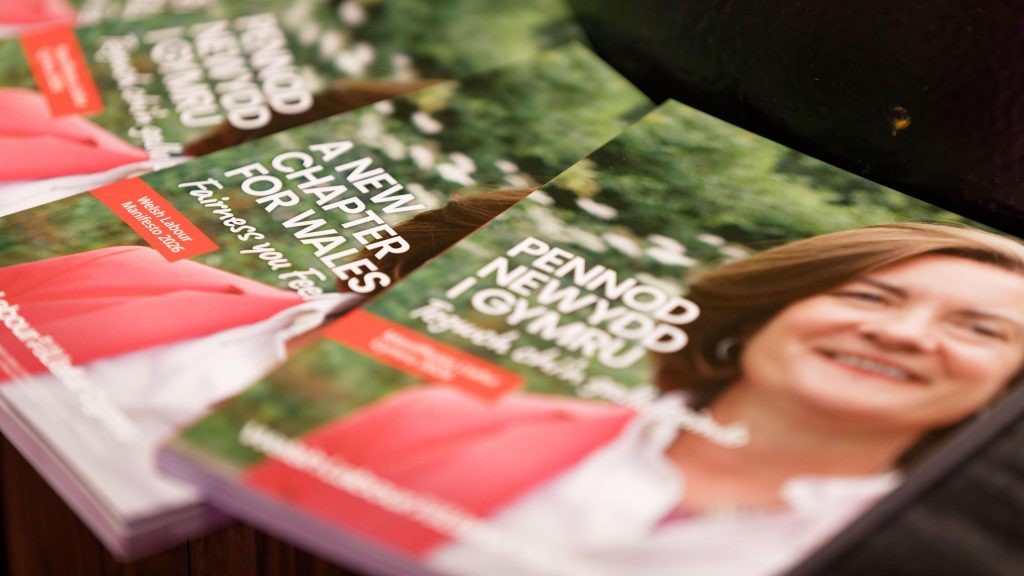
A HAVERFORDWEST teaching assistant became the quiet centrepiece of Welsh Labour’s manifesto launch — and, in doing so, revealed a party focused less on momentum than on damage limitation in towns like ours.
Eluned Morgan’s manifesto launch speech was meant to speak to the whole of Wales. But tucked inside it was a telling local calculation.
When the Welsh Labour leader told delegates about a teaching assistant in Haverfordwest who had “never voted in her life” but would now back Labour because of a pay rise, it was no throwaway line.
In political terms, it was no throwaway line. Morgan was invoking a voter from the very constituency battleground where Labour needs reassurance to cut through.
After years in power, Welsh Labour knows it cannot simply rely on habit, loyalty or anti-Tory feeling to carry it over the line. It needs to reconnect with lower-paid working people in towns like Haverfordwest — voters who may still support parts of Labour’s record, but are increasingly doubtful that life in Wales is getting better.
That is why Morgan’s speech mattered.
Far from sounding like a leader marching confidently towards victory, she sounded like someone trying to hold together a delicate coalition of public sector workers, traditional Labour supporters and anxious voters tempted by change, but wary of the alternatives.
The tone was revealing from the outset.
This was not a speech built on triumph. It was built on caution.

Morgan spoke of pressure on families, pressure on public services and pressure on her own party. She acknowledged that many voters feel something “isn’t quite right” and said people want “a little more certainty” and “a little less dread”.
That is not the language of a party taking victory for granted. It is the language of a party that knows it must steady nervous voters before polling day.
In that sense, the Haverfordwest example was politically shrewd.

Teaching assistants and school support staff are not just another part of the workforce. They are exactly the sort of voters Labour needs to keep onside — public-facing, often modestly paid, rooted in their communities and living the everyday pressures politicians talk about so freely.
By highlighting a Haverfordwest worker who had never voted before, Morgan was trying to tell a wider story: that Welsh Labour can still reach the ordinary voter who feels overlooked, underpaid and unconvinced by politics in general.
But there was another message buried in the anecdote.
Labour is plainly worried about disengagement.
A voter who has “never voted in her life” is useful in a speech not just because she is newly supportive, but because she represents a wider problem for all parties — the sense that many people have drifted away from politics altogether.
Morgan knows frustration with government in Cardiff Bay is real, especially after long-running complaints over NHS access, stretched public services, transport and the cost of living. Her answer was not to offer excitement, but reassurance.
That came through again and again.
She promised there would be no rise in income tax. She attacked “easy promises” and “slogans”. She said she would not “gamble” with people’s lives. She framed the election not as a call for upheaval, but as a choice between seriousness and protest.
In plain terms, Labour is trying to turn this election into a referendum on risk.
That is often what governing parties do when they sense frustration in the electorate, but hope voters remain more cautious about the opposition.
It also helps explain why west Wales featured so prominently in the speech.
Morgan promised a new hospital for west Wales as part of a wider NHS building programme. She also pledged that patients would be able to access a primary healthcare professional within 48 hours if they had a problem that could not wait.
Those lines will have landed strongly in Pembrokeshire, where concern over health services has become one of the most potent and emotional issues in local politics.
But they also expose Labour’s weakness.
After decades as the dominant force in Welsh politics, Labour is still having to promise basic improvements in areas where public frustration is already deepest. Voters may welcome those pledges, but many will also ask why, after all this time, they are still being asked to wait.
That is the central tension in Morgan’s speech.
She wants to campaign as both the agent of improvement and the guardian of stability. She is asking people to believe Labour can fix problems that have grown on Labour’s watch, while also arguing that nobody else can be trusted to take over.
It is not an impossible argument. But it is a difficult one.
For readers in Pembrokeshire, perhaps the most revealing thing about the speech is not just what it promised, but what it exposed.
It exposed a Welsh Labour leadership that knows west Wales matters.
It exposed a party that sees lower-paid workers and public service staff as central to its survival.
And it exposed a leader who understands that this election is not being fought on favourable ground.
The repeated slogan was “fairness you can feel”.
But the speech itself suggested something more hard-headed than hopeful.
Welsh Labour is no longer campaigning like a movement expecting gratitude. It is campaigning like a government asking voters, however frustrated they may be, not to take a chance on anything else.
Animal welfare groups back proposed ban, while supporters of country sports warn against further pressure on rural traditions
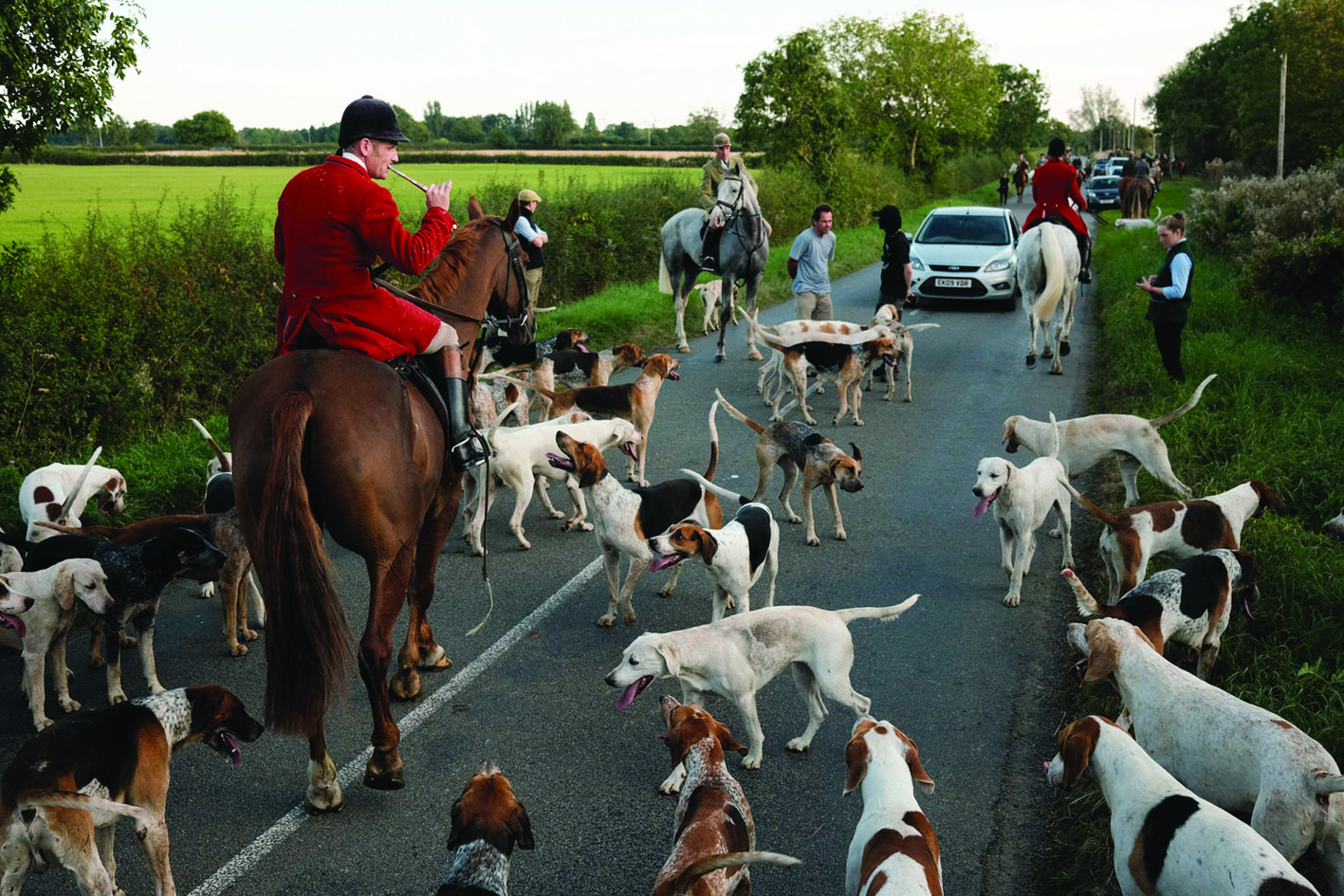
THE UK GOVERNMENT has opened a public consultation on plans to ban trail hunting in England and Wales, setting up a fresh debate in rural areas including Pembrokeshire, where hunting remains part of the social calendar for some communities.
Ministers say the move would deliver a Labour manifesto pledge and help close what campaigners describe as loopholes in the law. The consultation is seeking views from the public, landowners, hunt organisers, local authorities, conservation bodies, businesses and animal welfare groups on how a ban should work in practice and whether wider changes to hunting law may also be needed.
Trail hunting was introduced after the Hunting Act 2004, with organisers saying it involves hounds following an artificially laid scent rather than a live animal. Opponents argue it has too often been used as a cover for illegal hunting, while supporters say it is a lawful countryside activity which should not be swept away by politics.
The Hunt Saboteurs Association and the League Against Cruel Sports have both welcomed the consultation, saying it gives the public a chance to support stronger protections for wildlife and prevent further loopholes from being exploited.
But countryside groups have hit back, arguing that the proposals could have serious consequences for rural communities, jobs and long-standing local traditions. The Countryside Alliance has urged supporters to respond, saying those who understand country life must not allow others to shape the outcome unchallenged.
The issue is likely to attract strong views in Pembrokeshire, where country sports still have a loyal following. The Cresselly Hunt, one of the best-known local hunts, continues to hold regular trail hunts and social events, underlining how closely the subject is tied to local rural identity as well as national legislation.
That means any attempt to tighten the law is unlikely to be seen locally as a simple animal welfare measure. For many in west Wales, it will also be viewed through the lens of heritage, land management and concern that rural voices are being overlooked by decision-makers.
The consultation does not itself change the law, but it is the clearest sign yet that legislation is being prepared. With ministers now formally gathering evidence and public opinion, both supporters and opponents of hunting are expected to campaign hard over the coming weeks.

Campaign group says Wales is being left behind as parties urged to back legal framework for trials
POLITICAL parties contesting the Senedd election are being urged to commit to new laws that would allow shared e-scooter schemes to operate legally in Wales.
The call has come from Collaborative Mobility UK (CoMoUK), a charity which promotes shared transport, ahead of voters going to the polls in May.
At present, Wales has no public shared e-scooter trials, unlike parts of England where pilot schemes have been running since 2020. CoMoUK says that means communities in Wales are missing out on what it describes as a cheap, flexible and greener form of transport.
The charity has published six pledges it wants the next Welsh Government to support. Among them is a commitment to pass the legislation needed to allow shared e-scooter schemes on public roads.
CoMoUK said cities including Cardiff, Swansea and Newport would be well placed to host trials if the legal framework was introduced.
As well as calling for shared e-scooters, the organisation wants the next Welsh Government to create a dedicated shared transport team, expand car club provision, support shared bike schemes, and provide long-term funding for mobility hubs linking different forms of transport together.
It is also urging ministers to ensure new housing developments are designed to reduce dependence on private cars and include shared transport options.
Richard Dilks, chief executive of CoMoUK, said Wales had a chance to put sustainable transport “at the heart” of political debate ahead of the election.
He said: “Communities in England have benefited from the flexibility of shared e-scooters for years, and it is high time that this innovative form of transport was trialled in Wales too.
“As well as giving e-scooter schemes the green light, enacting our other pledges would help the next Welsh Government unlock a cleaner, greener, and more affordable future for all.”
Supporters of shared e-scooters argue they could help cut congestion, reduce emissions and make short urban journeys easier without relying on private cars.
However, any move towards legalising schemes in Wales is likely to prompt debate over safety, enforcement and where such schemes would be most appropriate.

At present, no Welsh political party has committed itself to introducing the legislation CoMoUK is calling for.



News1 hour ago
St Davids Cathedral marked Easter Sunday with full day of worship
FROM dawn vigil to choral evensong, the cathedral welcomed worshippers for one of the most important days in the Christian...


Crime3 hours ago
Neyland man spared immediate jail over aggravated vehicle taking
Defendant given a suspended prison sentence after magistrates heard the offence was serious enough to cross the custody threshold KRISTIAN...


Health19 hours ago
Crumbling NHS faces £1bn repairs bill in Wales
Senedd election promises collide with the harsh reality of ageing hospitals, fire safety concerns and a maintenance crisis stretching across...


News1 day ago
Emergency services respond to incident in Haverfordwest town centre
EMERGENCY SERVICES were called to an incident in Haverfordwest town centre on Saturday morning (Apr 4), with police and ambulance...
News1 day ago
Teenager intervenes after bridge incident
A TEENAGER was left shaken after stepping in to help a young woman in distress on Clay Lanes bridge in...


Crime3 days ago
Driver spared jail after crash killed young couple
A PEMBROKE DOCK driver who caused the deaths of a young couple in a road crash has been given a...


Entertainment3 days ago
BBC unveils major new Welsh dramas with Tenby set for prime-time spotlight
New crime series Old Town Murders and supernatural thriller The Witch Farm will both be filmed and set in Wales...


Health3 days ago
No jobs for new paramedics in Wales as graduates told to apply for technician roles
Students trained at public expense urged to take lower-grade jobs as anger grows over NHS workforce planning NEWLY qualified paramedics...


News4 days ago
Health minister refuses to act on Withybush despite 15,000-signature petition
Senedd pressure grows as Welsh Government declines to intervene over surgery fears THE WELSH GOVERNMENT has refused to step in...

Business5 days ago
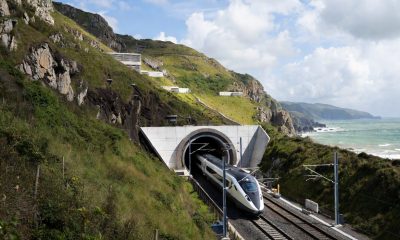
Fishguard to Wexford rail tunnel plan backed by Elon Musk firm
Six-hour London to Dublin service proposed in £32bn project ahead of Senedd election PLANS for a rail tunnel linking west...
-

 News2 days ago
Accommodation providers in Wales will be required to register under new law
-
Business5 days ago
Fishguard to Wexford rail tunnel plan backed by Elon Musk firm
-

 Entertainment3 days ago
From Milford Haven to the world: The story of The Evolution Experience
-
Entertainment3 days ago
BBC unveils major new Welsh dramas with Tenby set for prime-time spotlight
-

 Charity6 days ago
RSPCA calls for stronger animal welfare measures as Welsh Labour launches manifesto
-

 Community6 days ago
Pembrokeshire school allows Sikh pupil to wear Kirpan
-
 Tourism7 days ago
Moving to Australia from the UK: What you need to Kknow
-

 News6 days ago
Labour promises 48-hour GP access as manifesto faces questions over delivery