


Politics
Communities First had impossible task

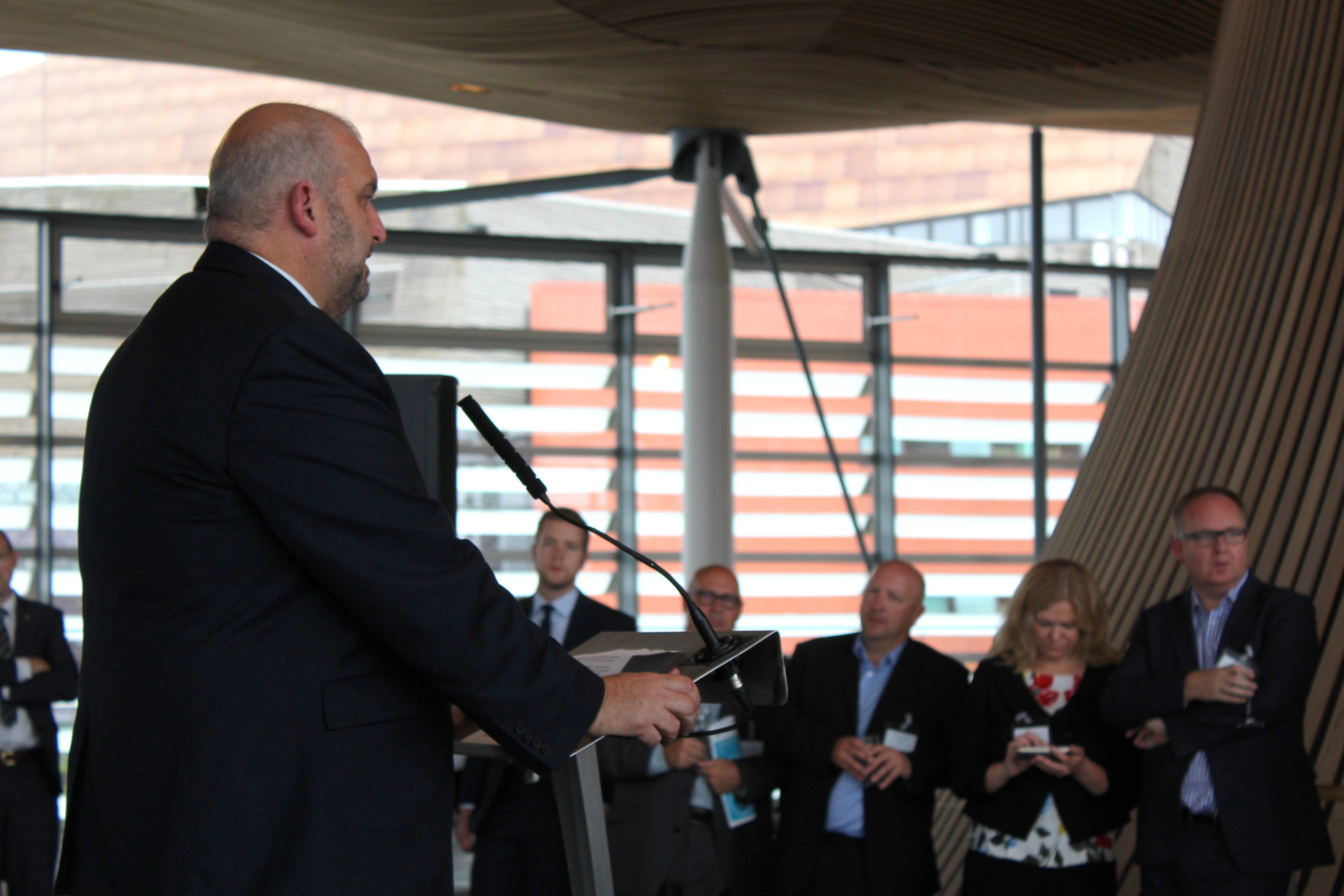
THE WELSH Government should ensure councils identify all programmes currently being delivered by Communities First that should be delivered by other public services and that they are transferred across to the relevant public service as soon as possible, according to a National Assembly Committee.
The Equality, Local Government and Communities Committee also found it has been difficult to make an overall assessment of the success of the 15-year, £432m Communities First tackling poverty programme because of insufficient performance management.
Communities First was the Welsh Government’s flagship tackling poverty programme. The Cabinet Secretary for Communities and Children Carl Sargeant AM announced that the programme would be wound down in February this year.
The report also highlights that uncertainty for staff caused by the way in which the announcement was made has had a detrimental impact on their work, and affected the people using the services.
The Committee also recommend that the Welsh Government outline how long legacy funding will be available for as soon as possible.

Committee Chair John Griffiths AM said: “For many people, Communities First has had a life-changing impact, and we know it has done great work in communities across Wales.
“We are concerned that the Welsh Government must learn lessons for future tackling poverty activities, ensuring progress is measurable, based on evidence of what works, and that the successful elements of Communities First, which could be delivered by other public bodies and are valued locally, are transferred to other public services to deliver.
“The need for these services hasn’t disappeared, but faced with uncertainty, we have heard that Communities First staff are already leaving for other jobs. Their expertise and relationships cannot easily be replaced.”
A key criticism in the report is that the Welsh Government had no baseline from which to assess success and without such a measure, it was impossible for Communities First’s successes – if any – to be adequately measured as delivering anything like value for the money invested in the scheme.

Evidence from Carmarthenshire County Council not only makes that criticism express, but continues: ‘Measuring the long term impact that the programme had on the individuals was not carried out in the initial years of the programme. As a result, there was limited recording of statistics and outcomes achieved during this period’.
Indeed, the committee states that its own work was hampered by lack of transparency by the Welsh Government. ‘On the day that it was announced the programme would definitely be ending (14 February 2017), all performance measurement data was removed from the Welsh Government’s website’.
The report mordantly notes that: ‘However, we were told in very stark times by a witness that having 102 performance indicators means in practice you have no performance indicators’. It goes on to warn that new indicators put in place by the Welsh Government are so broad as to be almost meaningless and recommends that the Welsh Government adopt the approach recommended by the Bevan Foundation, a social welfare think-tank.

The report notes that the Communities First programme was set the ‘near impossible task’ of reducing poverty, which could never be achieved through one single programme.
In written evidence to the Committee, the Cabinet Secretary for Communities and Children, Carl Sargeant said that “….the underlying premise of the programme that it was possible to improve area characteristics by influencing individual-level outcomes – was (and remains) untested.”
In addition to the broad aims of the programme, it remains unclear and un-evidenced as to whether interventions to improve individual circumstances lead to changes in a geographical area’s characteristics. This was accepted by the Cabinet Secretary in his written evidence.
Although it is unclear how well a place based approach works and it remains the approach for some other programmes such as Communities for Work, Flying Start, Lift, and others. The committee recommends review of these programmes ‘to ensure they are working to optimum benefit’.
The Committee expresses concern that Communities First programmes were used to deliver services that statutory bodies should have delivered, noting that Communities First schemes ‘were delivering projects and support in important areas, including health and education’.
As Herald readers in Carmarthenshire will recall, it is almost impossible to conceive that a local authority would misuse funds for a targeted project to subsidise delivery of its own services.
Other recommendations include:
• That the Welsh Government considers removing postcode barriers to families accessing Flying Start where there is an identified need and capacity to support them
• That the Welsh Government ensures that all advice and guidance to local authorities is available in written form to supplement information that is provided in person or orally
• That the Welsh Government That the Welsh Government makes it clear in guidance to local authorities that employability support should encompass all stages of the employment journey, including support to a person once they are in employment
Mark Isherwood, the Conservative spokesperson for Communities, joined in the Committee’s criticism.
“Despite repeated warnings, the Welsh Government has failed to deliver what the Communities First programme originally intended, which was to deliver community ownership and empowerment to drive positive change.
“An article by the Bevan Foundation achieved a far more perspicacious insight into why Communities First achieved such little success, by stating that community buy-in is essential and that if people feel that policies are imposed on them, then policies simply don’t work. The Cabinet Secretary should take note.
“However, it is not too late to do things differently. We can still unlock human capital in our communities and places to develop solutions to local issues, improve wellbeing, raise aspirations and create stronger communities.”
The Bevan Foundation has welcomed the recommendations of the Equality, Local Government and Communities Committee’s report.
In particular, it welcomes the Committee’s inclusion of the Bevan Foundation and Joseph Rowntree Foundation’s proposals to reduce poverty through a whole government strategy for reducing costs and raising incomes, rather than its current focus on employability, early years and empowerment.
The Bevan Foundation also welcome’s the Committee’s adoption of other Bevan Foundation proposals including:
• The recommendation that the Welsh Government work with the Bevan Foundation and Joseph Rowntree Foundation on a dashboard of indicators,
• The recommendation that the Welsh Government explore further the role of assets in generating income and wealth
• The comment that the Welsh Government needs to provide a robust framework for local action
Director of the Bevan Foundation, Victoria Winckler, said: “We were delighted that the Equality, Local Government and Communities Committee has listened carefully to our written and oral evidence and included so many of ideas in its recommendations. The Committee’s inquiries into poverty are vitally important, and we hope that the Welsh Government heed the Committee’s recommendations. We look forward to working with the Welsh Government and the Committee in taking them forward.”

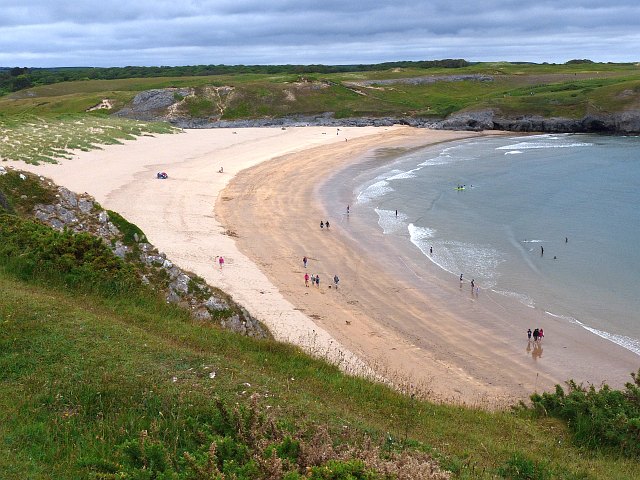
PLANS for three solar-powered parking meters at National Trust south Pembrokeshire beauty spots have been given the go-ahead by the national park.
In an application to Pembrokeshire Coast National Park, the National Trust, through agent Mott Macdonald Ltd, sought permission for replacement solar-powered parking meters, along with associated infrastructure including an Automatic Number Plate Recognition (ANPR) camera, at Broad Haven, Stackpole Quay, and Bosherston Lily Ponds carparks.
An officer recommending approval said it was intended to install a Solar Strada S5 Terminal parking meter at Broad Haven Carpark, an Automatic Number Plate Recognition (ANPR) camera and Solar Strada S5 Terminal at Stackpole Quay carpark, and a Solar Strada S5 Terminal parking meter at Bosherston Lily Ponds.
It added: “As there was a previous level of visual intrusion caused by the existing infrastructure, the proposed parking fee terminals are considered unlikely to exacerbate the existing level of visual impact caused by the existing pay and display terminals.
“The proposed installation of the solar parking fee terminals at Broadhaven, Stackpole Quay and Bosherston Lily Pond carpark and the ANPR camera at Stackpole Quay carpark are considered to be well designed in terms of scale, siting, visual amenity and biodiversity.”

The application for the three units was conditionally approved by park planners.

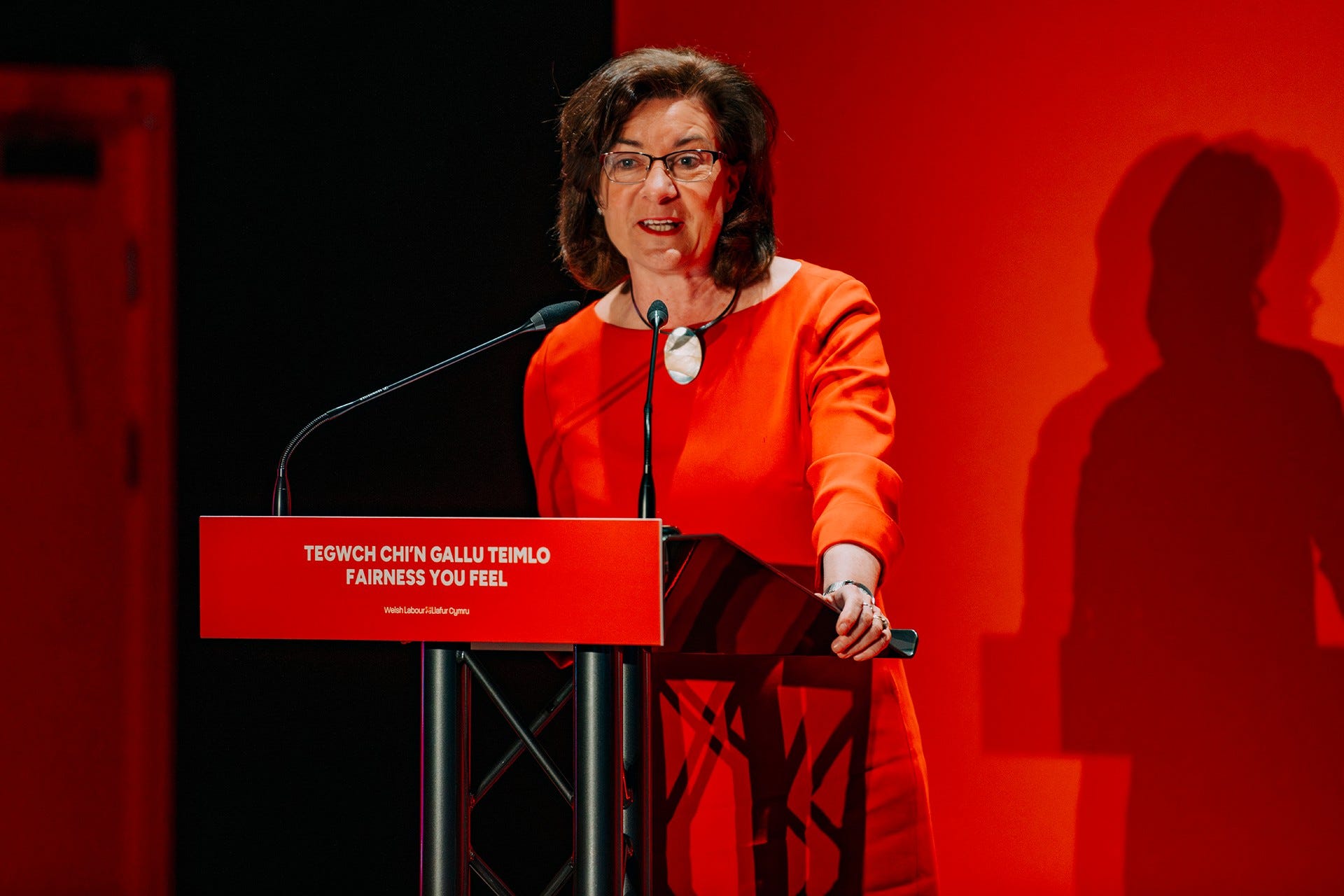
A HAVERFORDWEST teaching assistant became the quiet centrepiece of Welsh Labour’s manifesto launch — and, in doing so, revealed a party focused less on momentum than on damage limitation in towns like ours.
Eluned Morgan’s manifesto launch speech was meant to speak to the whole of Wales. But tucked inside it was a telling local calculation.
When the Welsh Labour leader told delegates about a teaching assistant in Haverfordwest who had “never voted in her life” but would now back Labour because of a pay rise, it was no throwaway line.
In political terms, it was no throwaway line. Morgan was invoking a voter from the very constituency battleground where Labour needs reassurance to cut through.
After years in power, Welsh Labour knows it cannot simply rely on habit, loyalty or anti-Tory feeling to carry it over the line. It needs to reconnect with lower-paid working people in towns like Haverfordwest — voters who may still support parts of Labour’s record, but are increasingly doubtful that life in Wales is getting better.
That is why Morgan’s speech mattered.
Far from sounding like a leader marching confidently towards victory, she sounded like someone trying to hold together a delicate coalition of public sector workers, traditional Labour supporters and anxious voters tempted by change, but wary of the alternatives.
The tone was revealing from the outset.
This was not a speech built on triumph. It was built on caution.

Morgan spoke of pressure on families, pressure on public services and pressure on her own party. She acknowledged that many voters feel something “isn’t quite right” and said people want “a little more certainty” and “a little less dread”.
That is not the language of a party taking victory for granted. It is the language of a party that knows it must steady nervous voters before polling day.
In that sense, the Haverfordwest example was politically shrewd.

Teaching assistants and school support staff are not just another part of the workforce. They are exactly the sort of voters Labour needs to keep onside — public-facing, often modestly paid, rooted in their communities and living the everyday pressures politicians talk about so freely.
By highlighting a Haverfordwest worker who had never voted before, Morgan was trying to tell a wider story: that Welsh Labour can still reach the ordinary voter who feels overlooked, underpaid and unconvinced by politics in general.
But there was another message buried in the anecdote.
Labour is plainly worried about disengagement.
A voter who has “never voted in her life” is useful in a speech not just because she is newly supportive, but because she represents a wider problem for all parties — the sense that many people have drifted away from politics altogether.
Morgan knows frustration with government in Cardiff Bay is real, especially after long-running complaints over NHS access, stretched public services, transport and the cost of living. Her answer was not to offer excitement, but reassurance.
That came through again and again.
She promised there would be no rise in income tax. She attacked “easy promises” and “slogans”. She said she would not “gamble” with people’s lives. She framed the election not as a call for upheaval, but as a choice between seriousness and protest.
In plain terms, Labour is trying to turn this election into a referendum on risk.
That is often what governing parties do when they sense frustration in the electorate, but hope voters remain more cautious about the opposition.
It also helps explain why west Wales featured so prominently in the speech.
Morgan promised a new hospital for west Wales as part of a wider NHS building programme. She also pledged that patients would be able to access a primary healthcare professional within 48 hours if they had a problem that could not wait.
Those lines will have landed strongly in Pembrokeshire, where concern over health services has become one of the most potent and emotional issues in local politics.
But they also expose Labour’s weakness.
After decades as the dominant force in Welsh politics, Labour is still having to promise basic improvements in areas where public frustration is already deepest. Voters may welcome those pledges, but many will also ask why, after all this time, they are still being asked to wait.
That is the central tension in Morgan’s speech.
She wants to campaign as both the agent of improvement and the guardian of stability. She is asking people to believe Labour can fix problems that have grown on Labour’s watch, while also arguing that nobody else can be trusted to take over.
It is not an impossible argument. But it is a difficult one.
For readers in Pembrokeshire, perhaps the most revealing thing about the speech is not just what it promised, but what it exposed.
It exposed a Welsh Labour leadership that knows west Wales matters.
It exposed a party that sees lower-paid workers and public service staff as central to its survival.
And it exposed a leader who understands that this election is not being fought on favourable ground.
The repeated slogan was “fairness you can feel”.
But the speech itself suggested something more hard-headed than hopeful.
Welsh Labour is no longer campaigning like a movement expecting gratitude. It is campaigning like a government asking voters, however frustrated they may be, not to take a chance on anything else.

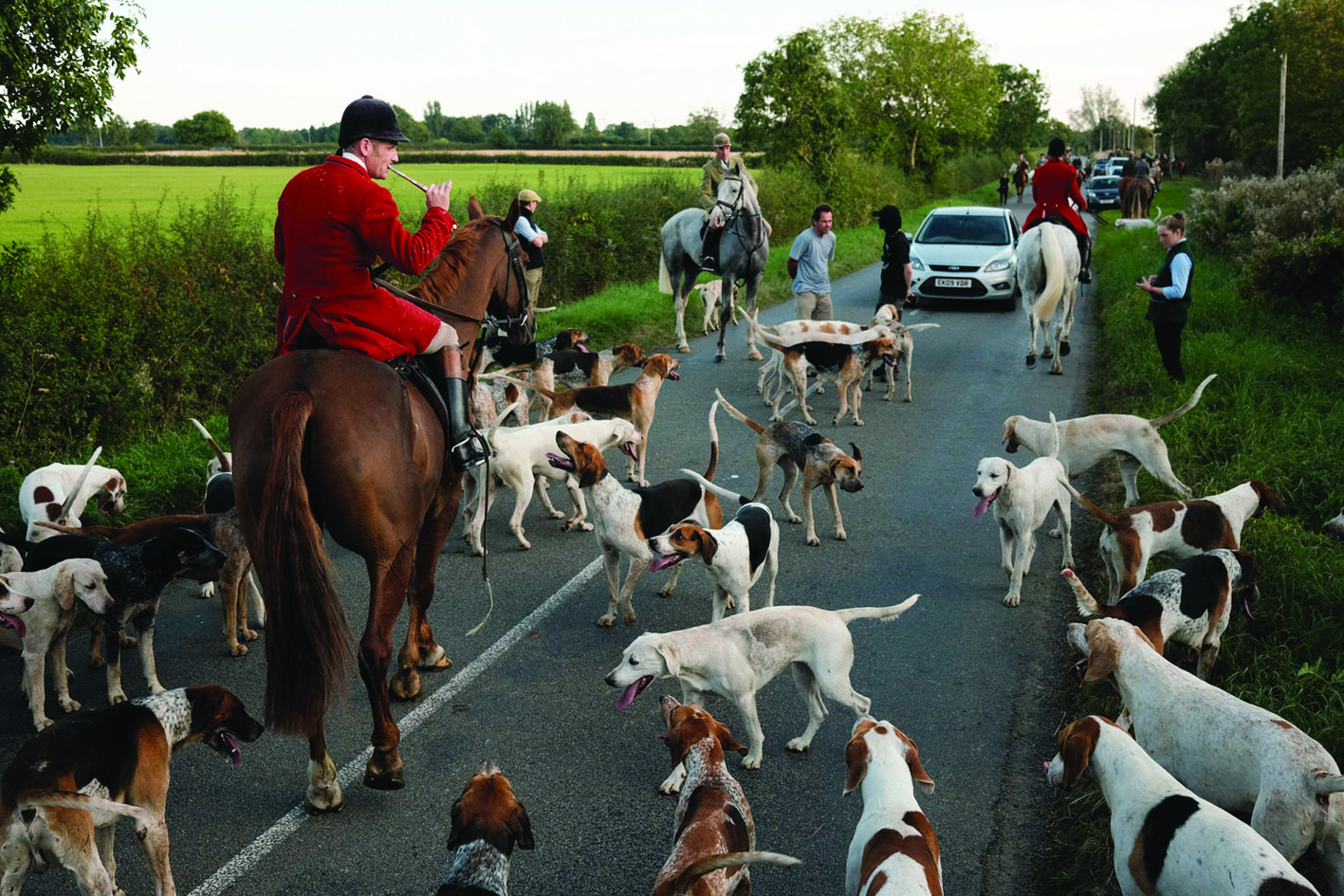
Animal welfare groups back proposed ban, while supporters of country sports warn against further pressure on rural traditions
THE UK GOVERNMENT has opened a public consultation on plans to ban trail hunting in England and Wales, setting up a fresh debate in rural areas including Pembrokeshire, where hunting remains part of the social calendar for some communities.
Ministers say the move would deliver a Labour manifesto pledge and help close what campaigners describe as loopholes in the law. The consultation is seeking views from the public, landowners, hunt organisers, local authorities, conservation bodies, businesses and animal welfare groups on how a ban should work in practice and whether wider changes to hunting law may also be needed.
Trail hunting was introduced after the Hunting Act 2004, with organisers saying it involves hounds following an artificially laid scent rather than a live animal. Opponents argue it has too often been used as a cover for illegal hunting, while supporters say it is a lawful countryside activity which should not be swept away by politics.
The Hunt Saboteurs Association and the League Against Cruel Sports have both welcomed the consultation, saying it gives the public a chance to support stronger protections for wildlife and prevent further loopholes from being exploited.
But countryside groups have hit back, arguing that the proposals could have serious consequences for rural communities, jobs and long-standing local traditions. The Countryside Alliance has urged supporters to respond, saying those who understand country life must not allow others to shape the outcome unchallenged.

The issue is likely to attract strong views in Pembrokeshire, where country sports still have a loyal following. The Cresselly Hunt, one of the best-known local hunts, continues to hold regular trail hunts and social events, underlining how closely the subject is tied to local rural identity as well as national legislation.
That means any attempt to tighten the law is unlikely to be seen locally as a simple animal welfare measure. For many in west Wales, it will also be viewed through the lens of heritage, land management and concern that rural voices are being overlooked by decision-makers.
The consultation does not itself change the law, but it is the clearest sign yet that legislation is being prepared. With ministers now formally gathering evidence and public opinion, both supporters and opponents of hunting are expected to campaign hard over the coming weeks.


News16 minutes ago
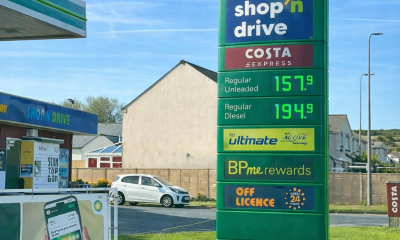
Diesel nears £2 a litre in Pembrokeshire as drivers scramble for cheaper fuel
Johnston forecourt hits 194.9p while wide price gaps and rush to fill up pile pressure on motorists across the county...


News20 hours ago
St Davids Cathedral marked Easter Sunday with full day of worship
FROM dawn vigil to choral evensong, the cathedral welcomed worshippers for one of the most important days in the Christian...


Crime21 hours ago
Neyland man spared immediate jail over aggravated vehicle taking
Defendant given a suspended prison sentence after magistrates heard the offence was serious enough to cross the custody threshold KRISTIAN...


Health2 days ago
Crumbling NHS faces £1bn repairs bill in Wales
Senedd election promises collide with the harsh reality of ageing hospitals, fire safety concerns and a maintenance crisis stretching across...


News2 days ago
Emergency services respond to incident in Haverfordwest town centre
EMERGENCY SERVICES were called to an incident in Haverfordwest town centre on Saturday morning (Apr 4), with police and ambulance...

News2 days ago
Teenager intervenes after bridge incident
A TEENAGER was left shaken after stepping in to help a young woman in distress on Clay Lanes bridge in...


Crime4 days ago
Driver spared jail after crash killed young couple
A PEMBROKE DOCK driver who caused the deaths of a young couple in a road crash has been given a...


Entertainment4 days ago
BBC unveils major new Welsh dramas with Tenby set for prime-time spotlight
New crime series Old Town Murders and supernatural thriller The Witch Farm will both be filmed and set in Wales...


Health4 days ago
No jobs for new paramedics in Wales as graduates told to apply for technician roles
Students trained at public expense urged to take lower-grade jobs as anger grows over NHS workforce planning NEWLY qualified paramedics...


News5 days ago
Health minister refuses to act on Withybush despite 15,000-signature petition
Senedd pressure grows as Welsh Government declines to intervene over surgery fears THE WELSH GOVERNMENT has refused to step in...
-

 News3 days ago
Accommodation providers in Wales will be required to register under new law
-

 Business5 days ago
Fishguard to Wexford rail tunnel plan backed by Elon Musk firm
-

 Entertainment3 days ago
From Milford Haven to the world: The story of The Evolution Experience
-
Entertainment4 days ago
BBC unveils major new Welsh dramas with Tenby set for prime-time spotlight
-

 Charity7 days ago
RSPCA calls for stronger animal welfare measures as Welsh Labour launches manifesto
-

 News7 days ago
Labour promises 48-hour GP access as manifesto faces questions over delivery
-

 Crime6 days ago
Driver trapped after crash while nearly four times over drink-drive limit
-
 Business6 days ago
Refusal over Pembrokeshire shepherd hut let goes to appeal