


Politics
20 years since Wales said ‘yes’

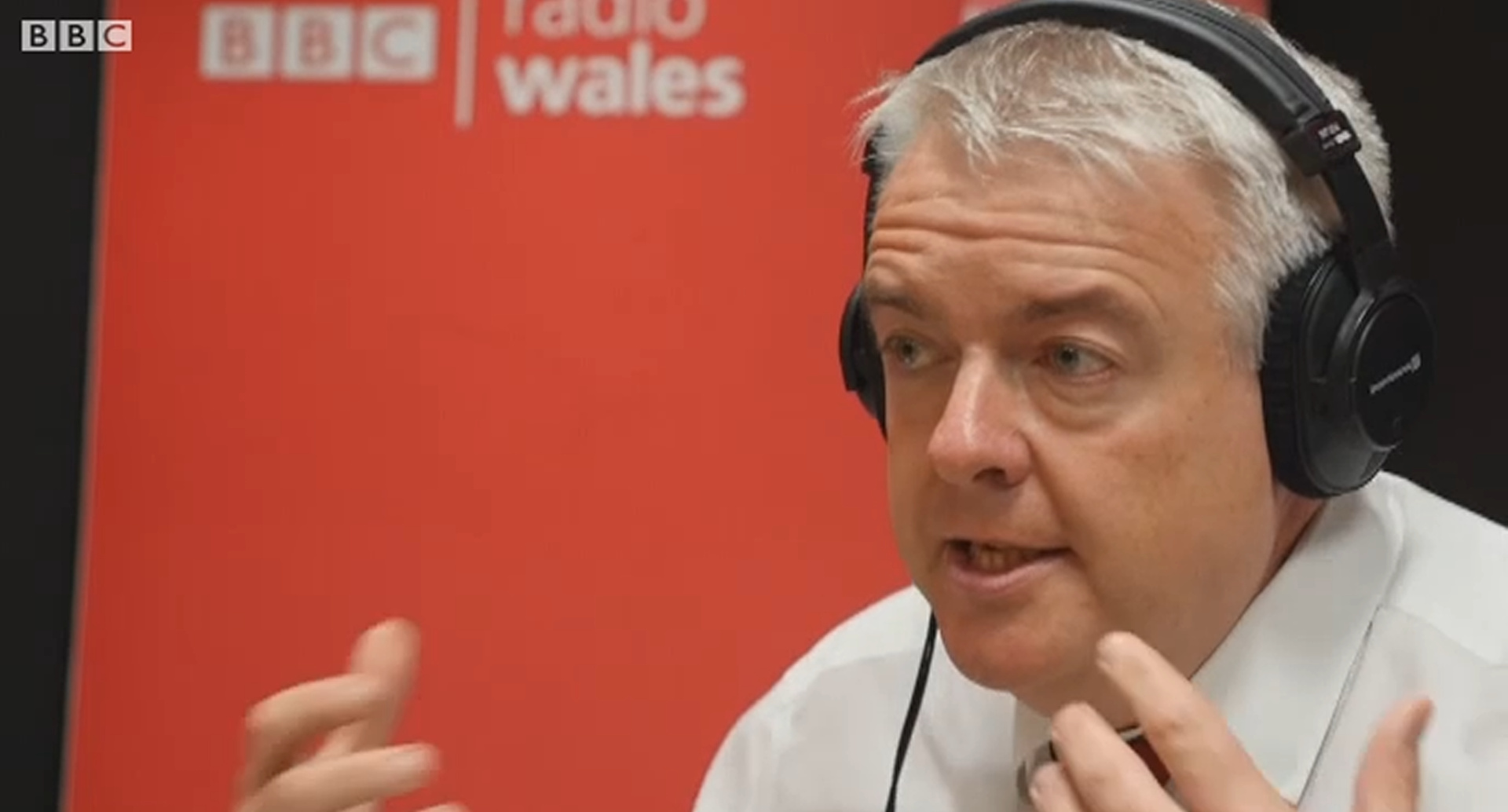
TWO decades since Wales said ‘yes’ in the referendum to create the National Assembly, a group of young people for whom the institution has always been a feature of their lives, visited the Senedd on Monday (Sept 18) and met the Llywydd, Elin Jones AM.
Representatives of the ‘devolution generation’ took part in a Question and Answer session with the presiding officer and were given a tour of the National Assembly building in Cardiff Bay.
SUPPORT FOR DEVOLUTION GROWS
In 1997 Wales went to the polls and voted to establish the National Assembly for Wales.
Since then the Assembly gained primary law-making powers through the Government of Wales Act 2006 before Wales voted again in 2011 to unlock further powers from Westminster.

Wales Acts in 2014 and 2017 have seen the Assembly’s responsibilities widen further to include tax-raising powers for the first time in almost 800 years.
Landmark laws passed by the Assembly include adopting a system of presumed consent for organ donation and minimum staffing levels on hospital wards, while a petition calling for a ban on single-use carrier bags led to a 5p charge which has greatly reduced their use and been adopted across the UK.
To mark the occasion around 70 young people took part in a question and answer session with the Llywydd of the National Assembly, Elin Jones AM, where topics including voting age, a youth parliament and the future of the Assembly were discussed.
Elin Jones AM said: “Support for devolution and the National Assembly has grown significantly in Wales. In 1997 the vote in favour was very close, but a BBC Wales St David’s Day poll in 2017 had 73% of people either saying the Assembly’s powers should be increased or were sufficient.

“Our priority for the future is to ensure that we have a parliament that is well-equipped to represent the interests of Wales and its people, make laws for Wales and hold the Welsh Government to account; a parliament that is an equal of its counterparts across the UK.”
How Assembly legislation has changed Wales and the UK:
- Wales was the first UK nation to restrict smoking in enclosed public places
- Wales was the first UK nation to have a national conversation about changing organ donation law and to pass legislation bringing in the soft-opt-out system. Now Scotland and England are looking to follow
- The Nurse Staffing Act, introduced by Kirsty Williams AM was the first legislation of its kind in the UK and Europe, requiring the NHS to take steps to calculate and maintain nurse staffing levels in adult acute medical and surgical inpatient wards
- A member-proposed measure by Ann Jones AM, now Deputy Presiding Officer, required all new homes built in Wales to be fitted with a sprinkler system
- The 5p charge on single use carrier bags was originally proposed via the Petitions Committee process and went on to become legislation through the Assembly. Wales went on to become the first country in the UK to introduce a charge on single use carrier bags in October 2011. Others have followed
- At a time when public confidence in politicians was at its lowest, the Assembly took the radical step in 2008 to review its arrangements for determining Members’ pay and allowances. The independent Remuneration Board was established in 2010 to determine the remuneration and allowances for Members of the National Assembly for Wales
- In 2013 the Assembly passed a law that cemented both English and Welsh as the Assembly’s official languages placing a statutory duty on itself to provide services to Members and the public in the official language of their choice
20 YEARS AND 20 QUOTES

“Devolution is about harnessing the power of community – the diverse community that is the United Kingdom, and the national communities that through devolution can take their futures in their own hands.”
A quote from Tony Blair who in 1997 led Labour back to power for the first time since 1979 in a landslide victory. The Labour manifesto included a commitment to holding a referendum on the creation of a Welsh Assembly.
“There are some variations across social groups in Wales. Women clearly support a Welsh Assembly – by 37 to 29 – while men oppose one by 43 to 38.
“There is strong majority support for devolution among those aged 18 to 34, while a majority of those voters aged over 65 oppose an assembly.”
An extract from the results of a Guardian/ICM poll taken a week before the referendum vote.
“Good morning, and it is a very good morning in Wales.”
This is how Ron Davies, Secretary of State for Wales in 1997 and leader of the Yes campaign started his speech when the result was announced.
“When you win a national campaign by less than seven thousand votes it makes every last leaflet, every last foot-step, every last door knocked, worthwhile.”
Leighton Andrews, former Assembly Member and Welsh Government Minister, reflects on the Yes Campaign in a recent blog for the IWA. 50.3% of those who voted in the referendum supported devolution – a narrow majority in favour of 6,721 votes.
Following the referendum, the UK Parliament passed the Government of Wales Act 1998. The Act established the National Assembly as a corporate body – with the executive (the Government) and the legislature (the Assembly) operating as one. The first Assembly elections were then held on 6 May, 1999.
“The people of Anglesey in the slate quarries of Caernarfonshire used to be known as Pobol y Medra, because their answer to the question, ‘Can you do this?’ was ‘Medra’—‘I can. That must be our message throughout Wales. Let the whole of Wales become Pobol y Medra.”
Alun Michael, having just become the First Secretary of Wales on 12 May 1999.
“It is now the only legislature in the world that is perfectly balanced between men and women. We should note that. It is a message that should ring around the world.”
Rhodri Morgan, then First Secretary, following the 2003 Assembly elections when a world record was set by the Assembly through becoming the first legislative body with equal numbers of men and women.
“We popped in to admire the architecture and have a look around but were pleased to find that we could enter the public gallery and watch a live debate taking place. It was really interesting and enhanced our understanding of the place and the people working there. Definitely worth a visit.”
A review of the Senedd on TripAdvisor. The Senedd became the home of the National Assembly for Wales in 2006 and since then has welcomed more than one million visitors.
“We are moving into a new era, with new powers, and we have a wonderful opportunity to attempt to take the constitution of Wales forward in a new stage of devolution.”
Dafydd Elis-Thomas AM, then Presiding Officer, speaking in 2007 following the legal separation of the National Assembly for Wales and the Welsh Government as the Government of Wales Act (2006) came into force.
The 2006 Act also gave a way for the National Assembly to gain powers to make laws without the need for the UK Parliament’s approval, through a yes vote in a referendum.
“The rest of the world can now sit up and take notice of the fact that our small nation, here on the western edge of the continent of Europe, has demonstrated pride in who we are, and what we all stand for.”
Ieuan Wyn Jones, then Deputy First Minister and leader of Plaid Cymru, following the 2011 referendum where the Welsh electorate voted in favour of further powers to the National Assembly.
“Just fifteen years ago, it would have been unthinkable for politicians, elected by Welsh voters, to draft such legislation and put it on the statute books within such a short space of time.”
Dame Rosemary Butler, then Presiding Officer, comments on the first Assembly act to become law following the new powers granted by the 2011 referendum. The law, introduced by the National Assembly’s Commission, officially recognised both the Welsh and English languages as the official languages of Assembly proceedings.
“Good laws need to be formed through contributions and opinions from the people of Wales if they are to be truly democratic, transparent and accountable.”
David Melding AM, then Deputy Presiding Officer and Chair of the Constitutional and Legislative Affairs Committee. Just like Select Committees in Westminster, Assembly Committees are an integral aspect of how the Assembly holds the Welsh Government to account.
“An impressive feature of this Chamber has always been your commitment to accountability and transparency through electronic communication and the broadcasting of your proceedings. I know that the way you have addressed this commitment has stimulated interest in other and older parliaments.”
HM The Queen Elizabeth II commenting on the technology of the Siambr during one of the five official opening ceremonies. The Siambr is a fully electronic debating chamber. Every Member has an individual computer terminal, to enable them to research subjects for debate and to undertake work when not being called to speak. They also have access to headphones to amplify the sound in the Siambr or to use the simultaneous interpretation services provided.
“It’s modern democracy. There aren’t traditions, we’re not bound by anything that’s gone before but we’re trying to create the right processes that suit a modern democracy – getting the business done, making things happen.”
Dame Claire Clancy, who was the Clerk and Chief Executive of the Assembly from 2007 to 2017.
“It is vitally important that people with autism are able to participate fully in civic life and in their communities. Training and awareness can make a huge difference and I hope that the Assembly’s example inspires more public buildings and other organisations in Wales to work with us to become more autism friendly.”
Mark Lever, Chief Executive for the National Autistic Society, on the Assembly’s work to make its work and buildings autism-friendly.
“We’ve got to be world class and we mustn’t settle for anything else.”
Peter Hain, a Welsh Officer Minister at the time of the 1997 referendum, comments on the progress of Welsh devolution in 2014.
“You don’t come out the one time, you have to do it over and over again because there is still that assumption you are straight. Like somebody once said about devolution, coming out is more of a process than an event.”
Hannah Blythyn AM is the first openly lesbian woman to be elected to the National Assembly for Wales. The 2016 Assembly election saw also saw two gay men elected – Jeremy Miles AM and Adam Price AM.
As an employer, the Assembly has been included in the top five of Stonewall’s UK-wide LGBT Workplace Equality Index for the last three years.
“Now is the time for Wales to unite and to think clearly about our future. Even before yesterday’s vote I said that no one party had the monopoly on good ideas, and now more than ever, we must rely on the abilities of all.”
Carwyn Jones AM, the current First Minister, following the result of the Brexit referendum in June 2016.
“I think young people should be involved in democracy, it will make so much difference to our country. We need to be progressive in our society, we need to make changes for the better – we can’t stay stuck in the past.”
Tooba Naqvi talking about why she believes there should be a Youth Parliament for Wales that works alongside the National Assembly.
Youth engagement has been a priority for the Assembly with 30,000 young people reached through school visits, outreach programmes and other activities.
“We are entering a period when fundamental changes will be made to the constitutional arrangements of the UK, the place of the devolved nations within it, and the ability of the Assembly to deliver for the people of Wales. As that process unfolds, I am determined to demonstrate and secure the Assembly’s role as a strong, effective Parliament for Wales.”
The current Llywydd, Elin Jones AM reacting to the UK Government triggering Article 50.
Let ‘difficult’ become simple, and ‘challenging’ become fun; and let us each day repeat the maxim: that ‘two men will come together sooner than two mountains.
An extract from ‘Y tŷ hwn’ (‘This House’) a poem by Ifor Ap Glyn commissioned by the National Assembly for Wales for the Official Opening of the Fifth Assembly.

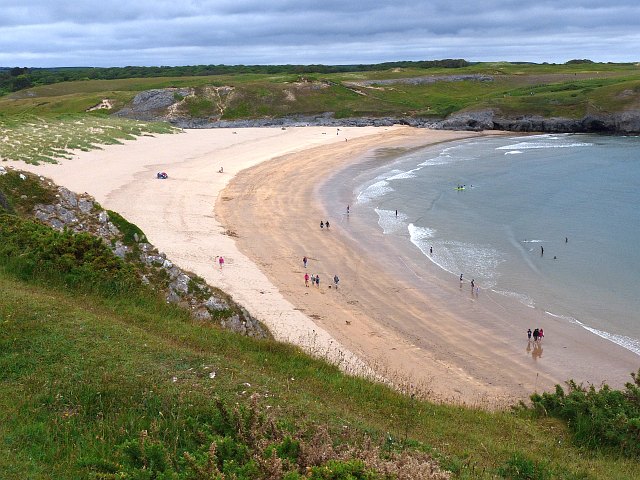
PLANS for three solar-powered parking meters at National Trust south Pembrokeshire beauty spots have been given the go-ahead by the national park.
In an application to Pembrokeshire Coast National Park, the National Trust, through agent Mott Macdonald Ltd, sought permission for replacement solar-powered parking meters, along with associated infrastructure including an Automatic Number Plate Recognition (ANPR) camera, at Broad Haven, Stackpole Quay, and Bosherston Lily Ponds carparks.
An officer recommending approval said it was intended to install a Solar Strada S5 Terminal parking meter at Broad Haven Carpark, an Automatic Number Plate Recognition (ANPR) camera and Solar Strada S5 Terminal at Stackpole Quay carpark, and a Solar Strada S5 Terminal parking meter at Bosherston Lily Ponds.
It added: “As there was a previous level of visual intrusion caused by the existing infrastructure, the proposed parking fee terminals are considered unlikely to exacerbate the existing level of visual impact caused by the existing pay and display terminals.
“The proposed installation of the solar parking fee terminals at Broadhaven, Stackpole Quay and Bosherston Lily Pond carpark and the ANPR camera at Stackpole Quay carpark are considered to be well designed in terms of scale, siting, visual amenity and biodiversity.”

The application for the three units was conditionally approved by park planners.

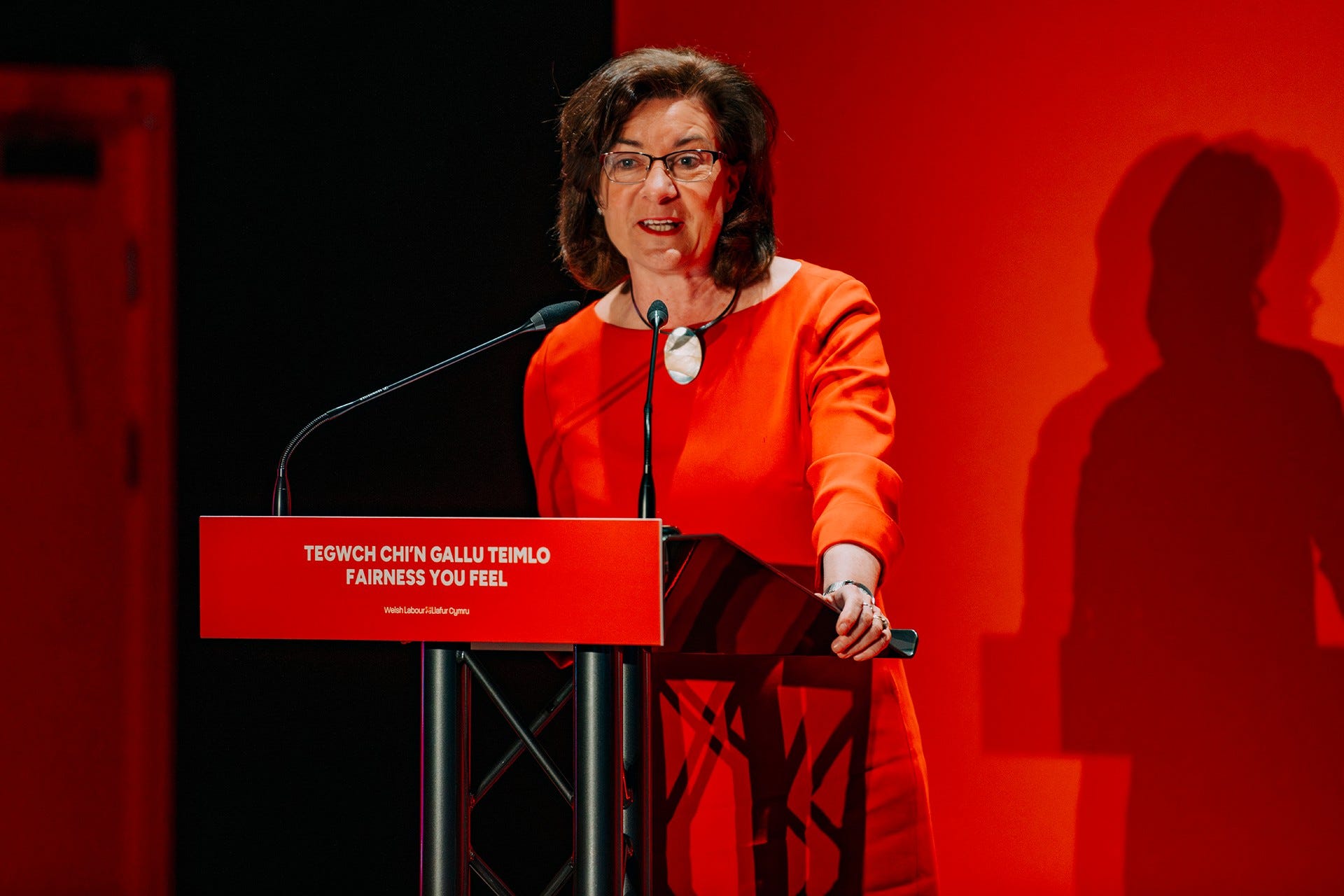
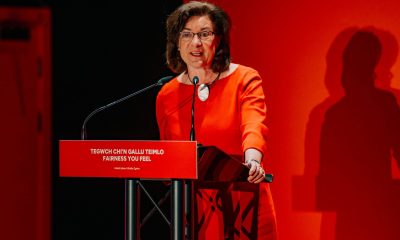
A HAVERFORDWEST teaching assistant became the quiet centrepiece of Welsh Labour’s manifesto launch — and, in doing so, revealed a party focused less on momentum than on damage limitation in towns like ours.
Eluned Morgan’s manifesto launch speech was meant to speak to the whole of Wales. But tucked inside it was a telling local calculation.
When the Welsh Labour leader told delegates about a teaching assistant in Haverfordwest who had “never voted in her life” but would now back Labour because of a pay rise, it was no throwaway line.
In political terms, it was no throwaway line. Morgan was invoking a voter from the very constituency battleground where Labour needs reassurance to cut through.
After years in power, Welsh Labour knows it cannot simply rely on habit, loyalty or anti-Tory feeling to carry it over the line. It needs to reconnect with lower-paid working people in towns like Haverfordwest — voters who may still support parts of Labour’s record, but are increasingly doubtful that life in Wales is getting better.
That is why Morgan’s speech mattered.
Far from sounding like a leader marching confidently towards victory, she sounded like someone trying to hold together a delicate coalition of public sector workers, traditional Labour supporters and anxious voters tempted by change, but wary of the alternatives.
The tone was revealing from the outset.
This was not a speech built on triumph. It was built on caution.
Morgan spoke of pressure on families, pressure on public services and pressure on her own party. She acknowledged that many voters feel something “isn’t quite right” and said people want “a little more certainty” and “a little less dread”.
That is not the language of a party taking victory for granted. It is the language of a party that knows it must steady nervous voters before polling day.
In that sense, the Haverfordwest example was politically shrewd.

Teaching assistants and school support staff are not just another part of the workforce. They are exactly the sort of voters Labour needs to keep onside — public-facing, often modestly paid, rooted in their communities and living the everyday pressures politicians talk about so freely.
By highlighting a Haverfordwest worker who had never voted before, Morgan was trying to tell a wider story: that Welsh Labour can still reach the ordinary voter who feels overlooked, underpaid and unconvinced by politics in general.
But there was another message buried in the anecdote.
Labour is plainly worried about disengagement.
A voter who has “never voted in her life” is useful in a speech not just because she is newly supportive, but because she represents a wider problem for all parties — the sense that many people have drifted away from politics altogether.
Morgan knows frustration with government in Cardiff Bay is real, especially after long-running complaints over NHS access, stretched public services, transport and the cost of living. Her answer was not to offer excitement, but reassurance.
That came through again and again.
She promised there would be no rise in income tax. She attacked “easy promises” and “slogans”. She said she would not “gamble” with people’s lives. She framed the election not as a call for upheaval, but as a choice between seriousness and protest.
In plain terms, Labour is trying to turn this election into a referendum on risk.
That is often what governing parties do when they sense frustration in the electorate, but hope voters remain more cautious about the opposition.
It also helps explain why west Wales featured so prominently in the speech.
Morgan promised a new hospital for west Wales as part of a wider NHS building programme. She also pledged that patients would be able to access a primary healthcare professional within 48 hours if they had a problem that could not wait.
Those lines will have landed strongly in Pembrokeshire, where concern over health services has become one of the most potent and emotional issues in local politics.
But they also expose Labour’s weakness.
After decades as the dominant force in Welsh politics, Labour is still having to promise basic improvements in areas where public frustration is already deepest. Voters may welcome those pledges, but many will also ask why, after all this time, they are still being asked to wait.
That is the central tension in Morgan’s speech.
She wants to campaign as both the agent of improvement and the guardian of stability. She is asking people to believe Labour can fix problems that have grown on Labour’s watch, while also arguing that nobody else can be trusted to take over.
It is not an impossible argument. But it is a difficult one.
For readers in Pembrokeshire, perhaps the most revealing thing about the speech is not just what it promised, but what it exposed.
It exposed a Welsh Labour leadership that knows west Wales matters.
It exposed a party that sees lower-paid workers and public service staff as central to its survival.
And it exposed a leader who understands that this election is not being fought on favourable ground.
The repeated slogan was “fairness you can feel”.
But the speech itself suggested something more hard-headed than hopeful.
Welsh Labour is no longer campaigning like a movement expecting gratitude. It is campaigning like a government asking voters, however frustrated they may be, not to take a chance on anything else.
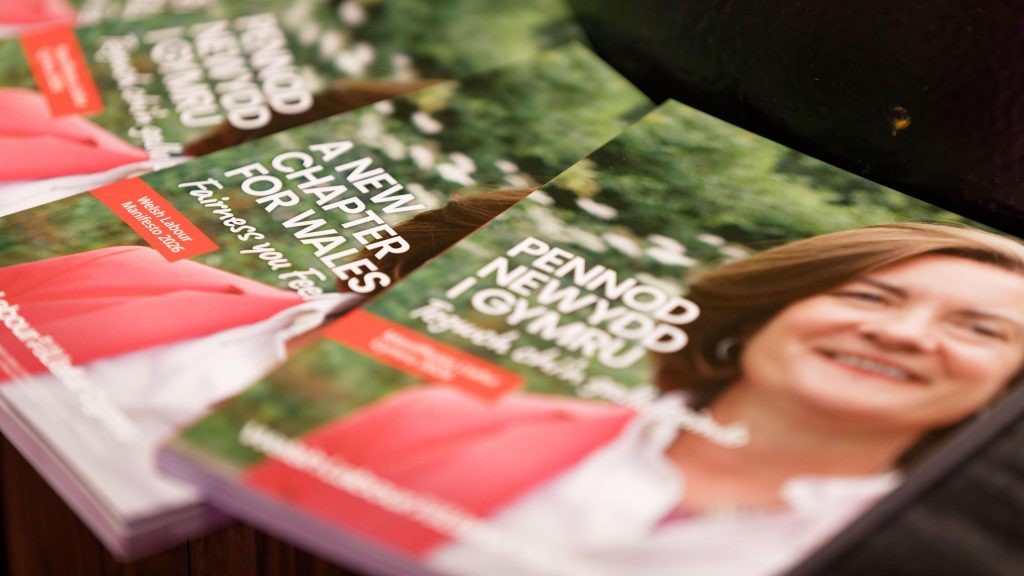
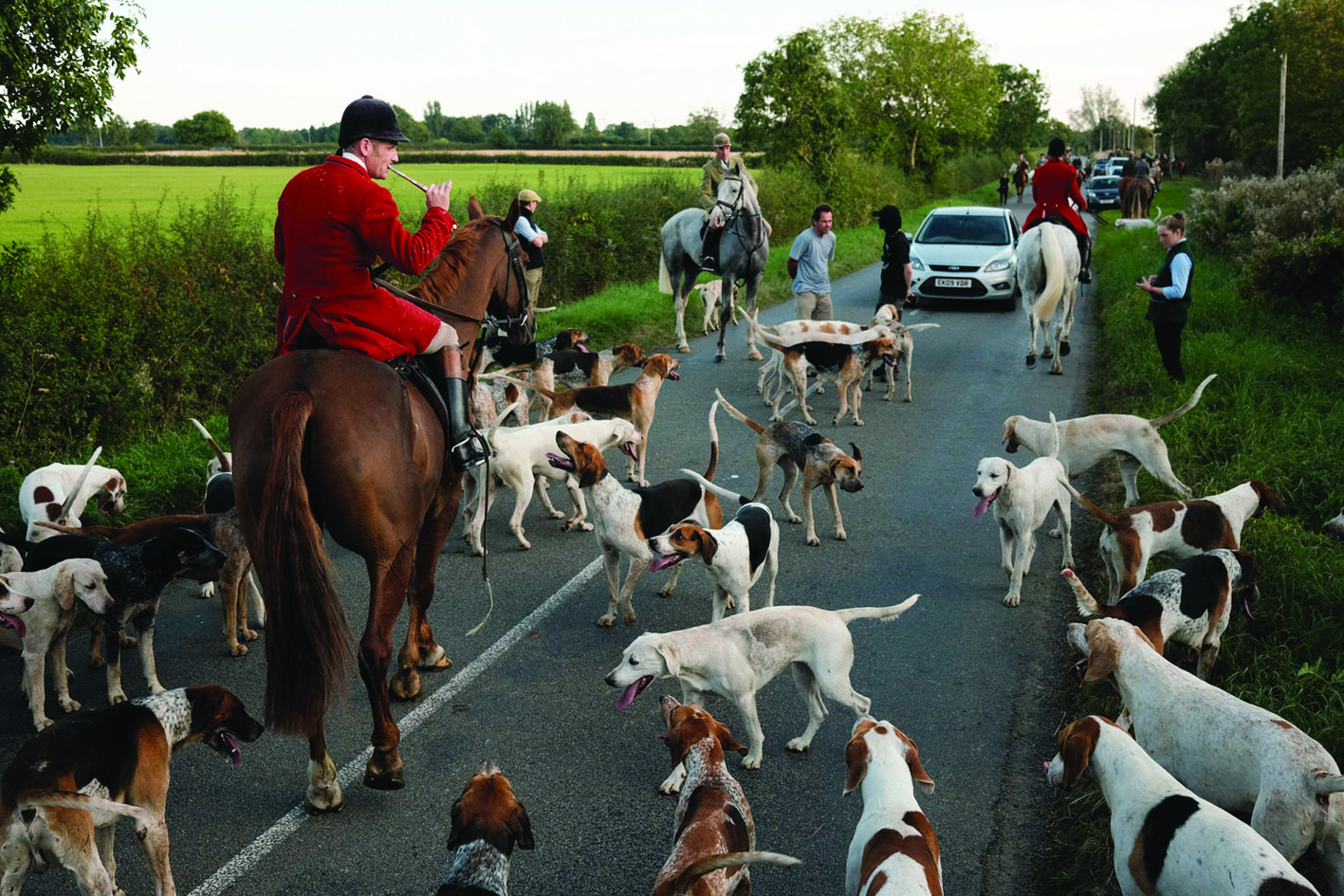
Animal welfare groups back proposed ban, while supporters of country sports warn against further pressure on rural traditions
THE UK GOVERNMENT has opened a public consultation on plans to ban trail hunting in England and Wales, setting up a fresh debate in rural areas including Pembrokeshire, where hunting remains part of the social calendar for some communities.
Ministers say the move would deliver a Labour manifesto pledge and help close what campaigners describe as loopholes in the law. The consultation is seeking views from the public, landowners, hunt organisers, local authorities, conservation bodies, businesses and animal welfare groups on how a ban should work in practice and whether wider changes to hunting law may also be needed.
Trail hunting was introduced after the Hunting Act 2004, with organisers saying it involves hounds following an artificially laid scent rather than a live animal. Opponents argue it has too often been used as a cover for illegal hunting, while supporters say it is a lawful countryside activity which should not be swept away by politics.
The Hunt Saboteurs Association and the League Against Cruel Sports have both welcomed the consultation, saying it gives the public a chance to support stronger protections for wildlife and prevent further loopholes from being exploited.
But countryside groups have hit back, arguing that the proposals could have serious consequences for rural communities, jobs and long-standing local traditions. The Countryside Alliance has urged supporters to respond, saying those who understand country life must not allow others to shape the outcome unchallenged.
The issue is likely to attract strong views in Pembrokeshire, where country sports still have a loyal following. The Cresselly Hunt, one of the best-known local hunts, continues to hold regular trail hunts and social events, underlining how closely the subject is tied to local rural identity as well as national legislation.
That means any attempt to tighten the law is unlikely to be seen locally as a simple animal welfare measure. For many in west Wales, it will also be viewed through the lens of heritage, land management and concern that rural voices are being overlooked by decision-makers.
The consultation does not itself change the law, but it is the clearest sign yet that legislation is being prepared. With ministers now formally gathering evidence and public opinion, both supporters and opponents of hunting are expected to campaign hard over the coming weeks.


News2 hours ago
Diesel nears £2 a litre in Pembrokeshire as drivers scramble for cheaper fuel
Johnston forecourt hits 194.9p while wide price gaps and rush to fill up pile pressure on motorists across the county...

News22 hours ago
St Davids Cathedral marked Easter Sunday with full day of worship
FROM dawn vigil to choral evensong, the cathedral welcomed worshippers for one of the most important days in the Christian...


Crime23 hours ago
Neyland man spared immediate jail over aggravated vehicle taking
Defendant given a suspended prison sentence after magistrates heard the offence was serious enough to cross the custody threshold KRISTIAN...

Health2 days ago
Crumbling NHS faces £1bn repairs bill in Wales
Senedd election promises collide with the harsh reality of ageing hospitals, fire safety concerns and a maintenance crisis stretching across...

News2 days ago
Emergency services respond to incident in Haverfordwest town centre
EMERGENCY SERVICES were called to an incident in Haverfordwest town centre on Saturday morning (Apr 4), with police and ambulance...
News2 days ago
Teenager intervenes after bridge incident
A TEENAGER was left shaken after stepping in to help a young woman in distress on Clay Lanes bridge in...


Crime4 days ago
Driver spared jail after crash killed young couple
A PEMBROKE DOCK driver who caused the deaths of a young couple in a road crash has been given a...

Entertainment4 days ago
BBC unveils major new Welsh dramas with Tenby set for prime-time spotlight
New crime series Old Town Murders and supernatural thriller The Witch Farm will both be filmed and set in Wales...


Health4 days ago
No jobs for new paramedics in Wales as graduates told to apply for technician roles
Students trained at public expense urged to take lower-grade jobs as anger grows over NHS workforce planning NEWLY qualified paramedics...


News5 days ago
Health minister refuses to act on Withybush despite 15,000-signature petition
Senedd pressure grows as Welsh Government declines to intervene over surgery fears THE WELSH GOVERNMENT has refused to step in...
-
 News3 days ago
Accommodation providers in Wales will be required to register under new law
-
 Business6 days ago
Fishguard to Wexford rail tunnel plan backed by Elon Musk firm
-

 Entertainment4 days ago
From Milford Haven to the world: The story of The Evolution Experience
-
Entertainment4 days ago
BBC unveils major new Welsh dramas with Tenby set for prime-time spotlight
-

 Charity7 days ago
RSPCA calls for stronger animal welfare measures as Welsh Labour launches manifesto
-
 News7 days ago
Labour promises 48-hour GP access as manifesto faces questions over delivery
-
 Crime6 days ago
Driver trapped after crash while nearly four times over drink-drive limit
-
 Business6 days ago
Refusal over Pembrokeshire shepherd hut let goes to appeal