


Community
All aboard as Milford Haven sight loss group take to the tracks


IT WAS a case of full steam ahead for the Milford Haven Macular Society Support Group after they were invited to take part in a Familiarisation Day organised by Transport for Wales.
Members of the group got on-board for the hour-long journey from Milford Haven to Carmarthen to test some of the assisted travel services available to people with sight loss and other disabilities when travelling on Transport for Wales’ trains.
The group was accompanied by Geraint Morgan, community affairs manager at Transport for Wales. Geraint recently visited the group at one of its monthly meetings to talk to its members about the support on offer to anyone using the train who has a visual impairment. He also invited the group to come and try it out for themselves.
The trip was one of many events taking place throughout the UK as part of Macular Week, which runs from 24-30 June. Now in its fifth year, Macular Week is organised by the Macular Society to raise awareness of macular disease. This year, the Society is highlighting the importance of research funding to find a cure.
Macular disease is the biggest cause of sight loss in the UK. Nearly 1.5 million people are currently affected and many more are at risk. The disease can have a devastating effect on people’s lives, leaving them unable to drive, read or see faces. Many people affected describe losing their sight as being similar to bereavement. There is still no cure and most types of the disease are not treatable. Age-related macular degeneration (AMD) is the most common form of macular disease, affecting more than 600,000 people, usually over the age of 50.


Milford Haven Macular Society
Madeline Roberts, leader of the Milford Haven Macular Society Support Group, said: “When Geraint asked us if we’d like to see how the assisted travel service works, we thought it was a great idea.
“I travel by train a lot myself, but many of our group don’t use it regularly or haven’t travelled by rail for a long time. For some of them, it’s simply because they just haven’t felt confident enough to do it. But there’s so much help and assistance available if you need it and nothing is too much trouble for the staff.
“It was also great that we could do this during Macular Week and use the opportunity to raise awareness of macular disease and spread the word to as many people while we were out and about.”
Geraint Morgan, community affairs manager at Transport for Wales, said: “For many people with sight loss, public transport is an important means of being able to travel – for work, for leisure or meeting family and friends. The objective of our assisted travel talks and familiarisation trips is to help raise awareness of the assistance that can be provided when travelling by train.

“The familiarisation trips offer an opportunity for people to experience a journey by train with the aim of giving everybody the knowledge and confidence to travel again in the future.”
For more information about assisted travel services available from Transport for Wales, please visit: https://tfwrail.wales/accessible-travel/booking-assistance.



PROTESTS against proposals for a deep-space radar site at Pembrokeshire’s Cawdor barracks, Brawdy, which have seen a local city council object, have taken place close to the site and at County Hall, Haverfordwest
In a pre-application consultation, ahead of a formal planning application, The Ministry of Defence wants to install 27 radar antenna and a long list of associated works at Cawdor Barracks, Brawdy.
The pre-application consultation on the UK Government website, ran up to March 23, with the MOD intending to submit a formal planning application to Pembrokeshire County Council after that date.
Proposals for a worldwide network of sensors called the Deep Space Advanced Radar Concept (DARC) to track active satellites and other objects would utilise three sites worldwide, in the USA, the UK and Australia “enabling 360-degree coverage of the sky at all times of day and under any weather conditions”.
In late 2023, Cawdor Barracks was identified as the preferred UK site by the-then UK Defence Secretary, Grant Shapps.

A supporting statement accompanying the pre-application consultation, through Montagu Evans LLP says: “The Deep Space Advanced Radar Capability proposal will enhance the UK’s ability to detect, identify, and track objects in Earth orbit, including satellites, space debris, and potential threats.
“This capability is vital for ensuring the resilience of UK space systems, enabling the UK to secure attribution, maintain stability and provide information for managing emerging challenges. Fundamentally, the project forms a key site that will support wider international space traffic management and enhance collective international security.
“As part of the ongoing investment into this domain, the UK has been working with its allies to identify a location for a new deep space monitoring facility to protect and defend both military and civilian infrastructure that supports our way of life.”
It adds that, as well as the civilian importance of satellite technology, “there is the strategic importance of secure communication for command-and-control activities undertaken by the UK military,” adding: “This not only serves to support operations for and with our allies across the globe, but also the day-to-day security of the nation.”

St Davids City Council members recently unanimously opposed the proposals, raising concerns including the impact on tourism, the loss of the only 4G sports pitch in the county area currently available to the community at Brawdy, the impact on the Pembrokeshire Dark Skies designation, and potential health considerations relating to non-ionising radiation.
Public objectors to the proposals have said there are concerns “about the scale, complexity and potential implications of the proposal,” adding: “A number of peaceful protests have taken place, including gatherings outside Brawdy Barracks and County Hall.
“In addition, a small number of people made camp over the weekend near the proposed site to highlight their concerns and to encourage further public dialogue about the proposed development.”

Concerns raised include a potential impact on the local economy, which is dependent on tourism, the environment, and potential impacts on human health.
“Other are worried that the presence of the radar would alter the profile of the region in terms of security,” Penny Dafforn of the protestors said, adding: “As we are seeing in the current action of the USA against Iran – such installations can very easily become a target for hostile forces.
“Given the technical and geopolitical complexity of the proposal, some residents have also expressed uncertainty about whether the local planning authority is best qualified to fully assess all aspects of this application.”
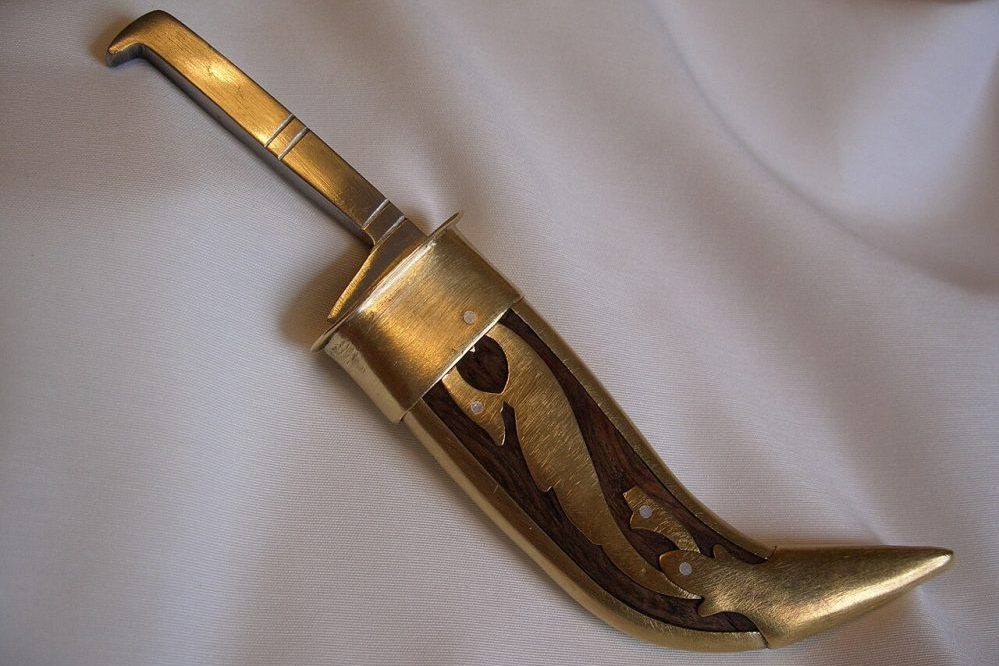
A PEMBROKESHIRE school and the council are providing reassurance after parents raised fears following an announcement that a Sikh pupil would be allowed to wear a ceremonial dagger for religious reasons.
An email sent to parents from the school’s headteacher said: “We have recently welcomed a Sikh family to our school community.
“As part of their faith, practising Amrhitrdhari Sikhs, over the age of 14, are required to wear certain symbolic items, one of which is the kirpan. In this case, the learner is wearing a small, sheathed ceremonial kirpan (that is secured and cannot be unsheathed). It is worn purely as a religious symbol and not as a functional item.
“We have taken appropriate steps to ensure that this is managed safely and in accordance with our safeguarding responsibilities, the laws of the United Kingdom, and our commitment to respecting the religious beliefs of all learners.
“We will continue to monitor this sensitively and appropriately.”
The kirpan is a mandatory article of faith worn by initiated (Amritdhari) Khalsa Sikhs, representing a commitment to spirituality, justice, and defending the innocent. Often a small steel or iron blade, it is one of the five Ks worn at all times by Sikhs.
It has been described as not a weapon of violence but a ‘weapon of grace,’ a symbol of courage, self-defence, and the duty to protect the weak and uphold justice.
Concerns have been raised by parents on social media, with one saying her daughter was made to take off her false nails she had got done for her birthday as the school classed them as “a dangerous weapon,” saying she refused and got sent home.
Another said: “Allowing that in a school? They planning on having a copper follow them everywhere every school day? Surely they cannot walk around with a blade in school, religious or not surely that’s not okay! I have absolutely no issue with any religion at all but that is dangerous for people, they could hurt someone whether accidental or intentional.”

The school’s uniform policy stresses: “Sikhism requires that a baptised Sikh should carry a comb (Khanga); steel bracelets (Kara) and a short sword or dagger (Kirpan). These additions to the jewellery / accessory rules are permitted, but any kirpan must be ceremonial: that is, safe and incapable of being used as a weapon.”
A Pembrokeshire County Council spokesman said: “The council is aware of the issue and provided guidance and advice to [the school].
“The school will follow their safeguarding process as outlined in the letter to parents and the council is satisfied that appropriate measures are in place at the school.”


RESIDENTS forced to evacuate their homes following a major fire in Kidwelly have now been allowed to return, as emergency services confirm the scene has been stood down.
The blaze broke out at a property on Lady Street in the early hours of Tuesday (March 24), with emergency services called at around 4:20am. Several neighbouring homes were evacuated as a precaution while firefighters tackled the incident and assessed the safety of surrounding buildings.
In the latest update, Dyfed-Powys Police confirmed that officers have now left the scene and displaced residents were able to return to their properties on Thursday evening (March 26), following work to make the affected building safe.

The incident caused significant disruption in the town, with Lady Street remaining closed while further work is carried out to ensure the safety of the highway and surrounding structures.
Emergency services, including Mid and West Wales Fire and Rescue Service, were on the scene for several hours during the initial response. Crews were understood to have dealt with a serious property fire, prompting a large-scale emergency operation in the centre of the town.
While the immediate danger has now passed, authorities have confirmed that investigations into the cause of the fire are ongoing. Police are continuing to appeal for witnesses or anyone with relevant information to come forward.
Officers are particularly keen to hear from anyone who may have CCTV, doorbell, or dashcam footage from the area between 11:00pm on Monday (March 23) and 4:00am on Tuesday (March 24).
Anyone with information is urged to contact police quoting reference 027 of 24/3, either via 101, online, or anonymously through Crimestoppers.
Authorities thanked residents and the wider community for their patience during the incident, which saw homes evacuated and roads closed while emergency services carried out their work.
Further updates are expected as the investigation progresses.




Crime19 hours ago
Gunshot fired by police during incident in Milford Haven
A POLICE officer discharged a firearm during an incident in Milford Haven on Saturday evening (March 28), prompting an investigation...


Community2 days ago
Three Amigos Easter Run roars through Pembrokeshire
MOTORCYCLE enthusiasts turned out in force today (Saturday, March 28) as the popular Three Amigos Easter Run returned to the...


Education3 days ago
Ysgol Henry Tudor reassures parents over Sikh ceremonial kirpan
School says religious item worn by pupil is secured, symbolic and non-functional YSGOL HENRY TUDOR has moved to reassure parents...


Crime4 days ago
Teen jailed after starting fire while others slept
Fire set in shared home left sleeping residents at risk and caused £130,000 damage A TEENAGER who started a fire...

Health4 days ago
GP crisis driving NHS pressure in Wales, Senedd report warns
Falling GP numbers and funding gaps blamed for worsening hospital delays THE NHS crisis highlighted earlier this week is being...


News5 days ago
Reform reveals west Wales candidates for Senedd battle
Monkton councillor tops Pembrokeshire list as party confirms Carmarthenshire names and includes Haverfordwest councillor in unwinnable Swansea spot REFORM UK...


Health5 days ago
Clash over Withybush Hospital services as Paul Davies challenges First Minister
A HEATED exchange in the Senedd has laid bare growing tensions over the future of hospital services in west Wales....


Crime6 days ago
Police stop car in Pennar as three arrested in drugs investigation
Suspected drug driver report leads to major police response and multiple arrests DRAMATIC scenes were reported in Pennar on Monday...


Business6 days ago
New pilot vessel Llanion arrives at Milford Haven
State-of-the-art 22-metre craft marks reset after £3.6m pilot boat controversy THE PORT OF MILFORD HAVEN has taken delivery of a...


Community6 days ago
Sycamore Gap legacy tree to take root in Pembrokeshire landscapes
A SAPLING grown from the famous Sycamore Gap tree is set to become part of Wales’ protected landscapes — with...
-

 Business6 days ago
Taxi fare shock in Milford Haven as drivers switch to meters
-

 Business7 days ago
Could Primark be coming to Haverfordwest? Major retailer in talks for former Wilko site
-

 News5 days ago
Welsh Government outlines progress on flood resilience plans
-

 Health6 days ago
Average of 18 deaths a week in Wales linked to A&E delays, figures reveal
-

 Community4 days ago
Hero female officer keeps job after sexual touching finding
-

 Local Government7 days ago
Milford Haven set for £200m investment with schools, leisure centre and rail upgrade
-

 Crime7 days ago
Armed police attend knife-related incident in Fishguard street
-

 News7 days ago
Kurtz calls for tougher action on water quality after Pembrokeshire sea swim visit