


News
Rosslare ready to go it alone


THE UK Government stands ready to revoke legislation governing the relationship between the ports of Fishguard and Rosslare.
The abolition of the current arrangements is a step closer according to Irish newspaper reports of a recent meeting between Transport Secretary Chris Grayling and Fianna Fáil’s transport spokesperson Robert Troy and Wexford TD James Browne.
According to the reports, Mr Grayling told the Irish politicians that the UK has ‘no strategic or economic’ interest in keeping the ports’ governance structure.
The Irish Government, meanwhile, regards Rosslare as a major part of its Brexit plans and has acquired further land to provide additional facilities there.
The ports are governed by a UK Act of Parliament from 1888, which created the Fishguard and Rosslare Railways and Harbour Company.

The Act continued to govern the relationship between the Ports, even after most of Ireland secured its independence from the – then – British empire.
However, the old legislation has – in the view of Irish TD James Browne – hindered the Irish Government’s ability to expand activities at Rosslare to the benefit of the local and Irish economies.
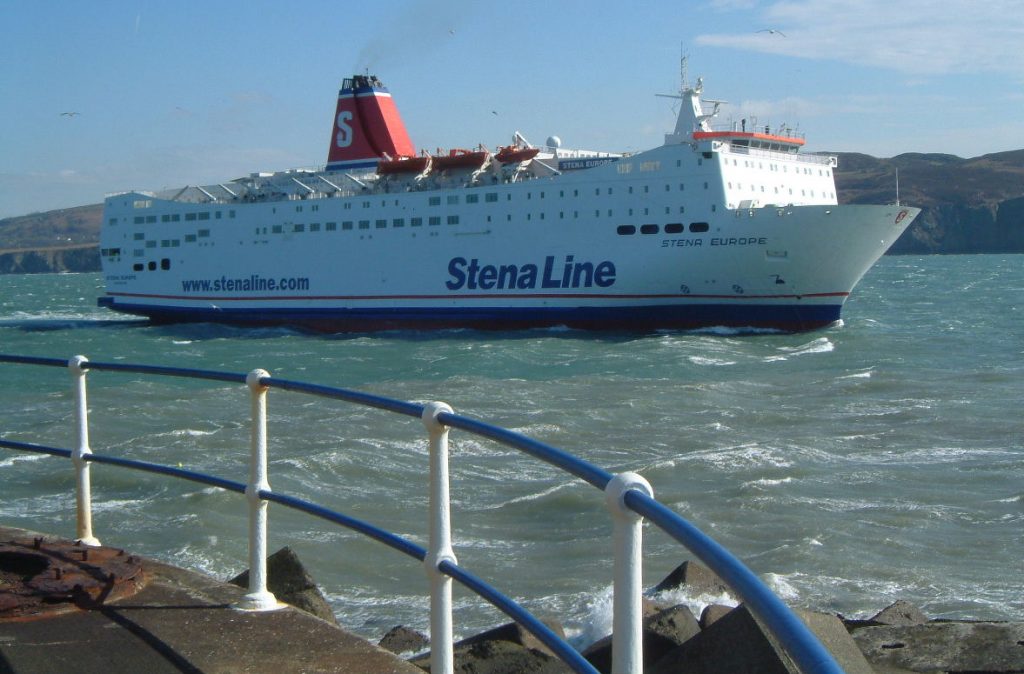
Stena Line: Looking at the long term development of both ports
Fishguard and Rosslare ports are part of the one company, namely the Fishguard and Rosslare Railway and Harbours Company set up by an Act of Parliament.
Mr Browne explained to The Herald: “In effect, ownership of the port lies with UK government. But in turn the ports are effectively run as private companies: Irish Rail control and operate the Rosslare end and Stena control and operate the Fishguard side and there is an agreement in place as to the division of profits of the company.
“In Ireland, this complex and archaic ownership model has regularly been cited as an inhibiting factor in the development of the port. In short, no one will invest in a port whose ownership is unclear.”
The opportunity is not, however, all on one side, says the Wexford TD: “The decoupling of the two ports, and the transfer of Rosslare to Irish state ownership would free up both ports from this complex ownership model and allow investment in the ports.”
Mr Browne also highlighted the potential for growth in economic activity in West Wales’ closest trading neighbour: “Dublin Port is so busy that it is turning away business. Rosslare Port is in an ideal geographical location to attract shipping business and to take the pressure off of Dublin. Port. It, in turn, would act as an economic driver for the entire South East of Ireland.”

Preseli Pembrokeshire MP Stephen Crabb told us: “The importance of the Fishguard – Rosslare ferry connection is unquestionable with 80% of all goods from Ireland passing through Welsh ports.
“However, the historic legal framework for the ports is outdated and does not give either side the freedom they need to develop and innovate. I can well understand why change is being sought at this time.
“I have met with the management on both sides of the Irish Sea to discuss Brexit planning and other aspects of the industry and will continue to do so.”
Ian Hampton, Chief People and Communications Officer, Stena Line said: “Stena Line hopes that by removing the historical legislation that governs the status of The Fishguard Rosslare Railways and Harbour Company it will enable Stena Line and the Irish Government to work closer together creating greater opportunity, such as the options for the long term development of both the respective ports.”


WELSH Labour leader Eluned Morgan has pledged to freeze Welsh rates of income tax if her party forms the next government, as Labour prepares to launch its Senedd election manifesto on Monday (Mar 30).
Speaking in Swansea, Morgan is expected to position the policy as part of a wider effort to ease pressure on households during the ongoing cost-of-living crisis.
In remarks released ahead of the launch, she said a future Welsh Labour government “will not raise income tax” during the next Senedd term.
She added: “Fairness starts with understanding the pressure families face, but fairness also means action.
“This manifesto delivers real help with the cost of living.”

Key pledges outlined
Alongside the proposed tax freeze, Welsh Labour says its manifesto will include a number of headline commitments.
These include a £2 cap on single bus fares across Wales, maintaining £1 fares for young people, and continuing free travel for over-60s.
The party has also pledged to create 20,000 new childcare places, expanding provision to include children from nine months old.
Other priorities outlined ahead of the launch include investment in the NHS, with plans for new hospital developments and expanded mental health support, as well as measures aimed at tackling environmental issues such as river pollution and fly-tipping.

Labour also says it will focus on job creation through green energy projects and introduce a “lifelong retraining guarantee”.
Context and scrutiny
The Welsh Government has the power to vary income tax rates in Wales, but changes have not been made since partial control over income tax was devolved in 2019.
A freeze would maintain current rates rather than reduce the tax burden, meaning the policy is unlikely to increase take-home pay directly but could prevent future rises.

Opposition parties are expected to challenge Labour’s plans during the campaign, particularly around funding commitments and delivery of large-scale pledges such as NHS investment and childcare expansion.
Welsh Labour also used its pre-launch briefing to criticise Plaid Cymru, claiming its rivals are focused on constitutional issues rather than economic priorities. Plaid Cymru has yet to formally respond to the manifesto announcement.
Election backdrop
The Senedd election is due to take place on Thursday (May 7), with the cost of living, NHS performance, and economic growth expected to dominate the campaign.

A US AIR FORCE E-3 Sentry airborne warning and control aircraft appears to have been heavily damaged — and possibly destroyed — during an Iranian missile and drone strike on Prince Sultan Air Base in Saudi Arabia on Friday (March 27).
Images circulating online, now also carried by The New York Times and other international outlets, show the rear fuselage of an E-3 burned out, with its distinctive radar dome separated and lying on the tarmac nearby. The extent of the visible damage suggests the aircraft may be beyond repair, although US officials have not formally confirmed the loss.

Reports cited by the The Jerusalem Post indicate that between ten and twelve American service personnel were wounded in the attack, with at least two said to be in a serious condition. The strike, which took place around 60 miles south of Riyadh in the early hours, is understood to have involved a coordinated barrage including at least one ballistic missile alongside multiple attack drones.
The same reports claim that other aircraft at the base may also have been damaged, including KC-135 Stratotanker refuelling aircraft, although this has not been independently verified.
Prince Sultan Air Base has been a key hub for US air operations in the region and has reportedly come under repeated attack in recent weeks. According to the Jerusalem Post, earlier incidents included a strike that wounded fourteen personnel earlier in the week, and a missile attack on March 1 which is said to have killed one servicemember.


High-value target
The E-3 Sentry is one of the most important aircraft in the US military’s inventory. Based on a modified Boeing 707 airframe, it is equipped with a large rotating radar dome providing 360-degree surveillance over hundreds of miles. The aircraft acts as a flying command centre, coordinating fighters, tracking threats, and managing complex air operations in real time.
The US Air Force originally operated around thirty E-3 aircraft, although that number has now been reduced to approximately sixteen as the ageing fleet is gradually retired. Around six had reportedly been deployed to the Middle East ahead of the current conflict.
Each aircraft cost roughly $270 million to build in the 1990s, which would equate to approximately $500 million to $700 million (£400m–£550m) today. However, analysts say the true value of the platform lies not in its price tag, but in the critical role it plays in maintaining air superiority and battlefield coordination.
Heather Penney, a former F-16 pilot and analyst at the Mitchell Institute for Aerospace Studies, described the potential loss as “incredibly problematic,” noting that such aircraft act as the “chessmaster” of modern air warfare, overseeing and directing operations across the battlespace.


Strategic implications
If confirmed, the loss or severe damage of an E-3 would represent a significant blow to US and allied operations in the region. The aircraft provides early warning of incoming threats and enables the coordination of large-scale air campaigns — capabilities that are difficult to replace quickly.
The strike may also highlight increasing sophistication in Iranian targeting. The Jerusalem Post reports that the attack appeared to focus on high-value assets, suggesting access to detailed intelligence on aircraft positions and operational patterns at the base. However, claims of external intelligence support have not been independently verified.
The incident underlines the vulnerability of even heavily defended installations to coordinated missile and drone attacks, and raises further concerns about escalation in an already volatile region.
At the time of publication, US officials had not issued a detailed public assessment of the damage or confirmed whether the aircraft has been written off.

Sixteen held as police press ahead despite ongoing legal dispute
SIXTEEN protesters have been arrested outside New Scotland Yard in London after holding placards expressing support for Palestine Action, as the Metropolitan Police Service continues to enforce controversial powers under terrorism legislation.
The demonstrators, described by campaign group Defend Our Juries as peaceful, were sitting outside the Met’s headquarters holding signs reading: “I oppose genocide – I support Palestine Action.”
The arrests come just days after the force confirmed it would resume enforcement action, reversing an earlier position taken following a February ruling by the High Court which found the proscription of Palestine Action to be unlawful.
Policy reversal
In the wake of that ruling, the Met had stated it would pause arrests and instead “focus on gathering evidence,” describing that approach as “the most proportionate” while awaiting further legal clarity.
However, earlier this week the force confirmed it would resume arrests under the Terrorism Act 2000, citing the need to provide clear guidance to officers and enforce the law as it currently stands.
The Government has since been granted permission to appeal the High Court decision, with the case due to be heard at the Court of Appeal later this month.
Welsh protesters involved
There is also a clear Welsh dimension to the protests, with campaigners from Pembrokeshire and across Wales regularly travelling to London to take part in demonstrations linked to Palestine Action.
The Herald understands that Welsh protesters have already been arrested at previous events prior to the High Court ruling, raising concerns locally about the use of terrorism legislation against those attending peaceful protests.
The latest arrests are therefore likely to resonate in west Wales, where opposition to the policing approach has been growing among activists and community groups.
Legal and political criticism
The move has drawn criticism from campaigners and legal figures. Law firm Hodge Jones & Allen has argued that such arrests may be unlawful, given the High Court’s findings.
Critics say the situation has created a legal grey area, with police continuing to enforce legislation that has already been ruled unlawful but remains in effect pending appeal.
Labour MP Diane Abbott previously described the use of terrorism powers in such cases as “an abuse of power to silence opinions [the police] want to suppress.”
Protesters speak out
Among those taking part was Árainn Hawker, 54, from Somerset, who said: “The courts have ruled that this proscription is illegal… yet people are still being arrested under it. That is an affront to justice.”
Another protester, who gave their name as Ams, said they believed the arrests were intended to deter further demonstrations, adding: “I refuse to be intimidated and I refuse to comply with this authoritarian overreach.”
Further protests planned
Defend Our Juries has announced plans for a further mass protest in Trafalgar Square on April 11, as part of its ongoing “Lift the Ban” campaign.
Despite the backlash, the Metropolitan Police Service has indicated it will continue enforcing the law pending the outcome of the appeal, meaning further arrests are likely in the coming weeks.



Crime5 hours ago
Gunshot fired by police during incident in Milford Haven
A POLICE officer discharged a firearm during an incident in Milford Haven on Saturday evening (March 28), prompting an investigation...


Community1 day ago
Three Amigos Easter Run roars through Pembrokeshire
MOTORCYCLE enthusiasts turned out in force today (Saturday, March 28) as the popular Three Amigos Easter Run returned to the...


Education2 days ago
Ysgol Henry Tudor reassures parents over Sikh ceremonial kirpan
School says religious item worn by pupil is secured, symbolic and non-functional YSGOL HENRY TUDOR has moved to reassure parents...


Crime3 days ago
Teen jailed after starting fire while others slept
Fire set in shared home left sleeping residents at risk and caused £130,000 damage A TEENAGER who started a fire...


Health3 days ago
GP crisis driving NHS pressure in Wales, Senedd report warns
Falling GP numbers and funding gaps blamed for worsening hospital delays THE NHS crisis highlighted earlier this week is being...


News4 days ago
Reform reveals west Wales candidates for Senedd battle
Monkton councillor tops Pembrokeshire list as party confirms Carmarthenshire names and includes Haverfordwest councillor in unwinnable Swansea spot REFORM UK...


Health4 days ago
Clash over Withybush Hospital services as Paul Davies challenges First Minister
A HEATED exchange in the Senedd has laid bare growing tensions over the future of hospital services in west Wales....


Crime5 days ago
Police stop car in Pennar as three arrested in drugs investigation
Suspected drug driver report leads to major police response and multiple arrests DRAMATIC scenes were reported in Pennar on Monday...


Business5 days ago
New pilot vessel Llanion arrives at Milford Haven
State-of-the-art 22-metre craft marks reset after £3.6m pilot boat controversy THE PORT OF MILFORD HAVEN has taken delivery of a...


Community6 days ago
Sycamore Gap legacy tree to take root in Pembrokeshire landscapes
A SAPLING grown from the famous Sycamore Gap tree is set to become part of Wales’ protected landscapes — with...
-

 Business5 days ago
Taxi fare shock in Milford Haven as drivers switch to meters
-

 Business6 days ago
Could Primark be coming to Haverfordwest? Major retailer in talks for former Wilko site
-
 News4 days ago
Welsh Government outlines progress on flood resilience plans
-

 Health5 days ago
Average of 18 deaths a week in Wales linked to A&E delays, figures reveal
-
 Community3 days ago
Hero female officer keeps job after sexual touching finding
-

 Local Government6 days ago
Milford Haven set for £200m investment with schools, leisure centre and rail upgrade
-

 Crime6 days ago
Armed police attend knife-related incident in Fishguard street
-

 Charity6 days ago
RNLI lifeguards save more than 300 lives in Wales as patrols return for Easter