


Politics
Significant concerns for EU citizens in Wales


THE UK Government’s EU Settlement Scheme (EUSS) is causing significant problems for EU citizens currently living and working in Wales.
LOW REGISTRATION IN WALES
Wales has the lowest rates of registration in the UK.
Only 41% of those eligible to apply for EUSS to stay in Wales after Brexit have done so.
The rhetoric surrounding EU migration since the referendum has taken its toll on people’s emotional wellbeing, meaning they no longer feel welcome to live here.
The UK Government has proposed a £30,000 salary threshold for EU residents to qualify for a work visa after Brexit. This could damage the Welsh economy and leave Wales short of key health professionals, say Welsh employers.
The National Assembly for Wales’ External Affairs and Additional Legislation Committee, which focuses on the implications of Brexit for Wales, is today publishing a report looking at the impact of changes to ‘freedom of movement’ after Brexit. As well as the impact on services and employers, the Committee has looked at the effect on individual EU citizens currently living and working in Wales – there are currently an estimated 80,000.
The Committee heard evidence from a range of health professionals, employers and individuals who would be affected by the proposals to change the immigration system after Brexit.
Organisations representing employers and key workers including the Welsh NHS Confederation, the Royal College of Nursing Wales, Airbus, Universities Wales, Wales TUC and the Arts Council for Wales have voiced serious concerns to the Committee. The UK Government’s proposals for EU citizens after Brexit cause concern to health services and businesses. Under the UK Government’s proposals almost two-thirds of EU workers currently in Wales would not be eligible under the proposed system with the £30,000 salary threshold, and the threshold would lead to a 57% reduction in EU immigration to Wales over 10 years.
EU SETTLEMENT SCHEME – DIGITAL BY DEFAULT
As part of the Committee’s inquiry, it heard evidence from people directly affected by the changes to freedom of movement after Brexit.
The EU Settlement Scheme (EUSS) was established by the UK Government because, in most cases, EU citizens living in the UK will no longer have a legal right to reside in the UK once it leaves the EU and free movement ends.
EU citizens living in the UK must register for the EUSS.
The Committee heard many concerns about the system to register. The UK Government has adopted a ‘digital by default’ approach and there have been issues with the technology. The current system only allows the use of Android phones or tablets, not iPhones.
£30,000 THRESHOLD – TOO HIGH FOR WALES
The Welsh NHS Confederation, the membership body representing all NHS organisations in Wales, told the Committee that the proposals to include EU citizens in its £30,000 salary threshold for a visa would “exacerbate current staffing shortages”. It highlighted that 53% of EU NHS staff currently earn below that.
The Bevan Foundation highlighted that the average salary in Wales for full-time workers is £26,000, significantly below the proposed threshold. Airbus, a large employer in Wales, added that the threshold is “too high for key sectors” which could have implications for many services and industries. They argued that the proposals from the UK Government could “leave gaps in the requirements of Wales which can’t be filled in the short term.”
The Committee believes that a salary threshold set at this level will not meet the needs and requirements of the Welsh economy. It is calling on the UK Government to lower the salary threshold requirements and is recommending that the Welsh Government uses all the means at its disposal to ensure that the currently proposed salary threshold is reduced.
FEELING UNWELCOME
The Committee heard evidence from people affected directly and how many people felt that they were no longer welcome in the UK following the EU referendum.
Some argued that the policy pursued by the UK Government since the referendum has exacerbated this.
Several people said that some of the rhetoric relating to the issue of EU migration had hardened and described the toll that this had had on their emotional wellbeing, and that of friends and family members.
One participant emphasised that it is not simply an administrative process, but that real people are involved and that it was important to remember how the process affects them.
Michal Poreba from Swansea, an EU citizen originally from Poland, who gave evidence to the Committee’s inquiry, said: “The EU settlement scheme and the UK Government’s immigration proposals after Brexit are not simply about administrative processes, they are about people’s lives. Real people are involved and it is important to consider how the process affects them and their families. Yet the debate appears to be all about the practicalities of the implementation.
“Questions are asked why so few people have registered so far and how to increase the uptake. But what does it offer? Why would anybody apply? The facts are that the scheme significantly reduces the rights of the applicants. Going through the process, while technically quite easy and straightforward, feels debilitating and comes with no legal guarantees. It feels like an act of political self-harm. No wonder there are no queues to do it.
“The message repeated by politicians appears to be the same – You will be allowed to stay. We want you to stay. Of course, economically speaking they need us to stay, at least for the short term. But there is a big difference between being allowed to stay, and being welcomed. There is a big difference between a legal right and permission.”

SHORTAGE OCCUPATION LIST
Wales has specific needs. The Shortage Occupation List is an official list of occupations for which there are not enough resident workers (including EU nationals) to fill vacancies. The UK list is supplemented by a separate list for Scotland.
The majority of those who gave evidence to the Committee supported the creation of a Wales-specific Shortage Occupation List to meet the specific needs of Wales. The Committee is calling on the UK Government to establish this, which the Welsh Government would be able to amend according to Welsh needs.
David Rees AM, Chair of the External Affairs and Additional Legislation Committee said: “We have significant concerns about the implications of Brexit on our workforce in Wales. The ending of freedom of movement will have consequences for business and our economy if we lose vital workers. What’s more worrying is the impact that the loss of EU citizens could have on our NHS. We rely on EU citizens who work as nurses and carers.
“We heard some very concerning and emotional evidence from EU citizens and their families living and working in Wales. We must not forget the human impact that the ending of freedom of movement will have.
“We are calling on the Welsh Government to do all it can to get the UK Government to reduce its proposed salary threshold of £30,000 in order to better reflect average earnings here in Wales. Under these proposals, almost two-thirds of EU workers currently in Wales would not be eligible to live here. This could mean that we would not be able to recruit key workers such as nurses and carers from abroad.
“The EU Settlement Scheme for those who already live and work in Wales is full of problems, with an online-only application process and limited access on smartphones, these problems must be addressed urgently.
“Wales’ economy has specific needs and changing demographics within Wales, including an ageing population, are likely to pose new challenges in the future. These challenges within the economy of Wales are likely to be exacerbated by an overly restrictive immigration regime after Brexit.
“Today we’re calling on the Welsh Government to show real leadership and send out a strong message that EU citizens are welcome, valued, and needed in Wales and we’re calling on the UK Government to rethink its proposals and take into account the needs of the Welsh economy and public services.”


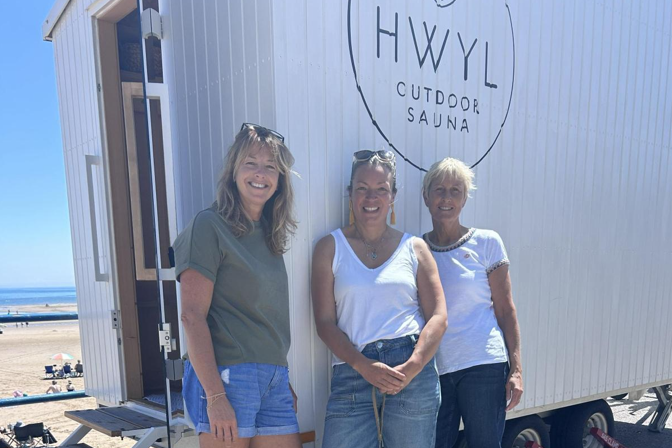
CALLS to allow the permanent siting of an award-winning Pembrokeshire seaside village outdoor sauna, which has been featured in the national press, have been submitted to the national park.
Back in June 2024, a temporary two-year permission for a mobile wood-fired sauna at Saundersfoot harbour was granted by Pembrokeshire Coast National Park’s development management committee.
Since then, a further application by Kerry Evans of Hwyl Outdoor Sauna to make the siting permanent has been submitted to national park planners.
A supporting statement says, since its introduction the sauna has “become a popular and valued amenity for both residents and visitors, offering a space focussed on health, wellbeing and community connection”.
It went on to say: “The overall sentiment within the village has been strongly supportive, with many residents recognising the sauna as a valuable asset that enhances the amenities in Saundersfoot,” adding: “Hwyl Outdoor Sauna has received positive attention in regional and national press helping to promote Saundersfoot as a destination for coastal wellbeing and outdoor experiences.
“Media coverage has highlighted the sauna as an example of the increasing popularity of sea swimming and sauna culture around the UK coastline.
“Hwyl Outdoor Sauna has been featured in two books on the best saunas in the UK.
“The business has also been recognised through tourism and hospitality awards, further demonstrating the quality of the experience provided and the positive contribution it makes to the local visitor offer.”
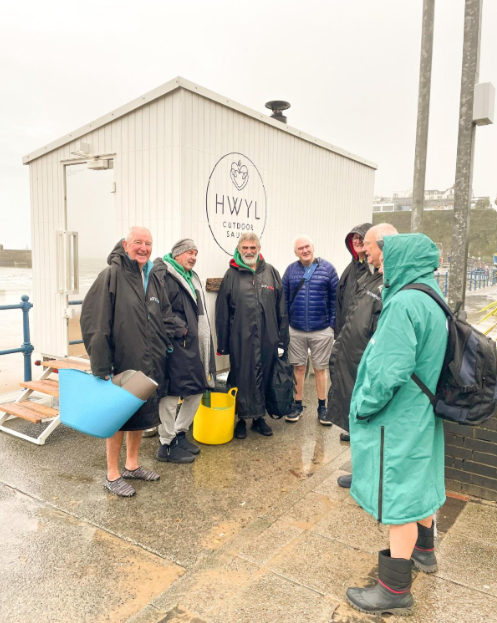
Back in February, the business, set up by former superyacht worker and mum-of-two Kerry won Sauna of the Year 2026/27 at the Wales Prestige Awards.

At the time Kerry said: “I could not be more proud of what I have achieved with Hwyl. I am so grateful to my wonderful team, who have made this journey not only possible but genuinely so much fun.”
Kerry ploughed a legacy from her beloved late father into the venture of a Pembrokeshire seafront sauna.
The application for allowing the sauna to be permanent added: “Through the Welsh Government I have been able to secure the funds to install a cold-water shower on Saundersfoot Harbour, which will be open year-round. This will be achieved via Hywel Outdoor Sauna and a weather proofing fund, from the Welsh Government. This facility has also a GoFundMe to raise the remaining costs.”

It concludes: “Hwyl Outdoor Sauna has established itself as a valued wellbeing facility that benefits both residents and visitors. It enhances the amenities available in Saundersfoot, supports the local economy by encouraging additional visitor activity, and contributes positively to the community through charitable support and engagement.
“The permanent siting of the sauna would allow this successful local small business to continue operating and provide these benefits to the village in a stable and sustainable way.”
The application for a permanent facility will be considered by park planners at a later date.

A SENIOR member of the Welsh Government has been accused of “passing the buck” for declining a call to directly intervene in contentious changes to Withybush hospital.
Last year, Hywel Dda University Health Board consulted with its communities on options for change in critical care, dermatology, emergency general surgery, endoscopy, ophthalmology, orthopaedics, stroke, radiology and urology.
It said its Clinical Services Plan focuses on nine healthcare services that are “fragile and in need of change”.
The proposed changes included an option for Withybush patients needing specialist critical care being transferred to Glangwili.
At a recent two-day meeting, the board, amongst its many other decisions, backed changes into emergency general surgery which will see no emergency general surgery operations taking place at Withybush, but a strengthening of the same-day emergency care (SDEC).

Members stressed the changes would not happen overnight.
Following the decision, calls for intervention have also been made by local Senedd members Paul Davies and Sam Kurtz, who wrote to the Cabinet Secretary for Health & Social Care to urge him to intervene and stop the Health Board removing services from Withybush.

That response from the cabinet secretary has been criticised by Mr Kurtz.
In his letter of response, Cabinet Secretary for Health and social Care Jeremy Miles MS stressed planning and delivery of local health services, in this case “scheduled to begin in the next Senedd term, with a time horizon of up to four years to complete,” were, under statutory arrangements for NHS Wales, “the responsibility of health boards”.
Responding, Sam Kurtz said: “The response from the Welsh Health Minister is regrettably, though perhaps unsurprisingly, deeply disappointing. Rather than demonstrating leadership and using the powers that he has as Health Minister, he appears to be passing the buck to the health board despite the profound impact these decisions will have on services in Pembrokeshire.
“There is clear and justified concern among residents. After years of cuts to services at Withybush Hospital, this response will do little to reassure our communities.
“People deserve clarity, accountability, and a meaningful voice in decisions affecting vital services. Paul Davies and I will continue to stand firmly in defence of healthcare provision across West Wales.”

The Minister’s letter added: “Since the decision was taken, both the First Minister and I have set out the Welsh Government’s position in answers to questions from members of the Senedd and in debates. We have been very clear that decisions of this nature rest with the health board.”
It went on to say: “In your letter, you raise points about services within the scope of the [Clinical Services Plan] as well as the future of the emergency department at Withybush Hospital. I want to be very clear that emergency department services were not part of the CSP decision.”
The county council has also debated the downgrade plans for Withybush.
A petition to the Senedd against the changes has been created by Crymych resident Ajay Owen, entitled Urgent Pembrokeshire Healthcare & Resident Safety – Withybush Hospital & Health Board Intervention.
The petition, running to August 23, has attracted more than 11,000 signatures to date.

THE WELSH LIBERAL DEMOCRATS have criticised comments by Reform UK figures suggesting coal mining could be revived in Wales, describing the idea as unrealistic and warning it could damage both the environment and future investment.
The row follows comments by Reform candidate Ben Hodge-McKenna, who said reopening coal extraction using newer and “safer” technology could help meet Wales’ future energy needs. Reform leader Nigel Farage has also previously faced criticism over remarks about sending young Welsh people back down the mines.
Responding to the comments, the Welsh Liberal Democrats said Wales should focus instead on developing newer industries, including floating offshore wind in the Celtic Sea, tidal energy and green manufacturing.
The party also linked the issue to Reform’s previous support for fracking, arguing that both positions point to what it sees as an over-reliance on older fossil fuel industries rather than long-term economic planning.
Welsh Liberal Democrat leader Jane Dodds said: “Reform’s plan to reopen coal mines is pure fantasy politics. It won’t cut bills, it won’t deliver lasting jobs, and it won’t stand up to even the most basic economic scrutiny.

“The fact they also want to open Wales up to fracking tells you everything you need to know. Fracking would destroy our countryside, can cause earthquakes and risks contaminating local water supplies, yet Reform seems willing to ignore those dangers.
“This is a party doubling down on the failed energy policies of the past, with no serious plan for the future.
“Wales cannot build its future by trying to relive its past. Communities that once powered the industrial revolution deserve better than being sold false promises about industries in irreversible decline.
“Instead of chasing yesterday’s solutions, we should be investing in the industries of the future and giving Welsh workers the secure, well-paid jobs they deserve.”

The Welsh Lib Dems said former coalfield communities deserve serious economic plans for regeneration rather than what they described as headline-grabbing promises.
Reform has argued that Wales should be more willing to use domestic energy resources, including fossil fuels, as part of a wider push for energy security and lower costs.
I’d add a line at the end saying Reform was approached for comment, if you have asked them.



Crime1 day ago
Driver spared jail after crash killed young couple
A PEMBROKE DOCK driver who caused the deaths of a young couple in a road crash has been given a...


Entertainment1 day ago
BBC unveils major new Welsh dramas with Tenby set for prime-time spotlight
New crime series Old Town Murders and supernatural thriller The Witch Farm will both be filmed and set in Wales...


Health1 day ago
No jobs for new paramedics in Wales as graduates told to apply for technician roles
Students trained at public expense urged to take lower-grade jobs as anger grows over NHS workforce planning NEWLY qualified paramedics...


News2 days ago
Health minister refuses to act on Withybush despite 15,000-signature petition
Senedd pressure grows as Welsh Government declines to intervene over surgery fears THE WELSH GOVERNMENT has refused to step in...


Business3 days ago
Fishguard to Wexford rail tunnel plan backed by Elon Musk firm
Six-hour London to Dublin service proposed in £32bn project ahead of Senedd election PLANS for a rail tunnel linking west...

Charity3 days ago
Milford Haven charity honoured with King’s Award for voluntary service
A PEMBROKESHIRE charity supporting vulnerable young people has received one of the highest honours in the UK for voluntary work....


News4 days ago
Plaid Cymru launches bid to lead next Welsh Government
Party positions itself as ‘government-in-waiting’ ahead of May election PLAID CYMRU has formally launched its campaign for the 2026 Senedd...


Crime4 days ago
Police appeal after attempted child abduction in Haverfordwest
DYFED-POWYS POLICE has launched an appeal for witnesses following a reported attempted abduction of a 12-year-old girl in Haverfordwest. The...


Crime5 days ago
Gunshot fired by police during incident in Milford Haven
A POLICE officer discharged a firearm during an incident in Milford Haven on Saturday evening (March 28), prompting an investigation...


Community6 days ago
Three Amigos Easter Run roars through Pembrokeshire
MOTORCYCLE enthusiasts turned out in force today (Saturday, March 28) as the popular Three Amigos Easter Run returned to the...
-

 News4 hours ago
Accommodation providers in Wales will be required to register under new law
-

 Charity4 days ago
RSPCA calls for stronger animal welfare measures as Welsh Labour launches manifesto
-

 Community6 days ago
Residents return home after major Carmarthenshire fire as probe continues
-
Business3 days ago
Fishguard to Wexford rail tunnel plan backed by Elon Musk firm
-
 Local Government6 days ago
Milford Haven Hakin Infants school site housing approved
-

 News6 days ago
West Wales man remanded in custody over serious sexual assault charge
-

 News7 days ago
Reform UK candidate quits days after Nazi salute row
-
 Tourism5 days ago
Moving to Australia from the UK: What you need to Kknow