


Politics
Conservatives take aim at own Achilles Heel

by Jon Coles
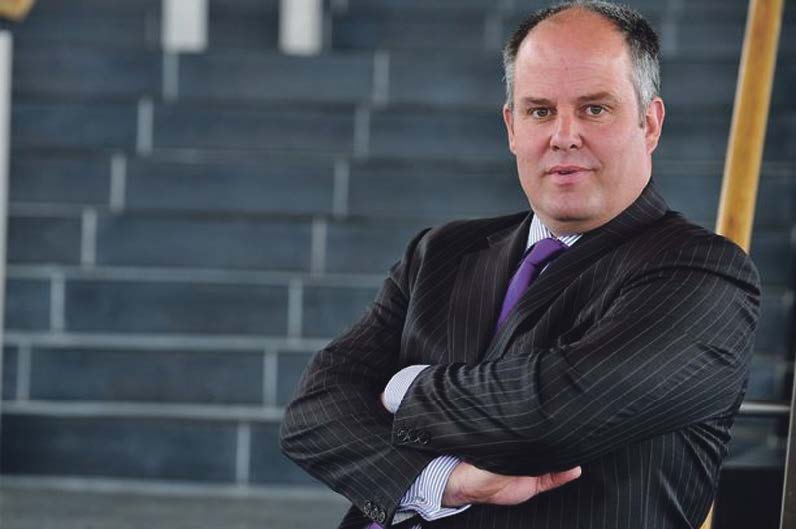
ANDREW RT DAVIES, the new and combative Conservative Shadow Health Minister, stepped into new territory for him and the Conservatives in Wales this week.
In recent weeks, the Conservative group in the Senedd has stepped up its attacks on the Welsh Government’s handling of the COVID-19 crisis, highlighting instances where Wales has failed to follow the Westminster Government’s lead on policy decisions.
TURNING A BLIND EYE
With Westminster’s current response to the COVID crisis at sixes-and-sevens, the Shadow Health Minister put in his boot to criticise the Welsh Government for following Westminster’s lead on a contentious policy decision.
In March, the Westminster Government – followed by the UK’s devolved administrations – began discharging hospital patients into care homes. Discharged patients were not tested for coronavirus.
The Herald reported on the scandal at the time. We highlighted instances where care providers, in both Wales and England, were pressurised by health boards and trusts to take untested patients into closed residential settings.
The outcome of that disastrous policy decision was easily predictable. Its likely consequences were well-known – at least by the Westminster Government – at the time it made that decision.
Introducing a virus known to be lethal to vulnerable and elderly patients caused a wave of deaths in care homes across the UK. The virus spread among an isolated and largely defenceless population.
The foreseeable result was a calamity.
Deaths in social care settings spiralled. They remain high even after the first spike of the virus in the general population and its decreasing incidence across the UK.
Wading into the scandal this week, Andrew RT Davies criticised Welsh Government without a moment’s apparent reflection on the wider context of his words.
In a press release, Mr Davies commented: “There can be no excuse for such an ill-thought decision which, of course, will have had a profound impact on some of our most vulnerable in care homes. I cannot comprehend where the government’s thought process was in pushing care homes to accept hospital patients who had not received a COVID-19 test.
“The bullish act by the Welsh Labour-led Government in applying pressure is truly scandalous and as a result, the people of Wales deserve an apology.
“The most pressing question now is to address how many patients were infected after being admitted and then discharged from the hospital. To address people’s serious concerns, this must be a priority for the Welsh Labour-led Government.”
On receipt of the press release, we replied and asked whether Mr Davies wished to extend his tart observations about the discharge of untested hospital patients to include the Westminster Government.
After recent press releases in which the Conservatives have not hesitated to compare Wales unfavourably with England, we believed Mr Davies might reflect and provide a balanced response: possibly to praise the Welsh Government for following Westminster’s lead; possibly to take the chance to even-handedly criticise the Westminster Government’s policy which the Welsh Government followed.
We did not receive a reply.
POLITICISING A PANDEMIC

Over recent weeks, the Conservatives have ramped up partisan rhetoric over the Welsh Government’s handling of the COVID-19 pandemic.
Former Shadow Health Minister, Angela Burns, managed to navigate a path between scoring political points and attacking the Welsh Government for its multiple early failings in Wales’ response to the virus.
Those failings include setting a testing target, failing to secure the testing kits necessary to meet the target, saying a testing target didn’t exist, announcing a revised testing target, and then abandoning testing targets altogether.
On each of those, Mrs Burns made telling points and held Wales’ Health Minister, Vaughan Gething, to account – often leaving him wriggling on a hook made of his own contradictions and evasions.
Similarly, when Wales entered the strictest phases of lockdown, Paul Davies was able to highlight the enormously disproportionate impact of them on Wales’ rural economy without indulging the fantasy that somehow things were any rosier over the border.
As the Westminster Government began to ease lockdown restrictions in England, and under pressure from both the Westminster Government and Conservatives on either side of Wales’ border with England, the tone of Conservative briefings changed sharply.
Repeated releases from the Conservatives demanded that the Welsh Government lift the lockdown in Wales in step with England. The Welsh Government was accused of ‘dither and delay’, the phrase ‘catch-up Cymru’ began to appear. Fighting talk appeared in the names of shadow ministers who previously expressed themselves cautiously, occasionally critically, and usually constructively.
With one eye on the next round of elections to the Senedd, the Conservatives moved away from consensus and criticism to outright attack.
Having watched the reopening of schools in England unravel into chaos, Conservative attacks on the reopening of Wales’ schools lost step with reality. Now, the Welsh Government was criticised for taking steps that England failed to take to keep schools open there. The desperate floundering of Westminster’s Conservative Education Minister, Gavin Williamson, stood in stark contrast to the determined and unflustered approach of his Welsh counterpart, Kirsty Williams.
Darren Millar, the Senedd Member charged with speaking for the Conservatives on COVID in Wales, began to speak of Wales’ failings – and particularly those of the Welsh Government – for not reopening pubs, restaurants and holiday accommodation. With Wales’ hospitality and tourism industries on their knees, it appeared that approach would serve the Conservatives well.
As the easing of lockdown in parts of England has unravelled, however, Mr Millar has gone noticeably quiet as Wales continues to lift restrictions now re-imposed in significant areas of England’s north-west.
The Prime Minister’s warnings of the risks of a second wave of the virus should focus Conservatives in Wales’ attention on what preparations the Welsh Government is making to head-off that eventuality or at least ease its impact if or when it arrives. Instead, Andrew RT Davies is fighting four-month-old battles seeking headlines.
CONSERVATIVES NOT ALONE
One of the features of the crisis has been how Plaid Cymru has used it to propel its own message for an independent Wales – or at least a Welsh legislature with far stronger powers than the current arrangements.
‘Westminster doesn’t work for Wales’ is how Plaid has pitched its message. Its fire is concentrated on the shambolic approach of the Westminster Government’s response to the crisis. The Prime Minister’s endless capacity to make up policy on the hoof when caught out or tell outright lies when questioned about details has given Plaid Cymru ample opportunity to illuminate the gap between Westminster’s rhetoric and reality.
The Westminster Government’s hectoring approach to the UK’s devolved administrations, which includes gazumping the Welsh Government on a deal for testing kits with pharmaceutical giant Roche, and its constant inconstancy and inconsistency has also allowed Plaid to deploy
its choir of voices demanding more autonomy – preferably independence – for Wales.
When attacking the Welsh Government, however, Plaid has taken a different approach to the Welsh Conservatives. It has clamoured to keep restrictions in place – for example on schools – and for existing restrictions to be strengthened and reinforced – for example on face coverings, a policy on which it is eerily close to the Conservatives’.
However, Plaid – and the Conservatives – have fallen well short of saying what they would have done differently in the same situation and what they would do now to improve things during the continuing COVID age.
ONE EYE ON THE ELECTION

By the time next May comes around, both of Wales’ principal opposition parties need to set out defined messages that are both less negative and more grounded in current reality if either is to shift Labour from power in Cardiff Bay.
For the Conservatives, the challenge is finding a voice for Wales which is not an echo of Westminster. The events of recent weeks demonstrate that efforts to reform the Conservatives in Wales to forge a distinct identity from the UK party are likely to be seed falling on stony ground. Darren Millar is Boris Johnson’s representative on Earth and Simon Hart his rock. A more constructive approach from the Conservatives is, therefore, highly unlikely.
For Plaid Cymru, the challenge is moving beyond dreams of jam tomorrow in favour of policies for today. Plaid need to focus less on what Westminster isn’t doing for Wales but what Plaid CAN deliver for the whole of Wales and not just its existing voters. Plaid’s problem is systemic. It lacks resources and, while it well-organised in pockets of Wales outside ‘Y Fro’, it has not found the key to unlock monoglot Anglophone voters in sufficient numbers across Wales.
As for Labour in Wales, all it can promise is more of the same. It’s been in power for over twenty years and it isn’t likely to change a formula that’s kept it in power for so long. And, when it comes to the economy, Labour can point out that the big levers are held by the Exchequer in London.
The Conservatives and Labour have the advantage of a large electoral base across most of Wales. If they can energise those voters to turn up and vote next May in anything like the numbers they did in the General Election, Plaid will have to watch out for a massive squeeze on their far smaller electoral base



THE WELSH GOVERNMENT’s key Child Poverty Strategy lacks clarity, has no reliable way of measuring success or failure, and, crucially, does not account for the Welsh Government’s lack of control over the levers needed to deliver on it.
Those are the findings of a new report by the UK’s leading economic policy research body, the Institute for Fiscal Studies (IFS), which looks at Wales’s economic performance and poor employment record.
The IFS report, published on Wednesday (April 1), shows that Wales’s economic performance is the worst of the UK nations, with the lowest employment rate, the lowest incomes, the lowest productivity, and the worst poverty levels.

POVERTY STRATEGY LACKS FOCUS
The Welsh Government launched its Child Poverty Strategy in 2018, with five broad aims to reduce child and youth poverty. However, the IFS criticises how those aims have been set out, finding that the definitions are too broad to be measured accurately and lack focus. In particular, the IFS says the strategy’s aims are so nebulous that they ignore the impact of policy areas over which the Welsh Government exercises direct control, for example, health and education, on how outcomes might be measured.
The IFS report says: “Issues with the data mean a material risk that the Welsh Government might either appear to have met a future poverty target or missed it, by a large margin, when in fact the reverse is true.”

WG NOT IN CONTROL OF OWN POVERTY STRATEGY
In any event, several of the most direct policy levers available to influence employment and earnings, including minimum wages, employment law and benefits policy, are reserved to Westminster. However, even if these policy levers were available, it would be very challenging to achieve large, rapid reductions in child poverty with them. In addition, Labour has ruled out using the tax system to generate additional income to help it meet its aims.
Wales’s highest-earning regions are along the North East Wales border with England and in the Cardiff and Newport areas. In addition, proportionately more Welsh employees are public sector workers, who are also, far and away, the best paid in Wales. The average public sector wage is around £5,000 higher than the average private sector wage. And those jobs, too, are disproportionately centred in Cardiff, Newport and North East Wales. The best-performing areas by employment rate, Monmouthshire and Newport, are within easy reach of the English border.
POVERTY CONCEALED BY LOWER PROPERTY VALUES
Compared with the rest of the UK, the gap between men’s and women’s pay is lower in Wales, as are the differences in income and in the highest and lowest property prices. However, property prices are far lower in Wales than in England, as are incomes overall; in addition, there are so few higher-rate tax earners in Wales that the Welsh Government increasing their income tax would have a negligible effect on its revenue. In addition, because Welsh housing prices are much lower than elsewhere in the UK, and because housing costs are a factor in how poverty is measured, housing costs improve one of the key poverty metrics.

TV presenter and commentator to appear at Cardiff event aimed at mobilising anti-Reform voters before May 7
CAROL VODERMAN has urged voters in Wales to reject Reform UK at next month’s Senedd election, as she prepares to appear at a live political event in Cardiff focused on keeping the party out of power.
Speaking ahead of an emergency Guilty Feminist Welsh Election Special at the New Theatre, Cardiff, on Sunday, April 12, Vorderman said Wales faced a crucial choice at the ballot box.
She said: “Wales has a chance for a new beginning in May. But Reform, the chaotic London-based, privately educated, failed Tory party, needs to be sent packing.
“Already numerous of their 96 Welsh candidates have resigned or been sacked for revolting actions. Their last Welsh Reform leader Nathan Gill is serving time in jail for accepting Russian bribes while serving in the European Parliament. Their new Welsh leader was a Tory living in London until a few months ago.
“Farage is a thin-skinned and proven liar. Everyone must come out to vote to save our country. Cymru Am Byth.”

Vorderman is due to appear alongside Guilty Feminist host Deborah Frances-White, with Welsh comedians Kiri Pritchard-McLean and Priya Hall also on the bill. Organisers say the night will mix comedy, music and political discussion, with the aim of building strategy ahead of the election.
Frances-White said polling suggested the Senedd result could be close and argued that “it really matters who ends up making decisions about our lives”, adding that the event was intended as a “get-in-the-room” night to work out how to respond.
Reform UK’s current leader in Wales is Dan Thomas, who was unveiled by Nigel Farage in Newport in February. Thomas is a former Conservative leader of Barnet Council in London, although he grew up in Blackwood.
Vorderman’s reference to Nathan Gill points to a highly embarrassing chapter in the party’s recent history. Gill, a former Reform UK politician and ex-MEP, was jailed last year after admitting taking bribes from pro-Russian figures in exchange for speeches and statements in the European Parliament.

Asked for a response to Vorderman’s remarks, a Reform UK Wales source replied briefly: “Does she even live in Wales?”
It was a short answer, but perhaps not one likely to end the argument. With the campaign heating up, and with high-profile voices now piling in from outside formal party politics, the battle for attention ahead of May 7 is only getting louder.

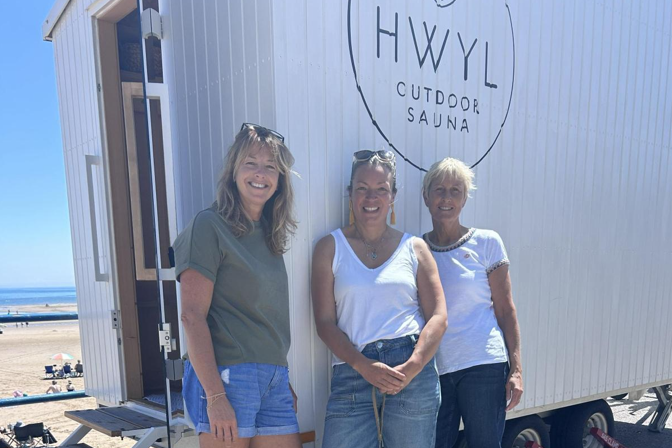
CALLS to allow the permanent siting of an award-winning Pembrokeshire seaside village outdoor sauna, which has been featured in the national press, have been submitted to the national park.
Back in June 2024, a temporary two-year permission for a mobile wood-fired sauna at Saundersfoot harbour was granted by Pembrokeshire Coast National Park’s development management committee.
Since then, a further application by Kerry Evans of Hwyl Outdoor Sauna to make the siting permanent has been submitted to national park planners.
A supporting statement says, since its introduction the sauna has “become a popular and valued amenity for both residents and visitors, offering a space focussed on health, wellbeing and community connection”.
It went on to say: “The overall sentiment within the village has been strongly supportive, with many residents recognising the sauna as a valuable asset that enhances the amenities in Saundersfoot,” adding: “Hwyl Outdoor Sauna has received positive attention in regional and national press helping to promote Saundersfoot as a destination for coastal wellbeing and outdoor experiences.
“Media coverage has highlighted the sauna as an example of the increasing popularity of sea swimming and sauna culture around the UK coastline.
“Hwyl Outdoor Sauna has been featured in two books on the best saunas in the UK.
“The business has also been recognised through tourism and hospitality awards, further demonstrating the quality of the experience provided and the positive contribution it makes to the local visitor offer.”
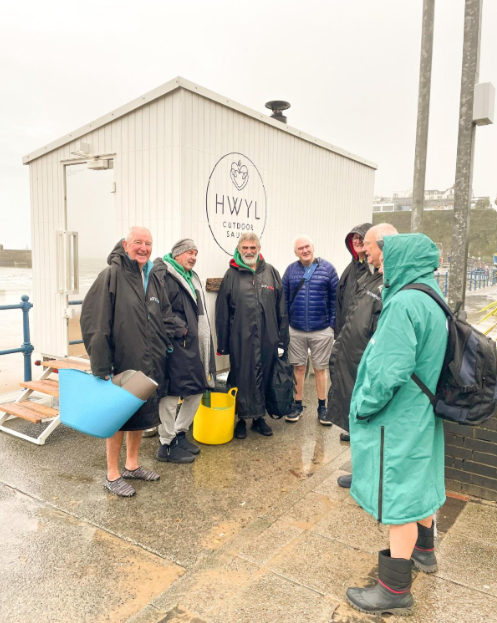
Back in February, the business, set up by former superyacht worker and mum-of-two Kerry won Sauna of the Year 2026/27 at the Wales Prestige Awards.

At the time Kerry said: “I could not be more proud of what I have achieved with Hwyl. I am so grateful to my wonderful team, who have made this journey not only possible but genuinely so much fun.”
Kerry ploughed a legacy from her beloved late father into the venture of a Pembrokeshire seafront sauna.
The application for allowing the sauna to be permanent added: “Through the Welsh Government I have been able to secure the funds to install a cold-water shower on Saundersfoot Harbour, which will be open year-round. This will be achieved via Hywel Outdoor Sauna and a weather proofing fund, from the Welsh Government. This facility has also a GoFundMe to raise the remaining costs.”

It concludes: “Hwyl Outdoor Sauna has established itself as a valued wellbeing facility that benefits both residents and visitors. It enhances the amenities available in Saundersfoot, supports the local economy by encouraging additional visitor activity, and contributes positively to the community through charitable support and engagement.
“The permanent siting of the sauna would allow this successful local small business to continue operating and provide these benefits to the village in a stable and sustainable way.”
The application for a permanent facility will be considered by park planners at a later date.



Crime1 day ago
Driver spared jail after crash killed young couple
A PEMBROKE DOCK driver who caused the deaths of a young couple in a road crash has been given a...

Entertainment1 day ago
BBC unveils major new Welsh dramas with Tenby set for prime-time spotlight
New crime series Old Town Murders and supernatural thriller The Witch Farm will both be filmed and set in Wales...


Health1 day ago
No jobs for new paramedics in Wales as graduates told to apply for technician roles
Students trained at public expense urged to take lower-grade jobs as anger grows over NHS workforce planning NEWLY qualified paramedics...


News2 days ago
Health minister refuses to act on Withybush despite 15,000-signature petition
Senedd pressure grows as Welsh Government declines to intervene over surgery fears THE WELSH GOVERNMENT has refused to step in...


Business3 days ago
Fishguard to Wexford rail tunnel plan backed by Elon Musk firm
Six-hour London to Dublin service proposed in £32bn project ahead of Senedd election PLANS for a rail tunnel linking west...
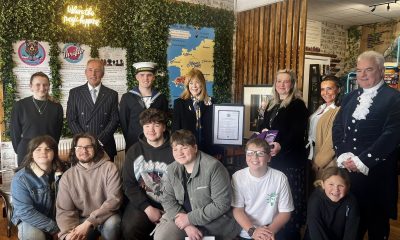

Charity3 days ago
Milford Haven charity honoured with King’s Award for voluntary service
A PEMBROKESHIRE charity supporting vulnerable young people has received one of the highest honours in the UK for voluntary work....
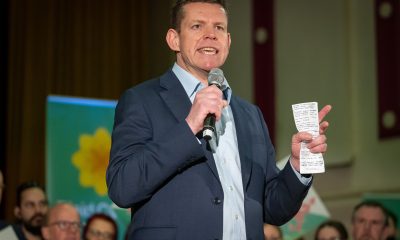

News4 days ago
Plaid Cymru launches bid to lead next Welsh Government
Party positions itself as ‘government-in-waiting’ ahead of May election PLAID CYMRU has formally launched its campaign for the 2026 Senedd...


Crime4 days ago
Police appeal after attempted child abduction in Haverfordwest
DYFED-POWYS POLICE has launched an appeal for witnesses following a reported attempted abduction of a 12-year-old girl in Haverfordwest. The...


Crime5 days ago
Gunshot fired by police during incident in Milford Haven
A POLICE officer discharged a firearm during an incident in Milford Haven on Saturday evening (March 28), prompting an investigation...


Community6 days ago
Three Amigos Easter Run roars through Pembrokeshire
MOTORCYCLE enthusiasts turned out in force today (Saturday, March 28) as the popular Three Amigos Easter Run returned to the...
-

 News10 hours ago
Accommodation providers in Wales will be required to register under new law
-
Business3 days ago
Fishguard to Wexford rail tunnel plan backed by Elon Musk firm
-

 Charity4 days ago
RSPCA calls for stronger animal welfare measures as Welsh Labour launches manifesto
-

 Entertainment23 hours ago
From Milford Haven to the world: The story of The Evolution Experience
-
Entertainment1 day ago
BBC unveils major new Welsh dramas with Tenby set for prime-time spotlight
-

 News6 days ago
West Wales man remanded in custody over serious sexual assault charge
-
Crime5 days ago
Gunshot fired by police during incident in Milford Haven
-

 Sport6 days ago
Lloyd and Reynolds take on France with Supra GT4 challenge