


Farming
Agriculture Bill passes Commons


THE CONSERVATIVE Party used its Commons majority to ram through its Agriculture Bill on Monday, October 12.
Along the way, it voted down amendments which would have forced Boris Johnson’s government to uphold its manifesto promises on food production standards and animal welfare.
The Government’s actions, combined with its procedural manoeuvre to block an attempt to give a proposed trade watchdog teeth, have drawn universal condemnation from farming unions and organisations.
Fourteen Conservative MPs opposed the Government, including former DEFRA Secretary of State Theresa Villiers. Every Welsh Conservative MP voted against safeguarding farmingstandards.
The Wildlife Trusts of Wales and England described the vote as: “[T]he clearest signal yet that the Government do not intend to uphold their election manifesto commitment to maintain the UK’s high environmental protection, animal welfare and food standards in trade negotiations.”
Phil Stocker of the NSA commented: “There is now the very real risk, despite Government’s assurances, that the UK’s standards that our nation’s farmers are proud to work to, could be undermined by lower standard imports.”
‘DISAPPOINTMENT AN UNDERSTATEMENT’
Speaking to The Herald after the vote, TFA Chief Executive George Dunn said: “To say that the events which took place in the House of Commons last night were a disappointment, would be a major understatement. For the Government to whip its MPs to vote against an amendment entirely in line with its own policy has created a breach of trust in believing its rhetoric around protecting our high environmental, animal welfare and food safety standards in future international trade agreements.”
“It was also shocking that the Government used a procedural manoeuvre to deny MPs the opportunity of voting on a crucial House of Lords amendment that would have improved the operation of the newly appointed Trade and Agriculture Commission,” Mr Dunn told us.
He continued: “This was a shocking piece of political chicanery which prevented MPs from even debating this important piece of legislation. Over a million people signed a petition earlier in the year calling on the Government to ensure the strongest standards in trade and it is an issue for which there has been cross-party support. Expanding the role and remit of the Trade and Agriculture Commission would not, as the Government claimed, tie its hands but merely ensure that its future trade policy had proper scrutiny and support from an expert panel.”
Mr Dunn concluded by drawing attention to the erosion of trust between the Conservative Government and the agriculture industry: “Day after day we hear Government Ministers declare that they will not jeopardise our high environmental, animal welfare and consumer safety standards in trade. Sadly, their words say one thing, but their actions say another. Unless we have strong legislation in this area, the fine words are just empty promises.”
‘WARM WORDS WON’T WASH’
Carmarthen East & Dinefwr MP Jonathan Edwards told this newspaper: “The Agriculture Bill was a missed opportunity to safeguard in law food product standards and in particular food production standards.
“Warm words from the British Government that they won’t allow Welsh farmers to be undercut by lower standard food in trade deals won’t wash.
“The fact that the British Government have gone out of their way to stop democratic accountability over trade deals does not fill me with confidence.
“Wales should have a veto over trade deals negotiated by the British Government in the same way that every single member of the European Union could veto trade deals negotiated by the EU.
“The reality is that the future of Welsh farming is in the hands of a British Government who I fear will be conceding access to food markets in order to gain concessions for London banks.”

NFU DISMAY
NFU Cymru expressed dismay but vowed to continue lobbying for binding commitments to safeguard farming’s high standards in future trade deals
NFU Cymru Deputy President Aled Jones said: “It is a blow that the Grantchester amendment (on animal welfare) was not adopted by a majority of MPs, nor did MPs have the chance to vote on the Curry amendment (strengthening the Trade & Agriculture Commission). However, NFU Cymru remains steadfast in its belief that Welsh farmers must not be undermined by imported products produced to lower standards than those observed here in the UK.”
Adopting an upbeat approach which suggested NFU Cymru was prepared to take government promises and MPs’ words at face value, Mr Jones continued: “We were encouraged to hear so many MPs in last night’s debate expressing their support for those high standards – standards that consumers in this country have come to expect – and we thank those MPs who spoke up in favour of this important cause.
“This ongoing debate around food standards is matter of a huge importance for Britain’s farmers and Britain’s consumers, also. We simply cannot risk any trade scenario which could result in food imports coming into this country that would be illegal if produced here.”
Looking forward to the next stage of the Bill’s passage to the statute books, Aled Jones added: “With the Agriculture Bill set to return to the House of Lords, this gives peers another opportunity to put forward amendments that we hope will bring about the changes we want to see – UK farming’s high standards protected and enshrined in law, while also giving more power to the elbow of the Trade and Agriculture Commission.”
LACK OF COMMITMENT ‘SPEAKS VOLUMES’
Plaid Cymru’s Shadow Rural Affairs Minister, Llyr Gruffydd MS, told us: “Last night, Plaid Cymru supported amendments that would have protected food standards in future trade deals and strengthened parliamentary scrutiny of trade negotiations.
“Yet again, the Conservatives let down Welsh farmers when given the chance to protect their livelihoods. Despite all their promises and manifesto commitments, the Government defeated the amendments, exposing our farmers to cheap produce in future trade deals.
“Plaid Cymru will continue to put forward a positive vision for our food producers based on a greater say for our devolved governments and the protection of food standards. This is not because we not only believe them necessary now, but because they are fundamental to our farmers and food producers in the future.”
Lesley Griffiths, Wales’ Minister for Rural Affairs, said: “Although UK Ministers continue to insist they will maintain existing high standards of food safety and animal welfare in any new trade deals, their rejection of the opportunity to put this commitment into statute speaks volumes – especially given the fact that the amendments put forward by the Lords gave them a prime opportunity to do so.
“Food safety and welfare are devolved matters, and we have been clear that we would resist any clauses in the Internal Market Bill which would allow Westminster to start a race to the bottom in terms of standards – a move which would not just impact consumers, but also risk farm businesses across Wales as they face international competition from companies willing to forego the standards to which they adhere.”

WIDER REACTION
Prominent farmer and TV presenter Gareth Wyn Jones tweeted: ‘Very disappointed this morning after last night’s government defeated amendments to the #AgricultureBill which would have protected our #food & #farming standards. Don’t forget they’ve not only sold the farming community out but the health of our nation. @BorisJohnson’
Conservation groups and environmental campaigners also expressed their concern at the government’s unwillingness to commit to anything more than warm sentiment over environmental standards and welfare measures.
The RSPB said: “The UK Government must now say how it will meet its manifesto commitment to maintain standards in future trade deals, as confidence in them to do so is now at a chronically low ebb.”
RSPCA Chief Executive Chris Sherwood also underlined the Government’s failure to put meat on its manifesto promise.
Chris Sherwood said: “The Government once again failed to make good their manifesto promise that they will not sell out the UK’s animal welfare for a quick trade deal. The vote shows a disregard for the British public, 83% of whom said they did not want lower standard imports coming in from the US when we leave the EU.”
Nature Friendly Farming Network UK Chair, Martin Lines, observed: “Despite manifesto commitments and repeated assurances from successive governments not to lessen standards in trade, the government has instead passed on one of the final opportunities to enshrine our high-quality environmental and animal welfare standards in law and to protect the UK farmingindustry.”
James Russell, BVA President, said: “This result is a severe blow for animal welfare and a betrayal of the Government’s own manifesto commitment to maintain and improve on health and welfare standards.
“We have long argued that the UK cannot commit to raising the bar domestically while allowing in goods that don’t meet the high standards that British consumers rightly want and expect.
“If the government won’t legislate to protect our standards it is vital that the Trade and Agriculture Commission is given more powers and stature to safeguard them in future trade deals.”
CLA President Mark Bridgeman sounded a warning note: “Government Ministers have successfully convinced MPs they can be trusted to protect food production standards without the need for legislation.
“Time and again Ministers have promised to protect British farmers from a flood of cheap imports produced to animal welfare and environmental standards far below our own.
“Farmers across the country will be watching Government’s every move very closely from hereon in.”


Final year of BPS as transition to Sustainable Farming Scheme begins
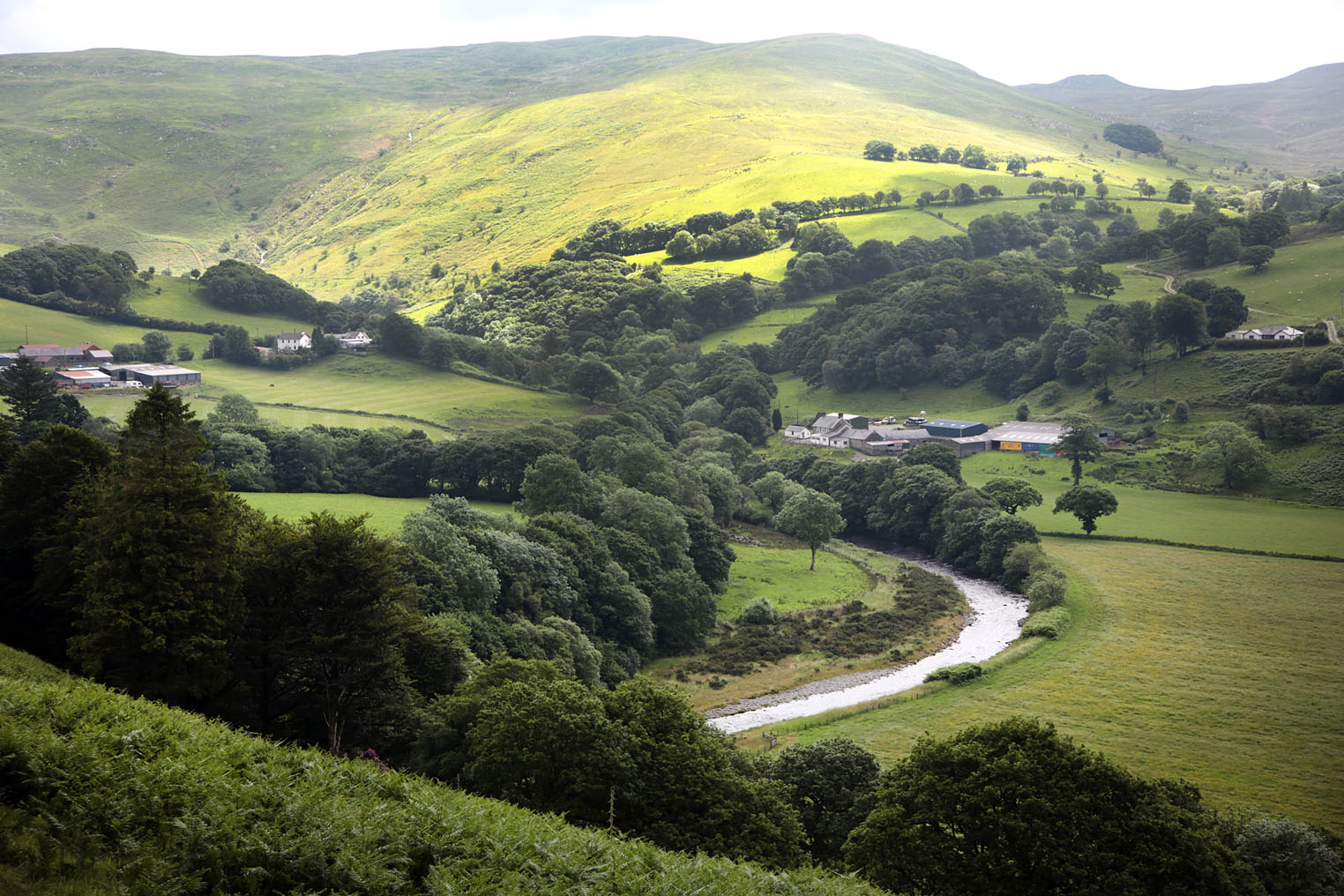
The WELSH Government says more than ninety-five per cent of farm businesses have now received their full or balance payment under the final year of the Basic Payment Scheme (BPS), ahead of the introduction of the new Sustainable Farming Scheme (SFS) in 2026.
Announcing the update on Friday (Dec 12), Deputy First Minister and Cabinet Secretary for Climate Change and Rural Affairs, Huw Irranca-Davies, confirmed that over 15,400 Welsh farm businesses have been paid £68.7m. This comes on top of the £160m issued in BPS advance payments since 14 October.
Final round of BPS payments
The Basic Payment Scheme, which has been the backbone of farm support in Wales for a decade, provides direct income support to help farmers plan and manage their businesses. BPS 2025 marks the last year in which full BPS payments will be made before the scheme begins to be phased out.
The Cabinet Secretary said officials would “continue to process the outstanding BPS 2025 claims as soon as possible,” adding that all but the most complex cases should be completed by 30 June 2026.
Payments issued today represent the main balance due to farmers following earlier advances, giving many businesses the cash flow they need during the quieter winter period—traditionally a challenging time in the agricultural calendar.
Shift to Sustainable Farming Scheme in 2026
From 1 January 2026, the Welsh Government will begin rolling out the Sustainable Farming Scheme, a major reform to how agricultural support is delivered. The SFS will reward farmers for environmental outcomes such as habitat management, carbon reduction and biodiversity improvements, alongside continued food production.
The government has argued that the new scheme is essential to meeting Wales’ climate and nature targets while ensuring long-term resilience in the sector. However, the transition has been closely watched by farming unions, who have raised concerns about the administrative burden, income stability, and the speed at which BPS is being phased out.
Mr Irranca-Davies reaffirmed the government’s stance, saying: “This government is steadfastly committed to supporting Welsh farmers to sustainably produce quality food. This is demonstrated today in our payment of the BPS 2025 balance payments and will continue throughout the transition period.”
Sector reaction
Farming unions are expected to scrutinise the detail of today’s announcement, particularly around remaining unpaid cases. Last year, late payments led to frustration in parts of the sector, with unions calling for greater certainty as the industry faces rising input costs, supply chain pressures and continued market volatility.

The move to the SFS remains one of the most significant agricultural policy changes in Wales since devolution. Ministers insist the shift is designed to support both food production and environmental stewardship, while critics warn the transition must not undermine farm viability—especially for family-run livestock farms that dominate rural areas such as Pembrokeshire, Ceredigion and Carmarthenshire.
What happens next
Farmers still awaiting their BPS 2025 balance will continue to be processed “as soon as possible”, the Welsh Government said. Officials will also publish updated guidance on the Sustainable Farming Scheme ahead of its launch.
The coming year will therefore become a pivotal moment for Welsh agriculture, as the long-standing BPS framework—which provided over £200m annually to Welsh farmers—makes way for a new results-based model that will shape the industry for decades to come.


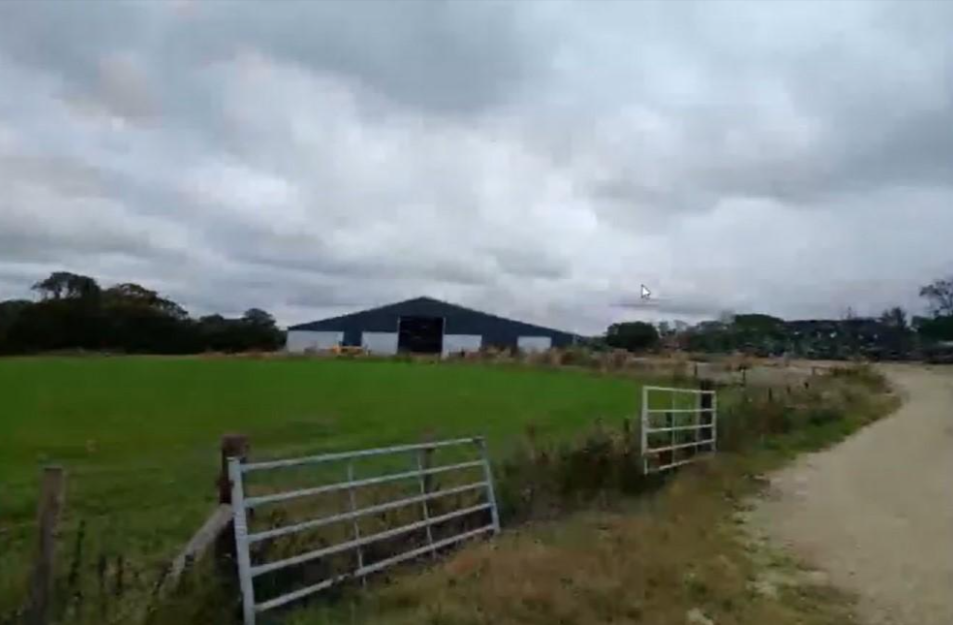
A PEMBROKESHIRE farmer “jumped the gun” in his enthusiasm to build a new cattle shed which includes ‘robot slurry scrapers’ that have been causing a noise nuisance for neighbours, county planners heard.
In a retrospective application recommended for approval at the December meeting of Pembrokeshire County Council’s planning committee, Aled Jenkins sought permission for a replacement cattle housing and silage clamp at Upper Ty Rhos, Wolfscastle.
An officer report said Upper Ty Rhos consists of a herd of 630 youngstock beef cattle, the applicant seeking permission for the replacement 100-metre-long cattle housing building.
It said the building benefits from a robotic scraping system to internally clean it to improve animal welfare and efficiency.
However, the slurry scraper system in operation has been found to constitute a statutory noise nuisance.
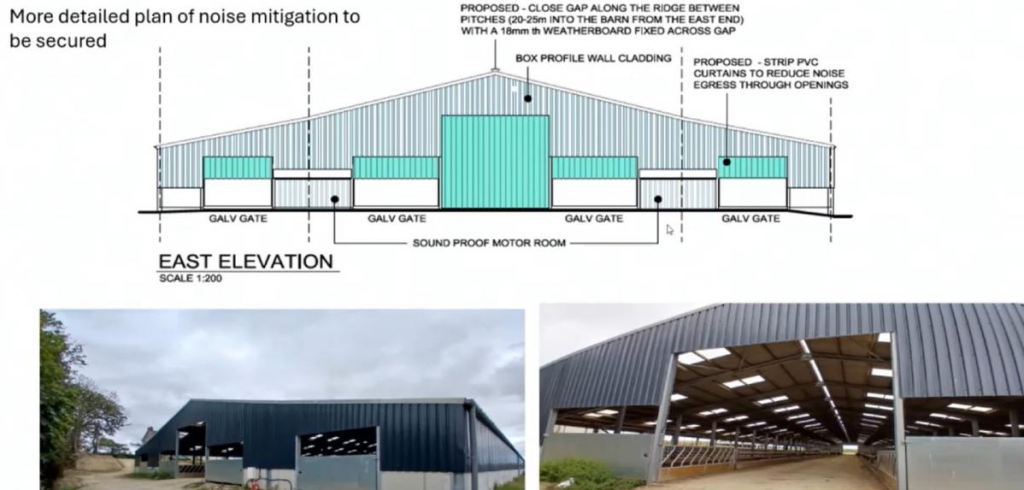
“The introduction of the slurry scraper system has resulted in a new noise source to the locality that is having a significant detrimental impact upon local amenity. The nuisance noise is directly associated with the extended hours of operation of the slurry scraper system and the noise created by the two motors powering the system including the drive mechanism that moves the scraper through the building to remove slurry produced by the housed cattle.
“To further exacerbate the situation, the building has open voids to the eastern gable end, which is within close proximity to the neighbouring property resulting in the building being acoustically weak.
“An acoustic report has been submitted with mitigation methods provided including relocating motors and associated equipment into external enclosures, reduction of noise egress through openings by installing hit-and-miss louvres and/or PVC strip curtains and consideration of blocking the gap between roof pitches along the ridge of the building.”
Three letters of concern were received from members of the public raising concerns including visual and environmental impact, noise issues and a potential for the herd size to increase.
Speaking at the meeting, neighbour Dr Andrew Williams, who stressed he was not seeking to have the shed removed, raised concerns about the noise from the ‘robot scrapers,’ exacerbated by cattle being concentrated in the immediate area from the wider farm complex.
Agent Wyn Harries addressed concerns about the retrospective nature was a result of over-enthusiasm by his client who “jumped the gun”.
He said there was now a scheme that was “fully worked through,” dealing with noise and other issues.

Members backed approval, which includes noise mitigation to address the impact of the robot scrapers; one member, Cllr Tony Wilcox, abstaining on the grounds of the retrospective native of the building “the size of a football field”.
THE FARMER’s UNION OF WALES has sounded the alarm over a sharp and sustained collapse in dairy prices, warning that the situation is placing intolerable pressure on family farms already grappling with regulatory change, rising costs and wider economic uncertainty.
The Union convened an emergency meeting of its Animal Health and Dairy Committee last week to assess the scale of the crisis. Representatives from across Wales reported widespread anxiety, with many members seeing milk prices fall dramatically through the autumn. Processors are now signalling further cuts in early 2026, while commodity markets offer little sign of stability heading into spring.
Farmers, fearful of jeopardising commercial relationships, have approached the FUW confidentially to express grave concern about projected milk payments for the coming months. Many say the offers being made will fall far below the cost of production.
Average milk prices are forecast at just 30–35 pence per litre, against estimated production costs of 39–44 pence per litre (Kite Consulting). On current trajectories, the FUW warns a typical Welsh dairy farm could lose thousands of pounds per month for as long as the downturn persists.
Following its committee meeting, the Union raised the matter directly with Deputy First Minister Huw Irranca-Davies MS during talks in Cardiff on Wednesday, December 3. Officials stressed the immediate threat facing family-run dairy farms and called for urgent consideration of government support to prevent long-term damage to the sector.
Gerwyn Williams, Chair of the FUW Animal Health and Dairy Committee, said the pace of the price crash was “unprecedented”.
“Farmers are facing an impossible situation where input costs remain high while the value of their product plummets. The viability of many family farms is now at serious risk. We need immediate assurances that this crisis is being treated with the urgency it deserves.
“Some can weather a short storm, but rumours that this could continue into summer 2026 will see businesses shut. These modest family farms have already invested heavily to meet regulatory requirements. Cuts on this scale will severely impact their ability to service repayments.”
FUW Deputy President Dai Miles warned that the consequences extend far beyond farm gates.
“Dairy farming underpins thousands of jobs in Wales and is central to the economic, social and environmental fabric of rural communities. When prices fall this sharply, it isn’t just farmers who suffer — local businesses, services and entire communities feel the impact.
“We have made it clear to the Deputy First Minister that government must work with the industry to provide immediate stability and a long-term resilience plan.”
The FUW says it will continue to work with the Welsh Government, processors and supply-chain partners to seek solutions and secure fair, sustainable prices for producers.




Man spared jail after baseball bat incident in Milford Haven
Judge says offence was so serious only a prison sentence was justified A 44-YEAR-OLD has been given a suspended prison sentence after...


Rural cannabis factory exposed after five-year operation in Carmarthenshire
Family-run drugs enterprise brought in millions before police raid during lockdown A FAMILY who relocated from England to a remote...

Senedd rejects calls to ‘eliminate’ rates for small businesses
A CONSERVATIVE call to abolish rates for all small businesses in Wales has been voted down by the Senedd amid...


Christmas song pokes fun at Haverfordwest’s ‘Instagram-friendly’ bridge
Rock track raises money for charity while giving a gentle dig to the council A BRAND-NEW Christmas rock song by...


Police reassure community after school lockdown incident in Carmarthen
DYFED-POWYS POLICE have issued reassurance to the community after Ysgol Bro Myrddin in Carmarthen was placed into a precautionary lockdown on...


Councillors call for urgent review as flooding hits coastal communities
Motion demands assessment of drainage infrastructure after Castle Pond overflow A MOTION on emergency flooding concerns was brought before Pembrokeshire...


Phillips found guilty of raping baby in “worst case” judge has ever dealt with
Baby’s mother cleared as judge says case “shaken me to my core” CHRISTOPHER PHILLIPS has been found guilty of the...
Storm Bram triggers widespread flood alerts across West Wales
As of Tuesday 9 December 2025, coastal communities in Pembrokeshire remain on high alert as Storm Bram continues to batter...


Parent challenges council over Manorbier school closure data as long-running dispute deepens
Fire-damaged school has operated with limited capacity since 2022, but consultation still uses original figures A ROW over the future...


Manorbier Castle Inn warns colossal rates hikes will ‘push venues to the brink’
Local inn among many facing dramatic increases from April 2026 MANORBIER Castle Inn has warned that its business rates are...
-
Crime5 days ago
Phillips found guilty of raping baby in “worst case” judge has ever dealt with
-
 Crime4 days ago
Kilgetty scaffolder sentenced after driving with cocaine and in system
-

 Crime4 days ago
Housing site director sentenced after failing to provide breath sample following crash
-

 Crime4 days ago
Motorist banned for three years after driving with cannabis in system
-

 Education3 days ago
Teaching assistant struck off after asking pupil for photos of her body
-

 News6 days ago
Jury retires tomorrow in harrowing Baby C rape trial
-
 Crime4 days ago
Milford Haven pensioner denies exposure charges
-

 Local Government6 days ago
New defamation row erupts after anonymous website targets Herald editor