


Sport
Nigel Owens bows out of international Test rugby

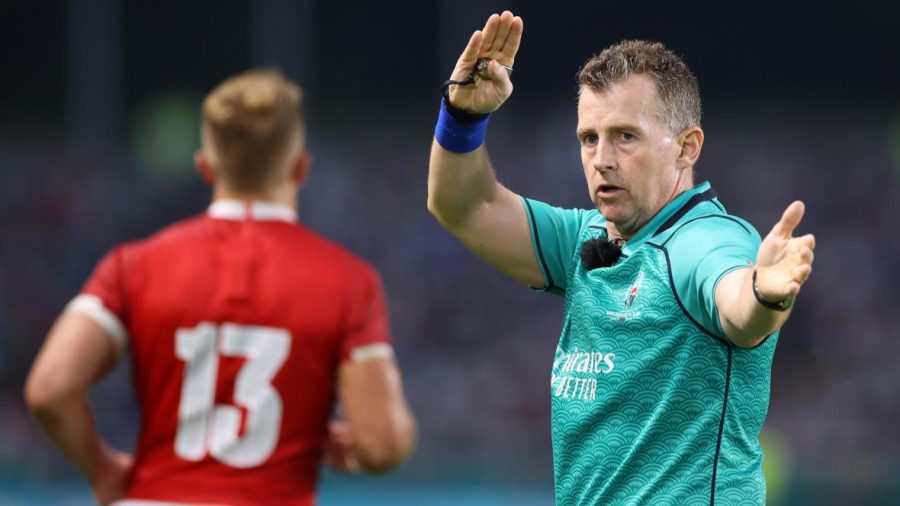
Nigel Owens, the most-capped referee in world rugby, has brought his 17-year international career to an end. Last month’s France v Italy Autumn Nations Cup game was his 100th and final Test match having made his international debut officiating Portugal v Georgia in February 2003.
Owens said, “Nobody has a divine right to go on forever. There comes a time where it’s time to move on so international refereeing will come to end now, that France v Italy game was my last Test match. To go out on 100 is a good time to go.
“I’m not going to be around for 2023, I don’t want to be. I still hope to referee in the Pro 14 and locally in Wales this season and maybe next as well. I will certainly continue to referee in the community game because when you are very fortunate to get so much out of something, I think it’s hugely important that you give something back to it as well.
“I’ll also be going into a coaching role with the WRU, helping some of our talented, young referees we have here in Wales so that is something I’m quite excited about. We currently have five referees including myself refereeing at Pro 14 level so it will be exciting to help them make further progress as well as our other upcoming male and female referees.”
Memories and milestones:
Reaching 100 caps was obviously a bit of a milestone in the end.
“I haven’t refereed in order to reach milestones but obviously when those milestones happen like when you get your first cap, it’s something special. When I got my 50th cap out in Dublin it was Brian O’Driscoll’s last international game in Ireland so that it was quite a special occasion and then obviously as the years go you aim to go to a Rugby World Cup, then another one. After the 2019 world cup, going into the Six Nations, I probably was looking then to call it a day around that time and all of a sudden you’re on 98 Test matches. Thankfully I got another two games and reached that milestone so it is something I’m proud of but more importantly I made my family and community proud which I think is more important.

“I’m sure it’s something I will appreciate more when I’ve got time to think about it – maybe I’ll even watch the 2015 RWC final one day! On a serious note, I think it’s important to set goals, but realistic ones – to take each step and a time and then set a new one.
“Along with refereeing the world cup final and other great internationals like the South Africa v New Zealand game in 2013, and memorable European occasions like the seven Champions Cup final and two Challenge Cup finals, there are many other memories too. One that sticks out was being asked to referee Pencoed under 12s v Cwmbran.
“I turned up the morning after refereeing a Heineken Cup match at Leicester. I’d met the team previously so they gave me a great reception when I arrived but one player in the corner of the changing room said, ‘I hope you’re going to ref this match better than yesterday’s’! I just thought, this is what rugby’s all about and that will always stay in my memory along with many other times.”
Representing Wales
“People ask me, which would you choose – refereeing the Rugby World Cup final or seeing Wales in the world cup final?
“It’s a very easy question – seeing my country in the final. We were so close to getting there in 2011 and 2015 too. Your country always comes first whatever sport you play but the next best thing I suppose was to get to referee there and it was a privilege and honour to represent my country, my community and everyone involved in refereeing and Welsh rugby on that stage.

“My whole village of Mynyddcerrig was just unbelievable that week, it was like a carnival! There was something on every day, the club was packed out every night, there were people driving from places like Pontypridd, Merthyr, Aberystwyth and Cardigan because the club had featured on TV that week and they wanted to be part of it. It was unbelievable what that meant for my community and my dad in particular or something very, very special and that’s what made the world cup final so special for me. The only thing I regret is that I couldn’t be there with them to enjoy it all!”
“I have so many people to thank from Clive Norling, who was the WRU referees manager who gave me my first opportunity, Derek Bevan was my coach for years and other people were a help in different ways from the likes of Bob Yeman and Clayton Thomas, to characters like Alyn West in Llanelli & District. It’s an ongoing process and you learn something from everyone who helps, coaches or assesses you over the years. I’m so grateful to so many different people, I owe the people in rugby and the sport so much and I want to help ensure Wales remains a great officiating nation as it always has been.
“My upbringing too had a big influence on me. Humour and Welshness are a big part of who I am. I was on stage in Mynyddcerrig Club at 14 doing stand-up comedy and I did public speaking with the Young Farmers movement. There’s no doubt that grounding helped my communication skills as a referee.”

On inclusion in rugby:
“Unless you are allowed to be yourself and happy in yourself, you can’t enjoy life or be the best you can be.
“It’s important that we are all treated the same and that we’re judged on our character and nothing else. Not on the colour of your skin, your sexuality, religious beliefs or wherever you come from.
“Those issues did hinder my life growing up and put me in a very dark place for quite a long period in my teens and early 20s but I got a second chance, was allowed to be who I am and I think it’s hugely important everyone gets that opportunity.
“One of the most important values and ethos of rugby union to me is the value of respect. I think today’s society lacks respect but I believe rugby values respect better than any other sport in the world. We can’t take the moral high ground as there are a lot of things that rugby can improve on, but one thing is certain, it does lead on inclusiveness, diversity, fair play and equality for all and that is something I’m very proud to be part of.”
Advice for players
“I would tell any young players, in particular those who have an ambition to make it to the international stage and don’t quite make it for whatever different reason, that refereeing is certainly the next best thing.
“I wouldn’t change a thing. I’ve travelled all over the world for the best part of the last 20 years, I’ve played a small part in some of rugby’s greatest occasions and you could be a part of that too if you take up the whistle. We are here to support you. You won’t regret it if it’s something you enjoy and become passionate about. It’s not for everyone, but with a lot of time and effort, it can be hugely enjoyable so I would encourage anyone to give it a good to give it a go.”
WRU chairman Rob Butcher added, “It’s a truly fantastic achievement for a referee to get to 100 caps. Moreover, Nigel has always been and still is a fantastic ambassador for Welsh rugby throughout the world. He’s a role model for many, not only for his refereeing but his communication and the way he conducts all aspects of his life.
“Along with most rugby playing nations, we need to keep recruiting referees, and who better than Nigel to inspire future Welsh match officials. You may not make it as far as you’d like as a player. If that’s the case, why not try refereeing – not necessarily at international level, but whatever your standard may be.”
Nigel Owens’ international career in stats
Nigel Owens refereed his 100th international 17 years after his test debut in February 2003 when he was in the middle for Portugal versus Georgia in Lisbon.
He claimed his 50th cap on 24 November 2012 when he took charge of Ireland v New Zealand in Dublin.
He surpassed Jonathan Kaplan as the most-capped referee when winning his 71st Test cap on 11 June 2016 in Suva when Fiji hosted Tonga.
He was awarded the 2015 Rugby World Cup final between New Zealand and Australia on 31 October, 2015.
He was the first referee to reach 100 Tests when in the middle of France v Italy in Paris on 28 November 2020
STATS
Tests as referee: 100
Tests as assistant referee: 101
Tests as TMO: 9
Total: 209
Yellow cards: 58
Red cards: 3
First yellow card: Daisuke Ohata (Japan, v Ireland on 12 June, 2005)
First red card: Napolioni Nalaga (Pacific Islanders, v France on 15 November, 2008) Tries scored in his tests: 495 – ever test has had at least one try scored in it
Points scored in his tests: 4,591
Four Rugby World Cups
Rugby World Cup matches as referee: 19
Record-holder for most Six Nations matches as referee: 21
World Rugby Referee Award recipient in 2015
TEAMS REFEREED
Number of teams refereed: 25. Portugal, Georgia, Japan, Ireland, Argentina, Samoa, Uruguay, Italy, Australia, Morocco, England, New Zealand, Scotland, Romania, Fiji, France, Pacific Islanders, South Africa, Russia, Canada, Namibia, Zimbabwe, Tonga, St Vincent and the Grenadines and Jamaica
Team refereed the most: New Zealand, 25 tests from 2007-19
Top five teams by Tests: New Zealand (25), England (24), France (24), Ireland (20), Australia (19) Only 13 tests have not involved a Six Nations or Rugby Championship team



THE WELSH Government has taken a major step towards making Wales the first nation in the UK to ban greyhound racing after winning a key vote.
Senedd Members voted 36-11, with three abstentions, to support the general principles of the greyhound racing bill on December 16, paving the way for the sport to be outlawed by April 2030. However, the bill will be subject to further votes before becoming law.
Huw Irranca-Davies, the Deputy First Minister who is responsible for animal welfare policy in Wales, told Senedd Members the welfare of greyhounds must remain paramount.
“It is about protecting the lives and welfare of greyhounds in Wales,” he said. “Greyhound racing around a track poses an inherent risk of high-speed collisions, falls and injuries.
“Bringing this to an end… will keep animals safer. This bill shows we are a progressive nation committed to ethical standards, animal welfare and forward-thinking legislation.”
He said officials will continue to monitor the social and economic impact, including the effect on the Valley Greyhound Stadium – Wales’ last remaining track in Ystrad Mynach.
Mr Irranca-Davies, who visited the stadium in November, added that work is under way to ensure targeted support for workers before the bill comes into force.

The Deputy First Minister told Senedd Members: “I took the opportunity to listen to the concerns from trainers, track managers and other industry representatives.”
He argued the likelihood of racing going underground was low, telling the Senedd he had accepted most of the recommendations on the bill made by scrutiny committees.

Delyth Jewell, who chairs the Senedd’s culture committee which has been examining the bill, expressed concerns about the “accelerated” window for scrutiny. “We hope the reduced timetable followed for this bill will not set precedents,” she said.
Ms Jewell said opponents accepted injuries to greyhounds happen but argued that welfare has improved under regulation, warning of racing moving underground or across borders.

She raised evidence from supporters who suggested these measures cannot address the inherent dangers of racing dogs where “catastrophic injuries are at times unavoidable”.

She stressed that the available data on welfare measures and injuries is highly contested.
Ms Jewell expressed her personal view that the bill should be agreed during the stage-one debate despite “shortcomings” in the legislative process.
The Plaid Cymru deputy leader said: “Nobody, in giving evidence, contested the fact there will always be predictable and unavoidable harms that are inherent to greyhound racing.”
She added: “Compassion should be our compass and the law should reflect that.”
Mike Hedges, who chairs the Senedd’s legislation committee, warned of a lack of consultation and said relevant impact assessments have not all been completed.
The Conservatives’ Gareth Davies, who visited the Valley track last week, recognised welfare concerns but he voted against the bill, suggesting a ban was disproportionate.
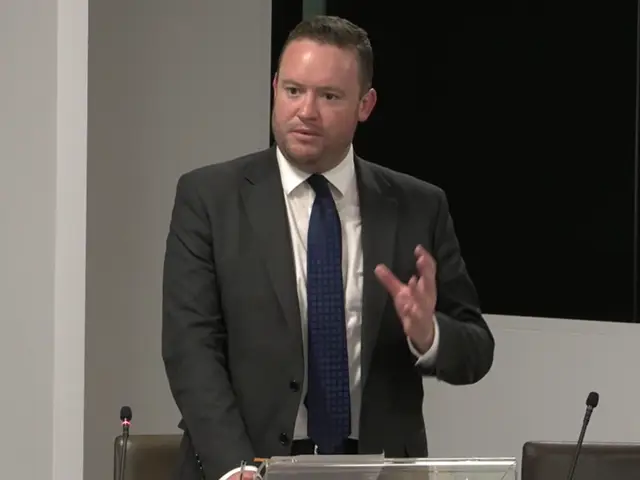
Mr Davies said: “I saw, first hand, the kennels the dogs were kept in which were of a very high quality and I was satisfied that the industry is, rightly, more than willing to comply with the very high standards of animal welfare regulation.”
He was pressed by Labour’s Carolyn Thomas about his support for a sport which sees dogs “suffering life-ending or life-altering injuries in the name of gambling and entertainment”.
Mr Davies warned the bill had been rushed through, with “clear evidence that injury rates have fallen to historic lows under the current regulatory framework”.
Llŷr Gruffydd explained he would not support the principles of the bill, breaking with most of his Plaid Cymru colleagues, due to the “highly contested” evidence base. “A strong ethical basis alone doesn’t necessarily make good law,” he said.
Mr Gruffydd told the Senedd the bill was introduced without an evidence base, without comprehensive public engagement and without complete impact assessments.

Raising the risk of unintended consequences, he pointed out dogs could still be kept in Wales and raced in England – “increasing travel distances and welfare risks”.
Mr Gruffydd warned the bill falls short, saying: “We all share the goal of improving animal welfare but good intentions don’t always deliver good legislation.”
Conservative James Evans echoed these concerns as he argued against a ban, warning politicians were being placed in an “impossible position” without the necessary evidence.
Jane Dodds, leader of the Liberal Democrats in Wales, struck a budget deal with the Welsh Government last year which led to the introduction of the greyhound racing bill.
Ms Dodds, who has owned rescue greyhounds, said: “These are animals that have been raced, they have been cruelly treated and I’m not going to milk that word: it is cruel.” She paid tribute to the Cut the Chase charity coalition which has campaigned for change.
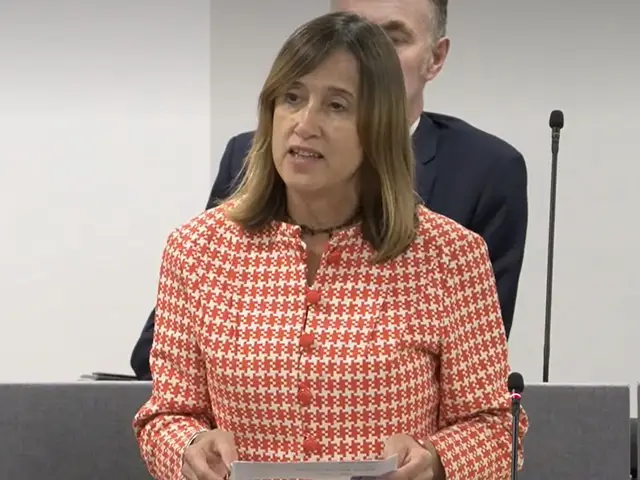
Labour’s Lesley Griffiths, John Griffiths and Carolyn Thomas; Plaid Cymru’s Siân Gwenllian and Luke Fletcher; and the Conservatives’ Altaf Hussain similarly spoke in support of a ban.
Mr Hussain told the Senedd: “Dogs are being subjected to horrendous injury and death… to maximise profits for the multi-billion-pound betting industry… enough is enough.”
The bill now moves to the next steps – consideration of detailed amendments by the culture committee then the whole Senedd – before a final stage-four vote.
Mark Bird, chief executive of the Greyhound Board of Great Britain which has launched a legal challenge to the plans, said the process showed the Senedd in the worst possible light.
Following the debate, he criticised a “dodgy backroom deal” and an “indefensible policy sham” which ignores the “condemnation and objections” of Senedd scrutiny committees.
Mr Bird warned: “This is neither good government nor good politics. This bill will do nothing to serve the priorities of the Welsh public, economy or animal welfare.
“Rather every instance of animal use in Wales – from horseracing to livestock farming – should prepare to be the next target of the animal rights movement and its political lackeys.”
He added: “Wales is sleepwalking into the arms of an animal rights future that no one has voted for and which ignores common sense, factual evidence and proper process.”
A spokesperson from the Cut the Chase Coalition – made up of Blue Cross, Dogs Trust, Greyhound Rescue Wales, Hope Rescue, and the RSPCA – said: “Today’s vote is so important and marks the latest step in what we hope will be the final lap for a pastime which is outdated, and puts animals at unnecessary risk.
“In backing the legislation’s general principles, MSs have made a clear statement that the risks greyhound racing continues to pose to dog welfare are simply not defendable in the interests of sport or entertainment.
“Across the UK, the industry’s own data shows the thousands of injuries that have occurred in recent years as a result of racing, while hundreds of dogs have lost their lives.
“Ending greyhound racing is the only way to protect dogs from such avoidable and unnecessary risk; and MSs have today voted in line with public opinion after tens of thousands of people signed a petition urging the Welsh Government to take action.
“In the months ahead, we look forward to continuing to work with MSs as this legislation progresses… to ensure Wales joins the growing list of nations worldwide where greyhound racing has been consigned to where it belongs – the history books.”

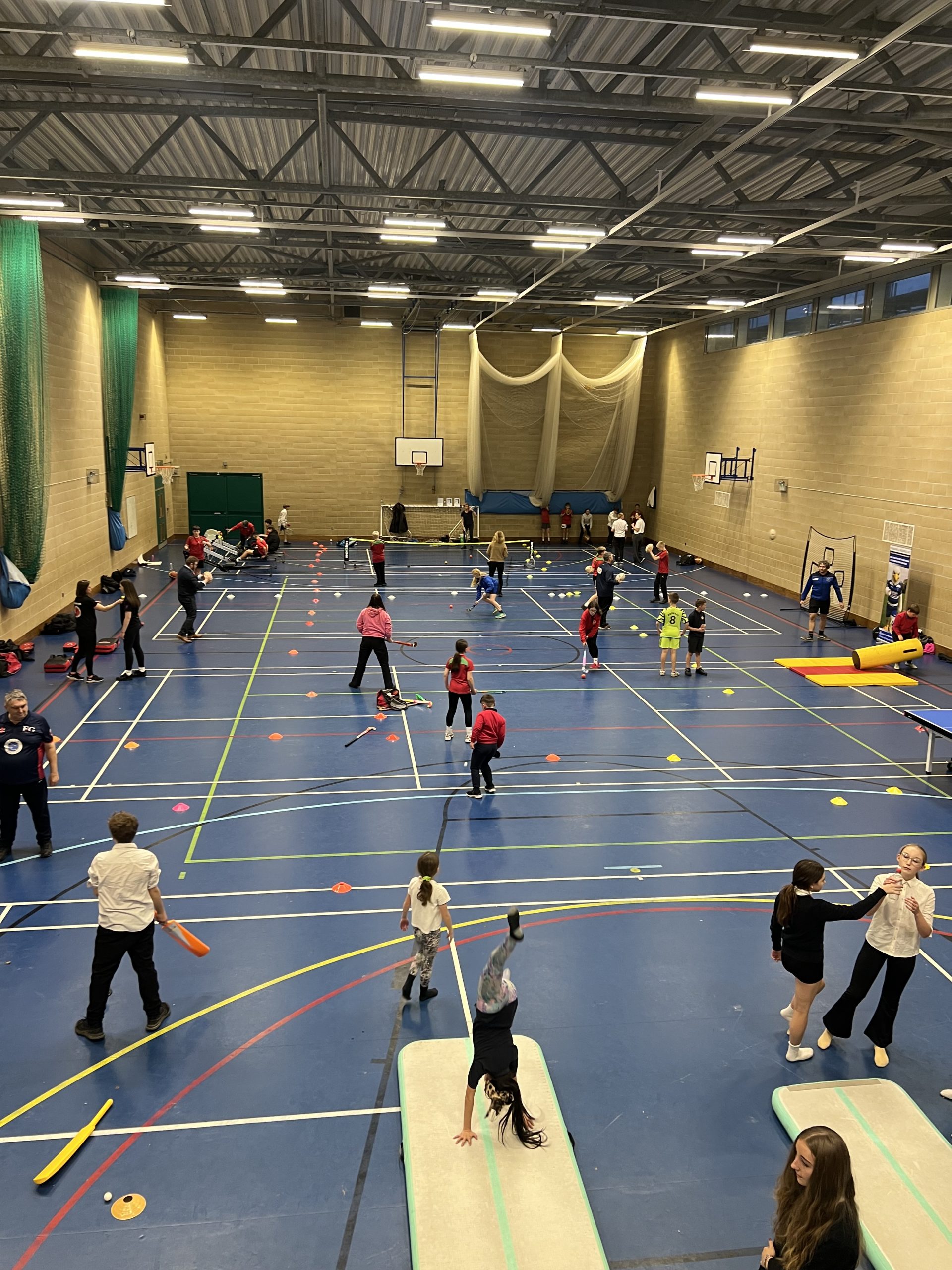
MORE than 50 young people took part in a multi-sport taster event designed to encourage girls to get involved in new activities.
The Sport Pembrokeshire Community Clubs event was held at Fishguard Leisure Centre on Sunday (Dec 1) for pupils from Ysgol Bro Gwaun and its feeder schools, with sponsorship from Valero.
Local sports clubs and activity providers offered a wide range of sessions, including cricket, self-defence, rowing, dance, hockey, tennis, table tennis, rugby and basketball. Water for participants was kindly provided by Princes Gate.
Young Ambassadors from Ysgol Bro Gwaun also played a key role in helping the event run smoothly.
Dan Bellis, of Sport Pembrokeshire, said: “It was a fantastic evening and it was brilliant to see so many young people and coaches in attendance.
“There was a wide range of activities on offer and everyone clearly enjoyed themselves.
“We hope the girls who took part have discovered a new sport or activity and will continue their involvement with the local clubs and providers who supported the event.”
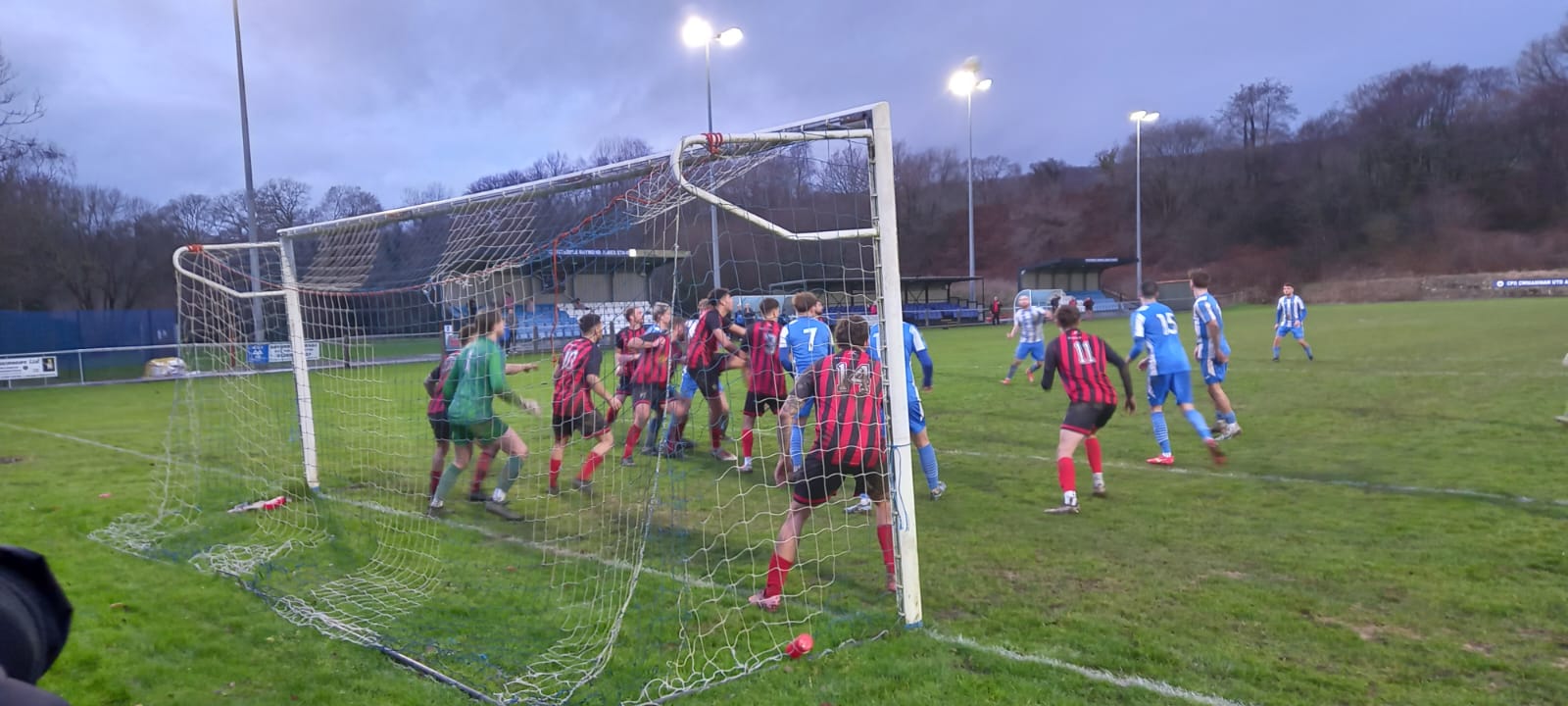
Cwmamman United stun Tenby AFC in an unforgettable 3-3 thriller to reach the last sixteen of the West Wales Intermediate Cup
Cwmamman Utd 3 Tenby AFC 3 (Cwm win 3–2 on pens)
AN EXTRAORDINARY cup tie unfolded at Grenig Park as Cwmamman United and Tenby AFC shared a breathless 3-3 draw, before the hosts edged through 3–2 on penalties.
Tenby struck almost instantly, with Lloyd Hughes finding the net inside the opening minute. Cwm hit back on 14 minutes when Cam Isaac produced a superb finish to level the tie, but Joe Leahy restored Tenby’s lead before the break – a goal that for long spells looked like it might settle the contest.
Deep into stoppage time, however, Cwmamman refused to accept defeat. In the 100th minute, Jackson Brereton pounced to smash home an equaliser and force extra time.
The drama only intensified. Tenby were awarded a hotly disputed penalty in the 114th minute, converted confidently by Hughes. The spot-kick also saw Cwm’s Kieran Rees – who had been excellent alongside Kai O’Donnell at the heart of the defence – shown a red card.
But with virtually the last kick of the game, Cwm’s goalkeeper Kai Rees strode forward for a final desperate attack and unleashed a stunning 25-yard volley to make it 3-3, sparking wild celebrations around the ground.
Rees was far from finished. In the decisive shootout, he produced two superb saves to secure a 3–2 penalty win and send Cwmamman United into the last sixteen of the West Wales Intermediate Cup.
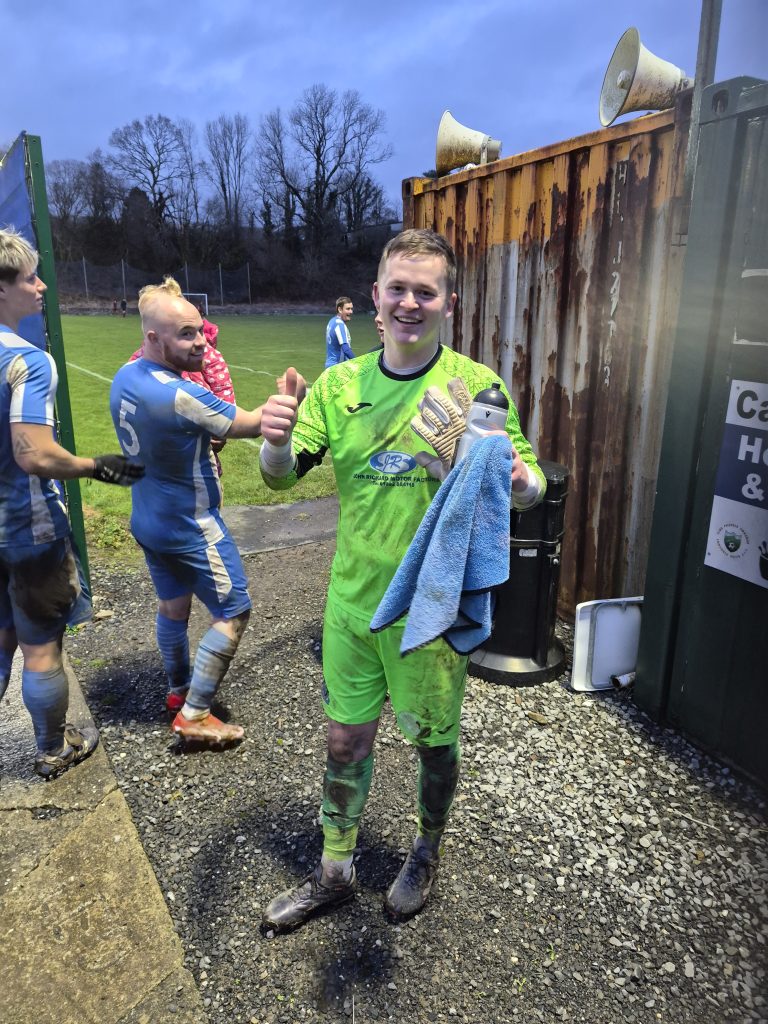
Photo: Cwm goalkeeper Kai Rees.



Community gathers to remember Corrina Baker
Lanterns and balloons released in emotional acts of remembrance FAMILY, friends and members of the local community came together to...


Teenager charged following rape allegation at Saundersfoot nightclub
Incident reported at Sands Nightclub in early hours of Sunday DYFED-POWYS POLICE is investigating an allegation of rape following an...

Milford Haven man jailed after drunken attack on partner and police officers
A MILFORD HAVEN man who launched a violent drunken assault on his partner before attacking two police officers has been...


Court hears historic child sex abuse claim emerged after ‘tarot reading’
Judge reminds jurors there is no standard timeframe for victims to come forward as trial reaches final stage A JURY...


Rape allegation investigated at Saundersfoot nightclub
Police appeal for witnesses after incident reported in early hours of Sunday DYFED-POWYS POLICE are investigating an allegation of rape...

Milford ground worker denies historic child sex abuse charges at Crown Court
Accused tells jury claims did not happen as trial hears evidence about alcohol use and alleged controlling behaviour A MAN...


Three inmates deny murder of Lola James killer at Wakefield prison
THREE prisoners have denied murdering child killer Kyle Bevan, who was found dead in his cell at HMP Wakefield. Bevan,...


Dyfed-Powys Police reassure communities after Bondi Beach mass shooting
Officers monitor local tensions following terror attack on Jewish event in Sydney DYFED-POWYS POLICE have issued reassurances to communities across...

Search under way in Pembroke Dock for missing man Lee
Coastguard, RNLI and rescue helicopter launched as fears grow he entered the water A MAJOR search and rescue operation is...


Search under way in Pembroke as man reported missing
Rescue teams battle worsening weather ahead of amber rain warning A MULTI-AGENCY search and rescue operation is under way in...
-
Crime17 hours ago
Milford Haven man jailed after drunken attack on partner and police officers
-
 News4 days ago
Dyfed-Powys Police launch major investigation after triple fatal crash
-
Crime3 days ago
Man sent to Crown Court over historic indecent assault allegations
-
 Crime2 days ago
Man charged with months of coercive control and assaults
-
Crime16 hours ago
Teenager charged following rape allegation at Saundersfoot nightclub
-
Crime4 days ago
Man spared jail after baseball bat incident in Milford Haven
-

 Crime2 days ago
Milford Haven man admits multiple offences after A477 incident
-

 Education7 days ago
Teaching assistant struck off after asking pupil for photos of her body