


News
British fishermen angry and betrayed over post-Brexit trade deal

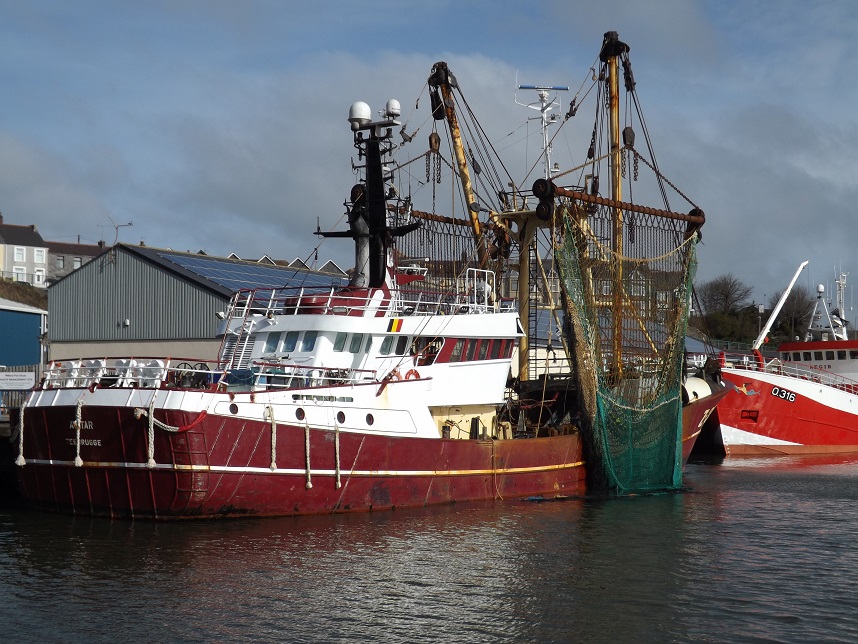
A FISHING INDUSTRY leader said he felt “angry, disappointed and betrayed” by the post-Brexit trade deal agreed by Boris Johnson, which he warned would force some firms out of business.
Barrie Deas, the chief executive, said that there was growing disappointment and frustration in the industry – with many fishers furious that EU boats will be able to fish up to six miles off the coast of Britain.
Andrew Locker, chairman of the National Federation of Fishermen’s Organisations (NFFO), added to the criticism, and said many fishing businesses would be “absolutely worse off by this deal”
Mr Locker who himself runs two boats said: “I don’t know how the hell we’re going to get through 2021. We used to swap the quota we didn’t want with the French and Germans didn’t want. That enabled us to put together a fishing plan. This year we’re going to be woefully short of the amount of saithe, hake and cod we can catch. I am angry, disappointed and betrayed.
There is anger that the “marginal” gains on the share of fish that the UK fleet will be allowed to catch may be outweighed by the end of the system of quota-swapping, which has until now enabled deals to be made between British boats and their European counterparts on mainland Europe.

This is despite The Cabinet Office minister, Michael Gove saying this week that the UK had struck the “best possible” deal for the UK fishing industry, as a whole.
Gove argued that at present British fishermen were entitled to about half the fish in UK waters but by 2026 this will increase to two-thirds.
The agreement, released on Boxing Day morning, contains numerous pages dedicated entirely to fishing policy in the UK and EU’s new relationship, and asserts the “sovereign rights” of EU states and the UK “for the purpose of exploring, exploiting, conserving and managing the living resources in their waters”.
However it also includes a line on “the social and economic benefits of a further period of stability, during which fishers would be permitted until June 30 2026 to continue to enter the waters of the other party”.

Mr Locker said he was not aware of any allowance in the trade deal for UK firms to trade fish quotas with EU countries, which is a crucial part of how the industry manages its catch.
He said many fishing firms would go out of business by the end of the transition in 2026, telling the BBC Radio 4 Today programme: “We are really, really going to struggle this
Mr Locker added: “When Boris Johnson and his government promised Brexit to the fishermen, he promised none of us would be worse off. And I can sit here now and tell you there is a considerable amount of fishing industry representatives and people, fishermen, small families, small communities, absolutely worse off by this deal.”

He said UK negotiators had won a “fraction” of the fishing quotas they had promised and warned about the prospect of having to revisit the deal when the transition period ends in 2026, describing it as a “can of worms”.
“When we were within the EU we used to trade fish with the EU and we used to swap fish that we didn’t use with fish they didn’t use, and that enabled us to put together an annual fishing plan,” he said. “What we’ve got now is a fraction of what we were promised through Brexit, a fraction of the fish we need to fish our annual fisheries plan through Brexit.”
A senior member of the UK’s negotiating team defended the agreement, and described fish as “one of the areas where we had to compromise somewhat”, but said this had been done by “both sides”.
The official said: “The crucial thing on fisheries policy is that although there is a transition, at the end of the transition it returns to normal arrangements, and we have full control over our waters.
“There’s a transition to that point and ideally we would’ve got out of it a bit faster, but where we’ve got to is acceptable and offers gains for the fisheries industry in the short run and a huge right to control everything and work within that after this five-and-a-half-year transition.”


WELSH food and drink has been promoted to thousands of international buyers in Japan — but producers in Pembrokeshire appear to have been left out of the spotlight.
A Welsh Government-backed delegation travelled to Foodex Japan 2026 in Tokyo, one of the largest food and drink exhibitions in Asia, attracting more than 70,000 industry professionals.
The event is designed to open doors to lucrative export markets, with Welsh Lamb, craft spirits and speciality foods presented as premium products for overseas buyers.
But despite Pembrokeshire’s strong agricultural base, seafood industry and growing reputation for artisan produce, no businesses from the county were among those showcased.
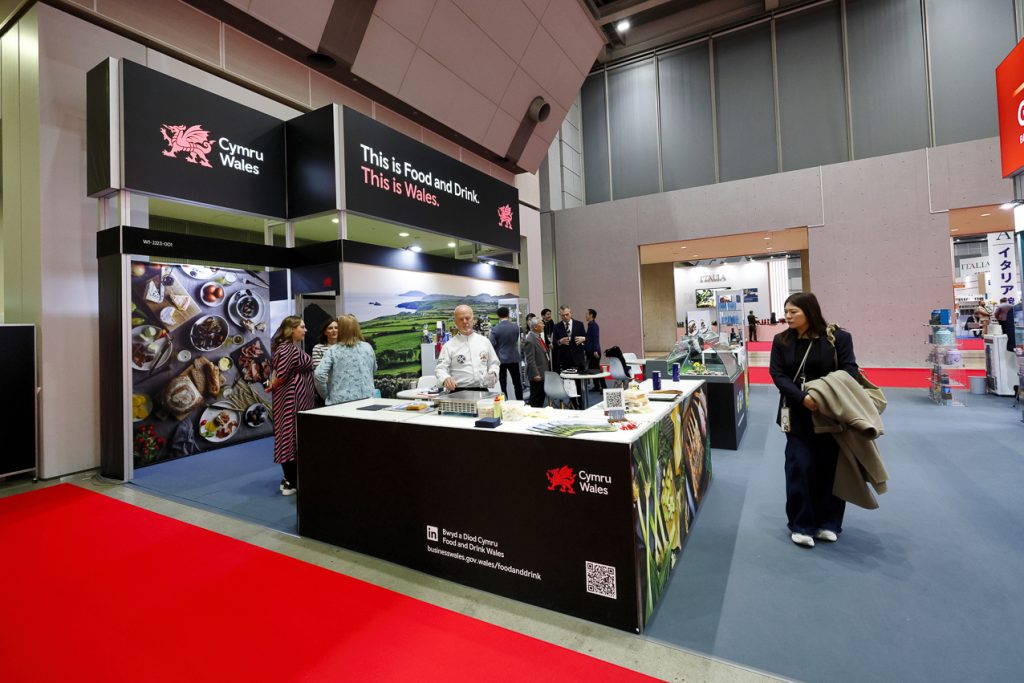
Global push — local absence
The delegation included Hybu Cig Cymru and Golden Road Gin, alongside a number of established Welsh brands and Japanese importers already working with Welsh suppliers.

While PGI Welsh Lamb — much of it produced in West Wales — was a central feature, the absence of Pembrokeshire-based producers raises questions about who is actually benefiting from the push into global markets.
For many local farmers, export growth is often presented as essential to the future of the industry. Yet access to those opportunities remains uneven, with smaller producers frequently lacking the scale or support to break into international supply chains.

Big talk, familiar questions
Deputy First Minister Huw Irranca-Davies MS praised the showcase, saying Wales had an “exceptional food and drink story to tell” and highlighting the importance of building international partnerships.
But on the ground in Pembrokeshire, producers continue to face mounting pressures — from rising costs and labour shortages to ongoing uncertainty around agricultural policy.

The Herald understands that while export events generate headlines, many small and medium-sized businesses struggle to translate that exposure into actual contracts.
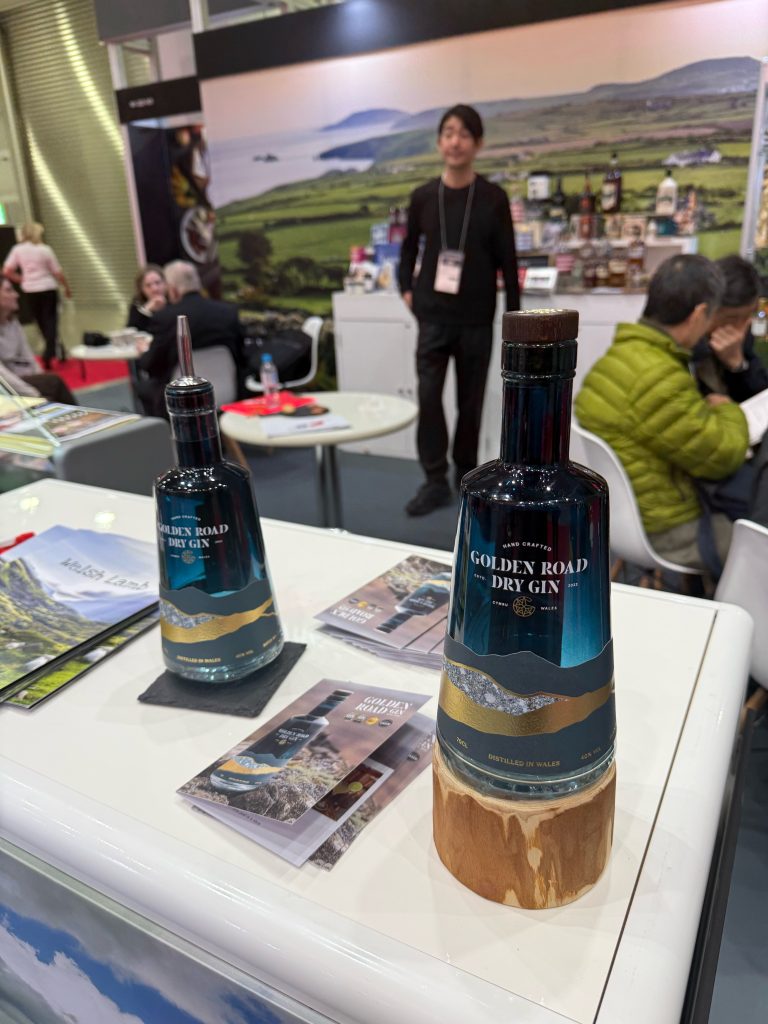
Missed opportunity for West Wales?
The Japanese market is known for its demand for high-quality, traceable food — exactly the kind of produce Pembrokeshire is well placed to supply.
From lamb and dairy to seafood landed at Milford Haven, the county has the raw ingredients to compete on the global stage.

However, without stronger support to help local businesses access export networks, there is a growing risk that the benefits of international promotion will remain concentrated among a relatively small group of producers.
The real test
Events like Foodex Japan may boost Wales’ profile overseas — but the real measure of success will be whether that translates into meaningful opportunities for communities at home.
For Pembrokeshire’s farmers and food producers, the question is no longer whether Welsh food can succeed globally.
It is whether they will be given a seat at the table.

A RECORD number of young musicians from across Pembrokeshire took part in this year’s Valero Primary Music Festival, with nearly 600 pupils showcasing their talents.
The event, organised by Pembrokeshire Music Service, was held at Ysgol Caer Elen on Saturday (March 14), drawing a large and enthusiastic audience.
The festival’s overall winner was Hafan y Môr pupil Carys Meiring, who impressed judges with a standout trombone performance of Let’s Call the Whole Thing Off. She had earlier secured victory in the open brass class.

Young talent shines
The afternoon Spotlight concert opened with an energetic performance from the county’s Second Steps ensembles, bringing together young players from across Pembrokeshire.
Winners from the day’s open classes also took to the stage, highlighting the depth of musical talent across local schools.
Osian Kite, of Roch CP School, won the open woodwind class with a performance of Sentimental Serenade on alto saxophone.
Cadi Marshall-Jones, from Ysgol Bro Preseli, claimed the open piano and harp title with Over the Sea to Skye, while Roch CP School cellist Mari Broomfield won the open strings category with Vamoose.
In percussion, Ysgol Caer Elen’s Aled Hooper secured first place in the open class with a drum kit performance of Are You Gonna Go My Way.
The open ensemble prize went to Tavernspite pupils Finn Hickman and Evelyn James, whose piano duet of Handel’s Passacaglia impressed both judges and audience.

Building confidence through music
Head of Pembrokeshire Music Service, Philippa Roberts said the festival continues to play a vital role in developing young performers.
She said: “Pembrokeshire Music Service is proud to deliver the Valero Music Festival, offering an exciting opportunity to nearly 600 young performers from across the county.
“Providing children with the chance to perform, shine, and receive supportive feedback from professional musicians is incredibly powerful and helps build lasting confidence.

“In line with the Music Plan for Wales, we remain committed to creating meaningful musical experiences for children throughout Pembrokeshire. Our sincere thanks go to Valero for their fantastic support.”
The festival forms part of a wider effort to promote music education across Wales, encouraging participation and nurturing the next generation of performers.
Photo caption:
Talented performers: Overall winner Carys Meiring is pictured with fellow category winners and organisers (Pic: Pembrokeshire Music Service).
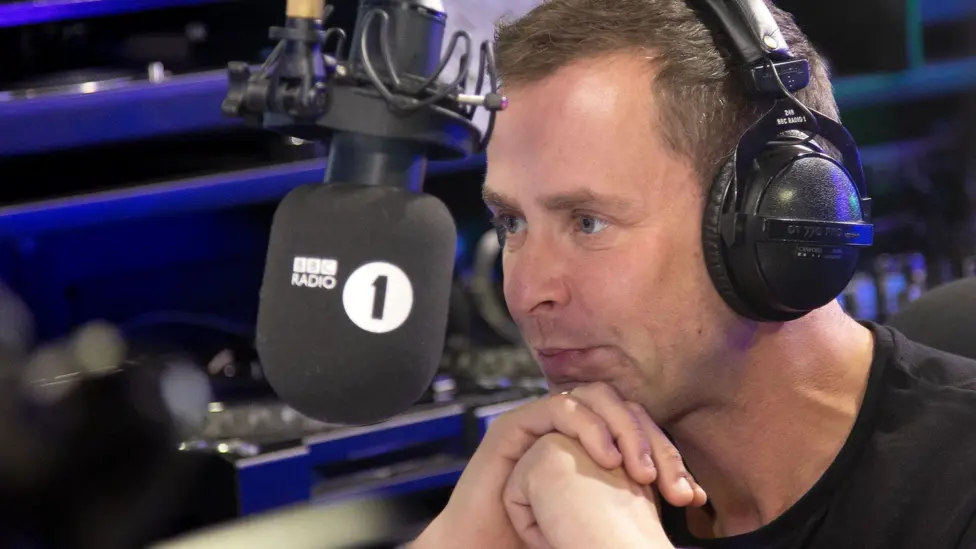
A FORMER BBC Radio 1 and Radio 2 presenter has been dismissed by the broadcaster following allegations relating to his personal conduct, with police confirming that the complainant at the centre of a historic investigation was under the age of sixteen.
Scott Mills, aged 53, was previously questioned by officers from the Metropolitan Police in 2018 in connection with allegations of serious sexual offences said to date back between 1997 and 2000.
The investigation, which began in 2016 following a referral from another force, was later closed in May 2019 after the Crown Prosecution Service concluded there was insufficient evidence to bring charges.
Police have now confirmed that the individual at the centre of the allegations was under sixteen at the time.
A spokesperson for the Metropolitan Police said the case involved “allegations of serious sexual offences against a teenage boy”, adding that a man in his forties at the time was interviewed under caution before a full file was passed to prosecutors.
No charges were brought.
BBC confirms departure
The BBC confirmed on Monday that Mills is no longer working for the corporation, but declined to provide further detail on the reasons behind his departure.
A spokesperson said: “While we do not comment on matters relating to individuals, we can confirm Scott Mills is no longer contracted to work with the BBC.”
It remains unclear whether the historic police investigation played any role in the decision.
BBC News understands that senior leadership at the time of the investigation, including then Director General Tony Hall, were not aware of the allegations.
Mills has been approached for comment.
Shock exit from flagship show
Mills had most recently presented the Radio 2 breakfast show, taking over from Zoe Ball in January 2025, and had worked for the BBC for more than 25 years.
His final appearance on the programme was on Tuesday (March 24), signing off with “Back tomorrow.” He did not return to air the following day.
Fellow presenter Gary Davies stepped in to cover the slot, alongside overnight DJ OJ Borg, as the broadcaster considers a longer-term replacement.
Colleague Jeremy Vine described the news as “a terrible shame” and said the development had come as a shock to staff.
Former Radio 1 presenter Nihal Arthanayake urged caution, telling ITV that while concern must remain for any alleged victim, “there is a human being – well, there’s two human beings – at the centre of this.”
High-profile career
Mills joined Radio 1 in 1998 and became one of the station’s most recognisable voices, later moving to Radio 2 in 2022. He also hosted the Official Chart Show and appeared on television programmes including Strictly Come Dancing and Comic Relief.
As one of the BBC’s highest-paid presenters, his sudden departure is likely to raise further questions for the corporation, which has faced intense scrutiny in recent years over safeguarding and conduct issues involving on-air talent.
The Herald understands that further details surrounding the circumstances of his departure have not yet been made public.


Charity2 hours ago
Milford Haven charity honoured with King’s Award for voluntary service
A PEMBROKESHIRE charity supporting vulnerable young people has received one of the highest honours in the UK for voluntary work....


News22 hours ago
Plaid Cymru launches bid to lead next Welsh Government
Party positions itself as ‘government-in-waiting’ ahead of May election PLAID CYMRU has formally launched its campaign for the 2026 Senedd...


Crime23 hours ago
Police appeal after attempted child abduction in Haverfordwest
DYFED-POWYS POLICE has launched an appeal for witnesses following a reported attempted abduction of a 12-year-old girl in Haverfordwest. The...


Crime2 days ago
Gunshot fired by police during incident in Milford Haven
A POLICE officer discharged a firearm during an incident in Milford Haven on Saturday evening (March 28), prompting an investigation...


Community3 days ago
Three Amigos Easter Run roars through Pembrokeshire
MOTORCYCLE enthusiasts turned out in force today (Saturday, March 28) as the popular Three Amigos Easter Run returned to the...


Education4 days ago
Ysgol Henry Tudor reassures parents over Sikh ceremonial kirpan
School says religious item worn by pupil is secured, symbolic and non-functional YSGOL HENRY TUDOR has moved to reassure parents...


Crime5 days ago
Teen jailed after starting fire while others slept
Fire set in shared home left sleeping residents at risk and caused £130,000 damage A TEENAGER who started a fire...

Health5 days ago
GP crisis driving NHS pressure in Wales, Senedd report warns
Falling GP numbers and funding gaps blamed for worsening hospital delays THE NHS crisis highlighted earlier this week is being...


News6 days ago
Reform reveals west Wales candidates for Senedd battle
Monkton councillor tops Pembrokeshire list as party confirms Carmarthenshire names and includes Haverfordwest councillor in unwinnable Swansea spot REFORM UK...


Health6 days ago
Clash over Withybush Hospital services as Paul Davies challenges First Minister
A HEATED exchange in the Senedd has laid bare growing tensions over the future of hospital services in west Wales....
-

 Business7 days ago
Taxi fare shock in Milford Haven as drivers switch to meters
-
 News6 days ago
Welsh Government outlines progress on flood resilience plans
-

 Community5 days ago
Hero female officer keeps job after sexual touching finding
-

 Health7 days ago
Average of 18 deaths a week in Wales linked to A&E delays, figures reveal
-
Education4 days ago
Ysgol Henry Tudor reassures parents over Sikh ceremonial kirpan
-

 Crime7 days ago
Police stop car in Pennar as three arrested in drugs investigation
-

 Business5 days ago
Popular Italian restaurant hit with £278,000 tax bill plus £186,000 fine
-

 Community7 days ago
Calls to block Withyhedge landfill expansion amid ‘worst in Wales’ claims