


Politics
Campervan car park trial in Pembrokeshire to come under spotlight

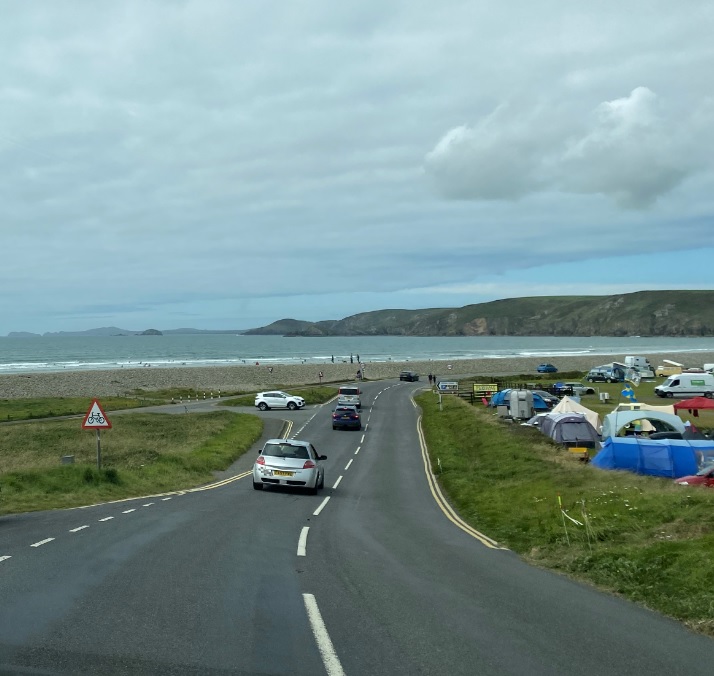
A RECENTLY-BACKED decision by senior Pembrokeshire councillors to allow a trial scheme for overnight motorhome and campervan parking at some of the county’s car parks is to come under further scrutiny.
Members of the council’s Cabinet, at their February meeting, backed a proposal for a trial run ‘Pembs Stop’ scheme at four car parks: North Beach, Tenby; Goodwick Moor, Goodwick; Townsmoor, Narberth; and Western Way, Pembroke Dock.
The ‘Pembs Stop’ trial areas, available for up to two nights, will operate year-round at £10 a night for a trial 18-month period, expected to start in July.
It was stressed the scheme was not intended to create ‘campsites,’ with a list of criteria including no LPG bottles or furniture to be stored outside, and no camping waste or recycling points being provided.
But local businesses say the proposals will harm Pembrokeshire.

Phil Davies, who owns Hungerford Farm Touring Caravan and Motorhome Park near Loveston, said: “One and two-night stays from motorhomes and campervans make up between 25 and 30 per cent of his annual turnover.
“Should the 18-month trial go ahead the drop in business will cause job losses within the industry as many businesses could not survive even a temporary drop in trade.”
He also criticised the Cabinet report for using evidence from Gwynedd Council which has faced similar issues, saying the research data, from 2021, was during a period when visitor numbers were “artificially high” as the country was still under Covid travel restrictions.
The Pembs Stop initiative would also place an additional burden on existing services, with many using public toilets to dispose of waste in order to travel empty to save fuel, Mr Davies said.
In a letter to the council on behalf of Narberth traders, Christine James said: “We feel let down that a matter such as this, with potential to have such huge effects on local residents and businesses, has not been brought to our attention.”
She said no-one in Narberth had been notified of the proposals prior to the cabinet meeting in February.
Vicky Gleeson, owner of Ty Creft on Narberth High Street, said: “One lady has recently been turned down for change of use of the upper level of her commercial premises into accommodation. The reason: increased phosphates into the sewerage system. How many phosphates will enter the water system if you’re allowing hundreds of people to pour their waste and chemicals down the public toilets?”

She added: “There are so many towns with dead high streets, empty shops and no visitors. Narberth is not one of those towns. It’s busy and thriving. It is a jewel in Pembrokeshire’s crown and PCC should be fighting to keep it and protect it.”
Councillor Di Clements has been working with those in her ward who will be affected, and also Narberth traders who contacted her, to make sure their concerns are heard.
She added: “It’s disappointing that businesses and residents in and around the trial areas weren’t consulted before it was given the go ahead. We are lucky here in Pembrokeshire to have such a beautiful landscape.
“While that has increased pressure from motorhomes and campervans in places like Manorbier and Newgale, the Pembs Stop trial places the council in direct competition with businesses like Mr Davies’ in an already saturated market.”
Cllr Clements has called for the matter be sent to the council’s policy and pre decision scrutiny committee for further discussion, which will now be considered at its April 9 meeting.
A report before the committee says: “After Cabinet, Cllr Clement raised concerns that the report would benefit from more oversight. The comments were raised with the Cabinet Member for Residents’ Services, who agreed that the matter be referred to Policy & Predecision Overview & Scrutiny Committee, and the chair of the committee supported this.
“As well as Cllr Clement’s observations there have been a number of comments raised about the decision, and the matter also received national coverage in terms of a discussion on phone-in programme on BBC Radio Wales on February 13.”
The report also highlights support received for the trial.
One comment received said: “I am writing on behalf of a vibrant group of motorhome enthusiasts who cherish exploring the beauty of Wales while respecting its communities and environment.
“We recently became aware of your pioneering ‘Pembs Stop’ initiative to accommodate overnight campers in selected car parks. This thoughtful decision not only showcases your commitment to promoting tourism in a sustainable manner but also acknowledges the growing interest in motorhome travel.
“We are a group deeply committed to responsible motor homing. We always strive to leave places better than we found them, supporting local businesses, and engaging positively with the communities we visit. Your initiative directly supports our ability to do so in the Pembrokeshire area; enhancing our members’ experiences while ensuring we contribute positively to the local area.
“We wanted to extend our heartfelt thanks to you and everyone involved in the Pembs Stop decision. Your forward-thinking approach not only makes a significant difference to motorhome enthusiasts like us but also sets a commendable example for how communities can embrace the benefits of responsible motorhome tourism.
“Please consider this email as a token of our appreciation and a pledge from our community to support and promote this initiative.”


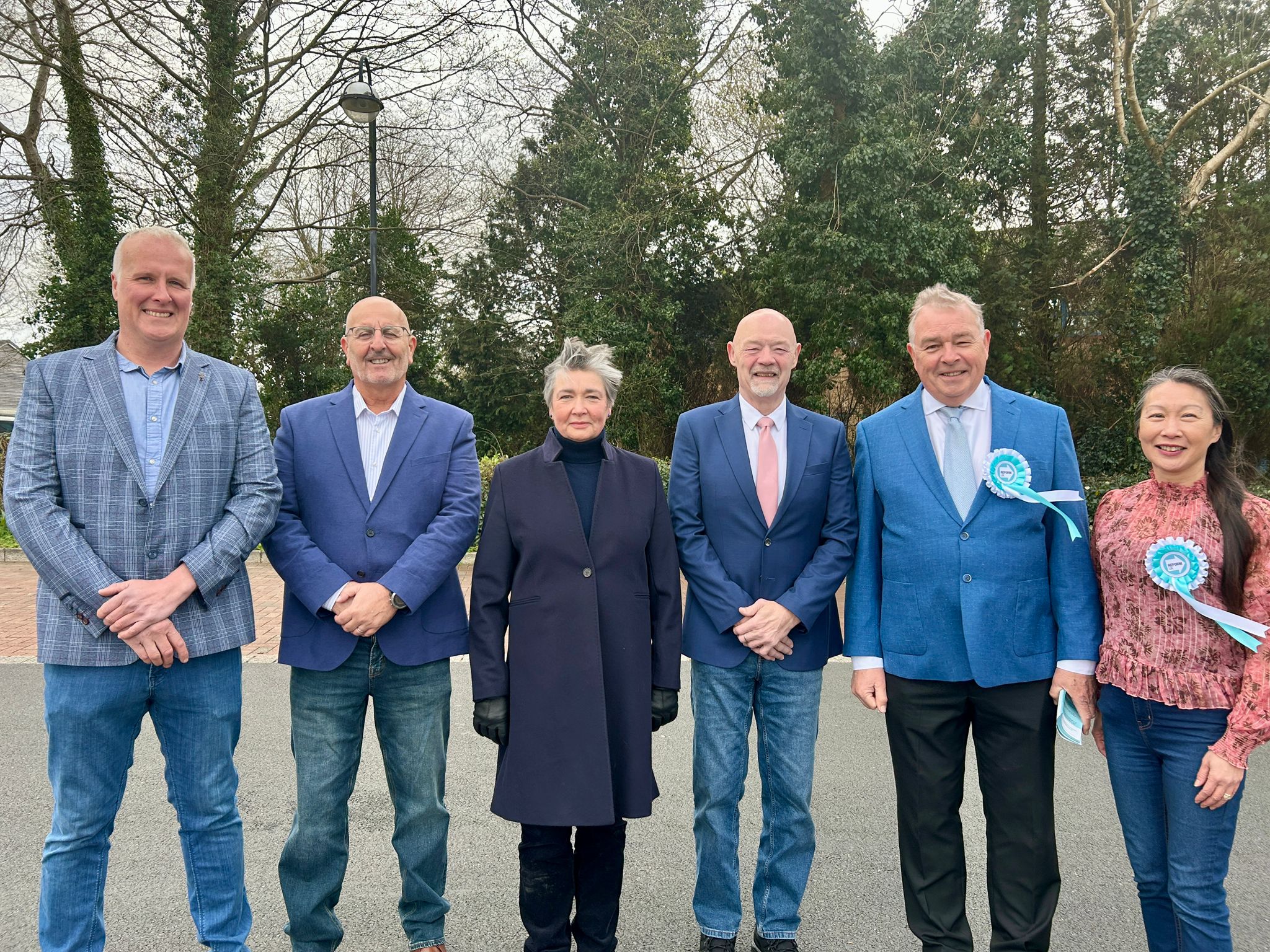
REFORM UK Wales has announced its full list of candidates for Sir Gaerfyrddin (Carmarthenshire) ahead of the Senedd election on Thursday, May 7.
Leading the list is Gareth Beer, the party’s Carmarthenshire chairman, a local businessman, father of four and Kidwelly town councillor. In the 2024 General Election, he came within around 1,500 votes of winning the Llanelli seat — Reform UK’s strongest result in Wales.
Beer said the party had assembled “a strong team of decent, hard-working people” ready to represent the county.
He said: “We have already started campaigning strongly across the constituency, and the reception we are receiving on the doorstep has been overwhelmingly positive.
“People have had enough of the lies they hear from politicians and want to give a new party a genuine chance to make real changes.”
He added that key issues raised by voters included NHS waiting lists, education standards, the economy and the cost of living.
Full candidate list
The Reform UK candidates for Sir Gaerfyrddin are:
Gareth Beer – Businessman, Kidwelly town councillor and Carmarthenshire chairman for Reform UK.
Carmelo Colasanto – County and community councillor with a background in retail, compliance and multinational business operations.

Sarah Edwards – Retired dental professional and smallholder, known for campaigning on rural and environmental issues.
Christopher Brooke – Retired engineer and manager with more than four decades’ experience in manufacturing.
Alan Cole – Former senior corporate leader and business owner who has worked with small businesses across South Wales.
Michelle Beer – Marketing and PR professional and Reform UK county councillor for the Lliedi ward, elected in a 2025 by-election.
The party said the team brings experience from business, engineering, healthcare and public service.
Reform UK Wales said its campaign in Carmarthenshire would focus on reducing NHS waiting times, improving education, supporting small businesses and addressing the rising cost of living.
The party is positioning itself as an alternative to what it describes as the political “status quo” in Cardiff Bay.

Concerns grow over Withybush services as ministers insist decisions rest with health board
THE WELSH GOVERNMENT has been accused of “ducking responsibility” and “hiding behind an unelected health board” amid growing concern over proposed NHS service changes in west Wales.
Samuel Kurtz MS and Paul Davies MS have criticised ministers following a formal response to their joint letter raising alarm about plans linked to Hywel Dda University Health Board’s Clinical Services Plan (CSP), which was approved at an extraordinary meeting in February.
The plan outlines significant changes to how services are delivered across the region, with implementation expected to begin in the next Senedd term and continue over several years.
In a reply dated March 26, Cabinet Secretary for Health and Social Care Jeremy Miles confirmed that responsibility for planning and delivering NHS services lies with local health boards, adding that decisions on the CSP “rest with the health board.”
He also sought to reassure concerns about Withybush Hospital, stating that emergency department services were not included in the CSP decision.

However, the response has drawn sharp criticism from local politicians, who argue that the Welsh Government cannot distance itself from decisions affecting frontline care.
Paul Davies said: “This response is deeply disappointing but sadly not surprising. The Welsh Government is once again trying to pass the buck and avoid accountability by hiding behind an unelected health board.
“Let’s be absolutely clear – health boards are not independent actors. They are created, funded and directed by the Welsh Government. Ministers cannot wash their hands of decisions that will have such a profound impact on communities across west Wales.”
Samuel Kurtz echoed those concerns, warning that public confidence is being eroded.

“People in Pembrokeshire are rightly concerned about what these changes mean for local services, particularly at Withybush Hospital,” he said.
“Attempting to suggest that key services like the emergency department sit outside of these plans will do little to reassure the public, when we have seen services hollowed out and destabilised over the last decade.
“The Welsh Government must stop hiding behind process and start taking responsibility for the future of healthcare in our communities.”

The Herald understands that concerns remain widespread among residents and campaigners, particularly over the long-term future of hospital services in Pembrokeshire, with fears that centralisation could lead to longer travel times for urgent care.
Hywel Dda University Health Board has previously said the changes are designed to improve safety, sustainability and outcomes for patients, but the proposals continue to generate strong local opposition.
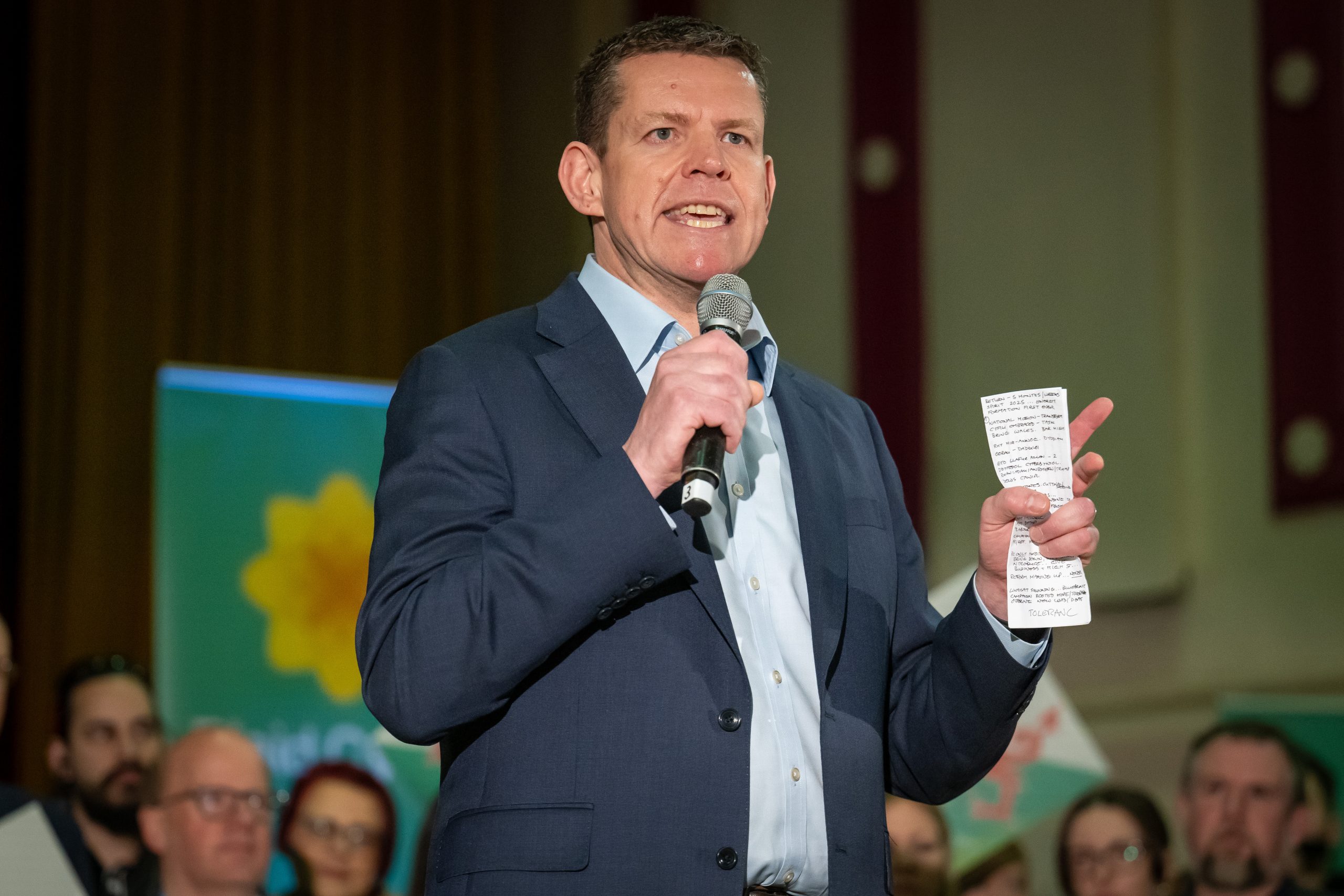
Party positions itself as ‘government-in-waiting’ ahead of May election
PLAID CYMRU has formally launched its campaign for the 2026 Senedd election, with leader Rhun ap Iorwerth declaring the vote a “historic opportunity” to end decades of Labour rule in Wales.
Speaking at the party’s national launch on Monday (Mar 30), he urged voters to “choose hope over division,” setting out Plaid’s ambition to become the largest party in the Senedd for the first time since devolution.
The election, due to take place on Thursday (May 7), is widely expected to be one of the most competitive in Welsh political history, with Plaid Cymru seeking to capitalise on growing dissatisfaction with public services and the cost of living.

Focus on health and families
At the centre of Plaid’s campaign is a pledge to improve NHS performance, with a particular emphasis on cutting waiting times and improving access to treatment.
The party also unveiled plans to expand childcare provision, including support packages it says could be worth up to £30,000 per family, alongside wider commitments to tackle child poverty and support working households.

Education reform was another key theme, with promises to raise standards and address long-standing concerns about attainment in Welsh schools.
Pitch for change
In his speech, Rhun ap Iorwerth framed the election as a clear choice between continuity under Labour and a new direction under Plaid Cymru.
He said the party was ready to govern and presented Plaid as a credible alternative capable of delivering practical improvements in people’s day-to-day lives.
Labour has led the Welsh Government since the Senedd was established in 1999, either alone or in cooperation with other parties.

Shifting strategy
Notably, Plaid Cymru’s campaign places less emphasis on Welsh independence than in previous elections, instead focusing on public services and economic pressures.
The Herald understands this reflects a deliberate effort to broaden the party’s appeal beyond its traditional base and attract voters concerned primarily with health, education and household finances.
Tight contest expected
Recent polling suggests the election could result in a fragmented Senedd, with no single party securing an outright majority.

Alongside Plaid Cymru and Welsh Labour, other parties are expected to play a significant role in determining the balance of power after May’s vote.
With just over five weeks until polling day, all parties are now expected to intensify their campaigns across Wales, as voters prepare to decide who will form the next Welsh Government.
Photos by Matthew Horwood



News3 hours ago
Plaid Cymru launches bid to lead next Welsh Government
Party positions itself as ‘government-in-waiting’ ahead of May election PLAID CYMRU has formally launched its campaign for the 2026 Senedd...


Crime4 hours ago
Police appeal after attempted child abduction in Haverfordwest
DYFED-POWYS POLICE has launched an appeal for witnesses following a reported attempted abduction of a 12-year-old girl in Haverfordwest. The...


Crime1 day ago
Gunshot fired by police during incident in Milford Haven
A POLICE officer discharged a firearm during an incident in Milford Haven on Saturday evening (March 28), prompting an investigation...


Community2 days ago
Three Amigos Easter Run roars through Pembrokeshire
MOTORCYCLE enthusiasts turned out in force today (Saturday, March 28) as the popular Three Amigos Easter Run returned to the...


Education3 days ago
Ysgol Henry Tudor reassures parents over Sikh ceremonial kirpan
School says religious item worn by pupil is secured, symbolic and non-functional YSGOL HENRY TUDOR has moved to reassure parents...


Crime4 days ago
Teen jailed after starting fire while others slept
Fire set in shared home left sleeping residents at risk and caused £130,000 damage A TEENAGER who started a fire...

Health4 days ago
GP crisis driving NHS pressure in Wales, Senedd report warns
Falling GP numbers and funding gaps blamed for worsening hospital delays THE NHS crisis highlighted earlier this week is being...


News5 days ago
Reform reveals west Wales candidates for Senedd battle
Monkton councillor tops Pembrokeshire list as party confirms Carmarthenshire names and includes Haverfordwest councillor in unwinnable Swansea spot REFORM UK...


Health5 days ago
Clash over Withybush Hospital services as Paul Davies challenges First Minister
A HEATED exchange in the Senedd has laid bare growing tensions over the future of hospital services in west Wales....


Crime6 days ago
Police stop car in Pennar as three arrested in drugs investigation
Suspected drug driver report leads to major police response and multiple arrests DRAMATIC scenes were reported in Pennar on Monday...
-

 Business6 days ago
Taxi fare shock in Milford Haven as drivers switch to meters
-

 Community4 days ago
Hero female officer keeps job after sexual touching finding
-

 News5 days ago
Welsh Government outlines progress on flood resilience plans
-

 Health6 days ago
Average of 18 deaths a week in Wales linked to A&E delays, figures reveal
-
Education3 days ago
Ysgol Henry Tudor reassures parents over Sikh ceremonial kirpan
-
Crime6 days ago
Police stop car in Pennar as three arrested in drugs investigation
-

 Community6 days ago
Calls to block Withyhedge landfill expansion amid ‘worst in Wales’ claims
-
 Business4 days ago
Popular Italian restaurant hit with £278,000 tax bill plus £186,000 fine