


Politics
Haverfordwest ‘Instagram-friendly’ bridge back under the spotlight

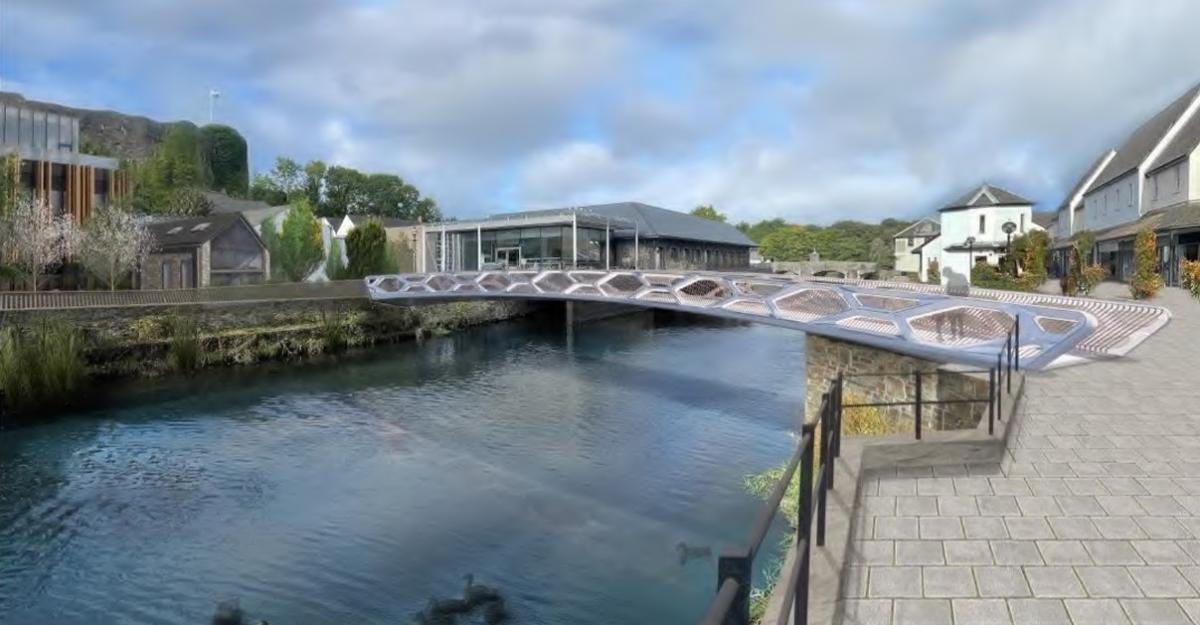
PLANS for an ‘Instagram-friendly’ new footbridge in the centre of Haverfordwest, are to be discussed further by senior councillors after a successful ‘call-in’ by Pembrokeshire’s Conservative group and the IPG group.
At the March meeting of Pembrokeshire County Council’s Cabinet, members awarded the contract for the Haverfordwest footbridge and Western Quayside Phase 2 project.
The signature bridge scheme, in the Haverfordwest’s conservation area, also includes a ‘plaza’ public realm reconfiguration and enhancement; and repair, renewal and refurbishment of the former Cleddau Foundry building.
It forms part of the ‘Heart of Pembrokeshire’ regeneration project, which was previously awarded a Levelling Up Fund grant.
Concerns about the bridge – and potential costs – have previously been raised, and the design of the new bridge has previously been labelled an ‘Instagrammable’ bridge by Councillor Rhys Jordan when raising questions about costs associated with it.

The bridge is also part of a wider regeneration of the county town, which includes the ‘Ocky White’ Western Quayside retail development and a new transport interchange on the site of the former multi-storey car park.
In a letter to the administration, the Welsh Conservative group, led by group leader Councillor Di Clements, asked for the decision to award the contract to be scrutinised further saying that “given its sizeable cost estimation and the high public interest in the matter, the Welsh Conservative group believe that this decision deserves full and proper scrutiny at committee level.”
A similar ‘call-in’ was also made by the Independent Group.
At the March 26 meeting of the council’s services overview and scrutiny committee, the ‘call-in’ request was backed, the matter returning to a special meeting of the county council’s Cabinet, taking place on April 4.

At the March meeting, members heard the cost of the bridge project amounts to £5.7m out of an overall Heart of Pembrokeshire budget of £25.4m; of that money, external funding of £17.7m (70 per cent) has been secured for the overall project and £5.1m (90 per cent) secured for the bridge project.
This leaves council costs at £7.7m for the overall project, and £600,000 for the bridge and associated works, a report for members said, with costs to date for the two projects amounting to £3.9m for the Heart of Pembrokeshire project, and £1.1m for the bridge only.
Papers published ahead of the April 4 meeting outline the history, and the case, for the new bridge, with a 2021 inspection report describing it as in “fair to poor condition,” adding that, while the steel members are still in serviceable condition, there are underside elements with “extensive corrosion throughout”.

The report says, in addition to the inspection details, it was viewed as “too narrow to accommodate increased pedestrian flow and does not meet current inclusive accessibility standards”.
It added: “The extension of the asset’s lifespan was therefore considered not to provide value for money and was discounted as a viable option for these reasons, and reported accordingly at planning stage. If the bridge were removed from the scope of the Heart of Pembrokeshire project, it would need refurbishment work, or replacement, in the short to medium-term, just to provide a like for like basic footbridge”.
The report also says: “There is a risk that expenditure to refurbish the existing bridge would not be eligible for LUF grant funding. A review of the ‘Benefit Cost Ratio’ would be required as well as ministerial approval on a project adjustment request.
“This will be both timely and costly and would impact on the timescale of the project to deliver against tight grant deadlines. Unless funded from external sources this cost would need to be funded 100 per cent by the council. Any costs greater than the approved matched funding would be an additional pressure on the capital financing costs; this is at a time when financial resources are already under immense financial pressure.”


Party positions itself as ‘government-in-waiting’ ahead of May election
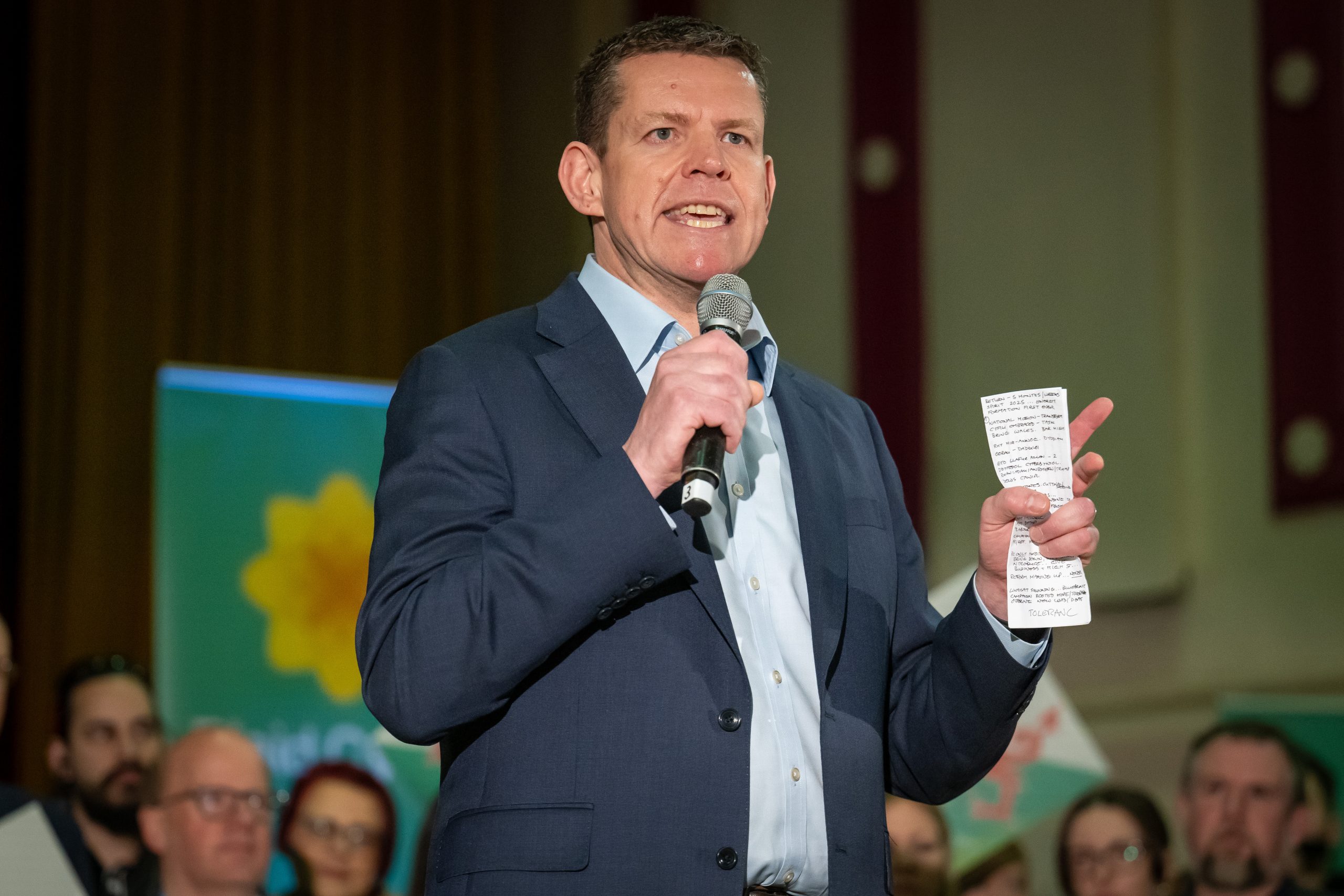
PLAID CYMRU has formally launched its campaign for the 2026 Senedd election, with leader Rhun ap Iorwerth declaring the vote a “historic opportunity” to end decades of Labour rule in Wales.
Speaking at the party’s national launch on Monday (Mar 30), he urged voters to “choose hope over division,” setting out Plaid’s ambition to become the largest party in the Senedd for the first time since devolution.
The election, due to take place on Thursday (May 7), is widely expected to be one of the most competitive in Welsh political history, with Plaid Cymru seeking to capitalise on growing dissatisfaction with public services and the cost of living.

Focus on health and families
At the centre of Plaid’s campaign is a pledge to improve NHS performance, with a particular emphasis on cutting waiting times and improving access to treatment.
The party also unveiled plans to expand childcare provision, including support packages it says could be worth up to £30,000 per family, alongside wider commitments to tackle child poverty and support working households.

Education reform was another key theme, with promises to raise standards and address long-standing concerns about attainment in Welsh schools.
Pitch for change
In his speech, Rhun ap Iorwerth framed the election as a clear choice between continuity under Labour and a new direction under Plaid Cymru.
He said the party was ready to govern and presented Plaid as a credible alternative capable of delivering practical improvements in people’s day-to-day lives.
Labour has led the Welsh Government since the Senedd was established in 1999, either alone or in cooperation with other parties.


Shifting strategy
Notably, Plaid Cymru’s campaign places less emphasis on Welsh independence than in previous elections, instead focusing on public services and economic pressures.
The Herald understands this reflects a deliberate effort to broaden the party’s appeal beyond its traditional base and attract voters concerned primarily with health, education and household finances.
Tight contest expected
Recent polling suggests the election could result in a fragmented Senedd, with no single party securing an outright majority.

Alongside Plaid Cymru and Welsh Labour, other parties are expected to play a significant role in determining the balance of power after May’s vote.
With just over five weeks until polling day, all parties are now expected to intensify their campaigns across Wales, as voters prepare to decide who will form the next Welsh Government.
Photos by Matthew Horwood
Charity backs greyhound racing ban and pushes for tougher laws on pet theft and exotic animals
The RSPCA has welcomed parts of Welsh Labour’s 2026 Senedd election manifesto, while urging politicians to go further to improve animal welfare across Wales.
Responding to the manifesto’s launch on Monday (Mar 30), Billie-Jade Thomas, Senior Public Affairs Manager for RSPCA Cymru, said the charity was encouraged by several proposed measures but stressed that more action is needed.
Greyhound racing
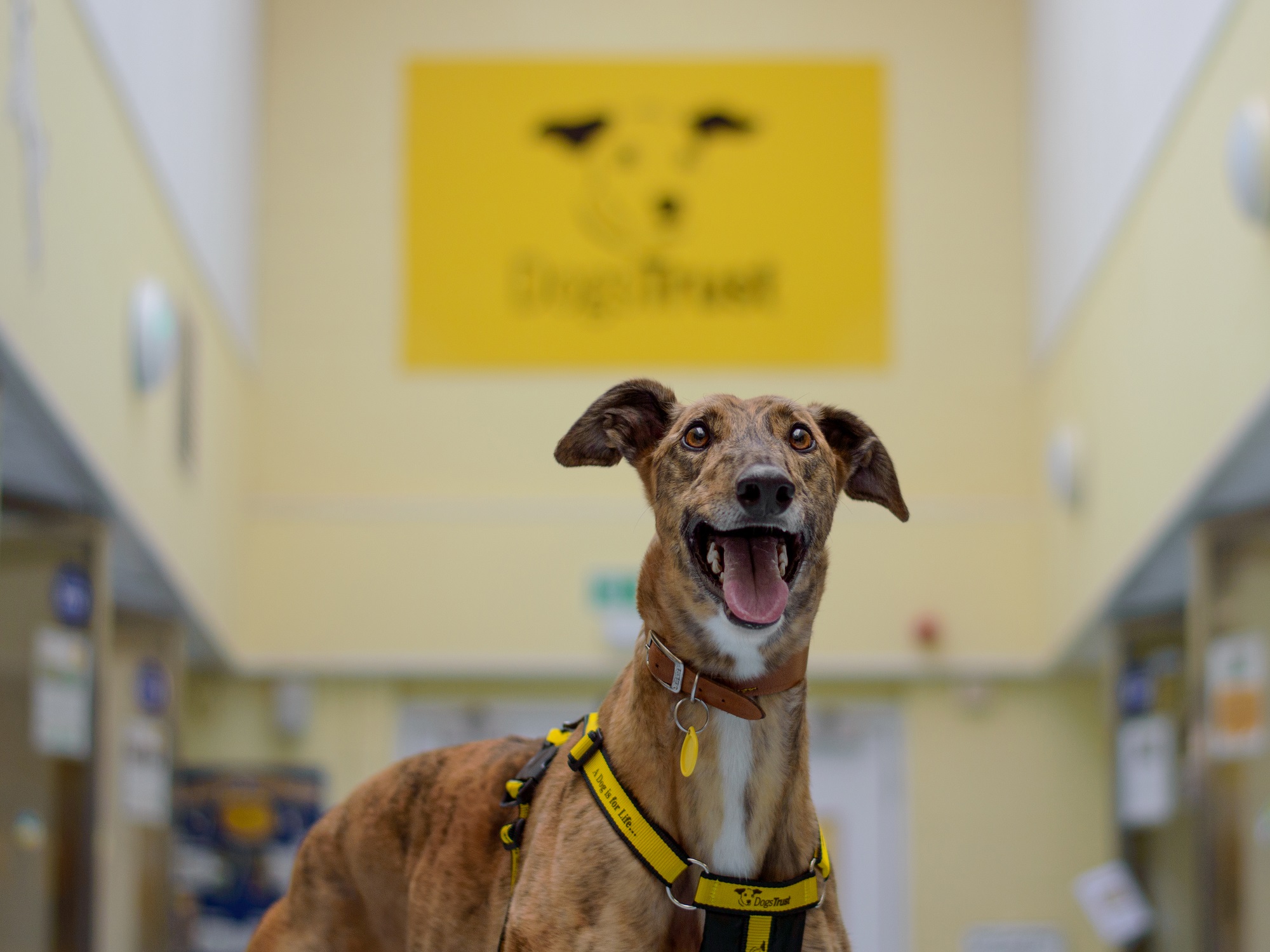
The charity reiterated its long-standing campaign to ban greyhound racing, calling for the industry to be phased out as soon as possible.
Thomas said: “Greyhound racing is inherently dangerous. The industry’s own data shows thousands of injuries and hundreds of deaths in recent years. That level of suffering, purely for entertainment, is unacceptable.”
Cat microchipping
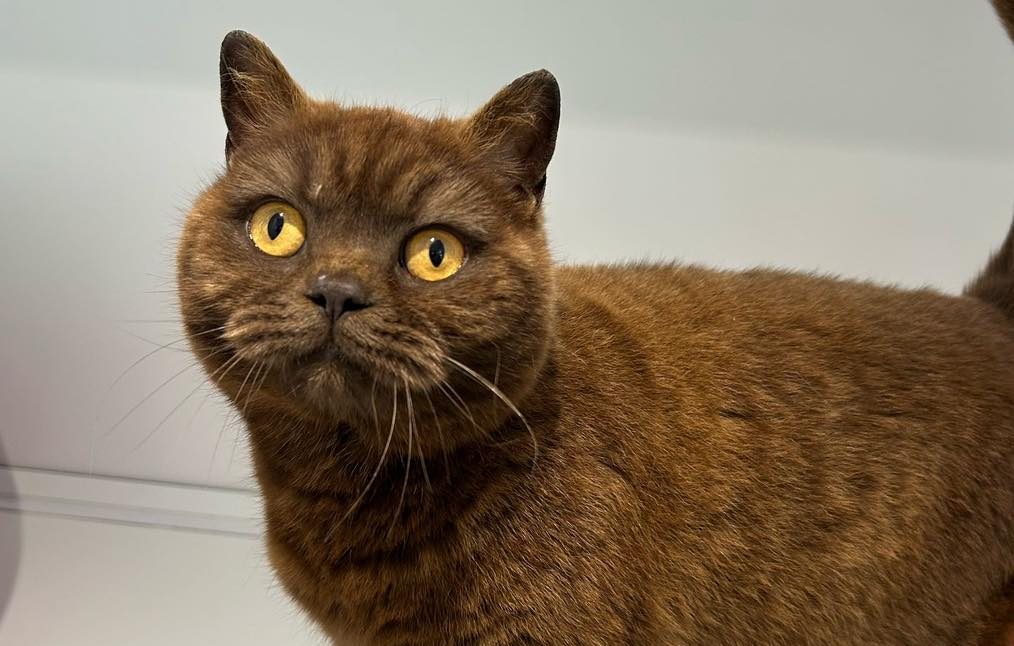
The RSPCA backed plans to introduce mandatory microchipping for cats, saying it would help reunite lost or stolen pets with their owners and reduce the number of abandoned animals.

The charity also said the move would bring Wales in line with England and improve traceability for rescue centres handling stray animals.
Animal welfare establishments
Concerns were raised about the lack of regulation for animal sanctuaries and welfare establishments.
Thomas said RSPCA officers frequently encounter cases where poor governance, financial problems, and overcapacity lead to welfare issues.
She added: “There is a clear need for proper oversight and regulation in this sector.”

Exotic pets
The charity welcomed proposals to regulate the keeping of exotic pets, warning that many species have complex needs that are difficult to meet in domestic environments.
Better regulation, it said, could improve welfare for animals such as reptiles and birds.
Statutory powers
The RSPCA is also calling for its inspectors to be given statutory powers, arguing this would allow them to deal with animal cruelty cases more effectively and reduce pressure on public services.

Pet theft
The charity renewed its call for tougher laws on pet theft, arguing that current legislation fails to reflect the emotional impact on owners.
Thomas said: “Pets are family members. It is not appropriate that stealing a dog or cat is treated the same as stealing a mobile phone.”
Wildlife and bovine TB
On wildlife policy, the RSPCA said it supports measures to tackle bovine tuberculosis through cattle-based approaches rather than culling badgers.
Wales ‘leading on animal care’
The charity also pointed to its Animal Kindness Index, which suggests Wales has the highest proportion of animal lovers in the UK.
Thomas added: “There is still much more that can be done to ensure a good life for every animal in Wales. We want to see all political parties set out clear plans ahead of the Senedd election.”
The Senedd election is due to take place in May 2026.

PROTESTS against proposals for a deep-space radar site at Pembrokeshire’s Cawdor barracks, Brawdy, which have seen a local city council object, have taken place close to the site and at County Hall, Haverfordwest
In a pre-application consultation, ahead of a formal planning application, The Ministry of Defence wants to install 27 radar antenna and a long list of associated works at Cawdor Barracks, Brawdy.
The pre-application consultation on the UK Government website, ran up to March 23, with the MOD intending to submit a formal planning application to Pembrokeshire County Council after that date.
Proposals for a worldwide network of sensors called the Deep Space Advanced Radar Concept (DARC) to track active satellites and other objects would utilise three sites worldwide, in the USA, the UK and Australia “enabling 360-degree coverage of the sky at all times of day and under any weather conditions”.
In late 2023, Cawdor Barracks was identified as the preferred UK site by the-then UK Defence Secretary, Grant Shapps.
A supporting statement accompanying the pre-application consultation, through Montagu Evans LLP says: “The Deep Space Advanced Radar Capability proposal will enhance the UK’s ability to detect, identify, and track objects in Earth orbit, including satellites, space debris, and potential threats.
“This capability is vital for ensuring the resilience of UK space systems, enabling the UK to secure attribution, maintain stability and provide information for managing emerging challenges. Fundamentally, the project forms a key site that will support wider international space traffic management and enhance collective international security.
“As part of the ongoing investment into this domain, the UK has been working with its allies to identify a location for a new deep space monitoring facility to protect and defend both military and civilian infrastructure that supports our way of life.”
It adds that, as well as the civilian importance of satellite technology, “there is the strategic importance of secure communication for command-and-control activities undertaken by the UK military,” adding: “This not only serves to support operations for and with our allies across the globe, but also the day-to-day security of the nation.”

St Davids City Council members recently unanimously opposed the proposals, raising concerns including the impact on tourism, the loss of the only 4G sports pitch in the county area currently available to the community at Brawdy, the impact on the Pembrokeshire Dark Skies designation, and potential health considerations relating to non-ionising radiation.
Public objectors to the proposals have said there are concerns “about the scale, complexity and potential implications of the proposal,” adding: “A number of peaceful protests have taken place, including gatherings outside Brawdy Barracks and County Hall.
“In addition, a small number of people made camp over the weekend near the proposed site to highlight their concerns and to encourage further public dialogue about the proposed development.”
Concerns raised include a potential impact on the local economy, which is dependent on tourism, the environment, and potential impacts on human health.
“Other are worried that the presence of the radar would alter the profile of the region in terms of security,” Penny Dafforn of the protestors said, adding: “As we are seeing in the current action of the USA against Iran – such installations can very easily become a target for hostile forces.
“Given the technical and geopolitical complexity of the proposal, some residents have also expressed uncertainty about whether the local planning authority is best qualified to fully assess all aspects of this application.”



News1 hour ago
Plaid Cymru launches bid to lead next Welsh Government
Party positions itself as ‘government-in-waiting’ ahead of May election PLAID CYMRU has formally launched its campaign for the 2026 Senedd...


Crime2 hours ago
Police appeal after attempted child abduction in Haverfordwest
DYFED-POWYS POLICE has launched an appeal for witnesses following a reported attempted abduction of a 12-year-old girl in Haverfordwest. The...

Crime1 day ago
Gunshot fired by police during incident in Milford Haven
A POLICE officer discharged a firearm during an incident in Milford Haven on Saturday evening (March 28), prompting an investigation...


Community2 days ago
Three Amigos Easter Run roars through Pembrokeshire
MOTORCYCLE enthusiasts turned out in force today (Saturday, March 28) as the popular Three Amigos Easter Run returned to the...


Education3 days ago
Ysgol Henry Tudor reassures parents over Sikh ceremonial kirpan
School says religious item worn by pupil is secured, symbolic and non-functional YSGOL HENRY TUDOR has moved to reassure parents...


Crime4 days ago
Teen jailed after starting fire while others slept
Fire set in shared home left sleeping residents at risk and caused £130,000 damage A TEENAGER who started a fire...

Health4 days ago
GP crisis driving NHS pressure in Wales, Senedd report warns
Falling GP numbers and funding gaps blamed for worsening hospital delays THE NHS crisis highlighted earlier this week is being...

News5 days ago
Reform reveals west Wales candidates for Senedd battle
Monkton councillor tops Pembrokeshire list as party confirms Carmarthenshire names and includes Haverfordwest councillor in unwinnable Swansea spot REFORM UK...


Health5 days ago
Clash over Withybush Hospital services as Paul Davies challenges First Minister
A HEATED exchange in the Senedd has laid bare growing tensions over the future of hospital services in west Wales....


Crime6 days ago
Police stop car in Pennar as three arrested in drugs investigation
Suspected drug driver report leads to major police response and multiple arrests DRAMATIC scenes were reported in Pennar on Monday...
-

 Business6 days ago
Taxi fare shock in Milford Haven as drivers switch to meters
-
 News5 days ago
Welsh Government outlines progress on flood resilience plans
-

 Health6 days ago
Average of 18 deaths a week in Wales linked to A&E delays, figures reveal
-
 Community4 days ago
Hero female officer keeps job after sexual touching finding
-
Education3 days ago
Ysgol Henry Tudor reassures parents over Sikh ceremonial kirpan
-
Crime6 days ago
Police stop car in Pennar as three arrested in drugs investigation
-
 Business4 days ago
Popular Italian restaurant hit with £278,000 tax bill plus £186,000 fine
-
 Community6 days ago
Calls to block Withyhedge landfill expansion amid ‘worst in Wales’ claims