


News
Cornerstone 4G phone mast unconditionally backed

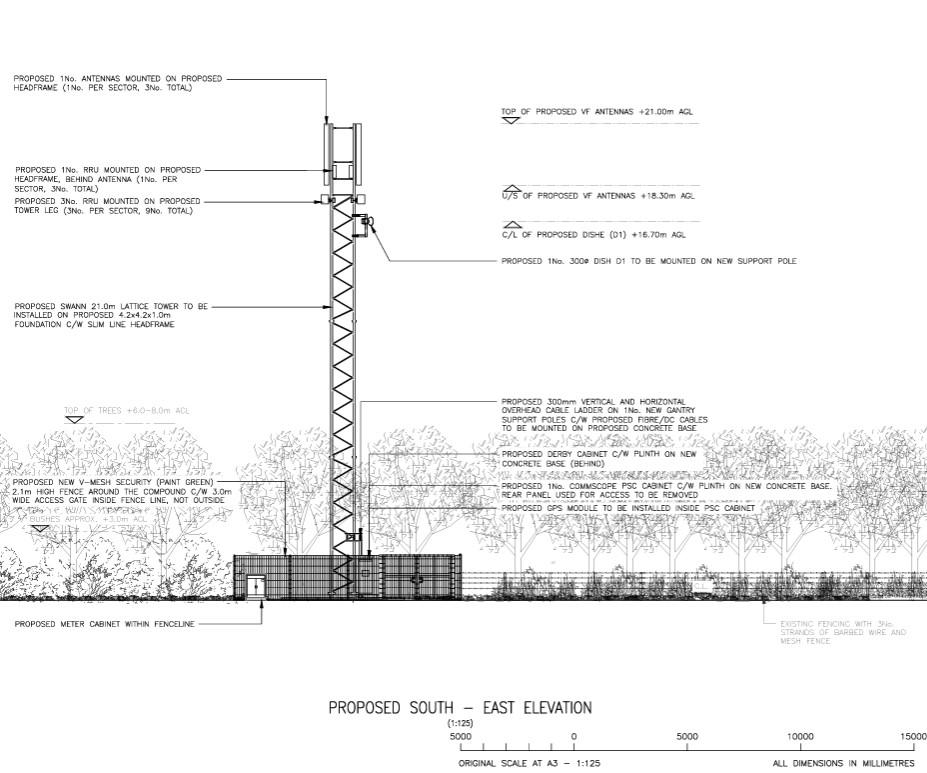
A NEAR 70-foot-high 4G telecommunications tower scheme in north Pembrokeshire has been unconditionally backed by county planners.
Applicant Cornerstone sought what – in planning terms – is called prior approval for the installation of a 21-metre lattice tower supporting three antennas and associated works on land at Castle Farm Villa, Llanreithan, Hayscastle.
A report for planners says the radio base station “would allow a shared rural network in this rural area of Hayscastle for two of the main operators, to provide 4G connection, which would provide a reliable and fast communications services; to facilitate significantly improved connectivity for residents, businesses and visitors to locality.”
The application was supported by local community council Brawdy.
Cornerstone, in a supporting statement, says: “To keep up with growing demand from mobile phone users we need to upgrade existing base stations or build new base stations. An upgrade can be done in a number of ways, often by redeveloping the site to enable an increase in the number of technologies, or increasing the number or height of the antennas. However, even after these upgrades, in some busy areas the demand for services can still exceed the capability of the local base stations.”

It adds: “We recognise that the growth in mobile communication has led, in some cases, to public concern about perceived health effects of mobile technology, in particular about siting masts close to local communities.
“Quite naturally, the public seeks reassurance that masts are not in any way harmful or dangerous. We are committed to providing the latest independent peer-reviewed research findings, information, advice and guidance from national and international agencies on radiofrequency (RF) electromagnetic fields.
“Cornerstone ensure that our radio base stations are designed and built so that the public are not exposed to radio frequency fields above the guidelines set by the International Commission on Non-Ionizing Radiation Protection (ICNIRP). In fact, radio base stations operate at low power and emit levels of radiofrequency fields many times lower than the ICNIRP general public guidelines.”
An officer report says a site visit was carried out to assess the impact of the proposed development, considering that the siting and design of the mast and associated structures would be acceptable.

“As such, the prior approval of the local planning authority is not required,” the report concluded.
Recent plans by Cornerstone for a 20-metre-high, timber-clad telecoms tower on land opposite the National Trust car park at Trehilyn West, Trefasser, near Goodwick, were turned down by Pembrokeshire Coast National Park planners.


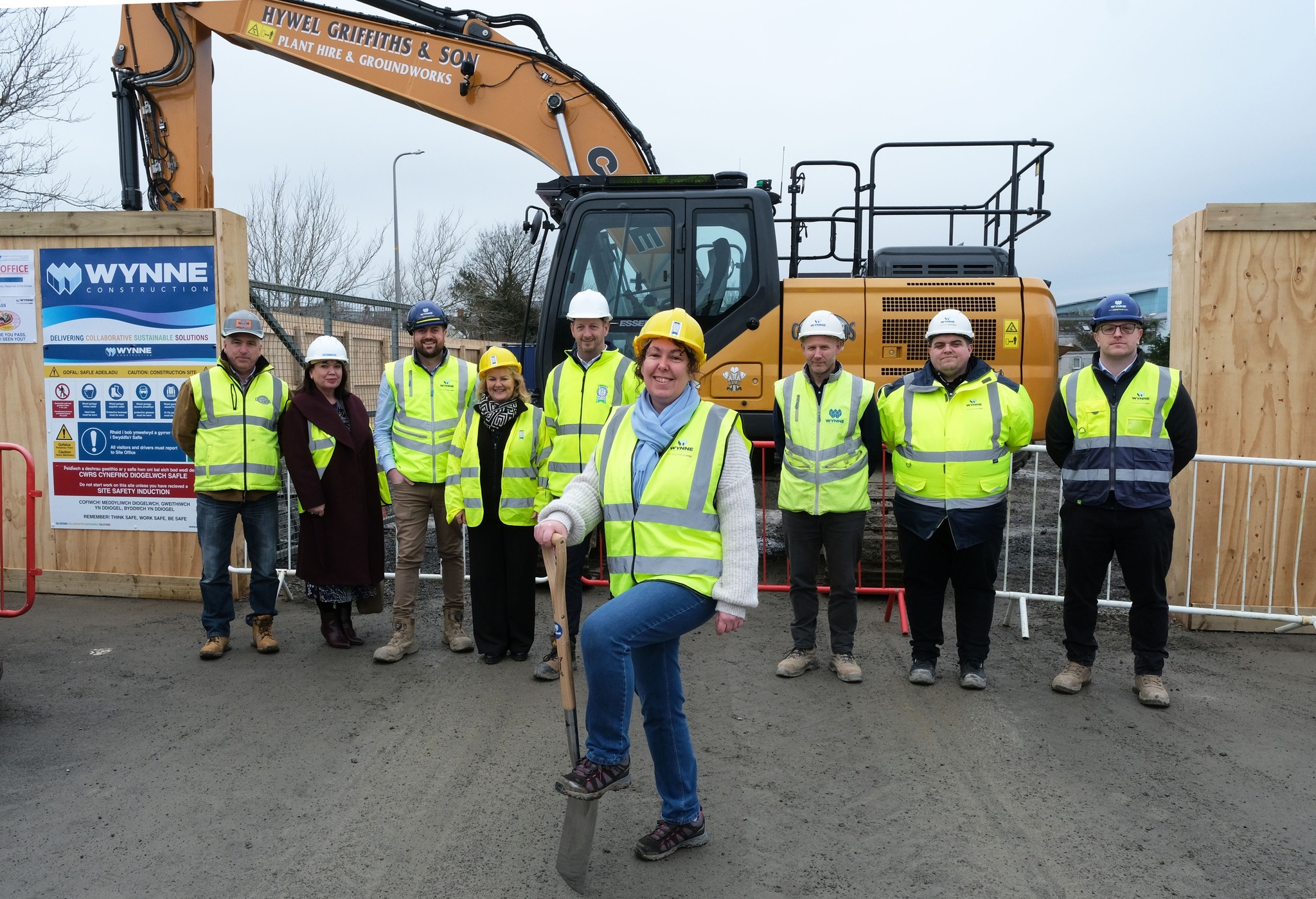
A MULTI-MILLION pound housing and care development in Haverfordwest has officially moved into the construction phase, with groundworks now underway at the Tŷ Haverfordia site.
Contractor Wynne Construction has begun work on the scheme at the former Haverfordia House site, marking the milestone with a turf-cutting ceremony attended by project partners and local representatives.

The development will provide 26 sheltered apartments for people aged over fifty-five, alongside a purpose-built twelve-bed reablement centre aimed at supporting residents returning home from hospital and regaining independence.
The project is being delivered in partnership with Pembrokeshire County Council and is expected to play an important role in easing pressure on local health and social care services.
Developers say they will work closely with local suppliers and businesses during the build to maximise benefits to the regional economy.

Measures have also been put in place to minimise disruption during construction, including maintaining pedestrian access and ensuring parking arrangements remain in place for nearby facilities.
Once complete, the scheme is expected to provide modern, high-quality accommodation tailored to the needs of older residents, while helping to free up hospital capacity across west Wales.

A PROGRAMME designed to support farming families in planning for the future is helping to break down one of agriculture’s most sensitive issues – succession.
Farm inheritance and succession planning returned to the spotlight in 2024 following UK Government reforms to inheritance tax (IHT), prompting renewed concern across the industry.
In response, Agrisgôp leader Elaine Rees Jones brought together farming families in the Welshpool area to take part in a structured programme aimed at addressing the issue head-on.
Agrisgôp, a fully funded management development initiative, encourages farmers to work collaboratively, building confidence and business skills through action learning.
Two distinct groups emerged: one made up of parents seeking to plan the future of their farms, and another of younger family members exploring how to take on responsibility and transfer knowledge from the previous generation.
A key theme identified early on was the importance of communication between generations.
Elaine said: “The meetings have offered the opportunity to gain professional and peer advice, time away from the farm to assess situations, and a safe, confidential space for discussion.
“Group members have shared concerns and apprehensions while getting to grips with the scale of the challenge, and have begun to develop action plans.
“The honesty and openness shown has been incredibly humbling.”

For many participants, the programme has provided the confidence to begin formal discussions with professional advisers.
One farming couple, currently working through the process of passing assets to their two sons, said the experience had been invaluable.
“It has made us tackle things properly. We had already started looking at succession before the Rachel Reeves budget, so this wasn’t a knee-jerk reaction.

“It’s a complicated process with no easy answers, and every farm is different. But Agrisgôp has helped us go into meetings with solicitors and accountants informed, rather than just accepting advice blindly.”
Another participant described succession planning as “mind-blowing” before joining the group, adding that expert input had highlighted the importance of early preparation.
The programme included a recent panel session in Welshpool, where professionals returned to answer questions from participants, alongside one-to-one sessions to clarify individual plans.
Specialist advice was provided on legal, financial, and land valuation matters, with a clear message emerging on the importance of having a valid will in place.
Angharad Hird, of Lanyon Bowdler Solicitors, warned that failing to make a will can have serious consequences, highlighting a case where a young farmer died unexpectedly. Under intestacy rules, his estate was divided between his wife and children in a way that may not have reflected the family’s wishes.
Financial planning was also a major focus. From April 2027, unused pension funds will be included within estates for IHT purposes, potentially attracting tax of up to 40%.
Emma Hall, a chartered financial planner, said some clients are already restructuring their finances to mitigate future liabilities, including placing assets into trusts or converting pension funds into income-generating annuities.
Land and property valuation was another key consideration. Richard Corbett, of Roger Parry & Partners, stressed that valuations must reflect current market conditions at the time of assessment, while also taking into account factors such as shared ownership or rights of way.
Accountant Sion Roberts highlighted the importance of setting emotion aside when making decisions.
“There is no one-size-fits-all solution,” he said. “Each farm is different, so it’s vital to understand your priorities and get the right advice.”
The issue of care fees and asset transfers was also raised, with warnings about the risks of deliberately reducing assets to avoid future costs.
Alongside Agrisgôp, Farming Connect’s Succession Pathway offers structured support for families navigating the process. This includes business reviews, facilitated family meetings, bespoke planning, and access to specialist legal services.
Organisers say early planning is crucial to securing both family relationships and the long-term future of farm businesses.
Farmers interested in accessing support can contact Farming Connect on 03456 000 813 or visit their website for further information.

Party positions itself as ‘government-in-waiting’ ahead of May election
PLAID CYMRU has formally launched its campaign for the 2026 Senedd election, with leader Rhun ap Iorwerth declaring the vote a “historic opportunity” to end decades of Labour rule in Wales.
Speaking at the party’s national launch on Monday (Mar 30), he urged voters to “choose hope over division,” setting out Plaid’s ambition to become the largest party in the Senedd for the first time since devolution.
The election, due to take place on Thursday (May 7), is widely expected to be one of the most competitive in Welsh political history, with Plaid Cymru seeking to capitalise on growing dissatisfaction with public services and the cost of living.

Focus on health and families
At the centre of Plaid’s campaign is a pledge to improve NHS performance, with a particular emphasis on cutting waiting times and improving access to treatment.
The party also unveiled plans to expand childcare provision, including support packages it says could be worth up to £30,000 per family, alongside wider commitments to tackle child poverty and support working households.
Education reform was another key theme, with promises to raise standards and address long-standing concerns about attainment in Welsh schools.
Pitch for change
In his speech, Rhun ap Iorwerth framed the election as a clear choice between continuity under Labour and a new direction under Plaid Cymru.
He said the party was ready to govern and presented Plaid as a credible alternative capable of delivering practical improvements in people’s day-to-day lives.
Labour has led the Welsh Government since the Senedd was established in 1999, either alone or in cooperation with other parties.

Shifting strategy
Notably, Plaid Cymru’s campaign places less emphasis on Welsh independence than in previous elections, instead focusing on public services and economic pressures.
The Herald understands this reflects a deliberate effort to broaden the party’s appeal beyond its traditional base and attract voters concerned primarily with health, education and household finances.
Tight contest expected
Recent polling suggests the election could result in a fragmented Senedd, with no single party securing an outright majority.

Alongside Plaid Cymru and Welsh Labour, other parties are expected to play a significant role in determining the balance of power after May’s vote.
With just over five weeks until polling day, all parties are now expected to intensify their campaigns across Wales, as voters prepare to decide who will form the next Welsh Government.
Photos by Matthew Horwood



News29 minutes ago
Plaid Cymru launches bid to lead next Welsh Government
Party positions itself as ‘government-in-waiting’ ahead of May election PLAID CYMRU has formally launched its campaign for the 2026 Senedd...


Crime1 hour ago
Police appeal after attempted child abduction in Haverfordwest
DYFED-POWYS POLICE has launched an appeal for witnesses following a reported attempted abduction of a 12-year-old girl in Haverfordwest. The...


Crime1 day ago
Gunshot fired by police during incident in Milford Haven
A POLICE officer discharged a firearm during an incident in Milford Haven on Saturday evening (March 28), prompting an investigation...


Community2 days ago
Three Amigos Easter Run roars through Pembrokeshire
MOTORCYCLE enthusiasts turned out in force today (Saturday, March 28) as the popular Three Amigos Easter Run returned to the...


Education3 days ago
Ysgol Henry Tudor reassures parents over Sikh ceremonial kirpan
School says religious item worn by pupil is secured, symbolic and non-functional YSGOL HENRY TUDOR has moved to reassure parents...


Crime4 days ago
Teen jailed after starting fire while others slept
Fire set in shared home left sleeping residents at risk and caused £130,000 damage A TEENAGER who started a fire...


Health4 days ago
GP crisis driving NHS pressure in Wales, Senedd report warns
Falling GP numbers and funding gaps blamed for worsening hospital delays THE NHS crisis highlighted earlier this week is being...


News5 days ago
Reform reveals west Wales candidates for Senedd battle
Monkton councillor tops Pembrokeshire list as party confirms Carmarthenshire names and includes Haverfordwest councillor in unwinnable Swansea spot REFORM UK...


Health5 days ago
Clash over Withybush Hospital services as Paul Davies challenges First Minister
A HEATED exchange in the Senedd has laid bare growing tensions over the future of hospital services in west Wales....


Crime6 days ago
Police stop car in Pennar as three arrested in drugs investigation
Suspected drug driver report leads to major police response and multiple arrests DRAMATIC scenes were reported in Pennar on Monday...
-

 Business6 days ago
Taxi fare shock in Milford Haven as drivers switch to meters
-

 News5 days ago
Welsh Government outlines progress on flood resilience plans
-

 Health6 days ago
Average of 18 deaths a week in Wales linked to A&E delays, figures reveal
-

 Community4 days ago
Hero female officer keeps job after sexual touching finding
-
Education3 days ago
Ysgol Henry Tudor reassures parents over Sikh ceremonial kirpan
-
Crime6 days ago
Police stop car in Pennar as three arrested in drugs investigation
-
 Business4 days ago
Popular Italian restaurant hit with £278,000 tax bill plus £186,000 fine
-
 Community6 days ago
Calls to block Withyhedge landfill expansion amid ‘worst in Wales’ claims