


Farming
PAS launches search for farm employees deserving Long Service Awards

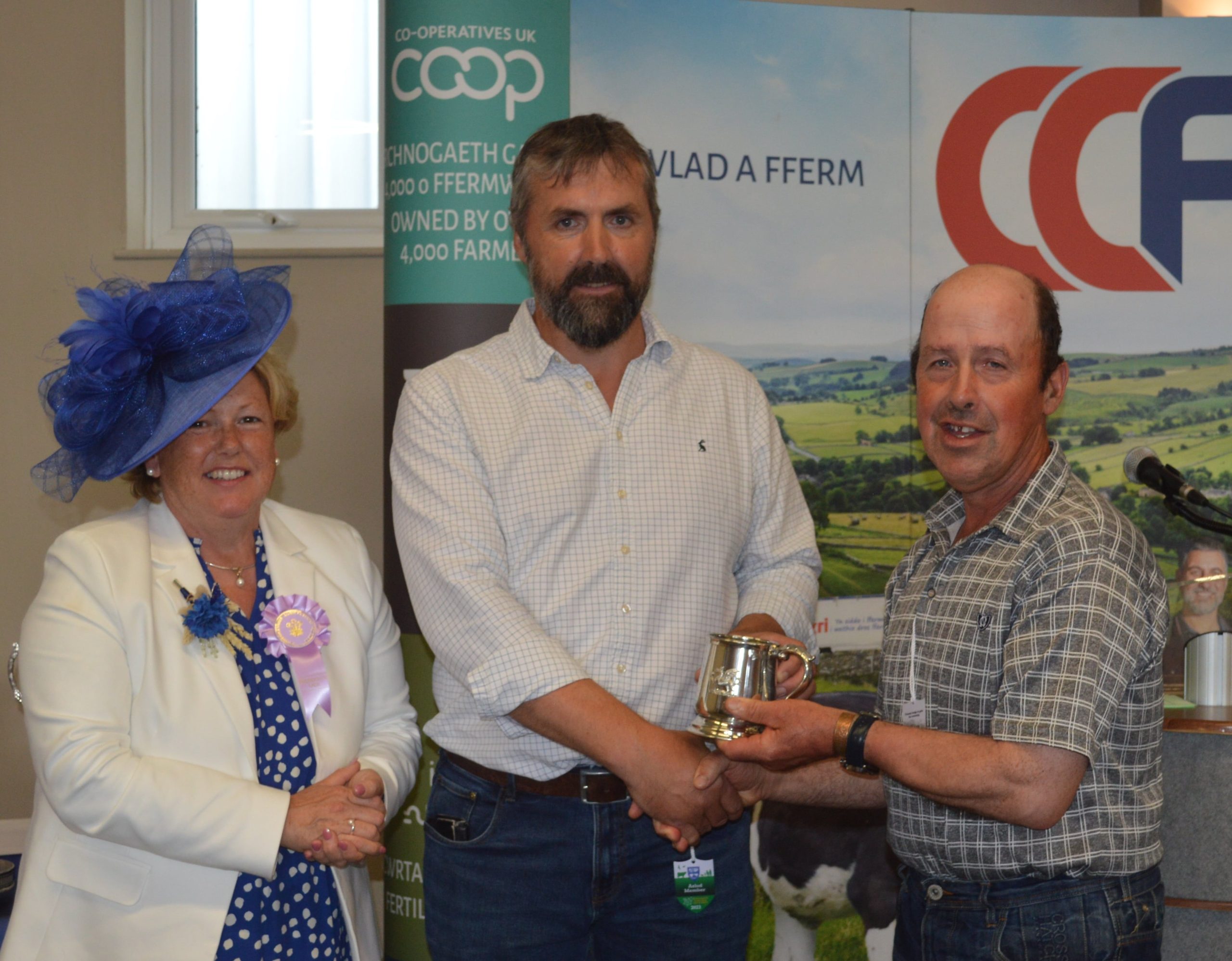
FARM and estate workers from Pembrokeshire, who have been employed on the land for 25 years or more, can be nominated for the Pembrokeshire Agricultural Society’s Farm Employee Long Service Award 2024.
The President and Trustees of the Pembrokeshire Agricultural Society wish to offer inscribed Awards to both male and female workers who have not received a Pembrokeshire Agricultural Society Farm Employee Long Service Award previously.
There were two recipients for the inscribed Awards at last year’s County Show: Darran Davies from Scleddau, Fishguard and Richard Davies from Treffgarn Owen, Haverfordwest.
The 2024 Long Service Awards presentation will take place on Wednesday, 14 August at 4pm, in the President’s Pavilion at the Pembrokeshire County Show and the Award recipient and guest will receive complimentary entry tickets to the show.
Adam Thorne, President of the Pembrokeshire Agricultural Society said, “It gives us great pleasure as a Society to reward those who have been employed for such a significant amount of time by one employer in the county. We recognise what an achievement this is and it deserves an award. We are very much looking forward to receiving applications for this year’s Long Service Award. The decision of the committee will be final.”

Conditions of the Award being given are:
1. The recipient must, on the first day of the Annual Show, have been in service for 25 years on the same farm continuously, or continuously in the service of the same employer within Pembrokeshire.
2. The employer must be a member of the Pembrokeshire Agricultural Society for the present year.
For those eligible to apply please complete the online application form and return it by 31 July 2024. If you are unable to complete the form online please contact the Show office on: 01437 764331. To apply online please click here: Long Service Award | Pembrokeshire County Show | Pembs Agricultural Society (pembsshow.org)

Pembrokeshire County Show, the largest county agricultural show in Wales, will take place on 14 and 15 August 2024. Earlybird e-tickets and Society membership details are available on the website: www.pembsshow.org

Harper Adams study shows strong growth rates and smooth weaning at 35 days
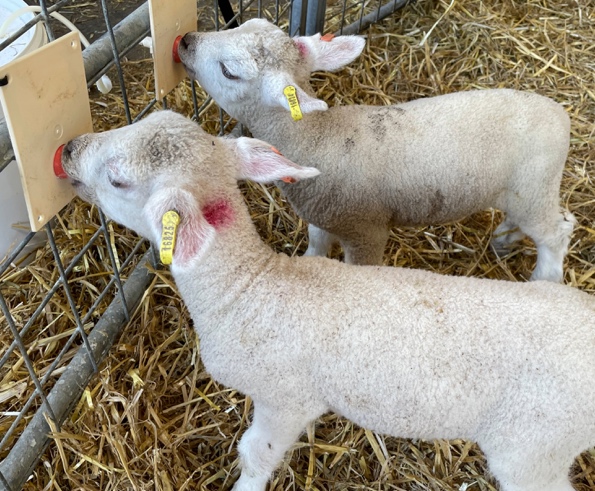
A TRIAL carried out in 2025 at Harper Adams University has found that surplus lambs can achieve strong daily growth rates when fed milk replacer mixed and delivered cold from eight days of age.
The study, using Lamlac ewe milk replacer, recorded an average weaning weight of 15kg at 35 days of age. Individual lamb weights ranged from 10kg to 19kg, while average daily liveweight gain up to weaning reached 332g per day.
Dr Jessica Cooke, speaking on behalf of Lamlac, said feeding ewe milk replacer cold should be considered a proven and practical technique for producers managing surplus lambs during busy lambing periods.
“Feeding cold milk provides a simple, time-efficient and practical method of rearing surplus lambs on farm, particularly where warm water is not readily available or when lambs of different ages require milk at a consistent temperature,” she said.
“With good attention to detail and suitable environmental conditions, lambs can successfully maintain strong daily growth rates when reared on Lamlac mixed and fed cold from week one. It also reduces labour input compared with preparing and feeding warm milk.”

Colostrum and early management
The trial involved twenty-three Lleyn x Aberblack/Charolais lambs. All were left with the ewe for twenty-four hours to receive colostrum naturally, or were fed colostrum artificially where required.
After the first day, lambs were placed in a training pen and fed warm Lamlac ad-libitum through an Ewe-2 feeder. The milk replacer was mixed at a rate of 200g powder to 800ml of water.
From day eight, lambs were moved to a larger pen where Lamlac was mixed and delivered cold at 10°C using two Ewe-2 feeders.
Fresh creep feed and straw were introduced from day seven to support rumen development and help minimise digestive upset around weaning.
Weaning targets met
Lambs were weaned abruptly at 35 days of age. The target was a minimum bodyweight of 10kg and a daily intake of 250g of solid feed.

Dr Cooke said the findings demonstrate the flexibility available to producers.
“After following recommended rearing practices during the first week of life, feeding lambs cold ad-lib milk offers a straightforward, practical and highly cost-effective method of rearing surplus offspring, particularly where warm water or additional labour are limited.
“However, it is vital that producers use a high-quality milk replacer to ensure good mixing quality and avoid potential problems.”
The trial results suggest cold milk feeding can provide an effective and labour-saving alternative for sheep farmers seeking consistent growth performance in surplus lambs.

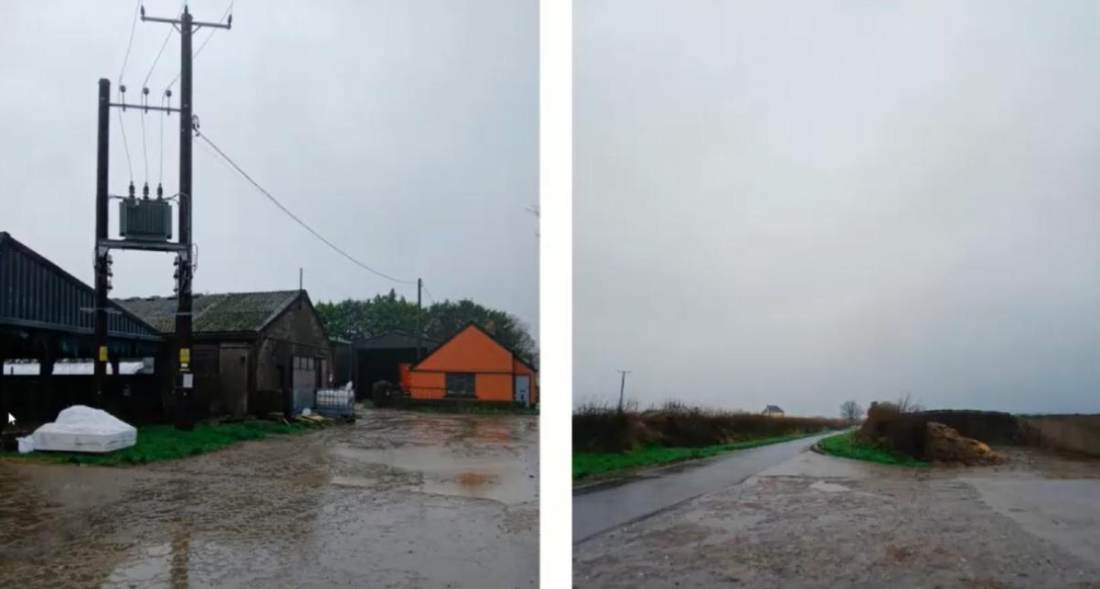
PLANS for new livestock buildings at a Pembrokeshire dairy farm, aimed at “improved animal husbandry” will not lead to an increase in herd size, councillors heard.
In an application recommended for approval at the February meeting of Pembrokeshire County Council’s planning committee, Mr Roblin of Clynderwen Farm, Clunderwen, sought permission for two livestock building at the 210-hectare dairy farm of 280 cows and 235 head of young stock.
A report for members said each livestock accommodation building would have a length of 77 m, a width of 33m, an eaves height of 3.6m and a ridge height of 8.9m.
Both buildings would be parallel to each other and would cover a footprint of 5,082sqm (2,541sqm each). The proposal includes a total of 308 cubicles, loafing and feed areas, with a central feed passage in the middle.
It said the buildings at the site, some 200 metres from the nearby Redhill school and just over a kilometre from Clunderwen, would sit a little lower than those already on site, and the proposals would not lead to any increase in herd size.
Speaking at the meeting, agent Gethin Beynon said the scheme would lead to “improved animal husbandry to serve the existing milking herd and to support the next farming generation”.
He told members the application was accompanied by environmental enhancements and screening, with no objections from members of the public or any statutory bodies.
Mr Beynon went on to say the herd was currently housed in historic farm site buildings that “fall short of current standards,” with a farm move towards Holstein cattle which need more space.
Read More:
- Police investigating report of livestock worrying after 11 sheep found dead
- Four arrested in major armed police operation in Pembrokeshire town
- Climber died and two others injured in incident on Pembrokeshire coast
“It will improve animal husbandry and efficiencies in what is currently a challenging market,” he concluded.
Approval was moved by Cllr Alan Dennison, seconded by Cllr Brian Hall, and unanimously backed by committee members.
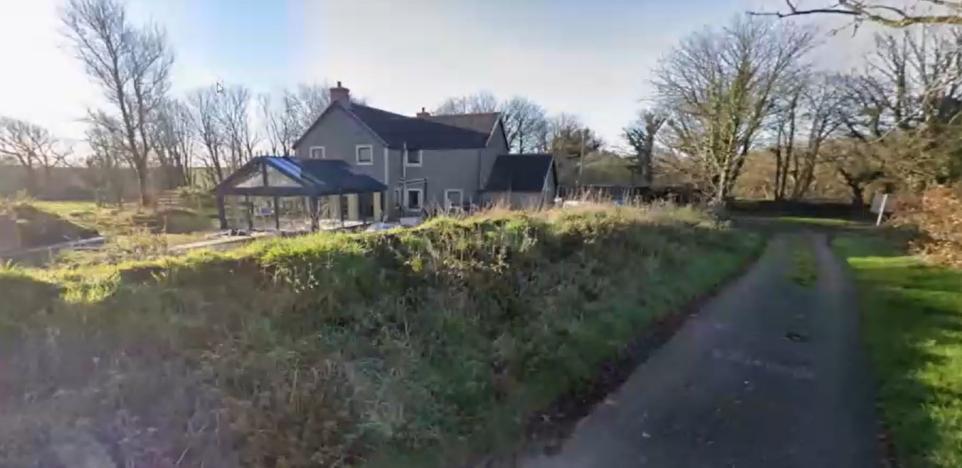
A CALL to remove an agriculture condition imposed back in 1989 on a Pembrokeshire farm site which is said to be “economically unviable” as a farm has been given the go-ahead.
In an application recommended for approval at the February meeting of Pembrokeshire County Council’s planning committee, Rosalyn Jayne Evans sought permission for the removal of an agricultural worker-only condition for residence at Upper Hayscastle Farm, Hayscastle, near Haverfordwest.
The original condition was imposed as part of a 1989-approved planning application.
A report for members said the land, some 26.3 hectares,” is, following independent valuation, not considered to be an ‘economically viable unit in its own right’.”
“The report author contends this was also likely to have been the case at the time when [the 1988 scheme] was originally granted as no housing for livestock, crop or slurry storage was provided as part of the original consent or since the approval.
“The report also states that whilst the land is productive for uses such as grazing and crops, the lack of building(s) would restrict the economic viability of Dolfach as a separate agricultural holding.
“If investment were to now be made at the holding in relation to dairy or beef farming, the report contends that this would be economically unviable, due to the holding at Dolfach being unable to support a sufficient number of animals to produce the financial return required to sustain the business. The report also highlights that building(s) for livestock would be essential in relation to the prevalence of Bovine TB in the locality.”
It added: “It is considered that the information provided by JJ Morris is sufficient to indicate that the scale of the land holding and the lack of infrastructure would make a farming enterprise at the site an economically unviable proposition.”
It recommended “the existing Section 52 agreement be discharged to remove the requirement for the dwelling to be tied to the land in agriculture at Upper Hayscastle Farm and for the dwelling to be occupied by a person solely or mainly employed before retirement in agriculture”.
The recommendation of approval was moved by Cllr Brian Hall and unanimously backed by committee members.



News10 hours ago
Sea Empress: 30 years since the grounding that transformed safety in Milford Haven
Human error, storm conditions and salvage decisions combined in one of Britain’s worst maritime disasters THIRTY years ago this week,...


Health1 day ago
NHS pay row erupts as ministers confirm 3.3% rise
Unions warn award amounts to real-terms cut as inflation remains above headline figure NHS staff across Wales will receive a...


Crime2 days ago
Governors defend leadership at Milford Haven School after stabbing incident
GOVERNORS at Milford Haven Comprehensive School have issued a public statement responding to concerns about leadership and staffing following last...


Crime3 days ago
Four arrested in armed police operation across Pembroke Dock
Firearms, drugs and GBH suspects detained as pre-planned raids hit Bush Street and Gordon Street A MAJOR armed police operation...


News3 days ago
Climber dies and two injured in St Govan’s Head fall
Major air and sea rescue launched as coastguard, lifeboat and helicopters scramble to Pembrokeshire cliffs A PERSON has died and...


Education3 days ago
School in special measures after inspectors raise safeguarding and leadership concerns
Estyn orders urgent action plan and regular monitoring at Pembroke secondary A PEMBROKESHIRE secondary school has been placed into special...
Crime3 days ago
Armed police arrest man after major operation in Pembroke Dock
Firearms officers, dog units and roadblocks deployed on Gordon Street as Dyfed-Powys Police investigate ARMED officers sealed off part of...


Community3 days ago
Lifeboat to find new home at Pembroke Dock museum after historic handover ceremony
A HISTORIC lifeboat which saved forty lives around the British coastline is set to begin a new chapter in Pembroke...


Crime4 days ago
Pendine man jailed for abducting and drugging teenage girl
Offender had 1,101 unlawful images of children stored on his devices, including 122 Category A images – the most serious...


Crime5 days ago
Publican admits supplying cocaine and cannabis at Crown Court
Admits cocaine and cannabis supply but denies intent and cash allegations A MILFORD HAVEN pub landlord has admitted supplying cocaine...
-

 Health5 days ago
Health Board to decide future of nine key services at two-day meeting
-

 Business7 days ago
Computer Solutions Wales under fire from customers
-

 Charity7 days ago
Welsh patient voices help shape new UK-wide online kidney forum
-

 Community6 days ago
Facebook ‘news’ site targeting Herald editor collapses after community backlash
-

 Community7 days ago
Calls for traffic calming in Neyland after car hits house
-
Crime3 days ago
Four arrested in armed police operation across Pembroke Dock
-

 News7 days ago
Fresh concerns over £60m A40 scheme after resurfacing works just months after opening
-

 Crime7 days ago
Woman admits two shop thefts and banned from town supermarkets