


Farming
Community farm brings support and skills to veterans in Pembrokeshire

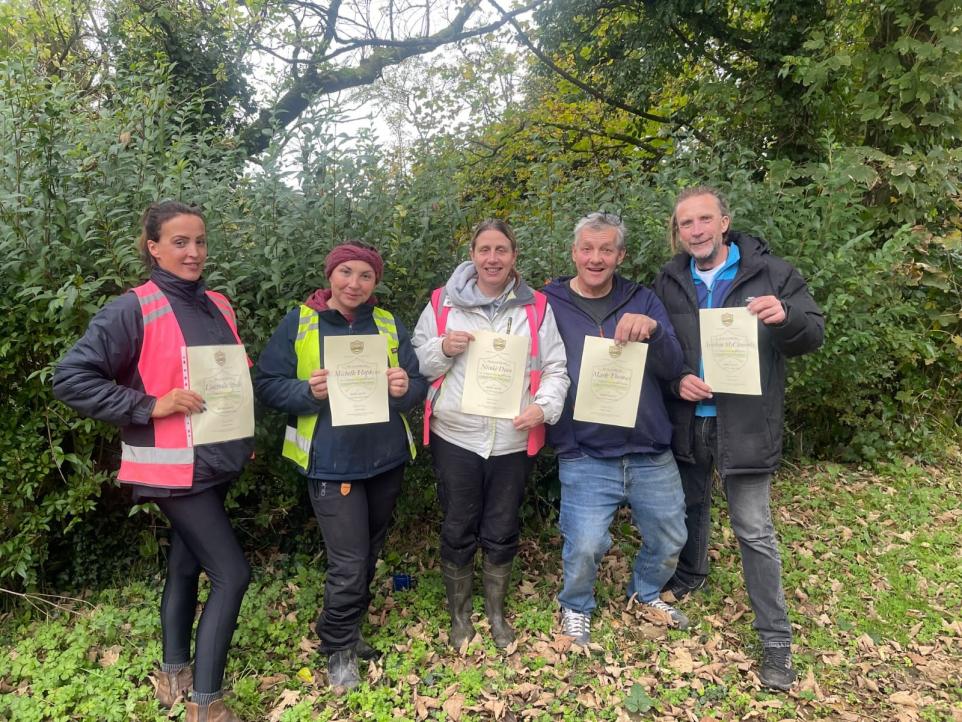
A COMMUNITY farm in Pembrokeshire is making a difference for veterans and vulnerable individuals by blending nature-based activities with therapeutic support.
Founded by Daisy Coleman in 2019, Redberth Croft CIC became an officially registered Community Interest Company in 2024. Since its inception, the farm has offered a host of engaging activities, from gardening therapy and animal-assisted sessions to creative workshops and rural skills training, all aimed at fostering resilience and personal growth.
One of its standout initiatives, ‘Hedging Your Vets,’ received support from the Port of Milford Haven Community Fund. This unique project provides veterans with training in traditional hedgelaying—a skill that preserves biodiversity while promoting mental wellbeing. Running throughout the winter, the programme equips participants with practical skills that open pathways to potential employment in conservation and sustainable agriculture.
To further its mission, Redberth Croft CIC collaborates with organisations such as The VC Gallery and The Tenby Project. Together, they work with local authorities to deliver day services that enhance inclusion and accessibility for individuals facing learning disabilities and mental health challenges.
More than just a farm, Redberth Croft CIC serves as a community hub, offering a supportive space for individuals with complex needs to build confidence, learn new skills, and form meaningful connections. Its core belief is that green health initiatives and nature-based therapies can offer significant therapeutic benefits to those in need.

For those interested in participating in the ‘Hedging Your Vets’ project or other future courses, further details can be found on Redberth Croft CIC’s website and social media channels.
Through its work, Redberth Croft CIC is cultivating a compassionate and resilient community in Pembrokeshire, promoting both personal growth and environmental conservation in a safe, welcoming environment.


CEREDIGION Penfro MS Anna Nicholl has welcomed the Welsh Government’s broad ambition to strengthen rural resilience and sustainability, but has warned that farmers and local communities must be involved in shaping the detail if policies are to work in practice.
Speaking during a Senedd debate on June 23, Ms Nicholl referred to a recent visit to a farm in Pembrokeshire with the Farmers’ Union of Wales, where she heard first-hand about the significant challenges facing the sector.

She highlighted examples of farms working with Farming Connect to reduce emissions, boost biodiversity and increase profits at the same time.
Ms Nicholl welcomed some of the Government’s stated priorities, including tackling bovine TB, reforming nitrate vulnerable zone regulations and cutting red tape, saying they had given the industry “fresh hope”.
But she pressed ministers on how they would work with farmers when drawing up the detail of future policy.
In response, the Cabinet Minister for Rural Resilience and Sustainability said the Sustainable Farming Scheme was being refined following feedback, with an emphasis on working with the sector, making the system easier to navigate and offering greater long-term certainty.
Ms Nicholl said: “It’s clear that change is needed to respond to the climate and nature crises, but that change must happen with our rural communities, not against them.
“It’s not just farming that matters here – it’s about keeping our food system strong, supporting local businesses, and securing jobs in our rural areas.
“Farmers in Ceredigion and Pembrokeshire want to see a system that is fair, simple to navigate, and provides real financial security, while also tackling the nature and climate crisis.
“It’s positive to hear that the Government is talking about less bureaucracy and more partnership. I look forward to seeing that happen in practice now.”
Photo caption: Anna Nicholl MS, Member of the Senedd for Ceredigion Penfro, on a farm visit in north Pembrokeshire arranged by the Farmers’ Union of Wales.


AMENDED plans for a rural mid Pembrokeshire slurry lagoon have been given the go-ahead after an initial scheme was altered due to the presence of mine workings.
In an application to Pembrokeshire Coast National Park, Owen Thomas, through agent Preseli Planning Ltd, sought permission for the excavation of an earth bank nutrient ‘slurry lagoon’ store of 60 by 48 metres near to New House Farm, some one kilometre from the village of Cresselly.
A supporting statement said: “The dairy farming operation at New House Farm covers approximately 290 hectares of mixed tenure land with the herd comprising of 250 milking cows, which have a yield of between 6-9 thousand litres per cow and associated youngstock.”
It added: “The current slurry storage arrangements at New House are insufficient based on the livestock numbers to accommodate a five-month slurry storage capacity. The purpose of the proposal is to increase the slurry and dirty water storage capacity for the farming enterprise to be compliant with the control of Agricultural Pollution (Wales) Regulations 2021 (CoAPR) requirements.
“It is not the applicant’s intention to increase stock levels at the holding. The existing slurry store on the farmstead following the deduction of rainfall and freeboard has a capacity of 1,178 cubic metres.”
It said the required capacity would be 5,481 cubic metres over a five-month period, leading to a current shortfall of 4,303 cubic metres, which the proposal would address.
It added: “A further environmental benefit bought by the development is the nutrient store would allow the spreading of nutrients during suitable weather conditions, rather than needing to be disposed of in unfavourable weather conditions.”
Local community council Jeffreyston raised no objections but noted concerns about its size, although recognising the development is required to meet legislation, requesting all appropriate mitigation measures would be explored and implemented.
The Coal Authority objected to the original proposed location, owing to the presence of a recorded mine shaft and associated zone of influence, leading to an amended scheme moving the store some 150 metres.
An officer report recommending approval for the amended scheme said: “The principle of the development is considered acceptable, given its direct functional relationship with the agricultural enterprise and the demonstrated operational need for additional storage capacity.
“The proposal would remain closely associated with the existing farm holding and would not result in the introduction of an unrelated use within the countryside.”
It added: “The proposal would improve slurry management arrangements at the holding and assist in reducing the risk of pollution incidents associated with insufficient storage capacity.”

The application was conditionally approved.

PEMBROKESHIRE sheep farmers are being urged to use weaning as a key opportunity to check ewe condition and deal with any problems before tupping.
With many local flocks now moving towards weaning, farmers are being advised to assess body condition score, as well as checking teeth, feet and udders, while there is still time to improve nutrition ahead of the breeding season.
Dr Alison Bond, Technical Services Manager at Rumenco, said close monitoring at this stage can help avoid major changes in ewe condition and improve overall flock productivity.
She said weaning at around 12 weeks was a good target, when lambs should usually be between 25kg and 30kg and taking very little milk from the ewe.

“There will of course be a focus on the lambs’ readiness for market at this stage, but it is equally important to put a hand across the ewes to assess their condition,” she said.
For lowland flocks, ewes with a body condition score below 2.5 at weaning should be given priority, as they may struggle to reach the target score of around 3.5 by tupping.
Those poorer condition ewes should be grouped separately, moved onto the best available grazing and given appropriate supplementary feeding where needed.
Dr Bond said waiting until closer to tupping could be less effective and may affect performance.
She added that ewes in good condition at tupping are more likely to scan with more lambs, produce healthier lambs after birth, and rear heavier lambs by eight weeks of age.
“It affects the whole production cycle, and not just one element,” she said.
The advice will be particularly relevant to farms across Pembrokeshire, Carmarthenshire and Ceredigion, where sheep remain a major part of the rural economy and where grass quality can vary sharply depending on weather, soil type and stocking pressure.
Dr Bond said the aim should be to keep ewes between body condition score 2.5 and 3.5 throughout the cycle, avoiding big dips and peaks.

Routine checks at weaning, she said, give farmers the best chance of correcting problems before the tups go in two to three months later.
Pic: Farmers are being urged to check ewe condition at weaning to protect flock performance ahead of tupping (Pic: Tim Scrivener/Agriphoto).



Local Government13 hours ago
Tenby Spectacular row continues as organisers say key question remains unanswered
Round Table says legal clarity over pedestrian access is still holding up event plan TENBY ROUND TABLE has welcomed Pembrokeshire...


Community1 day ago
Manorbier fire scandal: Council’s payout just £63,777 after school destroyed
PEMBROKESHIRE COUNTY COUNCIL has accepted an insurance settlement which leaves it with just £63,777.07 after the catastrophic fire which destroyed...


News2 days ago
Bus overturns in major incident near Kidwelly
All passengers rescued as emergency services remain at scene A BUS overturned on the A484 between Kidwelly and Ferryside on...


Community3 days ago
Tenby Summer Spectacular cancelled amid council row over harbour access
Organisers say popular charity events cannot safely go ahead without clear powers to control crowds TENBY ROUND TABLE has announced...


News3 days ago
Motorcyclist dies after four-vehicle crash on A40 in Carmarthenshire
A MOTORCYCLIST has died following a four-vehicle collision on the A40 between St Clears and Whitland. Dyfed-Powys Police said the...


News3 days ago
Rhun ap Iorwerth urges new deal for Wales after Starmer quits
First Minister says next Prime Minister must focus on greater powers, fair funding and respect for Wales’ democratic mandate FIRST...


News3 days ago
How Labour’s landslide victory unravelled in just two years
Prime Minister announces resignation after losing support within his own party as Andy Burnham emerges as overwhelming favourite to take...


News3 days ago
Long Course Weekend set to bring thousands to Pembrokeshire
Three days of swimming, cycling and running will once again transform Tenby into one of the UK’s biggest endurance sporting...


Community4 days ago
The gentle giant behind the tattoos
Pembrokeshire security worker Josh Davies praised for professionalism, kindness and proving first impressions can be wrong JOSH Davies is hard...


Charity5 days ago
Toy Story fans fill charity toy box at Haverfordwest cinema
Donations pour in for SNAP Specialist Play as families embrace Toy Story 5 launch A TOY STORY-themed charity appeal at...
-

 Crime7 days ago
Milford Haven man jailed for breaching domestic violence protection order
-

 News7 days ago
Crash on Freeman’s Way causes school-run chaos across Haverfordwest
-

 Health5 days ago
Woman jailed assaults on police, harassment and XL Bully possession
-

 Crime5 days ago
Milford Haven woman spared jail despite string of shop thefts
-

 Crime7 days ago
Portfield Gate man faces careless driving allegation after Tufton crash
-
Community4 days ago
The gentle giant behind the tattoos
-

 Local Government7 days ago
Pembrokeshire faces accessible housing shortage as 403 people wait for homes
-

 Crime5 days ago
Spittal man to stand trial accused of ABH