


Education
Workload crisis driving teachers out of Welsh schools, union warns


Funding shortfalls and rising pressures blamed for recruitment and retention failures
COMMENTING on a new report by the Senedd’s Children, Young People and Education Committee, which found that excessive workload is hampering teacher recruitment and retention, Laura Doel, national secretary at NAHT Cymru, said:
“These findings will unfortunately strike a chord with many school leaders across Wales, who consistently tell us they and their staff are struggling under unsustainable levels of pressure and workload as the demands of the job continue to grow.
“At the heart of this issue is the completely inadequate level of funding going into our schools. This leaves leaders unable to ensure they have enough staff — including teachers and teaching assistants — to manage workload effectively and provide the pastoral support pupils need.
“The situation risks becoming a vicious cycle. Without proper support, and after a decade in which real-terms pay has fallen sharply, teaching is becoming increasingly unattractive to both existing staff and those considering entering the profession. In some areas, even when schools can afford to recruit, they are finding it ever harder to do so.
“Insufficient funding also means some pupils who require specialist provision are remaining in mainstream schools because there is no capacity elsewhere. This can place children in environments that do not meet their needs, while also impacting other pupils and staff.

“Schools continue to be subject to an unfair funding postcode lottery. We urge the Welsh Government to clearly set out how it will respond to the findings of last year’s school funding review and to make significantly more money available to schools.
“However, investment is not only needed within education. Vital support services such as social care and mental health provision have also been under-funded in recent years, and schools are dealing daily with the consequences — from challenging behaviour to the wider impacts of poverty.
“We are calling on the Welsh Government to invest in creating the conditions where teachers and school leaders feel valued and supported. That means tackling workload, freeing staff to focus on teaching and learning, and ensuring they are paid appropriately.”


Face-to-face training replaced with online resources in decision branded a ‘slap in the face’ for Wales
A LONG-RUNNING Welsh digital education programme that has trained thousands of teachers and pupils every year is facing an uncertain future after Welsh Government funding was cut and redirected to an English university.
Technocamps, a Swansea University-based project which has operated across Wales for twenty-two years, has described the decision as a major blow to digital skills development, with staff already losing jobs and schools left without in-person support.
Instead of renewing Technocamps’ funding, ministers have awarded £1.4 million under the Curriculum for Wales Grant Support Programme to the University of York to deliver mainly online learning resources, with only limited face-to-face sessions in what are described as “priority areas”.
Critics say the move risks replacing hands-on, bilingual classroom support with generic remote materials.
Each year Technocamps provides direct training to more than 900 teachers and delivers workshops to over 30,000 young people in schools across Wales, working face-to-face with pupils to improve coding, computing and digital literacy.

The programme has been widely credited with helping schools meet the growing demands of the Curriculum for Wales and tackling shortages in specialist computing skills.
‘Bitter disappointment’
Plaid Cymru MS Sioned Williams, who represents South Wales West, said she had met the Technocamps team again this month and would be writing to the Cabinet Secretary for Education seeking answers.
She said: “The necessity of good quality, face-to-face digital skills training has never been more important in this digital age.
“I’ve seen firsthand how engaging and effective a Technocamps workshop is and what makes this programme so great is that it is made in Wales, delivered bilingually through our network of universities and is able to reach every school and teacher.

“That’s why the news that Welsh Government has cut funding is so bitterly disappointing.
“At a time when Welsh universities are in financial crisis, it’s an additional slap in the face that what little funding has been allocated has gone to a university in England.”
Jobs lost across Wales
Beti Williams MBE, the programme’s founder and patron, said the funding decision had already resulted in redundancies.

She said: “The end of Technocamps funding has led to the unemployment of teacher trainers at universities across Wales, leaving nearly 1,000 school teachers who rely on our bespoke in-person training and support in limbo.
“Replacing Technocamps with predominantly standard online courses is an insult to Welsh universities. Online courses, of which there is unlimited choice, offer nothing to struggling teachers who rely on tailored, face-to-face help.”
A petition calling for funding to be restored has gathered more than 4,000 signatures and is now being considered by the Senedd Petitions Committee.
Questions over value for money
The decision has also raised questions about value for money.
According to supporters, the £1.4m grant awarded to York is almost double Technocamps’ previous annual funding, yet delivers fewer in-person services.
There are also concerns that only seven per cent of the wider Curriculum for Wales grant funding over the next three years is allocated to science and technology subjects.
Education campaigners warn that reducing practical support in computing and digital technology could widen skills gaps at a time when Wales is trying to attract high-tech industries and improve economic productivity.
Digital divide fears
Teachers have long argued that in-person training is essential, particularly for schools with limited IT expertise or rural connectivity challenges.
Technocamps staff say online-only provision risks leaving some schools behind.
Ms Williams added: “It’s so important that we keep this crucial skills and knowledge in Wales. The thought that we could lose this valuable resource makes no sense at a time when the need for digital competency has never been greater.”
Welsh Government has been asked to explain why the funding was awarded outside Wales and whether the impact on Welsh university jobs and school support was assessed before the decision was made.

Community mural project earns Wales title and trip to London finals
A GROUP of young people from Haverfordwest High School are celebrating a major achievement after being crowned Wales country final winners at the King’s Trust Awards 2026.
The students secured the JD Foundation Community Impact Award and will now represent Wales at the King’s Trust National Awards in London.
The award recognises an outstanding community project delivered through the King’s Trust Achieve Programme, a Key Stage four GCSE option offered at the school and delivered locally by Pembrokeshire Youth Service.
Led by school-based youth worker Ell Lewis, the programme supports pupils who may find traditional academic routes challenging, including those facing emotional, social or caring responsibilities.
As part of their Community Impact project, the group identified a vandalised pedestrian tunnel in Haverfordwest that is used daily by students travelling to and from school. Determined to improve the space, they worked together to design and paint a large-scale mural celebrating wellbeing, identity and local pride.
The once run-down underpass has now been transformed into a colourful and welcoming feature, drawing praise from residents and passers-by.
Community members described the artwork as uplifting and inspiring, with many noting the positive difference it has made to young people using the route each day.
One participant said: “This project is our legacy. We’ve created something lasting that represents who we are and where we come from. It’s amazing what a cup of tea and a conversation can lead to.”
Mr Lewis said the benefits extended far beyond the finished mural.

He said: “Beyond its physical impact, the project has helped the young people build confidence, teamwork, leadership and communication skills. Their courage, resilience and ambition can’t be faulted. I am incredibly proud of them. All members of the group have since progressed into further education or employment.”
The students secured funding through the Pembrokeshire Youth Bank Grant and received support from local businesses including GD Harris & Sons. They also worked with local councillors, the local authority and local artist Lloyd Griffiths.
Additional funds were raised through school-led activities including bake sales and raffles.

The group will now travel to London to compete in the national finals, representing both their school and Pembrokeshire on a national stage.
Cover photo:
Proud moment: Members of the Haverfordwest High School group at the Wales King’s Trust Awards ceremony (Pic: Supplied).

THE SPOTLIGHT will be on the Senedd election in May and the development ofa new Apprenticeship Programme for Wales, starting in August 2027, when work-based learning practitioners gather for their annual conference in March.
‘Shaping Skills for a New Era’ is the theme of the conference organised by the National Training Federation for Wales (NTFW), which represents work-based learning providers across the country, at Cardiff City Stadium on March 10.
Bookings are now open for the conference which marks a pivotal moment for the future of apprenticeships, with the Senedd election and the next phase of the new apprenticeship programme on the horizon.
“The strength of our sector lies in collaboration,” said Lisa Mytton, NTFW strategic director. “By bringing providers, employers and stakeholders together, we can design a future-ready apprenticeship programme that responds to industry needs, supports learners from every background, and builds a resilient workforce for a changing world.”
There will be speakers from Medr, the tertiary education regulator in Wales, Coleg Cymraeg Cenedlaethol, Cavendish Cymru, Agored Cymru – conference headline sponsor, and City & Guilds.
Cavendish Cymru will preview how the Senedd will change following the May 7 election, review recent polling and speculate about the likely composition of the new Welsh Government.
“Agored Cymru is delighted to continue its headline sponsorship of the NTFW Conference,” said Darren Howells, Agored Cymru chief executive. “By creating world class bilingual vocational qualifications and apprenticeship frameworks, it is our aim to drive economic growth and ensure the future skills needs in Wales are met through engagement, foresight and innovation.
“We are proud to work with such committed and passionate providers to ensure individuals, whatever their background or circumstances, have the knowledge and skills to achieve their career aspirations and to contribute to a prosperous and thriving economy.”
Delegates will also be able to participate in a series of eight workshops, including the future Apprenticeship Programme for Wales, which will be run by Medr. They will hear about key projects that are shaping the programme to be more responsive when addressing skills priorities for a changing economy.
In their workshop, Qualifications Wales will explore how to build meaningful, sustained relationships with employers, so that post-16 vocational regulated qualifications are matched to the evolving skills needed.
Resilient Futures Coach will lead an interactive workshop, giving practitioners a set of resilience-boosting tools they can use for themselves and with their learners, while Careers Wales will explore how impartial careers guidance empowers young people to make informed decisions about their future.
As Artificial Intelligence (AI) reshapes skills across Wales, apprenticeships are on the frontline. Jisc’s workshop theme is ‘AI and skills for the future Welsh workforce’.
The Education Workforce Council will explore the role of professional registration and regulation in work-based learning, Estyn will explore literacy and numeracy skills support for apprentices and Regional Skills Partnership chairs will share the latest regional intelligence, emerging skills priorities and future plans.


Crime23 hours ago
Manhunt intensifies after woman seriously injured in Carmarthen park stabbing
Police say suspect known to victim as attempted murder investigation continues A MAJOR police manhunt is under way after a...


Health2 days ago
Consultation reveals lack of public trust in health board
EARLIER this week, Hywel Dda UHB published the results of a consultation into the future configuration of its clinical services....

Community2 days ago
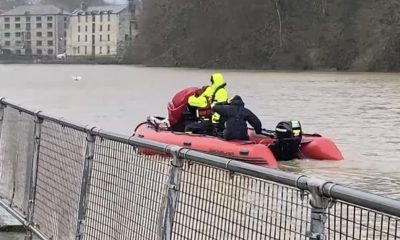
Specialist team searches River Teifi in ongoing hunt for missing man
A SPECIALIST search team has carried out a renewed and highly technical search of the River Teifi in Cardigan as...


News3 days ago
Wales’ first minister keeps distance from Starmer before May vote
Senedd race not Westminster THE FIRST MINISTER has moved to draw a clear dividing line between the Welsh Labour campaign...

News3 days ago
Kurtz raises Gumfreston flooding in the Senedd as petition deadline nears
LOCAL Senedd Member Samuel Kurtz has raised the long-running flooding problems affecting the B4318 at Gumfreston in the Senedd, as...


Community4 days ago
Anchor re-dedicated to mark 30 years of US–Haverfordwest ties
Service honours shared history, service and friendship on the Quayside A SYMBOL of Haverfordwest’s wartime and Cold War connections with...


Business4 days ago
Senedd urged to act as Welsh pubs fall further behind England on business rates
Industry leaders warn of closures and job losses as pressure mounts on ministers to pass on funding PUBS across Wales...


Crime4 days ago
Haverfordwest man jailed for online death threat
A Haverfordwest man has been sentenced to a year in prison after sending a threatening message online. Michael Carruthers, 34,...


Community4 days ago
Storm Chandra: Morning impacts across Pembrokeshire
HEAVY overnight rain and strong winds brought by Storm Chandra have caused disruption across Pembrokeshire, with fallen trees and localised...


Business5 days ago
Business voices heard as Kurtz and Davies urge action on business rates
LOCAL businesses from across West Wales have voiced serious concerns about the impact of business rates at a dedicated roundtable...
-
Health7 days ago
Health Board to decide on future model for nine clinical services
-
Health2 days ago
Consultation reveals lack of public trust in health board
-

 News3 days ago
Caldey still unsafe, survivors warn — despite Abbey’s reform claims
-

 Community3 days ago
Pembrokeshire students speak at national Holocaust Memorial Day event
-

 Climate7 days ago
Petition opposing climate emergency reaffirmation and ‘tax hikes’ to be heard
-

 Crime7 days ago
Pay boost for over 1,000 Pembrokeshire school support staff pledged by Labour
-

 Business7 days ago
Pembroke Dock battery box energy scheme is approved
-

 News5 days ago
Wales warned against single police force as Lib Dems cite Scotland ‘lesson’