


News
Sea Empress disaster 20 years on

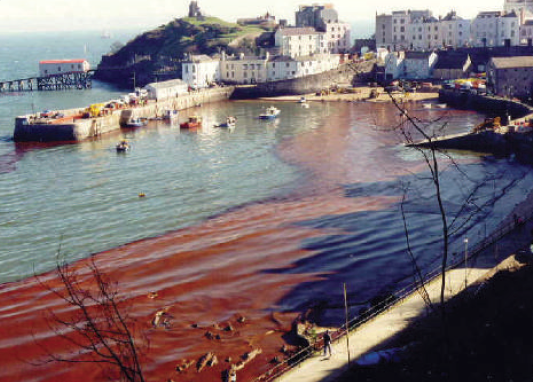
 IT WAS one of the biggest environmental disasters ever to hit UK shores and now 20 years on from the Sea Empress disaster RSPCA staff are looking back at the role they played in helping to save hundreds of seabirds and mammals.
Early on the evening of 15 February, 1996 the Sea Empress, a single hull oil tanker, hit rocks on its way into the Cleddau Estuary and the ship’s cargo of 130,000 tonnes of crude North Sea oil started to spill into the waters off Pembrokeshire.
The RSPCA launched a massive rescue operation in response to the disaster in an effort to save the thousands of oiled and dying seabirds that were so badly affected by the slick.
Scores of volunteers helped open and run a makeshift animal hospital – set up in an old industrial unit – where more than 7,000 dead or oiled birds were taken – while inspectors, drivers and wildlife centre staff experts worked around the clock to nurse, clean and feed as many of the birds back to health as they could.
“The rescue operation took a massive team effort,” said RSPCA chief inspector for the south west Wales inspectorate group, Romain de Kerckhove, who held the same position 20 years ago.

“It quickly became apparent that this incident was of a scale that needed national resources, and a roster was arranged that invited colleagues from all over England and Wales to become involved,” he said.
“Officers would attend, for a limited period, and would work extremely long days, responding to calls from the public, and patrolling beaches to search for victims of the disaster.
“They were accommodated locally, and would be replaced by other colleagues in order to keep the team fresh and strong. Some officers would actually sleep on camp beds at the temporary bird rescue holding/cleaning facility, in order to ensure that there were people on site overseeing the welfare of the birds 24/7.
“This was a rescue that involved teams from across the entire RSPCA, as well as countless volunteers who would work with us, and assist the RSPCA teams both at the cleaning and rehab centre, as well as on the beaches.

“It was hard work, but everyone enjoyed the atmosphere and being involved in such a worthwhile and much needed rescue operation.”
Richard Abbott, who is now an RSPCA chief inspector, was the officer on duty the night the Sea Empress ran aground. “I recall speaking to a Brecon RCC (Brecon Regional Control Centre) tasker who said they had received a call saying a tanker had run aground at Milford Haven and was leaking 30,000 gallons of oil.
I recall thinking, no chance, that’s never going to have happened, not these days with twin hulled tankers. I asked the tasker to ring the Coastguard to double check as I was driving and enroute to an emergency at the time, about 10.30pm ish.

“She rang me back about five minutes later and said to my astonishment that the Coastguard had confirmed the report. I pulled over and rang the chief inspector Romain de Kerckhove at home and started the response.
“I got back in about 1am that night and by 7am I had the call that I was needed to help set up the emergency response centre. A few hours later chief inspector Romain de Kerckhove arrived and took over.
“It was incredibly stressful for those three to four weeks, as we dealt with thousands birds and managed many rescue organisations. It was a steep learning curve.”
RSPCA inspector Rohan Barker attended the day after the incident with chief inspector Romain de Kerckhove.
“We spent two days putting together our response working with several organisations with very few birds coming in during the initial couple of days – but then the onslaught started.
“We worked 15 hour shifts collecting birds, setting up the cleaning station at a local industrial estate building provided by the council.
“Birds were collected by inspectors, animal collection officers and members of the public, brought to the station, initially cleaned and shipped off to RSPCA West Hatch Wildlife Centre by a fleet of vans.”
Dermot Murphy, who is now assistant director of inspectorate at the RSPCA, was one of the convoy of ambulance drivers drafted in from across the country at the time of the disaster to help ship stricken birds from the Pembrokeshire coast to the makeshift hospital.
“I was an RSPCA Ambulance Driver in London then, with just over a year’s service. I was sent to Milford Haven with an Inspector for a week.
“I had never seen anything like it. So many birds covered in oil in a terrible state, they were still being washed up two weeks into the operation. The birds that stuck in my mind were the common scoter, which is a sea duck. There were so many of them, an incredible amount and in such a bad way too.
“We had a busy week and did a range of duties, from collecting food to feed staff, patrolling beaches looking for oiled birds and cutting up food to feed the birds. It was a massive cleaning operation.”
Inside the RSPCA West Hatch Wildlife Centre in Somerset Paul Oaten was one of the team at the ready to take in casualties as they arrived in their droves from the Welsh coastline.
“We took in around 1,200 oiled birds. at the time of the Sea Empress disaster. They were covered in thick oil. Most of the casualties were scoters, and they were very badly affected.
“Luckily we had a lot of volunteers that came in to help with the sheer volume of birds that were coming in through the doors every day. People were happy to come in and wash towels while others spent their days cutting up sprats (fish) for the birds to eat.
“Those that were tasked with washing the birds would be in teams of two. One would hold the birds, the other would clean it using Fairy liquid. They would have a pre-clean where we would try to get as much of the oil off as possible without stressing the birds out. It was so important to get the oil off their plumage, not just because of the feathers but so that we could try to prevent them from ingesting the oil and stop it from burning them too.
“A lot of the birds were emaciated because they could not feed so building their strength back up and increasing their weight was also an important part of the process.”
He added: “Every role was vital to ensure we could keep the steady flow of birds through the cleaning system and the sense of teamwork was immense. That is my overwhelming memory of that time. the teamwork. It was so uplifting. The days were long and it was hard work but we were all working towards a common goal of trying to save these poor stricken birds.”
WWF-UK Head of Marine Policy Dr Lyndsey Dodds said told The Herald: “20 years on from the Sea Empress, Welsh waters are busier than ever but management is still piecemeal.
“The forthcoming Welsh National Marine Plan offers the opportunity to strategically manage activities that can impact upon Wales’s natural assets and should include provisions to ensure that the risks to the most sensitive areas from both accidental and chronic pollution are minimised.”


Haverfordwest man told police “women won’t have sex without force”
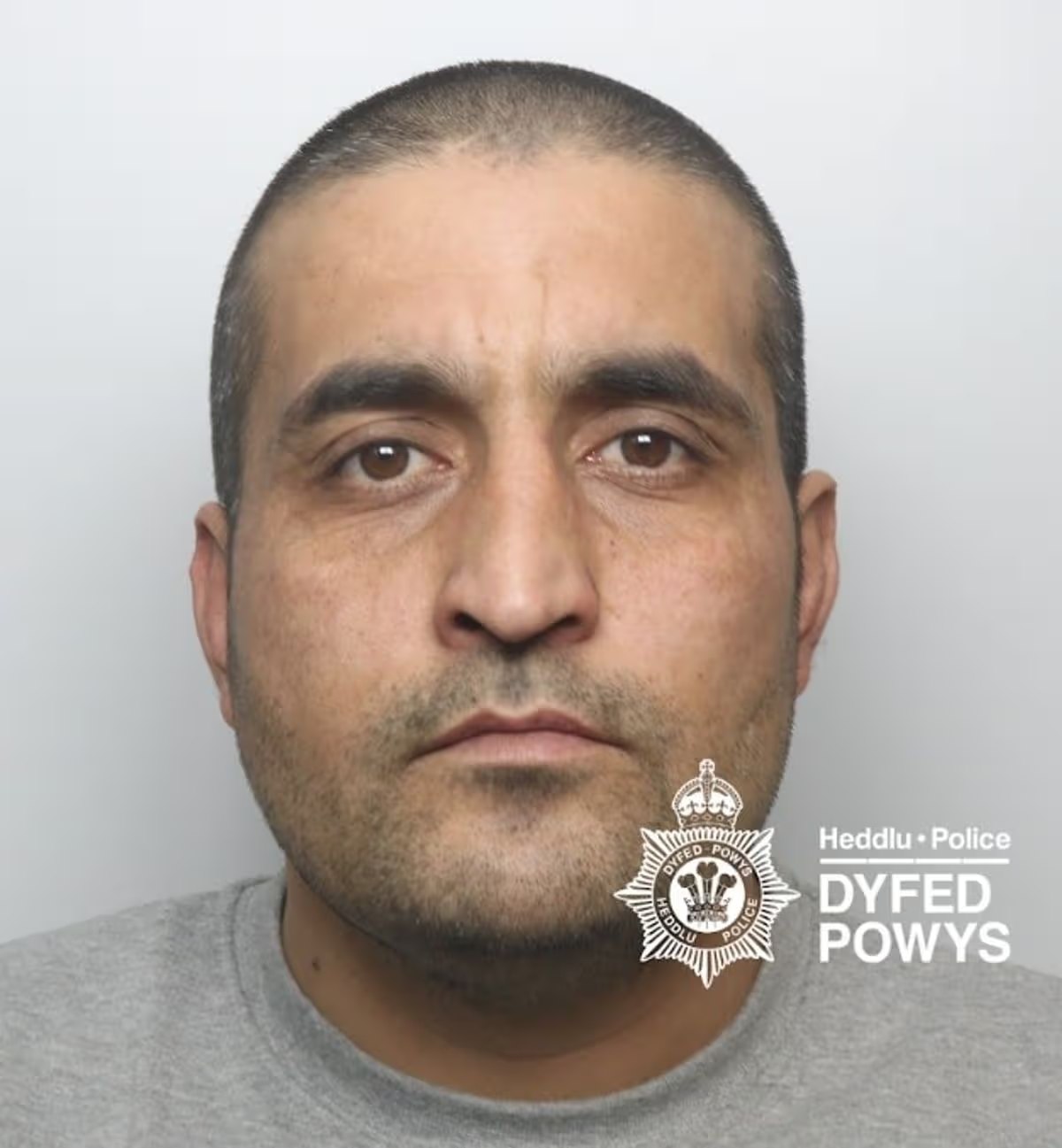
A HAVERFORDWEST man who raped a woman and a young boy and attempted to rape a child has been jailed for more than 21 years.
Talha Ahmadzai, aged 33, was sentenced at Swansea Crown Court on Monday (Mar 16) after admitting a series of serious sexual and violent offences committed in February last year.
The offences involved three victims — a woman, a girl and a boy.
Ahmadzai pleaded guilty to three counts of rape, rape of a child under 13, attempted rape of a child under 13, causing a child to watch a sexual act, assault by beating, and cruelty to a person under 16.
The court imposed an extended sentence of 21 years and seven months, comprising 19 years and seven months in custody followed by a two-year licence period. He must serve at least two-thirds of the custodial term before he can be considered for release by the Parole Board.
An indefinite restraining order was also imposed, banning him from any contact with his victims.

Shocking remarks to police
Following his arrest, Ahmadzai initially claimed the allegations had been fabricated. During police interview, he told officers: “Women won’t have sex without force.”
He also questioned the authority of the UK courts, stating that the acts he was accused of “were not offences in his country.”
“Catalogue of abhorrent offending”
Sentencing, Judge Huw Rees described Ahmadzai’s actions as a “catalogue of abhorrent offending of the utmost seriousness.”

The court heard he had been “sexually preoccupied for a long time” and held “entrenched views,” with a pre-sentence report concluding he posed a high risk to the public.
Ahmadzai, who appeared via video link from a psychiatric hospital, has no previous convictions.
In mitigation, defence barrister David Singh said his client had committed “appalling offences of the most serious type” and suggested his behaviour followed a “psychotic episode,” for which he has since received treatment.

Police praise victims’ bravery
Detective Inspector Sarah Totterdale, of North Pembrokeshire CID, said: “Ahmadzai is clearly an incredibly dangerous and cruel individual, and the sentence he has received reflects this.
“I would like to commend the bravery and dignity shown by his victims, who courageously gave their evidence of their horrendous ordeals. To do so and relive their experience must have been incredibly traumatic.
“Thanks to their evidence, and the hard work of our detectives, we were able to secure this result and ensure he is no longer a danger to the public.”
Deportation to be considered
Judge Rees said the case would be referred to the Home Office to consider Ahmadzai’s deportation following completion of his sentence.
Dyfed-Powys Police said support is available for anyone affected by rape or sexual violence, and urged victims to come forward.

Visit highlights major step forward for Pembroke regeneration project
PEMBROKE Town councillors and the Leader of Pembrokeshire County Council have visited the new Henry Tudor Centre at South Quay to see progress on the landmark development.
Cllr Gareth Jones, Cllr Rose Blackburn and Cllr Jonathan Grimes were joined by County Council Leader Cllr Jon Harvey and Town Clerk Suzie Thomas for a guided tour of the site, which is due to open in spring 2027.
The centre will celebrate the life and legacy of Henry Tudor, born in Pembroke, exploring his Welsh ancestry and his lasting influence on national history, culture and heritage.
Cllr Harvey said: “It is encouraging to see the Henry Tudor Centre taking shape following the dedication and hard work of the Pembroke community and partner organisations, supported by Pembrokeshire County Council.
“The restoration of these previously derelict buildings will also provide a new library, community café, and facilities for healthcare, social services and supported employment in adjoining premises. This is a key development in the ongoing regeneration of Pembroke town centre.”

The Henry Tudor Trust will operate the heritage centre, which is المتوقع to attract around 30,000 visitors annually. The Trust has worked closely with the County Council over several years to bring the project forward, with construction work beginning in earnest in summer 2024.
Cllr Gareth Jones said: “This is an impressive space that will do justice to Pembroke’s unique heritage and its connection to Henry Tudor. The centre will be a major attraction for visitors, enhancing the town’s already strong heritage offer.
“It will also provide a vibrant hub for learning, volunteering and community engagement in the heart of Pembroke.”
Additional funding from The National Lottery Heritage Fund will support the creation of a one-year Community Programme Coordinator role, helping to deliver a programme of events and activities, alongside volunteering opportunities and educational resources for schools.
Caption: Checking out progress at the new Henry Tudor Centre in Pembroke.

Broadcaster promises debates, youth-focused content and full results coverage across Wales
BBC CYMRU WALES has unveiled its plans for comprehensive coverage of the 2026 Senedd election, with a strong focus on accessibility, youth engagement and on-the-ground reporting.
The broadcaster says its election output—available in both English and Welsh—will include live debates, breaking news, in-depth interviews, analysis and expert commentary across television, radio, online and social platforms ahead of polling day on Thursday (May 7).
Special attention will be given to first-time voters aged sixteen and seventeen, as well as explaining the new electoral system. Content aimed at younger audiences will feature prominently, including short-form videos, “minute manifestos,” rapid-fire leader Q&As, and fact-checking reels shared across BBC Wales’ social channels.
Delyth Isaac, Head of News and Current Affairs at BBC Wales, said: “Welsh voters are our number one priority in this election. Our job in the run-up to polling day is to ensure they have all the information they need to make their choice.
“Our teams are getting out into communities across Wales, listening to voters, reporting on local issues and holding politicians to account. We will create spaces for open debate and ensure all voices are heard.”
Debates across Wales
A series of live debates and Q&A programmes will take place across the country in the weeks leading up to the election.
On Tuesday (Mar 17), Nick Servini hosted a Your Voice Live debate in Wrexham, featuring representatives from Welsh Labour, Welsh Conservatives, Plaid Cymru, Welsh Liberal Democrats, Reform UK and the Wales Green Party.
Further programmes include two Your Voice Live: Ask the Leader events. One will be broadcast from Haverfordwest on Wednesday (Apr 8) at 8:00pm on BBC One Wales, with another from Llandudno on Wednesday (Apr 15) at the same time. Both will also air on BBC Radio Wales and BBC Sounds.
The main leaders’ debate will take place on Tuesday (Apr 28), hosted by Bethan Rhys Roberts in Cardiff and broadcast at 8:00pm on BBC One Wales.
Digital, radio and investigation focus
BBC Wales News Online and Cymru Fyw will provide rolling coverage throughout the campaign, including policy analysis, constituency breakdowns, manifesto guides and BBC Verify fact-checking.
The BBC’s investigations team will also examine the spread of disinformation during the campaign, particularly on social media.
On radio, BBC Radio Wales and BBC Radio Cymru will feature regular election coverage across flagship programmes, alongside special editions of podcasts such as Walescast and Gwleidydda.

Full results coverage planned
BBC Wales reporters will be present at every count across the country when results are declared on Friday (May 8).
Coverage will include live reporting, expert analysis and reaction from candidates, with Political Editor Gareth Lewis playing a central role.
Special results programmes will air on BBC One Wales and S4C, alongside rolling coverage online and on radio. Politics Wales will also broadcast extended programmes during the campaign and a one-hour results special on Sunday (May 10).
Content for younger audiences
BBC Bitesize will produce a bilingual series of explainer videos aimed at 14–16-year-olds, while Newyddion S4C will provide dedicated coverage for younger viewers.
A major Welsh-language debate, Y Ddadl Fawr, will be broadcast live from Carmarthenshire on Thursday (Apr 23) at 8:00pm across S4C, BBC Radio Cymru and BBC Sounds.
The BBC said its aim is to ensure every voter in Wales understands how to take part and how their vote counts as the country heads towards a crucial election.



Crime3 minutes ago
Rapist jailed after ‘abhorrent’ attacks on woman and children
Haverfordwest man told police “women won’t have sex without force” A HAVERFORDWEST man who raped a woman and a young...


News2 hours ago
Reform secures first Pembrokeshire councillor in Hakin by-election win
Late Reform candidate takes seat as independent surge and Labour withdrawal shape contest REFORM UK candidate Scott Thorley has won...


News13 hours ago
Scott Thorley elected as Pembrokeshire’s first Reform councillor
REFORM UK candidate Scott Thorley has won the Hakin by-election after securing 179 votes. The full result is as follows:...


News20 hours ago
Police confirm man has died after being recovered from River Cleddau
Major emergency response in town centre after concerns raised for man in water A MAN has died after being recovered...


Community20 hours ago
Davies and Kurtz urge groups to seek employability funding
Community organisations in Pembrokeshire encouraged to apply for new grants supporting skills and job access LOCAL Senedd Members Samuel Kurtz...


News22 hours ago
Emergency services flood Haverfordwest after reports of person in river
Town centre sealed off as multi-agency response continues A MAJOR emergency response is underway in the centre of Haverfordwest after...


News23 hours ago
Detectives receive surge of new information in bid to identify man found at Powys reservoir
Public response follows release of facial image as officers pursue fresh lines of enquiry DETECTIVES investigating the identity of a...


News1 day ago
Senedd committee urges next Welsh Government to prioritise Wales–Ireland links
A SENEDD committee has called on the next Welsh Government to continue prioritising Wales’s relationship with Ireland, describing it as...


Education2 days ago
New facilities open at Portfield School as redevelopment reaches key milestone
THE FIRST phase of a major redevelopment programme at Portfield School in Haverfordwest has been completed, marking a significant step...


News2 days ago
£377m spent saving blast furnaces months after Port Talbot closure
Government intervention keeps UK’s last primary steelmaking furnaces running THE UK GOVERNMENT spent £377 million to prevent the closure of...
-

 Health5 days ago
Welsh Ambulance Service to host bi-monthly Board meeting
-

 News4 days ago
Rayner and Lammy visit Wales to discuss justice and community safety
-

 Local Government7 days ago
Register now to vote in May’s Senedd election
-
 News3 days ago
Fishguard linked to allegations in Many Tears Animal Rescue investigation
-
News22 hours ago
Emergency services flood Haverfordwest after reports of person in river
-

 Community7 days ago
Modern-day maritime hero backs exhibition marking 200 years since launch of HMS Erebus
-

 Crime7 days ago
‘Knife attack’ at Spittal property leaves man in hospital
-

 News6 days ago
Calls grow for water industry overhaul after Welsh Water faces £44.7m fine