


Politics
Dafydd Elis Thomas quits Plaid Cymru

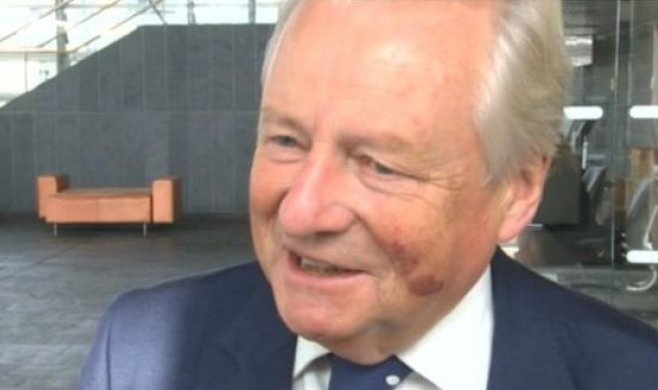
 PLAID CYMRU’S status as the official opposition to Labour in the Senedd was cast into uncertainty last Friday (Oct 14) after one of their most senior figures left the party less than six months after fighting an election as a Plaid AM.
Dafydd Elis Thomas, who has represented Plaid Cymru for 18 years at Westminster, 17 years in the Senedd, and four years in the House of Lords, informed his local party that he would subsequently sit as an independent in the Welsh Assembly. He is the second AM to leave their party group this year, following the prolonged saga of UKIP’s Nathan Gill.
Sources close to Lord Elis Thomas have suggested that he felt Plaid Cymru should have been more supportive of the Welsh Labour Government. Following his departure, the two parties agreed a draft budget which included £119m allocated to Plaid Cymru priority areas of spending.
Speaking to the BBC, Lord Elis Thomas said: “It was clear to me that the Plaid group in the National Assembly was not willing to seriously participate in government and to give Wales a stable government, particularly after the decisions taken in Wales and elsewhere about our future relationship with the European Union.
“There is a serious constitutional challenge now and we might well lose powers from Wales,” he added.

“I think all pro-devolutionists should be working together to ensure that doesn’t happen.”
The peer’s relationship with Leanne Wood, who defeated him in a 2012 leadership election, was also thought to have contributed to his decision. As Presiding Officer, Lord Elis Thomas ordered Ms Wood to leave the Chamber after the republican referred to Queen Elizabeth as ‘Mrs Windsor’. Ms Wood sacked Lord Elis Thomas from the front bench in 2014 after he publicly criticised the party’s stance on UKIP.
Plaid Cymru lost no time in calling for a by-election following Lord Elis-Thomas’ announcement. A party statement released shortly afterwards said: “Plaid Cymru will begin the process of selecting a new candidate in Dwyfor Meirionnydd following Dafydd Elis-Thomas’s decision to leave the Plaid Cymru Assembly group.
“Constituents, who Dafydd Elis- Thomas misled in the recent Assembly election, will expect a by-election to be held at the earliest convenience.”

A petition was also launched calling for him to resign and call a by-election. It claimed that Lord Elis-Thomas was ‘elected through the hard work and financial resources of Plaid Cymru’s local activists.
‘The electorate of Dwyfor Meirionnydd deserve the opportunity to voice their opinions on this through the ballot box’, the petition added. This was supported on social media by Dwyfor Merionnydd MP Liz Saville Roberts.
However, as UKIP found out, Lord Elis-Thomas is under no obligation to resign, and has said that he will be better-placed to serve his constituency now that he no longer has to toe the party line. Given that toeing the party line was hardly one of his strong points, it would be fair to suggest that Plaid Cymru’s Senedd group will not receive a great deal of support from their former colleague.

The question which has been asked by several political commentators is which party now holds the role of official opposition in Wales. Plaid Cymru and the Conservatives now have 11 seats apiece – compared to six UKIP AMs, two independents, and one Lib Dem.
The answer is that no one seems quite sure. A Plaid Cymru source suggested that, while the parties had the same number of seats, the Party of Wales had registered more votes. However, it is unclear whether this will make any difference.
The Welsh Conservatives, on the other hand, made light of the official opposition title they proudly held during the Fourth Assembly, with one source memorably describing it as ‘bald men fighting over a comb’.
However, they suggested that this would be a fight the party would be willing to participate in, by calling for the title to be shared or dropped.
Given that joint official opposition in a legislature which contains three major parties and UKIP is hardly a title worthy of boasting, it could well be the case that both parties refer to themselves as the opposition, while the official aspect is quietly dropped.
Of far more importance to the day-to-day running of the Assembly will be the changes made to committee place and chair allocations, but at the time of going to press, this had not been resolved.


CMA calls for new regulatory regime after households faced cancelled orders and sharp price increases
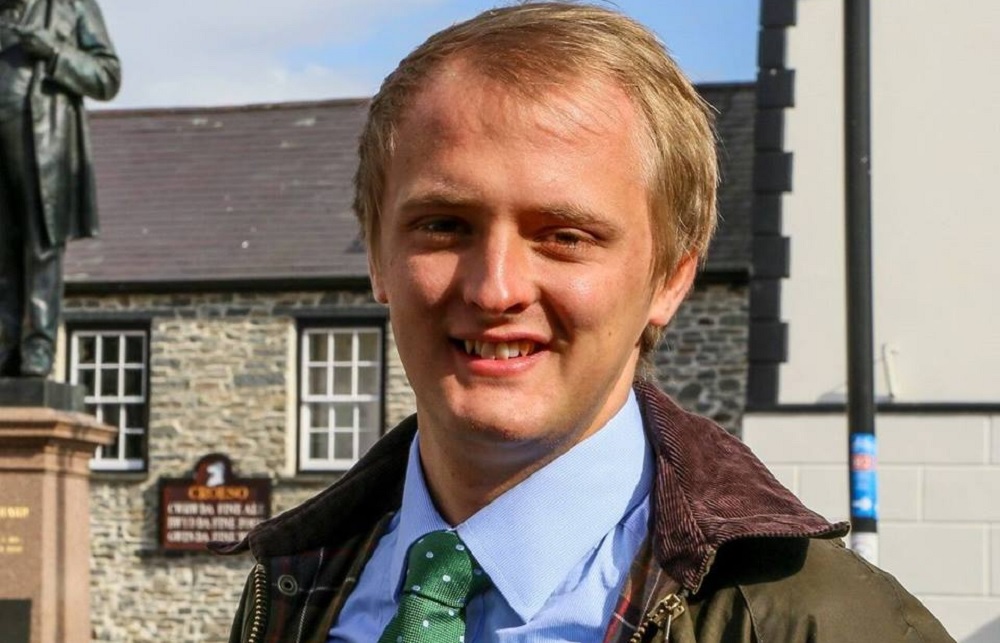
BEN LAKE MP has welcomed proposals for stronger protections for households that rely on heating oil, following a major investigation by the Competition and Markets Authority.
The Ceredigion Preseli MP said people living in rural and off-grid communities should receive protections comparable to those available to customers connected to the mains gas and electricity networks.
Around 1.5 million UK households depend on heating oil. Customers currently lack several protections available elsewhere in the energy market, including consistent support for vulnerable people and access to independent dispute resolution when complaints cannot be settled directly with suppliers.
The CMA launched its investigation after conflict in the Middle East disrupted supplies and caused heating oil prices to rise sharply earlier this year.
Its final report found that the market remained generally competitive and that suppliers had not profited materially from the crisis. Most of the increase was attributed to higher wholesale costs.
However, the regulator concluded that customers remained particularly exposed during periods of disruption, with uncertainty over prices, deliveries and the support available when problems arose.
In Wales, the average retail price rose from 64p per litre in February to 106p in March, an increase of 42p. Across the UK, prices peaked at 123p per litre in April, 92% above February’s average.
The CMA has recommended a proportionate regulatory regime requiring heating oil suppliers to register and meet minimum standards.
Proposed protections would cover the way prices are quoted, how cancellations are handled and access to independent dispute resolution. Suppliers could also be required to explain available payment plans and minimum purchase quantities more clearly.
A register of vulnerable customers has also been proposed, alongside a review of minimum-order rules to determine whether households should be allowed to buy smaller quantities.
Heating oil is generally purchased in bulk, leaving households facing bills of £500 or more at a time. The CMA said allowing smaller orders could make the fuel more accessible to customers experiencing financial difficulties.
Ben Lake old The Herald: “I welcome the Competition and Markets Authority’s call for a new regulatory regime for heating oil suppliers, together with action to compensate households affected by last-minute order cancellations earlier this year.

“Requiring suppliers to meet minimum standards, clearly explain payment plans and minimum purchases, and maintain a register of vulnerable households would help protect off-grid customers during sudden price increases or periods of crisis.
“These recommendations are welcome, but I will also be pressing for similar protections to be introduced for households that rely on LPG.”
The CMA estimates that around 1,700 customers may have had orders cancelled in circumstances that breached their contracts.
Although those customers received refunds, some were forced to place replacement orders at much higher prices, potentially leaving them between £150 and £350 worse off. Others were unable to obtain replacement fuel.
Several suppliers have agreed to compensate affected customers. Those who paid more for a replacement delivery are expected to receive the difference, while customers who did not purchase replacement oil should have their original orders honoured at the agreed price.
The CMA said some suppliers had not yet agreed to provide compensation and warned that it was preparing possible court enforcement action.
Mr Lake said the regulator’s findings reflected concerns raised by constituents across Ceredigion Preseli.
He said: “The conclusions of the CMA’s report will not surprise residents of Ceredigion Preseli.
“Many saw the price of their regular fuel deliveries changing at very short notice during the Middle East fuel crisis. I am also aware of cases where customers were not told the final price until the delivery lorry had arrived at their property.
“Ceredigion Preseli has one of the highest proportions of households in Great Britain that are not connected to the mains gas network. The crisis therefore had a disproportionate effect on the amount many residents were forced to pay to heat their homes.”
Mr Lake welcomed the commitment to compensate affected households but said further information was needed about how eligible customers would receive payments.
He added: “I welcome the announcement that compensation will be paid, but the eligibility and process remain unclear.
“I have asked for further details about how customers can make sure they receive the money they are owed. I am determined that constituents in Ceredigion Preseli should receive every penny of compensation to which they are entitled.”
The CMA will now work with the UK and devolved governments, regulators and the heating oil industry to consider how its recommendations should be implemented.

Aberafan Maesteg MP promises to champion Welsh interests and work closely with governments and institutions across Wales
STEPHEN KINNOCK has begun work as Secretary of State for Wales after being appointed to Prime Minister Andy Burnham’s new Cabinet.
The Aberafan Maesteg MP was appointed Welsh Secretary on Monday, July 20, having previously served as a Minister of State at the Department of Health and Social Care.
Mr Kinnock said he would provide a strong voice for Wales within the UK Government and promised an open and collaborative approach to the role.
He said he would work with the Welsh Government, local authorities and institutions across the country to support economic growth and deliver improved outcomes for Welsh communities.
Mr Kinnock said: “It is the privilege of my life to be appointed Welsh Secretary, and to serve the people of Wales as part of Prime Minister Andy Burnham’s new Cabinet.
“Wales succeeds when we all pull in the same direction, and I will work across all levels of government to deliver the best possible outcomes for our communities as a dynamic and confident country in a dynamic and strong United Kingdom.
“As Welsh Secretary, I will ensure that the Wales Office continues to champion Wales within the UK Government and that the needs of the Welsh people are prioritised.
“This is about building a strong Wales within a strong United Kingdom, where everyone has the opportunity to reach their full potential, with good growth in every Welsh postcode and communities that are in control and supported by government at every level.
“I am truly honoured to be taking on this role at such a pivotal time for Wales and for the UK, and I am clear that there is no limit to what we can achieve by working together.”
Mr Kinnock is now expected to begin a programme of meetings and visits as he develops the UK Government’s agenda for Wales and represents Welsh interests in Westminster and across Whitehall.

Only 63% of patients were dealt with within four hours in June, while treatment waiting lists and ambulance response times also worsened
A&E PERFORMANCE in Wales has fallen to its lowest recorded level, prompting renewed political pressure on the Welsh Government over waiting lists, ambulance response times and delays in cancer treatment.
Official figures show that 63% of patients attending emergency departments in June were admitted, transferred or discharged within four hours.
The figure was the lowest on record and remained well below the Welsh Government’s 95% target.
Performance was worse in major emergency departments, where fewer than half of patients, 49%, completed their visit within four hours.
A total of 11,826 people spent 12 hours or longer in Welsh emergency departments during June. This was the second-highest monthly figure recorded and an increase from 11,066 in May.
June also saw the highest number of emergency department attendances recorded for that month.
Treatment waiting list rises
The number of referral-to-treatment pathways waiting to begin treatment increased from 680,003 in April to 689,721 in May.
A patient may appear on more than one pathway if they are waiting for treatment for separate conditions, meaning the figure does not represent 689,721 individual people.
The estimated number of individual patients waiting nevertheless increased from around 536,500 to 542,600.
The number of pathways waiting longer than two years rose from 3,694 in April to 4,208 in May, an increase of around 14%.
There was also a rise in pathways waiting longer than a year, from 96,409 to 97,590.
Cancer performance remained below the national target. In May, 57.1% of patients started their first definitive treatment within 62 days of cancer being suspected, compared with the Welsh Government target of 75%.

Ambulance response times deteriorate
Ambulance response times for serious calls also worsened during June.
The median response time for red calls, involving immediately life-threatening conditions, increased to nine minutes and 32 seconds. The time in which 90% of red calls received a response was 23 minutes and 15 seconds.
Orange calls, which can include suspected strokes and other serious but not immediately life-threatening conditions, had a median response time of one hour, 29 minutes and ten seconds.
The longest 10% of orange-call waits exceeded six hours and 14 minutes.
Conservatives blame Plaid government
The Welsh Conservatives said the results showed that the pressures facing the NHS were continuing to deepen.
Shadow Cabinet Minister for Health and Social Care Natasha Asghar MS accused Plaid Cymru of attempting to distance itself from problems that developed under previous Welsh Labour governments.
Plaid supported a number of Labour budgets during the previous Senedd and entered a formal co-operation agreement with Labour between 2021 and 2024, although it was not responsible for running the health department during that period.
Ms Asghar said: “A&E performance has fallen to its lowest level on record, while the number of people enduring waits of 12 hours or more has reached the second-highest figure ever recorded.
“Cancer performance remains well below target, waiting lists have significantly increased and ambulance response times for the most serious red calls have once again deteriorated.
“Plaid Cymru cannot escape responsibility for this. They supported the previous Welsh Labour Government’s budgets and are now running the health service. Patients need urgent action, not more empty promises.”
The Welsh Conservatives renewed their call for the Government to declare a health emergency, increase hospital capacity and introduce a new NHS workforce strategy.
The party also called for a more detailed plan to reduce treatment waiting lists and relieve pressure on emergency departments.
Government says results are unacceptable
Cabinet Minister for Health and Care Mabon ap Gwynfor acknowledged that the figures were “disappointing and unacceptable”.
He said the Government’s immediate priority was to reduce the backlog inherited from the previous administration and ensure that patients who had waited longest were treated first.
Mr ap Gwynfor said: “Too many people are waiting for treatment, and they are waiting too long.
“We have a plan to tackle this which will deliver the real change the people of Wales need to see and that they rightly deserve.”
The minister said the Government intended to develop clinically led surgical hubs to increase capacity and prevent planned operations being disrupted by emergency pressures.
The new administration has proposed an additional £145 million for NHS Wales during the current financial year. This includes £100 million to increase planned-care activity and £25 million in capital funding for surgical and diagnostic hubs.
However, the supplementary budget containing the additional funding had not been approved by the Senedd when the latest figures were published.
Mr ap Gwynfor also said prolonged hot weather had contributed to increased emergency department attendances in June, adding further pressure to NHS and social care services.
He highlighted improved performance for the most serious purple-category ambulance calls, involving patients experiencing a cardiac or respiratory arrest. The response target for those calls had been met consistently over the previous 12 months.
Surgeons call for cross-party action
The Royal College of Surgeons of England said the figures demonstrated the need for increased surgical capacity and greater certainty over NHS funding.
Professor Jon Barry, the college’s director in Wales, said staff were working tirelessly but warned that lasting improvement would require expanded capacity and reliable resources.
He called on political parties to work together, saying that behind every waiting-list statistic was a patient whose life had been placed on hold.
The college said the principle of creating more surgical hubs had attracted support from parties across the political spectrum during the Senedd election.
Problems pre-date new administration
The latest figures cover the opening months of the new Plaid Cymru administration.
The planned-treatment and cancer figures relate to May, when the new Government had only recently taken office, while the A&E and ambulance figures cover June.
Many of the underlying problems, including lengthy treatment waits, missed A&E targets and pressure on ambulance services, developed over several years under successive Welsh Labour governments.
Plaid Cymru can therefore argue that it inherited a health service already facing serious difficulties. However, as the party now controls the health portfolio, attention will increasingly turn to whether its additional funding, surgical hubs and promised reforms deliver measurable improvements for patients.
Cabinet Minister for Health and Care
Minister Mabon ap Gwynfor said: “My immediate priority is clear – cut the waiting list backlog inherited from the previous Government, help those who have been waiting longest, and build an NHS here in Wales that can stand strong for generations to come.
“Today’s statistics are disappointing and unacceptable. Too many people are waiting for treatment, and they are waiting too long. We have a plan to tackle this which will deliver the real change the people of Wales need to see and that they rightly deserve.
“We’re doing things differently to previous approaches. Through our clinically-led surgical hub programme we will strengthen local capacity, get patients treated quicker and ensure that elective care demand is managed more sustainably within day-to-day NHS activity. We are committed to delivering our investment to support waiting list reductions this year.
“June saw the highest number of emergency department attendances recorded for that month. Prolonged hot weather led to more people turning up with heat-related issues, adding further pressure on health and care services. Sustained year-round preparedness is vital to anticipate seasonal risks such as heatwaves, and this Government will work closely with our partners to deliver it consistently. We have already begun preparations for expected winter pressures.
“Meanwhile, the response time target for the ambulance service to respond to patients in the purple category – those experiencing a cardiac or respiratory arrest who need an ambulance immediately – has been met consistently for the past 12 months which I am pleased about.
“I want to recognise the incredible people working in our NHS and social care. Every single day, they show up and give everything they have – often under enormous pressure. Their dedication and compassion is something we should all be proud of. Thank you for everything you continue to do.”



Local Government2 hours ago
Pembroke Dock councillor rejects claim he spent six months living in Portugal
Cllr Joshua Beynon says he remains active in his ward and has made only normal-length visits to see his Portuguese...

Health22 hours ago
More than 3,000 people have their say as Hywel Dda stroke consultation closes
Final decision on proposals, including a central 24-hour stroke unit at Glangwili and treat-and-transfer services at Withybush, is expected in...

Crime1 day ago
James McKenna guilty of attempted murder after Carmarthen Park knife attack
Jury rejects defendant’s claim he only intended to cause serious injury after ambush attack on former partner SPECIAL REPORT FROM...


Community2 days ago
New creative team transforms the Maes ahead of Eisteddfod y Garreg Las
Festival site in Llantwd is taking shape ahead of the National Eisteddfod’s arrival in Pembrokeshire from August 1 to 8...


Community2 days ago
From Tenby to Llandudno: Wales’ seaside towns face the same signal crisis
Businesses in two of Wales’s busiest resorts say unreliable mobile coverage is disrupting payments, bookings and everyday life TWO of...


Crime2 days ago
Judge orders Dyfed-Powys Police review after £3,912 fraud error
Force responsible for policing Pembrokeshire criticised after an officer understated the amount stolen from a vulnerable care-home resident A JUDGE...


Community3 days ago
Narberth bursts into colour as carnival brings Civic Week to spectacular close
Crowds lined the streets for an afternoon of floats, fancy dress, music and family entertainment at one of Pembrokeshire’s longest-running...


Community3 days ago
More than 100 racers take to Castle Pond for Paddle West’s inaugural regatta
Successful community event raised money for Forever11 and launched three consecutive weekends of waterside activity in Pembroke MORE than 100...


News3 days ago
NASA chief meets west Wales scientist helping search for life on Mars
Aberystwyth-led technology will guide Europe’s first Mars rover as it drills beneath the planet’s surface, while the proposed DARC radar...

News4 days ago
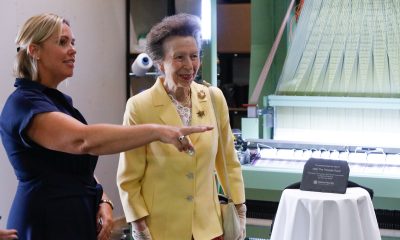
Princess Royal celebrates Pembrokeshire craftsmanship at family-run weaving mill
A Pembrokeshire business that began after a mother grew tired of waiting three weeks for her children’s name tapes has...
-
 News3 hours ago
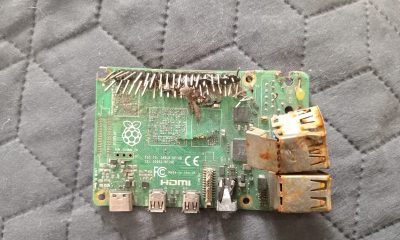
Welsh-made Raspberry Pi board found in Russian attack drone used against Ukraine
-

 Community21 hours ago
Huge water main burst sends geyser over Fishguard town centre
-

 Crime2 days ago
Steynton man fined after breaching dog mess and anti-social behaviour notice
-

 Crime18 hours ago
Man in custody accused of intentionally strangling woman in Haverfordwest
-
 Health16 hours ago
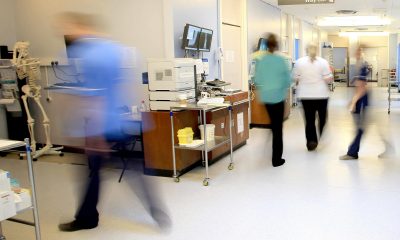
Welsh A&E performance hits record low as parties clash over NHS pressures
-
 Community59 minutes ago
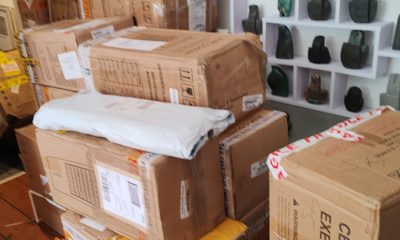
TikTok seller removed after Haverfordwest woman’s home swamped with parcels
-

 Community1 day ago
New recruits and old friends join choir at Cresswell Quay
-
Crime1 day ago
James McKenna guilty of attempted murder after Carmarthen Park knife attack