


Politics
Devolution of policing ‘could protect force budgets’

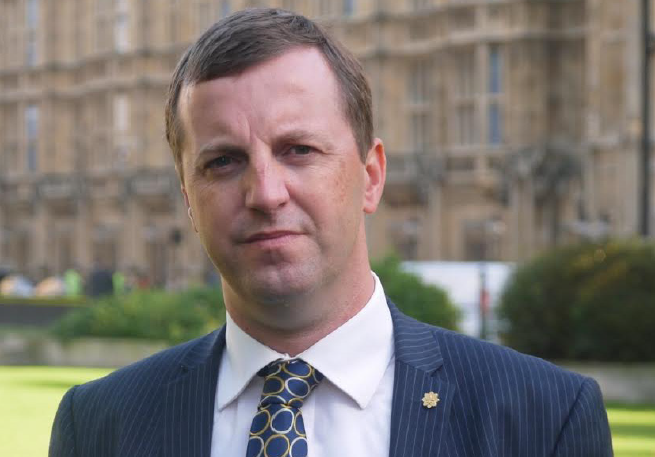

Jonathan Edwards MP: Remove policing from ‘simplistic one-size-fits-all system’
THE POLICING budget for Dyfed-Powys could benefit to the tune of £13.5m if policing was devolved, according to a Plaid Cymru MP.
The claim was made by Jonathan Edwards MP, who has raised concern ahead of the Home Office’s new policing budget formula consultation.
A policing grant consultation, launched by the then Home Secretary Theresa May, was abandoned earlier this year after Policing Minister Mike Penning admitted there had been a ‘statistical error’ on which several Police and Crime Commissioners threatened legal action.
Mr Edwards said that last year’s formula would have resulted in a £32 million cut to Welsh forces – £7.9m of which would have been cut from Dyfed-Powys constabulary – a staggering 16% of the force budget.
New policing minister Brandon Lewis MP has recently announced a new review of the Police Core Grant Distribution Formula, which prompted Dyfed-Powys Police and Crime Commissioner, Dafydd Llywelyn to host a summit for all elected members in the force area.

Mr Llyweyln is set to meet directly with the minister next month, but is urging politicians from all parties to support a fair funding formula that adequately reflects challenges faced by the force.
Figures provided to Jonathan Edwards show a formula which better reflects population statistics would result in an additional £25 million for Welsh forces – £13.5 million in the case of Dyfed-Powys – a figure the Plaid MP says strengthens the case for devolving policing.
Mr Edwards said: “The 43 police forces of Wales and England often have different needs and challenges. Policing is a field for which sophistication and complexity is needed in its funding formula to properly account for the relative needs of each force.
“The review last year sought to place greater emphasis on socio-economic data and more general crime figures. Such a formula doesn’t properly consider the workload differences of each constabulary and would have resulted in a £32 million cut to Welsh forces, with almost £8 million cut from our local force.

“Figures provided to me by Dyfed- Powys Police indicate that funding our forces in line with population would result in an additional £25 million for the four forces in Wales. This is particularly important when we consider that policing is devolved to Scotland and Northern Ireland. for whom the new formula would not apply.
“If policing was devolved to Wales, a position supported by all Police and Crime Commissioners, the overall Barnett formula for funding public services would indeed be based on our population. It is only be retaining policing control in Westminster that Welsh forces face these significant cuts.”
“Dyfed-Powys Police has already dealt with a £13 million cut from the Tory Home Office. One of the results of those cuts was the loss of our dedicated police helicopter. If further cuts come as a result of an inappropriate funding formula, what services will have to go next? With a formula taking proper account of population, Dyfed-Powys would actually receive an additional £13 million.

“Plaid Cymru will be actively working to lobby the policing minister to implement a formula that does not disadvantage the four Welsh forces, but the case for the devolution of policing to the National Assembly grows by the day and has never been stronger.
“It seems the best way to protect our policing system is to remove it from the simplistic one-size-fits-all approach at Westminster and operate a system that is developed in Wales and works for Wales.”



Only 63% of patients were dealt with within four hours in June, while treatment waiting lists and ambulance response times also worsened
A&E PERFORMANCE in Wales has fallen to its lowest recorded level, prompting renewed political pressure on the Welsh Government over waiting lists, ambulance response times and delays in cancer treatment.
Official figures show that 63% of patients attending emergency departments in June were admitted, transferred or discharged within four hours.
The figure was the lowest on record and remained well below the Welsh Government’s 95% target.
Performance was worse in major emergency departments, where fewer than half of patients, 49%, completed their visit within four hours.
A total of 11,826 people spent 12 hours or longer in Welsh emergency departments during June. This was the second-highest monthly figure recorded and an increase from 11,066 in May.
June also saw the highest number of emergency department attendances recorded for that month.
Treatment waiting list rises
The number of referral-to-treatment pathways waiting to begin treatment increased from 680,003 in April to 689,721 in May.
A patient may appear on more than one pathway if they are waiting for treatment for separate conditions, meaning the figure does not represent 689,721 individual people.
The estimated number of individual patients waiting nevertheless increased from around 536,500 to 542,600.
The number of pathways waiting longer than two years rose from 3,694 in April to 4,208 in May, an increase of around 14%.
There was also a rise in pathways waiting longer than a year, from 96,409 to 97,590.
Cancer performance remained below the national target. In May, 57.1% of patients started their first definitive treatment within 62 days of cancer being suspected, compared with the Welsh Government target of 75%.

Ambulance response times deteriorate
Ambulance response times for serious calls also worsened during June.
The median response time for red calls, involving immediately life-threatening conditions, increased to nine minutes and 32 seconds. The time in which 90% of red calls received a response was 23 minutes and 15 seconds.
Orange calls, which can include suspected strokes and other serious but not immediately life-threatening conditions, had a median response time of one hour, 29 minutes and ten seconds.
The longest 10% of orange-call waits exceeded six hours and 14 minutes.
Conservatives blame Plaid government
The Welsh Conservatives said the results showed that the pressures facing the NHS were continuing to deepen.
Shadow Cabinet Minister for Health and Social Care Natasha Asghar MS accused Plaid Cymru of attempting to distance itself from problems that developed under previous Welsh Labour governments.
Plaid supported a number of Labour budgets during the previous Senedd and entered a formal co-operation agreement with Labour between 2021 and 2024, although it was not responsible for running the health department during that period.
Ms Asghar said: “A&E performance has fallen to its lowest level on record, while the number of people enduring waits of 12 hours or more has reached the second-highest figure ever recorded.
“Cancer performance remains well below target, waiting lists have significantly increased and ambulance response times for the most serious red calls have once again deteriorated.
“Plaid Cymru cannot escape responsibility for this. They supported the previous Welsh Labour Government’s budgets and are now running the health service. Patients need urgent action, not more empty promises.”
The Welsh Conservatives renewed their call for the Government to declare a health emergency, increase hospital capacity and introduce a new NHS workforce strategy.
The party also called for a more detailed plan to reduce treatment waiting lists and relieve pressure on emergency departments.
Government says results are unacceptable
Cabinet Minister for Health and Care Mabon ap Gwynfor acknowledged that the figures were “disappointing and unacceptable”.
He said the Government’s immediate priority was to reduce the backlog inherited from the previous administration and ensure that patients who had waited longest were treated first.
Mr ap Gwynfor said: “Too many people are waiting for treatment, and they are waiting too long.
“We have a plan to tackle this which will deliver the real change the people of Wales need to see and that they rightly deserve.”
The minister said the Government intended to develop clinically led surgical hubs to increase capacity and prevent planned operations being disrupted by emergency pressures.
The new administration has proposed an additional £145 million for NHS Wales during the current financial year. This includes £100 million to increase planned-care activity and £25 million in capital funding for surgical and diagnostic hubs.
However, the supplementary budget containing the additional funding had not been approved by the Senedd when the latest figures were published.
Mr ap Gwynfor also said prolonged hot weather had contributed to increased emergency department attendances in June, adding further pressure to NHS and social care services.
He highlighted improved performance for the most serious purple-category ambulance calls, involving patients experiencing a cardiac or respiratory arrest. The response target for those calls had been met consistently over the previous 12 months.
Surgeons call for cross-party action
The Royal College of Surgeons of England said the figures demonstrated the need for increased surgical capacity and greater certainty over NHS funding.
Professor Jon Barry, the college’s director in Wales, said staff were working tirelessly but warned that lasting improvement would require expanded capacity and reliable resources.
He called on political parties to work together, saying that behind every waiting-list statistic was a patient whose life had been placed on hold.
The college said the principle of creating more surgical hubs had attracted support from parties across the political spectrum during the Senedd election.
Problems pre-date new administration
The latest figures cover the opening months of the new Plaid Cymru administration.
The planned-treatment and cancer figures relate to May, when the new Government had only recently taken office, while the A&E and ambulance figures cover June.
Many of the underlying problems, including lengthy treatment waits, missed A&E targets and pressure on ambulance services, developed over several years under successive Welsh Labour governments.
Plaid Cymru can therefore argue that it inherited a health service already facing serious difficulties. However, as the party now controls the health portfolio, attention will increasingly turn to whether its additional funding, surgical hubs and promised reforms deliver measurable improvements for patients.
Cabinet Minister for Health and Care
Minister Mabon ap Gwynfor said: “My immediate priority is clear – cut the waiting list backlog inherited from the previous Government, help those who have been waiting longest, and build an NHS here in Wales that can stand strong for generations to come.
“Today’s statistics are disappointing and unacceptable. Too many people are waiting for treatment, and they are waiting too long. We have a plan to tackle this which will deliver the real change the people of Wales need to see and that they rightly deserve.
“We’re doing things differently to previous approaches. Through our clinically-led surgical hub programme we will strengthen local capacity, get patients treated quicker and ensure that elective care demand is managed more sustainably within day-to-day NHS activity. We are committed to delivering our investment to support waiting list reductions this year.
“June saw the highest number of emergency department attendances recorded for that month. Prolonged hot weather led to more people turning up with heat-related issues, adding further pressure on health and care services. Sustained year-round preparedness is vital to anticipate seasonal risks such as heatwaves, and this Government will work closely with our partners to deliver it consistently. We have already begun preparations for expected winter pressures.
“Meanwhile, the response time target for the ambulance service to respond to patients in the purple category – those experiencing a cardiac or respiratory arrest who need an ambulance immediately – has been met consistently for the past 12 months which I am pleased about.
“I want to recognise the incredible people working in our NHS and social care. Every single day, they show up and give everything they have – often under enormous pressure. Their dedication and compassion is something we should all be proud of. Thank you for everything you continue to do.”

PLANS to convert a vacant former coffee shop next to a Pembrokeshire seaside town’s Sainsbury’s supermarket to healthcare clinic have been approved.
In an application before Pembrokeshire Coast National Park, Tenby Health Ltd, sought permission for a change of use of the former The Grind coffee shop, Supermarket Complex, Unit 3, Upper Park Road, Tenby to a private musculoskeletal healthcare clinic.
Tenby Town council recommended approval, saying: “Whilst councillors are disappointed in loss of retail, retail businesses have failed in the past. It will be good to have the space utilised and diversification may last longer,” adding it did not want empty units in the town.
Tenby Civic Society said: “Members of the executive committee felt these units have had a chequered history in retail use, and note that much needed renovation and re-marketing of the units has produced some new users whose lower footfall seems appropriate, though the issue of loss of retail use is disappointing.”
It did raise concern about the potential use of privacy film to the windows and prominent signage, which could affect the appearance of the courtyard, requesting that details of any such treatments be secured.
A supporting statement accompanying the application said: “The applicant is Tenby Health Ltd, a private musculoskeletal (MSK) healthcare clinic incorporated in Wales and operated by directors Hannah and Ben Horne. Ben is the sole practising clinician. The clinic provides the following services: chiropractic care, diagnostic musculoskeletal ultrasound imaging, shockwave therapy, rehabilitation, and exercise-based programmes.
“Tenby Health serves both the resident population of Tenby and the surrounding area, as well as visitors to the national park.”
It added: “The clinic will operate on an appointment-only basis during regular working hours. Patient numbers at any one time will be limited to those attending individual appointments.
“The low-intensity, appointment-based nature of the clinic means there will be no material increase in noise, disturbance, or activity at the site compared to the previous use. Opening hours will be limited to typical daytime business hours.”
An officer report, recommending approval, said the concerns raised by Tenby Civic Society were acknowledged, but the current application sought permission solely for the change of use of the premises and associated internal alteration, with no changes mentioned by the society forming part of the application.
Of the scheme itself, it said: “The site forms part of an established commercial complex adjacent to Sainsbury’s supermarket and Tenby’s multi-storey public car park, where commercial activity is an established characteristic of the area.
“Given the nature of the proposed use, together with its location within an existing commercial environment, the development is not considered likely to give rise to unacceptable impacts in respect of noise, disturbance, overlooking, loss of privacy, odour or visual intrusion.”

The application was conditionally approved.

A CALL for a two-year period of grace to test a previously-refused Pembrokeshire dog exercise area has again been turned down by planners.
In a resubmitted application to Pembrokeshire Coast National Park after a 2025 refusal, Lawson and Penny Owen, through agent Hayston Developments & Planning Ltd, sought retrospective permission for a farm diversification scheme for a dog exercise area with a small hardstanding area for parking on land near Williamston Farm, Long Lane, Broad Haven, near Haverfordwest.
The previously-refused scheme sought a permanent seasonal exercise area, the latest application seeking a temporary two-year year-round option so that the impact of dog exercise on agricultural land could be fully assessed.
That application was refused on the grounds it was not considered to be sited in a sustainable location which will assist in removing the need for private motor vehicle trip generation, and the potential impact on neighbours.
Local community council The Havens again objected to the latest application, objections including it too close to neighbouring residential properties resulting in unacceptable noise impacts, is incompatible with the adjoining agricultural use, and is located adjacent to a cycle route.
A supporting statement said: “It is clear that, whilst the whole of the field has been operating as a dog exercise area for the past two years, staff in Public Protection have not received any complaints in respect of noise or any other form of objection. As a result of additional information gained from [the previous application], this re-submission sets out to explore a suggested temporary two-year option so that the impact of dog exercise on agricultural land can be fully assessed.”
It said the applicants, who have some 400 acres spread across four farms in the Broad Haven/Nolton area have had a need to diversify, with previous activities including holiday lets, a weddings/summer cinema show venue, and a submitted planning application for nine holiday units.
It said the non-framing activities amounted to under a third of the applicants’ income, the dog exercise operation now foreseen to be some five per cent of income, at up to £20,000 per year.
An officer report recommending refusal said that, as with previous application, objections had been received; concerns including it being in an unsustainable countryside location, noise and disturbance to neighbouring residential properties, disturbance to grazing livestock, and concerns the proposal relies entirely on private motor vehicle journeys and conflicts with sustainable transport objectives.
The report said that while many planning matters could be addressed, they didn’t outweigh the principal policy objections that it had not been demonstrated the particular location was needed or it accords with the sustainable transport objectives [of planning policy], representing “an unsustainable form of development within the open countryside”.
It also said officers were of the view “that the proximity of the commercial dog exercise area to neighbouring residential properties would give rise to an unacceptable impact upon residential amenity through noise and associated activity”.
It concluded: “The proposed temporary two-year permission does not overcome these fundamental planning objections. The use has already operated for a significant period, enabling the Authority to assess the proposal on its planning merits, and a temporary consent would not resolve the inherent conflict with the adopted Development Plan.”

The resubmitted application was refused on the grounds highlighted in the officer report.


Health6 hours ago
More than 3,000 people have their say as Hywel Dda stroke consultation closes
Final decision on proposals, including a central 24-hour stroke unit at Glangwili and treat-and-transfer services at Withybush, is expected in...

Crime8 hours ago
James McKenna guilty of attempted murder after Carmarthen Park knife attack
Jury rejects defendant’s claim he only intended to cause serious injury after ambush attack on former partner SPECIAL REPORT FROM...


Community24 hours ago
New creative team transforms the Maes ahead of Eisteddfod y Garreg Las
Festival site in Llantwd is taking shape ahead of the National Eisteddfod’s arrival in Pembrokeshire from August 1 to 8...


Community1 day ago
From Tenby to Llandudno: Wales’ seaside towns face the same signal crisis
Businesses in two of Wales’s busiest resorts say unreliable mobile coverage is disrupting payments, bookings and everyday life TWO of...


Crime1 day ago
Judge orders Dyfed-Powys Police review after £3,912 fraud error
Force responsible for policing Pembrokeshire criticised after an officer understated the amount stolen from a vulnerable care-home resident A JUDGE...


Community2 days ago
Narberth bursts into colour as carnival brings Civic Week to spectacular close
Crowds lined the streets for an afternoon of floats, fancy dress, music and family entertainment at one of Pembrokeshire’s longest-running...


Community2 days ago
More than 100 racers take to Castle Pond for Paddle West’s inaugural regatta
Successful community event raised money for Forever11 and launched three consecutive weekends of waterside activity in Pembroke MORE than 100...


News2 days ago
NASA chief meets west Wales scientist helping search for life on Mars
Aberystwyth-led technology will guide Europe’s first Mars rover as it drills beneath the planet’s surface, while the proposed DARC radar...


News3 days ago
Princess Royal celebrates Pembrokeshire craftsmanship at family-run weaving mill
A Pembrokeshire business that began after a mother grew tired of waiting three weeks for her children’s name tapes has...


Local Government3 days ago
Burger King could be coming to Haverfordwest as plans submitted
Plans have been lodged for a Burger King outlet at the Morrisons petrol station on Bridge Meadow Lane BURGER KING...
-

 Community5 hours ago
Huge water main burst sends geyser over Fishguard town centre
-

 Health1 day ago
Welsh NHS executive pay revealed as patients face lengthy waits
-
 News1 day ago
Landmark rural law could reshape public services across west Wales
-

 Sport1 day ago
Saundersfoot stay unbeaten as Carew pile up 311 in Week 14
-
Crime8 hours ago
James McKenna guilty of attempted murder after Carmarthen Park knife attack
-
Crime1 day ago
Judge orders Dyfed-Powys Police review after £3,912 fraud error
-
 Business1 day ago
Pure West Parlour opens in the heart of Haverfordwest
-

 Business5 hours ago
Broad Haven dog exercise field with hardstanding parking area refused again