


News
Solva: Works start on flood defence project which will help 40 properties

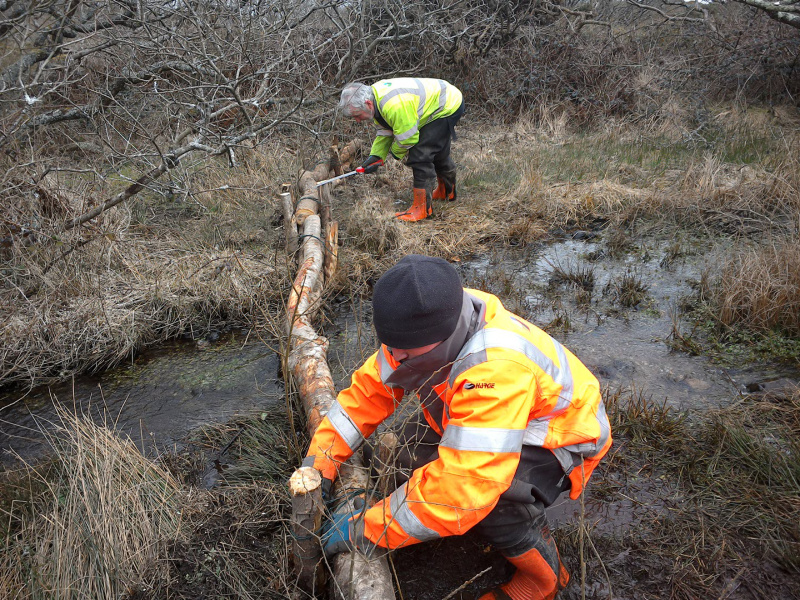
NATURAL RESOURCES WALES (NRW) has started work on a two-year project in Solva that will aim to reduce flood risk for over 40 properties in the local community.
The project, working with local partners including the Pembrokeshire Coast National Park Authority, Pembrokeshire County Council, the National Trust and local landowners, will focus on using natural flood risk management techniques along with traditional methods to ‘slow the flow’ and manage flood risk in the Solva catchment.
The first phase of this work involves the installation of 11 leaky dams on a tributary near St Davids Airfield on land managed by the National Trust and Pembrokeshire County Council.
Leaky dams allow normal flows to pass underneath them but restrict higher river flows and allow more water to be absorbed and stored locally.
Over the next two years NRW plan to install leaky dams at other suitable locations as well as other natural processes along the local water courses.

This will improve the level of flood protection given by Pont y Cerbyd Flood Storage Area to the communities of Middle Mill and Solva.
Mair Rees, Technical Officer of Biodiversity for NRW, said: “Lowering flood risk for communities is one of our biggest goals, which is why we monitor river levels 24 hours a day, find solutions to defend homes and work closely with those at risk.
“The work we’ve started in Solva is an example of green engineering, where a solution to a problem not only has minimal environmental impact but can also bring improvements to water quality, biodiversity and habitat creation.
“By working with natural processes, we are helping to sustainably manage the natural resources of Wales.

“We’re very excited to be starting this project and we look forward to working with our partners again and with local land owners and communities in the future.”
Cllr Cris Tomos, Pembrokeshire County Council’s Cabinet Member for the Environment and Welsh Language, said: “We are very pleased to support the NRW in this exciting project and are hopeful that it will result in a much-improved flood defence system for Middlemill and Solva while continuing to protect the natural habitat.
“The project is an excellent example of joint working across various organisations, with several officers providing assistance from different teams within the County Council, as well as support and advice from the Pembrokeshire Nature Partnership.”

Mark Underhill, National Trust Countryside Manager for North Pembrokeshire, said: “We are really pleased to be able to help Natural Resources Wales with this project.
“It is interesting to see this innovative low-tech approach to managing flood risk which could also bring some conservation benefits to the land we manage.”


PLAID CYMRU TAKES POWER AFTER HISTORIC SENEDD VOTE
PLAID CYMRU leader Rhun ap Iorwerth has become Wales’ new First Minister following a historic vote in the Senedd today, marking one of the biggest political changes since devolution.
Ap Iorwerth secured 44 votes in the chamber, defeating Reform UK Wales leader Dan Thomas, who received 34. There were nine abstentions.
The result confirms Plaid Cymru’s move into government after the party emerged from the Senedd election as the largest group in the expanded 96-member parliament.
It is the first time Plaid Cymru has held the top job in Welsh politics, ending Labour’s long dominance of the Welsh Government since the start of devolution in 1999.
The vote followed days of intense political manoeuvring after an election which transformed the balance of power in Cardiff Bay.
Plaid Cymru won the largest number of seats but fell short of an overall majority, meaning ap Iorwerth will now lead a minority administration.
Reform UK’s Dan Thomas also put himself forward for the role of First Minister after his party’s major breakthrough at the election.
However, ap Iorwerth won the Senedd vote with support from outside his own party, while Labour members abstained.
The result leaves Reform UK as the main opposition party in the Senedd, with Labour reduced to a much smaller role after more than two decades in control of Welsh Government.
Ap Iorwerth, a former BBC journalist and broadcaster, has represented Ynys Môn in the Senedd since 2013 and became Plaid Cymru leader in 2023.
He now faces the task of forming a government and setting out his cabinet, with pressure expected immediately on health, the economy, farming, housing, transport and public services.
The change comes after the first Senedd election held under the new voting system, with 96 Members elected across larger multi-member constituencies.

For Wales, the vote marks a political turning point.
For Plaid Cymru, it is the moment the party has sought for a century: the chance to lead the Welsh Government.
Welsh Labour interim leader has congratulated Plaid Cymru leader Rhun ap Iorwerth on his appointment as First Minister.
Speaking following the vote in this afternoon’s first meeting of the Seventh Senedd, in which Welsh Labour abstained, Mr Skates said: “I look forward to being an effective opposition, scrutinising and holding Rhun and his colleagues to account where necessary to improve legislation. I hope as a Minister I demonstrated to Plaid members how collaboration and challenge are mutually beneficial and we will be focused laser-like on serving the people of Wales. No games, no nonsense, just a determination to make the lives of those we serve better
“Be assured that we will not let the party of government off the hook at any time – as they, quite rightly, did not with us.”

FREE accessible boat trips are being launched along the Pembrokeshire coastline as part of a new 12-month programme.
Blue Horizons CIC Surf Club has announced that its first trips will take place on Friday, May 22, with four sailings planned during the day.
The project has been made possible with support from the Port of Milford Haven and Dale Sailing Company Ltd.
Blue Horizons said the trips have been shaped alongside people with additional needs to create a more supportive and inclusive experience.
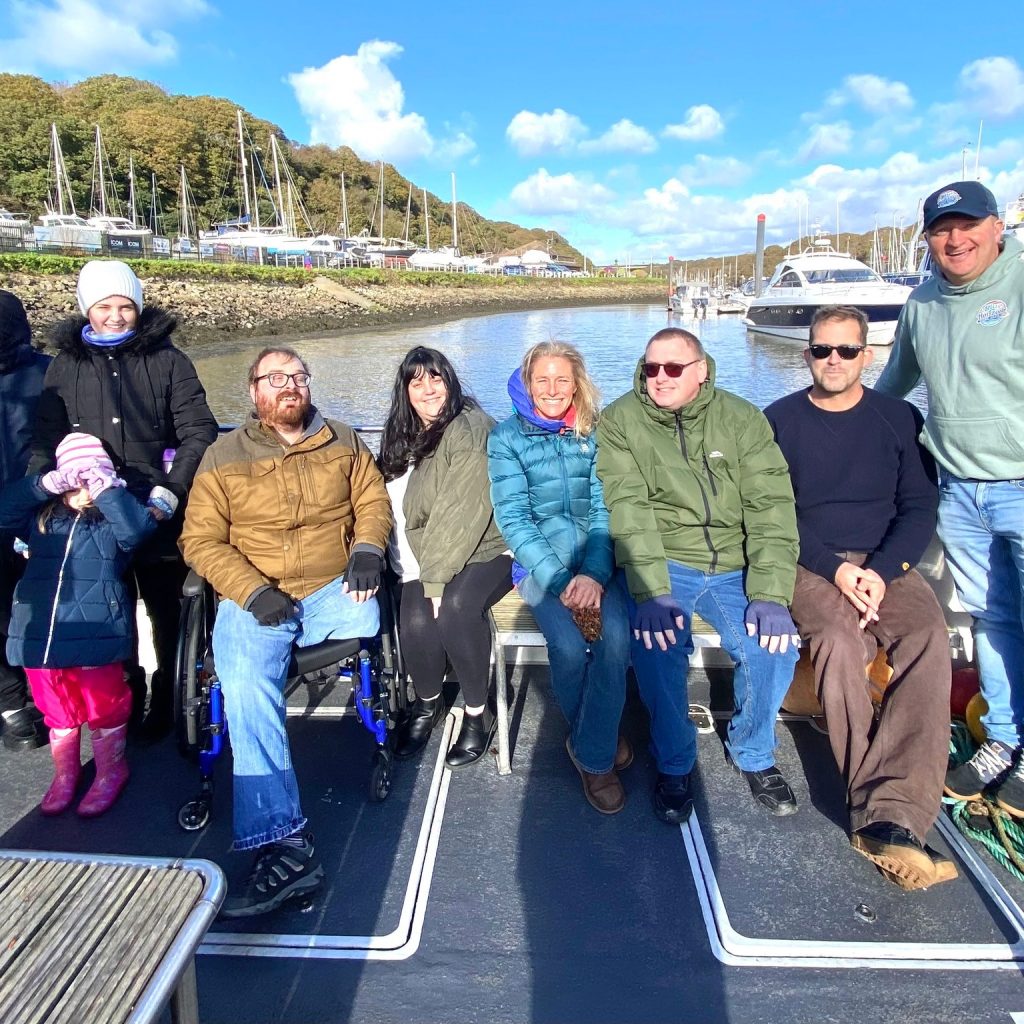
The organisation said accessibility was about more than simply getting onto a boat, but also about making sure people felt comfortable, supported and understood throughout the journey.
Its team members are DBS checked to work with children and vulnerable adults, first aid trained, experienced in supporting people with additional needs, and equipped with specialist adaptive and accessible equipment.
The trips will be free for Pembrokeshire residents.
A spokesperson for Blue Horizons said: “We know that everyone experiences the world differently. If the boat feels too fast, we slow things down. If someone needs a break or wants to turn around early, that’s absolutely fine.
“There’s no pressure and no judgement — because the people on the boat trip understand those challenges themselves.
“The coastline belongs to everyone and we can’t wait to welcome more people onto the water over the next year.”
Anyone interested can register here: https://forms.gle/WQjgsXSqhntS4zat7

TEN YEARS after the UK voted to leave the European Union, researchers at Aberystwyth University are launching an ambitious project to build the most detailed map yet of how communities voted in the referendum.
The team is appealing to campaigners, party activists and referendum observers to search old files, emails and campaign folders for informal tallies known as “boxcounts”.
These were unofficial figures recorded when ballot boxes were opened on referendum night, before the formal count began.
Official results from the 2016 referendum were published only at local authority level, giving a broad picture of Leave and Remain support across the UK.
But researchers say those figures do not show the more detailed patterns within towns, villages, suburbs and neighbourhoods.
The project, led by Professor Michael Woods at Aberystwyth University’s Centre for Welsh Politics and Society, aims to uncover those hidden local voting patterns.
Professor Woods said: “The EU referendum was the defining event in recent British politics and has shaped our political landscape for the last decade.
“We often talk about ‘Leave areas’ and ‘Remain areas’, but we don’t really know how communities voted beneath the level of local authorities.
“By bringing together boxcounts from across the UK, we can build a much more detailed picture of where support for Brexit was strongest, where it was weakest, and how these patterns relate to different types of places.
“As boxcounts from the referendum are unofficial no one has collected them together, but they will still be saved on people’s computers or archived in old campaign folders. We’re urging anyone who recorded or collated them to dig them out and send them to us.”
The team says it has developed a process to check the material and correct for potential bias, as well as safeguards to ensure privacy requirements are met.
Anyone with boxcounts from the 2016 referendum can find details on how to submit them via the Rural Spatial Justice Substack.
The study is part of the wider Rural Discontent, Spatial Justice and Disruptive Politics project, funded by the UK Frontier Research Guarantee, which is examining links between rural discontent and disruptive politics around the world.



News11 hours ago
Rhun ap Iorwerth becomes Wales’ new First Minister
PLAID CYMRU TAKES POWER AFTER HISTORIC SENEDD VOTE PLAID CYMRU leader Rhun ap Iorwerth has become Wales’ new First Minister...

News13 hours ago
Hotel was hit during a Luftwaffe bombing raid
THE COMMEMORATION, held on Tuesday (May 12), marked the anniversary of the wartime attack, with members of the community gathering...


News16 hours ago
Starmer fights for survival as Labour civil war erupts
Cabinet split, ministers resign and MPs revolt as pressure mounts on Prime Minister after disastrous election losses KEIR STARMER is...


News2 days ago
Starmer accused of ignoring Wales in major ‘reset’ speech
Prime Minister pledges EU reset, British Steel nationalisation and youth jobs guarantee — but critics say Wales was left out...


Community2 days ago
Concern grows after child hospitalised following Tenby sea swim
PARENT SAYS BOY BECAME SERIOUSLY ILL AFTER SWIMMING DURING FAMILY VISIT CONCERN is growing in Pembrokeshire after a parent claimed...


News2 days ago
Rhun prepares for clash with Starmer as Plaid eyes power in Cardiff Bay
PLAID CYMRU leader Rhun ap Iorwerth has signalled he is ready for confrontation with Prime Minister Keir Starmer after the...


News3 days ago
Plaid Cymru celebrates historic victory as Rhun ap Iorwerth arrives at Cardiff Bay
CROWDS gathered outside the Senedd as Plaid Cymru leader Rhun ap Iorwerth arrived in Cardiff Bay following his party’s historic...


Crime3 days ago
Police standoff ends after four-hour incident in Pembroke Dock
ELIZABETH COURT SCENE STOOD DOWN AFTER DOMESTIC INCIDENT A FOUR-HOUR police standoff in Pembroke Dock has ended with a 21-year-old...


Crime4 days ago
Teen denies attempted murder of Milford Haven teacher
TEENAGER REMANDED AHEAD OF JULY TRIAL A 15-YEAR-old boy has denied attempting to murder a teacher during a stabbing incident...

News4 days ago
Catastrophe for Labour as Plaid and Reform reshape Welsh politics
ELUNED MORGAN LOSES SEAT AS OLD CERTAINTIES ARE SWEPT AWAY THE VOTERS of Wales have delivered one of the most...
-

 News7 days ago
Former housing officer admits drink-driving in Pembrokeshire retail park
-

 Crime7 days ago
Job loss threat for convicted Pembrokeshire drug-driver
-
 Crime7 days ago
Milford motorist disqualified for drug-driving
-

 Crime7 days ago
Police tip-off leads to driving ban for Milford motorist
-

 Crime5 days ago
Racial abuse suspect barricaded himself inside Johnston lodge
-

 Community7 days ago
Sixth-former firefighter balances schoolwork with saving lives
-

 Crime7 days ago
Delivery driver caught twice over legal drink-drive limit
-

 Local Government5 days ago
Tenant says botched wetroom repair left her fearing flooding