


Politics
Benefits system ‘failing Wales’

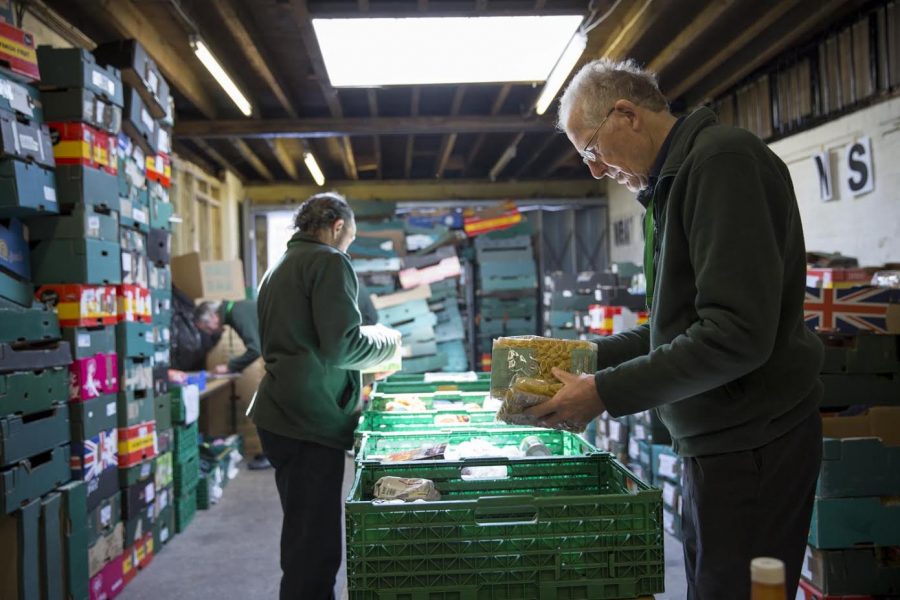
A REPORT from a Welsh Assembly Committee states the benefits system is too complex and does not treat people with dignity, fairness and compassion.
An inquiry held by the National Assembly for Wales’ Equality, Local Government and Communities Committee heard the benefits system is failing some people on the lowest incomes and is causing wider problems for our communities – in areas from mental health, to local government to poverty.
The UK Government’s programme of welfare reform is one of the most important political issues to affect Wales since devolution.
By 2023, one-third of Welsh households will receive Universal Credit, and the Committee heard particular concerns that long waits for the first payment and monthly, rather than fortnightly, payments were causing numerous problems.
The Committee’s report – Benefits in Wales: Options for a better delivery – contains 17 recommendations for Welsh Government. These include changes within the current devolution settlement, as well as exploring the devolution of housing-related benefits and the assessment process for disability and sickness benefits.
Included in the Committee’s report are recommendations to address these issues. They call for the Welsh Government to ensure that Discretionary Assistance Fund (DAF) payments are made available as an immediate action. DAF payments are non-repayable emergency grants for people on low-income in Wales and could ease the pressure on households as they wait for their Universal Credit payments.
Welsh Government should also seek payment flexibilities, so people can opt for more frequent payments, direct payments to the landlord, or to split payments between couples.
The complex system is not working at its best and could do more to help people on the lowest incomes, says John Griffiths AM, Chair of the Equality Local Government and Communities Committee;
“The current system is not working for far too many people. We repeatedly hear that benefits are not enough to cover basic and essential household costs, and the system does not treat people with dignity, fairness or compassion. The human cost of these failures is unacceptable, in one of the world’s largest national economies.
“Whilst recommending that Welsh Government explore opportunities to devolve more control of benefits to Wales, our recommendations emphasise what can be done now, within the current settlement, and in the longer term. We believe they set out a clear framework for positive change, which will reduce poverty and inequality at an individual and household level, improve well-being and the economy at a community and national level.
“Almost half of the Welsh population receive some kind of benefit, but the social security system is largely non-devolved. The system plays a vital role in the Welsh economy, for individual households and also the wider Welsh purse.”
Alone, among Wales’ principal political parties, Plaid Cymru supports the devolution of welfare benefits’ administration to Wales.
And a report published by the Wales Governance Centre outlines how Wales could be financially better off if it followed the same model over welfare as Scotland.
The report says that if a fiscal framework agreement similar to the one negotiated by the Scottish Government had been agreed by the Welsh and UK governments and had powers over S-benefits been devolved to Wales in 2018-19, the Welsh Treasury “would have been cumulatively better off by £700 million by the end of 2023-24.”
The Wales Governance Centre estimates we could be generating surpluses of over £200 million by the middle of the next decade if Wales had the same deal as Scotland. There would also be the indirect savings to the NHS and Housing Associations who have had to pick up the tab from Westminster’s shambolic handling of the welfare system.



THE WELSH GOVERNMENT’s key Child Poverty Strategy lacks clarity, has no reliable way of measuring success or failure, and, crucially, does not account for the Welsh Government’s lack of control over the levers needed to deliver on it.
Those are the findings of a new report by the UK’s leading economic policy research body, the Institute for Fiscal Studies (IFS), which looks at Wales’s economic performance and poor employment record.
The IFS report, published on Wednesday (April 1), shows that Wales’s economic performance is the worst of the UK nations, with the lowest employment rate, the lowest incomes, the lowest productivity, and the worst poverty levels.

POVERTY STRATEGY LACKS FOCUS
The Welsh Government launched its Child Poverty Strategy in 2018, with five broad aims to reduce child and youth poverty. However, the IFS criticises how those aims have been set out, finding that the definitions are too broad to be measured accurately and lack focus. In particular, the IFS says the strategy’s aims are so nebulous that they ignore the impact of policy areas over which the Welsh Government exercises direct control, for example, health and education, on how outcomes might be measured.
The IFS report says: “Issues with the data mean a material risk that the Welsh Government might either appear to have met a future poverty target or missed it, by a large margin, when in fact the reverse is true.”

WG NOT IN CONTROL OF OWN POVERTY STRATEGY
In any event, several of the most direct policy levers available to influence employment and earnings, including minimum wages, employment law and benefits policy, are reserved to Westminster. However, even if these policy levers were available, it would be very challenging to achieve large, rapid reductions in child poverty with them. In addition, Labour has ruled out using the tax system to generate additional income to help it meet its aims.
Wales’s highest-earning regions are along the North East Wales border with England and in the Cardiff and Newport areas. In addition, proportionately more Welsh employees are public sector workers, who are also, far and away, the best paid in Wales. The average public sector wage is around £5,000 higher than the average private sector wage. And those jobs, too, are disproportionately centred in Cardiff, Newport and North East Wales. The best-performing areas by employment rate, Monmouthshire and Newport, are within easy reach of the English border.
POVERTY CONCEALED BY LOWER PROPERTY VALUES
Compared with the rest of the UK, the gap between men’s and women’s pay is lower in Wales, as are the differences in income and in the highest and lowest property prices. However, property prices are far lower in Wales than in England, as are incomes overall; in addition, there are so few higher-rate tax earners in Wales that the Welsh Government increasing their income tax would have a negligible effect on its revenue. In addition, because Welsh housing prices are much lower than elsewhere in the UK, and because housing costs are a factor in how poverty is measured, housing costs improve one of the key poverty metrics.

TV presenter and commentator to appear at Cardiff event aimed at mobilising anti-Reform voters before May 7
CAROL VODERMAN has urged voters in Wales to reject Reform UK at next month’s Senedd election, as she prepares to appear at a live political event in Cardiff focused on keeping the party out of power.
Speaking ahead of an emergency Guilty Feminist Welsh Election Special at the New Theatre, Cardiff, on Sunday, April 12, Vorderman said Wales faced a crucial choice at the ballot box.
She said: “Wales has a chance for a new beginning in May. But Reform, the chaotic London-based, privately educated, failed Tory party, needs to be sent packing.
“Already numerous of their 96 Welsh candidates have resigned or been sacked for revolting actions. Their last Welsh Reform leader Nathan Gill is serving time in jail for accepting Russian bribes while serving in the European Parliament. Their new Welsh leader was a Tory living in London until a few months ago.
“Farage is a thin-skinned and proven liar. Everyone must come out to vote to save our country. Cymru Am Byth.”

Vorderman is due to appear alongside Guilty Feminist host Deborah Frances-White, with Welsh comedians Kiri Pritchard-McLean and Priya Hall also on the bill. Organisers say the night will mix comedy, music and political discussion, with the aim of building strategy ahead of the election.
Frances-White said polling suggested the Senedd result could be close and argued that “it really matters who ends up making decisions about our lives”, adding that the event was intended as a “get-in-the-room” night to work out how to respond.
Reform UK’s current leader in Wales is Dan Thomas, who was unveiled by Nigel Farage in Newport in February. Thomas is a former Conservative leader of Barnet Council in London, although he grew up in Blackwood.
Vorderman’s reference to Nathan Gill points to a highly embarrassing chapter in the party’s recent history. Gill, a former Reform UK politician and ex-MEP, was jailed last year after admitting taking bribes from pro-Russian figures in exchange for speeches and statements in the European Parliament.

Asked for a response to Vorderman’s remarks, a Reform UK Wales source replied briefly: “Does she even live in Wales?”
It was a short answer, but perhaps not one likely to end the argument. With the campaign heating up, and with high-profile voices now piling in from outside formal party politics, the battle for attention ahead of May 7 is only getting louder.

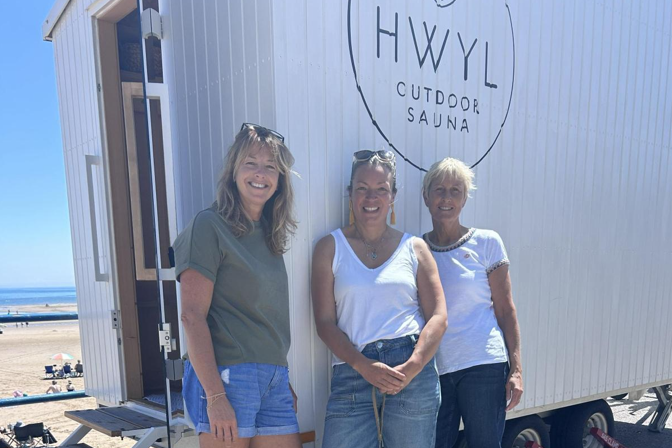
CALLS to allow the permanent siting of an award-winning Pembrokeshire seaside village outdoor sauna, which has been featured in the national press, have been submitted to the national park.
Back in June 2024, a temporary two-year permission for a mobile wood-fired sauna at Saundersfoot harbour was granted by Pembrokeshire Coast National Park’s development management committee.
Since then, a further application by Kerry Evans of Hwyl Outdoor Sauna to make the siting permanent has been submitted to national park planners.
A supporting statement says, since its introduction the sauna has “become a popular and valued amenity for both residents and visitors, offering a space focussed on health, wellbeing and community connection”.
It went on to say: “The overall sentiment within the village has been strongly supportive, with many residents recognising the sauna as a valuable asset that enhances the amenities in Saundersfoot,” adding: “Hwyl Outdoor Sauna has received positive attention in regional and national press helping to promote Saundersfoot as a destination for coastal wellbeing and outdoor experiences.
“Media coverage has highlighted the sauna as an example of the increasing popularity of sea swimming and sauna culture around the UK coastline.
“Hwyl Outdoor Sauna has been featured in two books on the best saunas in the UK.
“The business has also been recognised through tourism and hospitality awards, further demonstrating the quality of the experience provided and the positive contribution it makes to the local visitor offer.”
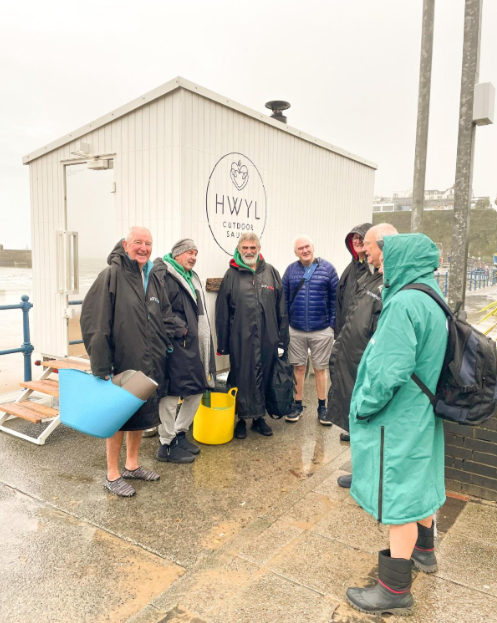
Back in February, the business, set up by former superyacht worker and mum-of-two Kerry won Sauna of the Year 2026/27 at the Wales Prestige Awards.

At the time Kerry said: “I could not be more proud of what I have achieved with Hwyl. I am so grateful to my wonderful team, who have made this journey not only possible but genuinely so much fun.”
Kerry ploughed a legacy from her beloved late father into the venture of a Pembrokeshire seafront sauna.
The application for allowing the sauna to be permanent added: “Through the Welsh Government I have been able to secure the funds to install a cold-water shower on Saundersfoot Harbour, which will be open year-round. This will be achieved via Hywel Outdoor Sauna and a weather proofing fund, from the Welsh Government. This facility has also a GoFundMe to raise the remaining costs.”

It concludes: “Hwyl Outdoor Sauna has established itself as a valued wellbeing facility that benefits both residents and visitors. It enhances the amenities available in Saundersfoot, supports the local economy by encouraging additional visitor activity, and contributes positively to the community through charitable support and engagement.
“The permanent siting of the sauna would allow this successful local small business to continue operating and provide these benefits to the village in a stable and sustainable way.”
The application for a permanent facility will be considered by park planners at a later date.



Crime1 day ago
Driver spared jail after crash killed young couple
A PEMBROKE DOCK driver who caused the deaths of a young couple in a road crash has been given a...


Entertainment1 day ago
BBC unveils major new Welsh dramas with Tenby set for prime-time spotlight
New crime series Old Town Murders and supernatural thriller The Witch Farm will both be filmed and set in Wales...


Health1 day ago
No jobs for new paramedics in Wales as graduates told to apply for technician roles
Students trained at public expense urged to take lower-grade jobs as anger grows over NHS workforce planning NEWLY qualified paramedics...


News2 days ago
Health minister refuses to act on Withybush despite 15,000-signature petition
Senedd pressure grows as Welsh Government declines to intervene over surgery fears THE WELSH GOVERNMENT has refused to step in...


Business3 days ago
Fishguard to Wexford rail tunnel plan backed by Elon Musk firm
Six-hour London to Dublin service proposed in £32bn project ahead of Senedd election PLANS for a rail tunnel linking west...

Charity3 days ago
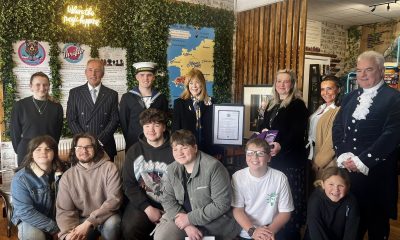
Milford Haven charity honoured with King’s Award for voluntary service
A PEMBROKESHIRE charity supporting vulnerable young people has received one of the highest honours in the UK for voluntary work....

News4 days ago
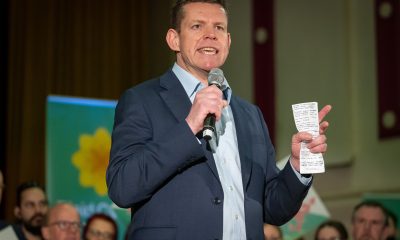
Plaid Cymru launches bid to lead next Welsh Government
Party positions itself as ‘government-in-waiting’ ahead of May election PLAID CYMRU has formally launched its campaign for the 2026 Senedd...


Crime4 days ago
Police appeal after attempted child abduction in Haverfordwest
DYFED-POWYS POLICE has launched an appeal for witnesses following a reported attempted abduction of a 12-year-old girl in Haverfordwest. The...


Crime5 days ago
Gunshot fired by police during incident in Milford Haven
A POLICE officer discharged a firearm during an incident in Milford Haven on Saturday evening (March 28), prompting an investigation...


Community6 days ago
Three Amigos Easter Run roars through Pembrokeshire
MOTORCYCLE enthusiasts turned out in force today (Saturday, March 28) as the popular Three Amigos Easter Run returned to the...
-

 News9 hours ago
Accommodation providers in Wales will be required to register under new law
-
Business3 days ago
Fishguard to Wexford rail tunnel plan backed by Elon Musk firm
-
Entertainment1 day ago
BBC unveils major new Welsh dramas with Tenby set for prime-time spotlight
-

 Charity4 days ago
RSPCA calls for stronger animal welfare measures as Welsh Labour launches manifesto
-

 Entertainment21 hours ago
From Milford Haven to the world: The story of The Evolution Experience
-

 News6 days ago
West Wales man remanded in custody over serious sexual assault charge
-
Crime5 days ago
Gunshot fired by police during incident in Milford Haven
-

 Sport6 days ago
Lloyd and Reynolds take on France with Supra GT4 challenge