


News
BBC Wales investigation uncovers potential new evidence in Clydach Murders case

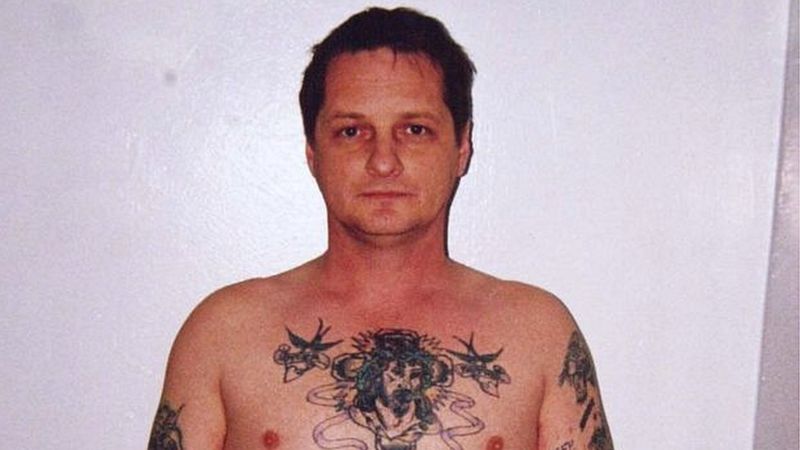
A BBC WALES investigation has uncovered potential new evidence casting doubt over the guilt of a man for the horrific murders of three generations of one family 21-years-ago.
In a powerful one-hour documentary made by the BBC Wales Investigates team, later tonight on BBC One Wales at 9pm and then on BBC iPlayer, reporter Wyre Davies explores whether the conviction of David Morris for one of Wales’ most shocking crimes could be a miscarriage of justice.
Mandy Power, her elderly mother and two young daughters were brutally bludgeoned to death with a metal pole coated in fibre glass at their home in Kelvin Road, Clydach, near Swansea in the summer of 1999. It led to South Wales Police’s largest ever murder inquiry.
Seven years after the murders, local labourer Morris was sentenced to four life prison terms at Newport Crown Court in 2006, later to be reduced to 32 years, after being found guilty of the mass murders.
A year earlier his conviction from a previous trial at Swansea Crown Court in 2002 had been quashed in the Court of Appeal but he was soon to be convicted again.

The brutal murders had sent shockwaves through the close-knit Welsh community in the summer of 1999 and it soon emerged 34-year-old Mandy Power had been involved in a serious love affair with former police officer Alison Lewis at the time she was killed.
Alison Lewis was married and living with her husband – South Wales Police Sergeant Stephen Lewis – when the murders occurred sometime between June 26th and the early hours of June 27th in 1999.
In a twist to the tragic events, Stephen’s twin brother Stuart, an acting inspector with the force at the time, was the most senior officer to arrive at the crime scene that morning.
All three of the Lewis’s quickly became suspects in connection with the murders and just over a year later – in July 2000 – Alison and Stephen Lewis were arrested on suspicion of murder and Stuart Lewis was arrested on the suspicion of perverting the course of justice.

They were questioned but weren’t charged as the Crown Prosecution Service said there was insufficient evidence. All three maintained they were innocent of any involvement.
The focus of the police investigation then sharply turned to Morris after police linked him to a gold chain left at the murder scene, which he admitted was his just weeks before his first trial. He was arrested in March 2001, questioned and charged with the horrific killings in the same month.
However, a new eyewitness account from the night questions whether South Wales Police missed investigating potentially important information during their original inquiries.

Tonight’s programme will hear from a taxi driver, Mike, who claims to have seen twin brothers Stephen and Stuart Lewis walking along Vardre Road minutes away from the crime scene in Kelvin Road after 2am.
“There were two blokes walking towards me on the pavement next to the taxi my side,” Mike said.
“And what struck me was they were very, very similar. Both dark hair, cropped. Very, very similar features.”
Mike says that after seeing their photos in local press coverage he was “100% convinced” the two men he saw were the Lewis brothers. He was working as a taxi driver for a local firm on the night of the murders. He said he contacted police twice about the sightings but says his calls and information he gave to police were never followed up.
Stephen Lewis issued a statement, saying any witnesses who suggest he was in Clydach on the night were mistaken as he was at home all night.
Stuart Lewis has said he did not see either Alison or his twin Stephen that night and was on general patrol when the killings took place; while Alison has said she was at home in bed with her husband, Stephen.
BBC Wales now understands Mike has given his statement to the police, who are investigating.
Wyre Davies also talks to another potential eyewitness in the programme.
John Allen claims to have seen a man carrying a green coloured “kit bag” under his arm near to the crime scene as he drove as a disqualified driver in country lanes in the early hours of the morning with three others.
He says he regrets not informing police at the time but has come forward now.
“I seen him perfectly. Standing there in the middle of the road. When I come round the corner I had to slam on or I would have hit him cause he was practically on my bonnet,” Mr Allen said.
Mr Allen did not report what he saw to the police at the time, and admits that he was driving while disqualified, but says he has now come forward as it’s “been on his mind” for 20 years, and he wants justice.
Another witness who actually gave evidence at David Morris’ trials, also claims to have seen a man carrying a bundle that night near to Kelvin Road.
Nicola Williams reported what she saw to police, provided an e-fit and later identified the man as Stephen Lewis at a video ID parade. At trial her evidence was disputed and it seems it didn’t cause the jury to doubt David Morris’ guilt.
Morris’ legal team believe the potential new sightings could be significant and their testimonials should be investigated by police and the Criminal Cases Review Commission.
Solicitor Maslen Merchant said: “It’s very, very interesting the accounts that they’ve given.
“It’s interesting that they describe events and seeing the same individual – or possibly one of two individuals – around that area at exactly the right time.
“Potentially, new witnesses could provide Dai with a ground of appeal; new “witnesses could get these convictions quashed.
Morris, who has spent more than 19 years in prison for the crime, has always protested his innocence.
His DNA and fingerprints were never discovered at the crime scene in Kelvin Road where he was said to have started four fires to destroy the house after brutally beating his victims to death.
The most incriminating evidence against Morris was the gold chain found at the crime scene which he lied was his until weeks before his first trial.
Winchester University lecturer Brian Thornton has been investigating the murders for more than 10 years from the Crime and Research Centre he set up at the university. He gave BBC Wales access to the original court files housed in a bunker at the university containing thousands of documents and exhibits from the case to investigate.
Professor Thornton said the potential new evidence could prove significant and hopefully provide a breakthrough in terms of getting the case reviewed and back to the Court of Appeal. They plan to include the potential new evidence in a fresh application to the Criminal Cases Review Commission (CCRC).
“The threshold that you have to pass is you have to establish that there is fresh evidence, new evidence, essentially evidence that the jury never heard.
“And this new evidence is going to be right at the heart of the fresh application,” Brian Thornton said.
Morris’ defence team also believe the key to potentially proving his innocence could still lie in the forensics, despite their client’s DNA never being discovered at the scene.
Forensic scientist Joanne Millington has been looking at the case again with fresh eyes.
In the programme she argues there were shortcomings in the original DNA testing of the murder weapon as well as a blood-soaked sock thought to be used as a glove by the killer and both found at the crime scene. Her findings will be included in the new application to be submitted to the CCRC.
Ms Millington says it is already known that an unidentified partial male DNA trace was detected on the murder weapon that isn’t a match to an elimination sample provided by Morris.
“We have an elimination sample from him to compare directly and it doesn’t match his profile,” she said.
Wyre Davies also traces the steps of Morris on the night of the murders and examines the potential sequence of who was killed at the victims’ home in Kelvin Road.
Also appearing in the programme is barrister Simon McKay who has expertise in disclosure and high-profile cases around terrorism and security.
After looking again at disclosure details in both of Morris’s trials, he raises concerns that too many documents were withheld from the defence under the legal umbrella of Public Interest Immunity (PII). The type of documents normally held back as PII are usually only those seen as important for protecting government and public security as well as covert police intelligence.
Mr McKay said: “This case certainly has a significant volume of material which was subject to a series of public interest immunity applications and there is not an obvious reason why you would expect that to arise.
“When one looks at the entire context of the case … then it’s understandable that one walks away from this case with serious concerns that justice has been done.”
The 21-year-old murder case has been back in the spotlight following a campaign set up by Morris’s family.
An online Facebook page aimed at freeing him now has more than 22,000 members. Before lockdown, meetings were held regularly in Swansea to rally support.
Supporters who believe there has been a miscarriage of justice wear or decorate their cars or house with yellow or green garlands and bows.
Morris’ sister Debra Thomas has always protested her brother’s innocence and says she hopes the programme will convince other potential witnesses to come forward with information.
Two attempts to convince the review body to take a fresh look at the case have so far failed, the latest in 2018.
South Wales Police says it undertook an extensive investigation; Morris has twice been convicted by a jury and they await the content of the programme with interest.
The victims’ families – the Dawson and Power families – both issued statements earlier this week, saying they believe the right man was behind bars for the killings.
The Clydach Murders: Beyond Reasonable Doubt airs on BBC One Wales tonight (Thursday) at 9pm; and will be available on BBC iPlayer.

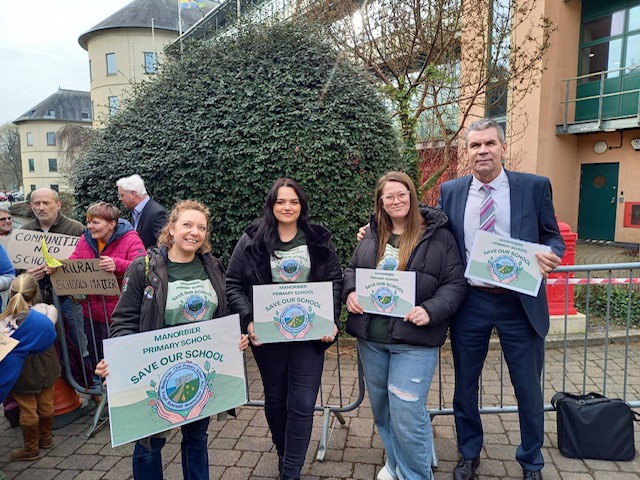
Extraordinary council meeting will consider objections before final ruling
THE FUTURE of two Pembrokeshire schools will be decided in June, despite councillors already backing plans in principle to close them.
Pembrokeshire County Council has confirmed that an extraordinary Full Council meeting will take place on Monday (June 15) to consider objection reports relating to the proposed discontinuation of Ysgol Clydau and Manorbier Church in Wales VC School.
The meeting represents the final stage in the statutory process, where councillors will decide whether to proceed with closure after reviewing formal objections.
The Herald understands that the extraordinary session has been called because the timetable for the proposals does not align with regular council meeting dates.
Last chance to overturn decision
Although councillors have already voted in favour of closure in principle, the June meeting is not a formality.
Campaigners still have a narrow window to influence the outcome, with councillors able to change their position after considering objections and any new evidence.
In rare cases, proposals have been halted or reversed at this final stage — particularly where strong community opposition or concerns over the accuracy of data have been raised.
However, the earlier vote means the schools remain at significant risk, with the council having already indicated its preferred direction.
Political pressure building
The confirmation comes amid growing community concern and a mounting campaign to save Ysgol Clydau.

Campaign group Save Ysgol Clydau – Cadw Clydau yn Gadarn has described the situation as a “critical moment,” urging residents to challenge political parties ahead of the upcoming elections.
Supporters argue that the future of the school is closely tied to the survival of rural communities and the Welsh language.
The group has also thanked councillors — particularly members of the Independent group — for their support.

Decision looming
The June 15 meeting is expected to draw significant public attention, with strong attendance likely as councillors prepare to make a final, legally binding decision.
If approved, the proposal would result in the closure of both schools.
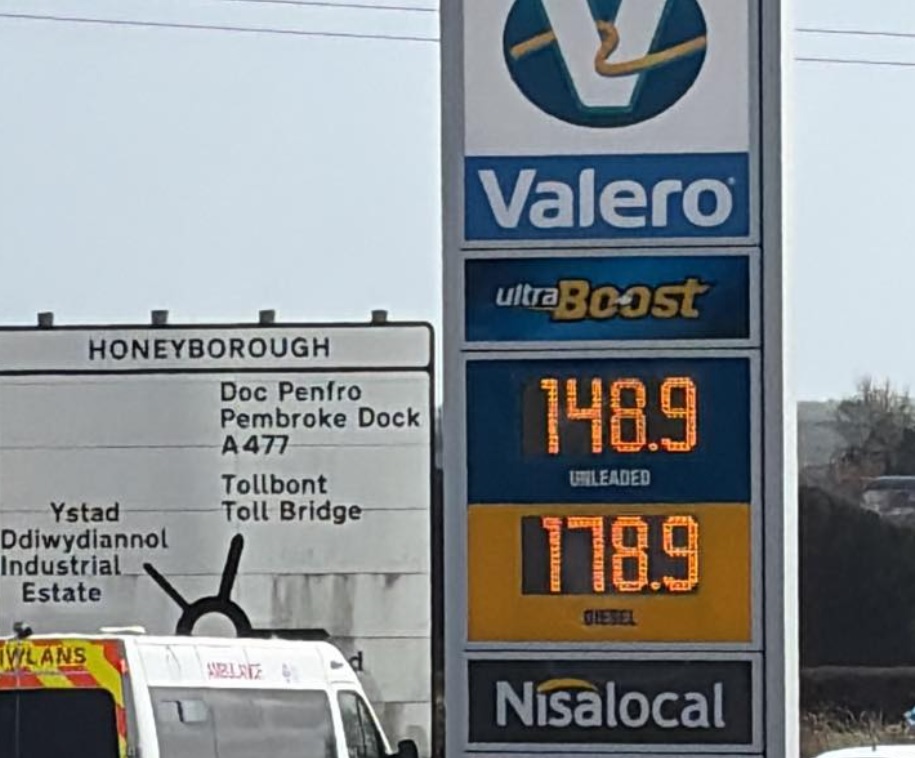
SAMUEL KURTZ MS has called on the UK Government to take immediate action to ease mounting cost-of-living pressures, warning that families across west Wales are being “squeezed from all sides” by rising fuel and energy costs.
Writing to Chancellor Rachel Reeves, the Carmarthen West and South Pembrokeshire Senedd Member urged ministers to cancel planned fuel duty increases and introduce fairer, more effective support for rural households living off the gas grid.
Energy bills are forecast to rise to nearly £2,000 from July, while persistently high global oil prices continue to drive up costs at the pumps. Diesel prices have surged in recent months, with petrol also climbing—adding further strain to already stretched household budgets.
Kurtz warned that any increase in fuel duty later this year would hit rural communities hardest, where reliance on cars is unavoidable due to limited public transport.
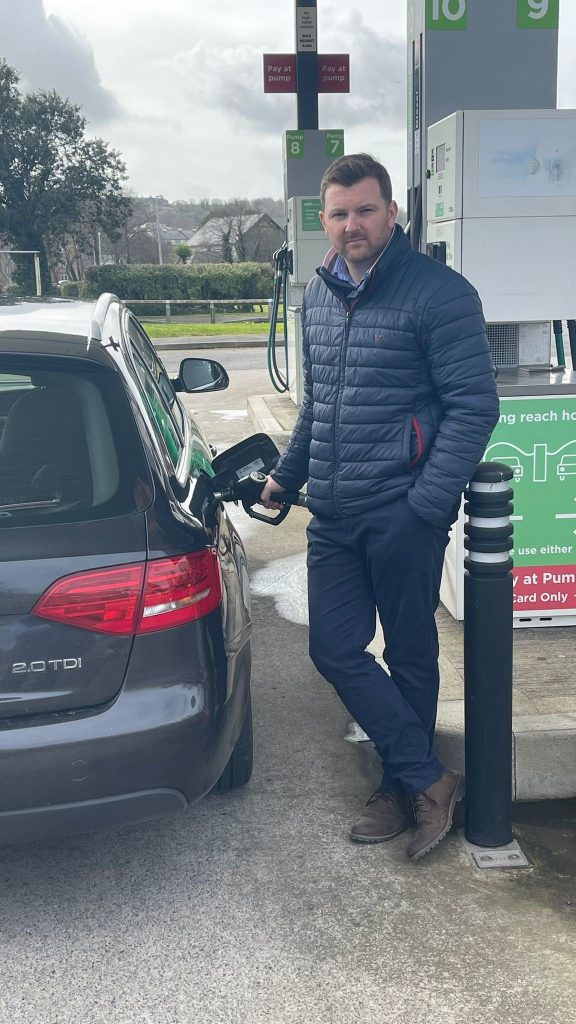
In parts of west Wales, the challenges are even more acute. In Ceredigion, up to three quarters of households are not connected to the gas grid, while in Pembrokeshire around 40% rely on alternative fuels such as heating oil and LPG. Unlike mains gas users, these households are not protected by energy price caps and remain exposed to volatile global markets.

He also criticised existing support measures, describing them as “limited and reactive,” often only available once households reach crisis point. While recent funding announcements for off-grid households have been welcomed, concerns remain over delays and a lack of clarity around how the support will be delivered.
Kurtz pointed to the UK Government’s response during the 2022 energy crisis, which included the Energy Price Guarantee, £400 bill support, and a £200 Alternative Fuel Payment for off-grid homes.
He said: “Households across west Wales are under real pressure, and for many this is not about cutting back—it’s about keeping up.
“Rural families already face higher costs, whether that’s heating their homes or filling up the car. Increasing fuel duty now would only make that worse.

“Off-grid households are being overlooked. They don’t benefit from price caps and are exposed to volatile fuel costs.
“The UK Government acted decisively during the last energy crisis. The same level of urgency is needed again now.
“The Chancellor must act—cancel the planned fuel duty increases and reintroduce the £200 Alternative Fuel Payment to give households the support they need.”

He warned that without swift intervention, rural communities risk being left further behind as cost pressures continue to rise.
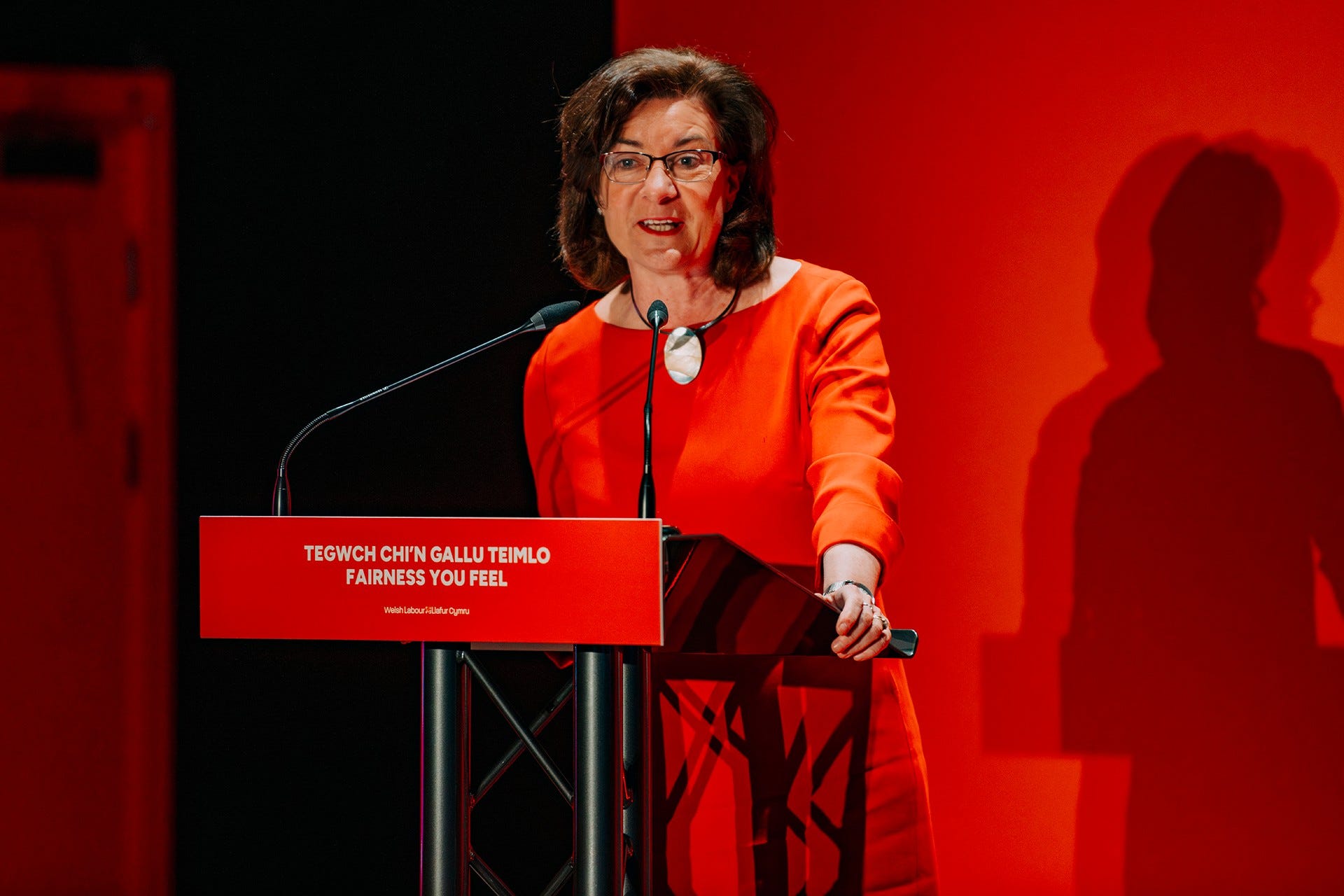
WELSH Labour leader Eluned Morgan has pledged that patients with urgent health concerns will be seen within 48 hours, as the party launched its manifesto ahead of the 2026 Senedd election.
Speaking at an event in Swansea on Monday (Mar 30), Morgan said a re-elected Welsh Labour Government would guarantee access to a GP or other primary healthcare professional on the same day or the following day for pressing issues.
She said: “If you are worried about your child, if your elderly parent needs help, or if something does not feel right, you should be able to get help quickly – not weeks later.”
The pledge forms a central part of Labour’s health offer, alongside plans for same-day, open-access mental health services and a £4bn “Hospitals of the Future” investment programme.
Pressure on delivery
However, the announcement has already prompted questions about how the target would be delivered, given ongoing pressures across NHS Wales.
Latest figures show around 757,000 patient pathways remain on waiting lists, with approximately 38,000 people waiting more than a year for treatment. Previous Welsh Government targets to reduce long waits have also been missed.
The 48-hour target itself is less ambitious than proposals in England, where a 24-hour access standard has been discussed. Morgan has said the Welsh target reflects what is “realistic” given current pressures.
Critics argue the pledge risks repeating a familiar pattern of commitments that prove difficult to deliver in practice.
‘Plans to have plans’
Beyond health, scrutiny of the manifesto has focused on what some commentators have described as a lack of urgency in key policy areas.

Several flagship commitments involve future strategies or reviews, including a promise to publish a new industrial strategy within the first year of the next Senedd term, and proposals to “explore” ways to reduce teacher workload.
Opponents have characterised this approach as “plans to have plans”, questioning whether it reflects the scale of challenges facing Wales in areas such as healthcare, housing and education.
The First Minister has defended the approach, arguing that detailed proposals are set out across the manifesto and that flexibility is needed to respond to changing economic conditions.

Health investment under scrutiny
Labour’s £4bn pledge for new hospitals and infrastructure has also come under examination.
The party says the funding will support major developments, including replacing University Hospital Wales and Wrexham Maelor Hospital, as well as improvements in West Wales.
However, questions remain about whether the funding would be sufficient to cover large-scale rebuilds while also addressing existing maintenance backlogs across the NHS estate.
Morgan said the figure was based on previous capital projects and insisted the funding plans were “realistic”.
Cost-of-living commitments
Alongside its health pledges, Welsh Labour has committed not to raise Welsh rates of income tax during the next Senedd term.
The manifesto also includes a £2 cap on single bus fares, continued discounted travel for young people, free travel for over-60s, and plans to create 20,000 new childcare places.
Labour says the package is designed to ease cost-of-living pressures while supporting economic growth.
A ‘new chapter’ or more of the same?
At the launch, Morgan described the manifesto as the start of a “new chapter” for Wales, signalling a shift from what Labour describes as a period of “protection” through austerity, Brexit and the pandemic, towards a focus on growth and opportunity.
But with Welsh Labour having been in power for more than two decades, opponents argue the party faces a challenge in convincing voters that change will come from the same administration.
While the manifesto contains a range of policy commitments across health, the economy and the environment, the central question is likely to remain whether voters believe the pledges can be delivered.
As the campaign for the May 2026 Senedd election gathers pace, that question is set to dominate the political debate in Wales.


News19 hours ago
Plaid Cymru launches bid to lead next Welsh Government
Party positions itself as ‘government-in-waiting’ ahead of May election PLAID CYMRU has formally launched its campaign for the 2026 Senedd...


Crime20 hours ago
Police appeal after attempted child abduction in Haverfordwest
DYFED-POWYS POLICE has launched an appeal for witnesses following a reported attempted abduction of a 12-year-old girl in Haverfordwest. The...

Crime2 days ago
Gunshot fired by police during incident in Milford Haven
A POLICE officer discharged a firearm during an incident in Milford Haven on Saturday evening (March 28), prompting an investigation...


Community3 days ago
Three Amigos Easter Run roars through Pembrokeshire
MOTORCYCLE enthusiasts turned out in force today (Saturday, March 28) as the popular Three Amigos Easter Run returned to the...

Education4 days ago
Ysgol Henry Tudor reassures parents over Sikh ceremonial kirpan
School says religious item worn by pupil is secured, symbolic and non-functional YSGOL HENRY TUDOR has moved to reassure parents...

Crime5 days ago
Teen jailed after starting fire while others slept
Fire set in shared home left sleeping residents at risk and caused £130,000 damage A TEENAGER who started a fire...

Health5 days ago
GP crisis driving NHS pressure in Wales, Senedd report warns
Falling GP numbers and funding gaps blamed for worsening hospital delays THE NHS crisis highlighted earlier this week is being...

News6 days ago
Reform reveals west Wales candidates for Senedd battle
Monkton councillor tops Pembrokeshire list as party confirms Carmarthenshire names and includes Haverfordwest councillor in unwinnable Swansea spot REFORM UK...

Health6 days ago
Clash over Withybush Hospital services as Paul Davies challenges First Minister
A HEATED exchange in the Senedd has laid bare growing tensions over the future of hospital services in west Wales....

Crime7 days ago
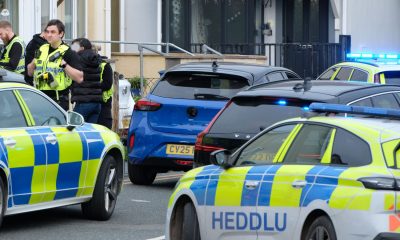
Police stop car in Pennar as three arrested in drugs investigation
Suspected drug driver report leads to major police response and multiple arrests DRAMATIC scenes were reported in Pennar on Monday...
-

 Business7 days ago
Taxi fare shock in Milford Haven as drivers switch to meters
-
 News6 days ago
Welsh Government outlines progress on flood resilience plans
-
 Health7 days ago
Average of 18 deaths a week in Wales linked to A&E delays, figures reveal
-
 Community5 days ago
Hero female officer keeps job after sexual touching finding
-
Crime7 days ago
Police stop car in Pennar as three arrested in drugs investigation
-
 Business5 days ago
Popular Italian restaurant hit with £278,000 tax bill plus £186,000 fine
-
Education4 days ago
Ysgol Henry Tudor reassures parents over Sikh ceremonial kirpan
-
 Community7 days ago
Calls to block Withyhedge landfill expansion amid ‘worst in Wales’ claims