


News
Welsh government asks Wales to make a stand


 IN THE WEEK when the Gender-Based Violence, Domestic Abuse and Sexual Violence (Wales) Bill goes before the National Assembly, the Welsh Government has launched an awareness campaign asking people to make a stand against all forms of such violence and abuse.
The Welsh Government is asking the people of Wales to openly declare their intolerance of these types of abuse by posting photographs of themselves linking arms on Facebook and Twitter and using the hashtag #makingastandwales. The photos will mirror an advertising campaign which began on Monday, June 30, on poster sites and LCD panels around Welsh railway stations, showing groups of figures linking arms. The year-long campaign will pose the question ‘What will you do?’ and will raise awareness of the support services available to those experiencing domestic abuse, violence against women and sexual violence. More information will also be made available to the public on what to do if they suspect someone may be a victim or perpetrator. In Jenny’s case she was 19-years-old when she was referred to Community Services by her social worker. Eighteen months prior to the referral Jenny fell pregnant, at which point the abuse from her then partner became physical and financial. At first, Jenny failed to engage with the support, missing appointments and making excuses. She also hid the truth from her social worker. After four months of failed attempts to engage, there was a final incident which made Jenny realise she needed help to keep herself and her son safe. Jenny said: “One day I was driving home with my son in the babyseat when I became aware of my ex-partner in his car directly behind us. He had obviously followed us and was driving like a maniac. He was furious about something and bumped the back of my car several times. He had never been violent towards our baby before. Knowing that he wanted to harm me even though he could harm our son in the process made me realise that I needed help. I was still terrified, but at that point I knew I had to do something to protect my son – no matter what. After ten months of support all of the goals Community Services had set with Jenny had been achieved. A risk assessment was completed and the risk was considerably reduced. There was still a chance the perpetrator could come to the house but a safety plan was in place and Jenny has since chosen to end support, safe in the knowledge that she can ring the emergency number she has been given at any time. All those in need of help or further information will be signposted to the Live Fear Free website – livefearfree.org. uk and the All Wales Domestic Abuse and Sexual Violence Helpline – 0808 8010800. The Minister for Local Government and Government Business, Lesley Griffiths AM, said: “Colleagues, f r i e n d s , neighbours and even family members may be afraid of acting on their s u s p i c i o n s of abuse for fear they are mistaken, interfering or even making the victim’s situation worse. With this campaign, we aim to empower people with information to act in the right way if they suspect abuse may be taking place. “We want people to openly declare they are united against these types of abuse. So we are appealing to groups of friends, neighbours, office, shop or factory workers, and social groups from book clubs to sports teams to publicly make a stand and begin to help us break this taboo.” The Welsh Government’s funding in this area totals £4m which supports third sector organisations delivering direct services to victims and education on healthy relationships in schools. The funding also supports domestic abuse co-ordinators and independent domestic violence advisers across Wales, as well as the 24 hour All- Wales domestic abuse helpline to provide help, advice and emergency support. If you are experiencing domestic abuse or suspect that someone you know is, call the All Wales Domestic Abuse and Sexual Violence Helpline on 0808 80 10 800 or visit www. l i v e f e a r f r e e . org.uk


Volunteer-run garden recognised among record number of award-winning green spaces across Wales
THE DEDICATION of local residents has secured Manorbier Community Garden its first prestigious Green Flag Community Award.
Around 50 people gathered at the garden to celebrate the achievement with food and refreshments before watching the Green Flag being raised.
The award was announced by Keep Wales Tidy as part of the 2026 Green Flag Awards, which recognise the best-managed parks and green spaces across Wales.
A record 330 Welsh sites have met the standards required to fly a Green Flag this year. Of these, 93 received full Green Flag Award status, while 237 volunteer-run spaces were presented with Green Flag Community Awards.
Manorbier Community Garden was recognised for its environmental work, welcoming visitor facilities and strong level of community involvement.

Green Flag Community Awards celebrate high-quality spaces managed largely by volunteers, including community gardens, local nature reserves and other valued neighbourhood sites.
Wales has now secured more Green Flag Community Awards than any other country taking part in the scheme for the third consecutive year. The total has risen from 223 last year to 237 in 2026.
Work on Manorbier Community Garden began in April 2024, transforming an area of scrubland into a flourishing community space in little more than two years.
Led by local couple Ollie and Sian Cromwell, volunteers have built raised beds using repurposed materials and filled them with vegetables, flowers and other plants donated by residents.

Everything is grown organically, without the use of pesticides or herbicides, and produce from the garden is available for the community to share.
The site also includes a secure chicken enclosure housing six hens, a children’s mud kitchen and spaces where residents can meet, play and enjoy the outdoors.
Pick-a-Pumpkin events have also been organised for local children.

Keep Wales Tidy supported the project by providing food-growing and orchard packages, a metal tool shed and a small polytunnel. Volunteers have since constructed a larger polytunnel using donated materials.
Sian Cromwell said: “We are absolutely delighted to have received the Green Flag Community Award. It means so much to our community and celebrates what can be achieved when people come together with a shared vision.
“Just over two years ago, this was simply scrubland. Today, it is a thriving and welcoming space, rich in biodiversity and bursting with life.
“There are fresh vegetables for everyone to share, flowers, chickens, a mud kitchen for children and space for people to play, meet and connect.
“The garden belongs to the whole community. We are incredibly proud of how far we have come and warmly invite everyone to play a part in its sustainable future.”
The Green Flag Award scheme was established 30 years ago and now recognises well-managed parks and green spaces in more than 20 countries around the world.
In Wales, the awards are administered by Keep Wales Tidy.
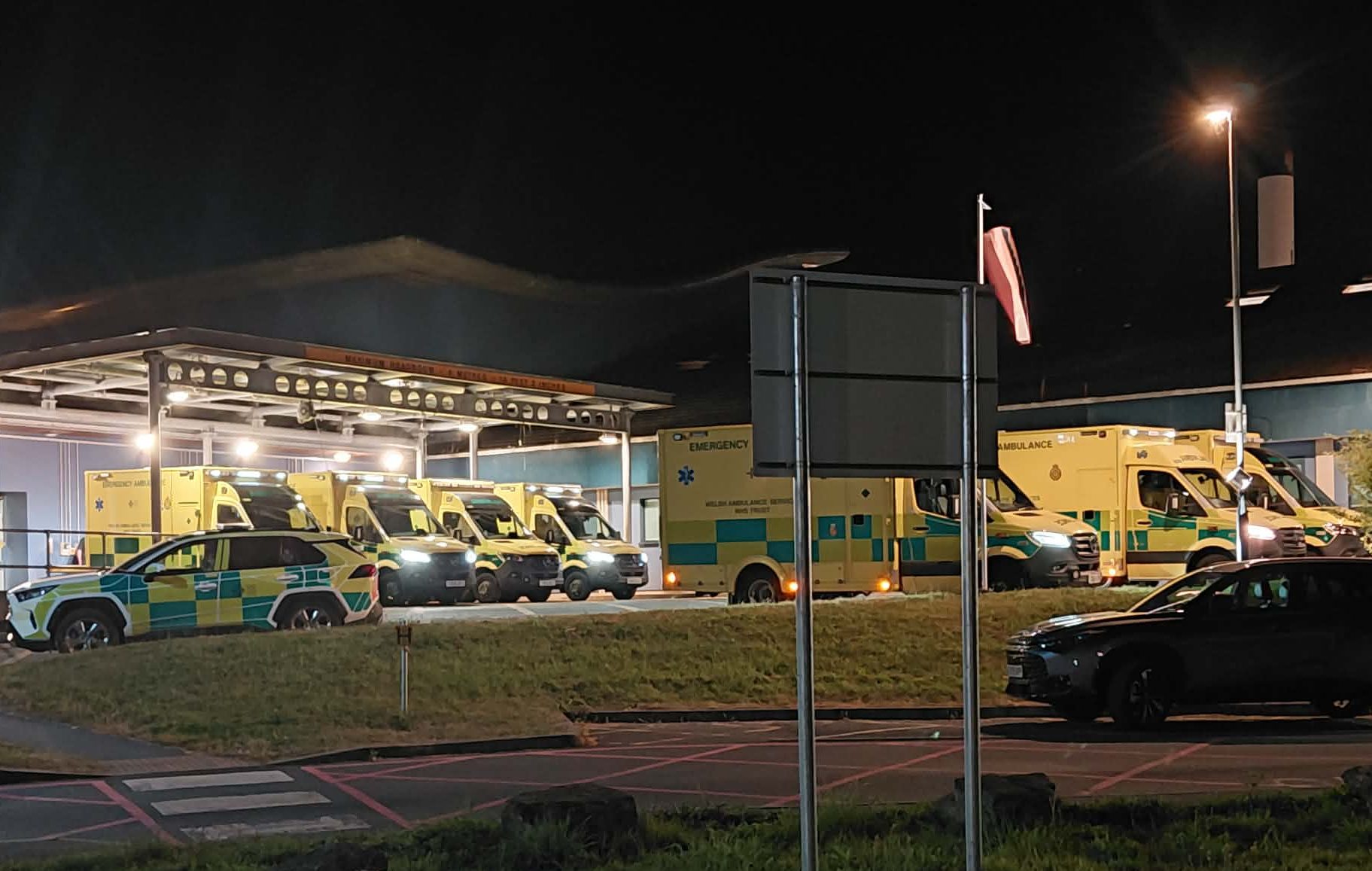
Almost 12,000 patients waited more than 12 hours in June as emergency doctors warned that a crisis once associated with winter had become a year-round emergency
WALES’ emergency departments have recorded their worst June for lengthy waits, with almost 12,000 patients remaining in major A&E units for more than 12 hours.
New NHS Wales figures show that 11,813 patients, equivalent to around one in six of those attending a major emergency department, waited more than half a day before being admitted, transferred or discharged.
Only 49 per cent of patients completed their journey through a major emergency department within four hours, the lowest proportion recorded and well below the NHS Wales target of 95 per cent.
Emergency doctors said the figures showed that a crisis once associated with the depths of winter had become a permanent feature of the Welsh NHS.
The Royal College of Emergency Medicine warned that patients were routinely being left on trolleys and chairs in overcrowded departments because hospitals did not have enough available ward beds.
Dr Rob Perry, the College’s Vice President for Wales, described the state of emergency care as “nothing short of shameful”.
He said: “We’re now in a situation where the majority of our patients are waiting more than four hours to pass through our department, and many are waiting more than half a day.
“This is an unacceptable state of affairs, and some of the worst waiting times since records began.
“I must be clear: no patient should wait 12 hours on a trolley, or a chair, in an overcrowded emergency department.
“Long waits like this are not only stressful and undignified, they are dangerous and put lives at risk.”
Crisis no longer confined to winter
The June figures are particularly concerning because they were recorded during summer, when hospitals are not yet dealing with the seasonal rise in flu, respiratory infections and cold-weather illnesses.
Dr Perry said: “Worse still, these are milestones which we are passing in summer.

“We aren’t even battling with flu or cold weather, but the wheels are coming off the bus anyway.”
The Welsh Government said June saw the highest number of emergency department attendances recorded for that month and pointed to additional demand caused by prolonged hot weather.
However, the Royal College argued that the number of people arriving at emergency departments was not the main cause of the deterioration.
Attendances fell compared with May and have remained broadly stable over the longer term.
Emergency doctors say the central problem is that patients who need admission cannot leave A&E because hospital wards are full.
Those wards may, in turn, contain patients who are medically well enough to leave hospital but cannot be discharged because the necessary social care, rehabilitation, equipment, home adaptations or suitable accommodation are not available.
The resulting blockage works backwards through the entire hospital.
Patients awaiting admission remain in emergency department cubicles or temporary treatment areas. Newly arriving patients cannot be moved into appropriate spaces, while ambulance crews may struggle to hand over those they have brought to hospital.
Patients trapped by hospital ‘exit block’
The Royal College describes the problem as “exit block”.
A patient may have been examined, treated and judged to need admission, but cannot be moved to a ward because no bed is available.
This can leave emergency departments attempting to provide ward-level care in spaces designed for short-term assessment and treatment.
Dr Perry said: “This is a fixable problem and we know what the causes are.
“Delayed discharges, and the accompanying lack of available beds in wards, are a serious problem, not the number of people arriving at our doors.
“Exit block makes it impossible for us to move patients in need of admission out of the emergency department.
“This complete breakdown in patient flow is causing untold misery for emergency department patients.”
Long waits do not necessarily mean a patient has received no medical attention. The NHS measurement covers the entire period between arrival and admission, transfer or discharge.
However, prolonged stays in crowded emergency departments can place patients at significant risk.
Frail and elderly people can become dehydrated, confused or physically weaker while waiting. Providing regular observations, medication, personal care and infection control also becomes more difficult when departments are caring for more patients than they were designed to hold.
Patients can be left without adequate privacy, while staff are forced to treat people in corridors, waiting areas and other unsuitable locations.
There is also a risk that conditions can deteriorate while doctors and nurses are simultaneously attempting to deal with new emergencies.
Social care pressures affecting hospitals
The problems facing emergency departments cannot be separated from the pressure on community and social care services.
Patients who are medically fit to leave hospital may still require home-care support, rehabilitation, a nursing or residential placement, specialist equipment or adaptations to their property.
When those services are unavailable, patients remain in hospital longer than clinically necessary.
That reduces the number of beds available for people waiting in A&E and contributes to congestion throughout the system.
Health and social care leaders have repeatedly warned of difficulties recruiting and retaining staff, particularly in rural areas, as well as shortages of suitable care placements and community support.
Simply discharging patients more quickly would not solve the problem if the necessary care is not available.
Patients must be able to leave hospital safely, with proper support in place to prevent them from deteriorating or being readmitted.
Pressure across west Wales
Hospitals serving Pembrokeshire, Carmarthenshire and Ceredigion are also affected by the wider pressures facing emergency care.
Withybush Hospital in Haverfordwest, Glangwili Hospital in Carmarthen and Bronglais Hospital in Aberystwyth serve large rural populations, with some patients living considerable distances from hospital, community care and specialist services.
The geography of west Wales can make it more difficult to arrange home-care visits, rehabilitation support and suitable placements, particularly when services are already facing staff shortages.
Patients discharged from hospital may also require transport, family support or changes to their homes before they can return safely.
Any failure in those services can result in hospital beds remaining occupied, even after treatment has been completed.
Ministers under pressure to deliver action
The new Welsh Government has said that reducing long waits and improving access to treatment are among its priorities.
Health and Care Minister Mabon ap Gwynfor described the latest performance as disappointing and unacceptable, while thanking NHS and social care workers for continuing to deliver services under intense pressure.
The Royal College said it welcomed the Government’s willingness to engage with emergency clinicians, but warned that discussions must now be followed by measurable action.
Dr Perry said: “The new Welsh Government has signalled that it understands the need to reduce long waits and overcrowding, and we are pleased that it is engaging with the Royal College on this issue.
“I hope, for our patients’ sake, that these words become action soon.
“As today’s figures show, the problem is only going to get worse without the proper interventions.”
The immediate test for ministers will be whether they produce a clear plan for reducing 12-hour waits, improving the movement of patients through hospitals and increasing the community and social-care capacity needed to allow people to leave hospital safely.
Without that intervention, Wales risks entering the coming winter with its emergency departments already experiencing conditions previously associated with the most difficult weeks of the year.
The crisis is no longer waiting for winter. It is already here.
Image:
Crisis point: Ambulances waiting to unload patients at Withybush Hospital, Haverfordwest, July 2026

Health board to consult patients over proposed permanent closure of nurse-led service at Shalom House
A NURSE-LED branch surgery in St Davids could be forced to close temporarily from the end of September after the building from which it operates was put up for auction.
Hywel Dda University Health Board has also confirmed that Meddygfa Penrhyn has submitted a formal application seeking the permanent closure of its branch surgery at Shalom House.
The practice applied to close the service in February, citing staffing difficulties and concerns about its long-term sustainability.
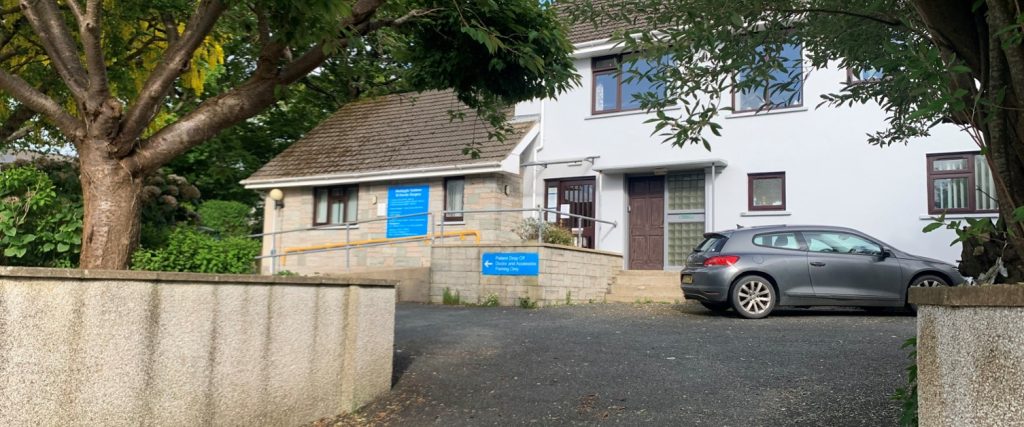
However, no final decision has been made, and the health board said patients, residents, staff and other stakeholders will be given an opportunity to express their views before the application is determined.
The situation has become more urgent after the trustees of Shalom House informed the health board that they intend to auction the premises.
The building will no longer be available for use as a surgery from the end of September 2026, meaning the branch could temporarily close while consultation takes place and alternative arrangements are considered.
Health officials stressed that the loss of the building would not automatically mean the permanent closure application would be approved.
The branch surgery opened in November 2024 and operates on weekday mornings. It is staffed by nurses and primarily provides services including blood tests and wound care.
Patients requiring a GP appointment currently travel to the main Meddygfa Penrhyn surgery, around three-and-a-half miles away.
The health board is drawing up an engagement plan with patient representative body Llais and the Local Medical Committee before formally seeking the views of the community.
Andrew Carruthers, chief operating officer at Hywel Dda University Health Board, said the organisation recognised the importance of accessible local healthcare.
He said: “We understand that residents may have questions about what recent developments mean for the future of the branch surgery.

“Our focus is on working hand-in-hand with our community to explore how we can ensure local health provision that keeps people well.
“We are keen to work with local stakeholders, including the Penrhyn Peninsula Working Group, to enable us to have a broader conversation about the future of our branch surgery and how it serves everyone in the area.”
Mr Carruthers said the health board was committed to hearing from as many people as possible before reaching a decision.
He added: “At this stage, no decision has been made regarding the closure application.
“We are committed to engaging with patients, residents and stakeholders to understand the potential impact of the proposal and to ensure that all views are considered as part of the decision-making process.
“Although we have been advised that Shalom House will no longer be available from the end of September, this does not predetermine the outcome of the branch surgery closure application.”
A final decision will take into account public feedback, evidence of local demand and the potential effect on patients.
Details of the consultation, including how residents can submit their views, are expected to be announced in the coming weeks.



Community19 minutes ago
‘Paying £29 to reach a cashpoint is absurd’: Narberth’s urgent ATM appeal
Residents, businesses and visitors are being urged to provide evidence after two High Street cash machines were removed, leaving the...

Crime17 hours ago
Haverfordwest man jailed for seven years for historic rape and sexual assault of girl
A HAVERFORDWEST man has been jailed for seven years after being convicted of raping and indecently assaulting a girl during...


News21 hours ago
Burnham more willing to listen on Welsh devolution, says First Minister
Rhun ap Iorwerth says he will press the new Prime Minister for powers over policing, railways and Wales’ natural resources...


Crime1 day ago
Women jailed after man chased through Milford home and attacked with knives
Kelly Rees receives further 27-month sentence while already serving prison term for notorious taxi robbery TWO women have been jailed...


Crime1 day ago
Mother headbutted and clawed police officers after threatening social worker
Court shown body-worn footage of violent confrontation at Goodwick property A COURT has been shown police body-worn footage capturing the...


Crime2 days ago
Man, 37, found dead following major police response in Pembroke Dock
Death not being treated as suspicious as police make statutory referral to IOPC following active investigation A 37-YEAR-OLD man has...


Community2 days ago
Household Cavalry drum horse returns home to Pembrokeshire for final farewell
Dyfed Willa Rose, who became Major Juno and the first mare to serve as a Household Cavalry Drum Horse, was...


News3 days ago
Jo Stevens out as Welsh Secretary as Burnham reshapes government
Cardiff East MP repeatedly visited Pembrokeshire to champion clean energy jobs, but her successor inherits unresolved questions over Milford Haven’s...


Crime3 days ago
Teen cleared of attempted murder but guilty of GBH after Milford teacher stabbed
Jury returns 11-1 majority verdict on charge of causing grievous bodily harm with intent, with sentencing set for September 3...


Community3 days ago
French troops march through Fishguard as Britain’s last invasion returns to life
Battle scenes, cavalry displays and a surrender procession brought one of Pembrokeshire’s most extraordinary stories back to the streets MUSKET...
-

 Crime1 day ago
Drunken rail passenger tried to headbutt police after being refused travel
-

 featured2 days ago
From a father-and-son project to an award-winning campervan business
-
Crime1 day ago
Women jailed after man chased through Milford home and attacked with knives
-
News21 hours ago
Burnham more willing to listen on Welsh devolution, says First Minister
-
Crime17 hours ago
Haverfordwest man jailed for seven years for historic rape and sexual assault of girl
-

 Entertainment2 days ago
Robin Hood: A magical show by young talent at The Torch Theatre
-
Crime1 day ago
Mother headbutted and clawed police officers after threatening social worker
-

 Farming2 days ago
Royal Welsh Show opens with Brecknock centre stage