


News
Brexit food export fees set by Pembrokeshire County Council


A NEAR-£200 fee is to be introduced for Pembrokeshire fishing businesses that wish to export food to Europe from county ports post-Brexit.
At the March meeting of Pembrokeshire County Council’s Cabinet, members were asked to consider implementing a fee for Export Health Certificates issued by the Port Health Team.
An Export Health Certificate (EHC) is an official document that confirms that food exports meet the health requirements of destination countries.
A report for Cabinet said: “As a result of Brexit, fishery products exported to the European Union from the United Kingdom now require an EHC, as laid out in the Official Control Regulations 2017/625.
“This Regulation (EU) 2017/625 of the European Parliament and of the Council of March 15, 2017 is related to official controls and other official activities performed to ensure the application of food and feed law, rules on animal health and welfare, plant health and plant protection products.”

Members were told The Port Health Team receives requests – 20 in 2022 – for EHCs from certain Pembrokeshire businesses, and fishing vessels, which land their catch in Milford Haven Docks, where the consignments are destined for the European Union.
The Port Health Team assumes responsibility for matters relating to fish and fishery products, issuing certificates as part of this function.
The team receives applications from exporters and attend the vessels at the time of landing to inspect the catch/consignment and to issue the certificates.
Legislation enables the council to charge for this service, allowing it to operate a full cost recovery for its time in inspecting and administering the requirements of the certification.
A fee to cover this was calculated at £199 [excluding VAT] per EHC request, which was recommended for approval.
Cabinet members agreed to support the introduction of the fees.


CONCERNS over the future of skilled industrial jobs in Pembrokeshire have been raised following a meeting between two Senedd Members and Valero.
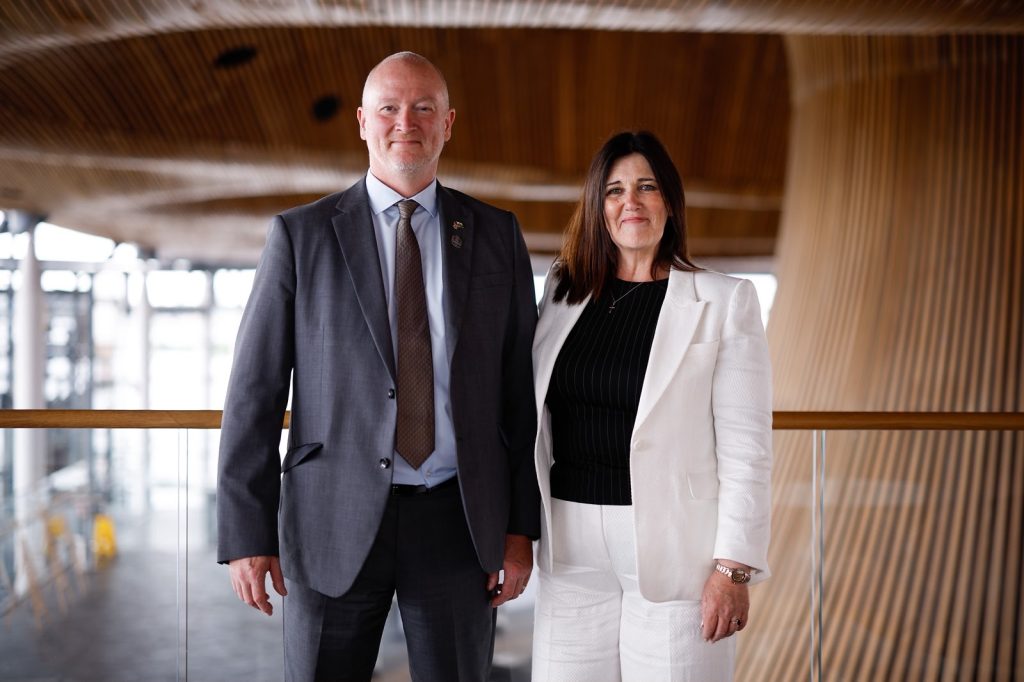
Claire Archibald MS and Paul Marr MS met with a senior representative from Valero to discuss the future of Pembroke Refinery, apprenticeships, and the pressures facing the UK refining industry.
Pembroke Refinery is one of the most important industrial sites in Wales, supporting hundreds of direct jobs as well as many more through contractors, suppliers and local businesses.
Speaking after the meeting, Claire Archibald MS said the refinery was “hugely important” to Pembrokeshire.

She said: “It supports skilled jobs, apprenticeships, contractors, local businesses, and families across the county. These are exactly the kind of well-paid, long-term jobs we should be protecting in west Wales.
“Valero raised serious concerns about the pressure being placed on UK refining, particularly through carbon costs and the UK Emissions Trading Scheme.
“If we make it too expensive to produce fuel here, we risk pushing jobs, investment, and production overseas. That would be bad for Pembrokeshire, bad for UK fuel security, and would not help the environment if the same fuel is simply imported from elsewhere.”
Ms Archibald said the Welsh Government had a role to play in supporting major industrial employers.
She added: “Ministers cannot just stand back and say this is nothing to do with them. They have responsibilities around economic development, skills, planning, regulation and infrastructure, and they are also part of the UK ETS framework.
“I will be pressing the Welsh Government to engage properly with Valero, listen to the concerns being raised, and treat Pembroke Refinery as the strategically important site it is.
“Pembrokeshire has already lost too much industry over the years. We should be doing everything sensible to protect skilled jobs, support apprenticeships and keep major employers investing here for the long term.”
Paul Marr MS said Pembroke Refinery remained a vital part of the local economy.

He said: “The message from Valero was clear: if we want to keep major industry in Wales, we have to make sure the policy environment allows businesses to invest, compete and plan for the future.
“We cannot afford to take sites like Pembroke Refinery for granted.”
Ms Archibald said she will now raise the concerns with the Welsh Government and ask what action ministers are taking to support Pembroke Refinery, protect skilled jobs and secure future investment in Pembrokeshire.
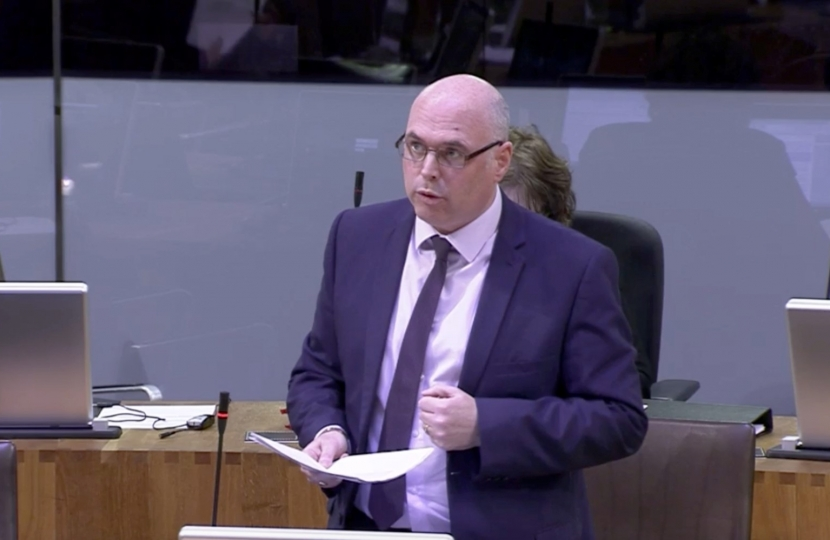
PAUL DAVIES MS has called on the Welsh Government to set out whether it will consider introducing a national screening programme for prostate cancer in Wales.
Mr Davies said he had requested a formal statement from ministers on prostate cancer services, including whether screening could be introduced to help improve early diagnosis.
He has also asked for an update on whether Stereotactic Ablative Radiotherapy, known as SABR, will be made available to patients in Wales. The treatment is already available to some patients in England.
Mr Davies said: “Prostate cancer is the most common cancer in men in Wales, and it is vital that patients have access to the very best treatments to improve outcomes.
“We need to understand whether the Welsh Government will consider a national screening programme, and whether Welsh patients will be given access to treatments that are already available across the border.”
The call comes amid continuing concern about cancer waiting times and access to specialist treatment in Wales.

New scheme aims to improve emergency response and safeguarding for victims across west Wales
A LAW introduced after a woman and her mother were murdered despite repeated 999 calls is to be rolled out in the Dyfed-Powys Police control room.
Domestic abuse specialists will be placed alongside emergency call handlers under the second phase of ‘Raneem’s Law’, giving officers and control room staff real-time advice when victims call for help.
The scheme is named after Raneem Oudeh and her mother Khaola Saleem, who were murdered in Birmingham in August 2018 by Raneem’s former husband after police failed to respond properly to repeated emergency calls.
Dyfed-Powys Police and North Wales Police are among twelve additional forces across England and Wales selected to join the scheme, bringing the total number taking part to seventeen.

For west Wales, the move means callers from Pembrokeshire, Carmarthenshire, Ceredigion and Powys should have domestic abuse risks assessed at the first point of contact, rather than later in the process.
The specialists will help identify high-risk cases, advise call handlers and responding officers, review risk assessments and ensure victims are referred quickly to specialist support services.
Early reports from forces already using the scheme suggest it has improved confidence among call handlers and officers, helped identify high-risk domestic abuse cases sooner, and led to faster safeguarding action.
The UK Government says the expansion comes six months after the launch of its Violence Against Women and Girls Strategy, which aims to halve violence against women and girls within a decade.
Minister for Safeguarding and Violence Against Women and Girls, Natalie Fleet, said: “Last year, one in eight women experienced domestic abuse, sexual assault, or stalking. No society that tolerates this level of violence can claim to be safe for women.
“That’s why we are rolling out the pioneering ‘Raneem’s Law’ to forces in Wales because every victim, no matter where they live, should be able to rely on a system that truly supports them.
“But we will not stop there. We will deploy the full power of the state to make this country safe for women and girls.”
Nour Norris, lead campaigner and the aunt and sister of Raneem Oudeh and Khaola Saleem, said: “When my sister Khaola and my niece Raneem called for help, they should have been heard, understood and protected. Instead, our family lost two beautiful lives in circumstances that should never have happened.

“Every step forward for ‘Raneem’s Law’ is deeply emotional for me because it comes from unimaginable pain and loss.
“‘Raneem’s Law’ is more than a policy. It is a legacy built on love for my sister and niece and on the determination that their voices, and the voices of all victims of domestic abuse, are never ignored again.”
Secretary of State for Wales Jo Stevens said: “The UK Government is working to make our communities safer and it is vital that we reduce violence against women and girls to achieve this goal.
“We know that a specialist focus on preventing domestic abuse works, and I am pleased that this new approach is going to be rolled out across two of our Welsh police force areas.
“Victims of appalling abuse across North Wales and Dyfed-Powys will now have the greater protection they deserve.”
The Government has committed to rolling out ‘Raneem’s Law’ across every police force in England and Wales by 2029.



Community8 hours ago
Manorbier fire scandal: Council’s payout just £63,777 after school destroyed
PEMBROKESHIRE COUNTY COUNCIL has accepted an insurance settlement which leaves it with just £63,777.07 after the catastrophic fire which destroyed...


News16 hours ago
Bus overturns in major incident near Kidwelly
All passengers rescued as emergency services remain at scene A BUS overturned on the A484 between Kidwelly and Ferryside on...


Community2 days ago
Tenby Summer Spectacular cancelled amid council row over harbour access
Organisers say popular charity events cannot safely go ahead without clear powers to control crowds TENBY ROUND TABLE has announced...


News2 days ago
Motorcyclist dies after four-vehicle crash on A40 in Carmarthenshire
A MOTORCYCLIST has died following a four-vehicle collision on the A40 between St Clears and Whitland. Dyfed-Powys Police said the...


News2 days ago
Rhun ap Iorwerth urges new deal for Wales after Starmer quits
First Minister says next Prime Minister must focus on greater powers, fair funding and respect for Wales’ democratic mandate FIRST...


News2 days ago
How Labour’s landslide victory unravelled in just two years
Prime Minister announces resignation after losing support within his own party as Andy Burnham emerges as overwhelming favourite to take...


News2 days ago
Long Course Weekend set to bring thousands to Pembrokeshire
Three days of swimming, cycling and running will once again transform Tenby into one of the UK’s biggest endurance sporting...


Community3 days ago
The gentle giant behind the tattoos
Pembrokeshire security worker Josh Davies praised for professionalism, kindness and proving first impressions can be wrong JOSH Davies is hard...


Charity4 days ago
Toy Story fans fill charity toy box at Haverfordwest cinema
Donations pour in for SNAP Specialist Play as families embrace Toy Story 5 launch A TOY STORY-themed charity appeal at...


Community4 days ago
Lord Rhys emerges from the mist in St Davids
Giant puppet begins historic journey marking 850 years since the first Eisteddfod MIST swirled around St Davids Cathedral on Friday...
-

 Crime6 days ago
Milford Haven man jailed for breaching domestic violence protection order
-

 News6 days ago
Crash on Freeman’s Way causes school-run chaos across Haverfordwest
-

 Health4 days ago
Woman jailed assaults on police, harassment and XL Bully possession
-

 Crime4 days ago
Milford Haven woman spared jail despite string of shop thefts
-
Community3 days ago
The gentle giant behind the tattoos
-

 Crime6 days ago
Portfield Gate man faces careless driving allegation after Tufton crash
-

 Local Government6 days ago
Pembrokeshire faces accessible housing shortage as 403 people wait for homes
-

 News6 days ago
Brexit at 10: How Britain was sold a dream that cost us dearly