


Charity
Fishguard RNLI celebrates first female Coxswain in Wales, as charity marks 200th year

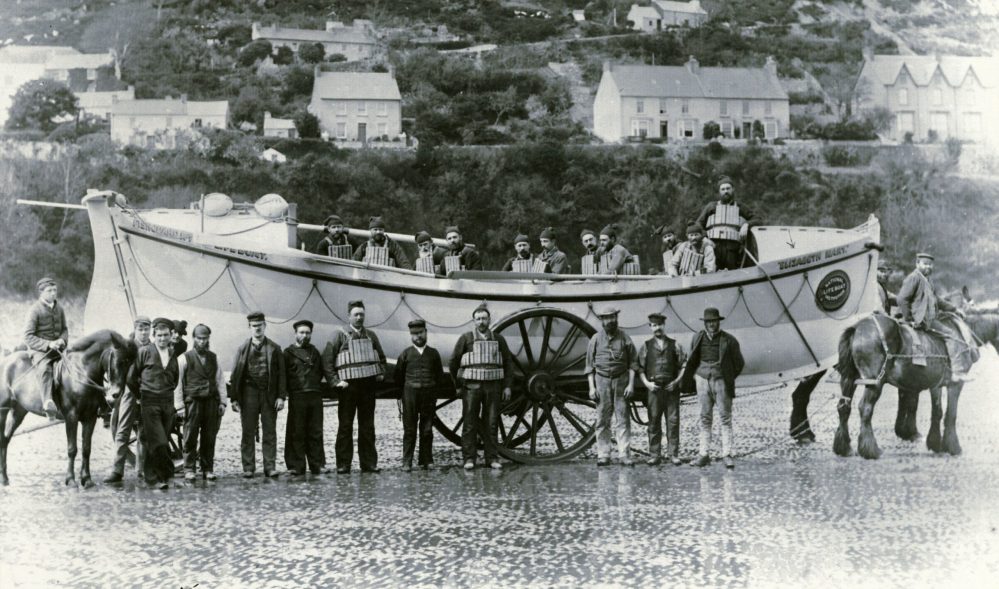
ON MONDAY, March 4, the Royal National Lifeboat Institution (RNLI) will celebrate 200 years of saving lives at sea. Fishguard RNLI Lifeboat Station is celebrating being both the oldest lifeboat station in Wales, as well as being the first Welsh station to have a female Coxswain.
On the day the charity turns 200, the RNLI is revealing its volunteer lifeboat crews and lifeguards in west Wales have saved an incredible 3,891 lives during its two centuries of lifesaving.
Since the charity was founded in 1824, its volunteer crews in west Wales have launched the lifeboats 14,872 times, saving 3,776 lives, while its lifeguards – who became part of the RNLI’s lifesaving service in 2001 – have responded to 8,865 incidents, saving 115 lives*. In total across the UK and Ireland, 146,452 lives have been saved by the RNLI – this equates to an average of two lives saved every day for 200 years.
Since 1824, the four lifeboat stations in Ceredigion have launched 4,848 times and saved 1,238 lives. In Pembrokeshire, the five stations have launched 8,563 times and saved 2,395 lives. Burry Port station in Carmarthenshire has launched 1,461 times and has saved 143 lives.
Fishguard Lifeboat Station on the far west coast of Pembrokeshire was the first lifeboat station to be established in Wales. Originally established in 1822, Fishguard’s first lifeboat was built by locals. In 1855, local inhabitants requested that the RNLI take over the station.

The station has also made RNLI history by being the first station in Wales to appoint a female Coxswain – Gemma Gill. Gemma has recently passed out as Coxswain and is thoroughly enjoying her new role.
Gemma joined the RNLI in 2001 serving as a volunteer for North Berwick and Aberystwyth RNLI before becoming a full-time staff member.
Gemma said: ‘The first person to take me to sea on a lifeboat was a woman called Rhona, and she told me “don’t let other people decide what you’re capable of,” which has always stuck with me.
‘While I believe it’s a matter of skills and experience rather than gender, I recognise the significance of this milestone.
‘We’ve come a long way from the image of a lifeboatman in his oilskins, and, as the first woman to become an RNLI coxswain in Wales, I hope to inspire other women and girls to join the lifeboat crew.’
Although not officially part of the early lifeboat crews, women have always played an active role in the work of the RNLI, from the ‘lady launchers’ who played key roles at lifeboat stations assisting in the launching and recovery of vessels, to fundraisers such as Marion Macara who helped to organise the first recorded charity street collection in Manchester in 1891.
Throughout its history, Fishguard lifeboat station has been awarded 28 medals. One gold, 18 silver and nine bronze. Today the station operates a D-class inshore lifeboat Edward Arthur Richardson as well as a Trent class Blue Peter VII.

While much has changed in 200 years, two things have remained the same – the charity’s dependence on volunteers, who give their time and commitment to save others, and the voluntary contributions from the public which have funded the service for the past two centuries.
Jo Partner, RNLI Head of Region for Wales says: ‘I am immensely grateful to everyone who is involved with the charity across Wales – our volunteers, supporters and staff. Today is a hugely significant day in our history and an occasion we should all be very proud of. I know there are lots of events being planned across Wales to mark this very special day and I hope people enjoy being part of this special piece of history.
‘I would like to take this opportunity to say thank you to all those who play a part in making the RNLI the proud organisation is it today – which really is a cause for celebration.’
RNLI Heritage Archive and Research Manager, Hayley Whiting, says: ‘The RNLI’s founder, Sir William Hillary, witnessed the treacherous nature of the sea first-hand when living on the Isle of Man and he wanted to take action. His first appeal to the nation in 1823 did not have the desired result but, thankfully, he persevered and gained the support of several philanthropic members of society, who put their names to the charity at a meeting in the City of London Tavern on 4 March 1824.
‘Twelve resolutions were passed at that meeting, the core of which still stand as part of the RNLI’s Charter 200 years later. This shows how the RNLI’s values and purpose have remained unwavering for 200 years, despite the social and economic changes and challenges of the past two centuries.
‘Hillary’s vision was ambitious and forward-thinking, and no doubt he would be extremely proud to see the charity he founded still going strong today, and to see how much it has achieved.’
The charity has a history of innovation, and adapting to challenging circumstances, such as:
Lifejackets: In 1861, Whitby lifeboat crew launched six times to rescue stricken vessels in a storm, but on their sixth launch a freak wave capsized the lifeboat and all but one of the crew were lost. The sole survivor was Henry Freeman, who survived because he was wearing a new design of cork lifejacket. After this event, the cork lifejacket became more widely adopted by lifeboat crews.
Fundraising: In 1886, 27 lifeboat crew members from Southport and St Annes lost their lives while trying to rescue the crew of the Mexico. A public appeal was launched, driven by local man Charles Macara. An 1891 appeal raised £10,000 in two weeks. On 1 October, Charles and his wife Marion organised the first Lifeboat Saturday. Bands, floats and lifeboats paraded through the streets of Manchester, followed by volunteers collecting money. More than £5,000 was taken on the day, which was the first recorded example of a charity street collection.
Lifeboats: In 1914, over 140 people were saved when the hospital steamship Rohilla was wrecked. The ship had been en route to Dunkirk to help wounded soldiers but was broken up when it ran aground on rocks near Whitby. Five lifeboats battled terrible seas to reach the ship. A motor lifeboat (the first of its kind) from Tynemouth, took the last 50 people on board. In total, 144 people were saved by the crews, who worked for over 50 hours in atrocious conditions. The motor lifeboat proved its capabilities and became more widely accepted by lifeboat crews after this event.
Wartime: When the First World War broke out, many lifeboat volunteers were called away to fight. The average age of lifeboat crews at home increased to over 50. During 1914-18, RNLI lifeboats launched 1,808 times, saving 5,332 lives. In 1939, young lifeboat volunteers were called away again to war. By the end of the Second World War, RNLI crews had saved 6,376 lives around the coasts of Britain and Ireland.
In 1940, 19 RNLI lifeboats were used to evacuate troops from Dunkirk. Two had RNLI crews onboard, while the others were crewed by the Royal Navy. The lifeboats and their stand-in crews saved thousands of lives while being shelled and bombed for days.
Throughout its bicentenary year, the charity is running events and activities to remember its important history and celebrate the modern lifesaving service it is today, while hoping to inspire generations of future lifesavers and supporters.
A Service of Thanksgiving to mark 200 years of the RNLI will take place at Westminster Abbey on 4 March 2024 at 11.30am. It will be attended by representatives from RNLI lifesaving communities around the UK and Ireland.
For further information about the RNLI’s 200th anniversary, visit RNLI.org/200.
*Statistics from RNLI Operational Data from 4 March 1824 to 31 December 2023 inclusive. A life saved shows how many of the people helped by the RNLI would have lost their life had the RNLI not been there.











RSPCA warns missing a walk is safer than risking heatstroke
DOG owners are being urged to keep their pets indoors and avoid normal walking routines as extreme heat affects Wales and England.
The RSPCA has called for “lockdown-style caution” for dogs over the next 24 to 48 hours, warning that walks, ball games and energetic exercise could put pets at serious risk.
The charity says owners should change routines immediately, keeping dogs cool, calm and comfortable indoors until temperatures ease.
Lauren Bennett, dog welfare expert at the RSPCA and a former veterinary nurse, said: “During a red weather warning, dog owners should think of it like a temporary lockdown for their pets.
“For the next 24 to 48 hours, routines need to immediately change. This isn’t the time for walks, chasing the ball or playing fetch, or exposing pooches to energetic exercise.
“It’s far better for dogs to miss a few walks completely than to suffer the potentially fatal consequences of overheating, or heatstroke.”
The warning comes as the peak of the current heatwave is forecast for today and tomorrow, with temperatures potentially reaching 39C in some areas.
The RSPCA says dogs should only be taken outside briefly for toilet breaks, ideally to the nearest grassy area, before being brought straight back indoors.
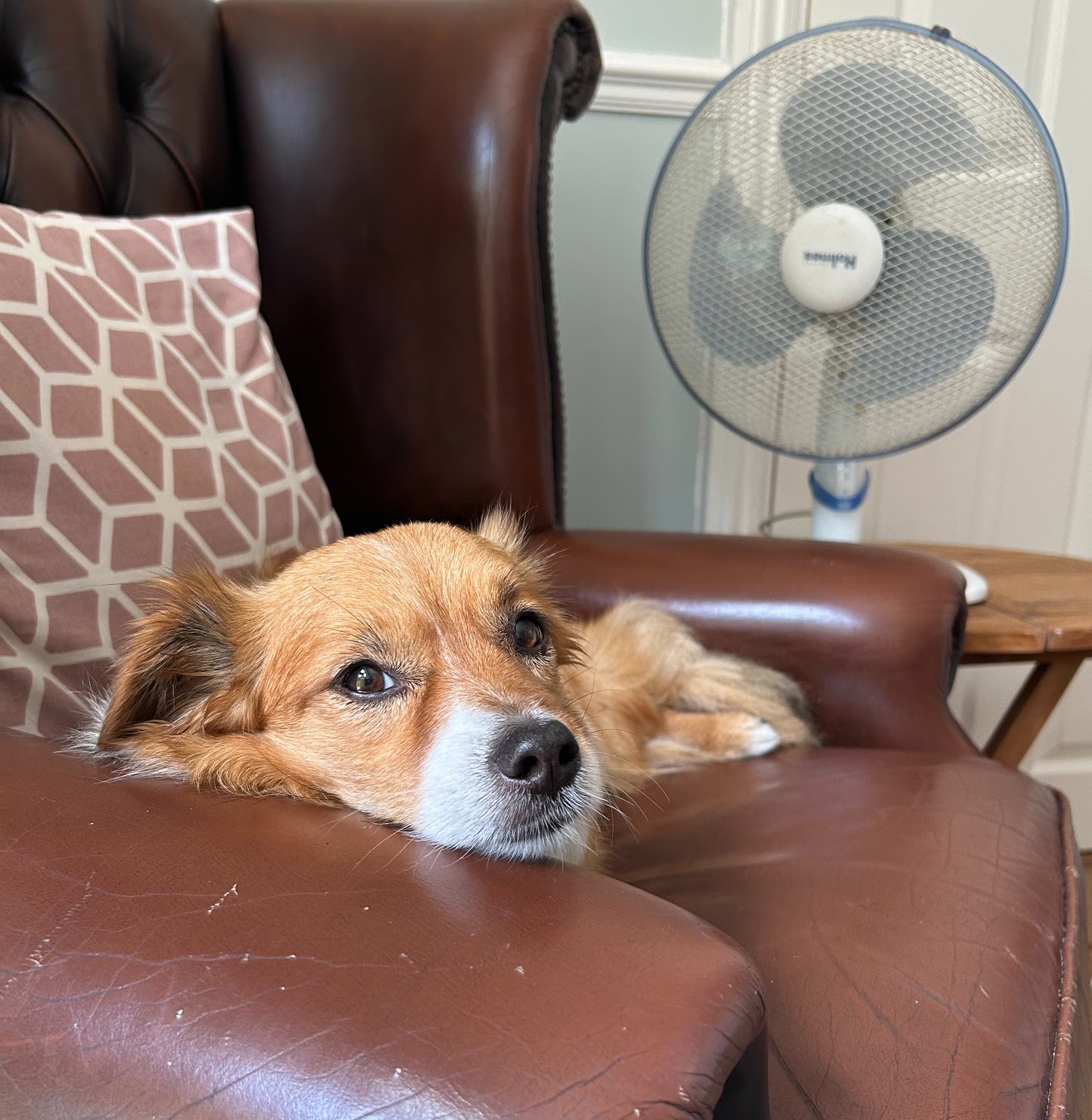
Owners are advised to provide fresh water in several places, close curtains in sunny rooms, use fans safely, and allow dogs to rest on cooler floors, cooling mats or damp towels.
Mental stimulation, such as puzzle feeders, snuffle mats and gentle indoor training games, can be used instead of exercise.
Ms Bennett added: “These temperatures won’t last forever, but the decisions owners make over the next couple of days could have a lasting impact on their pets.
“For now, the message is simple: pause normal routines, prioritise keeping pets cool and comfortable, and wait until temperatures ease before returning to business as usual.”

The charity is also reminding owners to watch for signs of heatstroke, which can include heavy panting, drooling, confusion, weakness, vomiting, collapse or seizures.
The RSPCA said vets dealt with 355 suspected heatstroke cases in 2025, with two thirds recorded during the summer months.
Anyone concerned about a dog showing signs of heatstroke should move the animal to a cool area, offer small amounts of water, begin cooling with cool—not ice-cold—water, and contact a vet immediately.
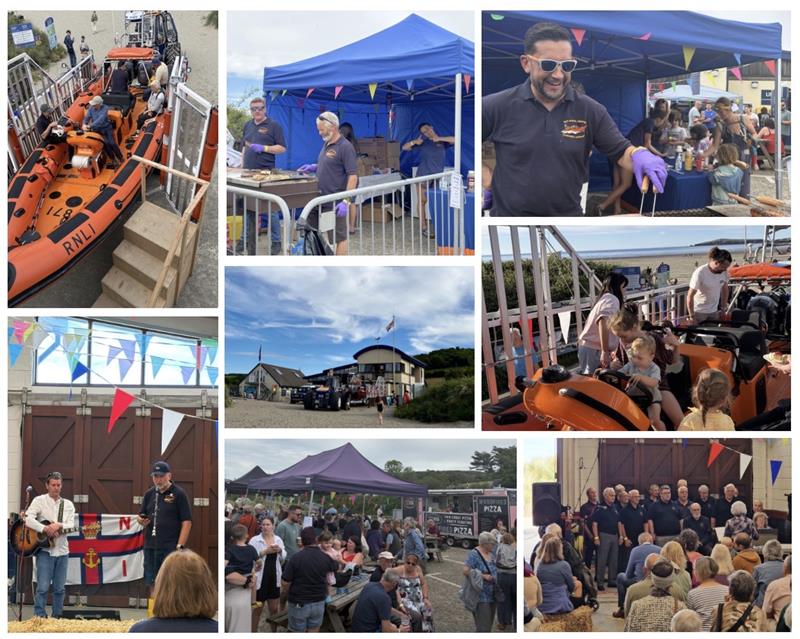
SUNSHINE, sea shanties and street food helped draw hundreds of visitors to Cardigan RNLI Lifeboat Station on Saturday (Jun 20).
The station’s Sea Shanty and Street Food Festival brought together families, supporters and visitors from across the region for a day of maritime music, food and community spirit.
Traditional sea shanty groups performed throughout the event, with songs echoing around the lifeboat station, while street food vendors served a range of refreshments.
The event also gave visitors the chance to learn more about the lifesaving work carried out by the RNLI and its volunteer crews.
Cardigan RNLI thanked the performers, food vendors, volunteers, sponsors and supporters who helped make the day a success.
Bruce Harris, Launch Authority and event organiser, said: “It was wonderful to see so many people come together to support the station, enjoy the entertainment, and celebrate our maritime heritage.
“The atmosphere throughout the day was fantastic, and we are incredibly grateful to everyone who attended, performed, volunteered, and contributed to such a memorable event.”
The RNLI is the charity that saves lives at sea. Its volunteers provide a 24-hour search and rescue service around the United Kingdom and Republic of Ireland coasts.
The charity operates 238 lifeboat stations in the UK and Ireland and more than 240 lifeguard units on beaches around the UK and Channel Islands.
Since the RNLI was founded in 1824, its lifeboat crews and lifeguards have saved more than 146,700 lives.


KATE DAVIES is taking on the Wales Half Marathon to say thank you to the NHS services that supported her during a difficult time.
Kate, a mother of one who works in operational workforce at Withybush Hospital, is heading to Tenby on June 28 to take on the Wales Half Marathon at Long Course Weekend Wales to raise funds for Cilgerran Ward at Glangwili Hospital.
Having been in good health for much of her life, Kate has been fortunate to not need many Hywel Dda University Health Board services until recent years.
Kate said: “The journey to becoming a parent wasn’t straightforward, and I experienced several difficult and emotional setbacks along the way. Throughout this time, I was supported with great care, kindness and compassion by various services across the health board, for which I will always be grateful.
“In December 2023, under the care of Glangwili consultants, I gave birth to a healthy baby girl. I’m incredibly grateful and fortunate that I have a fantastic, healthy and happy two-year-old daughter.
“To celebrate, I have signed up to take part in the Long Course Wales Half Marathon! I would love to raise money to give back to the health board that was there when I needed it.
“I can think of nothing better than reaching the finish line in good health, with my daughter waiting for me, knowing I have raised funds and given back to say thank you. Thank you from the bottom of my heart to everyone who has donated.”
Tara Nickerson, Fundraising Manager, said: “What a heartfelt story. A huge thanks to Kate for taking on the Wales Half Marathon to support a service so close to her heart. We look forward to cheering her on!
“The generous charitable donations we receive don’t replace NHS funding. Instead, they are used to provide items and activities above and beyond core NHS expenditure, such as more welcoming surroundings for patients, families and staff, and research into, and the development of, treatments.”
You can donate to Kate’s fundraiser here: https://hyweldda.enthuse.com/pf/kate-davies



Community15 hours ago
Manorbier fire scandal: Council’s payout just £63,777 after school destroyed
PEMBROKESHIRE COUNTY COUNCIL has accepted an insurance settlement which leaves it with just £63,777.07 after the catastrophic fire which destroyed...

News24 hours ago
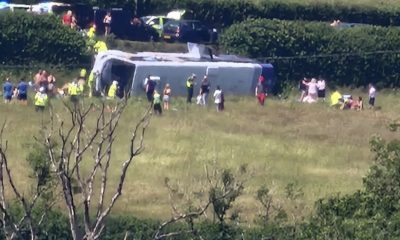
Bus overturns in major incident near Kidwelly
All passengers rescued as emergency services remain at scene A BUS overturned on the A484 between Kidwelly and Ferryside on...


Community2 days ago
Tenby Summer Spectacular cancelled amid council row over harbour access
Organisers say popular charity events cannot safely go ahead without clear powers to control crowds TENBY ROUND TABLE has announced...


News2 days ago
Motorcyclist dies after four-vehicle crash on A40 in Carmarthenshire
A MOTORCYCLIST has died following a four-vehicle collision on the A40 between St Clears and Whitland. Dyfed-Powys Police said the...


News2 days ago
Rhun ap Iorwerth urges new deal for Wales after Starmer quits
First Minister says next Prime Minister must focus on greater powers, fair funding and respect for Wales’ democratic mandate FIRST...


News2 days ago
How Labour’s landslide victory unravelled in just two years
Prime Minister announces resignation after losing support within his own party as Andy Burnham emerges as overwhelming favourite to take...


News3 days ago
Long Course Weekend set to bring thousands to Pembrokeshire
Three days of swimming, cycling and running will once again transform Tenby into one of the UK’s biggest endurance sporting...


Community3 days ago
The gentle giant behind the tattoos
Pembrokeshire security worker Josh Davies praised for professionalism, kindness and proving first impressions can be wrong JOSH Davies is hard...


Charity4 days ago
Toy Story fans fill charity toy box at Haverfordwest cinema
Donations pour in for SNAP Specialist Play as families embrace Toy Story 5 launch A TOY STORY-themed charity appeal at...


Community4 days ago
Lord Rhys emerges from the mist in St Davids
Giant puppet begins historic journey marking 850 years since the first Eisteddfod MIST swirled around St Davids Cathedral on Friday...
-

 Crime6 days ago
Milford Haven man jailed for breaching domestic violence protection order
-

 News6 days ago
Crash on Freeman’s Way causes school-run chaos across Haverfordwest
-

 Health4 days ago
Woman jailed assaults on police, harassment and XL Bully possession
-

 Crime4 days ago
Milford Haven woman spared jail despite string of shop thefts
-
 Crime6 days ago
Portfield Gate man faces careless driving allegation after Tufton crash
-
Community3 days ago
The gentle giant behind the tattoos
-

 Local Government6 days ago
Pembrokeshire faces accessible housing shortage as 403 people wait for homes
-

 News7 days ago
Brexit at 10: How Britain was sold a dream that cost us dearly