


Business
Victory for WASPI women but the fight goes on


A LANDMARK ruling by the Parliamentary and Health Service Ombudsman could benefit around 5,000 women in Ceredigion born in the 1950s.
As we reported in The Herald on Friday, on March 21 the Parliamentary & Health Service Ombudsman published his final report into the injustice caused by the Department for Work & Pensions (DWP)’s poor communication to 1950s women that their state pension age had increased.
The Ombudsman recommends that the DWP makes an apology to the women concerned and they receive compensation of between £1,000 and £2,950. He calls on Parliament to take his recommendations forward.
In the Commons yesterday (Monday) Pensions Minister Mel Stride faced a barrage of support for the WASPI women from MPs of all parties, calling for urgent compensation. His response was that he will look closely at the report and consider its contents. He refused to give a timescale for doing so.
“We have waited five years for this report,” said Pamela Judge, Joint Co-ordinator of Ceredigion Women Against State Pension Injustice (WASPI). “We welcome the recommendation of an apology and compensation though the level of compensation is disappointing. An All-Party Parliamentary Group of MPs recommended compensation at the top level on the Ombudsman’s scale, at least £10,000 which is much more realistic. We call on MPs to sort this out quickly. This is urgent – a WASPI woman dies every 13 minutes.”

Ceredigion MP Ben Lake commented: “It is high time that Parliament ensures that 1950s born women are finally afforded the justice that they deserve. The Ombudsman’s report has taken years to be completed. It officially acknowledges that WASPI women have fallen foul of maladministration by the Department for Work and Pensions. We cannot waste any time in bringing forward a compensation package which reflects the scale of the injustice suffered.
“Members of Parliament from all political parties have expressed their support for the WASPI campaign. Now we have an opportunity to deliver on these promises. We have not a moment to lose.”
Joint Co-ordinator Melinda Williams added: “The lack of notice we received that our pension age had changed was devastating for thousands of local women whose plans for retirement were wrecked. We suffered injustice and need compensation now”.


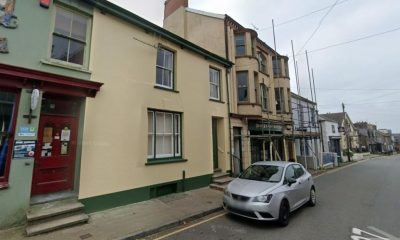









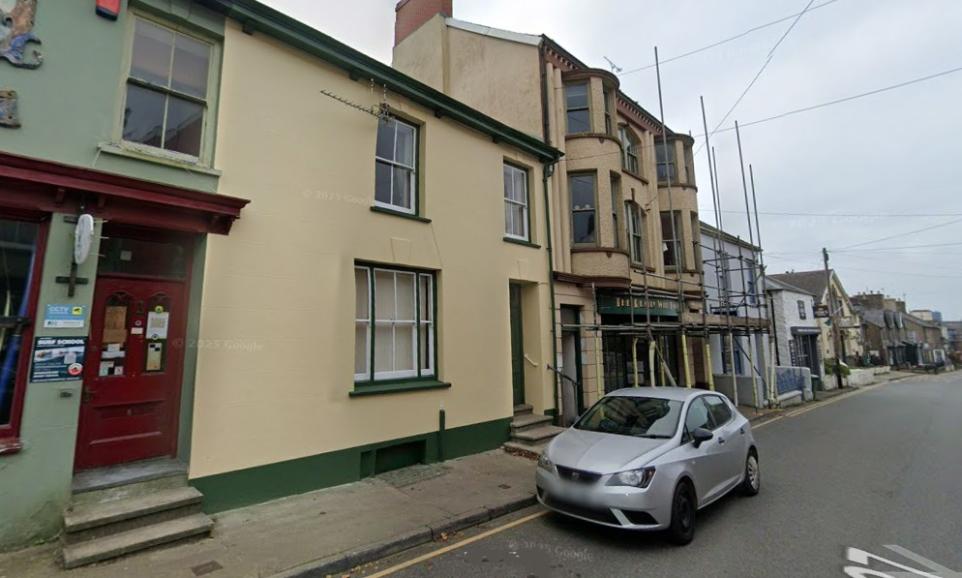
PLANS to change a former hairdressing salon in Pembrokeshire’s only city to a family-friendly coffee bar have been submitted to the national park.
In an application to Pembrokeshire Coast National Park, Gerallt Nash seeks permission for a change of use of 26 High Street, St Davids from a hairdressing salon to a family friendly coffee bar and children’s playroom.
The First floor, formerly used as accommodation of a tenant, would be used as an office and storage of business.
A supporting statement says: “It is proposed to open a family-friendly coffee bar with a children’s playroom on ground floor. It is not intended to cook food on the premises, therefore there will be no requirement for an extractor system.
“ Other than small scale repairs to part of one floor, and the installation of a sink and serving counter in the inner room (plumbing and electrics are already in place since its last use as a salon) the main work will be the redecoration of surfaces and ceilings, the provision of new light fittings and laying of new floor coverings.

“This part of High Street has been identified as a ‘commercial’ zone by PCNPA. Existing businesses close to No 26 include outdoor and surfing outlets; restaurants; clothes shops; holiday accommodation; ice cream parlour; fish and chips outlet; delicatessen and craft shops.
“The current proposal would fill a gap in the market, as most food outlets do not open until after 11am or 12pm, or only during the evenings in some cases. It would also provide somewhere for [young] families to go to unwind whilst their children can relax in the playroom.”
It says No 26, also known as ‘Preswylfa,’ was “part of a row of three shops (with dwelling accommodation above), built and owned by Thomas Evans of Solva probably during the late 1870s,” one “leased, and later purchased, by the applicant’s great grandfather, David Evans, who owned the local windmill”.
Detailing No 26’s history, it says: “Over the years, it has served as a grocery shop, veterinary surgery (before the current building at the rear of the property), café, and hairdressing salon (on at least three different occasions).

“Mrs Susan Bennett, who ran ‘Susan’s Hairdresser’ at No. 26, retired on 1 November 2024. Since then, the exterior of the property has been repainted. A new tenant, Keeley Rose, took over the lease on December 1, 2025.”
The application will be considered by park planners at a later date.


Six-hour London to Dublin service proposed in £32bn project ahead of Senedd election
PLANS for a rail tunnel linking west Wales directly to Ireland have emerged, with a company owned by tech billionaire Elon Musk said to be involved in early-stage discussions.
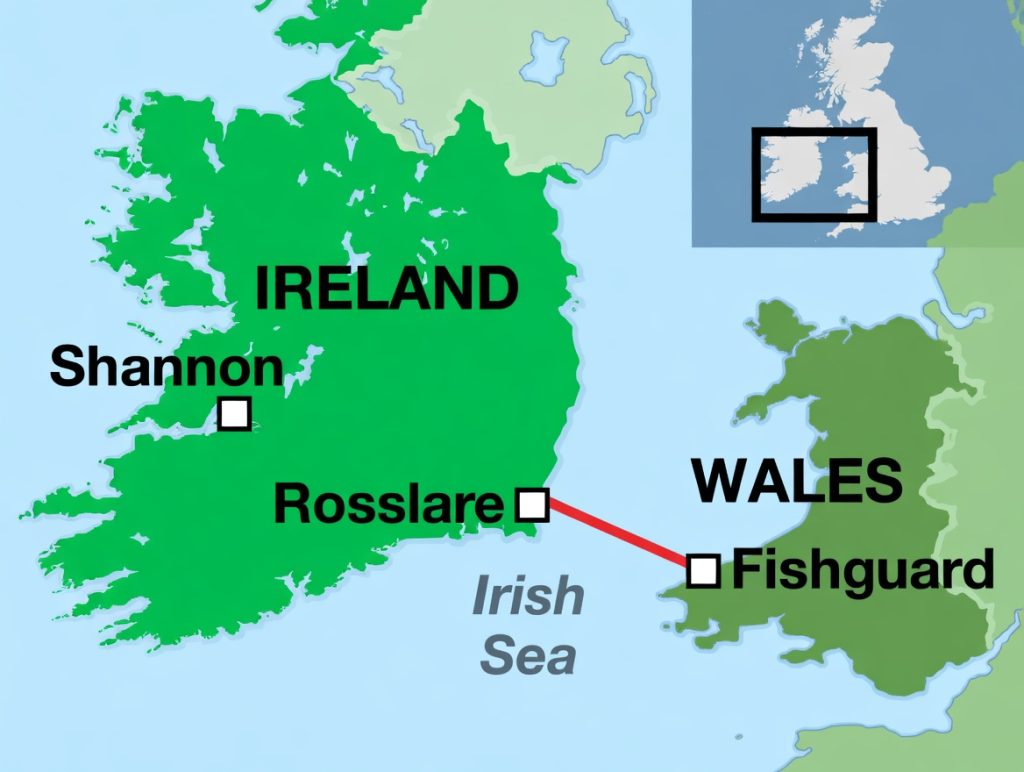
The proposed fixed link would connect Fishguard with Wexford, creating the first direct rail connection between the UK and Ireland.
Sources indicate that The Boring Company has been exploring the feasibility of constructing the tunnel, which could form part of a wider transport corridor linking London and Dublin.
Six-hour London to Dublin service
Under the plans, an express rail service could run directly from London to Dublin in around six hours, significantly reducing current journey times and removing the need for ferry crossings.
Passengers would travel via south Wales before entering the tunnel beneath the Irish Sea, with vehicles transported on specialised rail carriers similar to those used on the Channel Tunnel.
One source familiar with the discussions said: “This would be a game-changer for connectivity between Britain and Ireland. It’s being looked at very seriously.”
£32bn project backed by private investment
The project is expected to cost in the region of £32 billion, with the bulk of funding understood to come from private sector investors.
Sources suggest that both the Welsh Government and Irish authorities would support the scheme through planning, facilitation and long-term guarantees, but that no direct funding has been committed by Westminster.
Insiders say the decision reflects ongoing pressure on UK public finances following the spiralling cost of High Speed 2.


HS2 ‘owes Wales’ debate reignited
The proposal is also expected to reignite debate over whether Wales should have received additional funding as a result of HS2.
Critics have long argued that the classification of the project as an “England and Wales” scheme has denied Wales billions of pounds in consequential funding through the Barnett formula.
One political source told The Herald: “There is a growing view that HS2 effectively owes Wales a major infrastructure investment of its own.”

Election timing questioned
It is understood that the Welsh Government has brought forward the proposal just weeks ahead of the Senedd elections, in what some insiders believe is an attempt to boost support.
With First Minister Eluned Morgan facing a challenging political landscape, sources suggest the announcement of a bold, high-profile infrastructure project could help shift momentum ahead of polling day.
One insider said: “This is exactly the kind of big, attention-grabbing policy that can change the narrative during an election campaign.”
However, the concept of a fixed link between south Wales and Ireland is not new. A 2004 report by the Institution of Engineers of Ireland outlined a “Tuskar route” linking Fishguard and Rosslare via a tunnel beneath the Irish Sea. The proposal, which formed part of a wider long-term transport vision for Ireland, suggested a crossing of around 45 miles (72km) — broadly comparable in scale to the current plans under discussion.
Ferry firms raise concerns
Operators running services from Fishguard Harbour have reacted with concern, warning the plans could have a major impact on existing ferry routes.
An industry source said: “If this goes ahead, it would fundamentally change travel patterns. Ferry services could struggle to compete.”
Questions over Cardiff Airport links
The proposal is also likely to raise questions about the future of existing air routes between Wales and Ireland, particularly those operating from Cardiff Airport to Dublin.
With the Welsh Government owning and subsidising the airport, critics say a high-speed rail alternative could put pressure on passenger numbers.
One observer said: “If you suddenly have a direct six-hour rail service city-to-city, it inevitably puts pressure on short-haul flights.”
Economic boost for west Wales
Supporters of the scheme argue that, if delivered, the project could provide a major long-term economic boost to west Wales, improving connectivity, increasing tourism, and strengthening trade links.
The Herald understands that early projections suggest the scheme could bring significant investment and job creation to Pembrokeshire during both construction and operation.
However, key details — including environmental impact, construction timelines and final funding arrangements — have yet to be confirmed.
A fixed link between south Wales and Ireland has been discussed in various forms for decades, but has never progressed beyond early-stage proposals.
Some within government are said to view the scheme as a way of finally delivering Wales’ share of major infrastructure investment following HS2.
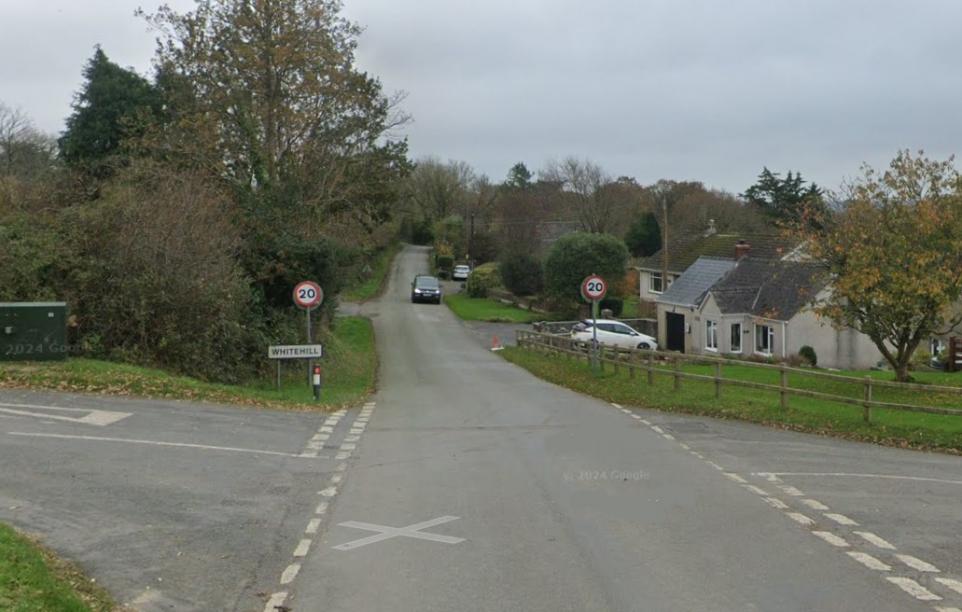
AN APPEAL against national park refusal of a shepherd hut holiday let in a Pembrokeshire village, which gained public support after it was turned down, has been lodged.
In an application refused by Pembrokeshire Coast National Park last year, Alex Mazaheri of Melrose, Whitehill, near Cresselly sought retrospective permission for a shepherd hut holiday let, and car parking space in the property grounds.
Work started in February 2025.
An officer report recommending refusal said: “National and local planning policies strictly control new development in such locations, permitting only certain forms where the need for a countryside location is essential.
“It is not considered that the applicant has demonstrated this essential need. Furthermore, the siting of the hut and associated access works, including the removal of a section of boundary hedge, has resulted in a significant visual impact when viewed from the public highway. “
It said a number of concerns had been raised by members of the public including the work already having been carried out, the hut sited in close proximity to the highway at one of the narrowest points of the road, removal of hedgerow and creation of a new access without permission, and a lack of adequate visibility to the road for vehicles emerging.
The application was refused on the grounds including it represented “unjustified new development in the countryside,” it would “appear visually intrusive and discordant within the street scene and surrounding rural landscape,” and “insufficient information was provided to demonstrate that the proposal would achieve nutrient neutrality within the Pembrokeshire Marine Special Area of Conservation (SAC) catchment”.
An appeal lodged with Planning and Environment Decisions Wales (PEDW), says: “The appellant contends that the refusal was disproportionate and failed to properly reflect the modest scale of the proposal, relevant consultee responses, and the ability to address matters through reasonable planning conditions.”
It added: “Neighbours and passers‑by have commented positively on the hut, noting its modest and sympathetic appearance. Following refusal, local press coverage generated a number of public comments, the majority of which were supportive of the proposal.

“While these are not formal consultation responses, they indicate that the local community did not view the shepherd’s hut as harmful.”
It disputed the ‘retrospective’ description as misleading, saying: “The shepherd’s hut was placed within the domestic curtilage in the belief that this was permissible, as ancillary domestic structures are generally allowed under permitted development rights,” adding the hut works are not yet fully complete.
It added Mr Mazaheri had “not sought to evade planning control but has instead acted in good faith, investing in landscaping and improvements for the immediate area while applying for planning in an open and transparent manner”.
It said he was willing to accept conditions including holiday occupancy-only, retention of an off-street parking space, obstruction-free visibility splays, and biodiversity enhancements.
It concluded: “The proposal is proportionate, reversible, and consistent with both local precedent and national guidance. It will support a young local family, provide modest but meaningful income diversification, and deliver biodiversity enhancements without causing harm to landscape character, ecology, highways, or amenity.”
A decision on the appeal is expected later in the year.


Business11 hours ago
Fishguard to Wexford rail tunnel plan backed by Elon Musk firm
Six-hour London to Dublin service proposed in £32bn project ahead of Senedd election PLANS for a rail tunnel linking west...


Charity24 hours ago
Milford Haven charity honoured with King’s Award for voluntary service
A PEMBROKESHIRE charity supporting vulnerable young people has received one of the highest honours in the UK for voluntary work....


News2 days ago
Plaid Cymru launches bid to lead next Welsh Government
Party positions itself as ‘government-in-waiting’ ahead of May election PLAID CYMRU has formally launched its campaign for the 2026 Senedd...


Crime2 days ago
Police appeal after attempted child abduction in Haverfordwest
DYFED-POWYS POLICE has launched an appeal for witnesses following a reported attempted abduction of a 12-year-old girl in Haverfordwest. The...


Crime3 days ago
Gunshot fired by police during incident in Milford Haven
A POLICE officer discharged a firearm during an incident in Milford Haven on Saturday evening (March 28), prompting an investigation...


Community4 days ago
Three Amigos Easter Run roars through Pembrokeshire
MOTORCYCLE enthusiasts turned out in force today (Saturday, March 28) as the popular Three Amigos Easter Run returned to the...


Education5 days ago
Ysgol Henry Tudor reassures parents over Sikh ceremonial kirpan
School says religious item worn by pupil is secured, symbolic and non-functional YSGOL HENRY TUDOR has moved to reassure parents...


Crime6 days ago
Teen jailed after starting fire while others slept
Fire set in shared home left sleeping residents at risk and caused £130,000 damage A TEENAGER who started a fire...


Health6 days ago
GP crisis driving NHS pressure in Wales, Senedd report warns
Falling GP numbers and funding gaps blamed for worsening hospital delays THE NHS crisis highlighted earlier this week is being...


News7 days ago
Reform reveals west Wales candidates for Senedd battle
Monkton councillor tops Pembrokeshire list as party confirms Carmarthenshire names and includes Haverfordwest councillor in unwinnable Swansea spot REFORM UK...
-

 News7 days ago
Welsh Government outlines progress on flood resilience plans
-

 Community6 days ago
Hero female officer keeps job after sexual touching finding
-
Education5 days ago
Ysgol Henry Tudor reassures parents over Sikh ceremonial kirpan
-

 Business6 days ago
Popular Italian restaurant hit with £278,000 tax bill plus £186,000 fine
-

 Crime7 days ago
Hakin motorist banned after drink-drive crash
-

 Sport7 days ago
Record-breaking disability swim gala celebrates success in Fishguard
-

 Health7 days ago
Doctors say Wales is failing to value NHS staff over new pay award
-

 Entertainment7 days ago
Duffy to tell her story in new Disney+ documentary