


Politics
Water legislation ‘outsourced to Westminster’

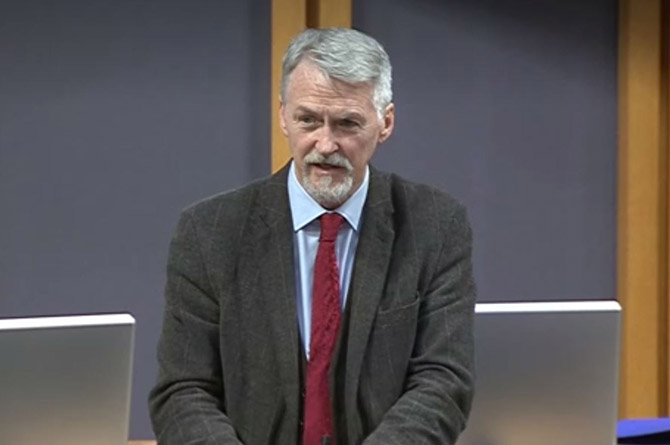
THE CLIMATE change secretary confirmed proposed UK water legislation will apply to Wales despite concerns about law making being “outsourced” to Westminster.
Huw Irranca-Davies, who is also Wales’ new deputy first minister, told the Senedd he has agreed that the UK Government’s water bill be extended to Wales.
The bill aims to ensure water companies are held to account, with increased enforcement powers for regulators and tougher penalties, including imprisonment.
Mr Irranca-Davies said the bill will grant the regulator, Ofwat, powers to limit bonuses paid to executives and allow Natural Resources Wales to recover costs from water firms.
He accepted changes to the law must reflect Wales’ needs as he committed to working with the UK Department for Environment, Food and Rural Affairs (Defra).

But former Plaid Cymru leader Adam Price pointed out that in a previous incarnation as chair of the legislation committee, Mr Irranca-Davies took a different position.
Questioning the climate change minister, Mr Price said: “You often eloquently made the case for us not outsourcing legislation to Westminster but legislating ourselves here.
“Maybe you could explain … why you’ve failed to persuade yourself of that former case.”
Mr Price called for a root-and-branch review of the governance model for Wales’ water industry, with the climate change secretary suggesting this is not high on the agenda.
Mr Irranca-Davies joked: “On your point of my unusual conversion to actually supporting us being involved in collaborating … you must have been referring to my twin brother, I think.”
The former MP and Defra minister said the Senedd may not have the opportunity to legislate for four or five years, so it was important to seize the opportunity.
But he admitted: “I realise I’m a bit of a poacher-turned-gamekeeper on this.”

Janet Finch-Saunders, the Conservatives’ shadow climate change secretary, raised concerns that Wales could miss out on revenue raised by fines.
She said: “If a company, for either land pollution, noise pollution or water pollution, if they’re fined, that money goes into the UK Treasury.
“And that’s always been used by the Welsh Government as an excuse, almost, that we don’t have the money to clean up our polluted rivers.”
Ms Finch-Saunders, who represents Aberconwy, stressed: “If the pollution has taken place in Wales, we should have that money here in Wales to help clean up afterwards.”
Responding to the statement on September 17, she warned of an environmental crisis with six of the UK’s most polluted rivers in Wales.
She said: “Warnings were issued only this summer for people not to go swimming or in the sea due to poor water quality at 25 Welsh beaches.”
Delyth Jewell, Plaid Cymru’s shadow climate change secretary, warned the public continues to feel powerless on the issue of sewage in Wales’ waterways.
She said: “The public deserves more than mere promises of improvement.
“They need to see action and, if necessary, stiff penalties imposed on those companies that fail to reach adequate standards time and time again.”
She reiterated her party’s calls for full devolution of powers over Wales’ water resources.
Ms Jewell, who is the Plaid Cymru group’s deputy leader, also called for action on microplastic pollution which can pose a threat to people’s health.
“These particles have been found in human lungs, breast milk and blood,” she said. “So, what specific steps will be taken to improve monitoring and enforcement with regard to water companies when their practices contribute to plastic and microplastic pollution?”
Mike Hedges, who represents Swansea East, also raised concerns about research showing “alarming” levels of microplastics in UK rivers.
The Labour MS suggested monitoring riverbeds for microplastic content could be an effective way to police water companies’ practices.
Carolyn Thomas, a fellow Labour backbencher, pointed out that many rivers cross Wales’ border, exemplifying the need to work with the UK Government.
The Conservatives’ Laura Anne Jones called for a ban on combined sewage outflows, “which allow water companies to pump sewage into the rivers”.
She told the chamber: “I grew up fishing and swimming in the River Usk, and I want my children and others to be able to do so.
“My children do now but it does make me wince a bit, knowing what’s coming into our rivers, with visible sewage more and more prevalent, unfortunately.”



ALMOST one in four working-age people in Wales are economically inactive, according to the latest labour market figures.
The Welsh Government’s June labour market overview shows the economic inactivity rate in Wales was 24.8% for people aged 16 to 64.
That is down 0.6 percentage points on the previous quarter, but up 0.6 percentage points over the year. The UK rate stood at 21.0%.
Economic inactivity refers to people who are not in work and are not classed as unemployed because they are not actively seeking work or are not available to start.
The figures have prompted criticism from the Welsh Conservatives, who said Wales’ economy was failing to grow strongly enough.
Janet Finch-Saunders MS, Shadow Minister for Enterprise, Connectivity and Energy, said: “These latest figures show the Welsh economy has continued to flatline with too many people economically inactive.
“We urgently need welfare reform to get people off benefits and into work, where they can pay their taxes and help generate more revenue to invest in better public services.
“The new Plaid Cymru government needs to focus relentlessly on creating the conditions for businesses to start up and expand because this is the only way to grow the Welsh economy and make Wales more prosperous.”
The latest statistics also show Wales’ unemployment rate was 3.8%, up 0.3 percentage points on the quarter but down 0.9 percentage points over the year. The UK unemployment rate was 4.9%.
The Welsh Government said evidence from a range of sources suggested the Welsh labour market was following a similar trend to the UK as a whole.
It also said Cabinet Minister for Enterprise, Connectivity and Energy Adam Price was keen to meet the Office for National Statistics to discuss the reliability of labour market data for Wales.
The issue is likely to remain politically significant because economic inactivity affects the size of the workforce, business recruitment, tax receipts and pressure on public services.

Across Wales, inactivity can include people out of work because of long-term illness, caring responsibilities, study, early retirement or other reasons. For rural and coastal areas, including Pembrokeshire, the challenge is often linked to the availability of suitable jobs, transport, skills and seasonal work.
RCN Wales joins doctors, patient groups and charities in call for national reporting before summer recess
NURSING leaders, doctors, patient groups and charities have called on the Welsh Government to take urgent action to end corridor care in Welsh hospitals.
A joint letter signed by Age Cymru, BMA Cymru Wales, Carers Wales, Llais, Marie Curie Cymru, Royal College of Nursing Wales, Royal College of Emergency Medicine Wales, Royal College of Pharmacy and Royal College of Physicians sets out a series of steps ministers are being urged to take immediately.
The organisations want the Welsh Government to publish a formal definition of corridor care, introduce national reporting, monitor the issue as a patient safety indicator, and require health boards to produce local plans focused on the most vulnerable patients.
They have also called for a coordinated approach across health and social care, warning that the problem cannot be tackled properly unless it is measured consistently across Wales.
The groups want a public commitment from the Welsh Government before the Senedd’s final sitting day before the summer recess on July 17.
‘Unsafe and unacceptable’
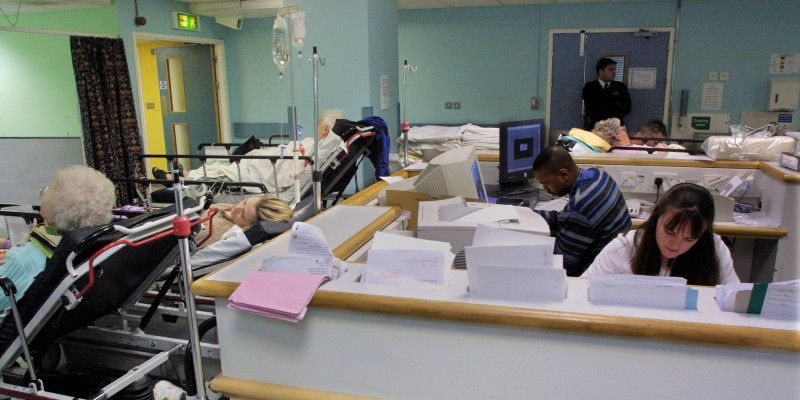
Corridor care refers to patients being assessed, treated or cared for in inappropriate areas such as corridors, waiting rooms, ambulance bays or other spaces not designed for clinical care.
Health bodies have repeatedly warned that the practice can put patients at risk, reduce privacy and dignity, and leave staff unable to provide the level of care they know patients need.
RCN Wales Executive Director Nicola Williams said corridor care was still happening every day across most hospitals in Wales.
She said: “Earlier this month, we welcomed the Cabinet Minister for Health and Care’s determination to address corridor care following England’s first publication of corridor care statistics.
“I have also been encouraged by the verbal commitments I have received from Welsh Government officials that echo our priorities of a clear, consistent definition of corridor care across Wales, and the development of a data set for use across NHS Wales for public reporting.
“Corridor care continues to happen every day across most hospitals in Wales, putting patients’ wellbeing and lives at risk and affecting the morale of nursing staff who cannot give the care that patients deserve.
“We must be able to quantify this problem if we are to eliminate it.”

Ms Williams added that the RCN must be involved in efforts to eradicate corridor care because nurses are “at the forefront of this crisis and a vital part of the solution.”
Wales behind England
The call comes after NHS England began publishing national corridor care data, giving a clearer picture of how often patients are being treated in inappropriate settings.
In Wales, there is still no formal national definition of corridor care and no routine public reporting.
RCN Wales has argued that without consistent data by health board, it is impossible to know the true scale of the problem, identify trends or hold the system properly accountable.
The issue has been raised repeatedly by nursing and medical bodies in recent months. In January, RCN Wales published a briefing calling for care delivered to a patient in a chair for more than 24 hours to be treated as a “never event.”
The RCN and BMA Cymru Wales have also called for reductions in hospital beds to be paused, for capacity to be reviewed nationally, and for greater investment in community and social care so patients who are medically fit to leave hospital can be discharged safely.
Healthcare Inspectorate Wales has also warned that corridor care should not become normalised, saying care in non-clinical spaces can compromise patient safety, dignity and the quality of care.
West Wales concerns
The issue is particularly relevant in west Wales, where hospital capacity, ambulance handover delays and the future of local services remain politically sensitive.
Hywel Dda University Health Board has faced repeated criticism over pressures at Withybush, Glangwili, Bronglais and Prince Philip hospitals, with patients in rural areas often facing long journeys for emergency treatment.
The call from nursing and medical bodies comes days after the Senedd backed a motion calling on the Welsh Government to rule out hospital closures and service downgrades during the current Senedd term, with patient safety prioritised.
That debate was dominated by concerns over Withybush Hospital, where changes to emergency general surgery mean some patients who need emergency operations will be transferred to Glangwili Hospital in Carmarthen.
Campaigners argue that distance is itself a patient safety issue in rural Wales, particularly when emergency departments and ambulance services are already under pressure.
Wider NHS pressure
Corridor care is widely seen as a symptom of wider problems across the NHS, including delayed discharges, lack of social care capacity, pressure on emergency departments, workforce shortages and too few available beds.
Doctors and nurses say patients can end up stuck in emergency departments because hospital wards are full, while patients on wards cannot leave because care packages or community support are not available.
The result is a system where pressure builds at the hospital front door, leading to long waits, ambulance queues and patients being cared for in unsuitable spaces.
The Welsh Government has previously said it recognises the seriousness of the issue and is committed to improving urgent and emergency care.
But professional bodies say recognition is no longer enough and that Wales now needs clear national data, local health board plans and public accountability.
The joint letter places fresh pressure on ministers to act before the Senedd breaks for summer.
For patients and staff, the message from Wales’ leading health organisations is blunt: corridor care cannot be ended until Wales properly defines it, measures it and treats it as a major patient safety issue.

Reform UK amendment passes as West Wales hospital fears remain central political issue
THE SENEDD has backed a call for the Welsh Government to rule out hospital closures and service downgrades during the current Senedd term, following a heated debate over the future of the NHS in Wales.
The motion was originally tabled by the Welsh Conservatives and called on ministers to rule out “any hospital closures and downgrading of hospital services for the duration of the Seventh Senedd.”
The original wording was defeated, but a revised version was later passed after Labour added wording that any decisions must prioritise patient safety.
The final motion agreed by MSs called on the Welsh Government to rule out hospital closures and downgrading of hospital services “with all decisions prioritising patient safety.”
Reform UK also played a significant role in the debate. James Evans MS moved an amendment, tabled in the name of Llŷr Powell, calling on the Welsh Government to set out how much it intends to spend tackling the NHS maintenance backlog to prevent reductions in service delivery.
The amendment was passed by 44 votes to 42 and became part of the final agreed motion, making it one of Reform’s first significant interventions on NHS policy since the Senedd election.
Withybush concerns
The debate comes amid continuing concern in Pembrokeshire over the future of services at Withybush Hospital.
Earlier this year, Hywel Dda University Health Board approved changes to emergency general surgery, meaning patients at Withybush who need emergency operations would be transferred to Glangwili Hospital in Carmarthen.
The health board has said Withybush will retain same-day emergency surgical care, but campaigners and local politicians have described the change as a serious downgrade.
During the Senedd debate, Preseli Pembrokeshire MS Paul Davies said the removal of emergency general surgery from Withybush was not a minor change, but a fundamental alteration to hospital services in west Wales.
He called on the Welsh Government to intervene and warned that communities in Pembrokeshire had already seen services centralised away from Withybush over many years.
Political row
The Welsh Conservatives accused Plaid Cymru ministers of failing to give patients certainty over the future of local hospitals.

Natasha Asghar MS, Welsh Conservative Shadow Cabinet Secretary for Health and Social Care, said: “It’s deeply worrying that Plaid Cymru failed to support our commitment to no hospital closures and no downgrading of services during this Senedd term.
“Patients deserve certainty that vital services will remain open and close to home when they need them most.”
Plaid Cymru has rejected the Conservative attack, arguing that NHS service decisions must be clinically led and based on patient safety.
Plaid MS Anna Nicholl also told the Senedd that protecting services at hospitals including Withybush and Bronglais was a priority.
The Conservative claim that Plaid has “given the green light” to hospital closures is a political interpretation of the vote rather than a decision to close any specific hospital.
Following the debate, Mr Davies said, “Communities across west Wales are deeply concerned about the future of their local hospital services and they want the Welsh Government to intervene and stop the local Health Board from centralising their services further afield – especially when the party of government campaigned against the Health Board’s proposals during the Senedd elections.
“Patients living in Pembrokeshire and Ceredigion deserve safe, accessible healthcare closer to their homes – they should not have to travel further afield for vital services.”
“We know that previous Welsh governments stood back and did nothing, and I hope this new Welsh Government doesn’t choose to go down the same route. We need urgent intervention from the Welsh Government to safeguard services and ensure they stay put at Withybush and Bronglais hospitals.”
What the debate does show is a clear divide over how far Welsh ministers should go in ruling out future service changes.
West Wales battleground
The issue is especially sensitive in west Wales, where the future of hospital services was one of the defining issues of the Senedd election campaign.
Concerns over Withybush, Bronglais and the distance rural patients must travel for emergency care helped shape the political mood in Ceredigion Penfro, where former First Minister Eluned Morgan lost her seat before resigning as Welsh Labour leader.
For communities in Pembrokeshire, the issue is not abstract. Withybush Hospital has been the subject of repeated campaigns over maternity, paediatrics, emergency surgery and other services, with many residents fearing that gradual centralisation is making healthcare less accessible in one of Wales’ most rural counties.
The Welsh Government and Hywel Dda have consistently argued that services must be safe, sustainable and clinically viable.
But campaigners say that in rural areas, distance itself is a safety issue, particularly when patients face long journeys to Carmarthen or beyond in an emergency.
The final Senedd vote means MSs have now formally backed a call to rule out hospital closures and downgrades, but with an important patient safety caveat.
For Withybush, the practical question remains whether that political vote will have any impact on decisions already made by Hywel Dda, or on future plans for hospital services in west Wales.



Health17 hours ago
Senedd backs call to rule out hospital downgrades after heated NHS debate
Reform UK amendment passes as West Wales hospital fears remain central political issue THE SENEDD has backed a call for...

News20 hours ago
Coastguard callout payments axe sparks fears for coastal communities
VOLUNTEER coastguards across the UK are set to lose callout payments, prompting concern over the future resilience of emergency cover...


Farming22 hours ago
Rural Wales ‘left out’ of net zero debate, warns carbon entrepreneur
A WELSH carbon entrepreneur has warned that rural Wales risks being left behind in the national conversation about net zero....


Local Government2 days ago
Tenby Spectacular row continues as organisers say key question remains unanswered
Round Table says legal clarity over pedestrian access is still holding up event plan TENBY ROUND TABLE has welcomed Pembrokeshire...


Community2 days ago
Manorbier fire scandal: Council’s payout just £63,777 after school destroyed
PEMBROKESHIRE COUNTY COUNCIL has accepted an insurance settlement which leaves it with just £63,777.07 after the catastrophic fire which destroyed...


News3 days ago
Bus overturns in major incident near Kidwelly
All passengers rescued as emergency services remain at scene A BUS overturned on the A484 between Kidwelly and Ferryside on...


Community4 days ago
Tenby Summer Spectacular cancelled amid council row over harbour access
Organisers say popular charity events cannot safely go ahead without clear powers to control crowds TENBY ROUND TABLE has announced...


News4 days ago
Motorcyclist dies after four-vehicle crash on A40 in Carmarthenshire
A MOTORCYCLIST has died following a four-vehicle collision on the A40 between St Clears and Whitland. Dyfed-Powys Police said the...


News4 days ago
Rhun ap Iorwerth urges new deal for Wales after Starmer quits
First Minister says next Prime Minister must focus on greater powers, fair funding and respect for Wales’ democratic mandate FIRST...


News4 days ago
How Labour’s landslide victory unravelled in just two years
Prime Minister announces resignation after losing support within his own party as Andy Burnham emerges as overwhelming favourite to take...
-

 Health6 days ago
Woman jailed assaults on police, harassment and XL Bully possession
-

 Crime6 days ago
Milford Haven woman spared jail despite string of shop thefts
-

 Crime17 hours ago
Police appeal after reported rape at Young Farmers rally
-

 Community5 days ago
The gentle giant behind the tattoos
-

 Crime6 days ago
Spittal man to stand trial accused of ABH
-

 Crime6 days ago
Carmarthenshire pensioner, 86, accused of causing prostitution for gain
-

 Entertainment5 days ago
Harbour Fest to bring music, food and maritime magic to Milford Waterfront
-

 Community6 days ago
Cabinet to review recent decision on crematorium services at special meeting