


Politics
Former UKIP Senedd leader Caroline Jones dies days after election bid


Tributes paid after politician falls ill with sepsis following vote count
FORMER UKIP leader in the Welsh Parliament Caroline Jones has died just days after standing in the Senedd election.
Ms Jones, 71, became seriously ill with severe sepsis on the night of the election count on May 8, after attending the results at Barry Leisure Centre earlier that day.
She was taken to Morriston Hospital, Swansea, where she died in the early hours of Thursday morning.
Her husband, Alun Williams, told BBC Wales she was a “fantastic woman” who was widely liked and respected across the Senedd.
“She couldn’t do enough for other people,” he said.

Ms Jones served as a Member of the Senedd for South Wales West from May 2016 to May 2021, and had been hoping to return to the Senedd as an independent candidate for the Pen-y-Bont Bro Morgannwg constituency.
She had initially been announced as a Reform UK candidate in another constituency but left the party in April, claiming it had ignored grassroots members.
Mr Williams, who works in the Senedd, said his wife’s illness last weekend had “come out of the blue”, despite having suffered pneumonia, sepsis and a hospital infection at Christmas.
He said she had been helping members of the public right up until the day before she was admitted to hospital, including assisting a homeless family who approached her late in the evening.

“She was helping people at 9pm the night before she went into hospital,” he said.
Mr Williams also recalled how she donated a salary increase to charity after becoming a Senedd commissioner – a role involved in overseeing the running of the Welsh Parliament.
“I’ve had people in the house at 1am asking Caroline for advice,” he said.

“It was like a calling for her, to help people.”
He added that Ms Jones was well respected among politicians from across the political spectrum.
“A lot of people from other parties all got on with her. People in the canteen were in tears when they found out she was in hospital again,” he said.
Ms Jones was born in Llwynypia Hospital in the Rhondda in 1955. She trained as a drama and PE teacher, later running cafés in Porthcawl and Bridgend.
She also spent more than seven years working as a prison officer at HMP Parc in Bridgend until 2005.
Ms Jones entered the Senedd in 2016 as one of the seven UKIP members elected to the then Welsh Assembly, making political history at the time.
During a period of infighting within UKIP, she became one of the party’s leaders in Cardiff Bay after successfully ousting former Conservative MP Neil Hamilton.
She later joined the Brexit Party and led the Independent Alliance for Reform until 2021, before becoming a volunteer regional manager for Reform.
Tributes have been paid following her death.
Llŷr Powell, Reform MS for Blaenau Gwent Caerffili Rhymni, said on X: “I have known Caroline Jones for over 15 years and I am shocked and saddened by today’s news. My thoughts and prayers are with her loved ones at this difficult time.
“Gorffwys mewn hedd (rest in peace).”
Former Reform councillor Owain Clatworthy, now with Restore Britain, said Ms Jones had shown resilience through political and personal challenges.
“Caroline believed in the importance of democracy, free speech, and standing up for ordinary people,” he said.



REFORM WALES has accused the First Minister of failing to guarantee jobs for student nurses in Wales, despite continuing pressure on the NHS.
During First Minister’s Questions on Tuesday (Jun 9), Reform Wales leader Dan Thomas MS challenged Rhun ap Iorwerth to promise that all student nurses would be offered employment in Wales after graduation.
Mr Thomas linked the issue to the Welsh Government’s overseas affairs budget, saying £9m should instead be used to employ newly qualified nurses.
He told the Senedd: “Will you do the right thing and will you guarantee all student nurses in Wales a job when they graduate, yes or no?”
The First Minister did not give a direct guarantee, but said workforce planning was central to the government’s health strategy.
Rhun ap Iorwerth said: “Putting a robust plan in place to make sure that people who have decided to devote themselves to careers in nursing or medicine or all the allied health professionals is a core part of our delivery of a workforce strategy.
“That is why my Minister for health and care has already begun the work of ensuring that we are able to support students to have careers within the NHS.”
Workforce concerns
The exchange comes after the Royal College of Nursing Wales warned in April that up to half of this year’s nursing graduates in Wales could be left without a role because of a shortage of Band 5 posts.
The RCN said the situation risked leaving hundreds of newly qualified nurses without work, despite pressure on services and continuing concerns about staffing levels.
Speaking after FMQs, Mr Thomas said: “Our health service is in desperate need of qualified staff. It is unacceptable that newly qualified nurses, doctors and paramedics are being told to find work outside of Wales.
“We all know Plaid Cymru are all in favour of open migration but forcing Welsh nursing graduates to move overseas is taking it way too far.
“I was disappointed that the First Minister could not commit to ensuring these hardworking, qualified professionals can move into the frontline roles our NHS so desperately needs to fill.”

The Welsh Government says its health minister has begun work on supporting students into NHS careers, but no blanket job guarantee was given during the Senedd exchange.

WELSH LABOUR has challenged Plaid Cymru over fears that badger culling could return as part of the new Welsh Government’s approach to bovine TB.
Interim Welsh Labour leader Ken Skates questioned First Minister Rhun ap Iorwerth in the Senedd today, Tuesday (Jun 9), after Plaid Cymru’s manifesto pledged a “new approach” to managing bovine TB which recognises wildlife as a source of infection and allows “scientifically validated control methods”.
Labour says the wording has raised concerns among animal welfare campaigners that badger culling could be reconsidered in Wales.
During First Minister’s Questions, Mr Skates asked: “What is Plaid Cymru’s preferred method of killing badgers? Is it to shoot badgers? To poison badgers? Perhaps bludgeon them, or gas them?
“Would you want the badgers shot or poisoned or do you have another method in mind?”
The First Minister did not rule out badger culling in his response, according to Welsh Labour.
However, Plaid Cymru has not explicitly said it will reintroduce badger culling. Its manifesto refers to “scientifically validated control methods”, wording which could cover a range of approaches unless ministers provide further clarification.
The issue remains highly sensitive in rural Wales. Farmers and farming unions have long argued that wildlife transmission must be addressed as part of any serious bovine TB strategy, while animal welfare campaigners strongly oppose any return to culling.
Labour said the previous Welsh Government rejected badger culling following research which it said showed the practice was cruel and ineffective in tackling the spread of bovine TB.
Mr Skates said: “I was appalled that the First Minister dismissed concerns raised about animal welfare today as ‘not a serious question’.
“Plaid Cymru’s approach to the outdated and cruel practice of culling badgers sets a dangerous precedent around how they will approach animal welfare. Which animal rights are they prepared to roll back on?
“Welsh Labour will continue to hold the government to account to ensure the progress made on a safer, kinder Wales for animals is not undone.”

Welsh Labour also pointed to its record on animal welfare, including bans on greyhound racing, snares and glue traps.
The Herald has asked Plaid Cymru and the Welsh Government to clarify whether badger culling is being considered.

PUPILS and teachers in Wales could see changes to the new GCSE English Language and Literature qualification after WJEC admitted “significant adjustments” may be needed only months after the course began being taught.
The qualification, introduced for Year 10 pupils in September 2025 as part of the new Curriculum for Wales, combines English language and literature into a single or double award.
WJEC said it had received concerns from schools about teacher workload and the manageability of delivering the new course.
The exam board is now consulting on possible changes, including the removal of some assessments from units. This could include changes to oracy assessments, which currently form a significant part of the qualification.
If approved, the changes would apply to Year 10 pupils starting the course in September 2026. They would not apply to pupils who began the qualification in September 2025, because some have already completed work and WJEC says grades must remain comparable within the same cohort.
Other changes already due from September 2026 include dropping the requirement for mandatory video evidence of oracy assessments, allowing either audio or video evidence instead.
WJEC also plans to clarify that a teacher may take part in group discussions where there are attendance issues or special requirements.
The Welsh Conservatives said the situation raised wider questions about the roll-out of the new curriculum.
Sam Rowlands MS, Welsh Conservative Shadow Minister for Education, said: “Only months after this qualification started being taught, WJEC is already saying significant adjustments are needed. That should set alarm bells ringing across the Welsh education system.
“Teachers and pupils warned that too many assessments across the school year were adding pressure and creating burnout. They deserved to be listened to before this was rolled out, not after pupils had already started the course.
“If significant changes are already being considered only months after this qualification began being taught, then serious questions need to be asked about the Welsh curriculum. Teachers and pupils deserve a curriculum that is manageable and focused on raising standards.”
However, WJEC says the review is a response to feedback from schools and is intended to make the qualification more workable.

The new GCSE was designed to support the Curriculum for Wales by combining language and literature skills, encouraging pupils to study texts, spoken language, writing, context, culture and communication in a more integrated way.
Supporters of the reforms argue that a more joined-up approach better reflects how pupils use language in real life, and gives greater weight to speaking and listening as well as written exams.
But critics say the volume of assessment has placed extra pressure on teachers and pupils, particularly because several units involve non-exam assessment marked by schools and moderated by WJEC.
The consultation closes on June 19, with WJEC expected to confirm any agreed changes before the end of the summer term.



News2 minutes ago
First Minister challenged over jobs for student nurses
REFORM WALES has accused the First Minister of failing to guarantee jobs for student nurses in Wales, despite continuing pressure...

Crime2 hours ago
Knife blankets call as school staff face rising violence fears
GMB says protective equipment should be considered where risk assessments show staff could face blades SCHOOL staff should be given...


News3 hours ago
Claire Archibald secures review of Milford Haven train times
RURAL TRANSPORT CONCERNS RAISED WITH TFW CLAIRE ARCHIBALD MS has secured a review of train times between Milford Haven and...


Crime3 hours ago
PCC review calls for stronger youth crime prevention work
REPORT MAKES 13 RECOMMENDATIONS A REVIEW into crime and anti-social behaviour services for young adults has called for stronger prevention...

Crime5 hours ago
Families condemn failed appeal by paddleboard boss jailed over Haverfordwest tragedy
RELATIVES SAY LATEST COURT BID HAS REOPENED PAIN AFTER FOUR DEATHS ON WESTERN CLEDDAU THE FAMILIES of victims of the...


Community22 hours ago
Forgotten wartime archive found in Pembroke Dock attic after 80 years
Remarkable family collection reveals story of father and son who served through two world wars A REMARKABLE untouched family archive...


Crime1 day ago
Milford Haven woman left with facial fractures after drunken attack
A WOMAN in her late fifties suffered facial fractures after being repeatedly punched through the window of her car during...


Crime1 day ago
Sex offender in senior role at Tenby family hotel
CREST HOTEL GROUP says it is investigating safeguarding concerns after staff at the Imperial Hotel in Tenby raised alarm over...

Sport2 days ago
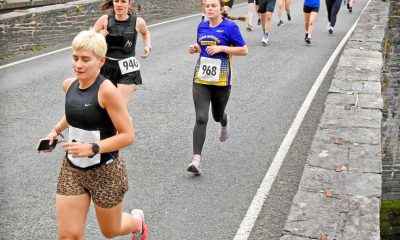
Runners tackle new route in Ras Y Castell 10k
MORE than 90 runners took to the streets and paths around Cardigan on Friday evening (June 5) for the annual...


Business2 days ago
Turkish Kitchen reaches Welsh restaurant award semi-finals
Haverfordwest café praised as small independent business flies flag for Pembrokeshire A HAVERFORDWEST café has been named as a semi-finalist...
-
Crime4 days ago
Paddleboard company owner loses bid to cut sentence over Haverfordwest tragedy
-

 Crime3 days ago
Milford Haven man admits harassment and assault
-

 Crime6 days ago
Milford Haven man bit neighbour’s neck near cashpoint
-

 News3 days ago
Community appeal for privacy after serious emergency in Pendine
-

 Crime6 days ago
Pembroke Dock driver avoided jail after drug-drive crash
-

 Crime6 days ago
Dinas Cross man jailed over shop thefts
-
Crime1 day ago
Sex offender in senior role at Tenby family hotel
-

 News6 days ago
Mass rescue as west Wales lifeguards save three lives during busy half-term