


Business
70% of UK workers are struggling to ‘switch off’ from work


SEVENTY percent of UK professionals are struggling to ‘switch off’ from work, an issue which is leaving many unable to relax and even lose sleep over.
With the Government’s plans to double down on professionals’ ‘right to switch off’ deferred to their Next Steps to Make Work Pay document, new research from global talent solutions firm Robert Walters highlights that professionals are regularly finding their personal time interrupted by work-related emails, tasks or calls.
Lucy Bisset, Director of Robert Walters North comments: “Not being able to fully ‘switch off’ from work can result in a variety of negative side effects for professionals. From diminished concentration and motivation to their productivity and engagement levels dropping off.
“All professionals should feel able to relax and unwind outside of work – without the concern of having to pick up work-related tasks.”
According to the Robert Walters poll, 29% of professionals state that not being able to log-off properly from work has directly resulted in them losing sleep – whilst a quarter cite being unable to relax or reset themselves for the next day.

A further 35% of professionals have struggled with increased stress or anxiety because of this.
Lucy comments: “Missing out on hours of sleep, being unable to fully relax as well as experiencing increased stress or anxiety can pose a huge threat to professional’s ability to work, even carrying out regular tasks and activities. Not to mention, maintaining a satisfactory work-life balance.”
A key trigger of not being able to switch-off from work is the mounting pressure on professionals to be ‘always available’ – with 67% of workers across all professional services industries stating that this pressure has increased over the past 12 months.
76% admit to checking-in on work-related emails or calls when not in the office and a further fifth stating that their employer ‘frequently’ contacts them outside of office hours.
Lucy comments: “Over recent years the boom of workplace tech like Teams and Slack has meant that teams can be more easily tracked and contacted by their managers, whilst the rise of hybrid/remote working has caused professionals to literally bring work home with them.
“An ‘always online’ workplace culture contributes to the blurring of lines between office hours and personal time as well as an increasingly unrealistic expectation for greater availability. This is something that if left unchecked can rapidly lead to increased cases of burnout across workforces.”
Indeed, according to further research from Robert Walters’ Benefits Guide, 86% of UK companies have hybrid-working options, while a further 55% have the option of flexible working hours.

However, there is some variation between industries – for example, professionals working in financial services (93%) and technology (87%) are more likely to have hybrid-working options than engineering professionals (64%).
Whilst professionals in general management are 19% more likely to have flexible working hours than those in tax, legal and compliance (65% vs. 46%).
Lucy comments: “Professionals in traditionally on-site roles often have a clear boundary between work and personal life – being able to ‘clock off’ when they finish for the day.
“Something which becomes more blurred for those working from home. With many professionals who have a hybrid-working schedule literally bringing work home with them 2-3 days out of the week.”
What is the antidote?
When asked about what employers could do to help them to switch off, two-fifths of professionals suggested ‘setting realistic deadlines’ and over a quarter (27%) said putting a limit on out-of-office contact.
Other strategies mentioned were boosting wellbeing incentives (16%) and encouraging regular breaks throughout the working day (16%).
Lucy comments: “Employers who verge on creating a ‘zombie workforce’ put employee productivity, engagement and satisfaction levels on the line. This could also directly lead to a rise in cases of absenteeism throughout their organisation.
“This issue must be addressed head on, by establishing a solid foundation of achievable deadlines, manageable workloads along with clear boundaries between work and personal time – for both those working from the office and at home. Once this groundwork is set, additional improvements like enhanced wellbeing incentives can be introduced.”


A POPULAR Pembrokeshire music shop is changing the way it operates, with Main Street Music confirming it will no longer trade as a retail shop from September 1.
The business said there will be an immediate 15% sale on all stock, but stressed that Main Street Music is not disappearing completely.
The owner said the decision had been made “with a heavy heart”, adding that the shop’s closure as a retail outlet would be a loss for Pembrokeshire as the county’s last professional guitar dealership.
He said his long-term passion had always been making musical instruments, something he had done since his teenage years, later receiving scholarships and a fellowship for his studies.
After college, he was given the opportunity to buy the business at the age of 24.
He said: “I have had an amazing time running this shop, giving it everything I’ve got, met some wonderful people and sold some incredible guitars.”
Although the business itself remains successful, he said tighter retail margins, dealership pressures and rising costs had made it difficult to grow in a way that would allow him to employ others and spend more time in the workshop.
The shop will eventually reopen as an appointment-only workshop and showroom for handmade guitars and repairs.
Current repair work will continue on a case-by-case basis by appointment only.
Main Street Music thanked customers for their support over recent years, saying the owner was proud of where the shop had been taken.
Caption:
Main Street Music will close as a retail shop from September 1, but will continue as an appointment-only workshop and showroom for handmade guitars and repairs.


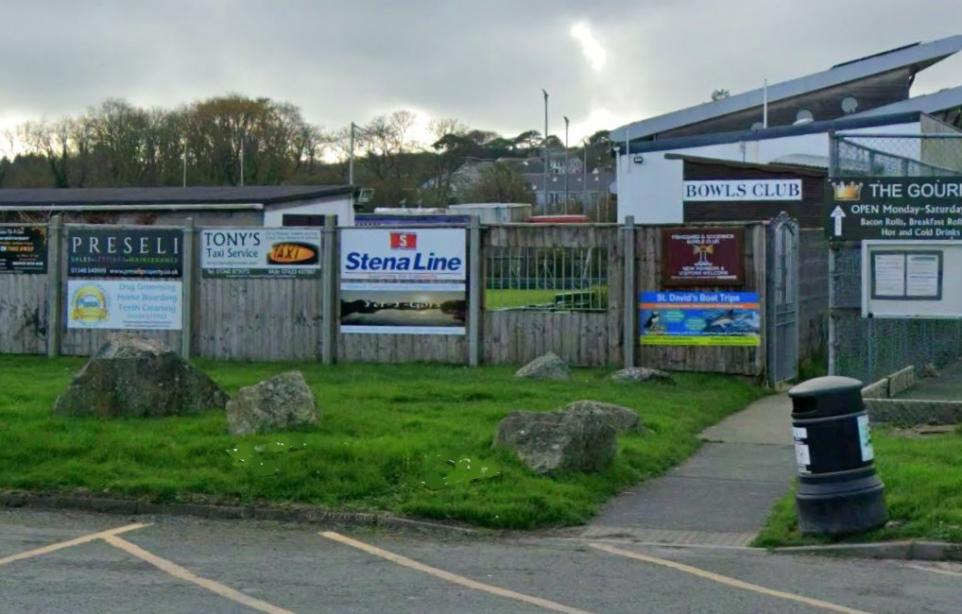
A Pembrokeshire sports club, which was recently refused permission by the council to keep advertising signs which support its activities, is looking to fight that decision.
Earlier this month, in an application refused by Pembrokeshire County Council on the grounds of visual impact, Fishguard & Goodwick Bowls Club sought retrospective permission for up to 36 signs on land close to the town’s Phoenix Centre.
The signs, which the applicants said provide “an important source of revenue for the Fishguard and Goodwick Bowls Club, supporting the ongoing operation and maintenance of local community sporting facilities,” had been in place for some 18 months, being removed ahead of the formal planning application.
Speaking after the refusal, Richard Brind, club captain of Fishguard & Goodwick Bowls Club, said the club had discussed challenging the decision, and had been taking advice from local county councillors about the best potential route, with options including a direct appeal through the Welsh Government’s PEDW (Planning and Environment Decisions Wales).
“We acted in good faith as we believed we had permission from a PCC department to install the signs.
“The irony in all of this is we actually paid PCC to have the signs made by their sign making department (who were the department that told us it would be OK to install the signs on our fence).
“The landlord of the grounds which is PCC have told us that they had no objection to us installing the signs, providing planning is granted.”
Mr Brind added: “I’m disappointed with the way the planning department have handled the process, not the decision, but I do think that was wrong; other sports clubs have signs up in the area, it doesn’t seem right.”
On the financial implication, he said: “Unfortunately, the costs of everything goes up, the costs to maintain the green are not covered by our membership, this year we’re probably going to spend £5,000. The money from the signs was certainly helping to keep the club viable, if we don’t get that money from somewhere, maybe through increased fees; membership would have to go up by a half, from £80 to £120.
“The funding we receive from the ads, it’s not vital but it’s a definite help, losing it would be ‘death from 1,000 cuts,’ money slowly trickling out.”
He finished: “I could understand it if it was an area of outstanding natural beauty rather than a car park, where we are we’ve got Jewsons and a petrol station.”
A spokesman for Pembrokeshire County Council said: “The Local Planning Authority has considered the application in accordance with the Town and Country Planning (Control of Advertisements) Regulations 1992 (as amended), which require due consideration of the impact signage would have on visual amenity and public safety.
“While comments regarding advice the applicant received from other council departments and landowner consent are noted, each application must be determined on its own merits with regard to relevant policy and legislation.
“The Authority recognises the club’s valuable role in the community; however, financial considerations are not material to the assessment of advertisement consent.
“Whilst there is a right of appeal to Planning and Environment Decisions Wales (PEDW), the Local Planning Authority remains willing to engage with the applicant regarding any revised proposals they may wish to present.”

MINISTERS have announced plans to speed up reforms aimed at helping high street businesses compete with online retailers and overseas sellers.
The Treasury said changes to low-value imports will now be brought forward by six months, with customs duty relief on goods worth £135 or less set to be scrapped from October 2028.
The move is designed to stop online retailers gaining an unfair advantage over shops, pubs, restaurants, hotels and other high street businesses.
At present, many cheaper imported goods can enter the UK without customs duty, a system which ministers say has left traditional retailers at a disadvantage.
The Government is also reviewing how VAT is collected from businesses trading through online marketplaces, amid concerns that some sellers are failing to pay the tax they owe.
The Treasury said revenue raised from tougher VAT enforcement would be used to help improve the business rates system for high street firms.
Dan Tomlinson, Exchequer Secretary to the Treasury, said: “This action tackles the unfair competition and dodgy businesses that are doing real damage to our high streets.
“And by making sure that tax is paid when it’s owed, we can raise revenue to put back into improvements to the business rates system for pubs, restaurants, hotels and other high street businesses.”
The package also includes a consultation on VAT reform for land used in new social housing developments.
Ministers say the change could help speed up the delivery of affordable homes by making the tax system better reflect how social housing schemes are developed.
The Treasury said the measures form part of wider plans to make the UK tax and customs system simpler, fairer and more focused on economic growth.



Local Government10 hours ago
Tenby Spectacular row continues as organisers say key question remains unanswered
Round Table says legal clarity over pedestrian access is still holding up event plan TENBY ROUND TABLE has welcomed Pembrokeshire...


Community1 day ago
Manorbier fire scandal: Council’s payout just £63,777 after school destroyed
PEMBROKESHIRE COUNTY COUNCIL has accepted an insurance settlement which leaves it with just £63,777.07 after the catastrophic fire which destroyed...


News2 days ago
Bus overturns in major incident near Kidwelly
All passengers rescued as emergency services remain at scene A BUS overturned on the A484 between Kidwelly and Ferryside on...


Community2 days ago
Tenby Summer Spectacular cancelled amid council row over harbour access
Organisers say popular charity events cannot safely go ahead without clear powers to control crowds TENBY ROUND TABLE has announced...


News3 days ago
Motorcyclist dies after four-vehicle crash on A40 in Carmarthenshire
A MOTORCYCLIST has died following a four-vehicle collision on the A40 between St Clears and Whitland. Dyfed-Powys Police said the...


News3 days ago
Rhun ap Iorwerth urges new deal for Wales after Starmer quits
First Minister says next Prime Minister must focus on greater powers, fair funding and respect for Wales’ democratic mandate FIRST...


News3 days ago
How Labour’s landslide victory unravelled in just two years
Prime Minister announces resignation after losing support within his own party as Andy Burnham emerges as overwhelming favourite to take...


News3 days ago
Long Course Weekend set to bring thousands to Pembrokeshire
Three days of swimming, cycling and running will once again transform Tenby into one of the UK’s biggest endurance sporting...


Community3 days ago
The gentle giant behind the tattoos
Pembrokeshire security worker Josh Davies praised for professionalism, kindness and proving first impressions can be wrong JOSH Davies is hard...


Charity4 days ago
Toy Story fans fill charity toy box at Haverfordwest cinema
Donations pour in for SNAP Specialist Play as families embrace Toy Story 5 launch A TOY STORY-themed charity appeal at...
-

 Crime7 days ago
Milford Haven man jailed for breaching domestic violence protection order
-

 News7 days ago
Crash on Freeman’s Way causes school-run chaos across Haverfordwest
-

 Health5 days ago
Woman jailed assaults on police, harassment and XL Bully possession
-

 Crime4 days ago
Milford Haven woman spared jail despite string of shop thefts
-

 Crime7 days ago
Portfield Gate man faces careless driving allegation after Tufton crash
-
Community3 days ago
The gentle giant behind the tattoos
-

 Local Government6 days ago
Pembrokeshire faces accessible housing shortage as 403 people wait for homes
-

 Crime4 days ago
Spittal man to stand trial accused of ABH