


Politics
Free childcare proposal could cost half a billion each year

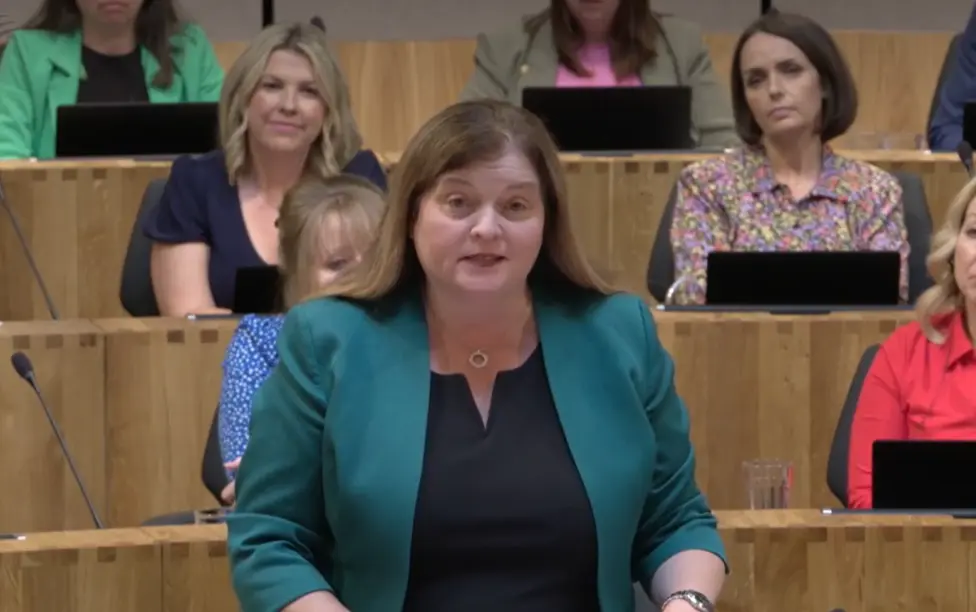
FAMILIES across Wales have been promised free childcare for all children aged nine months to four years by 2031, but the proposal could cost up to £500m a year.
Wales’ Deputy First Minister Sioned Williams told the Senedd on Tuesday July 14 that the Welsh Government’s core estimate for the full rollout is £375 million annually.
However, Ms Williams admitted under questioning that the final bill could rise to half a billion pounds depending on uptake
Ms Williams said: “Families of all children from nine months to four years across Wales should be able to access a more affordable, simpler, more consistent childcare offer by the end of this Senedd term.”
Describing childcare as “absolutely essential”, Ms Williams told the Siambr that whether or not to expand funded childcare is “not a question to discuss.”

She said: “The lack of affordable childcare is a societal problem to solve, and in solving it, we will deliver benefits that span across gender equality, early child development, tackling poverty, supporting our economy and improving our children’s health and educational outcomes.”
Ms Williams said work with economists and analysts was “ongoing”, and said factors such as workforce costs, training and development, additional learning needs and more will also be taken into account.
She pointed to the fact funded childcare was offered to nearly 75% of two-year-olds across Wales in 2025/26, the minister said: “We want to go further and ensure that what was promised by the previous Labour government, but not delivered, is fully implemented.”
Ms Williams highlighted the importance of the supplementary budget – which was later that day rejected – in enabling the childcare offer rollout.
She said: “At the start of this government term, three local authorities had succeeded in completing the roll-out of 12.5 hours of funded childcare to all two-year olds. One other local authority has reached every two-year-old child last month.
“And 16 more local authorities have already confirmed that, with the additional funding that we will invest through the supplementary budget, they’ll be able to move to a full rollout by the end of this financial year”.
She added: “Wales has the highest childcare costs in the UK, with many households spending more than their rent or mortgage on childcare costs. Women are disproportionately affected by this and Wales has a persistent gender pay gap.

“Wales has some of the poorest children who cannot currently access the benefits of early years provision.”
Reform’s Christiana Emsley, who is the party’s shadow minister for families, told the Deputy First Minister that “ambition is not the issue; preparedness is”.
Ms Emsley said that a want for children to have “the best possible start in life” and for families to be able to access “affordable, high-quality childcare” is something that unites everyone across the Siambr.
However, she criticised the Deputy First Minister’s statement suggesting it contained a “contradiction at its very heart”.
The Fflint Wrecsam MS said: “You tell us that, whilst developing the manifesto, Plaid Cymru, quote, ‘carefully costed’ the expanded childcare offer, yet only moments later you tell us that officials are now developing clearer costs, reconsidering the assumptions behind them, modelling potential take-up rates and testing a range of variables.”
Ms Emsley also questioned Ms Williams’ statement that the policy will cost £375 million a year, noting that the Deputy First Minister described this as a “mid-point estimate”.
She called on Ms Williams to reveal the government’s highest estimate – but the minister took aim at Reform’s election manifesto – which contained no mention of childcare – in her response.
Ms Williams said: “We know that for years and years anti-poverty researchers and people who are trying to promote equality in Wales and in our society have seen this as a keystone, a foundational part of addressing that inequality.
“And yet all we get from Reform is talk about a worst-case scenario, a financial liability.”
Responding to Ms Emsley’s comments on the midpoint estimate, Ms Williams said the figure is based on the take-up that has been seen in other parts of the UK with similar demographics.
She confirmed her government does know the potential full cost and said: “The maximum is usually about 80% take-up.
“The additional funding that would be needed would be between £250 million and £500 million. The £375 million is a midpoint estimate.
“The precise funding will always depend on take-up rates. We have to have estimates and modelling around all those scenarios. That’s why the work is ongoing.
“It’s not about making a plan, it’s about making sure that we can deliver what is actually needed as we work through these phases.”
The Deputy First Minister was also questioned on her plans for the Flying Start scheme.
Former education minister Lynne Neagle – who is Labour’s spokesperson for children – told the Siambr that Flying Start provision provides better health visiting, speech and language therapy, and parenting support.
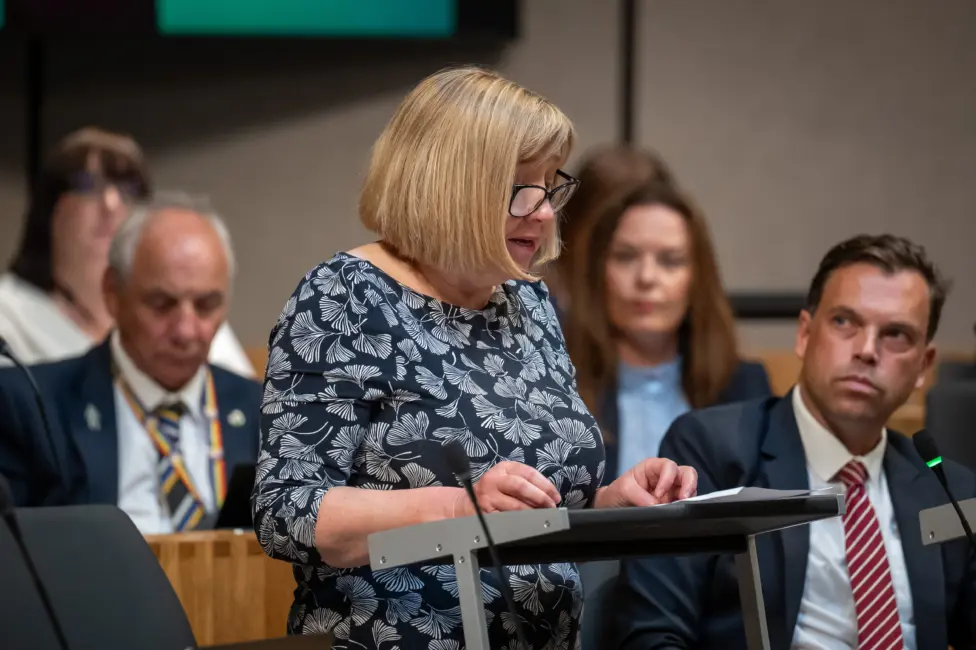
Ms Neagle asked what the “ramifications” of Plaid’s childcare plans will be for Flying Start – and whether there could be a reduction in the number of children receiving all four elements of Flying Start to fund the new offer.
Ms Williams said: “As regards Flying Start, as I’ve said, this isn’t about […] just adding hours; absolutely not.
“This is about taking a system-wide approach to transforming support for children in the early years.
“Childcare, as I said, is our manifesto commitment. It’s absolutely a key part of that, and so, […], the immediate priority is to make sure that we can start that work of rolling out what we’ve promised to the Welsh electorate, and then build, as I say, towards the next stages of expansion”.
The Welsh Conservatives described the current system as “far too complex”.
Sam Rowlands, Tory spokesperson for families, said: “We believe that one of the first things that the Welsh Government should be looking at is how to streamline and simplify childcare funding so that parents in particular can easily understand what support is available to them so that they can properly plan for the future.”

Responding to Mr Rowlands’ question on what will be done to engage with parents and carers, Ms Williams said: “We know that many people don’t take up childcare, not only because it’s disjointed, but because it’s difficult, it’s complex, and there are so many different eligibility thresholds, things you’ve got to apply for at different points during your child’s life.
“So, I can assure you that the point around simplification and what that looks like, what that front door looks like, is absolutely part of this work as well. And my officials are already working on that.”
Mr Rowlands also quizzed the Deputy First Minister on a proposal put forward in the Conservative manifesto – a “grandparent payment scheme”.
The Tory spokesperson described the proposed scheme as designed “to recognise the role of the wider family in bringing up children”.
He continued: “You say that it takes a village to bring up a child. I wonder what consideration you’ve given to a scheme similar to that, where a nominated family member is able to be supported to support bringing a child up, rather than, perhaps, necessarily, that money always going to a childcare provider setting.
“At the end of the day, parents want childcare that is safe, affordable and reliable. Providers want a system that is properly funded, sustainable and workable. Those are the priorities that we should all be focused on.”
Ms Williams replied: “We are looking at creative solutions. We really need to consider childminders in this, who are constantly coming up as ‘excellent’ and ‘good’ when they’re inspected.
“They provide such a valuable service for people who work irregular hours, especially in places where there isn’t a density of population.
“So, we will absolutely be considering other models of provision as we roll this out.”

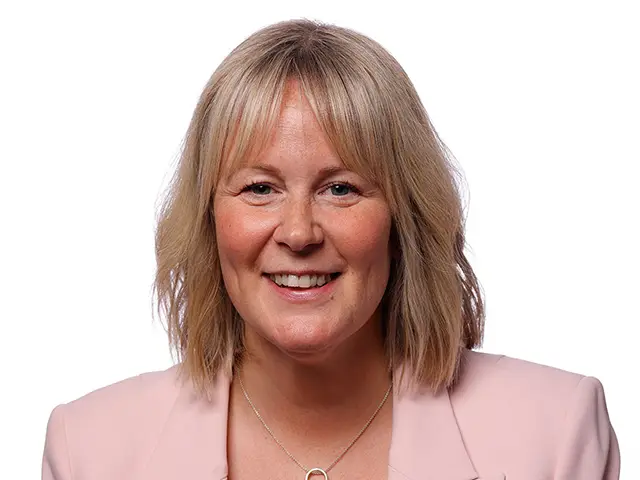
SENEDD Members have questioned the Welsh Government over a new £8 million obesity strategy, tightening restrictions on youth vaping, and regional inequalities in cancer screening.
Deputy Minister for Public and Preventative Health, Nerys Evans, confirmed Public Health Wales has secured the funding through the obesity pathway innovation programme.
The funding will be used to develop new NHS treatment models for obesity, viewing it as a chronic condition rather than a short-term issue.
The announcement on Tuesday July 14 followed a speech to the Senedd, where Ms Evans outlined her preventative healthcare priorities and drew on the words of Aneurin Bevan: “The victories won by preventive medicine are much the most important for mankind.”
Emphasising the importance of prevention in healthcare, Ms Evans said: “The need to make this change is not new. What has been missing is the determination to deliver it.
“For too long, our models, processes and ways of working have been built around responding to crises, rather than preventing them and helping people to live healthier and happier lives.
“This changes now. Under this government, success will be measured not by the number of hospital admissions, but by the number of people who stay healthy enough to avoid hospital altogether.”
Ms Evans told Senedd colleagues that providing healthy environments, better access to sustainable and nutritious food, and addressing vaping amongst young people were among her top priorities as minister.
Concluding her speech she said: “We firmly believe that building a healthier population is not only a moral imperative, particularly in tackling deep-rooted inequalities, but is also fundamental to improving the wider prosperity and resilience of our nation.”
Facing questions from the opposition benches, Ms Evans took questions on funding for weight loss jabs, screening and vaccinations, and vaping and smoking.
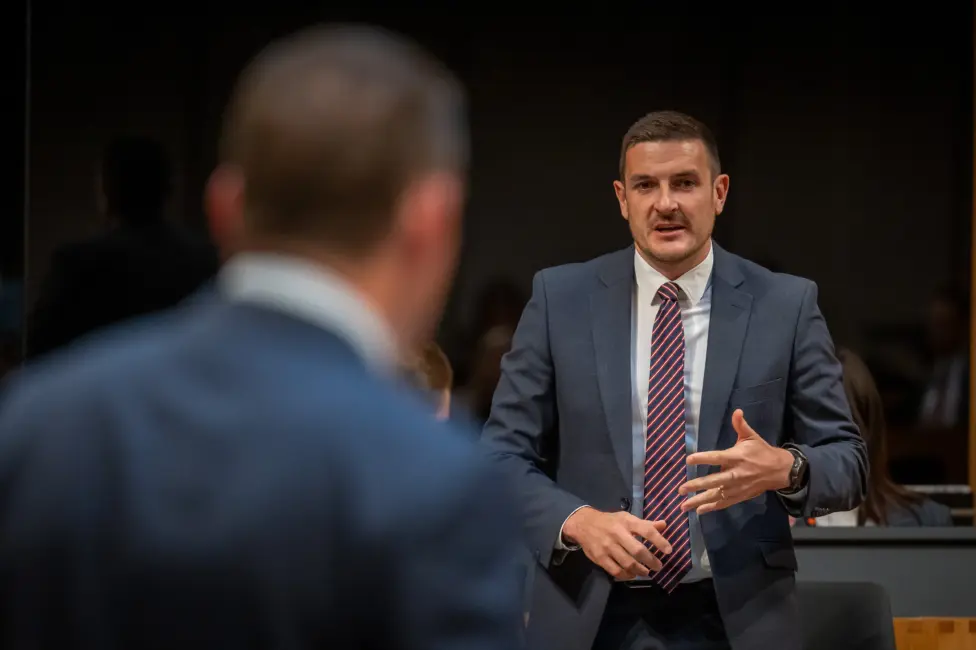
Reform’s James Evans pressed the deputy minister on the longer term impacts of weight loss medication.
He said: “I think one thing we have to be careful with, with weight-loss medication, is that, yes, it is changing lives, but it’s not changing lifestyles.

“It cannot be seen as a silver bullet to losing weight long term, because we do know about the longer term health impacts, with osteoporosis in women, with people with cardiovascular problems emerging from these jabs”.
Mr Evans asked his opposite number if she will be working with primary care, gyms, and leisure providers to ensure people on weight loss medication are also making lifestyle changes.
“If you don’t, it’s just a vicious circle,” Mr Evans explained. “You’ll come off it, you’ll put weight back on again, and you’re back on the jabs and then end up in A&E with longer term problems, and that’s no way to help our health service.”
The deputy minister agreed, adding that it is about “creating that system of support around individuals for those lifestyle choices”.
Ms Evans revealed Public Health Wales has recently been successful in co-ordinating a Wales-wide bid for funding through the obesity pathway innovation programme.
She said: “That’s £8 million of funding in order to look at these issues, to develop and test approaches that could form part of that delivery model going forward.
“We want to be looking at treating obesity as a chronic condition, and, obviously, the changes that would mean in terms of how the NHS would respond to that would be key.”

Drawing attention to the national lung cancer screening programme that was introduced by Welsh Labour, Jayne Bryant quizzed Ms Evans on her plans to encourage participation in screenings and vaccination programmes.
Ms Bryant – who is Labour’s spokesperson for public and preventative health – also acknowledged the HPV vaccine, noting that since its introduction in 2008 the vaccine has “reduced cervical cancer rates by almost 90% in women in their 20s”.
She also highlighted the importance of cervical screenings, but said work needs to be done to make them more accessible Wales-wide.
The Labour spokesperson called for Ms Evans to share how the Welsh Government will encourage participation in vaccines and screenings.
The deputy minister said: “One of the things that worries me is the differences within our deprived communities in terms of screening and vaccine uptake.”
She spoke of making sure Public Health Wales, in its efforts to boost screening and vaccinations, understands what the barriers are to uptake.

Ms Evans also faced questions on her plans for preventing smoking and vaping among children and young people by Conservative MS Natasha Asghar.
Ms Asghar, of Casnewydd Islwyn, told the Siambr that Wales sees almost 4,000 preventable deaths each year because of smoking.
She acknowledged the deputy minister has already launched a consultation on vaping as part of the four-nation approach to prevent children from smoking, but called for clarity on what other actions will be taken.
Ms Evans said that tackling the increasing number of children vaping is a “key priority” for her as minister.
She urged the public to take part in a consultation into vaping, which is looking at changing vape product packaging to be more like tobacco packaging – and less attractive to young people.
Ms Evans also confirmed she has asked officials to provide an outline of what other powers the Welsh Government has to tackle tobacco and vaping.

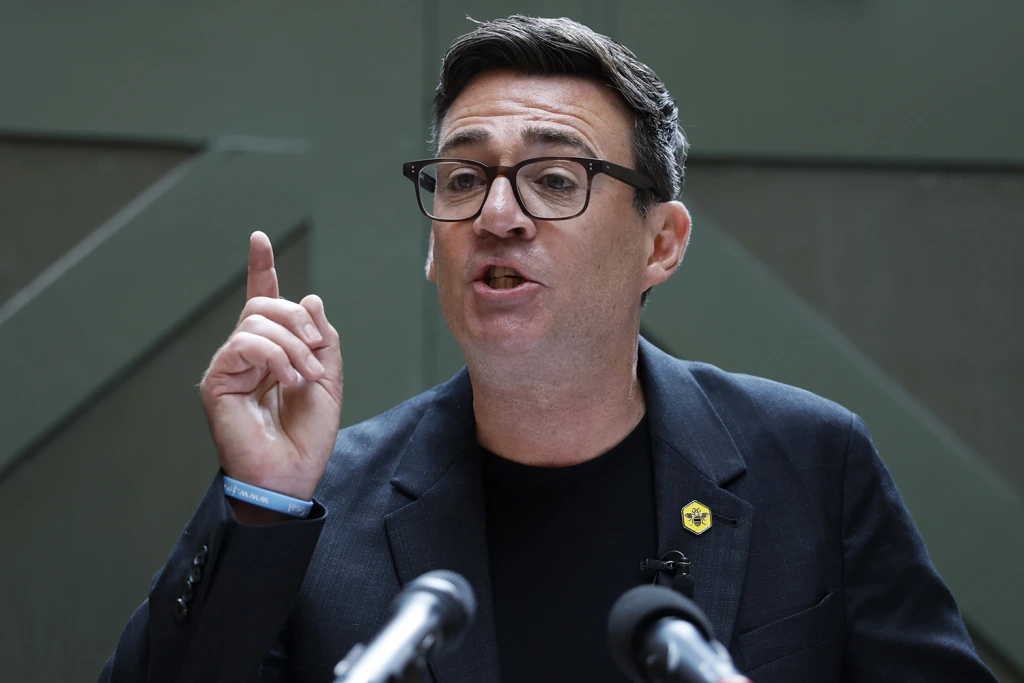
Former Greater Manchester mayor promises an ‘unashamedly Labour’ government after completing extraordinary return to Westminster
ANDY BURNHAM has been formally confirmed as leader of the Labour Party, clearing the way for him to become Prime Minister on Monday.
The former Mayor of Greater Manchester succeeded Sir Keir Starmer at a special Labour conference in London on Friday (July 17), after becoming the only candidate to secure enough nominations to enter the leadership contest.
Burnham received the backing of 379 of Labour’s 403 MPs, bringing the contest to an end without a ballot of party members.
Sir Keir will remain Prime Minister over the weekend. He is expected to visit Buckingham Palace on Monday (July 20) to formally tender his resignation to the King.
Burnham will then be invited to form a government before entering Downing Street, addressing the country and appointing his first Cabinet.
His arrival in No 10 will make him Britain’s seventh Prime Minister since 2016, following David Cameron, Theresa May, Boris Johnson, Liz Truss, Rishi Sunak and Sir Keir.
It will also complete one of the most remarkable political comebacks of modern times.
‘Unashamedly Labour’
In his first speech as party leader, Burnham promised a government with the courage to address problems which he said had been neglected by successive administrations.
He said Britain needed more than a change of leadership and pledged to transform the way the country is governed.
Burnham described his programme as “unashamedly Labour”, placing economic renewal, regional equality, public services and social care at the heart of his emerging agenda.
He argued that Britain had taken a series of wrong turns during the 1980s, when political power became increasingly concentrated in Westminster while industries and essential services were transferred into private ownership.
His government, he suggested, would seek to reverse that imbalance by giving communities greater control over decisions and allowing more parts of the country to take public control of services such as transport.

Burnham is expected to use his experience in Greater Manchester as a model for wider reform.
His flagship Bee Network brought buses under public control, introduced capped fares and sought to connect bus and tram services across the city region.
Supporters believe the project demonstrates that devolved government can deliver visible improvements to everyday services. Critics will question whether the Greater Manchester model can be expanded across a country facing severe financial pressures.
From regional mayor to Prime Minister
Burnham’s rise to the Labour leadership follows a decade-long political journey which appeared, at one stage, to have taken him permanently away from Westminster.
He served as an MP between 2001 and 2017 and held senior positions in the governments of Tony Blair and Gordon Brown, including Health Secretary and Culture Secretary.
He stood for the Labour leadership in 2010 and again in 2015, losing first to Ed Miliband and then to Jeremy Corbyn.
In 2017, Burnham left Parliament to become the first directly elected Mayor of Greater Manchester.
The move allowed him to build a political identity outside Westminster and to present himself as an advocate for regions which felt ignored by central government.
His national profile grew significantly during the Covid pandemic, when he publicly challenged Boris Johnson’s government over financial support for Greater Manchester during the imposition of regional restrictions.
The confrontation earned him the unofficial title “King of the North” and helped establish him as one of Labour’s most recognisable figures.
His return to Westminster was far from straightforward.
Burnham was prevented by Labour’s ruling National Executive Committee from seeking selection in the Gorton and Denton by-election earlier this year.
Following Labour’s disastrous local election results and growing pressure on Sir Keir, he was later selected to fight the Makerfield by-election.
He won the seat on June 18 with a majority of 9,231, giving him the parliamentary platform needed to contest the Labour leadership.
Sir Keir initially vowed to fight any challenge but announced his resignation days later as support within the parliamentary party collapsed.
Potential leadership rivals declined to stand as Labour MPs rapidly consolidated behind Burnham.
Less than a month after returning to the Commons, the former regional mayor is now preparing to become Prime Minister.
Immediate economic test
The celebrations are unlikely to last long.
Burnham will inherit a sluggish economy, continuing pressure on household finances, strained public services and deep concern about the state of the public finances.
His first major task will be to reassure voters and financial markets that his promise of significant economic change will not come at the cost of fiscal stability.
Attention will focus immediately on his choice of Chancellor, along with whether he retains senior figures from Sir Keir’s government or uses the reshuffle to signal a decisive political break.
Burnham must balance demands from Labour members for greater public investment with Treasury warnings about borrowing, debt interest and the limited room available for expensive new commitments.
He must also decide how far he is prepared to depart from the manifesto on which Labour won the 2024 general election.
A significant shift could help Burnham establish his own political identity, but it would strengthen demands from opposition parties for an early general election.
Another Prime Minister without an election
Burnham will become Prime Minister without having led Labour into a general election.
The transfer is permitted under Britain’s parliamentary system. A governing party can change its leader during a Parliament, with the monarch inviting the person most likely to command a majority in the House of Commons to form a government.
Labour retains a large Commons majority and the next general election does not legally have to take place until 2029.
However, opposition parties are expected to argue that Burnham should seek a personal mandate from the electorate, particularly if he intends to take the Government in a substantially different direction.
Burnham is likely to resist immediate calls for an election, insisting that Labour was elected to govern and must now deliver the change promised to voters.
Whether he eventually chooses to call an early contest may depend on his polling, the condition of the economy and his success in rebuilding support lost to Reform UK, the Conservatives, the Liberal Democrats, Plaid Cymru and the Greens.
The challenge from Reform
Reconnecting Labour with working-class voters who have moved towards Reform UK will be one of Burnham’s most urgent political challenges.
Labour’s heavy local election losses exposed anger over the cost of living, immigration, public services and a widespread belief that the Government had failed to deliver meaningful change after taking power.
Burnham’s supporters believe his less formal style and experience outside Westminster could help Labour rebuild trust in former industrial communities.
He has often presented himself as both a Labour loyalist and a critic of the Westminster system, allowing him to speak the language of political change while remaining at the head of the governing party.
But Reform will seek to portray his premiership as another internal transfer of power carried out without consulting the public.
The battle between Burnham and Reform is therefore likely to shape the next phase of British politics.
What Burnham’s leadership could mean for Wales
Burnham’s commitment to transferring power away from Westminster could have major consequences for Wales.
Welsh political leaders will be watching closely to see whether his support for devolution extends beyond English city regions and results in additional powers and funding for the Senedd.
Long-running disputes remain over rail investment, the Crown Estate, policing, justice, borrowing powers and the distribution of UK research funding.
Plaid Cymru is likely to increase pressure for further responsibilities to be transferred to Wales, while Welsh Labour will expect a closer and more productive relationship with the new Prime Minister.
Burnham will have to recognise that devolution in Wales is not simply another version of regional government in England.
The Senedd represents a nation with its own legislature, government and political identity. Any attempt to apply a single model across the UK would risk creating an early confrontation with Cardiff Bay.
His handling of Welsh funding and constitutional questions will provide an immediate test of whether his promise to move power out of Whitehall represents a genuine change in government or merely a change in tone.
A decisive moment
Burnham enters the Labour leadership with overwhelming support from his MPs, but without having faced a public leadership contest or a general election.
That has allowed Labour to complete the transition quickly, avoiding weeks of internal division.
It also means the public has heard relatively little detail about what a Burnham government will do.
His first Cabinet, his approach to the economy and his relationship with the devolved nations will begin to answer those questions.
For Burnham, Friday marked the completion of an extraordinary journey from defeated leadership candidate to regional mayor, returning MP and leader of the Labour Party.
On Monday, the campaign to reach Downing Street will be over.
The much harder task of governing Britain will begin.
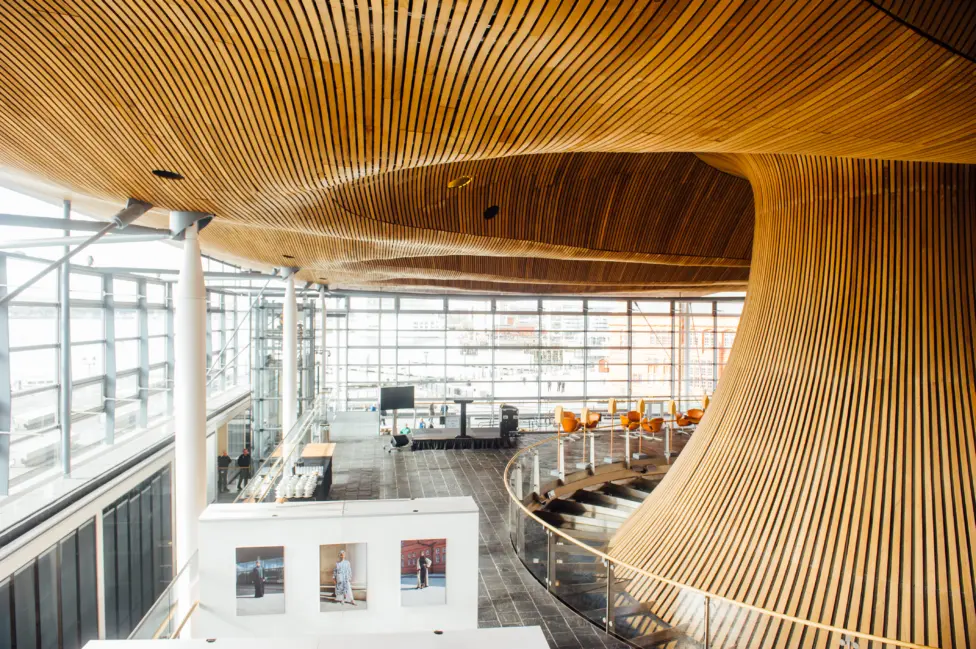
Arwain will replace Academi Wales and focus on improving leadership, skills and cooperation across Welsh public services
THE WELSH GOVERNMENT has announced the creation of a new national school of government aimed at strengthening leadership and improving the delivery of public services across Wales.
Arwain will build on the work of Academi Wales and provide training and development for current and future leaders throughout the Welsh public sector.
The initiative was announced on Friday (July 17) by Dafydd Trystan Davies MS, Cabinet Minister for Government Effectiveness and the Constitution, as part of the Welsh Government’s commitments for its first 100 days in office.
Mr Davies said Arwain would promote a “One Wales Public Service” approach, encouraging organisations to work together across institutional boundaries to deliver better outcomes for communities.
He said: “Through Arwain, we will establish the centre of excellence for leadership and capability.
“Rooted in the Welsh context and grounded in a One Wales Public Service ethos, it will support current and future leaders with the skills, confidence and shared purpose needed to lead change, strengthen delivery and improve outcomes for the people of Wales.”
Owen Evans, His Majesty’s Chief Inspector of Education and Training in Wales, will chair the new Arwain Steering Board.
The Welsh Government said Mr Evans would bring senior leadership and public-service experience to the organisation during its early development.
Members of the steering board will help shape Arwain’s work and promote it across public-sector bodies in Wales.
Further details about its programmes, structure and launch timetable are expected to be announced at a later date.


Crime44 minutes ago
Milford Haven teacher ‘fought for her life’ during alleged knife attack
Crown says teenage pupil planned classroom assault and intended to kill, as attempted murder trial reaches closing speeches LIVE FROM...

News1 hour ago
Andy Burnham becomes Labour leader and prepares to enter No 10
Former Greater Manchester mayor promises an ‘unashamedly Labour’ government after completing extraordinary return to Westminster ANDY BURNHAM has been formally...


News3 hours ago
Motorcyclist dies following collision near Narberth
Police appeal for witnesses and footage after fatal crash on B4313 at Redstone A MOTORCYCLIST has died following a collision...


Local Government23 hours ago
Stepaside school saved as council abandons closure proposal
Governors welcome decision but maintain original plans were based on outdated information STEPASIDE Community Primary School will remain open after...

Crime23 hours ago
Footballer given 200 hours’ unpaid work for eye-gouging assault during match
Magistrates heard Robert Hedley put an opposing player in a headlock before gouging at his eyes during a match in...


Community1 day ago
Tenby Summer Spectaculars brought to an end after harbour licence revoked
Round Table says it was willing to make major safety changes but could not secure the access controls needed to...
Local Government3 days ago
Catapult attacks suspected after wildlife deaths at Pembroke Mill Pond
Wildlife Crime Officers are investigating after the town council said around five animals showed signs of deliberate injury WILDLIFE found...

Crime3 days ago
Narberth retailer speaks of shoplifting toll after ‘collectable bear’ stolen
Independent shop owner said rising costs meant businesses could not afford to absorb losses caused by theft A NARBERTH retailer...


Crime3 days ago
Teen accused of attempting to murder teacher says she lied about stabbing
Defendant accepts teacher was terrified and that a knife wound to the head could kill, but denies deliberately attacking her...


Local Government5 days ago
Calls grow for independent investigation into Manorbier school closure
Councillor alleges misleading figures, inadequate insurance and poor treatment of staff CALLS for an independent investigation into the controversial closure...
-

 Crime3 days ago
Letterston footballer guilty of eye-gouging assault during match
-
 News7 days ago
Milford Haven Coastguard coordinates rescue of injured paddleboarder
-

 Crime7 days ago
Ann Widdecombe: Welsh politicians pay tribute as murder probe launched
-
 Business3 days ago
Former St Davids GP surgery to holiday let and home conversion conditionally approved
-
 Education7 days ago
Saundersfoot graduate secures teaching job before completing degree
-
 Education6 days ago
Welsh Government under fire to spend extra £340m on ALN
-
Community4 days ago
Call for investigation into Manorbier school closure as councillor seeks apology
-
 Climate6 days ago
Minister denies plan to cut livestock numbers over ‘left-wing ideological climate targets’