


Farming
Red clover innovation for Wales

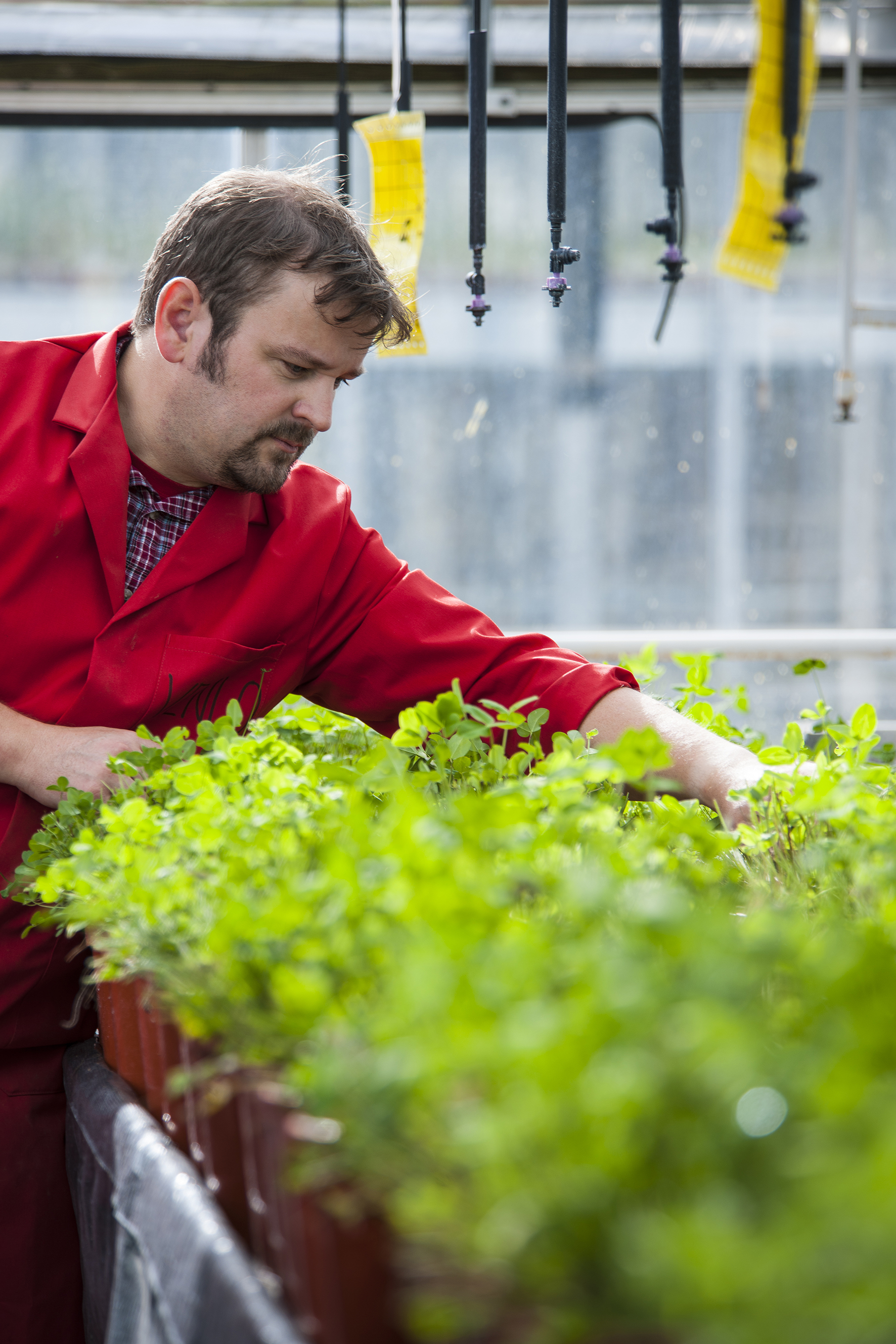
NEW research to ensure more Welsh livestock farmers could benefit from longer lasting, disease resistant red clovers is being undertaken at Aberystwyth University’s Institute of Biological, Environmental and Rural Sciences (IBERS).
The three-year Welsh Government (WG) and European Regional Development Fund (ERDF)-funded project is looking at ways to improve protein production and utilisation on farms in Wales through improved forage crops.
Professor Leif Skot, head of forage plant breeding at IBERS, is leading the project, whose partners are WG, ERDF, Germinal Holdings, HCC and Farming Connect.
As part of the project, Professor Skot and his team are looking at how red clover production and persistence can be improved, helping farmers to improve their silage crop value. In turn, this could go some way in helping farmers reduce the need to buy-in as many expensive concentrates.
Historically, some producers have been drawn away from red clover due to a tendency for yields to drop off after a couple of years. To solve that problem, scientists developed varieties which focused on improved yields and better persistence so they yield well into their fourth and fifth harvest.
However, prolonging the productive life of the plant increases the risk of another problem red clover faces, which is where this new project is currently focused.

Professor Skot explains: “One of the biggest issues is that red clover is susceptible to trampling, and if the plants get damaged then they are susceptible to disease. White clover is stoloniferous, which means it grows by stolons [small roots] which spread across the soil surface and allows the plant to fill in any gaps in the sward. Red clover plants, on the other hand, grow from a single growing point, the crown. That means that once the crown is damaged and the plant succumbs to disease, the remaining plants aren’t able to compensate and fill in the gaps, leading to a loss in yields.”
In a bid to counter this, Professor Skot and his team are developing resistance to the two major diseases responsible for red clover loss: Stem Nematode and Crown Rot (Sclerotinia).
They hope that by developing disease-resistant plants, they can create a more robust, productive plant.
“Stem Nematode and Sclerotinia are soil-borne pathogens for which we have no recognised chemical control. The current solution is to take a long gap in the rotation to minimise the potential risk of the problem,” adds Paul Billings of Germinal. “This research project is looking at whether we can select material which is more resistant to each of these diseases, and then combine them to create varieties resistant to both pathogens.”

Professor Skot says he and his team have carried out several generations of selection for Stem Nematode and Sclerotinia. They are now at the stage where they will combine the resistance to one population so it can be tested in the field.
While it is high-yielding and produces high-quality forage from the first year, red clover does need to be managed in a way which will improve its resistance, Professor Skot adds.
“The crown of the plant is susceptible to damage, so we are looking at improving its structure.. Our research shows that if they have compact crowns then they are more resilient to damage from machinery and compaction from animals or grazing. The major management technique is not cutting below 5cm and not overgrazing so that the crown isn’t damaged.”
With the correct management, red clover can yield between 22 and 25 tonnes of dry matter per hectare per annum when sown with grass, with clover content able to reach as high as 20 tonnes of dry matter in the first year.

“It’s high-yielding and high-quality from the first year, which is one of the great things about the crop. By minimising the problem areas, we can hopefully give Welsh farmers a way to produce more of their own protein on-farm,” he says.
This project aims to help deliver on the Welsh Government’s Well-being of Future Generations Act, one objective of which is to drive sustainable growth. It also contributes to its Economic Action Plan which encourages greater R&D and innovation.
RED CLOVER CASE STUDY
The Cowcher family from Penrhiw, Ceredigion, a Farming Connect Focus site, has seen the advantages of growing red clover on their farm for over a decade, but the introduction of long-lasting varieties would boost the benefits of the crop even further.
“We’ve been using red clover for more than ten years since we converted to organic production,” says Phil Cowcher, who farms beef and sheep with his parents across 500 acres (202ha) of part-owned, part-rented and part share-farmed organic farmland.
“It gives us high yields of good-quality forage, which can be difficult in organic systems, and it suppresses weeds because it’s very vigorous – if we get creeping thistles it smothers and gets rid of them,” he says. “Red clover is also important for fixing nitrogen. Cereals following red clover systems seem to yield very well, and it has deep tap roots so it breaks up the compaction.”
Phil believes planting with a cereal reduces competition from weeds during establishment, as the cereal acts as a nurse crop.
The 45 acres (18ha) of red clover is used by both the farm’s beef and sheep enterprises. The calves – produced by the 60-head, mainly Stabiliser suckler herd – tend to be fed the second and third cuts, as part of the growing and finishing rations.
The first cut, which usually has a higher grass content and metabolisable energy, is usually fed to pregnant ewes late in their pregnancy. Towards the end of the growing season, the red clover leys are rotationally grazed by lambs.
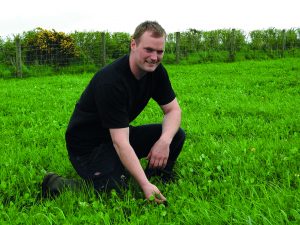
In clover: Phil Cowcher at Penrhiw
Phil adds: “For the calves, I like to feed two-thirds red clover with a third barley and peas for fibre. If it’s alone then it’s a bit rich, but by combining it with barley and peas it seems to complement the clover well.
“We make sure lambs are introduced gradually to the red clover when they first graze it. Once they’ve adjusted to the diet, growth rates are good and they usually finish well – we start selling in June at around 19kg and the last ones go by October.”
Phil believes management is fairly simple but stresses the importance of sowing in a fine seedbed when soils are over 10℃. If there’s a cold spring then cereals are planted first and the red clover ley is sown on top with a grass harrow/air seeder, into the growing crop, once soil temperature is high enough.
“When we cut it we have to make sure we don’t cut it too low, and we have to be careful not to overgraze it and damage the crown too. But for us, red clover’s a high-quality, high yielding crop and we’ll definitely carrying on growing it,” Phil concludes


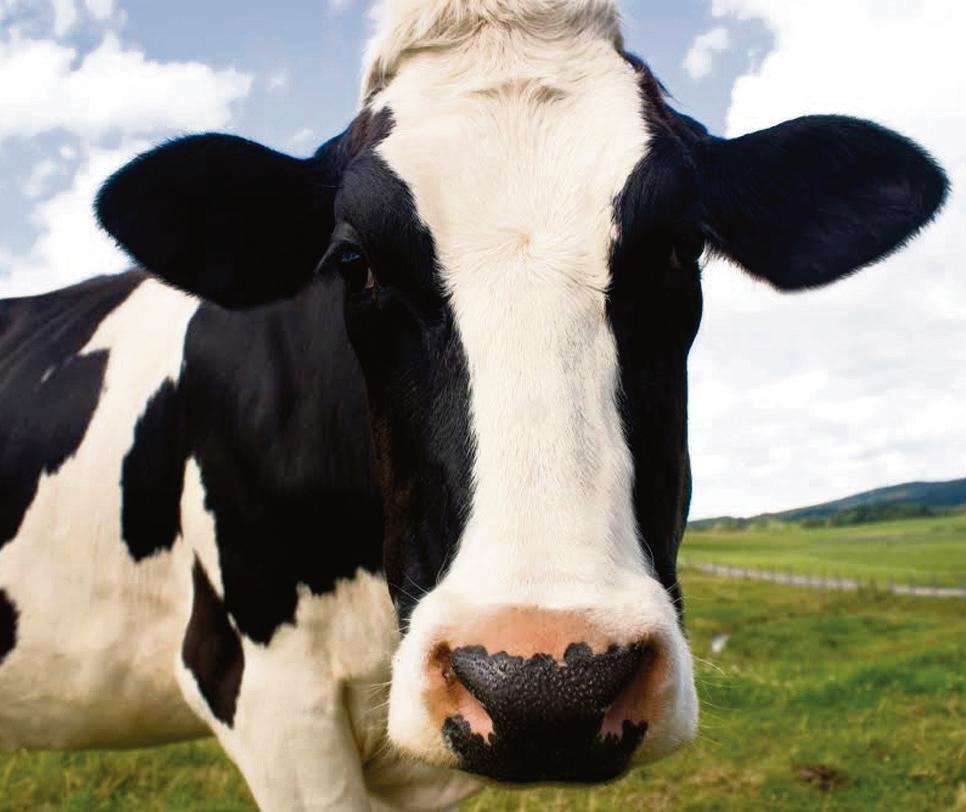
THE WELSH CONSERVATIVES have challenged the Welsh Government over climate change policies they say could lead to reductions in livestock numbers across Wales, raising concerns about the future of Welsh farming.
The row follows the Welsh Government’s decision, alongside Plaid Cymru and the Welsh Liberal Democrats, to support the UK Climate Change Committee’s Fourth Carbon Budget, which sets out the pathway towards Net Zero greenhouse gas emissions by 2050.
The Carbon Budget, produced by the independent Climate Change Committee (CCC), states that meeting Net Zero targets will require a reduction in agricultural emissions, including changes to land use and, in some scenarios, a reduction in livestock numbers.
During questioning in the Senedd, the Welsh Conservatives pressed the Deputy First Minister and Cabinet Secretary for Climate Change and Rural Affairs on whether the Welsh Government supports reducing livestock numbers as part of its climate strategy.
Speaking after the exchange, Welsh Conservative Shadow Cabinet Secretary for Rural Affairs, Samuel Kurtz MS, said the Welsh Government could not distance itself from the implications of the policy it had backed.
Mr Kurtz said: “By voting in favour of these climate change regulations, Labour, Plaid Cymru and the Liberal Democrats have signed up to the UK Climate Change Committee’s call to cut livestock numbers in Wales, and they cannot dodge that reality.
“The Deputy First Minister’s smoke-and-mirrors answers only confirm what farmers already fear: that Labour, along with their budget bedfellows in Plaid and the Lib Dems, are prepared to sacrifice Welsh agriculture in pursuit of climate targets.”
He added that the issue came at a time of growing pressure on the farming sector, pointing to uncertainty over the proposed Sustainable Farming Scheme, the ongoing failure to eradicate bovine TB, nitrogen pollution regulations under the Nitrate Vulnerable Zones (NVZs), and proposed changes to inheritance tax rules affecting family farms.
The Welsh Government has repeatedly said it does not have a target to forcibly reduce livestock numbers and has argued that future emissions reductions will come through a combination of improved farming practices, environmental land management, and changes in land use agreed with farmers.

Ministers have also said the Sustainable Farming Scheme, which is due to replace the Basic Payment Scheme, is intended to reward farmers for food production alongside environmental outcomes, rather than remove land from agriculture.
The UK Climate Change Committee, which advises governments across the UK, has stressed that its pathways are based on modelling rather than fixed quotas, and that devolved governments have flexibility in how targets are met.
However, farming unions and rural groups in Wales have warned that policies focused on emissions reduction risk undermining the viability of livestock farming, particularly in upland and marginal areas where alternatives to grazing are limited.

The debate highlights the growing tension between climate targets and food production in Wales, with livestock farming remaining a central part of the rural economy and Welsh cultural identity.
As discussions continue over the final shape of the Sustainable Farming Scheme and Wales’ long-term climate plans, pressure is mounting on the Welsh Government to reassure farmers that climate policy will not come at the expense of the sector’s survival.

Experienced insurance and risk specialist joins board as long-serving director retires
FUW INSURANCE SERVICS LTD, Wales’ leading specialist agricultural insurance broker, has announced the appointment of Dr Paul Jameson as a non-executive director.
Dr Jameson brings extensive experience in insurance and risk management, having worked as an actuary and senior executive within subsidiaries of major global insurers including Allianz, Munich Re, Legal & General and Wakam. He has held chief risk officer roles since 2020.
During his career, Dr Jameson has led multidisciplinary teams spanning actuarial services, risk management, compliance, audit, legal and marketing approvals, giving him broad experience in both strategic oversight and operational governance.
Speaking following his appointment, Dr Jameson, who lives in Colwyn Bay, North Wales, said he was looking forward to supporting the farming sector in Wales.
He said: “I am delighted to join FUW Insurance Services and would like to thank Ann, Guto and the rest of the team for their warm welcome.
“I have been impressed by the passion and commitment of the board to the farming community, and by its ambition to grow and diversify the insurance business. I am keen to support the farming profession and help ensure the continued success of the sector in Wales, particularly during periods of economic and geopolitical uncertainty.
“I hope my experience in the insurance sector will help the business build on its successes and continue to grow, especially as it explores new commercial opportunities and innovative avenues for expansion.”
Ann Beynon OBE, chair of the FUW Insurance Services board, said Dr Jameson’s expertise would be a significant asset to the organisation.
She said: “We are delighted to welcome Dr Paul Jameson to the board. His depth of experience in insurance and his understanding of risk management will be invaluable as we continue to develop and diversify our services.
“Paul’s insight and strategic perspective will help us navigate a changing insurance market, identify new opportunities for innovation and growth, and strengthen the services we provide to our customers.”
Dr Jameson’s appointment follows the retirement of Ken Isherwood, who has stepped down from the board after more than a decade of service.
Paying tribute, Ann Beynon said: “Ken’s integrity, wisdom and deep knowledge of the insurance industry have underpinned much of our success.

“It has been a privilege to work alongside him, and we wish him every happiness in his well-earned retirement.”

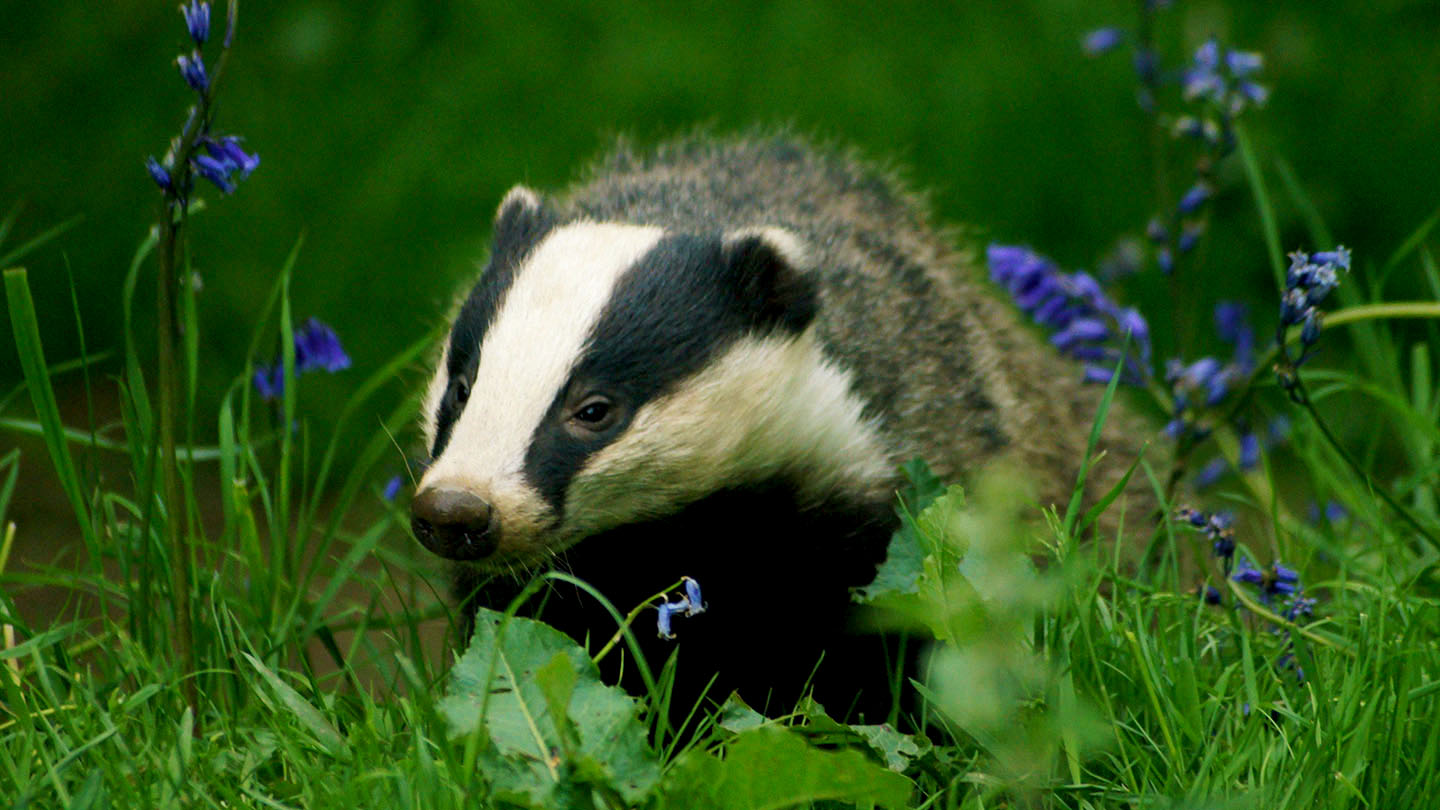
THE BADGER TRUST has published a new Cymru Badger Manifesto calling on candidates standing in the 2026 Senedd elections to commit to a science-led approach to bovine tuberculosis (bTB) and to maintain Wales’ current policy of not culling badgers.
The manifesto, released on Wednesday (Dec 10) as part of the charity’s Badgers Belong Here / Mae Moch Daear yn Perthyn Yma campaign, sets out the organisation’s position on badger protection, wildlife crime and bTB control, and urges politicians to reject calls for the reintroduction of culling in Wales.
Badger Trust argues that political decisions taken during the next Senedd term will be critical to the future of badgers, which it describes as culturally and ecologically significant to Wales. The charity says badgers have been present in Wales for more than 250,000 years and remain part of Welsh folklore, place names and rural identity.
Five key commitments
The manifesto outlines five commitments the charity is asking Senedd candidates to support, including defending what it describes as science-led policy on bTB, challenging misinformation in public debate, strengthening enforcement against wildlife crime, recognising badgers as part of Welsh heritage, and supporting local volunteer badger groups.
According to Badger Trust, 140 incidents of badger-related wildlife crime have been recorded in Wales since 2020, which it says highlights the need for improved reporting and enforcement.
The charity also points to the work of six active badger groups across Wales, which it says assist with rescuing injured animals, monitoring setts, recording road casualties and supporting local authorities.
bTB policy in Wales and England
Wales has not carried out widespread badger culling as part of its bTB control strategy, instead focusing on cattle testing, biosecurity measures and herd management.
Badger Trust claims that new herd incidents of bTB in Wales fell by more than 40% between 2010 and 2024, which it attributes to cattle-based controls rather than wildlife intervention.
The charity contrasts this with England, where it says almost 250,000 badgers have been culled over the past decade as part of bTB control programmes. It argues that bTB rates in England remain higher than in Wales and that the evidence does not show culling alone to be responsible for reductions in disease.

Disputed claims over culling
The manifesto challenges the frequently cited claim that badger culling in England led to a 56% reduction in bTB in cattle. Badger Trust says this figure has been misinterpreted and that studies cited in support of culling also involved additional measures such as enhanced cattle testing and biosecurity.
The charity points to statements from researchers and official correspondence which, it says, indicate that reductions in bTB cannot be attributed solely to culling.
Supporters of culling, including some farming groups, continue to argue that wildlife control should remain an option as part of a wider disease management strategy, particularly in areas with persistent infection. The Welsh Government has previously said it keeps its bTB policy under review in line with emerging evidence.
Call to candidates
Nigel Palmer, CEO of Badger Trust, said Wales demonstrated that bTB could be tackled without killing wildlife.
He said: “Wales is a world-leading example of how to address bovine TB through evidence-based policy. The progress made here shows that culling is not necessary, and we urge Senedd candidates to stand by the science.”
The manifesto is available in both Welsh and English and will be circulated to political parties and candidates ahead of the 2026 election.



Bail revoked for teenager charged with rape following Sands Nightclub allegation
A TEENAGER charged with rape following an alleged incident at a Saundersfoot nightclub has been remanded into custody after bail...


Former police officer accused of making sexual remarks to women while on duty
Court hears allegations of inappropriate behaviour during official police visits A FORMER police officer has appeared in court accused of...


Community gathers to remember Corrina Baker
Lanterns and balloons released in emotional acts of remembrance FAMILY, friends and members of the local community came together to...


Teenager charged following rape allegation at Saundersfoot nightclub
Incident reported at Sands Nightclub in early hours of Sunday DYFED-POWYS POLICE is investigating an allegation of rape following an...


Milford Haven man jailed after drunken attack on partner and police officers
A MILFORD HAVEN man who launched a violent drunken assault on his partner before attacking two police officers has been...


Court hears historic child sex abuse claim emerged after ‘tarot reading’
Judge reminds jurors there is no standard timeframe for victims to come forward as trial reaches final stage A JURY...


Rape allegation investigated at Saundersfoot nightclub
Police appeal for witnesses after incident reported in early hours of Sunday DYFED-POWYS POLICE are investigating an allegation of rape...


Milford ground worker denies historic child sex abuse charges at Crown Court
Accused tells jury claims did not happen as trial hears evidence about alcohol use and alleged controlling behaviour A MAN...


Three inmates deny murder of Lola James killer at Wakefield prison
THREE prisoners have denied murdering child killer Kyle Bevan, who was found dead in his cell at HMP Wakefield. Bevan,...


Dyfed-Powys Police reassure communities after Bondi Beach mass shooting
Officers monitor local tensions following terror attack on Jewish event in Sydney DYFED-POWYS POLICE have issued reassurances to communities across...
-
Crime2 days ago
Milford Haven man jailed after drunken attack on partner and police officers
-

 News5 days ago
Dyfed-Powys Police launch major investigation after triple fatal crash
-
Crime1 day ago
Teenager charged following rape allegation at Saundersfoot nightclub
-

 Crime2 days ago
Man charged with months of coercive control and assaults
-
Crime3 days ago
Man sent to Crown Court over historic indecent assault allegations
-
Crime5 days ago
Man spared jail after baseball bat incident in Milford Haven
-

 Crime3 days ago
Milford Haven man admits multiple offences after A477 incident
-

 Crime2 days ago
Woman ‘terrified in own home’ after ex breaches court order