


Community
Brave Teddy highlights need for ‘Gift of Life’

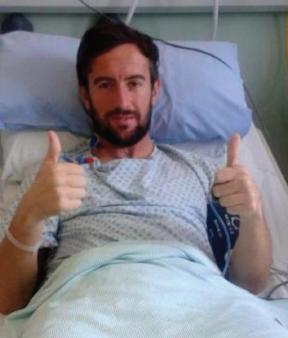

Adam Hughes: Just after his transplant.
FOR Jess Evans and Mike Houlston from Cardiff, the birth of twin boys Teddy and Noah on April 22 2014 was one of both heartbreak and hope. Teddy was born with a rare yet fatal condition – anencephaly – but his parents were determined his short life would not be in vain. Once the diagnosis was confirmed during pregnancy, the parents discussed and wanted, if possible, for his organs to be donated. The family managed to spend precious time with him before he passed away and Teddy became the youngest organ donor in the UK. In the last ten years, 39 babies younger than two years old have become organ donors helping to save the lives of strangers.
As his twin Noah celebrated his first birthday the family used the anniversary to mark the occasion when his brother Teddy became a hero. His kidneys were transplanted to help save the life of another person.
Jess, 28, said: “Knowing that part of your loved one is living on in someone else is comforting. If it stops any other person going through the same thing then this can only be good. Teddy´s life had a very important role to play. Unless you have been through the same thing or know someone affected it´s hard to understand how important organ donation is.”
Mike, 30, added: “We want Teddy´s story to inspire others and help break any taboos people might still hold regarding organ donation. Organ donation wasn´t prominent in my life growing up and while I was up for it I never got round to doing anything about it. I´m sure there are many more men like me who think the same! I want to spread the word as much as possible about how organ donation saves lives, and that we should all speak to each other about our wishes. Without that discussion it is a very difficult conversation to have when it comes out of the blue. Put simply, you should ask yourself the question “Would you take an organ if you needed it?” Everyone would do so if the truth were told so we hope what Teddy did can educate people and prompt them to get talking.”
April 22 2015, the one year anniversary of Teddy’s heroism, was also a personal milestone for myself, it marked six months to the day since I received my kidney transplant and got to experience first hand the ‘gift of life’. In April 2013 I was admitted to hospital with symptoms of cramps, breathlessness, headaches, nosebleeds and chest pains. A simple blood pressure test at the doctor’s surgery had indicated a blood pressure reading of 230/170, high by anyone’s standards, but stratospheric for a 25 year-old.

This was the start of a three week stay in hospital. I had suffered Chronic Renal Failure, my blood readings were so dangerously unbalanced that I was told I may not have survived a fortnight longer. My blood pressure had been so high for so long that my heart’s muscular walls had doubled in size, I was seriously ill. Although I knew I hadn’t been feeling right for a few months, my decline from being a fit and healthy individual to being registered on the transplant waiting list was swift.
For nearly two years I was in a daily routine of medications, injections and ten hours of dialysis which took place overnight. I was unable to eat almost all of the food I liked and travel, which had been one of my main interests, was made almost impossible through the sheer amount of equipment and supplies I would have to take with me in order to survive.
For me the only option was a transplant and with an average waiting time for a kidney of between three and five years I was incredibly fortunate to have received a match in just under two years. I am one of the lucky ones and the need for donors has never been more urgent. More than 8,000 people in the UK need an organ transplant. Despite the huge advances in medicine and the great success of transplant operations, people are still dying while waiting.
There is a critical shortage of organs and the gap between the number of people waiting for a transplant and the number of organs donated is increasing. One donor can save the life of several people, restore the sight of two others and improve the quality of life of many more. The more people who pledge to donate their organs and tissue after their death, the more people stand to benefit.

In a recent survey 90% of people said they supported organ donation and almost everyone would accept a transplant if they or their loved one needed one. Yet only a third of people in the UK have registered to be an organ donor. Last year, over 40% of families refused to allow organ donation to go ahead, sometimes even when their loved one was a registered donor.
In September 2013 the Welsh Assembly passed what it described as it’s ‘most significant’ legislation to date. From December 1, Wales will be the first UK country to introduce a soft opt-out system for organ and tissue donation. The new law aims to make it easier for people in Wales to become organ donors. From this date, if you have not registered a decision to opt-in or opt-out of organ donation, you will be treated as having no objection to being an organ donor. This is called deemed consent. Thus meaning that if you did not want to donate your organs then you would have to ‘opt-out’.
In 2012/13, 36 people died in Wales whilst waiting for an organ transplant as a donor could not be found. In 2011/12 30,000 people died in Wales. Around 250 of these died in a way that would have allowed them to become a potential organ donor. But only 67 people became organ donors. Through the ‘opt out’ legislation it is hoped that waiting times for people requiring organ transplants and the number of preventable deaths can be reduced significantly.

It is rare for families to be in the awful situation where their loved one could be a potential donor. In 43% of cases where organ donation is possible, families say no to donation because they don’t know whether their loved one wanted to be a donor. When the new system is in place, families will know their loved one could have opted out if they didn’t want to be a donor. Therefore by proceeding with organ donation, they can be reassured that they are carrying out the decision of their loved one.
The law will mean if you support organ donation but simply haven’t got around to signing the Organ Donor Register, you won’t need to. As someone who has experienced first hand the positive impact organ donation can have upon a person’s life, the law change is an extremely positive move. Despite this I would still encourage people to sign up to be an organ donor. My message is a simple one: if you would accept an organ, surely you should be prepared to be a donor. Sign up to the NHS Organ Donor Register and tell your relatives that you want to donate. You can do this online by following the links on http://www.organdonation. nhs.uk or by calling 0300 123 23 23.

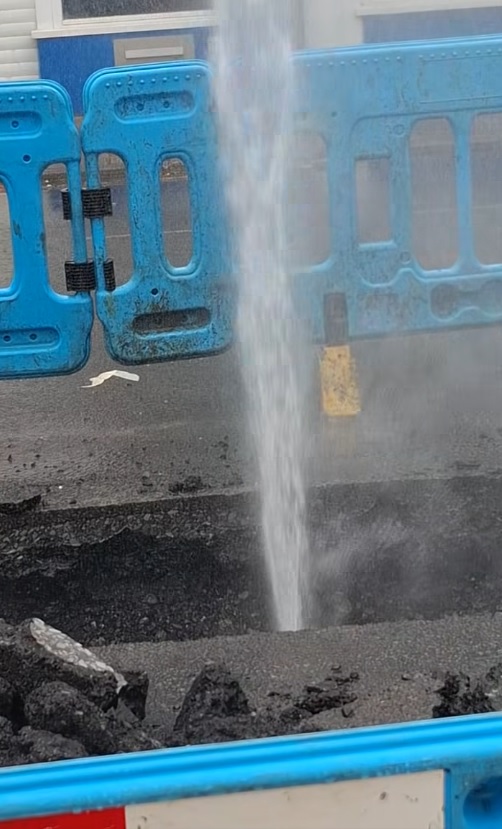
Water shot several metres into the air from an excavated section of West Street as crews worked behind safety barriers
A HUGE burst water main sent a towering jet of water into the air in the centre of Fishguard on Monday afternoon (July 27).
Photographs show water surging several metres into the air on the Golden Mile.
The road surface had been opened and the area surrounded by barriers, with an excavator and repair equipment at the scene. Broken sections of tarmac could be seen around the large excavation as water continued to pour from the damaged main.
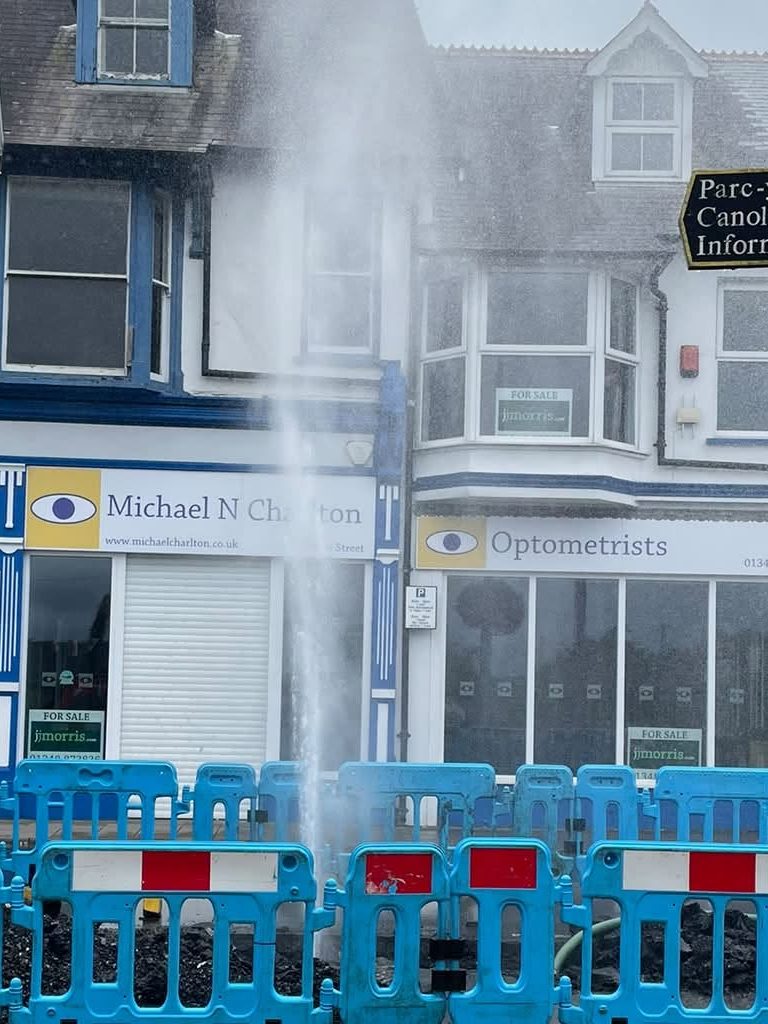
The incident comes just eight days after Dŵr Cymru Welsh Water introduced temporary hosepipe restrictions across parts of west Wales because of exceptionally high demand for treated drinking water.
The ban affects around 33,000 properties, including communities in north Pembrokeshire such as Crymych, Eglwyswrw, Nevern, Newport, Llanfyrnach, Tegryn and Star. Fishguard itself is not currently included in the company’s published list of restricted areas.
Welsh Water said the restrictions were introduced because demand had risen to around one billion litres a day, approximately 20 per cent above the level normally expected. It stressed that the immediate problem was the ability to treat, pump and distribute water quickly enough, rather than a shortage in reservoirs.
The sight of such a substantial volume of water escaping from the network is nevertheless likely to cause frustration among residents who have been urged to conserve supplies during the prolonged hot and dry weather.
Community
Wales wildfire crisis sparks calls for Senedd recall as crews battle blazes into second week

Major fires have scorched thousands of acres, threatened protected habitats and exposed concerns over Wales’ ability to secure aerial firefighting support
WILDFIRES across Wales have prompted calls for the Senedd to be recalled as firefighters continue tackling some of the country’s most serious incidents in years.
Crews have faced simultaneous fires across north and south Wales, with the largest incidents centred on the Rhinogydd mountains near Harlech and the hills above Blaenavon.
The emergency has unfolded after successive heatwaves and exceptionally low rainfall left mountains, moorland and grassland tinder dry.
Natural Resources Wales has now declared drought conditions across North Wales and the Upper Severn, while every other part of Wales is classed as experiencing prolonged dry weather. July is on course to become the driest month recorded in Wales for almost 190 years unless substantial rainfall arrives before the end of the month.
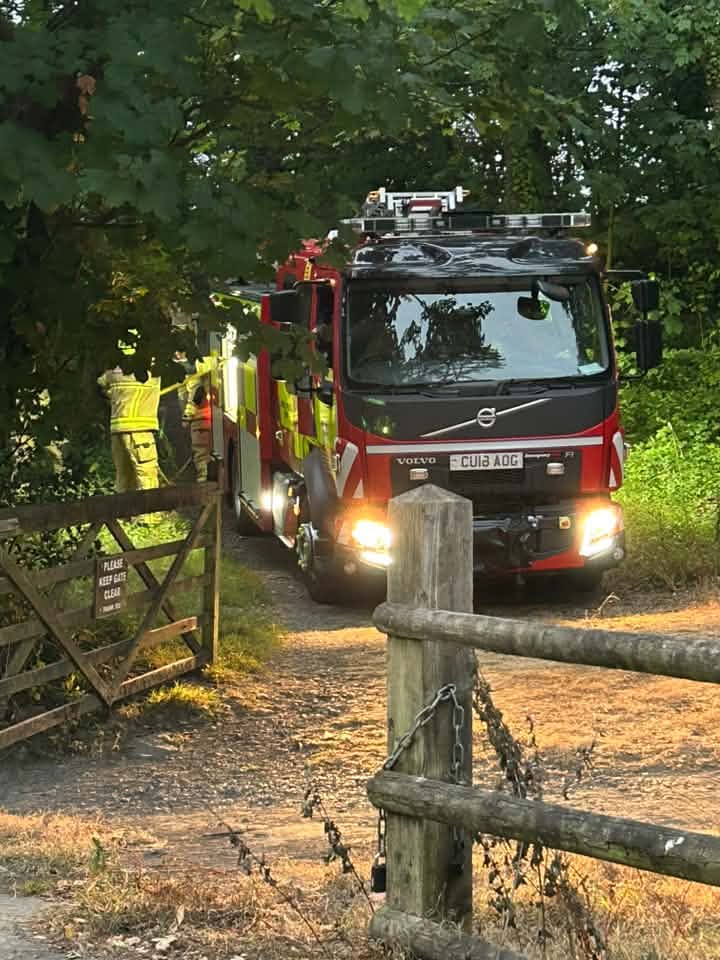
Major fire enters second week
Firefighters were still working on Monday, July 27, to extinguish the wildfire above Blaenavon, more than a week after the first emergency call was received.
The fire has affected an estimated 220 hectares, around 543 acres, of mountainside covered by bracken, gorse and other vegetation.
Crews have been working around the clock in difficult terrain, supported by specialist wildfire officers, drones, four-wheel-drive vehicles, water bowsers and heavy machinery.
Tactical burning has been used to remove vegetation ahead of the advancing fire, while farmers have helped create firebreaks intended to prevent the flames spreading further.
South Wales Fire and Rescue Service has established an operational base near Blaenavon, with local residents and businesses delivering meals, drinks and other supplies to firefighters working long shifts on the mountain.
Smoke from the blaze has travelled considerable distances, affecting communities around Nant-y-Glo and Brynmawr and reportedly being detected as far away as Cardiff.
Residents affected by smoke have repeatedly been advised to remain indoors where possible and keep their windows and doors closed.
Protected landscape burned near Harlech
In North Wales, firefighters have spent more than two weeks responding to a fire across the Rhinogydd mountains, close to Llyn Cwm Bychan, Harlech and Trawsfynydd.

The fire was first reported on July 12 and spread across remote terrain containing nationally and internationally protected habitats.
Parts of the affected landscape are designated as a Special Area of Conservation, Site of Special Scientific Interest and National Nature Reserve.
An estimate reported by BBC Wales suggested that the fire had affected approximately 951 hectares, equivalent to around 2,350 acres.
Firefighters and Natural Resources Wales staff created and strengthened firebreaks while monitoring the threat to woodland, wildlife habitats and nearby communities.
Roads and footpaths were closed to protect the public and maintain access for emergency vehicles. Smoke also reduced visibility around parts of the A470 near Bronaber and Coed y Brenin.
By Friday, July 24, North Wales Fire and Rescue Service said there was no longer a continuous fire front. However, numerous hotspots remained and crews expected monitoring and firefighting work to continue over the weekend and beyond.
Helicopter arrived after days of delay
The Rhinogydd fire became the focus of a national debate about the availability of aerial firefighting equipment.
North Wales Fire and Rescue Service requested helicopter assistance because crews were struggling to reach parts of the fire across steep and isolated terrain.
Natural Resources Wales approved the request and agreed to meet the associated costs because of the potential damage to protected habitats.
However, an approved helicopter was initially unavailable because aircraft were already in demand at other wildfire incidents across the UK.
The Welsh Government said there was no suitable military aerial firefighting capability based in the UK and that the armed forces could not provide a water-bombing aircraft.
A specialist civilian helicopter was eventually secured and began supporting the Rhinogydd operation on Friday, July 24.
The aircraft helped firefighters reach difficult areas and attack hotspots from the air, alongside the continuing ground operation. It was also scheduled to return the following day.
The Welsh Government has now promised to review the capabilities available to deal with wildfires, including the possible future role and cost of aerial support.
Cabinet Minister for Local Government, Housing and Planning Siân Gwenllian said fire and rescue services remained responsible for operational firefighting decisions.
She said Natural Resources Wales’ existing aerial arrangements related principally to protecting the Welsh Government Woodland Estate rather than providing a general national wildfire service.
She added that there were differing views among emergency services and other agencies about the role helicopters should play but accepted that the issue needed to be examined.
Labour calls for Senedd recall
Welsh Labour has called for the Senedd to meet during its summer recess so Members can question ministers about the response.
Jayne Bryant MS, Welsh Labour’s spokesperson for communities, said: “I am deeply concerned about the wildfires across Wales.
“There is an urgent need for the Senedd to meet in order for the government to provide an update about the response and give Members the opportunity to represent their constituents’ views.
“The lack of aerial support is of great concern.”
Ms Bryant thanked firefighters and emergency workers who had been operating in difficult and dangerous conditions.
She said: “My thoughts remain with everyone affected by the fires and I would like to thank the fire and rescue teams across Wales, who have been working tirelessly in very difficult circumstances.”
The Welsh Government has said multi-agency tactical co-ordination groups were established for both the Rhinogydd and Blaenavon fires.
Those groups included the fire and rescue services, Natural Resources Wales, military representatives and Welsh Government officials.
Ministers said the groups allowed resources and information to be co-ordinated quickly and reported that, as of July 23, neither major fire posed an immediate threat to life or property.
Fires reported across North Wales
The fires at Rhinogydd and Blaenavon have been the largest incidents, but they formed part of a much wider pattern.
North Wales Fire and Rescue Service has dealt with fires or remaining hotspots at Pentrefelin near Holyhead, Hope Mountain, Pentre Halkyn, Mount Pleasant in Brymbo and the mountain above Capelulo near Sychnant Pass.
Other incidents were reported at Braichmelyn Forest near Bethesda, Bagillt, Brynford and Conwy Mountain.
A major incident was declared during the earlier fire at Sychnant Pass, where 36 properties were evacuated as flames and smoke approached nearby communities.
Residents were later allowed to return after firefighters brought the immediate danger under control.
The scale and number of the incidents placed significant pressure on fire control rooms, specialist wildfire crews and equipment.
Mutual aid was requested to bring staff and fire appliances into North Wales from other services.
Entire country affected by exceptional dryness
The wildfire emergency has coincided with rapidly deteriorating environmental conditions.
Natural Resources Wales declared drought status across North Gwynedd, Ynys Môn, South Gwynedd, the Welsh Dee, Clwyd and the Upper Severn on July 23.
North Wales and the Upper Severn had received less than two per cent of their expected rainfall for July at the time of the declaration.
Some rivers recorded new monthly minimum flows, while groundwater levels continued to decline and river temperatures increased.
All remaining catchments in south-west Wales, including Pembrokeshire, Carmarthenshire and Ceredigion, were moved into prolonged dry weather status.
South-east Wales had already been placed in that category, meaning the whole of Wales is now experiencing drought or prolonged dry conditions.
Reservoir supplies were reported to remain generally healthy, but NRW asked households and businesses to use water carefully to reduce pressure on rivers, habitats and wildlife.
Risk remains despite some rainfall
Rain and cooler conditions brought some temporary relief over the weekend, but the Met Office has warned that the wildfire danger remains elevated across much of Wales and England.
Dry ground, low humidity, warm temperatures and stronger winds can allow a small fire to spread quickly and become difficult to control.
The Fire Severity Index measures how serious a fire could become if one starts rather than predicting whether an ignition will take place.
The Met Office said conditions were expected to become increasingly warm again during the week beginning Monday, July 27, while wildfire conditions would remain elevated despite rainfall in some areas.
Questions over management of the uplands
The fires have also revived debate about how mountains and moorland should be managed.
The National Sheep Association said properly managed grazing by sheep and cattle could help control the amount of bracken, gorse and long grass available to fuel wildfires.
Chief executive Phil Stocker said declining livestock numbers and reduced grazing in some upland areas had allowed large fuel loads to develop.
He called for farmers to be supported through agricultural and environmental funding to manage vegetation, protect peatland and reduce fire risks.
Any future policy would need to balance grazing, habitat protection, carbon storage, biodiversity and wildfire prevention across some of Wales’ most environmentally sensitive landscapes.
Public warned against barbecues and campfires
Fire and environmental authorities have stressed that many wildfires can be prevented.
People are being told not to light campfires or carry out controlled burning during periods of extreme dryness.
Disposable barbecues should not be used in the countryside, on mountains or in other open spaces. Cigarettes should be extinguished completely and never thrown from vehicles or dropped on the ground.
Visitors are also being asked to take bottles, cans and broken glass home and to use authorised campsites rather than setting up unauthorised camps where fires may be lit.
Public Health Wales said wildfire smoke could irritate the eyes, nose and throat and cause coughing, wheezing, breathlessness or chest discomfort.
People with asthma, chronic obstructive pulmonary disease or heart conditions, along with older people, young children and pregnant women, may be particularly vulnerable.
Anyone affected should stay indoors, close windows and doors, turn off systems drawing outside air into the building and keep prescribed medication nearby.
People should call 999 immediately if they discover a wildfire or believe that lives or property are in danger.
A warning for the future
Although firefighters have made progress at several sites, the crisis has raised questions that will remain after the final hotspots have been extinguished.
Ministers now face pressure to establish whether Wales needs guaranteed access to specialist helicopters, additional wildfire vehicles, more trained personnel and a long-term national wildfire strategy.
There will also be questions about land management, emergency funding and how communities are protected as hotter and drier summers become more common.
For now, firefighters remain on the mountains, supported by farmers, volunteers, emergency services and communities who have supplied food, water and practical assistance.
Their work has prevented a serious environmental emergency from becoming a tragedy involving the loss of homes or lives.
But with the landscape still exceptionally dry and further warm weather forecast, the danger has not passed.

Volunteers provided almost 1,500 hours of frontline support last year as the town marked a decade of partnership working
A PARTNERSHIP which has helped secure the future of Narberth Library has celebrated its tenth anniversary.
Pembrokeshire County Council’s Library Service, the Friends of Narberth Library and Narberth Town Council have worked together since July 2016 to maintain and develop the town’s library service.

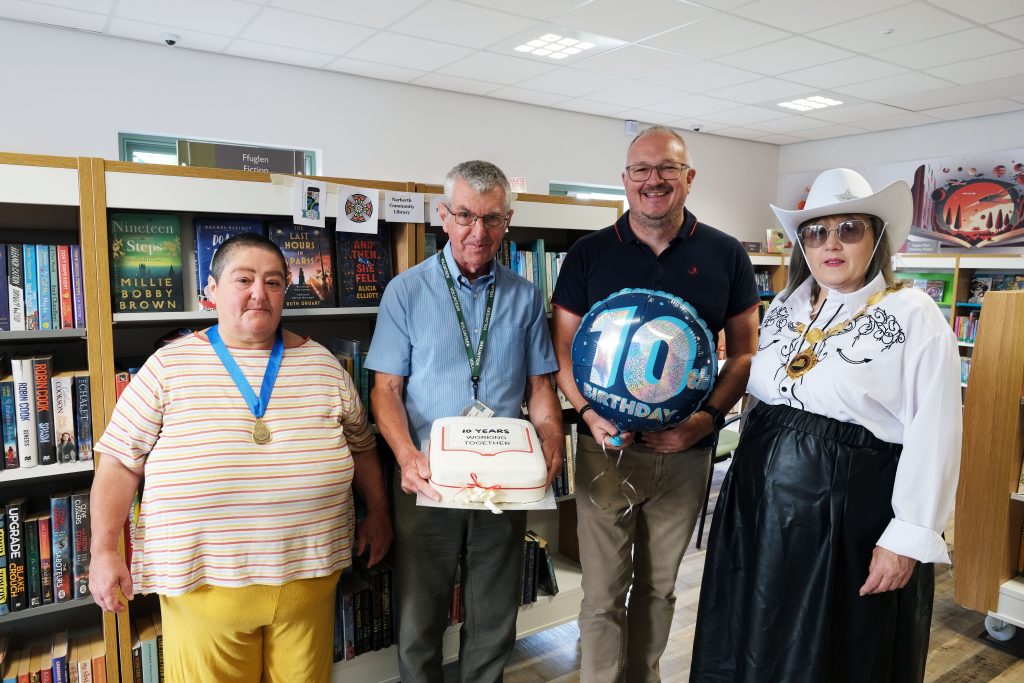
The milestone was marked with a coffee morning on Saturday (July 25), as Narberth celebrated the final weekend of Civic Week and its popular annual carnival.
Under the partnership, the county council provides the library’s furniture, fittings, IT equipment, book stock and six hours of paid staffing each week.
Volunteers recruited by the Friends of Narberth Library allow the facility to remain open for longer, while Narberth Town Council covers the cost of the premises, including maintenance, utilities and business rates.
The town council’s clerk is also based at the library, which is used for council and sub-committee meetings.
Sixteen volunteers currently support the service, with six having been involved since the partnership began. During the 2025/26 financial year, volunteers provided 1,468 hours of frontline service.

The library moved into its current, larger premises in 2024. The modern and accessible building includes a children’s section, three public computers, internet access, printing and copying facilities, community information and an extensive selection of books.
Mayor of Narberth, Cllr Elizabeth Rogers, said: “Narberth Town Council is immensely proud to have played its part in sustaining our library over the past ten years.
“It is far more than a place to borrow books. It is a welcoming community space where people of all ages can read, learn, access information and feel supported.
“This anniversary is a wonderful opportunity to recognise the dedication of the Friends of Narberth Library and its volunteers, whose remarkable commitment has made the partnership such a success.
“Together with Pembrokeshire County Council, we look forward to continuing to support and strengthen this invaluable community service for many years to come.”

Local county councillor and chairman of the Friends of Narberth Library, Cllr Marc Tierney, thanked residents and volunteers for their continued support.
He said: “The Narberth community has always been a great supporter of its library. We thank everyone who responded to the original call for volunteers, as well as those who continue to give their time and commitment.
“We have had a strong volunteer team from the beginning, committed to providing a public library service for the benefit of the local community.
“There are now 16 volunteers, including six who have been with us since day one. Their dedication has been remarkable.”
Pembrokeshire County Council’s Cabinet Member for Residents’ Services, Cllr Rhys Sinnett, said: “It is a great pleasure to celebrate the importance of libraries and reading, as well as the success and strength of this partnership.
“A big thank you must go to the paid staff and volunteers for their hard work, and to Narberth Town Council for its financial contribution.
“We now look forward to another ten years and beyond.”
Suggested picture caption: Volunteers, councillors and representatives of the organisations behind Narberth Library’s successful partnership celebrate its tenth anniversary.



Local Government41 minutes ago
Pembroke Dock councillor rejects claim he spent six months living in Portugal
Cllr Joshua Beynon says he remains active in his ward and has made only normal-length visits to see his Portuguese...


Health20 hours ago
More than 3,000 people have their say as Hywel Dda stroke consultation closes
Final decision on proposals, including a central 24-hour stroke unit at Glangwili and treat-and-transfer services at Withybush, is expected in...


Crime23 hours ago
James McKenna guilty of attempted murder after Carmarthen Park knife attack
Jury rejects defendant’s claim he only intended to cause serious injury after ambush attack on former partner SPECIAL REPORT FROM...


Community2 days ago
New creative team transforms the Maes ahead of Eisteddfod y Garreg Las
Festival site in Llantwd is taking shape ahead of the National Eisteddfod’s arrival in Pembrokeshire from August 1 to 8...


Community2 days ago
From Tenby to Llandudno: Wales’ seaside towns face the same signal crisis
Businesses in two of Wales’s busiest resorts say unreliable mobile coverage is disrupting payments, bookings and everyday life TWO of...


Crime2 days ago
Judge orders Dyfed-Powys Police review after £3,912 fraud error
Force responsible for policing Pembrokeshire criticised after an officer understated the amount stolen from a vulnerable care-home resident A JUDGE...


Community3 days ago
Narberth bursts into colour as carnival brings Civic Week to spectacular close
Crowds lined the streets for an afternoon of floats, fancy dress, music and family entertainment at one of Pembrokeshire’s longest-running...

Community3 days ago
More than 100 racers take to Castle Pond for Paddle West’s inaugural regatta
Successful community event raised money for Forever11 and launched three consecutive weekends of waterside activity in Pembroke MORE than 100...


News3 days ago
NASA chief meets west Wales scientist helping search for life on Mars
Aberystwyth-led technology will guide Europe’s first Mars rover as it drills beneath the planet’s surface, while the proposed DARC radar...


News4 days ago
Princess Royal celebrates Pembrokeshire craftsmanship at family-run weaving mill
A Pembrokeshire business that began after a mother grew tired of waiting three weeks for her children’s name tapes has...
-

 News2 hours ago
Welsh-made Raspberry Pi board found in Russian attack drone used against Ukraine
-
 Community20 hours ago
Huge water main burst sends geyser over Fishguard town centre
-

 Crime2 days ago
Steynton man fined after breaching dog mess and anti-social behaviour notice
-

 Crime17 hours ago
Man in custody accused of intentionally strangling woman in Haverfordwest
-

 Health15 hours ago
Welsh A&E performance hits record low as parties clash over NHS pressures
-

 Sport2 days ago
Haverfordwest County Women begin preparations for Tier 3 campaign
-

 Community1 day ago
Canadian family travels to Pembrokeshire for international rare disease event
-

 Community20 hours ago
Narberth Library partnership celebrates ten years of community service