


Community
50th Anniversary celebrations for Rotary clubs



French twin club members: With Robbie and Liz Burns
THE ROTARY CLUB OF NARBERTH AND WHITLAND celebrated their 50th anniversary last week with a dinner at the Plas Hyfryd Hotel, Narberth, attended by over 100 Rotarians and guests including representatives of Whitland and Narberth Town Councils and other local organisations and supporters.
During the much enjoyed evening Club President Dr Paul Crawford proposed a toast to the Club’s guests whilst South Wales District 1150 District Governor, Rotarian Chris Williams of the Fishguard & Goodwick Club replied on behalf of the guests with a toast to Narberth & Whitland Rotary Club and its Members who he said was a shining example of how a Rotary Club should be run and the enthusiasm and commitment of the members made it a real pleasure to visit. It was no surprise that the Club was so successful he said.
During the evening, District Governor Chris was delighted to be able to present three ‘Paul Harris Fellowships’ on behalf of the Club to Rotarians Robbie Burns and John Hughes and Robbie’s wife Mrs Liz Burns for her unstinting support to Rotary.
The PHF is Rotary’s highest award and recognises the recipients’ contribution to Rotary over many years and during the evening it was asked if a husband and wife had both previously been awarded the highly coveted award previously on the same occasion.
From its inception in 1966 to the present day, the club has strived to be of service to others, nationally, internationally and locally, in and around the communities of Narberth and Whitland.

Their work has included a wide range of activities from providing aid to those affected by natural disasters and supporting the “End Polio Now” campaign to delivering meals on wheels, assisting with transport of disabled sports participants and encouraging young talent in our local schools.
Through promotion of concerts with Welsh pop stars and ‘Racing the Dragon’ in the annual Welsh Dragon Boat Championship, the Rotarians of Narberth & Whitland have provided the funds to support worthwhile causes which improve the lives of those less fortunate both at home and abroad.
It will always remain a bone of contention concerning who actually thought up the idea of the formation of a Rotary Club in Narberth, but there is no doubt that a Mr Eric Shott (Customs and Excise) and Mr Alan Lock (Head Postmaster) were involved, with the assistance of Mr Tommy Nicholas (Groceries) who also had adequate accommodation at a nearby hostelry, the Dragon Inn, of which he was the licensee.
The District Extension Officer was the late Rtn Reg Pickett (Cardiff), whilst Rtn Roger Wright (Llandrindod Wells) was the then R.I. Representative and Chairman of District 1150 Council (to be known later as District Governor). The Tenby Club (President Joe Joseph) agreed to act as sponsors and act as ‘Mother Club’ to steer its ‘Daughter’ through the early difficult days.

A well-attended inaugural luncheon was held on January 19 1966 at the Queens Hall, Narberth and the late Mr John Lee Davies was appointed as the Clubs Founder President. He ably led the club through its ‘Interim’ days and the first year after the granting of its Charter (No.1023) at the Dragon Hotel, Swansea on April 20 1966.
In its earlier days the Tenby members who were frequent visitors assisted the club in no small way. The Clubs original founder members and officers are listed elsewhere.
One or two of the original classifications were a little dubious – Founder Secretary, the late Rtn Alwyn Morgan (Horticulture), was a retired banker and only tended his garden, and the preponderance of farmers was distributed amongst the various sub-divisions of that noble profession so there was room for everyone.

Had the Club been formed in the current climate with the more relaxed approach to classifications there would have been no problem in increasing membership.
And so from a slow start Rotary activities increased and the fledgling club made its presence felt in the community, principally Narberth, as there was only one Whitland member in the early days.
However, it would not be fair to conclude this detail on the clubs formation without a comment that subsequent membership from the Whitland area has had a marked impact on the success and achievements of the club.
The two most significant events to affect the club’s membership development have been the change from lunchtime to evening meetings and the admission of women as members.
Both decisions were taken despite resistance from a minority, some of whom resigned their membership as a result. Several years on from both decisions, there can be little doubt that they have resulted in a sustained improvement in recruitment and retention of new members, many of whom have transferred in from other clubs across the UK.
The club is a successful dual gender club with an enthusiastic and youthful (in spirit) membership. However, they are always looking to increase their numbers and are welcoming of new members. N&W now have a significant presence on social media and a wealth of further information on the World Wide Web.
Membership has remained at a comfortable level of between 30 and 35 for several years. The youngest member is 24 years of age she also happens to be female and is soon to be joined by another lady of the same age. The oldest member is 94 so as you can see they cater for everyone.
The club were delighted to have eight Rotarians visit on the weekend from their twinning club Fontenay le Comte, in France. Rotarian Ken Morgan first started the twinning process 20 years ago. The Clubs visit each other biannually.
The venue for meetings has also changed many times. The club now meets at the Plas Hyfryd Hotel in Narberth where food, service and value-for-money is envied by other clubs in south west Wales. For the future, membership recruitment and retention remains one of the main challenges that the club faces and it is looking forward to the next chapter.


A MAYDAY call sparked a major nighttime rescue after an 84-year-old man fell from a tender and was swept towards rocks near St Catherine’s Island in Tenby.
Both Tenby RNLI lifeboats were requested to launch shortly before 10.30pm on Friday, July 17, after the Coastguard received a distress call from a yacht anchored in North Bay.
The yacht’s crew reported seeing an elderly man who appeared to be in difficulty while attempting to return to his vessel in a small tender after spending time ashore in Tenby.
The all-weather lifeboat began searching between St Catherine’s Island and the North Highcliffe buoy, while the inshore lifeboat searched the waters beneath the Esplanade.
During the operation, the inshore lifeboat crew fired a white parachute flare to illuminate the area. The improved visibility allowed them to spot the tender, but when they reached it, they discovered it was empty.
The crew could then hear cries for help coming from the water.
A member of the public, Josh Dean, had rushed to the lifeboat station after seeing the tender being carried by the current into the cave beneath St Catherine’s Island.
Using the information he provided, the lifeboat crews quickly located the man clinging to rocks at the island after he had fallen overboard in the strong current.
He was immediately taken aboard the lifeboat, warmed up and assessed for any urgent medical problems before being taken into Tenby Harbour.
The casualty was handed into the care of the Tenby Coastguard Rescue Team while an ambulance was requested. Due to high demand on the Welsh Ambulance Service, he was later taken into the lifeboat station to wait in warmth and safety.
Tenby RNLI said the information provided by Josh had saved valuable time during the search and helped crews locate the casualty more quickly.
A spokesperson said: “We would like to extend our sincere thanks to Josh Dean, who came to the lifeboat station to report seeing the casualty being carried by the current into the cave beneath St Catherine’s.

“The information Josh provided was invaluable. It undoubtedly saved valuable time during the search, helping our crews locate the casualty more quickly and ultimately contributing to saving his life.”


SUPPORTERS of Ysgol Cilgerran’s Church in Wales school have protested at a Pembrokeshire County Council meeting against council plans to remove church status from the school.
Back in May, Pembrokeshire County Council voted to remove Voluntary Controlled (VC) status from the Welsh-medium rural school despite 97 per cent of the responses to a consultation having opposed a change which the church describes as ‘entirely unnecessary’.
The Church in Wales has objected formally to the proposal and has warned it will take legal action on the grounds of “public misrepresentation and unqualified legal assertions made by Pembrokeshire County Council officers,” and “discrimination against faith schooling”.
During Pembrokeshire County Council’s full council meeting of July 16, parents, teachers, and students travelled to County Hall, Haverfordwest to protest.
Their colourful protest signs, made by students, carried messages such as “You can’t fix what isn’t broken”, “Leave our VC status alone”, and “Don’t take away our identity for a few £££”.
One of the protesters, an ex-pupil and governor, Sarah Moore, has said: “I’m here today because I’m horrified that the council are talking about taking the church status away from our school. The church gave that land for the school over 180 years ago.
“97 per cent have voted against this and yet they’re still trying to do it. If we want our children to stay in a church school, the nearest one is Letterston. So where will these children have that good education that they are getting now?”
Kelly Davies, parent and governor, said: “We feel really strongly as parents, the pupils and the community that we’re not happy about them taking VC status away.
“We have really strong links with the church and the school and the community. It just seems that they’re taking this away from us permanently for no reason.”
The Church has said it has deep concern about what it sees as a pattern of the council’s recent actions regarding Church Schools.
In June, councillors voted to close Manorbier Church in Wales Voluntary Controlled School, which was damaged by a fire in 2022.
The Church says it is taking formal action in this case.

It has also expressed concerns about VC status being lost for Tenby Church in Wales VC school after councillors backed a consultation on penitential education changes in the Tenby area.
A spokesperson for the Church in Wales said: “The entirely unnecessary threat to the status of this much-loved community school has had an impact on children, families, and the wider community. We are not prepared to allow another thriving rural school to lose its treasured character.
“Ysgol Cilgerran has our full support, and we hope that Pembrokeshire County Council listens to the voices of the community it serves, and chooses not to remove VC status.”
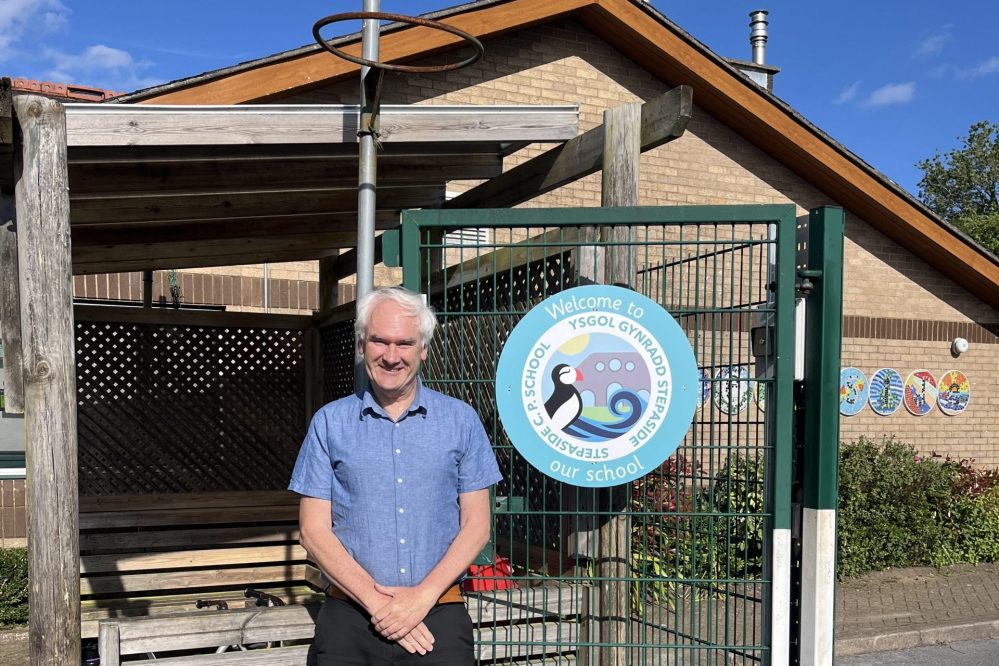
A CLOSURE-THREATENED Pembrokeshire school, which has now been saved, should “never have been considered for closure,” a local councillor who battled to keep it open has said.
Kilgetty’s Stepaside CP School was being earmarked for closure by Pembrokeshire County Council, as part of proposals to establish a new 3-11 primary school on the Saundersfoot School site, discontinuing both Saundersfoot school and Stepaside school.
The Stepaside proposal was based on surplus places for all the schools in the proposals, with Stepaside having a surplus capacity of over 50 per cent, councillors had previously heard; figures that have since been much debated.
In March, a vote at a full meeting of Pembrokeshire County Council reaffirmed a decision of last December, that the Director for Education be authorised to commence statutory consultation to discontinue Stepaside and Saundersfoot and establish the new three-11 primary school.
Since then, Pembrokeshire’s deputy leader Cllr Paul Miller, who has recently taken on Cabinet member responsibility for education, made a call for the school to instead remain open, rescinding the previous decision to discontinue Saundersfoot and Stepaside schools, which was unanimously backed at the July 16 meeting of Pembrokeshire County Council.
Local county councillors Alistair Cameron and Alec Cormack, who had both battled for the school to remain open, said they are delighted at the decision to rescind the previous backing of a public consultation on closing Stepaside School and merging it with Saundersfoot School on the existing Saundersfoot School Site.
Cllr Alistair Cameron said: “Stepaside School should never have been considered for closure. The number of pupils at the school have been stable since 2022 at between at between 110 and 115. We are looking at another good intake of pupils in September which shows just how popular this school is.
“This has been confirmed by the school inspectors, Estyn, who described it as a ‘Happy place where pupils feel safe and eager to learn’ and ‘a welcoming, calm and purposeful learning environment,’ where ‘pupils make good progress with their learning’.
“Thank you to Mr Jones, headteacher at Stepaside School, and all of his colleagues for their continued dedication and hard work for the children in their care.
“Thank you also to the Chair of Governors, Laura Burnett and all of the governors for their leadership as well as the parents and wider Kilgetty community for their support. The school staff can now concentrate on what they do best, which is to provide excellent education in a caring and nurturing environment.”
Cllr Alec Cormack welcomed the Cabinet decision saying adding “I am very pleased that the decision taken in council was unanimous.”
Speaking after the decision, Laura Burnett said: “The Governing Body of Stepaside Community Primary School are delighted to share the exciting news that the school will remain open for many years to come.
“This is a tremendous achievement for the community that is served by the school in Kilgetty.”



Community10 hours ago
84-year-old man rescued after falling overboard near Tenby
A MAYDAY call sparked a major nighttime rescue after an 84-year-old man fell from a tender and was swept towards...


Crime2 days ago
Jury hears final arguments in Milford Haven teacher stabbing trial
Defence says there was no motive or intention to kill as judge reviews competing accounts of classroom knife incident SPECIAL...


News2 days ago
Andy Burnham becomes Labour leader and prepares to enter No 10
Former Greater Manchester mayor promises an ‘unashamedly Labour’ government after completing extraordinary return to Westminster ANDY BURNHAM has been formally...


News2 days ago
Motorcyclist dies following collision near Narberth
Police appeal for witnesses and footage after fatal crash on B4313 at Redstone A MOTORCYCLIST has died following a collision...


Local Government3 days ago
Stepaside school saved as council abandons closure proposal
Governors welcome decision but maintain original plans were based on outdated information STEPASIDE Community Primary School will remain open after...

Crime3 days ago
Footballer given 200 hours’ unpaid work for eye-gouging assault during match
Magistrates heard Robert Hedley put an opposing player in a headlock before gouging at his eyes during a match in...


Community3 days ago
Tenby Summer Spectaculars brought to an end after harbour licence revoked
Round Table says it was willing to make major safety changes but could not secure the access controls needed to...

Local Government5 days ago
Catapult attacks suspected after wildlife deaths at Pembroke Mill Pond
Wildlife Crime Officers are investigating after the town council said around five animals showed signs of deliberate injury WILDLIFE found...


Crime5 days ago
Narberth retailer speaks of shoplifting toll after ‘collectable bear’ stolen
Independent shop owner said rising costs meant businesses could not afford to absorb losses caused by theft A NARBERTH retailer...


Crime5 days ago
Teen accused of attempting to murder teacher says she lied about stabbing
Defendant accepts teacher was terrified and that a knife wound to the head could kill, but denies deliberately attacking her...
-
Community10 hours ago
84-year-old man rescued after falling overboard near Tenby
-
Crime2 days ago
Milford Haven teacher ‘fought for her life’ during alleged knife attack
-
Crime2 days ago
Jury hears final arguments in Milford Haven teacher stabbing trial
-

 Crime22 hours ago
Fears wildlife at Mill Pond beauty spot being targeted by catapults
-
News2 days ago
Andy Burnham becomes Labour leader and prepares to enter No 10
-

 Education2 days ago
St Davids headteacher says emotional goodbye after 37 years in education
-

 News2 days ago
Historic budget defeat exposes divisions in Welsh politics
-

 Health2 days ago
First Minister challenged over ‘conflicting’ NHS waiting times as Senedd breaks for summer