


News
Fishguard: Work starts on ‘Chimneys Link’ development



Pictured in Fishguard are (left to right): Rob Hamer, Senior Engineer at Pembrokeshire County Council; Craig Kearney, Atkins Senior Assistant Engineer; Cllr Rob Lewis, Cabinet Member for Transportation; and Cllr Pat Davies, County Councillor for Fishguard North West
WORK has commenced on Phase 1 of the ‘Chimneys Link’ development in Fishguard.
Pembrokeshire County Council’s scheme aims to alleviate traffic congestion and improve public transport capabilities and safety in Fishguard town centre.
Phase 1, which is expected to take ten weeks to complete, comprises the following works:
- demolition of the rear function room of the Ship and Anchor pub
- demolition of parts of the former library building attached to the Ship and Anchor
- landscaping and construction of a car park.
Atkins has been commissioned by the County Council as consultants with Alun Griffiths Ltd as contractors.
Throughout the spring and summer of 2017, further ecological surveys will be undertaken. Subject to getting the necessary approvals, the next phase of the work – which will include a one-way circulatory system, footways, shared use paths and a public transport hub – will start in late 2017.

Cllr Pat Davies, Councillor for Fishguard North West, said the plans had been well received by the community and she was delighted to see work starting on the first phase.
“I’m hopeful that this scheme will prove to be catalyst for the regeneration of our town and give confidence to potential investors,” she said.
“I’m also very pleased that our streets will become more pedestrian-friendly. They are not really suitable for the traffic that we have now.”


A LINE of vintage tractors made an unusual sight on Broad Haven beach on Saturday as enthusiasts gathered for a fundraising run in aid of breast cancer research.
The event brought together a colourful collection of classic farming vehicles, with Welsh flags and pink decorations on display as supporters and spectators gathered along the seafront.
The tractors were parked on the sand before taking part in the run, helping raise awareness and funds for the cause.
Caption:
Vintage tractors lined up on Broad Haven North beach on Saturday for a fundraising run in aid of breast cancer research (Pic: Martin Cavaney).


SENEDD Member for Ceredigion Penfro, Paul Davies, has called on Ceredigion County Council to urgently review its policy on car parking charges, following growing concerns from local businesses about the negative impact charges have on trade and town centre footfall.
Mr Davies wrote to the Leader of the Council on May 18, to highlight the challenges faced by businesses across Ceredigion’s towns, where rising parking costs are seen as a deterrent to people visiting local high streets. He urged the local authority to listen carefully to the concerns being raised and to review these charges.
In his letter, Mr Davies wrote: “I’m writing to raise concerns regarding car parking charges across Ceredigion, and to urge the local authority to do all it reasonably can to minimise these costs for individuals spending time in towns throughout the county.
“This is a serious issue for local businesses, many of whom have made it clear that car parking charges risk deterring people from visiting our high streets and towns. Any resulting decline in footfall would have immediate and damaging consequences for local trade and, more broadly,for the county’s economy.
“At a time when our high streets are already facing significant challenges, | believe it’s unacceptable that additional financial barriers have been introduced. The Council should be actively supporting its high streets and town centres and encouraging people to visit, not implementing measures that make doing so more difficult and less affordable.
“The concerns raised by both residents and businesses are justified and cannot be ignored. The Council must act on these concerns and urgently review the decision to introduce or increase car parking charges, with a view to reducing their impact.”
Many locals have voiced their concerns on social media, commenting on the “outrageous” cost of parking and the cost of public toilets, claiming that Ceredigion County Council are to blame for the loss of footfall in the area.
Mr Davies said: “Car parking charges add yet another barrier to people visiting our towns and high streets and can be detrimental to local businesses, at a time when many businesses are already facing significant economic pressures.
“Our high streets are the backbone of our communities and play a vital role in the local economy. If people are put off visiting because of the cost of parking, then businesses will inevitably suffer. This is not only short-sighted but risks causing long-term damage to the vibrancy of our towns.

“The Council must act on the valid concerns being raised and review its parking policy as a matter of urgency. The focus should be on encouraging footfall, supporting local trade, and ensuring that our town centres remain accessible and affordable for everyone.”


JURORS in the trial of two prisoners accused of murdering former Lostprophets singer Ian Watkins have been told that his horrific crimes “did not justify his killing in any way”.
Watkins, who was serving a 29-year sentence for child sex offences, was attacked in his cell at high-security HMP Wakefield on October 11 last year.
Leeds Crown Court heard that Rico Gedel, 25, stabbed Watkins three times with a makeshift knife before allegedly passing the weapon to fellow prisoner Samuel Dodsworth, 44.
Both men deny murder and possessing a knife in prison.
‘Done nothing to provoke attack’
Prosecutor Tom Storey KC told the jury on Monday that Watkins had “done nothing whatsoever” to provoke the attack in the period leading up to it.
He said: “However heinous his crimes were, that did not justify his killing in any way.”
The court has heard that Gedel hated being housed with sex offenders and had threatened to hurt “any number of paedophiles” if he was not transferred.
Gedel told the trial he chose Watkins largely because he was nearby, having been placed in the next cell the night before.
Alleged motive
Mr Storey said Gedel’s alleged words before the attack — “This is what paedophiles deserve” — were a clear indication of motive.
The prosecutor said Watkins had no defensive injuries and there was no sign of a struggle, meaning he was likely taken by surprise.
He told jurors that the repeated use of a makeshift knife showed an intention to kill or cause really serious harm.
The court heard Gedel was laughing after the stabbing and allegedly asked prison officers to “let me know when he dies”.

Knife allegation
Dodsworth denies supplying the weapon or helping with the attack.
Gedel claimed Dodsworth gave him the knife and later disposed of it, but Mr Storey told the jury Gedel had “every reason” to lie about him.
The prosecutor said CCTV appeared to show Gedel handing the weapon to Dodsworth after the attack, and suggested Dodsworth acted as if he knew what was happening.
Judge’s warning
Mr Justice Hilliard told jurors that Watkins had committed very serious offences, but “clearly should not have lost his life in prison while serving his sentence”.
He said they must not decide the case on sympathy, anger or disapproval, but on a “cool, calm, careful and impartial” assessment of the evidence.
Watkins was jailed in December 2013 after admitting a string of child sex offences, including the attempted rape of a fan’s baby.
The trial continues.



Community34 minutes ago
Paul Davies MS calls for review of parking charges in Ceredigion following concerns
SENEDD Member for Ceredigion Penfro, Paul Davies, has called on Ceredigion County Council to urgently review its policy on car...
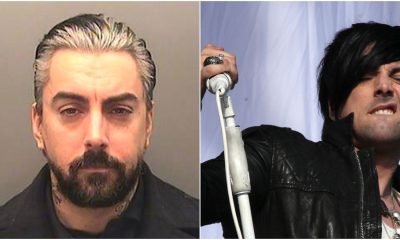

Crime2 hours ago
Former Lostprophets singer’s killing ‘not justified’, jury told
JURORS in the trial of two prisoners accused of murdering former Lostprophets singer Ian Watkins have been told that his...


Health1 day ago
Occupational therapists urge Welsh Government to act before NHS crisis deepens
More than 300 professionals sign open letter calling for prevention-focused care and urgent reform OCCUPATIONAL therapists across Wales are urging...


Community2 days ago
Surfers take sewage protest to Broad Haven beach
CAMPAIGNERS took to the sea at Broad Haven today in a colourful protest demanding urgent action over sewage pollution in...


Health2 days ago
New NHS regional body raises questions over future hospital services in Pembrokeshire
Health bosses promise better joined-up care — but patients will want assurances over Withybush and travel distances PEMBROKESHIRE patients are...


Local Government3 days ago
Pembrokeshire County Council welcomes new chairman
CLLR DELME HARRIES has been elected chairman of Pembrokeshire County Council for the coming municipal year. Cllr Harries, who was...


News3 days ago
From Milford Mercury to County Hall for Pembrokeshire’s first female leader
Late councillor Mike Stoddart helped hold power to account for decades — now his daughter Tessa Hodgson leads the council...


Business3 days ago
Port reports record turnover, but debt, emissions and senior pay also rise
Annual report shows strong growth and major investment, but underlying figures reveal a more complex picture THE PORT OF MILFORD...


Community3 days ago
DARC radar: Campaigners ask Welsh Government to call in planning application
PARC AGAINST DARC has submitted an official request asking the new Welsh Government to call in the planning application for...


News5 days ago
State Opening overshadowed by Starmer leadership crisis
KING CHARLES has arrived at Parliament for the State Opening as Sir Keir Starmer faces the most serious crisis of...
-

 News3 days ago
Palestine pledge backed by 36 new Senedd Members
-

 Crime5 days ago
Teenager banned from roads after being caught six times over drug-drive limit
-
Community2 days ago
Surfers take sewage protest to Broad Haven beach
-

 Crime5 days ago
Man threatens to torch Silverdale Lodge through ‘demon drink’, court hears
-

 Crime5 days ago
Man sentenced for stalking women and threatening to torch home
-

 Crime5 days ago
Violent man jailed after ‘Banksy’ claims and campaign of domestic abuse
-

 Local Government7 days ago
Council leadership hopeful responds after anti-Tory rally photos surface
-

 Crime5 days ago
Man denies exposure in Pembrokeshire town