


Politics
Andrews blames media for ‘information deficit’


THE NATIONAL ASSEMBLY must look beyond the fragmented media in Wales to better communicate its work to a wider audience and address the democratic information deficit, at least that’s the claim of the Digital News and Information Taskforce report presented to the Assembly last week.
The report encourages the Assembly to lead the way and establish an integrated content service using social media and other channels to engage directly with the people of Wales. It recommends placing people, rather than the institution and its processes at the heart of topical news stories as it looks to build citizen engagement.
Chaired by Leighton Andrews, the former Welsh Government Minister who lost his seat to Leanne Wood, who was then appointed to a publicly-funded post which never previously existed, and who has now turned up as ‘Professor of Practice in Public Service Leadership and Innovation’ with Cardiff University’s Business School, the Taskforce also recommends:
The Assembly reimagines itself as a content creator, pushing content directly to the platforms that audiences are already consuming
Designing all communications with the user at its heart, taking every opportunity to consider the impact of the Assembly’s work on people of Wales when explaining Assembly business, structures or policy making

A presumption of Open Data, so that others can freely use, re-use and redistribute Assembly data
Providing open access to the Assembly’s resources for teaching via the Hwb platform, which is accessed by over half a million young people, and all schools in Wale s
Leighton Andrews said: “These are radical proposals to use modern digital communication to better understand what people are thinking and concerned about, to engage in real-time with people and to share with them how their representatives are responding to these issues, and I want to thank the members of the Digital News and Information Taskforce for their work.
“Assembly Members and staff must recognise their role as content creators, and see the Assembly as a content platform which should reflect the nation’s conversations about the issues which are of most concern to it.

“The Assembly has done much to embrace digital communication, but in an age where increasing numbers of people are looking to social media for news, and traditional media outlets are providing less political coverage than ever, the Assembly must provide the people it serves with engaging content, delivered in formats that they wish to use.”
The report prepared by the Taskforce does not consider whether the Welsh Government – as opposed to the Assembly – in which Mr Andrews played such a boisterous and controversial part, might be to blame for alleged public ignorance and indifference to its activities.
The report instead appears to countenance blaming the institution itself, as opposed to its distinguished current (and former) political occupants.

When Mr Andrews refers to ‘traditional media outlets providing less political coverage than ever’, it is interesting that a supporting example given in the report refers to Trinity Mirror’s decision to cease the Daily Post’s dedicated Assembly coverage. It does not reference other local media, shows no sign that other local media have been considered, and does not mention the coverage of local and national politics by other newspaper groups in Wales.
Mr Andrews failed to mention that many members of the panel advising him were drawn from a narrow cohort of ‘digital media consultancy’ firms, who might be considered to have an interest in boosting the claimed effectiveness of the strategy he now propounds.
Leighton Andrews’ announcement was also given enthusiastic coverage by the BBC, for whom he was formerly Head of Public Affairs.
Llywydd of the National Assembly for Wales Elin Jones AM said: “I want to thank the Digital News and Information Taskforce panel for their work. They have provided us with thought provoking, practical proposals to strengthen the way we communicate as we seek to become an open, digital parliament which engages with all the people of Wales.
“We are approaching the twentieth anniversary of the Assembly, which is an opportunity to refresh the way in which the Assembly presents itself and to build a deep and genuine dialogue with the people of Wales. I look forward to discussing the report, and how we take it forward, with Assembly Commissioners.”

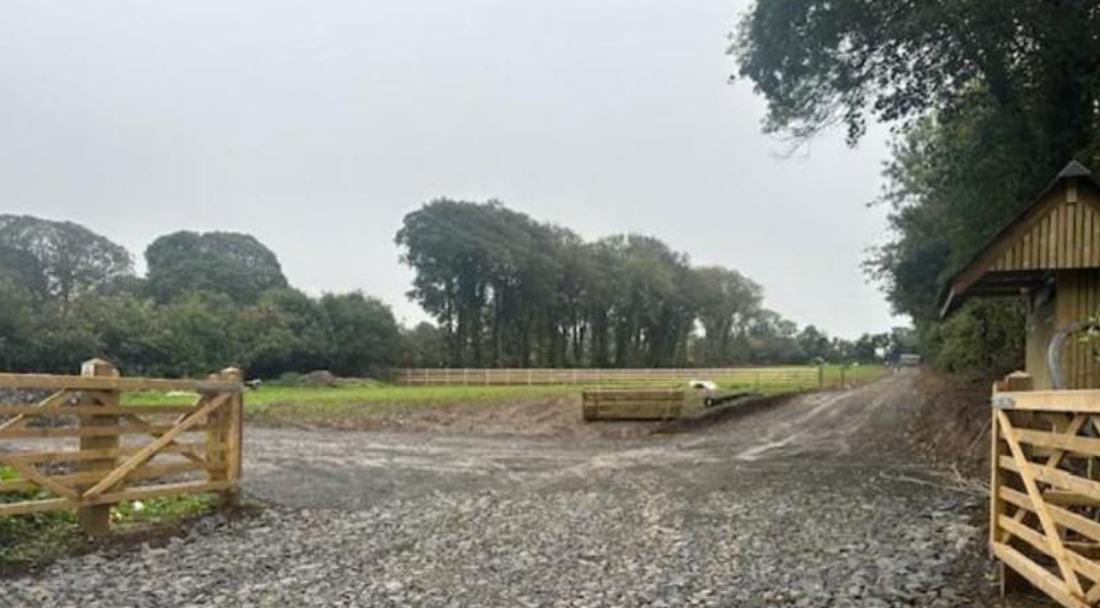
A CALL for a 60-foot-long shed and stables at the proposed home of a gypsy traveller family near a Pembrokeshire village has been refused by planners.
In an application to Pembrokeshire County Council, Ryan Surname Boswell & Family, through agent Hayston Developments & Planning Ltd, sought provision for an access road and replacement of temporary stables and storage containers with a multi-purpose shed and stables at Greenwells, Cosheston Bridge, Cosheston.
The application initially sought a 24.3 by 9.1 metre building, which has now been reduced to 18.3m by nine.
A supporting statement said that land to the north “is subject to a current planning application for the provision of two traveller family pitches with improvements to access and ecological enhancements with other land in our client’s ownership being un-affected”.
It added: “Mr Boswell and his family are of traveller origin and intend to make this site their family home. They own various domestic equipment, children / family articles, mowers / tools and farming equipment that require secure storage. The shed will also be used to house horses/ponies that are currently stabled in the temporary wooden stable block currently on skids on the land in question.”
It concluded: “The scale, design and use of materials (and colours) of the proposed shed is comparable to many new such sheds throughout Pembrokeshire. There will be no significant negative impacts on the level of amenity enjoyed by any neighbours or those travelling along the minor county road to Cosheston from any aspects of the proposed development.”
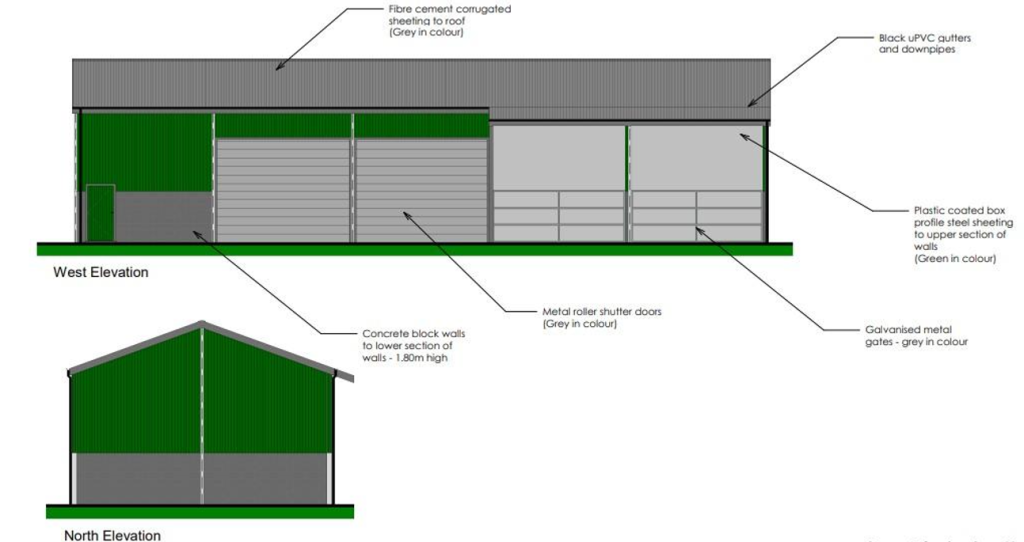
Local community council Cosheston had raised concerns including the “excessive” size of the proposed building, feeling “this is on the large side of what is required for a couple of ponies”.
It added: “Our concern is that the applicant intends to run his building/property maintenance business from the property. If the council grants the application, restrictions should made on the property’s use. i.e. restricted to agricultural use only.
“We have no objection to the construction of a small stable block, similar in size to the existing one on site.”

Objections were also received from two members of the public, raising concerns including the scale, environmental concerns, and a potential conflict with the ongoing application.
An officer report recommending refusal said the scheme was part-retrospective due to the prior formation of an access track within the field.
It added: “Despite amendments to the application as originally submitted by the reduction in building footprint and scale, the proposal remains a substantial and visually intrusive structure in the open countryside. An essential countryside need has not been justified nor evidence provided of an agricultural or equine enterprise warranting a building of this size or permanence.”

The application was refused on the grounds it “is not typical of a structure intended solely for the storage of paraphernalia associated with grazing land or for equine use and no information has been provided within the application to demonstrate the functional need for a building of this scale”.
It added: “The nature, siting and scale of the building would not be compatible with the capacity and rural character of the site, and together with the access track results in an unjustified and visually intrusive form of development in the open countryside, which does not represent sustainable development.”
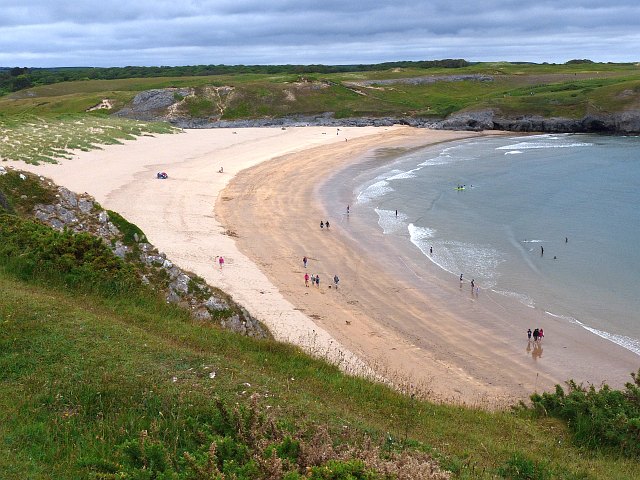
PLANS for three solar-powered parking meters at National Trust south Pembrokeshire beauty spots have been given the go-ahead by the national park.
In an application to Pembrokeshire Coast National Park, the National Trust, through agent Mott Macdonald Ltd, sought permission for replacement solar-powered parking meters, along with associated infrastructure including an Automatic Number Plate Recognition (ANPR) camera, at Broad Haven, Stackpole Quay, and Bosherston Lily Ponds carparks.
An officer recommending approval said it was intended to install a Solar Strada S5 Terminal parking meter at Broad Haven Carpark, an Automatic Number Plate Recognition (ANPR) camera and Solar Strada S5 Terminal at Stackpole Quay carpark, and a Solar Strada S5 Terminal parking meter at Bosherston Lily Ponds.
It added: “As there was a previous level of visual intrusion caused by the existing infrastructure, the proposed parking fee terminals are considered unlikely to exacerbate the existing level of visual impact caused by the existing pay and display terminals.
“The proposed installation of the solar parking fee terminals at Broadhaven, Stackpole Quay and Bosherston Lily Pond carpark and the ANPR camera at Stackpole Quay carpark are considered to be well designed in terms of scale, siting, visual amenity and biodiversity.”

The application for the three units was conditionally approved by park planners.

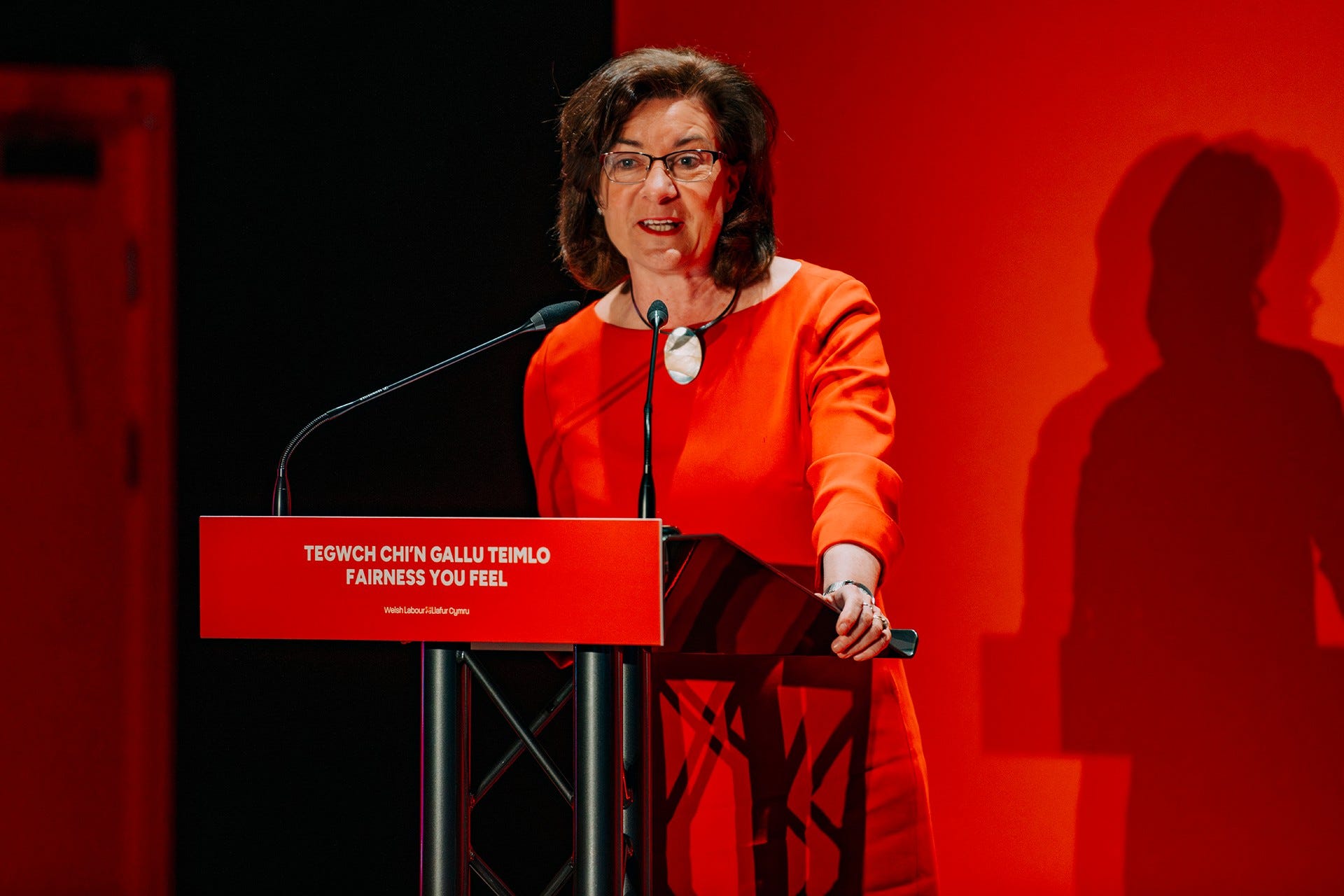
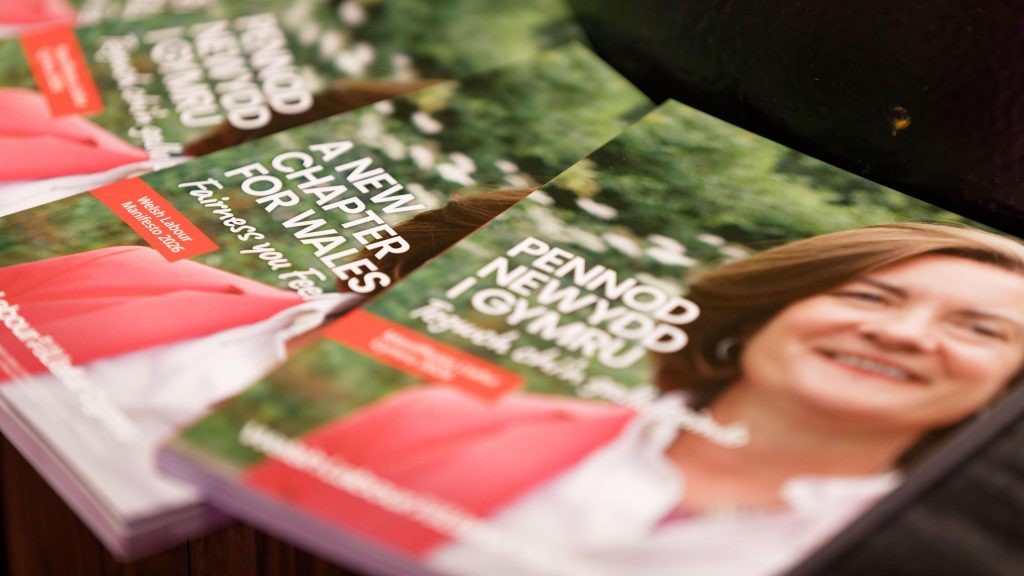
A HAVERFORDWEST teaching assistant became the quiet centrepiece of Welsh Labour’s manifesto launch — and, in doing so, revealed a party focused less on momentum than on damage limitation in towns like ours.
Eluned Morgan’s manifesto launch speech was meant to speak to the whole of Wales. But tucked inside it was a telling local calculation.
When the Welsh Labour leader told delegates about a teaching assistant in Haverfordwest who had “never voted in her life” but would now back Labour because of a pay rise, it was no throwaway line.
In political terms, it was no throwaway line. Morgan was invoking a voter from the very constituency battleground where Labour needs reassurance to cut through.
After years in power, Welsh Labour knows it cannot simply rely on habit, loyalty or anti-Tory feeling to carry it over the line. It needs to reconnect with lower-paid working people in towns like Haverfordwest — voters who may still support parts of Labour’s record, but are increasingly doubtful that life in Wales is getting better.
That is why Morgan’s speech mattered.
Far from sounding like a leader marching confidently towards victory, she sounded like someone trying to hold together a delicate coalition of public sector workers, traditional Labour supporters and anxious voters tempted by change, but wary of the alternatives.
The tone was revealing from the outset.
This was not a speech built on triumph. It was built on caution.

Morgan spoke of pressure on families, pressure on public services and pressure on her own party. She acknowledged that many voters feel something “isn’t quite right” and said people want “a little more certainty” and “a little less dread”.
That is not the language of a party taking victory for granted. It is the language of a party that knows it must steady nervous voters before polling day.
In that sense, the Haverfordwest example was politically shrewd.
Teaching assistants and school support staff are not just another part of the workforce. They are exactly the sort of voters Labour needs to keep onside — public-facing, often modestly paid, rooted in their communities and living the everyday pressures politicians talk about so freely.
By highlighting a Haverfordwest worker who had never voted before, Morgan was trying to tell a wider story: that Welsh Labour can still reach the ordinary voter who feels overlooked, underpaid and unconvinced by politics in general.
But there was another message buried in the anecdote.
Labour is plainly worried about disengagement.
A voter who has “never voted in her life” is useful in a speech not just because she is newly supportive, but because she represents a wider problem for all parties — the sense that many people have drifted away from politics altogether.
Morgan knows frustration with government in Cardiff Bay is real, especially after long-running complaints over NHS access, stretched public services, transport and the cost of living. Her answer was not to offer excitement, but reassurance.
That came through again and again.
She promised there would be no rise in income tax. She attacked “easy promises” and “slogans”. She said she would not “gamble” with people’s lives. She framed the election not as a call for upheaval, but as a choice between seriousness and protest.
In plain terms, Labour is trying to turn this election into a referendum on risk.
That is often what governing parties do when they sense frustration in the electorate, but hope voters remain more cautious about the opposition.
It also helps explain why west Wales featured so prominently in the speech.
Morgan promised a new hospital for west Wales as part of a wider NHS building programme. She also pledged that patients would be able to access a primary healthcare professional within 48 hours if they had a problem that could not wait.
Those lines will have landed strongly in Pembrokeshire, where concern over health services has become one of the most potent and emotional issues in local politics.
But they also expose Labour’s weakness.
After decades as the dominant force in Welsh politics, Labour is still having to promise basic improvements in areas where public frustration is already deepest. Voters may welcome those pledges, but many will also ask why, after all this time, they are still being asked to wait.
That is the central tension in Morgan’s speech.
She wants to campaign as both the agent of improvement and the guardian of stability. She is asking people to believe Labour can fix problems that have grown on Labour’s watch, while also arguing that nobody else can be trusted to take over.
It is not an impossible argument. But it is a difficult one.
For readers in Pembrokeshire, perhaps the most revealing thing about the speech is not just what it promised, but what it exposed.
It exposed a Welsh Labour leadership that knows west Wales matters.
It exposed a party that sees lower-paid workers and public service staff as central to its survival.
And it exposed a leader who understands that this election is not being fought on favourable ground.
The repeated slogan was “fairness you can feel”.
But the speech itself suggested something more hard-headed than hopeful.
Welsh Labour is no longer campaigning like a movement expecting gratitude. It is campaigning like a government asking voters, however frustrated they may be, not to take a chance on anything else.


Charity13 hours ago
Angle RNLI answers string of call-outs across the Milford Haven Waterway
Volunteer crew launched for searches, police incidents, a medical evacuation and a grounded yacht during a busy spell from mid-February...


Charity16 hours ago
St Davids RNLI launches on Easter Monday after drifting kayak spotted off Solva
Missing vessel recovered near shore after coastguard confirms it had been reported lost days earlier ST DAVIDS RNLI launched on...


News19 hours ago
Diesel nears £2 a litre in Pembrokeshire as drivers scramble for cheaper fuel
Johnston forecourt hits 194.9p while wide price gaps and rush to fill up pile pressure on motorists across the county...


News2 days ago
St Davids Cathedral marked Easter Sunday with full day of worship
FROM dawn vigil to choral evensong, the cathedral welcomed worshippers for one of the most important days in the Christian...


Crime2 days ago
Neyland man spared immediate jail over aggravated vehicle taking
Defendant given a suspended prison sentence after magistrates heard the offence was serious enough to cross the custody threshold KRISTIAN...


Health2 days ago
Crumbling NHS faces £1bn repairs bill in Wales
Senedd election promises collide with the harsh reality of ageing hospitals, fire safety concerns and a maintenance crisis stretching across...

News3 days ago
Emergency services respond to incident in Haverfordwest town centre
EMERGENCY SERVICES were called to an incident in Haverfordwest town centre on Saturday morning (Apr 4), with police and ambulance...

News3 days ago
Teenager intervenes after bridge incident
A TEENAGER was left shaken after stepping in to help a young woman in distress on Clay Lanes bridge in...


Crime5 days ago
Driver spared jail after crash killed young couple
A PEMBROKE DOCK driver who caused the deaths of a young couple in a road crash has been given a...

Entertainment5 days ago
BBC unveils major new Welsh dramas with Tenby set for prime-time spotlight
New crime series Old Town Murders and supernatural thriller The Witch Farm will both be filmed and set in Wales...
-

 News4 days ago
Accommodation providers in Wales will be required to register under new law
-
 Business6 days ago
Fishguard to Wexford rail tunnel plan backed by Elon Musk firm
-

 Entertainment4 days ago
From Milford Haven to the world: The story of The Evolution Experience
-
Entertainment5 days ago
BBC unveils major new Welsh dramas with Tenby set for prime-time spotlight
-

 Crime7 days ago
Driver trapped after crash while nearly four times over drink-drive limit
-

 Community5 days ago
Sycamore Gap legacy takes root at Carew Castle
-
 Business6 days ago
Refusal over Pembrokeshire shepherd hut let goes to appeal
-

 News6 days ago
Health minister refuses to act on Withybush despite 15,000-signature petition