


News
Plans for more Senedd members and changes to electoral system


PLANS to increase the number of Senedd members and change the electoral system have passed their first hurdle.
MSs agreed the general principles of the Senedd Cymru (Members and Elections) bill, which would expand the Welsh Parliament from 60 to 96 members.
Under the bill, the 32 constituencies that will be used in the next general election would be paired to create 16 for the 2026 Senedd vote – with each returning six members.
Senedd elections would be held every four years under a “closed list” form of proportional representation, which would see people voting for parties rather than specific candidates.
Mick Antoniw, the Welsh Government’s counsel general and constitution minister, stressed compromise is necessary because the bill requires a two-thirds majority to become law.

He argued the proposed closed lists would be simpler than, and superior to, the current additional member system – a mix of proportional representation and first past the post.
“It will improve democracy and ensure every vote counts, it will lead to a Senedd that is far more representative of the people of Wales,” he said.
If passed, the bill would also increase the size of the Welsh Government from 14 to 19, including the first minister, ministers, deputies and the counsel general.
Mr Antoniw rejected two Senedd committees’ calls for the removal of powers in the bill for ministers to further increase this limit to 21 without full legislative scrutiny.

He also rejected calls to reduce a proposed 10% variance in the number of voters in each constituency, which is twice that allowed in Westminster elections.
The member in charge of the bill pointed to the need for “future proofing” and flexibility.
Darren Millar, the Conservatives’ shadow constitution minister, said Wales needs more doctors, nurses, dentists and teachers – not 60% more politicians in the Senedd.

He claimed there is no public mandate as he criticised “woolly” references to Senedd reform in Labour and Plaid Cymru manifestos for the 2021 election.
“No-one mentioned this closed-list voting system that has been proposed,” he said.
“This is a system that amounts to a power grab by political parties, taking power away from the voters and preventing them from being able to vote for a candidate of their choice.”
Mr Millar warned that losing direct accountability between elected representatives and the public they serve would be devastating for Welsh democracy.
Calling for a referendum, he said: “Give the people of Wales the choice on whether to endorse this atrocious system … and I can tell you which fingers they will use to salute you.”
David Rees, who chaired the Senedd reform committee, which produced a stage-one report on the bill, raised concerns about the rejected recommendations
The Aberavon MS stressed the importance of public confidence in the proposed reforms.
Alun Davies, a fellow Labour backbencher, who represents Blaenau Gwent, criticised the Conservatives for failing to oppose more “cronies, donors and hangers on” at Westminster.
Heledd Fychan, for Plaid Cymru, described the bill as a major step forward for Wales, making the Welsh Parliament more effective and representative.
The South Wales Central MS said: “These are ambitious plans … Wales will be the first national legislature in the UK to move away in full from the first-past-the-post system.”
She told MSs that Plaid Cymru also favours STV or a flexible/open-list system but her party’s priority is to ensure a bold package of reforms is in place by 2026.
Adam Price urged MSs to grasp the opportunity – pointing out that progress can be painfully slow in Wales, with various commissions and panels since the Kilbrandon report in 1973.
The former Plaid Cymru leader argued that the Senedd is underpowered, raising the example of only one private member’s bill being passed in the past eight years.
Mike Hedges, a Labour backbencher who represents Swansea East, called for further consultation on the electoral system as the bill moves forward.
Raising concerns about the size of constituencies, particularly any that’s paired with the new Brecon seat, he argued the Senedd and UK Parliament should use the same boundaries.
Tom Giffard, a Conservative, warned the reforms risk eroding the link between the public and their representatives, making Wales less democratic.
The South Wales West MS said: “If we vote for more politicians without asking the people’s permission, all we’ll do is create the impression that this isn’t a parliament for them.”
The Conservatives’ Natasha Asghar described Senedd reforms as a vanity project, suggesting the money would be better spent on 150 consultants to ease waiting times.
Challenged about where the extra doctors would come from, the South Wales East MS said: “Where there’s a will, there’s a way – if you’ve got the money, anything’s possible.”
Jane Dodds, the Lib Dems’ leader in Wales, described the bill as a once-in-a-generation opportunity to revitalise democracy but said the current proposals “fall far, far short”.
Ms Dodds argued the proposed closed list system would be a profound and lasting mistake, saying: “I have not heard a single reason why this represents a necessary compromise.”
With no plans for by-elections in future, James Evans, the Conservative MS for Brecon and Radnorshire, raised the risk of vacant seats leading to political paralysis in the Senedd.
Closing the debate, Mr Antoniw said the bill is an investment in democracy and 0.07% of the budget is a price worth paying.
MSs backed the proposals 39-14 in the vote on January 30. The bill now moves to stage two, which will see a committee of the whole Senedd consider amendments.


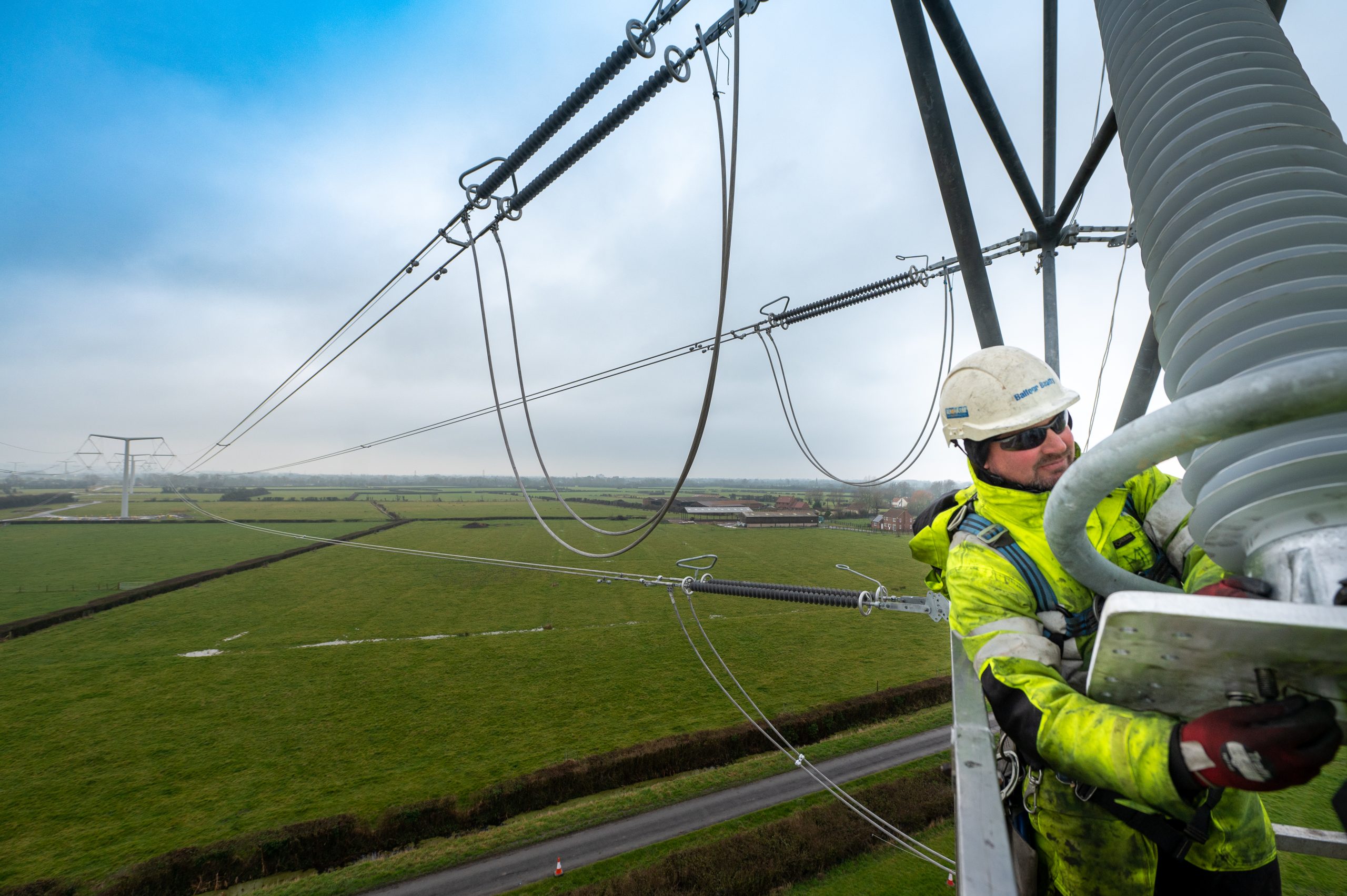
LABOUR SAYS MINISTERS MUST EXPLAIN COST AND TIMETABLE FOR PYLON PLANS
PLAID CYMRU’S approach to energy infrastructure has come under scrutiny after Energy Minister Adam Price was challenged over plans to reduce the use of overhead pylons in Wales.
Mr Price defended the Welsh Government’s position during an appearance on BBC Radio Wales’ Sunday Supplement, arguing that communities must have greater confidence in how major grid projects are handled.
Plaid Cymru has pledged to give communities a stronger voice over energy developments and to look more closely at alternatives to overhead transmission lines, including underground cabling where possible.
The issue has become increasingly sensitive in rural parts of Wales, where proposed pylon routes linked to renewable energy schemes have raised concerns about landscape impact, tourism and local consultation.
However, Welsh Labour said the minister had failed to explain when any restriction on pylons would take effect, or who would pay the additional cost of placing cables underground.
A Welsh Labour spokesperson said: “Adam Price keeps saying how clear their manifesto was and yet he won’t say when they’re banning pylons. They won’t say who is paying for the extra cost of undergrounding cables.
“Without certainty, companies won’t invest. That’s thousands of clean, green energy jobs at risk. Plaid need more than a plan to have a plan.”
Labour said the Welsh Government must now set out how its policy would work in practice, including whether it amounts to an outright ban, what exemptions would apply, and how any extra costs would be funded.
The debate highlights the challenge facing ministers as Wales seeks to expand renewable energy generation while addressing public opposition to large-scale grid infrastructure.

HORSES, STALLS AND FAMILY CROWDS RETURN TO MONKTON
FAMILIES, horse owners and visitors turned out in force for Pembroke Fair on Saturday (May 23), with many praising the event as one of the best organised in recent years.
Held at the Community Centre Field in Monkton, the annual fair brought together horse owners, traders and local families for a traditional day centred around horses, ponies, stalls and socialising.
Coloured cobs, heavy horses, ponies and horse-drawn traps attracted attention throughout the day, with many visitors gathering around the field to watch the animals being shown and led around the site.
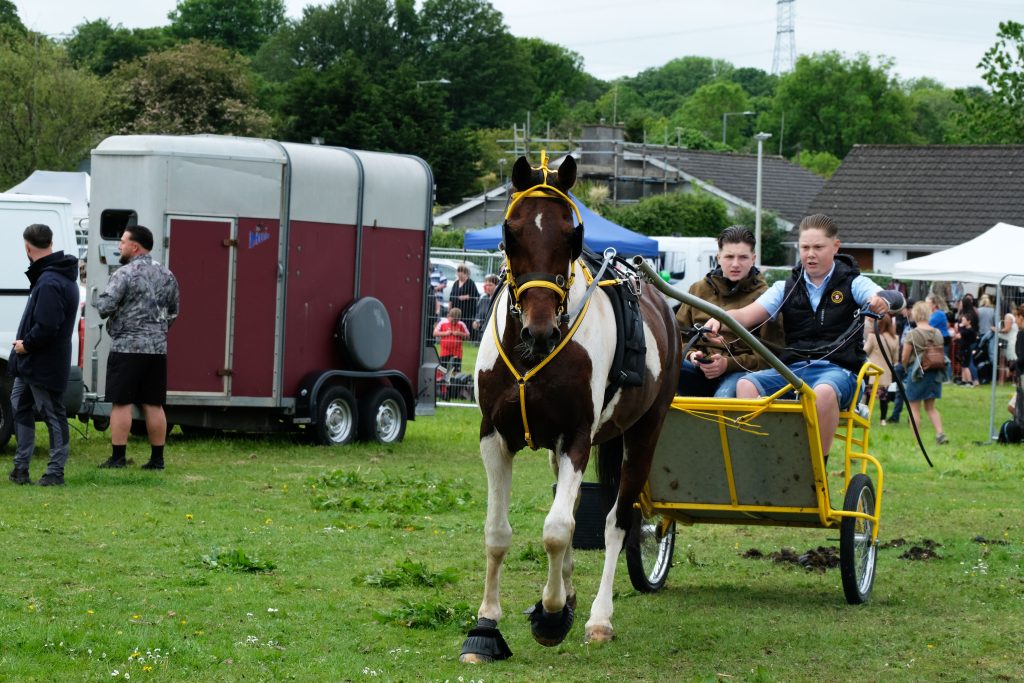
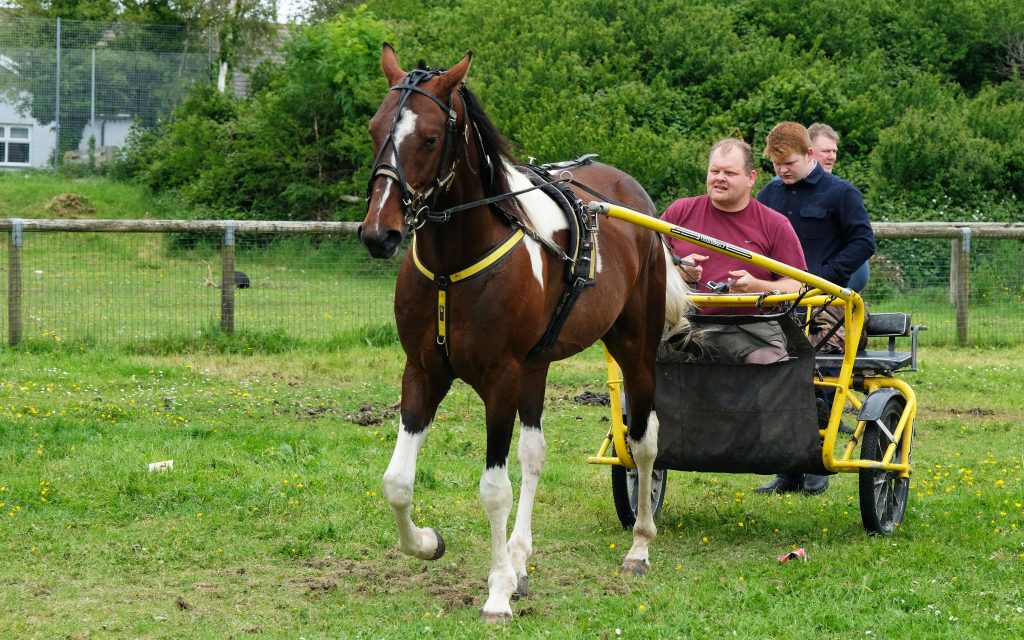

A variety of stalls selling everything from clothing and ornaments to tack and second-hand goods helped create a lively market atmosphere, while food vendors kept visitors fed throughout the day.
Despite overcast conditions at times, the event remained busy, with many attendees staying for several hours to enjoy the traditional fair atmosphere.
Community members later took to social media to praise the smooth running of the event, with several publicly thanking organiser Charlie Price for his efforts in bringing the fair together.
Comments described the day as “well organised” and praised the welcoming atmosphere, with many saying it was encouraging to see a long-standing local tradition continuing to thrive.
The fair once again brought together members of the travelling community, local residents and horse enthusiasts from across west Wales.






A horse drive was also due to take place on Sunday (May 24), continuing the weekend’s celebrations.
Photo captions:
Traditional gathering: Horses, ponies, horse-drawn carts and market stalls drew crowds to Pembroke Fair in Monkton on Saturday (Pic: Herald).

A HEALTH board has been criticised by Audit Wales after GP contracts worth more than £10m were awarded without sufficient due diligence checks.
Aneurin Bevan University Health Board allowed a GP partnership associated with eHarley Street Primary Care Solutions to take on eight GP contracts in south-east Wales, with a combined annual value of around £10.1m.
Audit Wales said the board should have carried out greater scrutiny before approving the arrangements, including checks on financial resilience, workforce plans, business risks and the partnership’s ability to manage several practices at once.
However, the watchdog found no evidence of fraud and noted the board was dealing with significant pressure in general practice, including vacant contracts and limited interest from other bidders.
The report said weaknesses in governance and scrutiny contributed to later disruption and uncertainty for patients and staff when problems emerged.
Concerns included financial and workforce pressures, unpaid invoices, and issues relating to tax and pension payments. Some contracts were later handed back, requiring the health board to step in to protect services.
Natasha Asghar MS, Welsh Conservative Shadow Cabinet Minister for Health and Social Care, said the findings were “deeply concerning”.
She said: “Patients and staff were left facing disruption and uncertainty because proper scrutiny was not carried out before these contracts were awarded.
“The Welsh Conservatives believe lessons must be learned to ensure robust checks are in place, protect frontline services and restore confidence in primary care across Wales.”
Aneurin Bevan University Health Board accepted the recommendations and said it had already strengthened its processes.
Audit Wales said the case highlighted the need for stronger checks before GP contracts are transferred, particularly when a single partnership is taking on multiple practices in a short period.


Business19 hours ago
Plaid energy policy challenged by Labour after Adam Price interview
LABOUR SAYS MINISTERS MUST EXPLAIN COST AND TIMETABLE FOR PYLON PLANS PLAID CYMRU’S approach to energy infrastructure has come under...


Community19 hours ago
Pembroke Fair praised as well-organised community event
HORSES, STALLS AND FAMILY CROWDS RETURN TO MONKTON FAMILIES, horse owners and visitors turned out in force for Pembroke Fair...

Local Government3 days ago
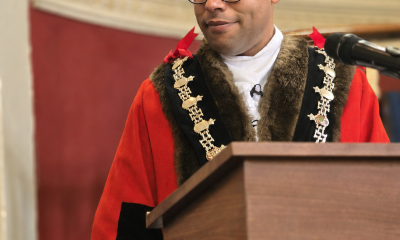
Youngest mayor in century takes office in Haverfordwest
Randell Izaiah Thomas-Turner makes history as town’s first millennial mayor and first from a diverse background HAVERFORDWEST has welcomed a...


Community3 days ago
Pembroke Fair set to return after last year’s success
STALL HOLDERS INVITED AS HORSE DRIVE PLANNED PEMBROKE Fair is set to return this weekend following the success of last...


Crime4 days ago
Neyland man accused of running over traffic worker’s foot
Jury hears conflicting accounts over roadworks incident in Milford Haven A NEYLAND man has appeared before Swansea Crown Court accused...


Community4 days ago
New pilot boat Llanion dedicated at emotional Milford Haven ceremony
Vessel dedicated at Mackerel Quay as Port marks major investment in safety and resilience MILFORD HAVEN’S new state-of-the-art pilot vessel...


Local Government4 days ago
Police and GoSafe to target speeding in Newport and Dinas
RESIDENTS’ concerns over speeding and anti-social driving have prompted planned enforcement action in the Newport and Dinas areas. Dyfed-Powys Police...


Community5 days ago
Safety first as Milford Haven’s new pilot boat marks end of troubled chapter
Gary Solomon, who was aboard St Davids during the 2016 collision, helped shape new self-righting vessel Llanion from conception to...


Crime5 days ago
Cocaine courier caught with £15,000 haul in Pembroke Dock
Defendant transported high-purity drugs from Cardiff to Pembrokeshire for £210 A PEMBROKESHIRE man caught transporting more than £15,000 of high-purity...


News5 days ago
Car bursts into flames near Redberth Croft as road closed after incident
Nobody injured after vehicle fire near A477 prompts emergency response A CAR was destroyed by fire near the entrance to...
-

 News2 days ago
Watchdog criticises health board over £10m GP contract checks
-

 Crime5 days ago
Farm owner in court after 26 dogs removed over welfare concerns
-

 News4 days ago
Paul Davies meets Openreach Cymru at the Senedd to discuss Full Fibre rollout
-

 Crime5 days ago
Tree surgeon sentenced for failing to provide breath test
-

 Crime5 days ago
Pembrokeshire teenager admits driving almost four times over drug-drive limit
-

 News5 days ago
Milford man admits handling stolen goods from three local properties
-

 Crime7 days ago
Builder jailed for £82,000 fraud affecting 18 victims
-

 Crime4 days ago
Milford Haven man admits affray after alleged pub incident